The 51 events of the 2nd World Games of Human Robots were divided into two distinct evaluation systems: athletics testing movement limits and synchronous ability, and scenic racing directly to the operational standards of real-world positions. Industrial scenic mounting races were the closest to the production line of the latter, evaluating the core indicators of straight-finger delivery at the industrial level: long-term stability, millimeter accuracy, and disruptive autonomous recovery capability.
It was in this race closest to a real factory that the three-month-old rhinos, built with a robot assembled from a demo-level body, made their way through the preliminary round and advanced to the final, ultimately finishing in the top three in the country with 160 points, becoming the only startup to win an award outside the industry's leading enterprises in the industrial scene competition.
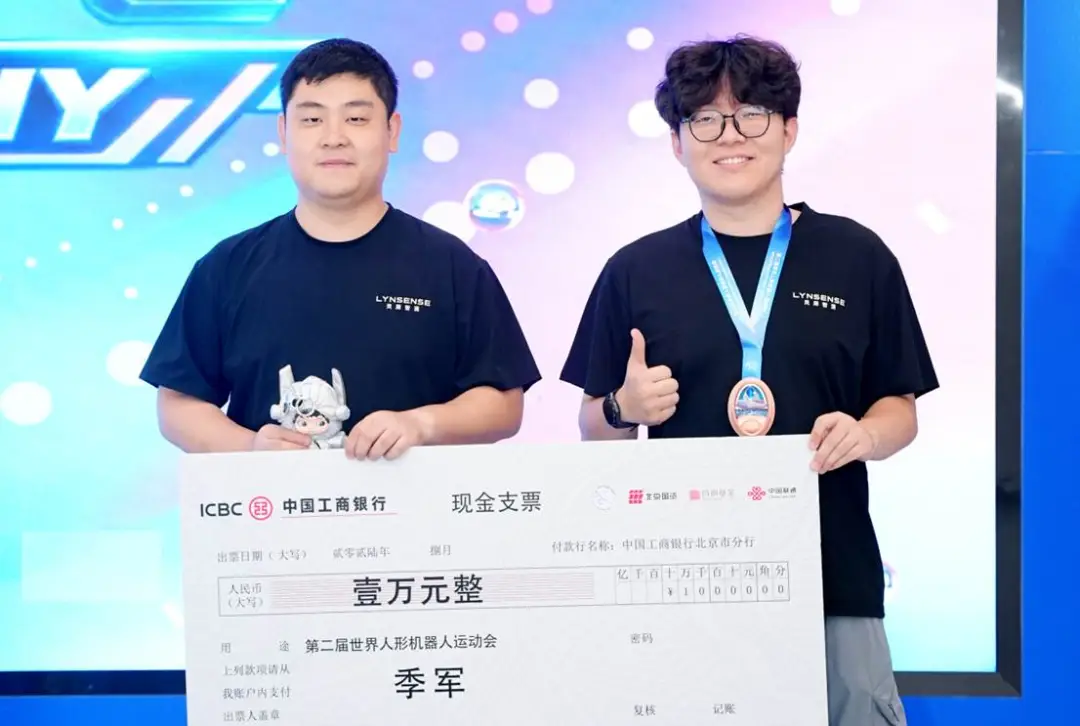
The golden content of this achievement is: the company was founded in a short time, the competing machines were not mass-produced models but demo assemblies, and the competitors of the same competition were the main components, accumulated extensively in hardware capabilities such as the chassis, mechanical arm.
It's not just a story of a black-horse reversal, but it's also a story of how to understand the rational route choices, first of all, to see the collective plight of the industry, and then to see how difficult it is to get through the real industrial landscape. It's stuck in just four things: unstable success rates, insufficient throughput rates, too expensive to operate, too difficult to move around. The underlying reason is the methodological limitations of a single model route: the model is always a probability output, the single success rate has skylights; the industrial landscape is an open world, the existing systems lack the ability to self-evolve, and experience cannot be absorbed into replicable assets.
It was at the heart of this industry that the startup, which was founded in Shanghai, gave a different answer.
01.
ROSS Harness: The power of self-evolution
ROSS Harness, self-developed by co-founder and CTO Dr. Steven Ivan, is an industrial-level execution system built around body models. Named after W. Ross Ashby, founder of control theory, the system is not an off-model engineering patchwork, but a continuously running execution loop between models and robots that transforms the model's probability of action into a stable, controllable, and reproducible production capacity.
After ROSS unifies models such as the VLA, World Action Model, and others into standard interfaces, new models require only local adaptation, top-level task planning, skill sorting, security strategies, and robotic control modules are still reusable, reducing the cost of system rebuilding that comes with rapidly changing models.
ROSS encapsulates models, tools and engineering strategies into Skills with applicable conditions, security constraints, outcome judgement and failure handling, dispersing the know-how in code, parameters and engineer experience into inviable, movable digital capability assets.
Agentic AI enables robots to organize long-range tasks. Agents are responsible for goal understanding, task dismantling, skill sorting and abnormal recovery, creating boundaries between the model's flexibility and the certainty of industrial execution, avoiding allowing large models to play freely at every step of the execution.
From millisecond-level hardware security, secondary trajectory monitoring to task-level status judgement, ROSS continues to determine whether robots are performing correctly, and triggers interruptions, retests, reversions, Skill replacements or reprogramming at unusual times.
Data flyers make every execution the starting point for the next evolution. Context on mission, failures, artificial takeover and recovery pathways are structured to be used to update Skill, optimize task compilation, refine recovery strategies and long-term memory, and further counteract models. ROSS-defined lithium-ion automation pumps, therefore, do not re-train a large model every time, but instead allow models, Skill, Tools, task scheduling and memory systems to evolve together in real industrial tasks.
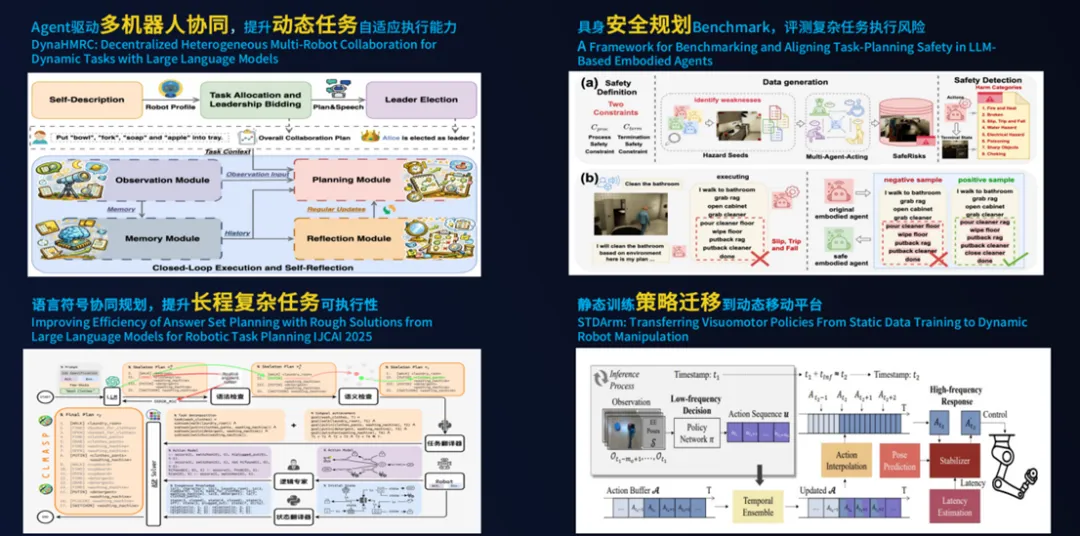
While the mainstream industry is more focused on mass-data-throwing large models, driving the rapid evolution of the intrinsic matrix, Rhino has placed the core barrier on the Harness layer. The physical world is repeating this logic: Embodied Agent = Embodied Model + Embodied Harness + Hardware, the stronger the model, the larger the boundaries of Harness's call capability; and Harness's accumulated real industrial experience can in turn help the model better understand industrial tasks, which is real collaborative development. On the other hand, Rhino has not emphasized Harness but abandoned its model capabilities. Model capabilities are not an alternative to Harness, and the stronger the base model, the more Harness can transform its capabilities into stable, controllable, and scalable industrial execution capabilities. The two routes are focused: the model determines the initial capabilities of the robot, and Harness determines whether these capabilities can be continuously amplified and evolved in real-world tasks, anomalous feedback, and continuous data after they enter the production line.

This is the industry-level evolution defined by Intel: not by expanding model parameters, but by allowing models, Skills, Tools, task scheduling and memory systems to evolve together in real-world tasks, serving the same result of increasing the success rate and throughput of actions, which is the quantitative expression of Harness's systematic expansion of model capabilities.
02.
Doctors at the Faculty of Medicine and Dentistry: Resonance from the Laboratory to the Production Line
The core of the route was chosen from a team with both academic depth and engineering experience.
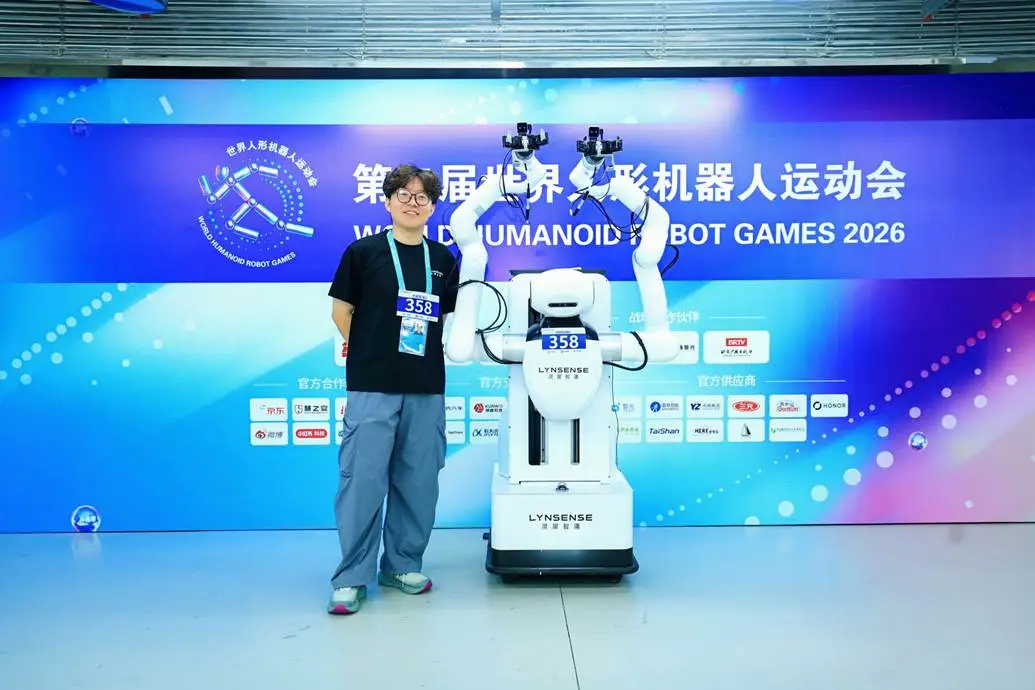
During the course of his studies, he focused on physical intelligence, spatial intelligence, etc. The results of his research were subsequently published in top international publications such as RSS, IJRR, TRO, ICRA, IROS, published a total of 36 papers, cited more than 390 times, and had a complete chain of engineering experience ranging from autonomous driving, campus mining and vehicle riding scenes to industrial ones.
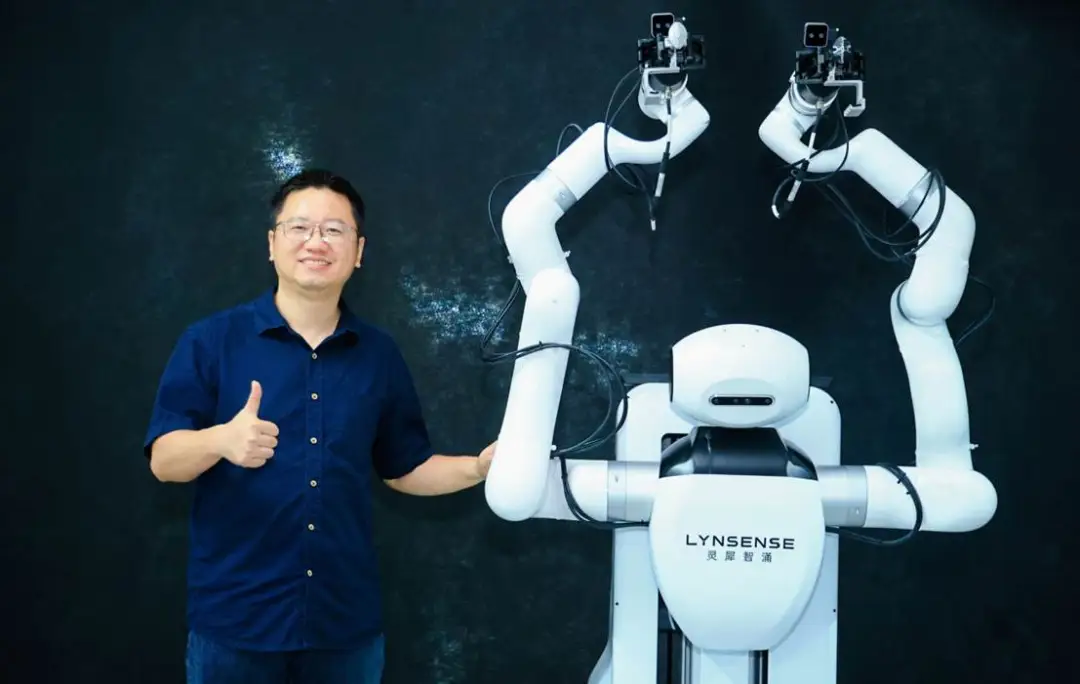
Professor Jijianmen, Vice-Professor, Co-Founder, Co-director, Principal Scientist, and Co-Director of the School of Computer Science at the University of China. For more than a decade, he has led the Cognitive Robot Service Decision Making System at the University of China, won the RoboCup@Home World Championship, and has been recognized as one of the best technological achievements of the decade for Cognitive Robot by Artificial Intelligence. He has both academic vision and industry-leading experience.
The two faculty members form a dual engine structure that combines academic guidance and engineering strategies: Jianmen is responsible for cutting-edge technical guidance, long-term technical routes to bring control and underlying methodology to input, and Jianfan leads the engineering team to master the architectural design of ROSS Harness, engineering implementation and product definition, a fixed direction, a landing execution, academic legacy and engineering experience resonating in the same system.
To date, the team has published more than 100 top-level papers with intelligent topics, cited more than 1,000 times, and has verified the location of industrial scenarios such as raw materials, precision screening, concrete compression in machine processing.
03.
From the racetrack to the production line: first product launch of an evolutionary engine
If the racetrack fitted to the racetrack is the first public verification of ROSS Harness, the next step is that Rhinos is advancing the product-oriented landing gear for this set of evolutionary engines through a standardized hardware platform, delivering the Harness capabilities tested on the racetrack to more industrial scenarios, so that every robot that enters the production line can continue to mutate skills, optimize strategies, and self-repair, and truly realize the harness with more and more power.
From winning the event to the continuing depths of the industrial scene, the renowned renowned renowned renowned renowned renowned renowned renowned renowned renowned renowned renowned renowned renowned renowned renowned renowned renowned renowned renowned renowned renowned renowned renowned renowned renowned renowned renowned renowned renowned renowned renowned renowned renowned renowned renowned renowned renowned renowned renowned renowned renowned renowned renowned renowned renowned renowned renowned renowned renowned renowned renowned renowned renowned renowned renowned renowned renowned renowned renowned renowned renowned renowned renowned renowned renowned renowned renowned renowned renowned renowned renowned renowned renown.
The experience of the digital world also proves this. After the emergence of big-language model intelligence, the most phenomenal products are not chatbots, but the same base model, such as the Codex, the Claude Code, and the different Coding Agent Harness, whose task performance may determine if the two-person Harness model decides whether or not it will, Harness decides that it can't really get it right.
At a time when the industry is generally concerned with how strong the silicon robot is when it's being manufactured, how rhinos are gaining momentum while responding to another question about how strong the silicon robot is when it's being manufactured. This may be a key step towards a massive industrial adoption of artificial intelligence.