At the 2026 World Robot Games, the most "working" robots won.
For the first time, Chiu took 18 gold, 16 silver and 12 bronze medals, with a total of 46 medals. According to the list published by the organizing committee, both Chiu's gold and total medals ranked first.
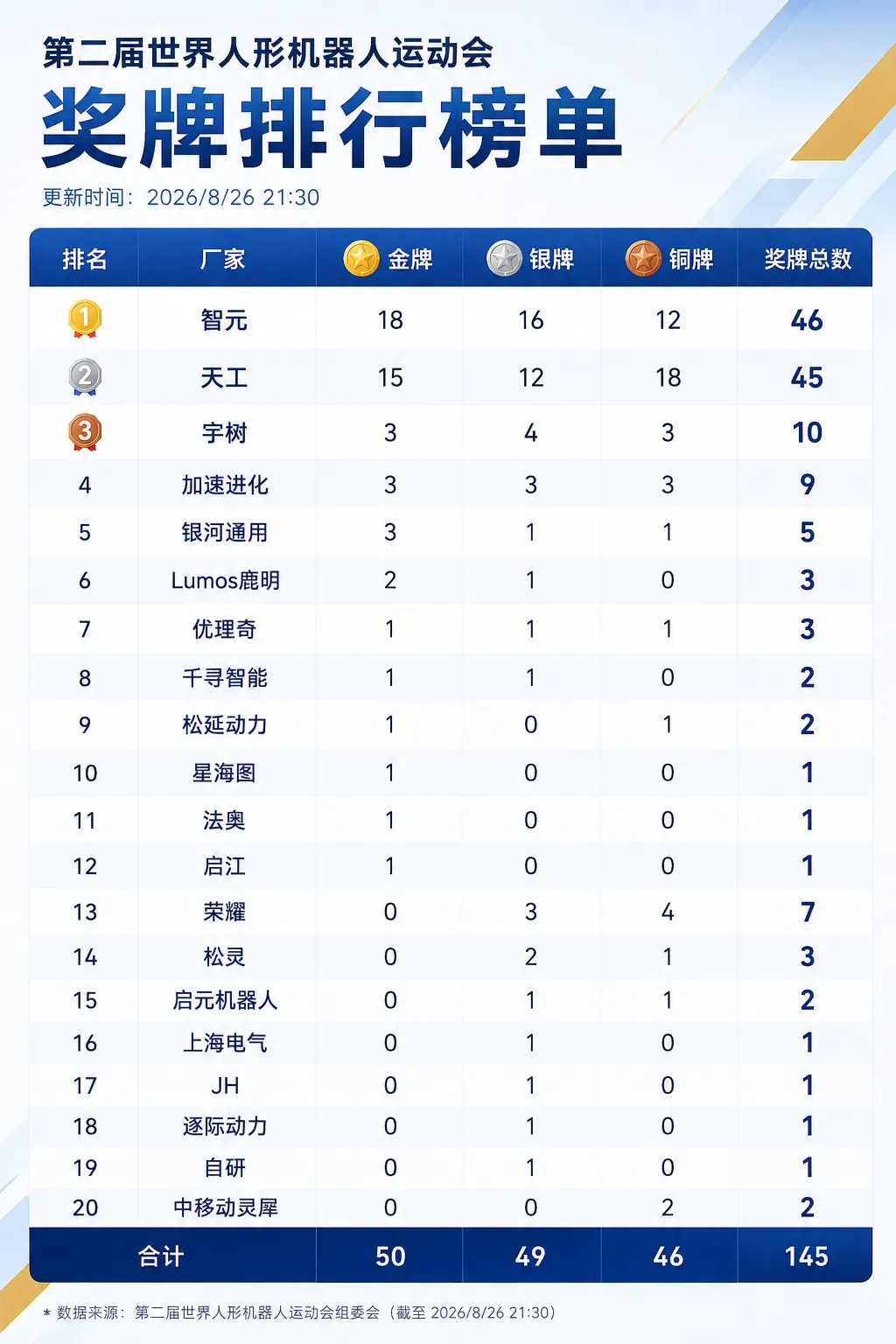
A total of 51 events were contested at the Games, which were divided into three main sections: competitive events, skill competitions and scenic events, almost covering the main capability dimensions of humanoid robots.
Among them, Xiao OmniHand won seven gold medals in eight competitions, G2 won six gold medals in 12 operational scenarios in hotels, emergency rooms and libraries, A3 Expedition won five gold medals in dance, martial arts and table tennis, and X2 won gold medals in the 100m hurdles and bronze in the 400m hurdles.
A single score can reflect the ability to perform a specific action or task, while the overall score tests the overall strength of the robot. If the robot continues to score in multiple projects such as fine operation, scene work, high dynamic movement, any apparent ability shortboard will affect the final ranking.
In addition, all competing models were mass-produced and no custom body was built specifically for the competition.
Custom sampling machines can adjust hardware design around specific rules, and mass production products must also take into account cost, reliability, maintenance efficiency and batch consistency, and cannot simply pursue limit parameters for a particular project. Therefore, mass production machines' achievements on the open field are closer to the limits of the product's ability to achieve under real conditions.
In addition to several competitions based directly on real-life workplace scenarios, the mass-produced machines continue to win in real-life events, which is more like an open deployment capability pressure test.
The Games
It's more like an addiction test.
In the three big plates, the commercial landings of the scenic race and the humanoid robot are nearby.
Competing robots must complete multiple task links in sequence within 20 to 30 minutes, so that one link cannot score or jump directly to the next. The longer the task chain, the easier it is to detect errors, catch failures and accumulate positioning biases.
In the hotel competition, the G2 adopts an autonomous scheme to continuously complete luggage transport, room replenishment and room sorting. In the process, it also passes through narrow doors and narrow passages, accurately identifying small targets such as door handles, elevator buttons, the appearance of objects and the positioning of different hotels, the on-site light and movement of people, and will continue to interfere with the perceptual results.
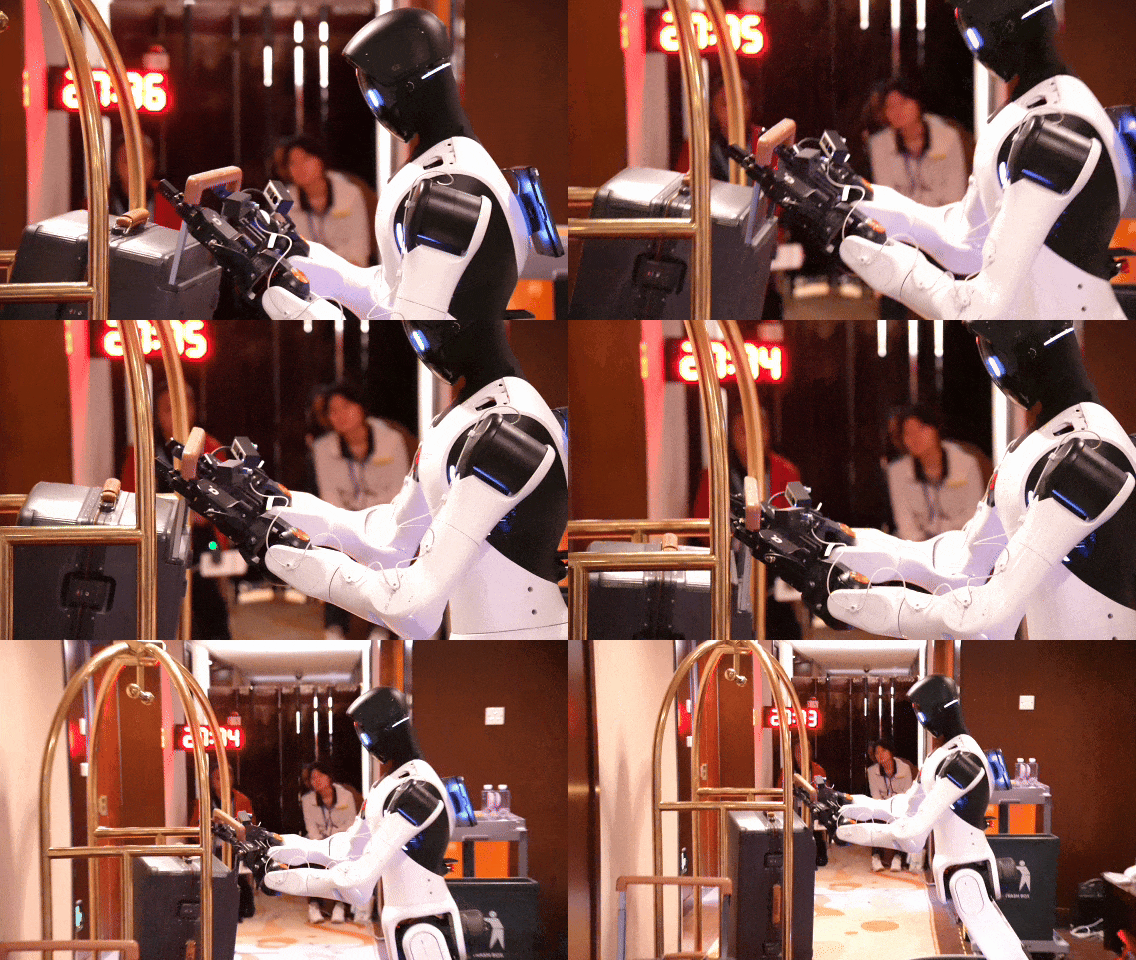
With the large models of the GO series, it enhances visual characteristics extraction and integrates RGB with depth information to help robots determine the location and posture of targets. The system also adds space constraints to reduce the impact of environmental changes on subsequent decisions.
Garden racing is a purely outdoor, autonomous course. The G2 Elves need to independently complete forbidden items identification, uncivilized behavior patrol and garbage collection, performing three tasks in a row. Lighting, weather and wet ground will change perception conditions, and complex terrain will also test the chassis through sexual and movement controls.
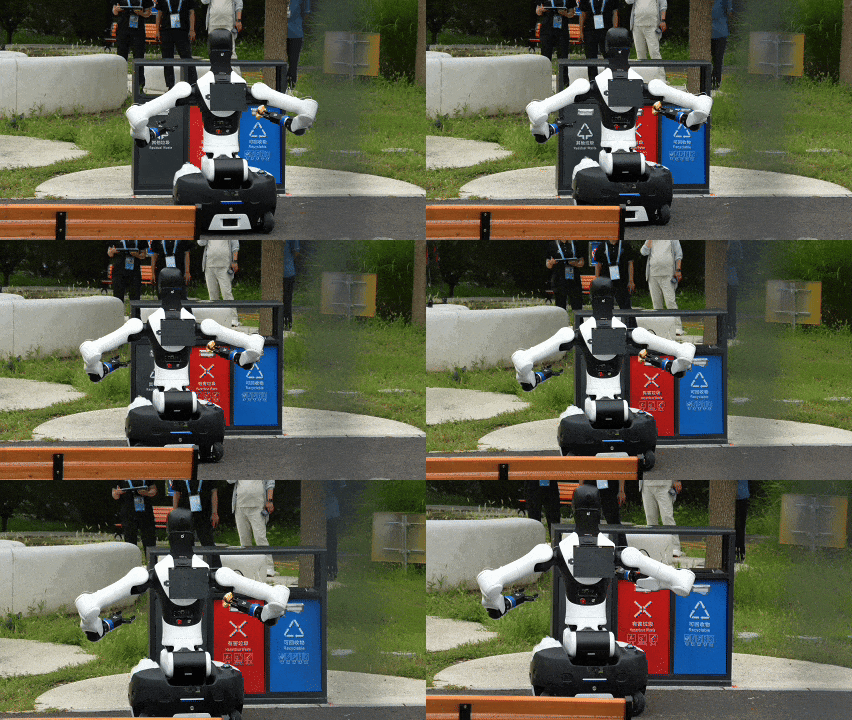
Long-term outdoor operation requires continuous stability of mechanical structure, sensors, batteries and communications, and Chiu plans the entire chain of tasks through Genie Agent, and conducts coverage tests for different periods of time, wet weather, and dry ground.
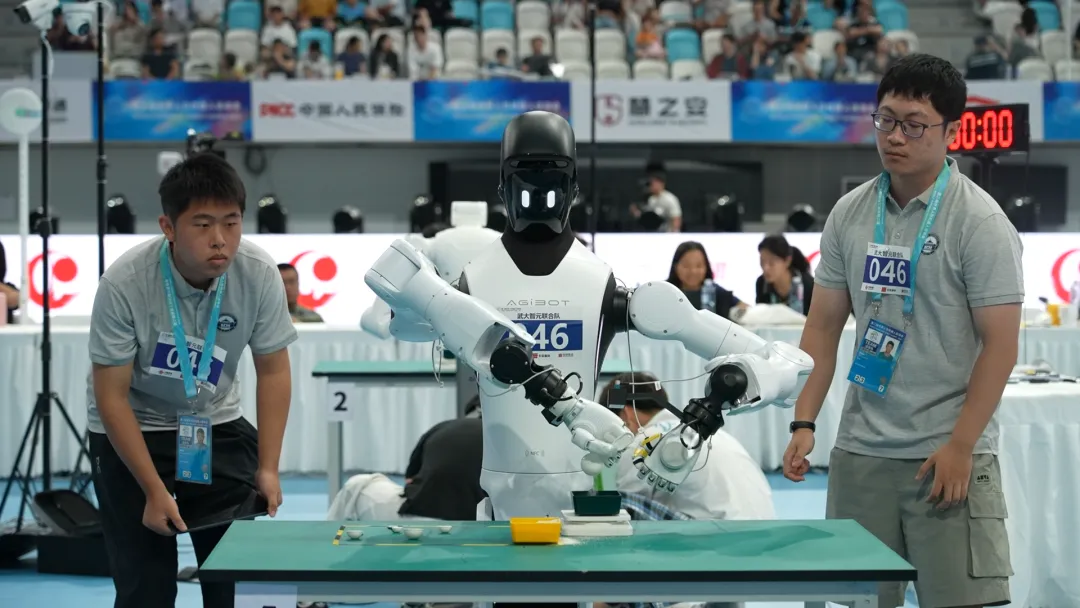
OmniHand reached the final of eight competitions with the same quantity of products, winning seven gold medals. Projects such as building bricks, weighing powders, peanut butter, opening bottle caps, testing precision extraction, steady force, tool use and hand-held cooperation.
For example, the robot will need to find the potatoes and salts on its own, adding the powder to the electronic scales gradually, and eventually adding 20 grams, with the error not exceeding 0.5 grams.
OmniHand has three fully autonomous projects that show that the same set of hardware can be used for multiple tasks.
Expeditions A3 and Rhino X2 extend the test from both hands to the entire body.
Expedition A3 involves the continuous completion of hollow, transitional, single-legged support and low-centered posture changes, large range of movements, rapid rhythm changes, and high body coordination control requirements.

The Ping-Pong project further introduces high-speed visual perception and real-time response, requiring robots to judge the speed and trajectory of the ball in a very short time, completing movements and vibrations instantly.
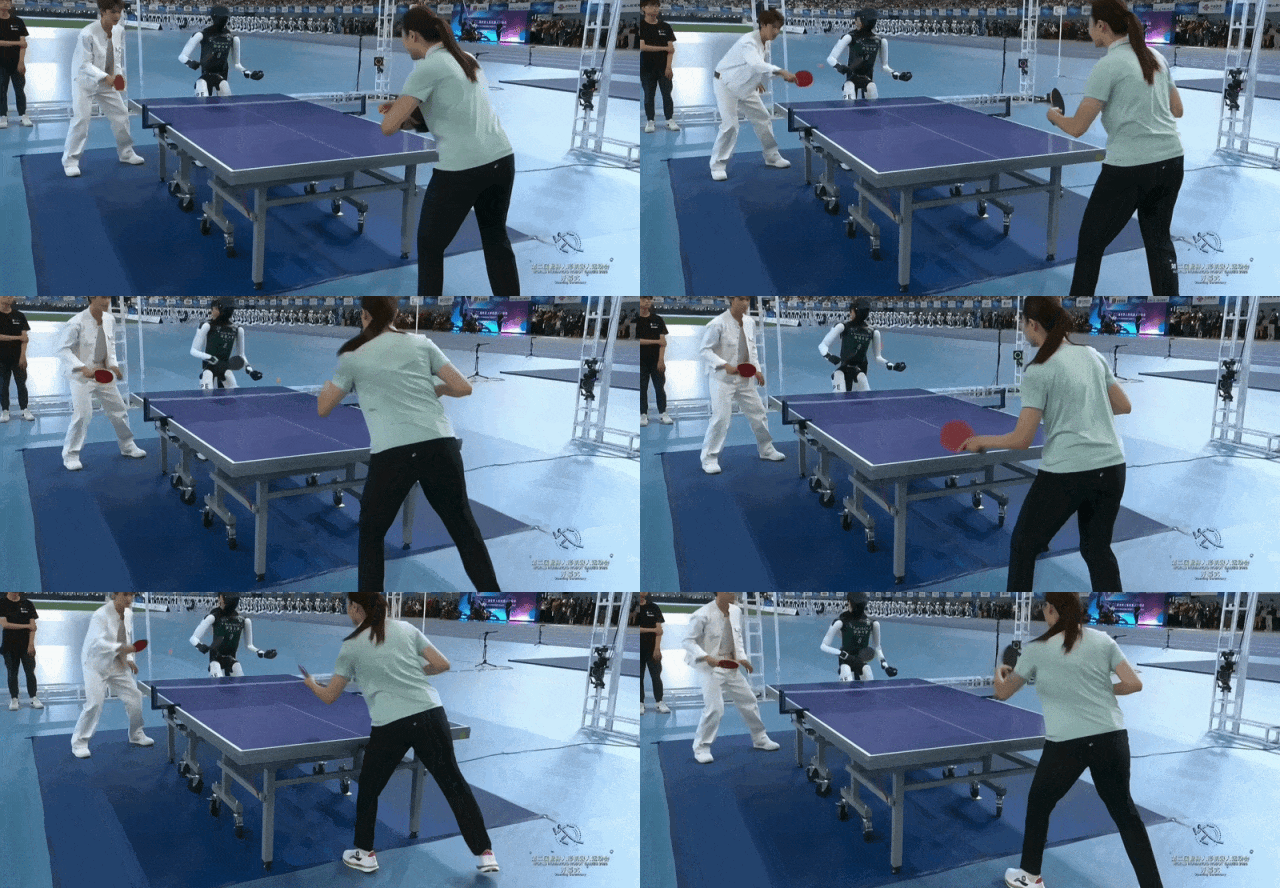
A3 Expedition playing table tennis with Dingning, Li Jing
In the 100m hurdles in which the X2 took part, the stairs, narrow passageways and upside-down pathways were interconnected, allowing the robot to keep moving at high speed while identifying terrain and adjusting pace.

Some projects even require robots to move forward.

The game transforms the ability of robots into a specific task, which can be done continuously and steadily, only closer to the real climb, thus showing the amount of gold at the top of the list.
Long-headed, full-body coordination
This is how Xiao's medal came about.
If you look at the projects of this Games, you will find that the medals received by Chiyuan are quite scattered, and the differences between the projects are great, very testing the complex qualities of robots. Some fully autonomous projects also test the "generalization" ability.
The bookshelf is temporary, no one tells the robot how to place the book before the race, even the spotlight is not the same as when training. The robot comes to the bookshelf, to see for itself, to think for itself.

Chiyo's technical architecture is called the "Tri-Intelligence", that is, a single body, which carries three types of intelligent minds. The movement of the mind calculates small brains, runs steadily; interacts with intelligent controllers, communicates with humans, is responsible for understanding people and the environment; the real functioning of the mind is operational intelligence, from understanding tasks to executing them manually, with everything in between.
Of the three smartphones, work intelligence is the most valuable, with the most manpower and money, and the longest shredding time. So it's not surprising that the company has so many "active" medals this time around.
There are three core models of this working intelligence system, known as GO, GE and RW-RL.
The first is understanding. The body-based model GO is responsible for "understanding the problem": for example, receiving an instruction to "clean up the room", it knows that this means first finding the items that are scattered, then deciding where everything should be placed, and finally issuing a reasonable order of movement.
The second is the projection. The world model GE is equivalent to a simulator in the brain, the action has not yet been made, and the consequences are first estimated in the "brain".
The third is hand sensing. Large-scale distributed real-machine reinforcement RW-RL allows robots to practice repeatedly in the real world, to practice "seeing and doing" into "getting it done".
Three things come together, and in turn, one key ability: generalization. The organization of hotel scenery learning, replacing the library without having to learn from scratch. The skills exercised on the elf G2 can also be transferred to the past.
Of course, after knowing what to do, the robot still has to really control the body, which is a matter of exercise intelligence. Expedition A3, attics, flag dancing, hollow jumps, large-angle transformations, single-leg support, very testing the weight, torsion, real-time coordination between limbs. The A3 can do millisecond-level body posture adjustments, adjust torsion and limb angles at any time during the torsion, dynamic adjustment of the weight. These movements also do not fall all the time on the machine, so the A3 followed the path of Sim2Real, first to learn a lot in the simulation environment, and then to transfer the exercised exercise skills to the real machine.
The X2 also took this logic a step further: from perceiving one's body, to looking at the movement of the environment. Now most operating systems rely solely on the sense of the joints, the robot knows where its legs are, but does not know what is in front of it. The X2 has added vision to the obstacle game, the self-developed AGILE generated general brain engine, while not seeing the obstacles of the rules, while deciding how to make autonomous or semi-autonomous decisions in different terrains.
The brain and the little brain are in place, and the last link is worse: the hands. The robots are smart, and when they are really working, the intelligence has to make contact through the hands and the physical world. The powder weighs, the bottle caps open, the disassembly of the boxes, the building blocks, it is difficult to find that they are far from as simple as "moving the hands to the X coordinate".
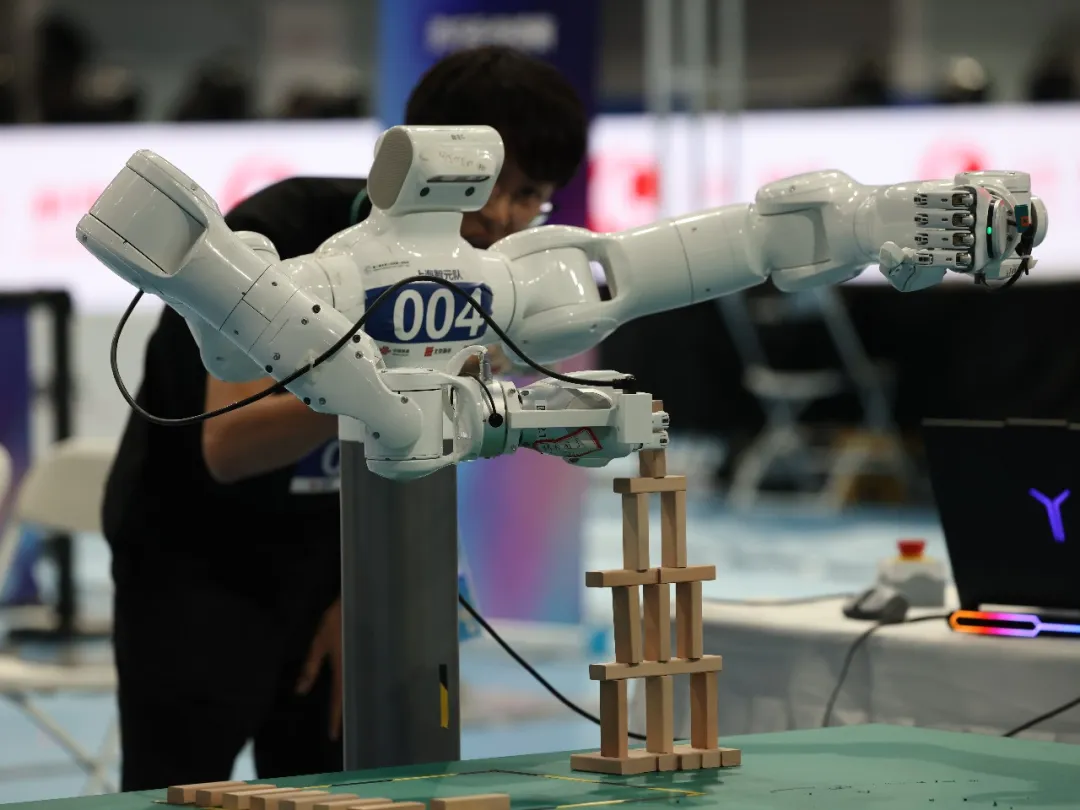
It's hard to find companies that do well in the industry. It's hard to find companies that do well in the industry. It's hard to get them all together in the same company. The model knows what the body can do, what it can't do, and the design of the body knows how much room to leave for intelligence and move forward with it.
This is exactly the path between "swimming" and "working". Winning one or two projects and breaking through on a single point. One breath to win medals in so many competitions can only be achieved by a complete set of deeply integrated technologies.
Robots are really hard.
There's no obvious shortcut.
It's easy to leave an impression when you browse videos of robots on social media: robots are competing against each other to see who is more difficult to do and who is better.
But what's really troubling about robotics is that it's hard to get to work on a single point. Recently, Sergey Levine, a professor at UC Berkeley and co-founder of Physical Intelligence, said in an interview that the biggest difference between robotics and language and visual models is that it's first and foremost a "discipline that builds supercomplex complex systems: from the very bottom of the body, energy, executives, all the way to perception, control and high-level decision-making, all the software hardware puzzles are complete, and all the pieces that are missing are exposed in the real world".
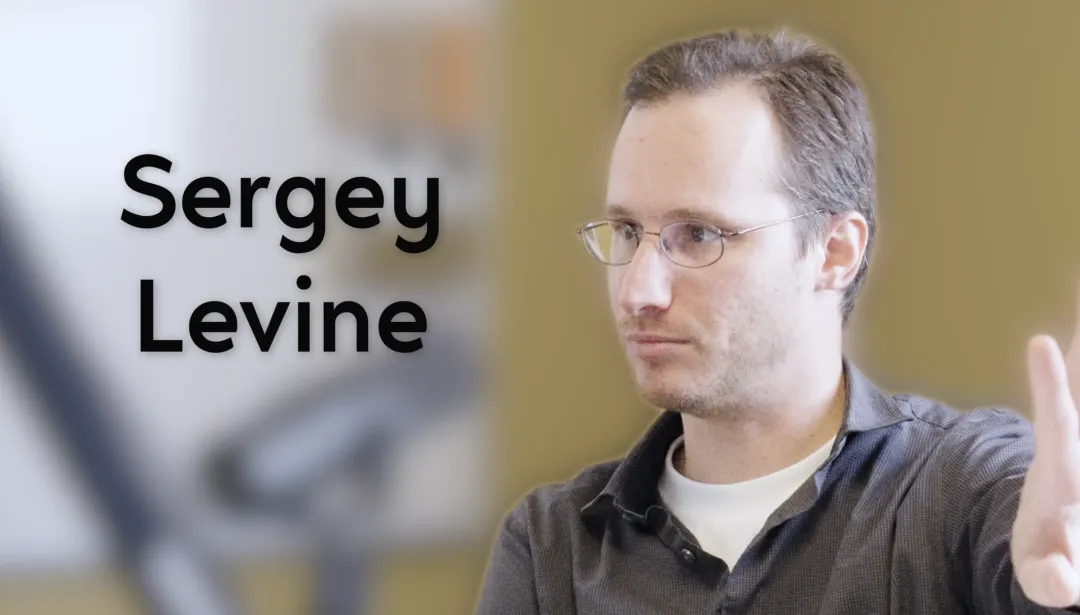
This is a good way to re-view the game.
Xi'an's medals are not focused on a specific skill set; they are scattered across the complexities of operation, body movement, and scene work.
This kind of "scatter" is more forward-thinking because it looks at how a company can do a whole bunch of things at the same time - body, control, perception, hands, software engineering, mass production reliability - without a clear shortcut.
In the past few years, human robots have been the easiest thing to do, often a surprising move. When products come out of the lab, the competition is increasingly not a one-off competition, but one that can "complete the whole system".
So this double-list first place is more like a comprehensive ability scoreboard. Single first, try to always have enough companies to get.