A few days ago, I saw a recruitment advertisement in a group of homeowners in my village: home based subsidiary, AI data collection part-time.

This kind of advertising is not new anymore. In May, First Finance reported a group of "home data collectors": they wear gloves or headphones to collect data, pick food at home, fold clothes, open drawers, record these moves and sell them to companies that need to train robots. According to one data server, among its group of about a hundred collectors, Amazon accounts for close to 60 percent, with household salaries ranging from 3,000 to 4,000 yuan per month, and the daily salaries circulating on social platforms are about 25 yuan per hour.
The desire for data in the smart industry is evident.
But I looked at that ad for a long time and thought of something else: these part-functionality picks, all handheld (end-user) data, ignoring the "motion data of the interaction of the robot's body with the environment".
Everyone is collecting data.
It's the same data.
As of early 2026, the total amount of high-quality real-physical interaction data globally is only about 500,000 hours, less than one-twentieth of the training material for large language models.
So capital and giants poured in. In March this year, Light Wheel Intelligence completed a combined 1 billion yuan financing, valued at over 1 billion dollars, becoming the world's first corporate data unicorn, now valued at more than 2 billion dollars; without question, Intel has built the largest physical data collection training ground in the country, producing thousands of hours of daily data; Chiyo divided its data business into beehive technology and got hundreds of millions of dollars of wheels and angel wheels in ten days; and China announced that it would launch hundreds of thousands, accumulating thousands of hours of real-world scene data in two years...
"The robot itself hasn't made any money yet, and it's the unicorn that sells ticks". This is the conclusion of the first half of this year's race.
This year, many companies have launched their own data production tools in WAIC and WRC exhibition areas, with routes roughly divided into four categories:
The remote operation of the real machine, the man holding the main arm, the remote from the arm in real time, the power of feedback back in milliseconds, the highest data quality but also the highest cost;
The cost of moving the wear, putting the sensors on people, the cost is down, the cost is the need to redirect different types of human institutions;
Human behaviour videos, the lowest cost at the largest scale, but lacking precise markings of position, force, and touch;
Simulation synthesis is fast, cost less than one percent of real data, and the cost varies by domain.
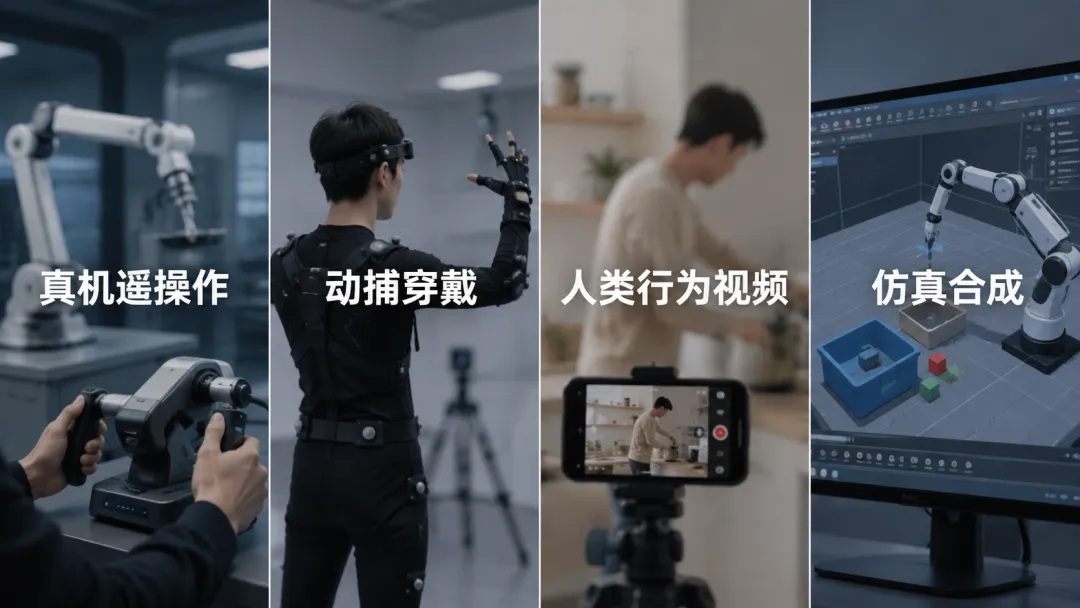
The collecting objects of these four routes are highly consistent: the end executor (i.e. the hand).
It's not hard to understand. Picking up, assembling, sorting, opening the door is the easiest thing to dismantle into tasks, the easiest thing to label, and the easiest thing to verify commercially.
But there's also a premise: for a robot to do any real work, it has to go to the workplace first.
The world's largest leg-sized robot reveals data set: only five hours
It is easy to understand this as a phased resource allocation problem if you look only at domestically: money flows in the direction where it is most easily transformed, and sooner or later it adds up.
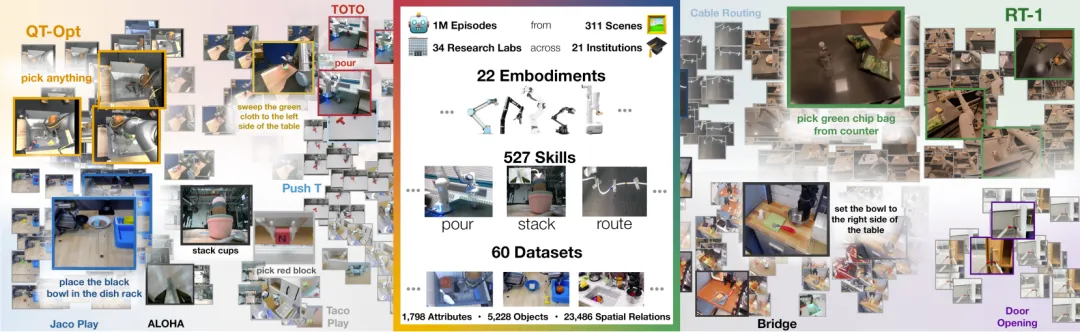
In 2023, Google DeepMind, a collaboration of 21 agencies, released the Open X-Embodiment data set, which combined 60 existing data sets into a unified format, containing more than 1 million real robot tracks, 22 nationalities, 527 skills. It is one of the most cited infrastructure in the field of physics over the past three years, with almost all mainstream VLA models (from RT-2 to π0 and GR00T) being pre-trained on it or its derivatives. However, this work is focused solely on robotic manipulation.
This is contrasted with the GrandTour dataset released in February this year by the Federal Institute of Technology's Robotics Systems Laboratory (ETH Zurich RSL) in conjunction with the University of Oxford. They used ANYbotics' ANYmal-D quadruped robot, backed by a 7.1-kg, 120-watt multi-mode sensor suite, to run through the Alps, forests, demolition buildings and urban neighborhoods, collecting 10 cameras, three laser radars, multiple different levels of IMU and 12 node encoder synchronization data, along with the millimeter true-value trajectory provided by RTK-GNSS and the whole station.
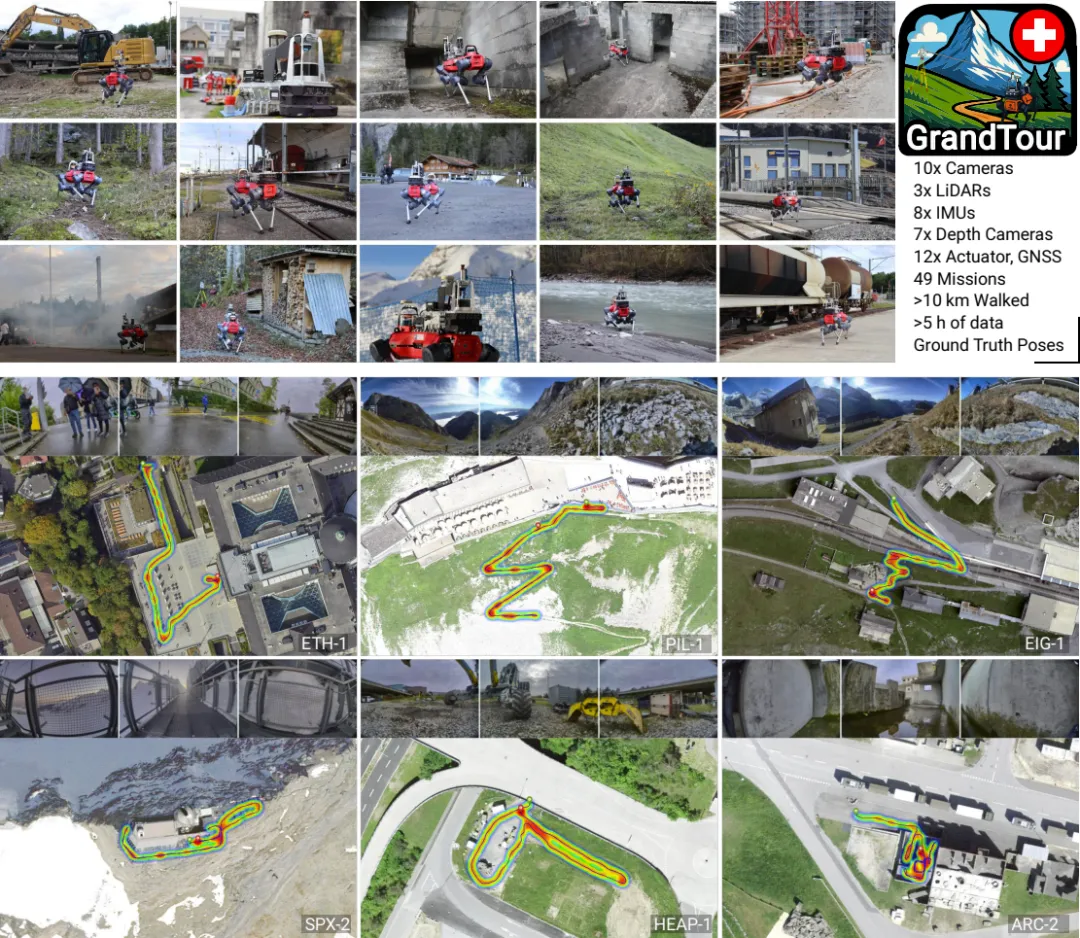
The paper says it is the largest open-legged robot dataset to date, with a scale of 49 missions, 3 to 7 minutes each, a total time of just over 5 hours and a cumulative walking distance of over 10 km.
The GrandTour paper writes that open data sets for leg robots are still scarce, and researchers often can only collect small-scale, unrepresentative experimental data on their own, or go back to simulation to develop state estimates, diagrams, and perceptual-action methods that are not necessarily generalized to the complexity of real-world scenarios.
There is little, but valuable, movement data that interacts with the robot's environment.
So why is it important that these robots run the data themselves?
As previously suggested, physical data has two dimensions:
Perception and operation: cameras, laser radars, touch sensors record what the environment looks like, what the hands do to the objects. This burden has been covered by the dense gloves of data factories, remote operating systems and home collectors.
The interaction of the body with the environment: in what state the robot moves on the ground, how much force the joints produce, how much impact and vibration the body undergoes, at what slope the wheels begin to slip, how the focus is shifted when it breaks. Specifically, we can look at the GrandTour's list of sensors: the position of the joints, speed, contact power, and even the hidden state of the sports strategy are recorded step-by-step. These quantities are not intermediate products of the movement control, they themselves are coded in large quantities, which can be used as training material.
So the next question arises: how do we get the movement data that the robot itself interacts with the environment?
An important ruling is that robots can only run on their own. For example, home collectors can demonstrate how to open bottle caps in handcuffs, but they cannot demonstrate how a 30 kg robot rushes at 2 meters per second on a severely worn metal slope, where each joint has its own power condition. Human legs and robot legs differ greatly in structure, mass distribution, and driving mode, and gravity-oriented motion is barely available in operational data, and is largely ineffective at the overall mechanical level.
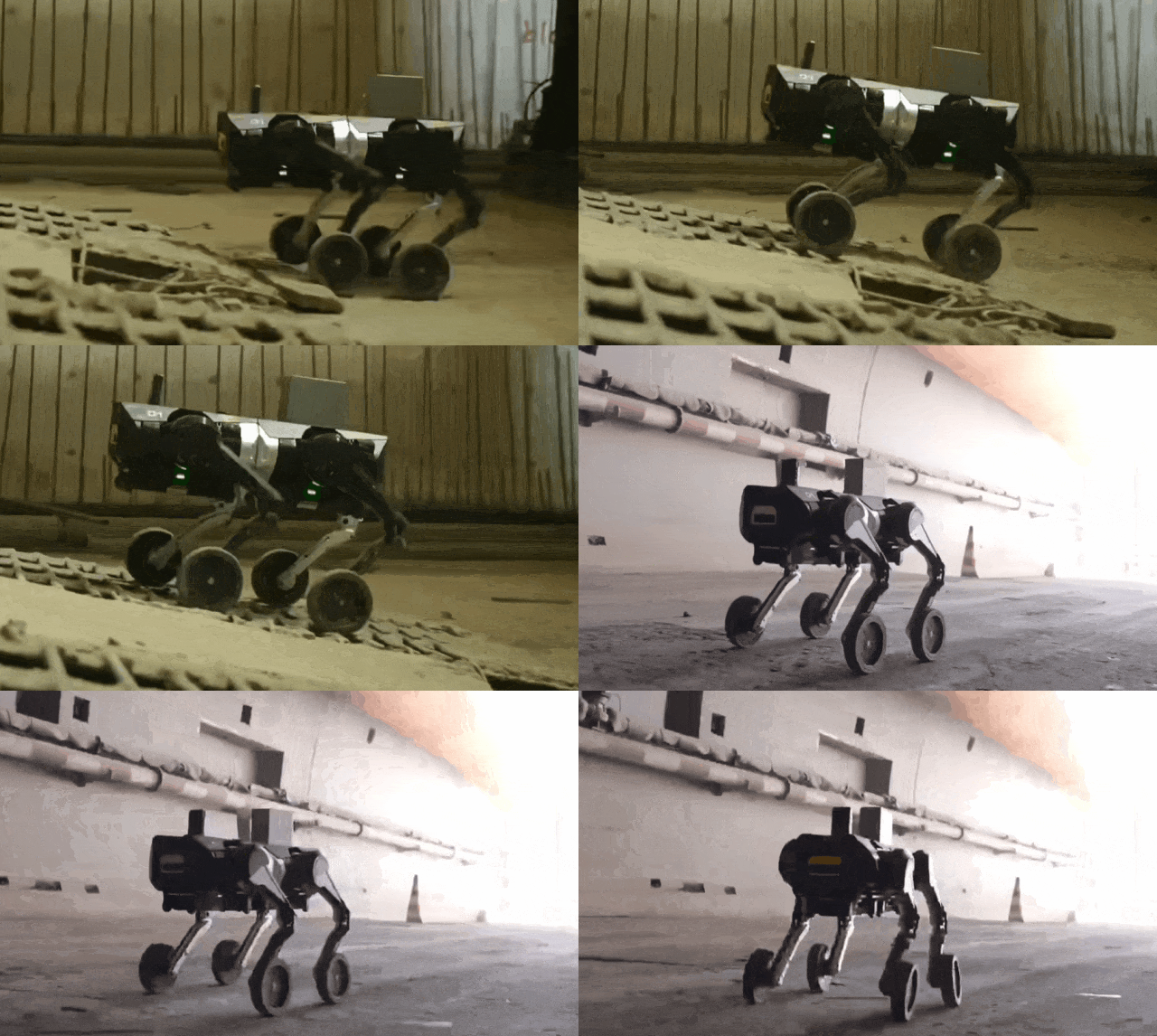
The D1 robot is on the ground.
This type of data cannot be replenished by labeling. The assumption of labeling is that the original record already exists, and the torque curves and contact events occur only when the machine actually steps on it.
Based on this, the difficulties faced by the industry today are of a completely different nature: not enough people, not enough carriers.
Triple structural constraints
Can't be solved with more manpower
Since these data are important and valuable, why can't they be replenished so late? The answer, as the latest technology concludes, is the structural constraints of a triple superimposition.
The first is the inherent limitations of imitation.
The simulation can almost perfectly replicate geometric appearances and render them real enough, but the reproduction of physical properties is always a scam. The robotics community calls it the Reality Gap. The field randomization proposed in 2017 by OpenAI, the network recognition of the executors developed by the subsequent ETH team, and the joint-spatial dynamic matching that began to gain popularity last year, are all ways to bypass this scam.
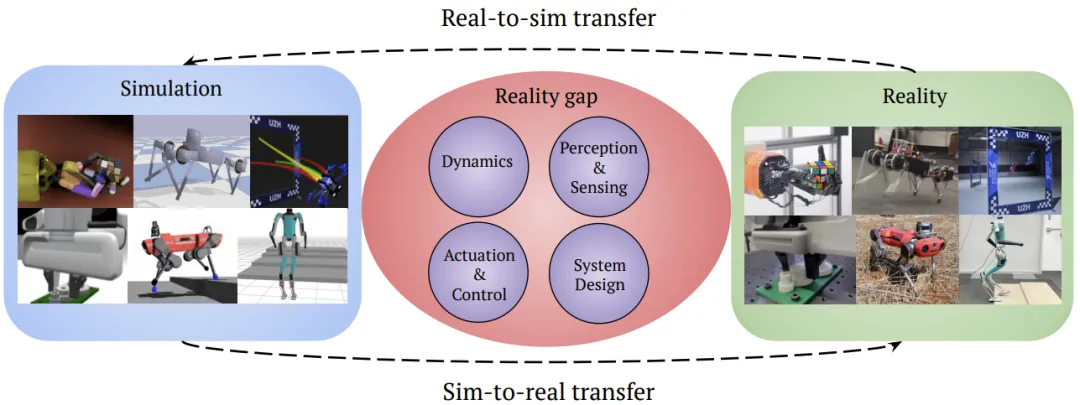
The reality gap of robots, from arXiv:2510.20808
Many of the methods themselves illustrate the rigidity of the problem. Ground friction coefficients, material shape changes, contact impact, tire slippage, which are usually given in parameters in simulation, and in the real world are constantly changing with temperature, humidity, wear and pollution.
In May this year, a study of quadruped-legged robots simply dealt with complex topographical heights and physical friction as "unobserved hidden states" based on historical sensory signal implicit estimates. One of the fastest-used directions since the release of the GrandTour was to improve sim-to-real migration and real-to-sim reconstruction of the real environment.
The second is the carrier constraint.
Stairs, slopes, muddy terrain, industrial terrain with cross-lines and oil dirt, post-disaster ruins... these are the places where the most data-intensive working conditions are the ones that most wheelbases can't get in. Carriers can't get in, and interactive data under the working conditions will never be generated. This is a hard constraint, and manpower and budget can't be avoided, because these places lack access, not recording capacity.
The third principle is model constraint.
Large quantities of equipment are custom-made machines for a single scene, and a different environment requires re-engineering of the hardware. For teams that need to re-engineer each new scene, this means that the process of re-engineering, re-engineering, debugging, verification, time and money costs are extremely high, and the collection radius is tightly locked.
Putting the threefold constraints on top of each other, one can come to a less comfortable conclusion: the physical limit of the carrier is the limit of the training data. A robot that can only work on flat ground, no matter how long it runs, will not produce movement data on ladders and muddy ground; nor will a model know how to walk on those surfaces.
A company that makes motors
It's a question of standing up for it.
Direct Drive Tech offers a complete set of solutions, and they go in very different directions.
The company was founded in 2020 by its founder and CEO Zhang Fuet, a graduate of the Hong Kong University of Science and Technology with a Master's Degree from Li Zhejiang.
The initial technological choice of this end-technology was quite radical: abandoning the decelerator in the robot's joints, using a direct drive program to allow the motor to directly output torque in exchange for lower noise, longer service life and lower failure rates.
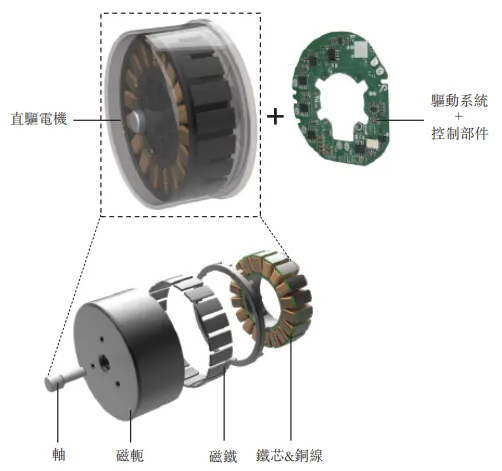
The main components of this end-of-tech typical robotic direct-drive module
Following this path, the company has taken a fairly stable position in the consumer robot power module market. It is known that the company is the first and only company in the world with a shipment of more than 5 million units.
Yes, today's EndTech is a company that makes money from selling machines, and robotics is still a small business in its infancy. But robots are also a key business line that makes it relevant to data issues.
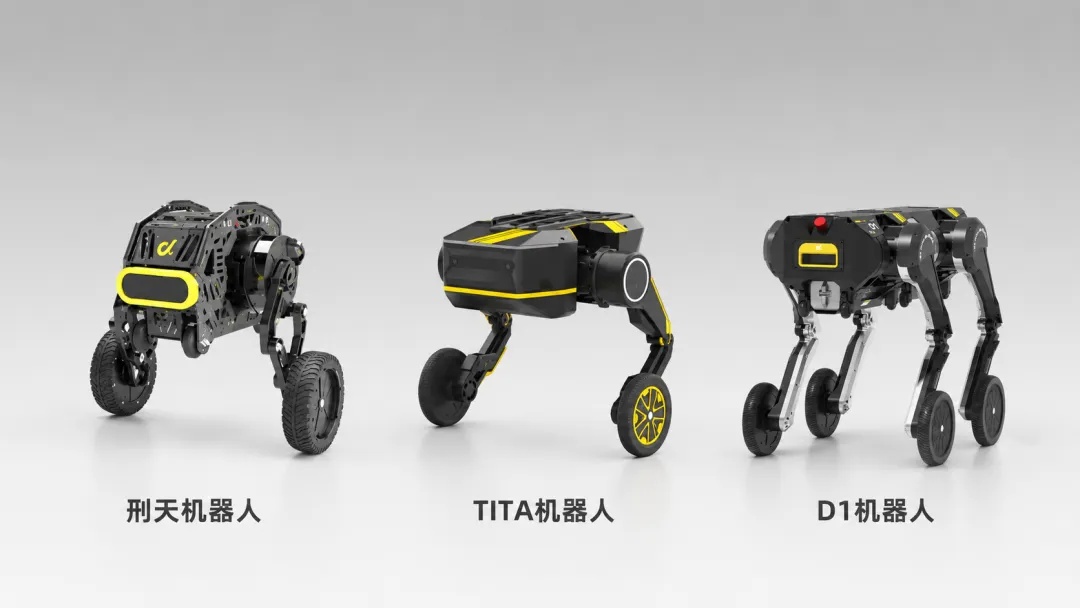
This route is characterized by combining the speed of the wheels with the ability of the feet to adapt to the terrain: running on the flat with the wheels, encountering stairs and trenches with the legs.
In the IPO, EndTech believes that this form is in line with its technical goals for developing general robots, because "we believe that the wheel-foot form is an essential lower limb configuration for intelligent robots" and "we believe that robots that can choose their own form will have greater universality than humanoid robots".
This is a very different technical judgment from the current mainstream narrative.
In the past two years, almost all attention has been focused on the upper half of the body, including dexterity, hand-to-arm coordination, grabbing strategies. The latter is the lower half, because universality is ultimately limited to accessibility rather than operational ability. Whether this judgment is made requires time to verify, but it and all the advances before this article point in the same direction.
Overall, from making a motor to making an assembly, the end result is a "part-assembly" two-way verification path. The components lower the R&D threshold for the assembly, and the load, duration, and dynamic response data that the assembly runs in real-world scenarios in turn drives the parts. This closure was originally intended to serve the product, but it gradually produced a byproduct: a batch of vehicles that could continue to operate on unstructured ground and fully document their state of operation.
This is exactly what the previous threefold constraint lacks. The three product lines correspond well to three previously difficult data collections.
Penalty Day: Research and development of data collection carriers
It is designed for scientific development and is powered by six straight-drive joints, with important indicators including standing load of 4 kg, maximum jump of 8 cm, maximum walking speed of 2 meters per second, horizontal angle control range of ±37 degrees, and 16-bit encoders with a steady state error of 0.01 degrees.
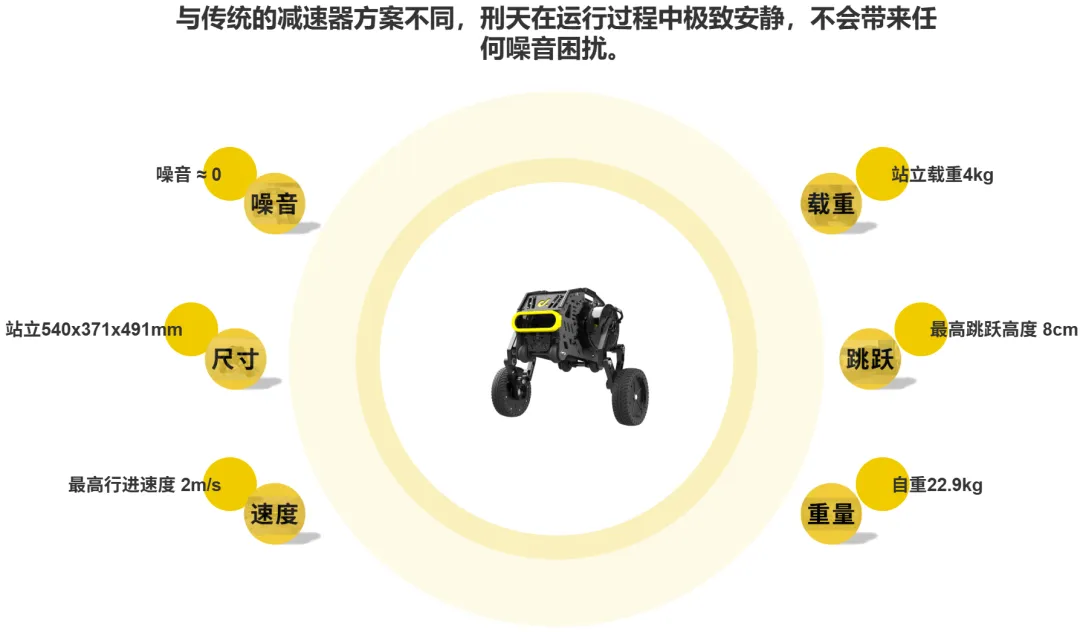
These numbers are not surprising in themselves, and what is really important for scientific research is its open part. Direct drive joints do not have a decelerator, which means that the torque transmission path is shorter, the current at the junction level, the torque at the junction level, the location data are closer to the real physical, and there is less of a transmission link in the middle that needs to be recognized and compensated; coupled with open control interfaces, the laboratory can directly get the original signal at the junction level.

In contrast to GrandTour's work, we can understand the significance of this kind of platform: a lab would make available leg-shaped data sets, provided there was a machine willing to unlock the joint encoder, contact force, state estimation intermediate results and even control the hidden state of the strategy. The original signals of the body determined the depth of the study.
TITA: Surveillance data collected from the carrier
TITA is aimed at patrolling: 8 precision-driven articulation modules, peak torque of 120 N.m., 8 degrees of freedom, maximum dynamic load of 10 kg, maximum jump of 20 cm, speed of 3 to 5 meters per second; body equipped with NVIDIA Jetson Orin NX 16GB, with ultrasound, SPAD ToF and double-eyed cameras as autonomous barriers; structurally using aluminum alloy processes 3.35 times harder than aluminium alloy, capable of continuous operation in environments of -10 to 45 °C, supporting battery hot plug and POGO Pin rapid disassembly. These parameters indicate that TITA is designed to run for a long time in industrial environments such as parks and mines.
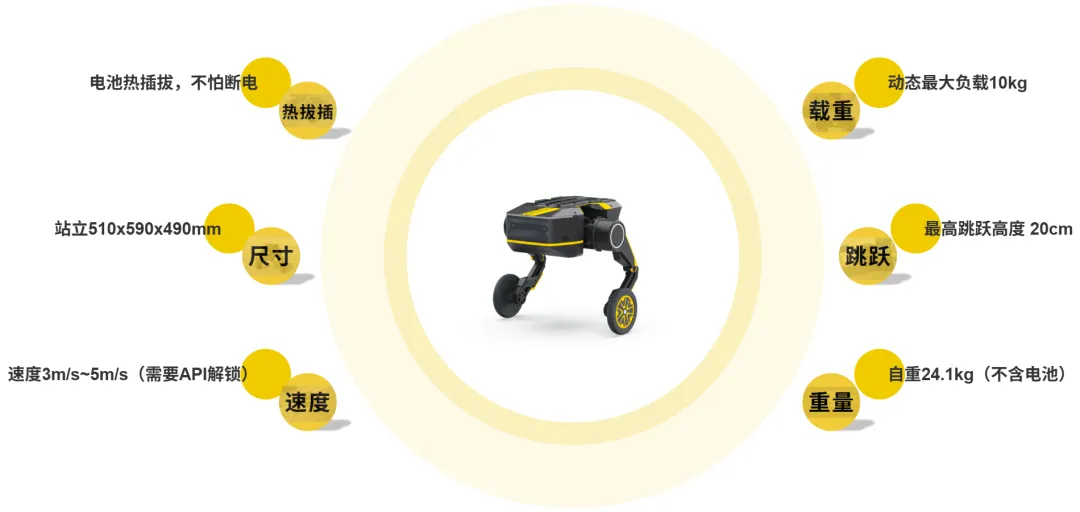
A survey itself is a natural data-gathering behavior. ANYbotics, which is performed by more than 200 robots thousands of times a week, produces not only equipment temperature and gas concentration readings, but also a record of the same route being repeatedly passed in different weather conditions, in different wear and tear conditions. This is a time dimension that is difficult to reproduce on a lab site, and is also a unique advantage of a survey robot relative to a data factory: its data is an active by-product and the marginal cost is close to zero.
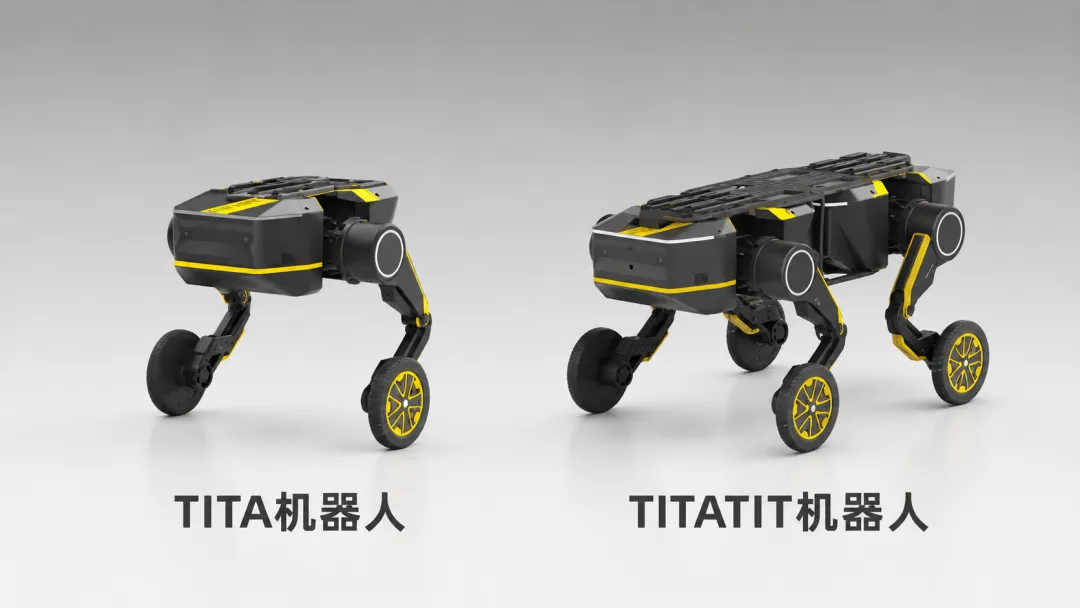
Not only that, but two TITA robots can also be folded into TITATIT robots, achieving more powerful capabilities. This is also the world's first commercialized folding wheelchair robot.
D1: High-complexity geographic multi-module data collection carrier
D1 is geared towards highly complex terrain. It is a modular integrated system introduced at the end of 2025, the core of which is a fully self-developed P10 series integrated joint module, which converts motors, sensors, drivers and controllers into "sensory-driven integration" units, coupled with a collaborative algorithm known as "general brain", that can complete multi-module splicing in 3 seconds and switch between two-wheeled, four-wheeled and even horse-drawn models.
According to the data published at the end of this article, the maximum load in the four-wheel-drive mode can reach 100 kg, in the standing mode can still maintain 80 kg, and the two-wheel-drive mode can run continuously for more than 5 hours.
Modularization also has a significance in the context of data. The third part of the triple constraint is the model constraint, which requires changing a set of hardware in one scenario. If the configuration can be reconfigured in a few seconds, the same set of joint modules can be drilled into a narrow tunnel in the form of two-wheeled legs, with heavier sensors crawling along the slopes in the form of four-wheeled legs. The adaptive radius of the carrier increases and the boundaries of data collection also increase.
What's more subtle is that the data generated by different configurations running the same terrain can constitute a valuable control group in itself: the same ground + the same sensor + different mobility structures, which is the type of variable control most lacking in existing leg data sets.
Carriers are an infrastructure
What needs to be made clear is that EndTech isn't a data company. It doesn't build data factories, it doesn't sell datasets, and it doesn't price data assets separately.
When the entire industry focuses on "who gets more hours", a more pressing question is often overlooked: where did those hours come from? Data factories can scale up the trajectory of crawling in the kitchen, but they can't produce the force curve on the wet sliding steel ladder; recruiting 10,000 household collectors can increase coverage of household activities, but they can't find any data in the mine.
It's not that handheld data isn't important, on the contrary, it's the most scarce or commercialized part of the world today; it's just that the two words "general" in the "general body model" are becoming an important bottleneck when it comes to mobility and whether it can reach the work environment.
Back to the ad in our neighborhood group. It recruits people's time and exchanges people's hands with demonstrations in the home scene. This business will continue to expand and will indeed solve some of the real problems.
In the millennium of data collection, perhaps the most scarce are robots that can actually get to the scene.