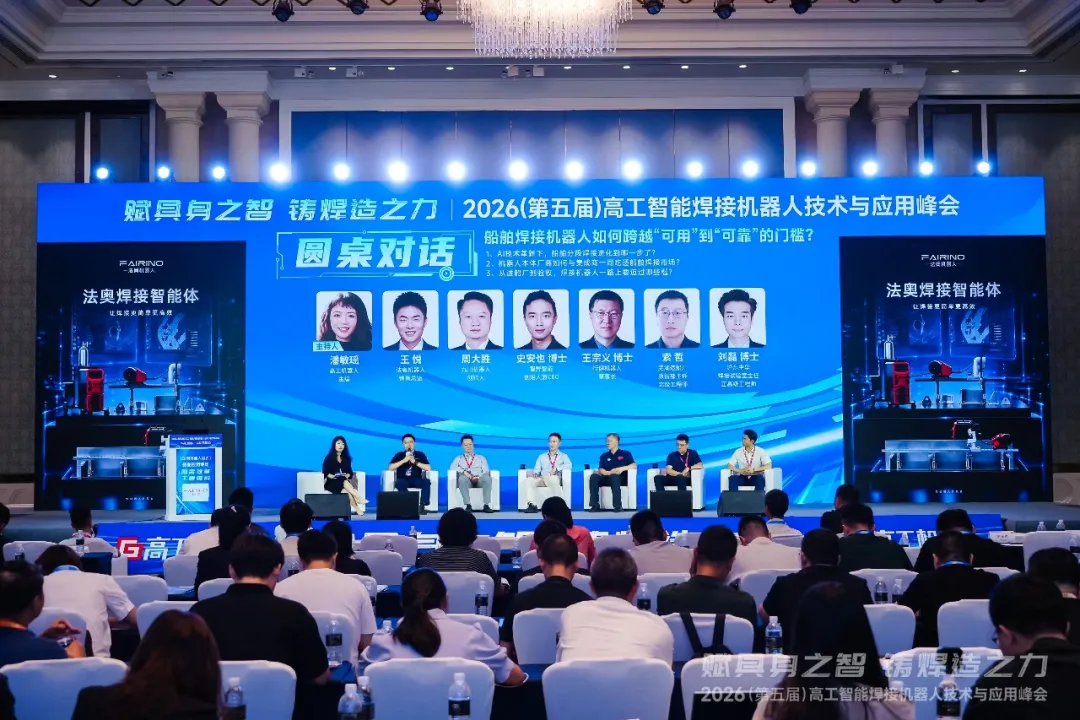
Shipwrecking without a shortage of aluminum technology
What's missing is productivity.
Over the past two years, AI technologies such as demonstration-free, artificial intelligence, and digital welding have flooded vessel welding, but shipyards have never looked at the concepts themselves, but at the figures in the actual production plan: for example, the modeling time of individual components, the length of welding for individual shifts, and the return cycle on investment for single equipment.
Dr. Liu, senior engineer and director of Pyongyang's China Welding Laboratory, explained that Pyongyang China has been co-developing welding robots with manufacturers since 2022, from the sampling machine to the product generation, and that the modeling time between individual frames has been reduced from the initial 40 minutes to the current 10 minutes, with the next goal being to compress to 2 minutes or even shorter.
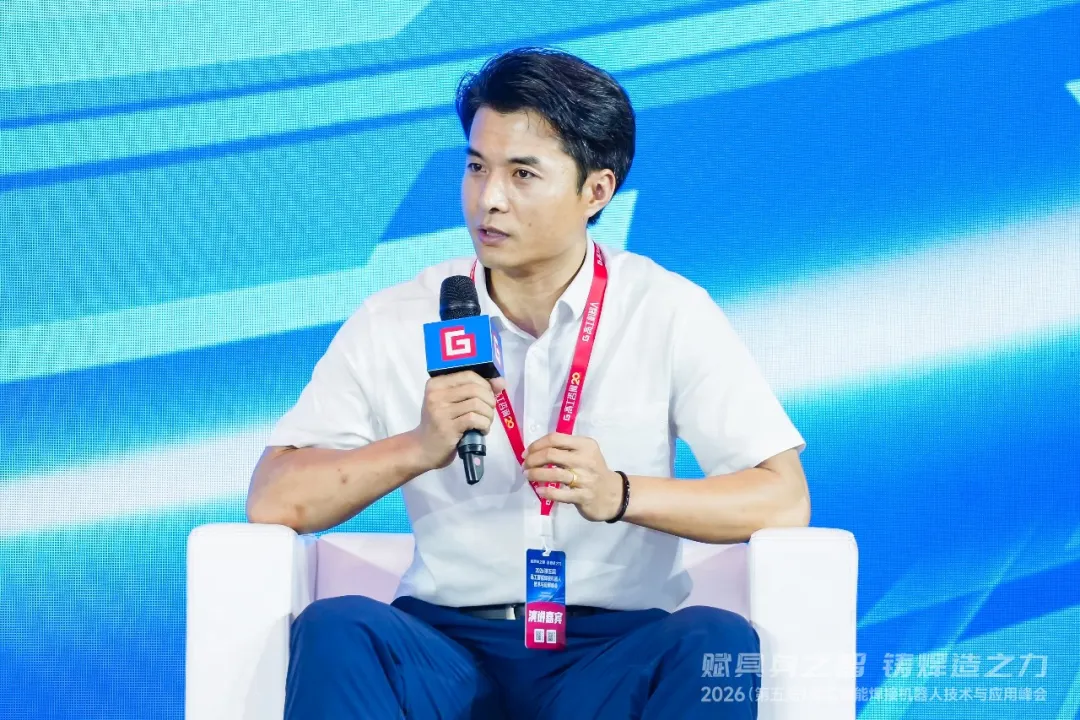
Chinese welding laboratory director, senior engineer, Dr. Liu
Dr. Sanmei, founder and CEO of the company, was equally impressed with the pace of demand at the shipyards, with its focus on collaborative robotic ship-free welding systems, which have landed about 100 devices in dozens of first-line shipyards this year. After long interactions with shipyards, he found that shipyards' demands for efficiency and landing were higher than the demands of functional imagination, and that the technological stories set up in research and development sites did not necessarily meet on-site production standards.
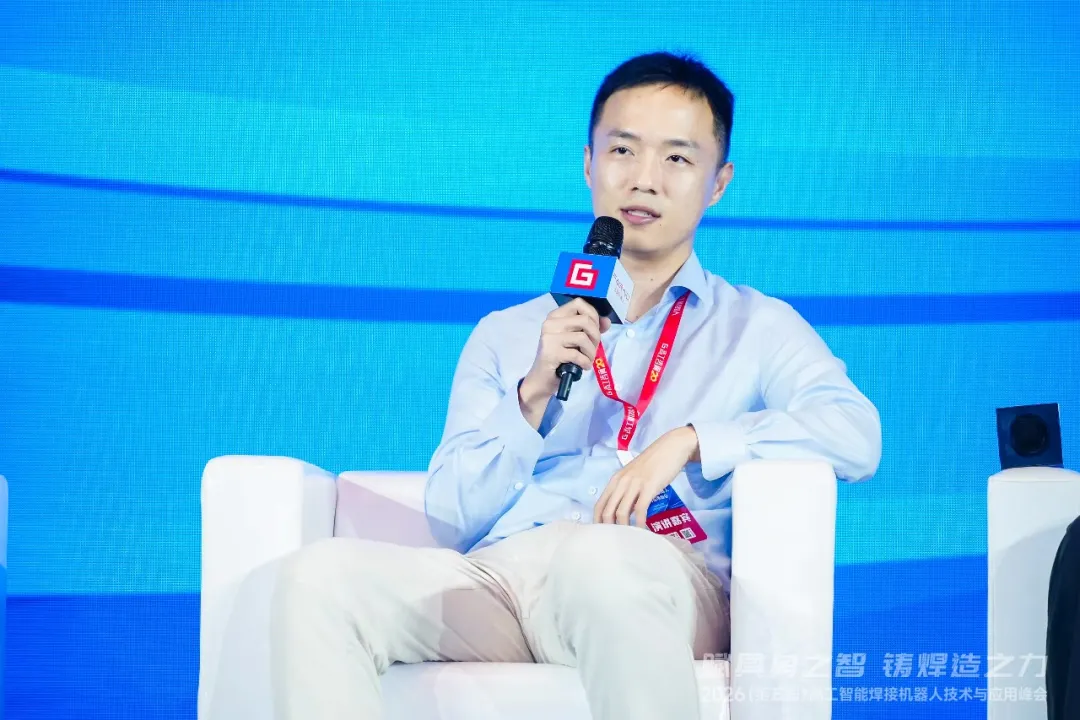
Dr. San-mei, founder and CEO of Intel
Some seemingly beautiful technological schemes in the R&D phase are not necessarily built at the shipyards. For example, man-made, human-like smart welding equipment, and software programs such as digital embryos, smart bodies, the current stage will first face two problems: operational efficiency will not meet production requirements, and equipment or software costs will not be able to calculate the return on investment.
The shipbuilding industry itself is also changing at the same time. The director of the Salt Lake Shipyard, Senior Engineer Soetz, recalled that when welding robots first entered the shipbuilding industry in 2019, many people naturally believed that robots belonged to the high-end equipment industry and wanted to give the most difficult and complex problems directly to robots to solve.
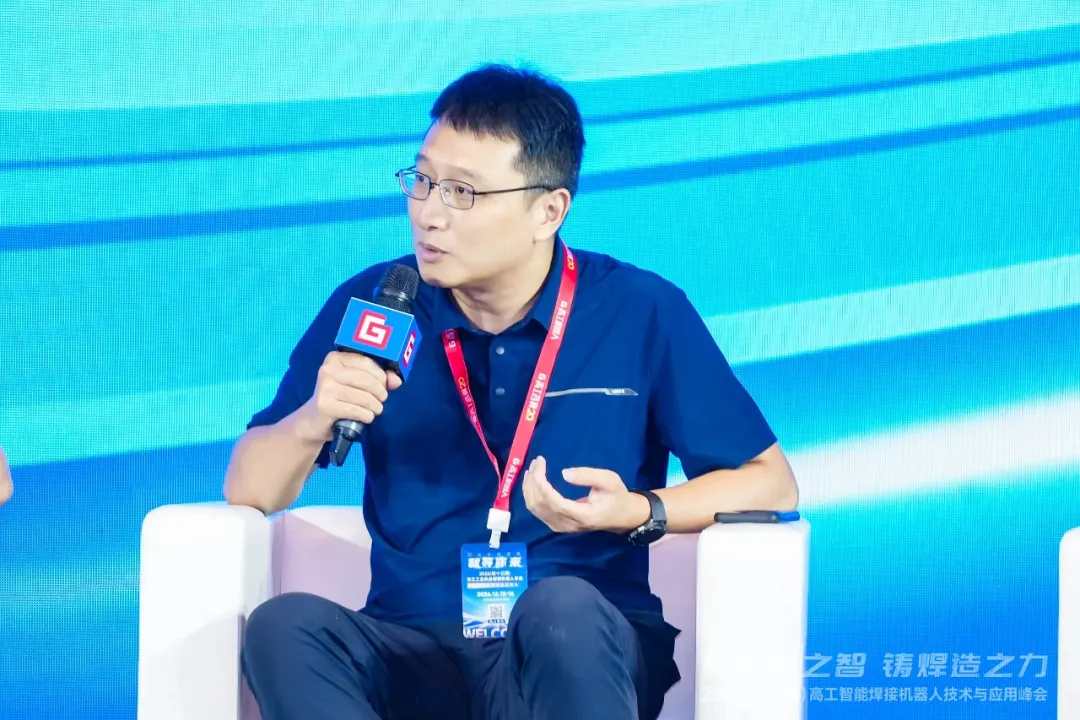
Soge, Senior Engineer, Head of the Shipbuilding Department at Salt Lake
But as practical applications deepened, this expectation began to return to logic. Soetzsche pointed out that shipyards that have completed a round of automation practices tended to hand over structural simplicity and rigidity to robots before expanding the application boundaries step by step.
Liu also gave a similar judgment: the diversity of ship scenarios, it is impossible to rely on one robot to solve all problems. For different scenarios, the introduction of different types of devices, different levels of intelligence, may be a more realistic path at this stage.
It's a lot harder than a monkey can cook.
It's the fact that the carpenters don't want to use it.
If the pace of technology and production determines whether a robot's torch can't get into a ship's hull, then the real determination of whether the equipment can stay is often a line of torch work.
Wu-Tang's founder, Zhou Zheng, poses a seemingly simple, but actually very critical question: What kind of collaborative robot does a shipyard really need?
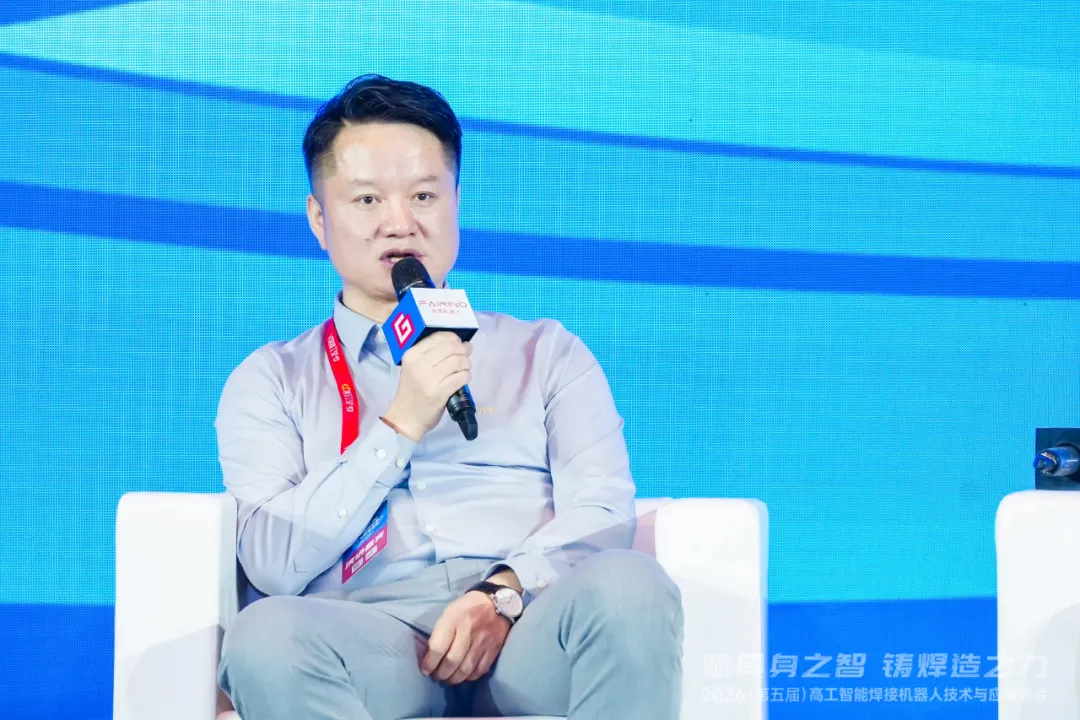
The founder of the Ku-chao robot, Zhou Liang
The products that are understood by robot manufacturers are sometimes not the same thing as the products that shipbuilders and bricklayers really need, and the most typical contradiction is transportation. Scenarios such as assembly and subdivision in ships are not like standard workstations, where robots often need to move frequently as the operating location changes.
In the past, collaborative robots weighing 3 kg could weigh as much as 14-15 kg, while products with a load of 5 kg and an arm length of about 900 mm could exceed 20 kg. This is just a weight parameter for the company itself.
Due to the ongoing feedback from shipyards and integrators, Wang Yue, director of sales of Foo Robotics, noted that from last year onwards, Foo Robotics has been promoting collaborative robot weight reduction as an important product direction, and thanks to the ability to self-develop motors and accelerators, Foo Robotics has reduced its own 900mm arm span to 11kg.
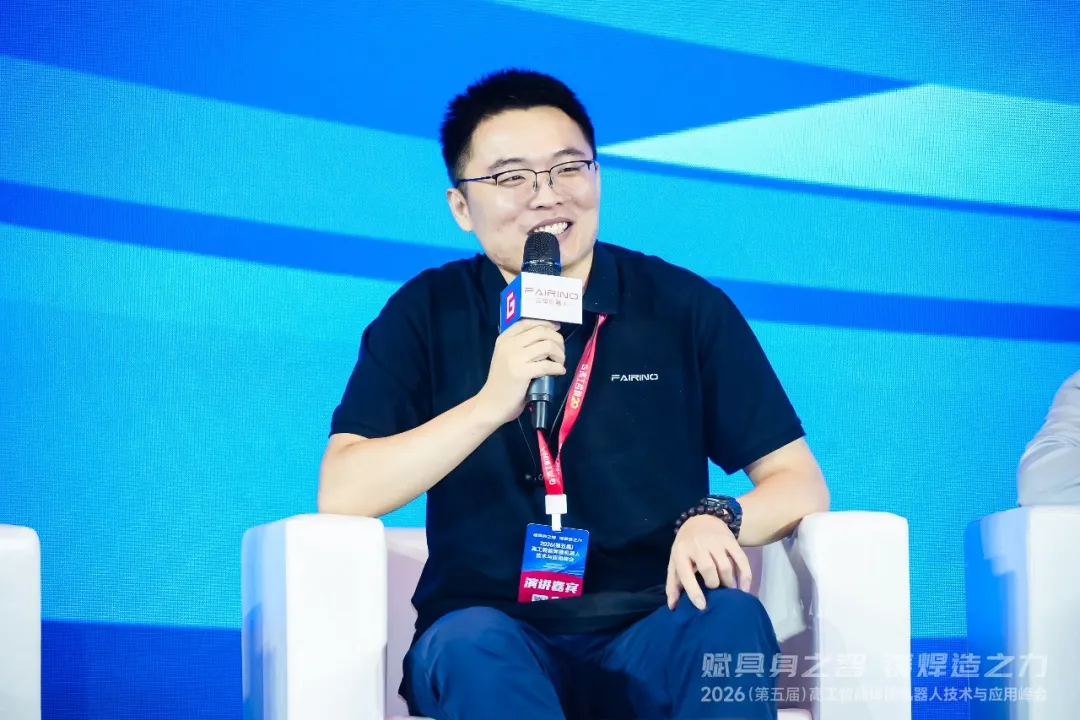
Wang Yue, director of sales of Foo Robotics
Another even more obvious contradiction comes from efficiency. For example, in a semi-assembly scenario, manual welding by craftsmen can be done about 50 to 60 meters per day, but with some collaborative robot schemes, the actual welding capacity per day may be as little as 25 to 30 meters.
In terms of earnings, this means a very realistic problem: working less, earning less after using robots while also carrying and operating robots.
If each hull still needs to be manually towed, the robot's saved work may not even cover the newly added workbook. This also explains why shipbuilding hulls with robotic hulls and craft hulls willing to use robotic hulls are two concepts.
He believes that the central assembly itself has a standardized basis, and that many of the hulls and tunnels are essentially the same, changing more from the relative position changes between the components and robots. If it is possible to determine the position relationship between robots and the tunnels more quickly, there is an opportunity to reduce the number of repetitions.
Wang Yue further dismantled the high-frequency crankcase into two different questions. First, the crankcase was willing to drag the crankcase, but after the crankcase was completed, could the crankcase quickly generate the program?
Second, craftsmen were initially reluctant to do high-frequency drag-and-drop instruction. So no matter how simple the subsequent programming was, the fundamental problem was not solved, and the only way to further reduce human participation was through visual guidance and non-learning techniques.
Shipyard cognition is shrinking, but from cognition to product landing, this ring is also separated from the integrator in the middle. In the process of transferring terminal demand through the integrator to the mainstream manufacturer, it can be directly converted into effective information in the transition direction.
Wang Yi pointed out that some terminal customers would even require robots to have absolute positioning accuracy of ±0.2mm and even ±0.1mm. In his opinion, such indicators are extremely challenging even for industrial robots, let alone collaborative robots.
In other words, the terminal poses its own production problem, but the industrial chain needs to do is to dismantle the problem again. Which one needs to be solved by the robot itself? Which one can be compensated by the ability of the visual, process or system layer?
Based on his experience working with large manufacturing companies such as TripAdvisor and S.M.A., Dr. Wang Zhongyi, Chairman of the Board of Management, said: "Thanks to the suffering of our customers, the high-difficulty requirements of our customers are not a bad thing, and they can in turn promote the continuous improvement of products and programs, but on the condition that the two sides of BET must move forward".
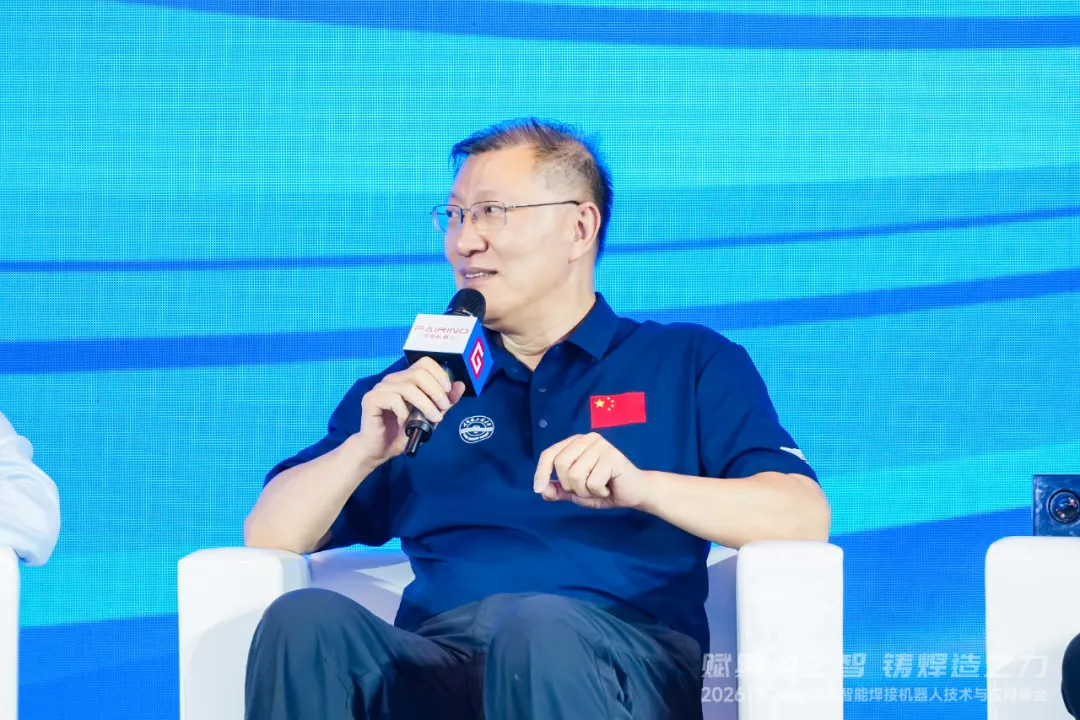
Dr. Wang Zhongyi, Chairman of the Board of Go-Kin Robotics
The standardisation of automotive manufacturing and ship manufacturing is not the same and cannot simply be moved according to the logic of highly mature industrial automation. Similarly, shipyards cannot directly package all complex problems into a robot indicator.
What steps do you need to take from entering the shipyard to receiving it?
A series of welding production lines, from program design, technical protocols, to factory installation, testing and production, to multi-sector joint acceptance, require much more than the delivery of a single unit of equipment.
The first threshold, in fact, appears before the contract is signed. Soetzsche believes that it is best for equipment manufacturers to get involved in the program phase, to really get through the actual process processes at the shipyards, while clarifying the limits of equipment capabilities.
Otherwise, an overly optimistic description of the pre-sale phase may become an unsolvable problem once it is written into the technical protocol and specification book at the project acceptance stage. Because shipbuilding equipment acceptance often requires the collaboration of multiple departments, such as production, processes, and eventually everyone returns to the initial technical terms and conditions for verification.
Sam also encountered similar problems when participating in projects such as the Shipyard Group's Intelligent Manufacturing Production Line. Some projects were not adequately discussed in the pre-sales phase, resulting in subsequent technical indicators not matching the actual production needs; some problems arose from the detailed terms in the technical specifications book, which were not given enough attention at the time of signing, and became unattainable indicators at the time of final approval.
So, the first threshold for welding robots on ships is not that the equipment is running steadily, but that the limits for welding robots should be determined before the project starts.
The second threshold is how quickly capacity can be generated after entry. Wang's purpose gives a clear contrast between the two time nodes: after 2017 and 2018, when robotic jets provided group schemes for offshore bridges, tugboat repair, New Age and other shipyards, a large number of tests and route validations were required on the customer's premises, with a single project cycle that could be as long as 8-10 months.
Eight years later, the pace of the project has changed dramatically. In a project in Guangdong, China, in March, the company signed a contract, equipment entered service in May, with a total of 24 robots on four lines, with a week's installation, a week's modeling, and a week's completion of three test runs.
Behind the change, Wang identified a very realistic reason: the shipyard no longer has time to wait for the equipment to slowly debug, and the site of the shipyard itself is scarce resources.
Liu also said that after Pyongyang's relocation to Longxing Island, the introduction of thin-panel flat-section flow lines, central assembly and multiple sub-unit production lines, the main concern was the planned completion.
This also reflects the special requirements of the shipyard for the delivery of automated equipment: the shipyard does not need a set of equipment that will eventually be able to adapt to the needs of the ship, but a set of equipment that can form production capacity as planned.The third threshold appeared after production. Unlike welding robots and machinery, there are currently no complete engineers, technicians and maintenance systems inside the shipyard. Wang Zhongyi mentioned that the project initially may only plan to arrange engineers and production for a month, but some customers even want the manufacturer to continue with production for half a year.
On the one hand, there is a lack of adequate maturing technical positions in the shipyards at this stage; on the other hand, new equipment is really entering the production system and requires continuous training, grinding and solving on-site problems.
Soetz pointed out that welding equipment must be really useful. If the actual experience of use is not good, even if the shipyard is promoted through administrative means or even rewarding, workers will not actively use it.
This makes it very clear to look back at the difference between aluminum used for welding and aluminum reliably used for welding. It is possible that this robot is able to complete welding. It is reliable and useful, from technical protocols, installation modulation, test welding to production, to continuous production and personnel use, the entire system can achieve production objectives in accordance with the agreed stability.
From this point of view, the shipyard has never purchased just a set of welding robots, but a set of production capacities that can perform as planned.
The next phase of the ship's intelligent welding is the keyword welding
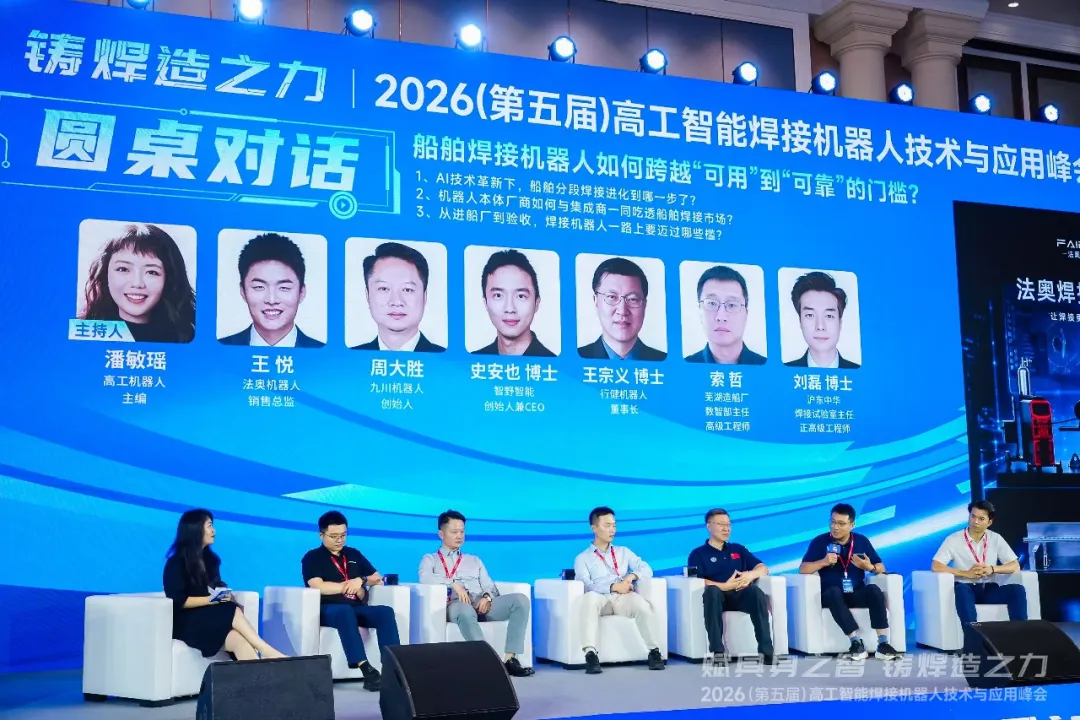
At the end of the roundtable, Pan Min-min invited each guest to summarize the next phase of the ship's intelligent welding with a few key words. The six guests gave the key words: weight loss, non-learning, one machine multi-use, one multi-brain, multi-function, AI empowerment, extreme construction.
Putting these words together, we find that the product direction for the next phase of ship welding robots is becoming increasingly clear: weight reduction, non-learning, in order to make welding robots more useful in shipyards; multi-use, multi-brain, multi-function, in order to cover more production tasks; AI empowerment and extreme construction, with the ultimate goal of improving efficiency and quality.
Shipbuilding poses a real production problem, integrators translate the problem into process and system solutions, and homebuilders reassess the needs of communities as the next generation of products. Under this continuous iteration, ship welding robots can gradually move from solving a puzzle to solving a scenario puzzle, from single-point verification in a project to products that can be repeatedly delivered.
* Cover for AI mapping