With a wave of physical intelligence surging, almost all vision, capital, talent, and computing are concentrated on one word: the big model. It is given the sacred role of the brain stem, carrying all the expectations of understanding, planning, and reasoning.
The industry has gradually developed a default logic that as long as the brain is sharp enough, robots can understand the physical world, break down tasks, plan movements, and ultimately do everything like humans. So, a large number of projects have taken the shortcut to an outsourced substrate + a self-developed top-level model to create a demonstration machine that can talk, identify paths, and plot at the fastest speed.
These samples show a steady pace in video, move smoothly, and shine brightly at major exhibitions such as WRC, WAIC, but once they enter the unstructured scene of the real world, they are often difficult to walk in. Most of them, in fact, are in the same place, the last step from simulation to the real physical environment.
And this final step is precisely the cruelest test of being physically intelligent. It also makes one wonder if developing physically would really be easier when the world only had to turn its brains around.
01.
Your brain says I will, your hand says you're not crazy.
Many teams encounter a ridiculous but widespread scenario in development where a robot's brain clearly knows how to start a glass of water, how to bypass obstacles in front of it, and how to maintain balance in complex terrain, but its hands and feet are completely unheard of.
This is actually a real shot of a large number of current projects with physical intelligence.
In the context of physical intelligence, the brain, cerebellum, and body respond to three distinctly different capacities.
Brain: Responsible for making big model decisions, understanding environmental semantics, task planning, data collection and image transmission, and solving the problem of what the brain is thinking;
The small brain: responsible for controlling the underlying movement core, including high dynamic movement, gesture calculation, balance control, general controllable executive components, solving the problem of how to make a mouse;
Body: Responsible for modulating the hardware kernel to determine what physical environment a robot can reach with high throughput mechanical structure.
Each of the three levels functions as a complete execution chain. However, many programs currently only write articles in the upper brain, and the hardware of outsourcing is considered a black box, with the ability of the brain and body severely underestimated.
This heavy-headed, light-hearted cut allowed the team to complete a surprising demo in a short time, but also buried the deepest mines.
In a simulated environment, the ground is flat, the rules are known, the dynamic parameters are ideal; and the real physical world does not accommodate the performance. Even a gateway, a crumbling pathway, a sloping pathway can instantly disrupt the brains of intelligent people.
This kind of brainstorming and brainstorming makes it impossible for intelligence to complete the first physical step to its destination by staying in a simulation and demonstration environment.
It's also the embarrassment of classifying industry workers. When algorithm engineers, data engineers, model trainers stand at the center of the stage, robot body engineers, motion control engineers, and mechanical integration engineers go behind the scenes. But what really determines whether a robot can survive in the real world is its seemingly asexual brainwashing and body-wrenching abilities.
02.
The big model determines the limits of intelligence, and the small brain and body determines the limits below.
It must be admitted that the big model solves the limits of intelligence, and the control of motion and the hardware itself determines the limits of the underground. The AI brain is stronger and is always based on the premise that the physical world can be reached.
Embodied Intelligence is often referred to as embodied intelligence because it must have a physical entity and have meaning in interaction with its environment. It is a complete closed loop: cognitive decision-making, motor control, and the three physical entities that cannot be broken. Only the brain, which is equivalent to infinitely reinforced thinking, continues to weaken the ability to act.
The real difficulty lies in the idea that the brain can navigate the body through the small brain, stabilizing itself in real-world environments of unstructured, uncertainty. The cognitive layer and the executive layer of movement must match each other, otherwise the intelligence can only stay in the simulation and demonstration environment.
Think of it this way: if the cost of a smart landing were to be drastically reduced because of an integrated system, developers would have to concentrate only on cognitive and decision-making skills, no need to build a movement control base from scratch, no need to re-modulate hardware and algorithms, no need to re-resolve the problem in every new scenario, and the fall case cycle would be significantly shortened.
This is exactly the problem that technology is trying to solve.
03.
Three signs of the latest technology: body and small brain addicted to addiction.
The industry undoubtedly needs a synergistic underpinning for a rigid body-small brain. This underpinning must go from physical structure, motion control algorithms, execution components to perceptual interfaces for integrated design and verification. Only such underpinnings will allow the upper brain to truly release intelligence into the physical world without being dragged around.
This is precisely the path that the latest technology offers, which is the formation of general capabilities at the level of the hippocampus and the hippocampus, to control high-dynamic movement, gesture calculation, balance control, modulating the execution of components, and to make the bottom of the hippocampus into an open box.
(1) The Day of Execution: 80 kg of force forwards
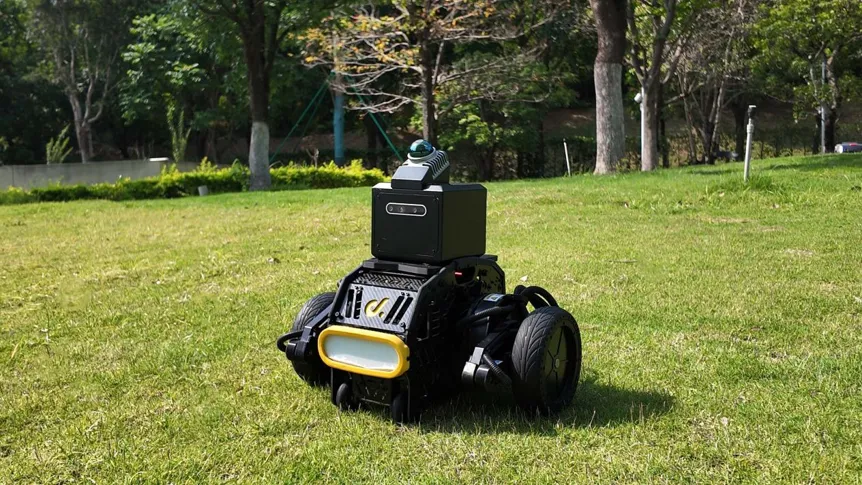
It is reported that this latest technology is the world's first commercialized straight-wheel-drive two-wheel-drive robot, which combines wheeled high-speed mobility with foot-wheel-drive capability. According to its core parameters, its maximum load in steady state exceeds 80 kg, which means that it can carry a considerable amount of material to complete transportation tasks without worrying about insufficient power.
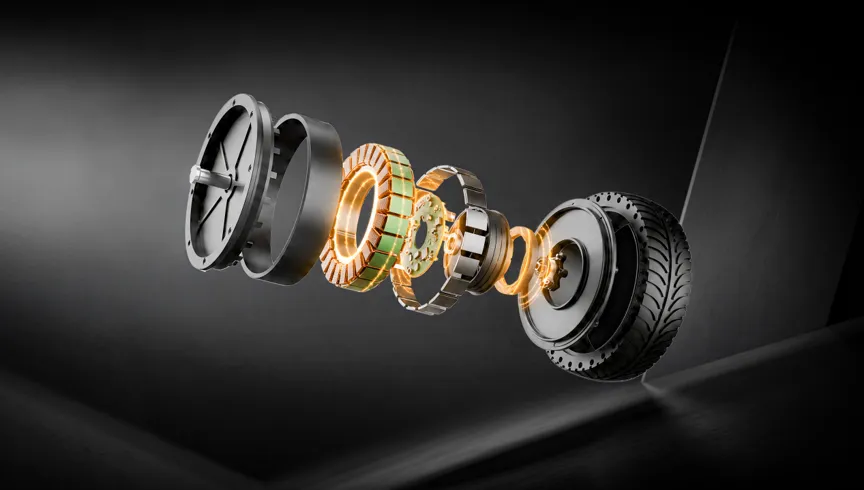
Combined with navigation tower modules and transportation accessories, Penang can complete transportation and distribution of goods in direct indoor scenarios. In addition, its adoption of direct-drive technology routes removes the decelerator in traditional robotic joints, making the movements smoother, more responsive, and less energy-efficient. For developers, Penang provides a sporting platform that is packed into a tank, focusing only on upper-level applications and brain algorithms, with lower-level brain control and physical execution already in place.
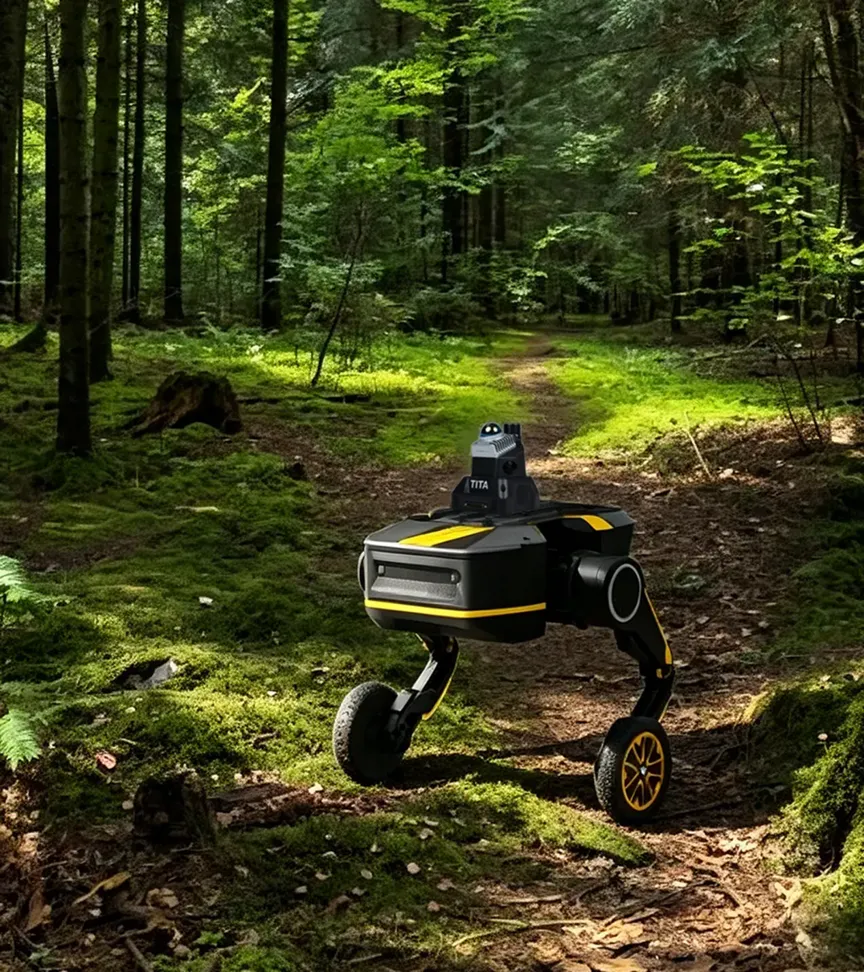
(2) TITA: Modular players for indoor delivery
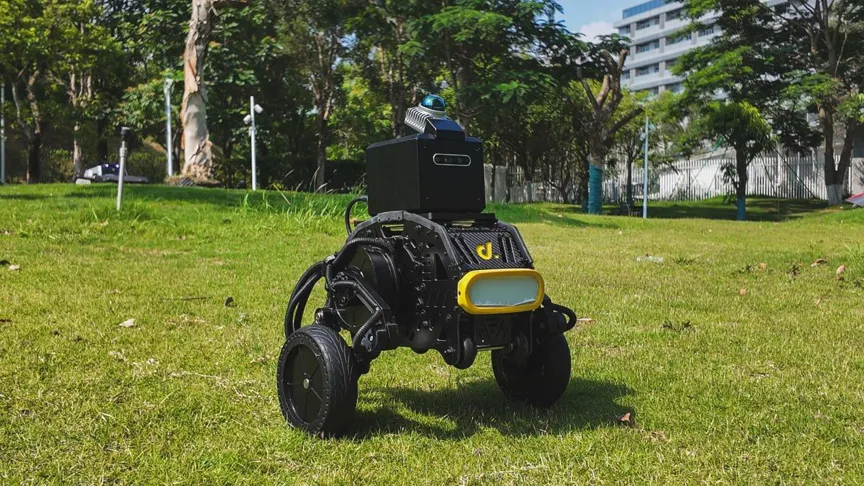
The TITA robot, which plays the most agile routes, with its own optical sensors, horns and cameras, is capable of completing point-to-point data distribution in libraries and offices by installing a navigation module in the indoor distribution scene.
What's even more ingenious is that TITA has a modular splicing architecture that can accommodate multiple module sensors, which means that it can flexibly flip-flops depending on the needs of the scene, and developers don't have to redesign the hardware for each new scene, just replace the modules and adjust the algorithms.
(3) D1: A deformed diamond that can be crushed
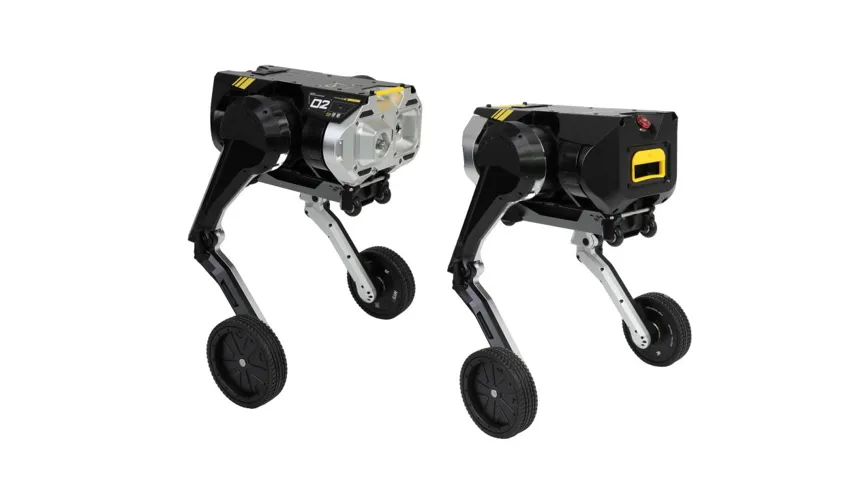
The D1 robot pushes the idea of modularity even further: it is the world's first fully automated modular body-smart robot to be released by the end of 2025 by EndTech. Its core innovation is body-splicing. Based on body-joint modules, coupled with the general brain-splicing algorithm, the D1 can achieve three-second fast splicing, flexible switching of two-wheeled legs, four-wheeled legs, and many other configurations.
A D1 is capable of high-speed cruising in two-wheel-drive or four-wheel-drive mode. It can be disassembled, reassembled, and deformed. In the park, with a navigation tower, mechanical arm, and carrier, the D1 is capable of short-distance running; with a navigation tower and a gas detector, it can also be used to detect various changes in terrain, such as tunnels, railways, and more.
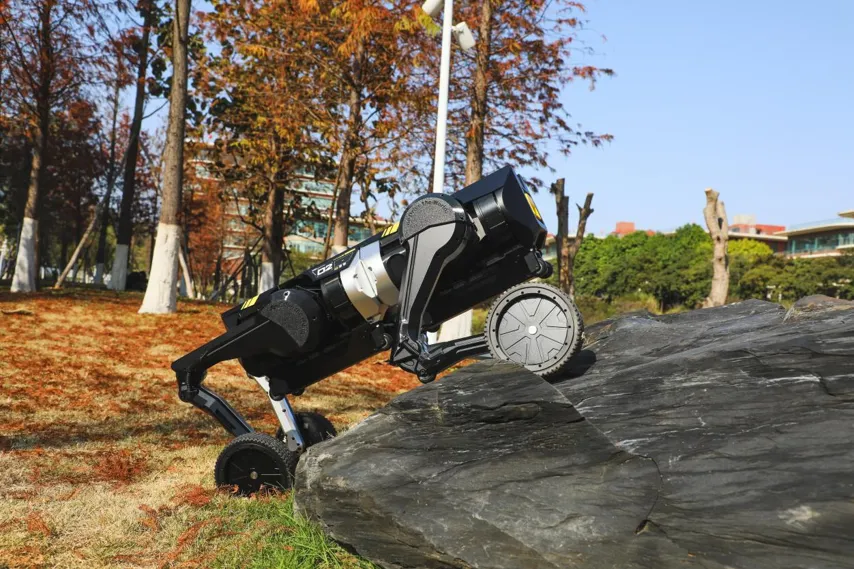
This one-piece body, multi-faceted body, is a rare physical universality in the field of physical intelligence and one of the most physically-imaginative products in the field of physical intelligence.
Penang emphasizes high load and indoor throughput, TITA emphasizes lightweight and interactive integration, and D1 emphasizes modularity and geospatial adaptability, which all point to one fact: Intelligent engineering with a body is not about building an all-powered robot, but about providing a set of replicable physical capability modules.
Developers select a combination of capabilities, such as building blocks, depending on the needs of the craft, and then install their brains.
04.
Link to the Future
Looking back at the industry's excitement with physical intelligence, we can clearly see a trend towards division of labor. Some people explore the boundaries of intelligence upwards, some people explore the foundations of physics downwards. The former require courage and imagination, while the latter require patience and engineering intelligence.
If the world only needed a curved brain stem, physical development would certainly be much easier. But assuming that the curved body stem and the curved brain stem are strong enough to exist by default and can be safely ignored. When such a premise is not yet widespread, it is even more necessary to maintain reverence for the curved body stem and the curved brain stem.
The end-of-tech offer is not just a few robot products, but a new feasible solution. Through three product lines: Penitentiary, TITA, D1, covering a wide range of scenarios from indoor delivery to outdoor patrol, from light transportation to overloading tasks.
When the industry is finally willing to admit that the premise of brainwashing is that the body and the brain are ready, physical development will be really easy.
After all, the smart brain has to learn to walk first.