The decline in the real estate industry has long been not news, but every number that falls on the accounts of a specific company is a pain in the ass.
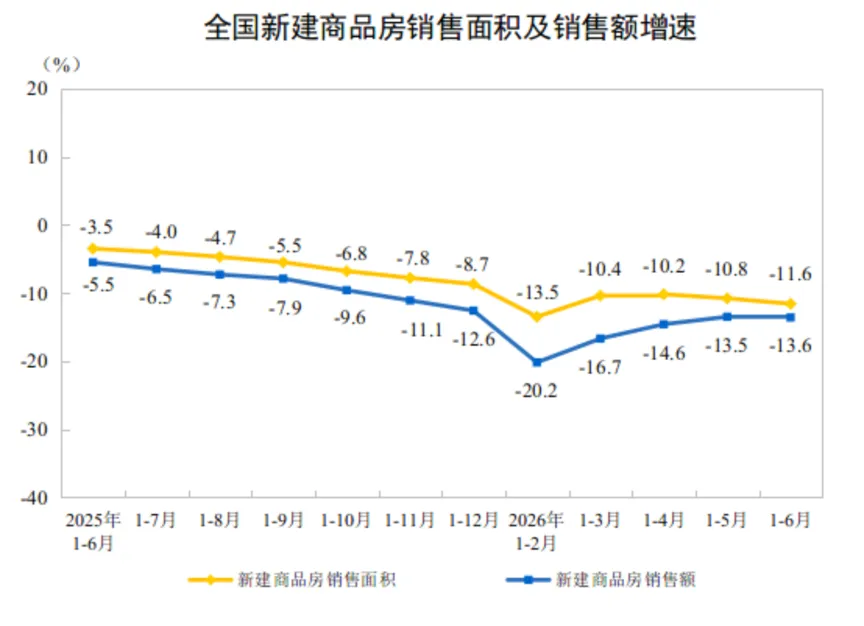
Data from the National Bureau of Statistics (NBS) is the clearest indicator of this change. On 1 June 2026, national real estate investment in development decreased by 18.0%, the sales area for newly built goods decreased by 11.6% and sales decreased by 13.6% respectively.
Homeowners who used to flounder in the land market are now faced with the same question: Land dividends in the age of growth are running out, where are the meals for the next decade?
First, let's see what's left in their hands - scenery, cash flow, space management capabilities, and a near-natural desire to make a living. So a collective industrial migration unleashed. A group of traditional real estate-related businesses turned their attention to a seemingly distant but deeply linked field of artificial intelligence and robotics.
Of course, this round of 2026 cross-border robotics is fundamentally different from the booming real estate automation of a decade ago, when it was the logic of financial investments in the stock market, which is now the dead end of the mainstream business after the collapse. The difference is that this time, they did not back down.
01.
*ST 9th: Blood on the old curve to keep the new track alive
*ST Nine is the best piece to watch this season of intelligent migration.
The company's traditional business is in full retreat. In the first half of 2026, the company's real estate development business revenue was only 11,36 million yuan, a decrease of 79.19 percent.
Public information indicates that the company's attitude towards this part of the asset is clearer and that it plans to withdraw gradually based on the completion of the development, sales and livelihoods of existing projects.
The only remaining strong growth was in the first half of the year in revenue of 28.75 million yuan for the construction business, an increase of 346.15% on the cumulative amount of new contracts of 757 million yuan as of the report's disclosure date.
The risk of going out of the market is like the sword of Damocles hanging over his head, forcing the ST-9 to find a real way out.
The path of transformation is well-designed. For the first time, the company's quarterly newspaper divides the business into two parts: traditional business (private equity, real estate development, construction) in charge of blood transfusion, new business (human robot core components) in charge of creating dreams.
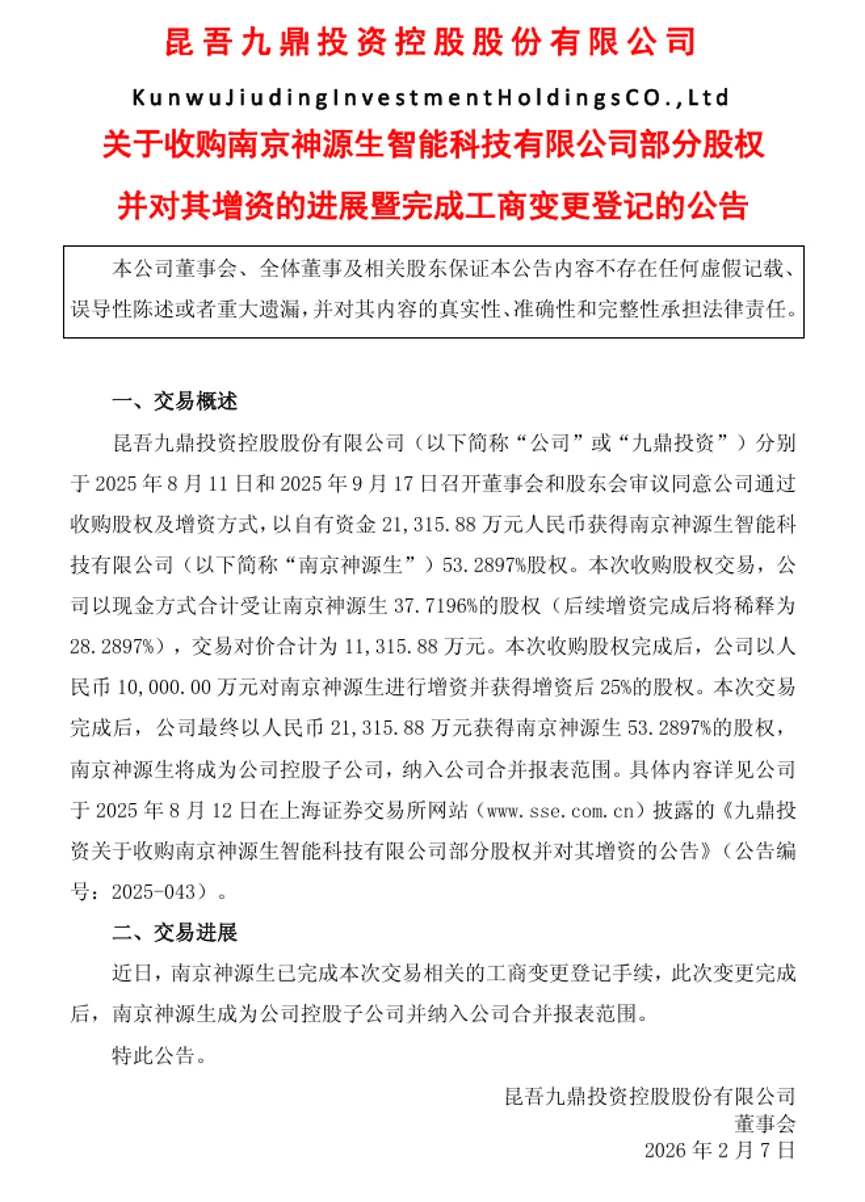
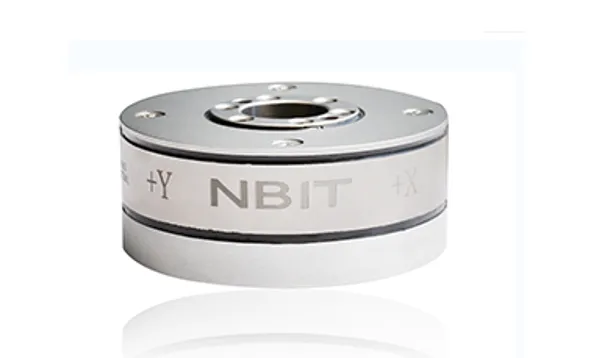
In February 2026, ST Nine completed the acquisition and expansion of Nanjing Shenzhen, holding about 53.3% of the shares, and incorporated it into the merger report, directly cutting into the six-dimensional sensor racetrack. This is a highly technical threshold segment, known as the bead on the wrist of a robotic wrist, directly determining the power control accuracy and smooth operation of the mechanical arm.
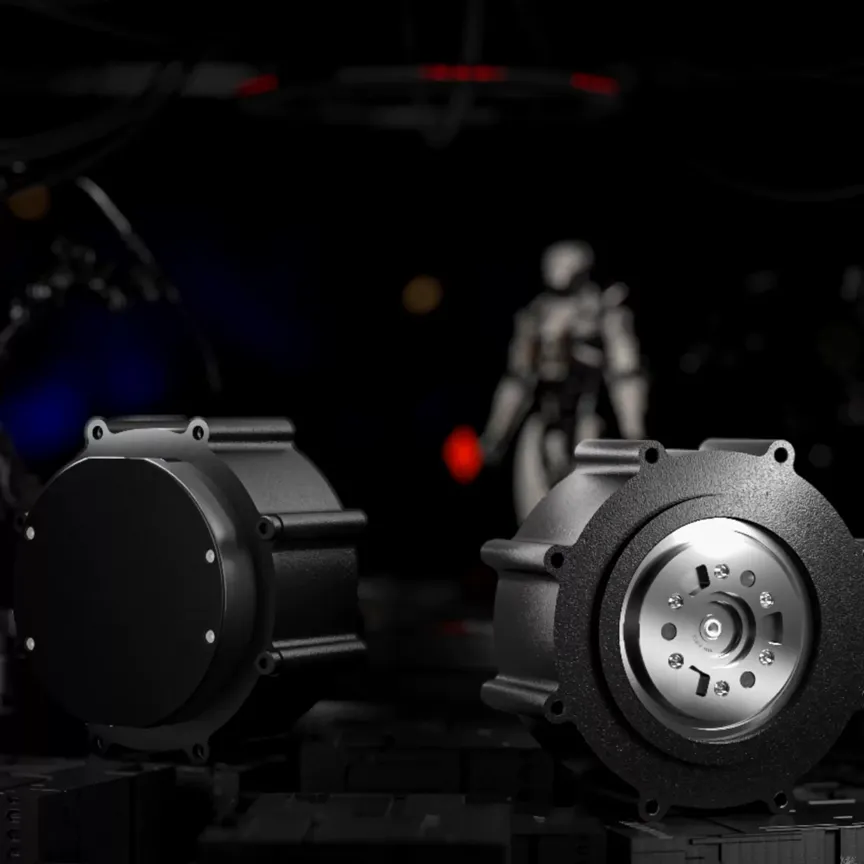
Three months later, ST Nine Nine Nine jointly with Nanjing Nanjing, founded Shenzhou Dynamic Robotics Technology Co., Ltd., which focuses on the production of robotic joint modules, planning an annual capacity of up to 300,000 units, and has started small-scale production this month.
In addition to the acquisition and newly established subsidiaries, ST9 will also play a professional advantage in the field of equity investments, with its own funds, focusing on competitive advantages and development prospects for outstanding companies in the AI and robotics industry chain. In March this year, the company has invested strategically in Beijing Dynamic Technology and holds 19.8% stake.
From sensors to joint modules, from controlling operations to strategic investments,* within six months, ST Ninjago has built an industry chain of sensing-performing sensors. The company, which used to make money from investing, is now working on the core parts of the robot itself.
According to the company's semi-annual report, the future* ST 9 Series will have long-term production operations in the two main segments of root sensors, joint modules and, when the conditions are right, horizontal mergers and acquisitions around these two segments, further expanding the company's competitive advantage and business scale in the core parts of human robots.
Of course, as of now, the story of the ST Ninja's robot, which is currently written on PPT and factory charts, has not yet been written in the profit chart. After all, the new business is still in the pipeline, for example, Nanjing Shenzhen, with revenue of only 248 thousand yuan in the first half, net profit of 476 thousand yuan, and a distance from real output.
02.
Hong Kong-guarded robot: a boxed-out box containing the remains of a unicorn
The Hong Kong market is playing another drama.
One of the key players is the Guangzhou Group, a diversified business that includes international aviation, maritime freight and logistics services, trading securities, interior design services, project management services, real estate, etc., but has been losing for years.
The second is Davenport, a once-cloud robotic unicorn valued at nearly $20 billion and behind the likes of SoftBank, which plunged into a deadlock of layoffs, unpaid salaries and financing breakdowns in early 2025 after going public in the United States.
One urgently needed transformation life, one urgently needed capital life. The conglomerate therefore shifted its business to the robotics field and entered into a strategic partnership with Daegu Technologies. The two founded a joint venture company, Daegu Technologies. The conglomerate holds 51% of the shares and achieved financial synergies. Daegu Technologies holds 49% of the shares, mainly responsible for technology and operations.
Subsequently, in order to more accurately outline this transformation process, strengthen market positioning, boost investor confidence and attract important strategic partners, while closely blending the company's image with the robotics business, the Chinese conglomerate decided to change the company's name to Hong Kong Robotics.
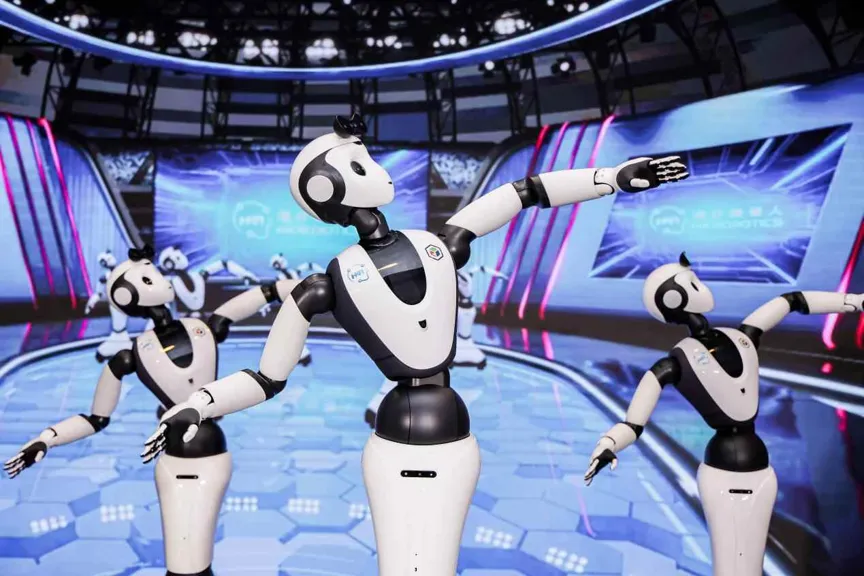
Today, more than a year later, the company's losses have not improved significantly, but it has also partnered with enterprises such as Huawei Cloud, LongHong Care, and U.S. Healthcare to take partial orders.
Object-oriented, of course, the cooperation between the two sides is not lost on the precise complementation of capital and technology. The strength of publicly traded companies and the ability to demonstrate and finance channels, encountering a company with complete robotics technology that is running out of cash, both of which complement each other's balance sheet shortcuts.
After all, the lesson of the company itself is written at the bottom of this business, that once a money-burning robot company breaks the pace of financing, technological re-sexuality is only an asset on paper.
This bidirectional redemption, which will ultimately turn into a sustainable cash flow and a positive flow, will also take time to respond.
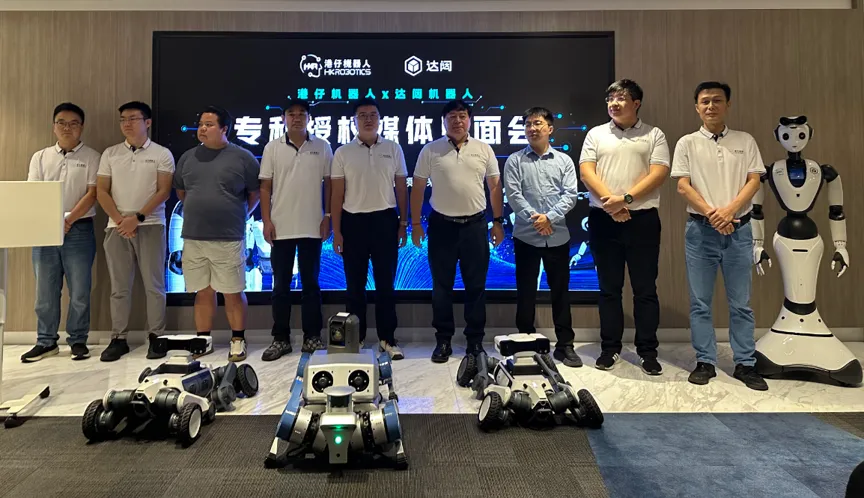
Hong Kong's robot model contrasts sharply with the *ST Nine, where one is a flat-topped, self-building industrial chain; the other is borrowing from the blue cloud to buy an existing industrial chain. However, the two share the same underlying logic: time-switching with capital, technology-switching with equity, and trying to nail their own coordinates to the robot's blueprint.
03.
Scenic scene: billions of square meters of management space for robot tickets
Real estate capital in the second half of the robotics industry, in fact, in the community, more real estate companies have chosen a path that is more in line with their own genes, asking for robots on their land.
In March 2026, it founded Resident Zero (Shenzhen) Robot Limited; in July of the same year, it also founded Busan Border Robots Limited. Within six months, two robotic companies were connected, with legal representatives as well as lighting, rhythm density and clarity.
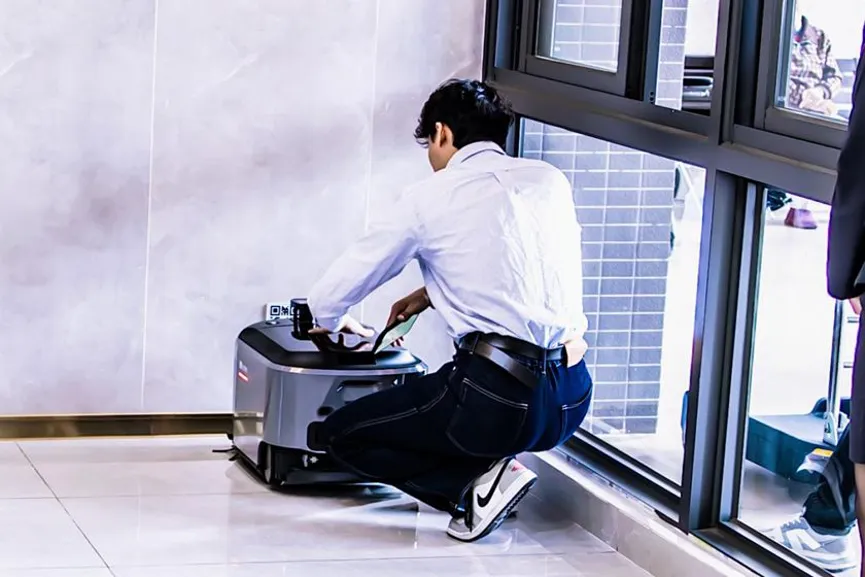
Huawei shares have a more futuristic vibe. It has introduced human robots, patrol dogs, cleaning robots, and other types of robots in communities such as Lake Shansan. It is known that these robots are being developed by companies such as Huawei, Digital, and others, covering security patrol, home services, rehabilitation assistance, community cleaning, and children's education.
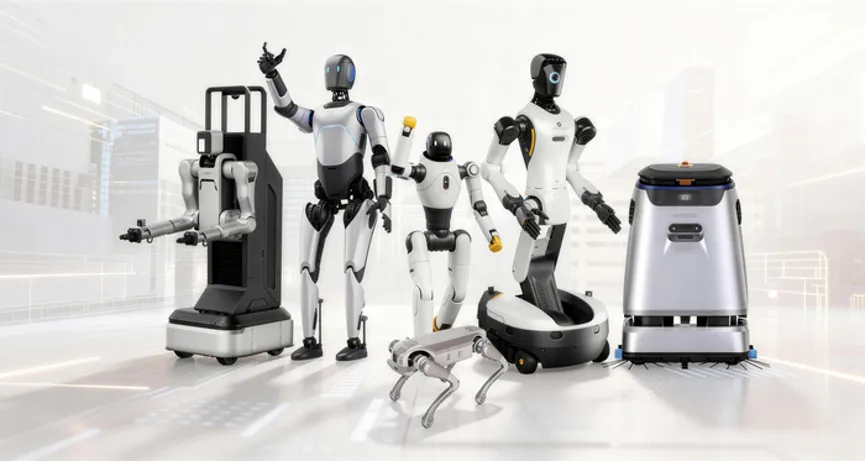
In June 2026, Guangzhou signed a 10-year strategic joint venture agreement with Beijing Guangzhou Intelligent Technologies to jointly establish Guangzhou Intelligent Robot Company, which owns 60% of the contract management area of over 100 million square meters. In June 2026, Guangzhou signed a joint venture agreement with Beijing Guangzhou Intelligent Technologies. The first robots were officially deployed in August 2026.
In June 2026, Red Star America signed a partnership with the nation's first world-class model unicorn to create a smart home landing solution and the first pilot scenario for Red Star to land on the Red Star Mall.
What these real estate firms have in common is that they hold the most scarce and undervalued asset-sharing scenes in the robotics industry. Tens of thousands of communities, hundreds of millions of management spaces, tens of millions of owners, make up a network of sheltered smart floors that cover tens of millions of households.
Patrol, cleaning, delivery endings, elderly care, equipment inspection, all are the real business aspects of robot commercialisation. The shop is a robot showroom, the community is a robot training ground, and the tolling corridor for real estate fees is naturally the billing entrance for subscriptions to robot services.
04.
Makoto Construction: Imagine robots on the construction side
There is another path hidden in the factory.
In 2025, the company invested in mirror technology and matrix superintelligence, and in conjunction with Matrix superintelligence, it formed Ningbo Interactive Power. A company based in the construction industry, which invested its capital in the robotic body and power system, is equally proud of its logic: it is both an investor in robots and could become the first big customer of the robotic construction scene.
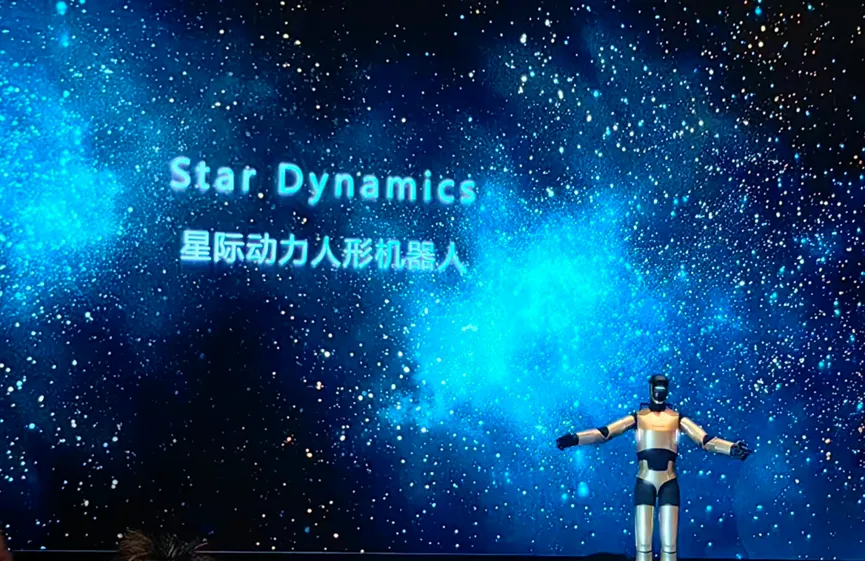
Construction sites are a long-term scenario of low robot penetration rates, high environmental complexity, unstructured levels, and stringent safety requirements, but at the same time, the construction industry's labor shortages and safety production pressures make it one of the most realistic buyers with physical intelligence.
Investments, procurement, and scenic operations are a three-way street, which is another unique aspect of real estate capital entry.
05.
Migration patterns: upstream snatching of parts, downstream snatching of scenes
Putting all these facets together, a complete picture of industrial migration is emerging: Chinese real estate-related enterprises are entering various nodes of the robotics industry chain at different depths and positions.
Upstream, the parts were taken. *ST Nine uses six-dimensional sensors and joint modules, and the macro builds the core and the drive. This is hard-technology logic, with engineering, mass production and efficiency in mind, and the test standards are the cutting edge between order and output.
Downstream, the scenery is captured. Park service, Huawei, Huawei, and the Red Star are communities, shopping malls, and residential spaces. It's a tunnel with operational logic, and it's about the area of piping, service density and willingness to pay, and the test standards are the openness and failure rates of robots in the real world.
In the meantime, the narrative and the platform are captured. The Hong Kong boy robot from Hong Kong and Hong Kong is essentially a tradable capital story of packaging Chinese technology assets and platforms into a marketplace.
The three-way capital is driven by the same dark flow. China's real estate balance sheet is undergoing a massive migration. Over the past two decades, capital has been concentrated in land and houses; as the growth of development has peaked, the same batch of capital has begun to redefine the concept of the space from the physical space of reinforced concrete, to the operating space of real estate services, and to the physical space in which robots enter.
The real estate accounts are coming together, the robot accounts are opening, and the middle is flowing through the same cash stream.
But it's important to keep in mind that some of these moves are real strategic transformations, some are hedge funds, some are narrative packages of capital management. The criteria for judging is simple, whether it's willing to pay for the ongoing organizational costs of the robotics business, including the construction of R&D teams, the grinding of supply chains, and the trial and error of real-world scenarios.
If a company completes only one equity-level transaction without substantial changes in organizational capabilities and industry cognition, it simply swaps a set of badges to face the same IPO questionnaire.
In the real estate industry, there used to be a belief in land grabs, land grabs, land grabs. In the robotics industry, a new belief is forming a grabbing scene, a scene, a scene.
Physical spaces that have real people, real processes, real problems that need to be solved every day are the last of the most scarce assets in real estate-related businesses. And those spaces are waiting for real robots to come in.
At the end of the day, real estate doesn't have to be robots, but at least they're running at each other.