Over the past decade, the most important story in China's industrial robotics industry has been the replacement of domestic products.
A group of Chinese robotics companies have joined forces, SCARA, the six-axis mechanical arm all the way up, taking the market back from overseas brands in the manufacturing scenes of cars, 3Cs, food, medicines, etc. Cost, localized services, speed of delivery are the most effective weapons at this stage.
But by 2026, the robot industry is entering its next phase.
As general-purpose robots become more mature, product parameters become more transparent, prices get closer, and what's really scarce begins to change: not how many factories can buy robots, but how many robots can get into the ones that are the hardest to access.
In recent months, a series of moves by WingFee have happened to step on this change.
01.
The turning point behind a semi-annual newspaper
On 25 August, WingFi Technologies released its mid-2026 results, the company's first after landing in the port on 18 May.
During the reporting period, the company achieved operating revenues of US$186 million, an increase of 58.0%; the gross margin remained stable, at 23.7%. Out of these, overseas revenues reached US$22.6 million, an increase of 318.5%, accounting for 12.1% of total revenues.
Losses also expanded simultaneously, resulting in a net loss of 108 million yuan and an adjusted net loss of 75.7 million yuan. However, the main reason for the loss expansion was that the company continued to increase its R&D investment in core products such as physical intelligence and controllers.
Behind the numbers, there is a more important signal: WingFee's growth momentum is shifting.
In the past, most of the company's revenue came from the solution business; now, the robot body is becoming an increasingly important revenue component. At the same time, the company is not staying with the standardization of the body, but continues to expand to control, visual, semiconductor, humanoid robots and whole-line solutions.
At the same time, making robotic products thick, while broadening robotic capabilities.
This may be the real clue to understanding the latest in a series of actions by Wingfi.
02.
The real gateway to the sea is to stay.
China's robotics enterprise is no longer a new story.
But in the past, most of the logics for exporting products were to find agents, sell equipment, build projects, and then be delivered by local integrators.
This model is not wrong.
The problem is that it is difficult to build a real capacity for globalization.
An industrial robot is not a consumer electronics. A mobile phone sold overseas, as long as it is channelled, certified and sold; a robot to enter a mature manufacturing enterprise, it has to face a whole set of industrial systems that have been in operation for decades.
Certification, engineering standards, supply chains, customer verification, after-sales response, process understanding, any loop that breaks the chain can keep the robot in the sample stage.
So, the real watershed of robotic globalization is not the volume of exports, but the ability of companies to bring their industrial capabilities together.
This is a change that is taking place in Wingfi.
For example, in June of this year, WingFee entered into a strategic partnership with South Korean company MiR, which commissioned it to be the group's regional agent for the entire series and to connect SCARA robots to the South Korean market. MiR itself has a domestic sales and technical service system in South Korea and has accumulated project resources in areas such as 3C electronics, high-end manufacturing. This is no longer an overseas agent in the traditional sense. The company has begun to put research and development, talent, industrial resources and local operational capabilities together overseas.
Saudi Arabia is another model. On 10 July, WIFI officially signed a strategic cooperation agreement with Saudi-based robotics company Swarm Robotics at the first LEAP East International Science and Information Technology Fair. WIFI is responsible for the production of SCARA robots, Delta fusion robots, flexible transportation sorting equipment and non-standard line solutions, specifically adapted to Saudi high temperatures and multi-powder industrial conditions.
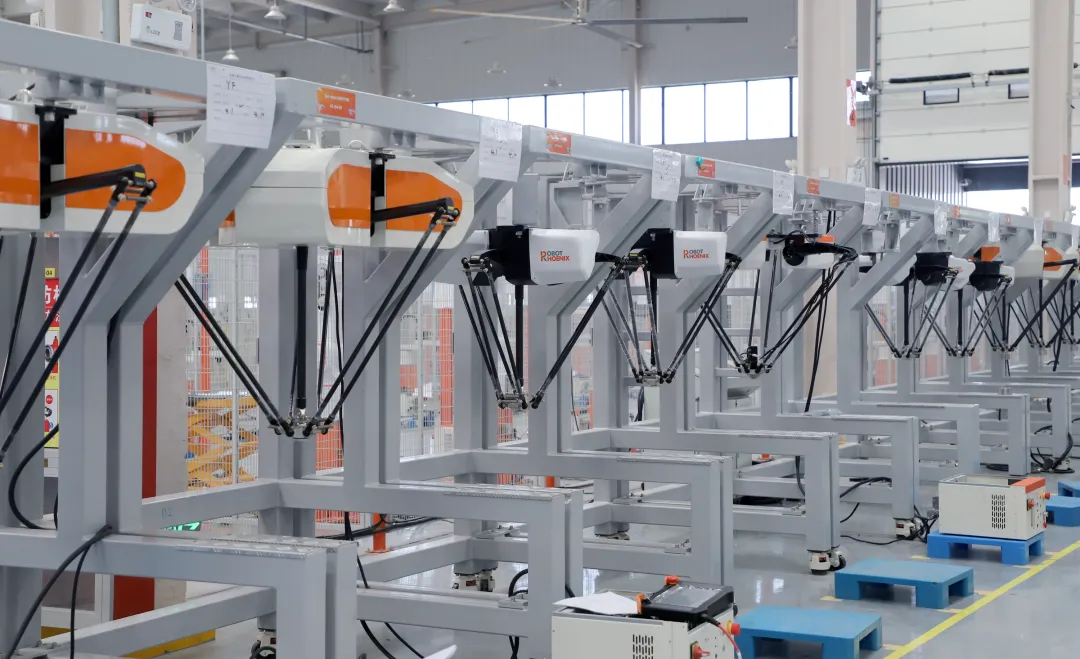
Different national markets, different industrial environments. For example, South Korea is a mature manufacturing market, while Saudi Arabia is in an accelerated period of industrial digitalization and manufacturing upgrading, while Japan is a market with extremely high global standards of industrial automation.
WingFi has not copied the same set of templates. The semi-annual paper shows that the company has established distributors in eight countries, covering 27 regions. In the first half of the year, its core products were featured in several international exhibitions such as the Italian A&T Exhibition, the German LOGIMAT, the Vietnamese Industrial Equipment Association.
Behind this is a shift that is taking place for Chinese robotics companies to go offshore: the first phase is exporting products, the second phase is building tunnels, and the third phase is replicating industrial capacity.
A truly mature globalization, not by increasing sales in a few countries on the map, but by having the ability to continue to evolve customer-certified lithium-ion delivery services locally.
03.
Moving the whole line from the wavelength to the wavelength box
Outside of overseas deployments, WingFee's technology-focused moves are equally worthy of attention.
In June, WingFee launched the Lobster series of wavelength robots, covering 4/6/8/12 inch wavelength transmission scenarios, for use on waste materials, equipment couplings, clean transportation, etc. The series is equipped with a self-developed motion control system and precision mechanical structure, and the RW-A model meets the ISO 1 ultra-clean standard.
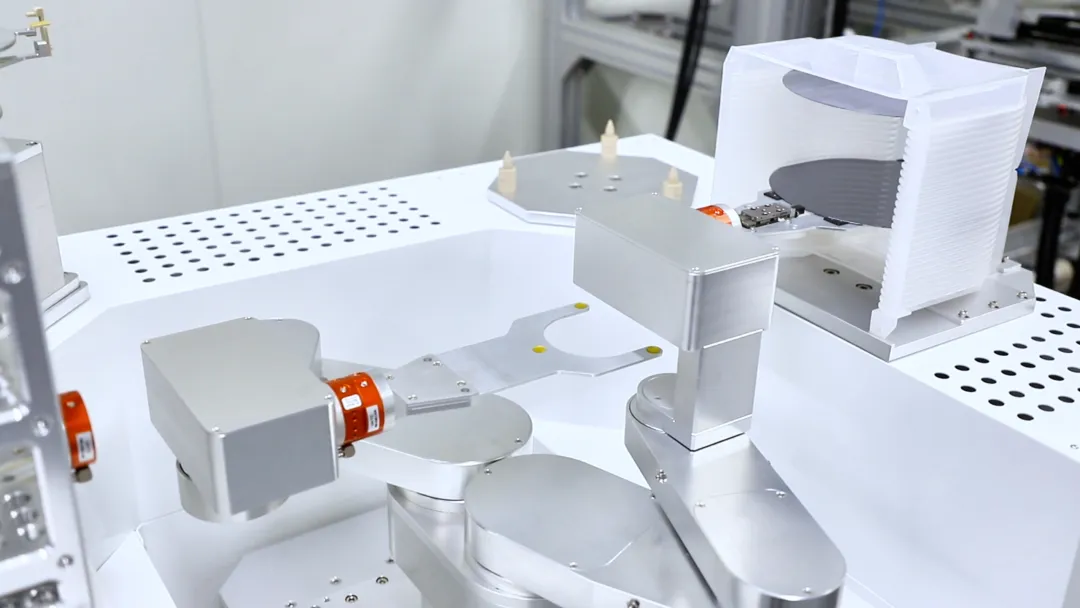
But what's even more remarkable is the company's ability to extend from a single line to the whole line.
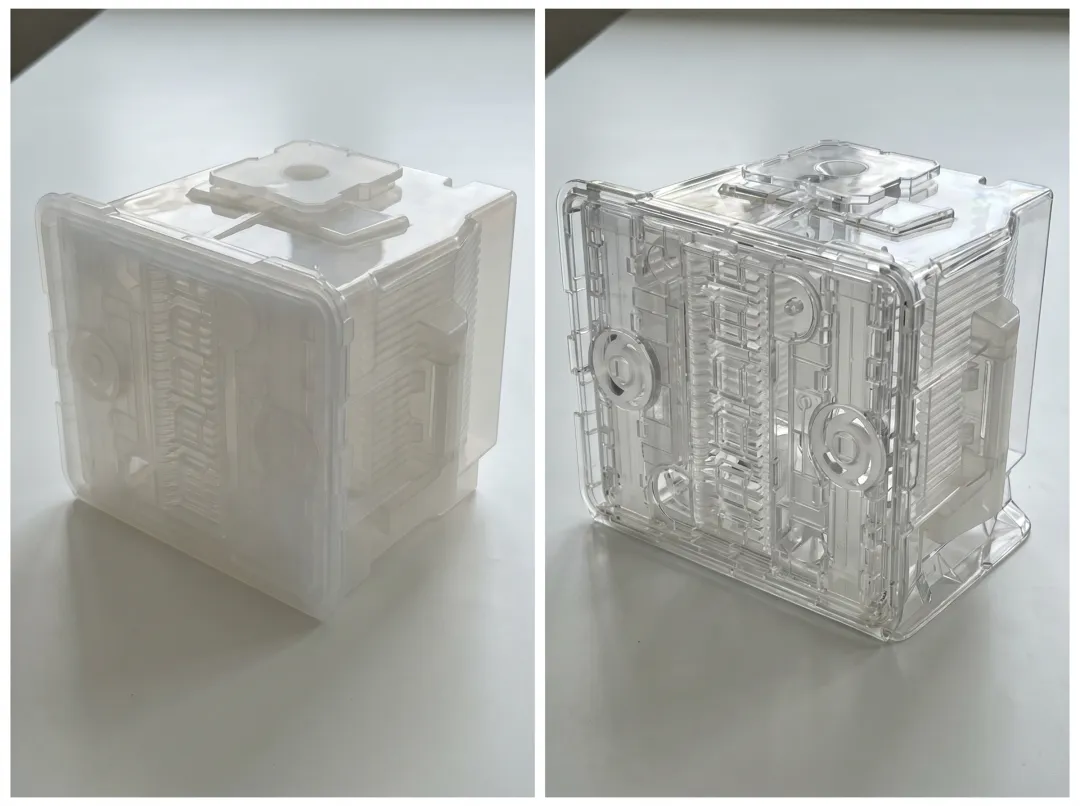
The half-yearly report shows that the full line of multi-wafer box LOT fully automated intelligent packaging has achieved stable production quantity delivery, complementing domestic high-end wafer precision packaging equipment domestically produced short boards. The production line has achieved the automation of the connections of open boxes, bubble cotton assembly, wafer box containers, labels, scan detection, seals, codes, and form a complete program through robotic control, visual detection, vacuum seizure, special equipment and WCS production management system.
There's a big change behind this: WingFee isn't just selling robots, it's solving problems that robots can solve once they get into the production process.
These two business models have completely different ceilings.
It's easy to go back to the price, the speed, the load and the precision.
Selling a solution requires an understanding of the customer's processes, materials, rhythms, quality standards, and production management.
Once customers embed robots into the production process, the cost of replacement increases.
This may be the real value of moving the high barrier industry such as WIFI to semiconductors. The company's semiconductor business has been cut into the leading semiconductor enterprise supply chain in the country, and the cooperative customers include well-known enterprises in industries ranging from pure technology, core sources to micro.
04.
Looking for the ultimate scenarios of robots
In June, WIFI also disclosed the progress made in entering the commercial space industry chain. Currently, downstream terminal customers with WIFI high-speed precision robots are entering the global supply chain of commercial space enterprises, while the company is planning to automate production lines for ground-based space components, and research and development for space robots.
But WingFee wants to do this space robot thing, where there is real industrial value, instead of on the ground.
Commercial space is moving from small-scale, customised manufacturing to more high-frequency, more efficient industrial production. The production of rockets, satellites and their components itself requires a large amount of precision assembly, testing and transportation.
This poses another requirement for robotics companies - not that robots look more advanced, but that they can work long-term in high-value, low-fault production environments.
From wavelength manufacturing to commercial space, the two industries are different, but there is a certain similarity to the requirements for robots: the more the robot moves up the industrial chain, the more the robot cannot be just a machine performing its actions, but must become a part of the manufacturing process.
This is also the significance of WingFee's continuous expansion into semiconductor, commercial space and other scenarios in recent years. They will not necessarily be the company's biggest source of revenue right away, but they will become a highly difficult scenario for testing robotic technology capabilities. Once validated, these capabilities can also feed other industries.
High-precision motion controls can be transferred to precision electronics; clean environment adaptations can be transferred to pharmaceuticals; flexible grappling can be transferred to complex assemblies; and high reliability can enter more high-value manufacturing links.
05.
Human robots are the next piece of the puzzle for industrial automation
At the same time, WingFee's layout in a physically intelligent direction is also accelerating.
According to the semi-annual report, the company's smart core product, a second-generation turbocharged two-arm robot with its own YiBrain multi-modal industrial smart body model, has officially entered the small-scale pilot procurement phase and has been completed deployment by several manufacturing companies.
The Z001 twin-arm wheeled humanoid robot uses 313 simulated mechanical arm layouts, a single-arm total of 7 degrees of freedom, fully replicates the human arm motion shape, achieving 360° full-field rotation, with a maximum motion speed of 275°/s. The product was unveiled at the Cherry-Ecotech Smart Manufacturing Technology Exchange and completed the automotive-powered total high-barrier scenario benchmark verification.
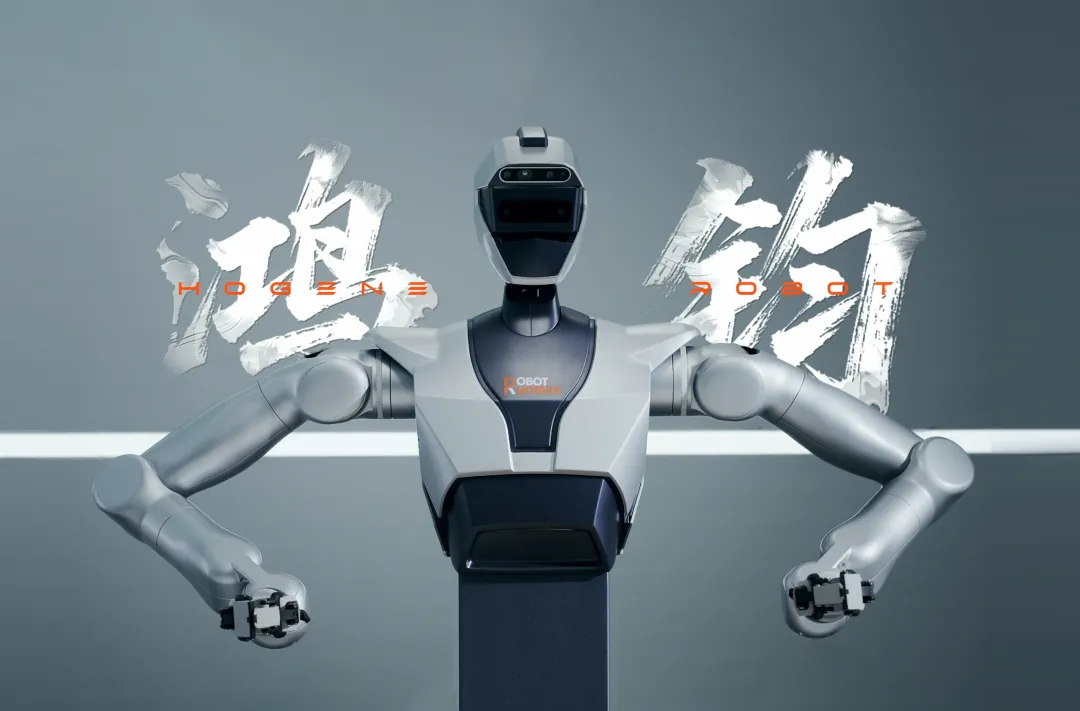
Unlike many companies that first saw humanoid robots as universal mobile platforms, WingFee's industrial genetics determined that it focused more on one question: What tasks could robots solve for humans once they entered the factory?
This is also the reason why WingFee officially became a two-member unit of the Working Group on Integrated Systems and Standardization (WG4) and the Working Group on Applications (WG5) of the Intelligent Standardization Technology Committee of the Ministry of Industry and Communications in July. This indicates that the company is expanding from traditional industrial robots to new robot forms, while also taking part in the construction of industry standards and application systems.
In the past, the human-robot industry has focused on the body, joints, motors, accelerators, and large models. When it really gets to the factory, the question quickly becomes another: how to adapt the production line? how to collaborate with existing robots? how to meet safety requirements? how to connect industrial systems? how to complete tasks in dynamic environments?
These are precisely the problems that traditional industrial robotics companies have been solving for the past decades. When the industry can't walk, can't crawle into work that can't be sustained, industrial automation accumulation may become important again.
What is really worthy of attention is perhaps not that it will ultimately become a humanoid robot company, but that it will be able to reassemble past industrial robots, intrinsic control, vision, mobility and system integration capabilities, with physical intelligence.
06.
Moving from robotics to robotics capability
A very clear clue is given by re-arranging the movements of the Wings in recent months.
In terms of globalization, Japan-Korea is a rapidly expanding channel into global markets, and has improved its localization capabilities; market pioneers such as Saudi Arabia have explored the combination of Chinese robotics products and local engineering systems.
From the landing scene, semiconductors are a validation of precision manufacturing capabilities; commercial space is a validation of high reliability manufacturing capabilities; and silicon is an extension of traditional industrial automation to flexible intelligence.
They are not a series of unrelated business lines, but rather a capability puzzle that WingFee is working on.
On August 20, at the 2026 World Robotics Congress, Jindong Industries joined forces with industry-leading companies such as Scheffler, Qingdao Cloud Road, Suzhou Source Control, and WIFI Technologies to form the Alliance for the Industrial Development of Robotic Parts.
During the same period, WIFI also held an in-depth technical exchange with the Samsung Group on August 11, where the two sides discussed topics such as 3C electronics, semiconductor production line automation upgrades. WIFI has completed a complete set of compliance preparations for KC certification in South Korea and established a local on-site team and spare parts warehouse.
In the past, the competition between robotics companies was more about single-device devices, which robots were faster, more accurate, cheaper, and who had the opportunity to order.
But as the product matures, the competition begins to shift to who can understand customer processes, who can complete system integration, who can solve complex scenarios, who can replicate this capability globally.
07.
Next round of robots competing for who's harder to replace
China's industrial robots have come a long way from being the most understandable.
In the past, domestic robots only needed to prove that they could replace imports.
The question at the next stage has changed. Can domestic robots still go where previous domestic robots didn't?
This is the reason why the recent action of Wingfi is really worth observing.
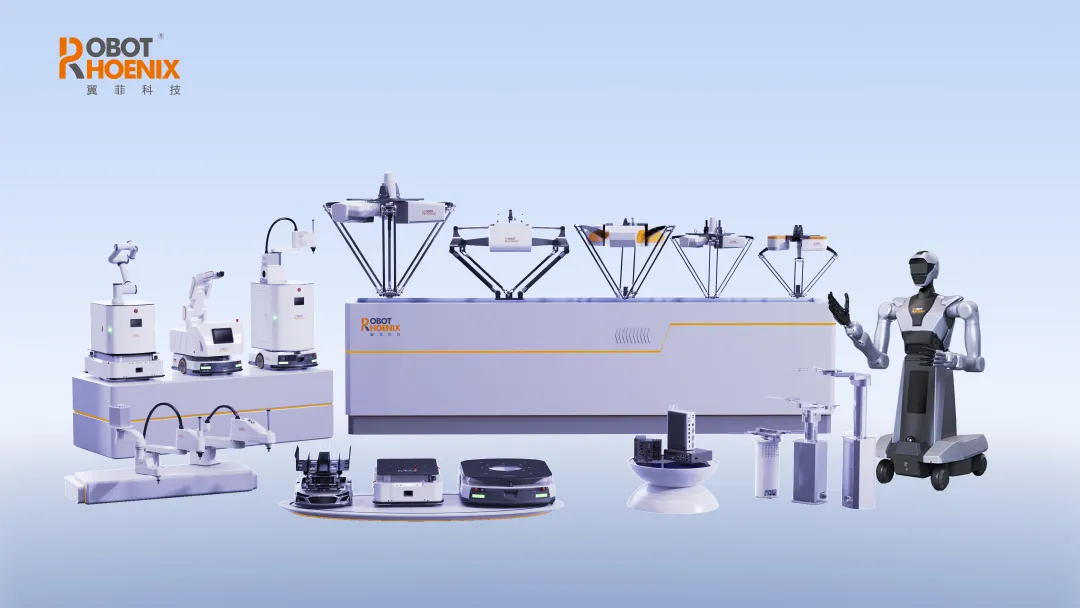
From South Korea to the Middle East, it's solving the problem of globalization; from waves to wafer boxes, it's moving deeper into precision manufacturing; from commercial space supply chains to future space robots, it's looking for the limits of robotic capability; from shell to humanoid robot standard systems, it's trying to extend traditional industrial automation capabilities to tangible intelligence.
It's not going to be easy.
High-end manufacturing has longer customer verification cycles, overseas localization requires more organizational costs, human robots are a long way from mass commercialization, and commercial space is also a high-end industry.
But for a family