The four-legged robot industry is experiencing a return in value.
Over the past few years, competition has focused on parameters and demonstrations, such as who has higher torque density, who overturns more torque. Behind the heat pump, a fundamental question has always remained unresolved.What are these robots going to do after they get off the stage?
At the WAIC 2026 South Power Station, a four-legged robot equipped with two arms, a lifting platform and modular operating tools, completes the automated opening of the cabinet door, empty opening of the casing, etc. This is a series of actions that it has done countless times in a real switching station.
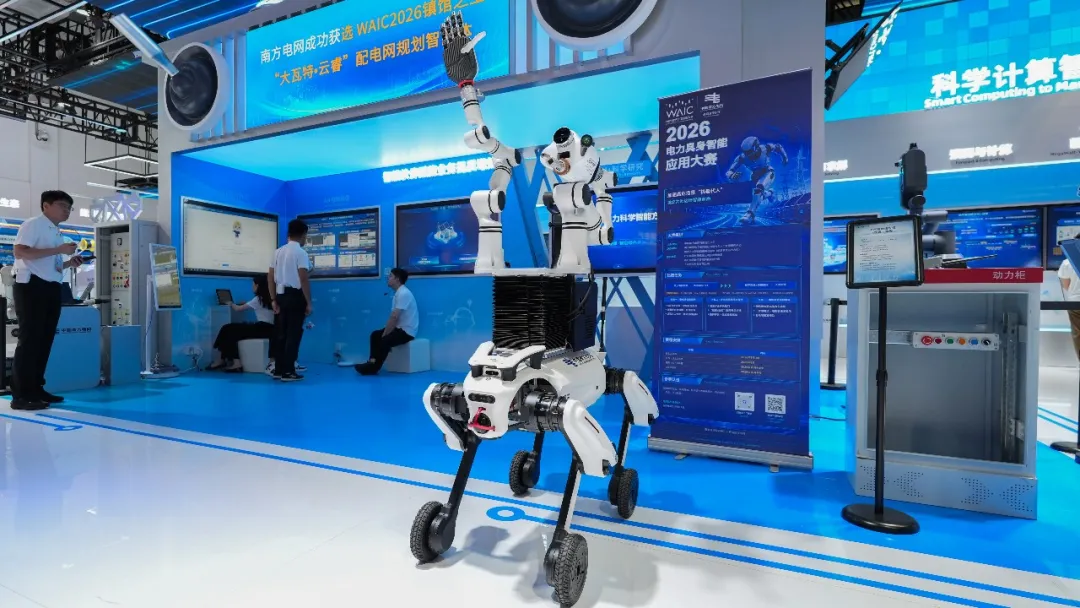
Performances on the stage and repetitions at the power station refer to two very different capability definitions on the same track.As the industry moves from show jumping to show jumping to show jumping to show jumping, the benchmark is changing from show jumping to show jumping.
The four-legged robot enterprise demonstrating real-life work scenes at the South Electric Networks stand is giving its own answer.
Fully self-taught
Triple Barriers to Build the Walled River
Technical value of steam power, concentrated inThis is the core of our research and development.。
The vast majority of quad-foot robotics teams on the market adopt integrated paths of outsourced core components, while Dynamics opted for a more difficult but deeper barrier-oriented full-frame self-development path. Its value lies in: the synchronous optimization of integrated systems directly from the motor level, and the ability to align each line of code with the physical properties of the underlying hardware.
Specifically, steam power has created a threefold irreplaceable barrier.
One is.Technical barriers,ImplementationThe whole chain from the engine to the whole machine is controlled.。Self-educationAxis magnetic drive motorThe peak torque is 600N m and the torque density is 240N m/kg.The rate of self-development of core components is as high as 90%.When the industry competes from a single parameter to a system-level competitive stage, the architecture of core components + operating control algorithms + integrated system bridges forms a systemic advantage in the three dimensions of cost control, product generation speed and extreme environmental reliability.
The second is the delivery of mass production, which is achieved from“It can be done.”I'm going to“Bulk Delivery”The crossroads.The full-scale self-development of dynamics not only creates barriers at the technical level, but also creates new opportunities for growth.Its autonomous production lines also give a very strong cost control and capacity resilience at the supply chain level.All of the core parts of the turbocharger are self-developed and self-produced, allowing customers to collaborate on faster product conversion and localization services.
Batch deliveries of aluminum are uncommon in the quad-foot robotics industry. Most teams are still in the pilot stage, really getting into customer operation processes, 24-hour continuous operation, and dynamic quad-foot robots have achieved fully autonomous surveys in complex geographic environments such as switching stations, underground pipelines, completion of infrared temperature measurement, localization testing, and more.
The cost of self-development of core components is autonomously controllable, overlapping with the capacity advantages of mass-produced scale deliveries, allowing Dynamics to have risk-resistant capabilities and a delivery base that is not afraid to compete in the face of possible future price wars in the industry.
Three is.Ecological openness,ConstructionPlatform thinking for ecological co-operation。It's not a purely robotic corporation, it's a robot company.Highly open SDK, a solution provider dedicated to deeply customized development with leading eco-makers.With the introduction of a collaborative system of channels, programs, hardware triangles, covering the entire industry chain segment, including sensors, communication modules, system integration, supporting loads, and more, Dynamics has established deep collaborations with dozens of eco-chain enterprises covering key areas such as sensing equipment, operational machinery, and communication networks.
During the WAIC,In a joint venture with General Motors, the company introduced the RV-BOT multi-sensor integration positioning solution.A classic example is the integration of dual-eye cameras, dual antenna RTK, IMU multi-source data, RTK positioning fixed resolution accuracy ± 2 cm, compatible 4G/5G cellular communication, adapting the ROS1/ROS2 development framework, reducing the underlying robot development and the field modeling cycle, achieving complex environmental precision positioning, remote scheduling, multi-machine collaboration, a set of multi-sensor integration positioning schemes that addresses the industry pain points of location failure and disruption of satellite signals in landscapes, underground tunnels, parks, etc.
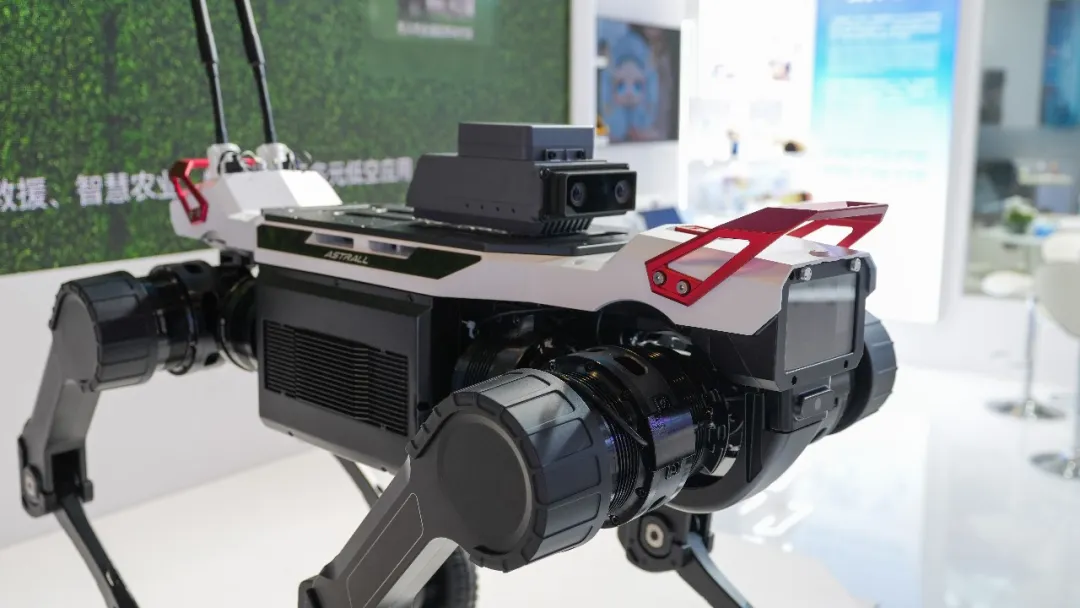
With a closed-loop logic that is fully autonomous, self-developed, self-produced, and can be integrated with the ecosystem for faster product-technology architectural transformation and full-cycle service collaboration. Depending on open SDKs, vertical industries such as electricity, emergency fire, parks provide customized overall drop-off locations, and Dynamics is perfecting industrial intelligent supply chains.
Two-line matrix of products
Weight gain, climb high, adapt widely、It's good, easy to expand.
Based on all-wheel-drive technology, the powertrain built the Hypertron-T01 heavy-duty model and the Hypertron-SW01 medium-duty twin-line product matrix, forming a complete layout with lightweight matching and scene complementarity.
The Hypertron-T01 carries the flagship.Defined as an industry-class all-terrain load-bearing wheeled foot robotIt has high-load, long-lasting, all-terrain, fully autonomous core advantages, adapted to power energy, emergency fire, heavy freight transport and other high-load scenarios.
Depending on the high torque density brought by the self-development axis to the magnetic drive motor, the Hypertron-T01 is equipped with IP67 all-area industrial protection and can operate continuously in a wide temperature environment of 20°C to 55°C; combined with self-developed adaptive operating control algorithms, capable of autonomously climbing stairs, crossing, traversing cable tunnels, crumbs, muddy slopes, narrow passageways, etc. Unstructured terrain. The model supports fully autonomous patrol, independently completing infrared temperature measurement, instrument identification, stationary detection, environmental monitoring and other high precision tasks.
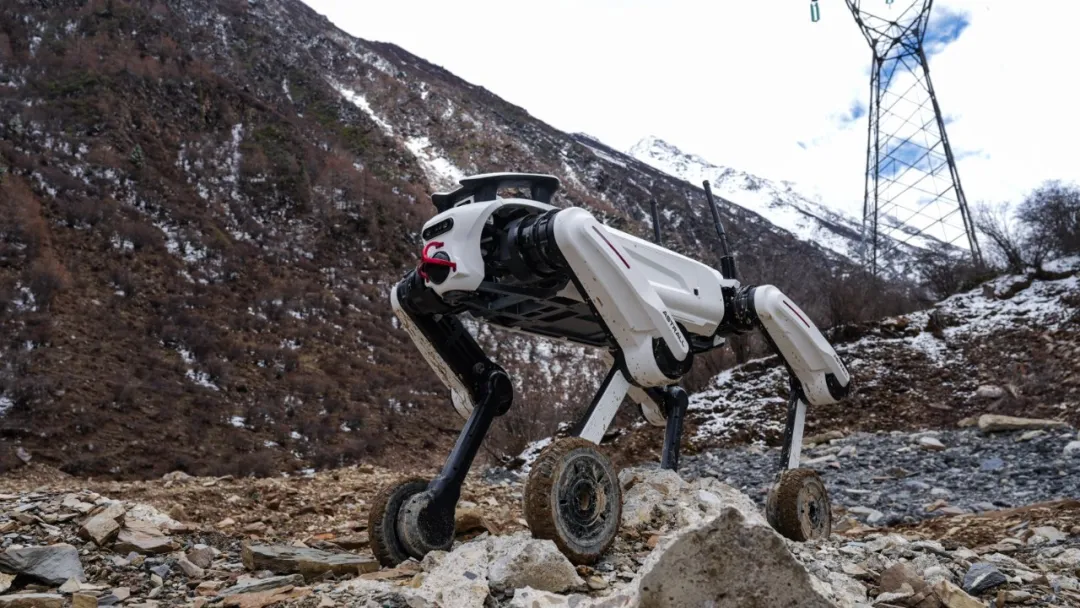
Hypertron-SW01 medium-sized general platformAs a medium-sized mainline aircraftContinuing the same development of the movement control system, maintaining excellent all-terrain throughput and adaptability to the environment. Its maximum standing load of 120 kg, all-terrain movement load of 40 kg, focusing on normal patrol, security patrol, etc. medium load scenarios; 6 hours long service life with a heat-extracting battery design that can respond quickly to operational needs; the whole machine also achieves IP67 high protection level, maximum speed of 8 m/s. The model balances the mechanical dynamics, duration and cost of procurement, adapting to the large range, long-term regular conditioning unmanned operation requirements, providing customers with a simplified, high-cost standardized option.
Both models use the same source standardised expansion interfaces, and can quickly replace patrol hangers, fire extinguishers, explosive mechanical arms and other multifunctional tasks.Unified modular design effectively reduces customer procurement and maintenance costs, effectively achieving multi-purpose pumps.。
Scenes of deep strife
From the power station to the fire station,Leave the danger to the machinePeople
The differential advantage of dynamics lies in the deep understanding and delivery of certainty about the front-line operational scenario.
Electricity is the most mature landing scene for hydrogen.In scenarios such as switching stations, cable tunnels, the pain points of traditional patrol are difficult to resolve in the long term, such as low man-made patrol efficiency, the presence of leak detection errors, fixed camera coverage of blind areas and the construction of new equipment, the data stays in the paper recording stage difficult to trace; the station is distantly scattered, personnel are delayed when sudden failures occur and cannot meet the requirements of high-frequency patrol in all weather; operational areas carrying electricity are frequently operated, personnel are at risk of electrical contact and falls.
The dynamic Hypertron series has achieved fully autonomous patrol, complete all process operations such as infrared temperature measurement, instrument identification, stationary detection, environmental monitoring, adapting to complex terrain such as meadows, stairs, cable tunnels, narrow corridors, and 24 hours of continuous operation.
At the South Electric Networks showcase, the two jointly developed power inspection robots have normalized delivery, which is the most direct landing proof of product reliability. Operational workmanship weighs over 100 kg, ordinary four-legged robots are difficult to fit, while the Hypertron-T01 has the maximum standing load of 200 kg, full-area load of 80 kg performance, both load capacity and full-area, climbing capacity.
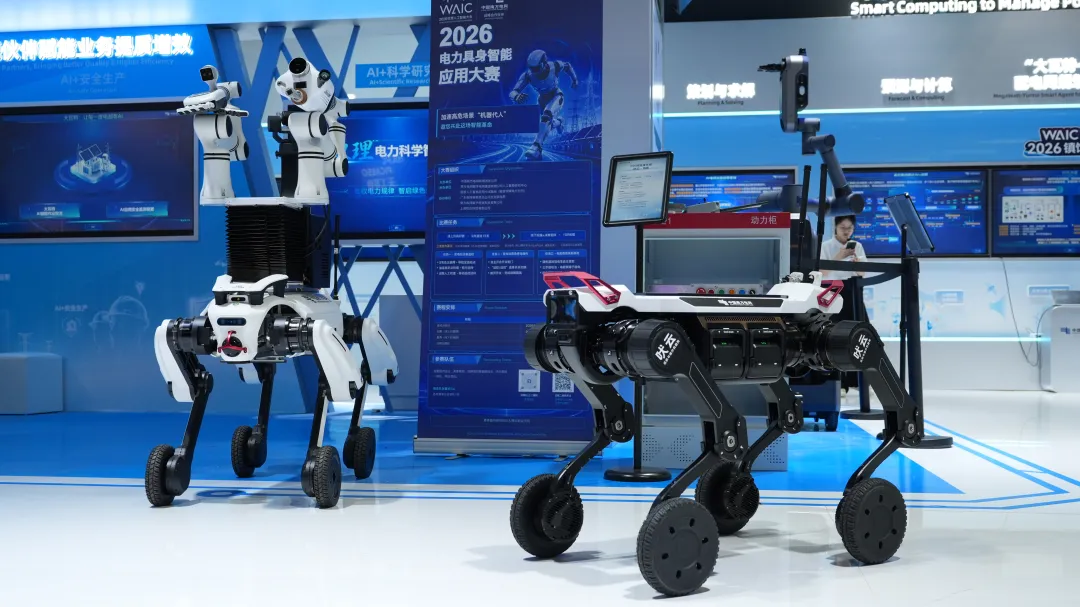
According to the announcement, the program will feature the China Southern Electric Networks 2026 Competition for Electrical Intelligent Applications to transform power station operation and equipment operation scenarios as a carrier, focusing on demonstrating the generalized operational capabilities of autonomous perception and autonomous decision-making in real-world physical scenarios.
Emergency firefighters are another testing ground for recharging capabilities.In high-level firefighting, the transport of supplies is the largest component of firefighters' consumption. The Hypertron-T01 is capable of carrying a large amount of supplies, and is capable of carrying water-filled water belts at the front, with the strong recoil of high-pressure water cannons and the risk of firefighting, safeguarding the lives of first-line fighters.
Park security sceneTraditional security relies on fixed cameras (blind zone) and man-made patrol (low efficiency, poor night security). Powerful four-legged robots can move freely in complex sections of the park, cross-floor, cross-regional, unmanned continuous operation, 24-hour patrol, AI anomaly detection, remote deterrence.
In the field of education and research,High-school robotics education has long faced the challenge of imitating light-reality landscapes, the inability of robots to integrate with the demands of the industry, the inability to get out of the contradictions of the laboratory environment. The impetus is to provide high adaptability for universities through the provision of a fully equipped intelligent robotics platform, to meet the needs of AI cross-fertilization, cross-disciplinary, cross-professional course group construction, and to meet the needs of universities to develop complex cross-fertility talents, enabling researchers to test algorithms and programs in real-world situations.
Get out of here.A more difficult but right way
In the midst of a boom in the body-smart industry chasing home appliances to become general appliances, Dynamics opted for a quieter and more difficult way of opening the door to hardcore scenarios such as root electricity, firefighting, security, which are highly unstructured and cost a lot of mistakes. It is precisely in those situations where appliances do not allow failures that the robustness and reliability of the system is truly refined.
Through the large-scale deployment of industry-leading customers such as the Southern Power Network, from patrol operation process specifications, extreme environmental reliability testing standards, to matching specifications with existing safety and maintenance systems, Torque Power is establishing replicable delivery standards for applications in the industrial landscape for four-legged robots.
Currently, the smart industry-level racetrack has said goodbye to pure parametric competition, the single-company phase of single-player competition, and the core of racetrack competition has shifted to real industrial deployment capabilities and the power of ecological collaboration.
It's always going to be tough.Product definitions, landing checks and value checksPractical routes, relying on self-developed product performance, complete support delivery systems, open collaboration ecosystems, and continuing deep-farming industry-class robotics racetracks.
At the same time, steam power has begun to move forward into a broader market.A new generation of consumer-grade body-smart robot products is planned for the second half of 2026To extend the full self-development capabilities, extreme environmental reliability verification outcomes and mass production delivery experience accumulated in the industrial landscape to the broader commercial and domestic landscape.
The ultimate standard of the technology is not cool and cool, but that it can't protect people. At switching stations, it replaces maintenance personnel with high voltage, closed corridors; at fireplaces, it searches the water belt in front of firefighters; at the safety line, it patrols 24 hours a day.