
It's the first time in the history of the world.
AI customer service has been considered one of the few best scenarios for the commercialisation of Agent in the last two years, and with RAG technology, the cost of AI customer service is much lower than that of artificial customer service, allowing us to get through the life of being forced to "transform into artificial intelligence".
In this fast-growing area, with a market value of RMB 100 billion, OpenAI, as an API provider, sees its biggest customer, Salesforce, become overwhelmed and unable to sit down, start to show up in person, bypass the volatile middlemen, or it will bring about an overwhelming change in the landscape of the market.
On July 22, OpenAI released Presence, an enterprise-focused Agent deployment product that covers both voice and text channels.
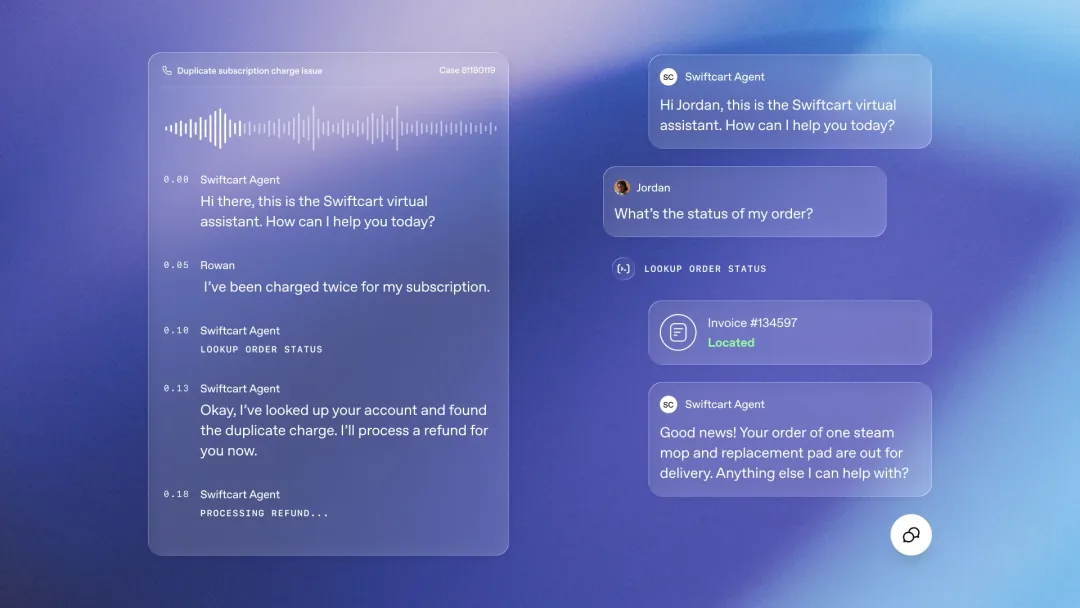
Presence is already running on OpenAI's own English customer hotline 1-888-GPT-0090, and 75% of calls can be solved without manual intervention.
In recent weeks, the quality of AI services has surpassed the evaluation benchmark of artificial intelligence.
OpenAI defines Presence as a "virtually proven enterprise product" where the model combines a complete set of strategies for customization, security assurance, performance evaluation and continuous improvement mechanisms.
The launch of this product also pushes OpenAI to a new position: Salesforce, Zendesk, Intercom, companies that have built their own AI customer solutions using the OpenAI model, are now competing with their own model vendors for the same number of enterprise customers.
An agent can only do one thing.Presence's product design starts with restrictions.
Each agent is only responsible for one specific task: the agent handling the bill dispute does not see the data of the insurance claims, the agent solving the IT work order does not have access to the financial system.
Companies allocate powers to each agent, determining what it can do, what operations need approval, and what the conditions are for hiring.
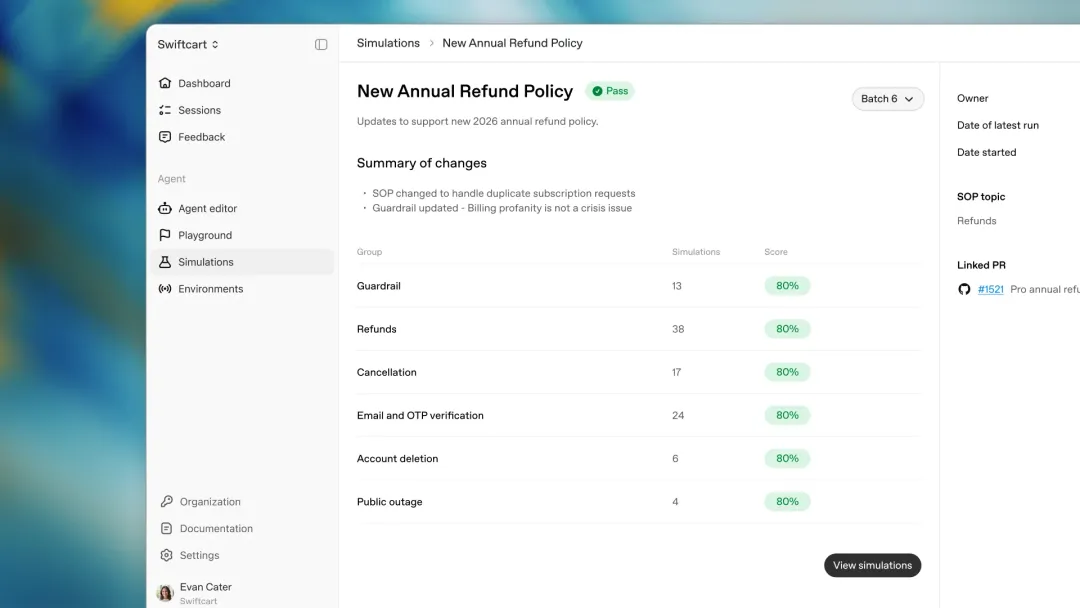
After it was updated, the codex began to improve.
It analyzes the dialogue and transfer data in the production environment, locates Agent's weak links, and generates recommendations for modifications.
After the team approved the test, the update was posted online.
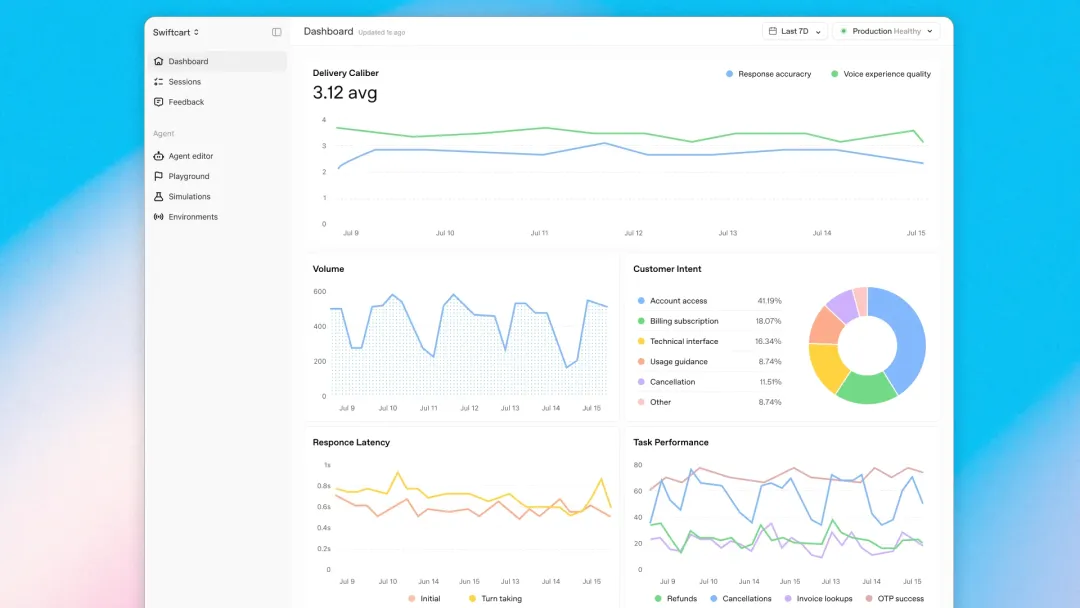
This closed loop within OpenAI has run out of numbers: Codex-driven improvement cycles have reduced the rate of man-made transmissions of customer hotlines by 15 percentage points in 10 days.
AI customer service is one of the fastest growing segments of enterprise software.
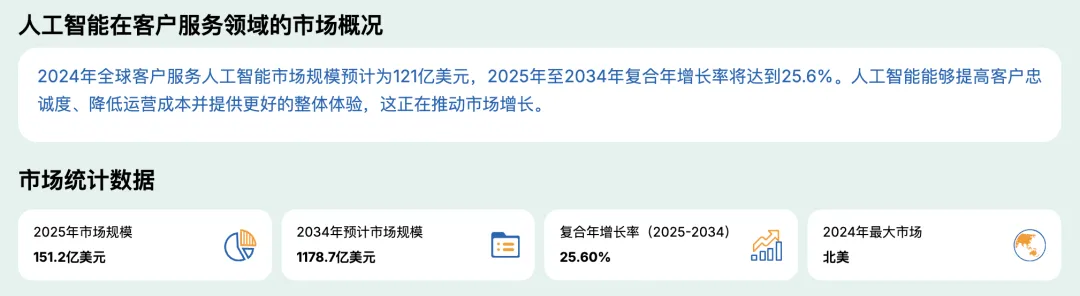
Polaris Market Research data shows that by 2026, the global AI customer market will be worth about $1.5 trillion, growing at a compound annual growth rate of 25.6%.
Gartner gives another reference from a cost perspective: By the end of 2026, AI is expected to save $80 billion in human resources in global customer centers.
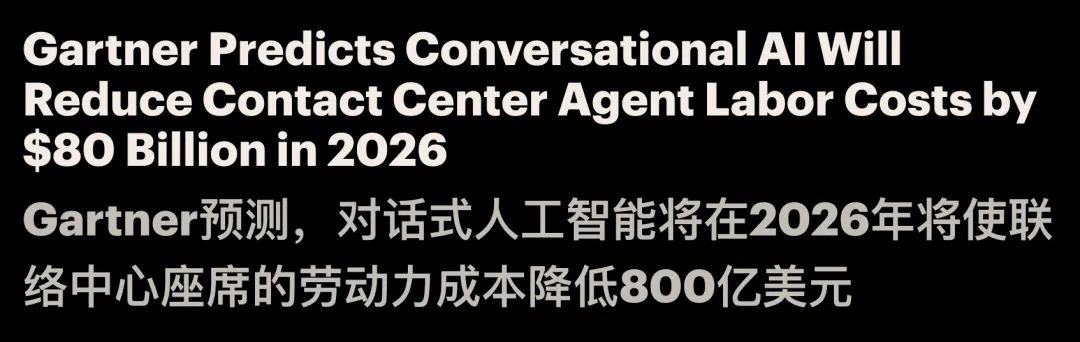
The cost gap for single interactions has been widened: AI self-help services at $1.84 and AI self-help at $13.50, more than seven times worse.
$1.5 trillion is just a slice of a bigger plate.
According to Fortune Business Insights, the entire customer-centered software market is expected to reach about $77.8 billion by 2026.
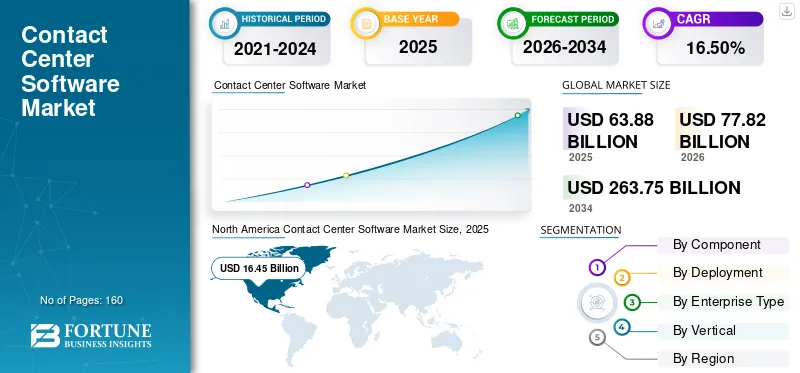
The table is filled with mature players: Salesforce's Agentforce costs about $2 per conversation, Zendesk and ServiceNow each have a formatted Agent program, and NICE acquired conversational AI company Cognigy in 2025 for about $955 million.
The supply chain contradictions mentioned at the outset are clearer in terms of specific products.
Intercom Fin uses models from OpenAI and Anthropic, while KIQ Agents from Customer builds on top of the OpenAI model.
These companies are OpenAI's paid API customers, and the launch of OpenAI's Presence has turned both companies into direct competitors from upstream and downstream.
In May, OpenAI launched the deployment of companies to provide enterprise AI consulting and integration.
Presence is a product extension of this route.
At this time, pricing has not been disclosed, geographic coverage has not been disclosed, and compatibility with third-party models has not been mentioned.
Presence's business logic points to an emerging industry judgment: the profitability of model APIs is declining, with deployments and governance at a high marginal range.
OpenAI uses its own customer hotline as a template, and 75 percent of the independent resolution rate is a figure that can be put on the negotiating table.
The next step is to connect two nodes:
After the pricing announcement, how many companies are willing to bypass Salesforce, Zendesk directly to find OpenAI to buy customer solutions;
When did the self-help version of Presence come online?
Only the $77.8 billion table that gets rid of the FDE's capacity bottleneck is truly relevant to it.