Over the past two years, large models have almost rewritten the default idea of human-machine collaboration: writing code, checking data, doing analysis, seemingly answering questions. But a closer look reveals that many of today's capabilities were not developed by the model itself, but rather by humans, encased in layers and layers of framework.
Human processes, writing Skills, building knowledge bases; parameters continue to grow and tool chains continue to thicken. Agents, Skills, Function Calling, RAG, Harness take the turn to consolidate temporary judgments into actionable workflows.
The problem is that the limits of abilities are often on the writing board. Changing scenarios requires rewriting processes, changing tools requires rearranging tips and permissions. The system seems more efficient, but knowledge is increasingly hanging outside the process. Another path closer to how humans learn is to replicate failure, connect structural problems, and use effective reasoning until the next time.
Now the mainstream approach is more about interfaces and retrieval, and it's rare to re-write the experience of yoga into reasoning itself. It's more difficult for people who are hanging out and calculating to pile it up, and it's even harder for the model to invoke the old experience itself on new problems. We named this route "Inspirational Learning" and integrated it into the side of reasoning, named "Isaac" (from Newton's name, a metaphor for standing on the shoulders of giants).
How human intelligence evolved:
From old experiences, you can learn new things.
In the history of modern science, major breakthroughs have rarely been made from scratch. For example, Kuhn was inspired by Newton's gravitational model of thinking and proposed Kuhn's law; Hollande moved Darwin's logic of natural selection to the field of computing, with the advent of genetic algorithms. The most common path is to move known structures to new fields: analogy, migration, rearrangement.
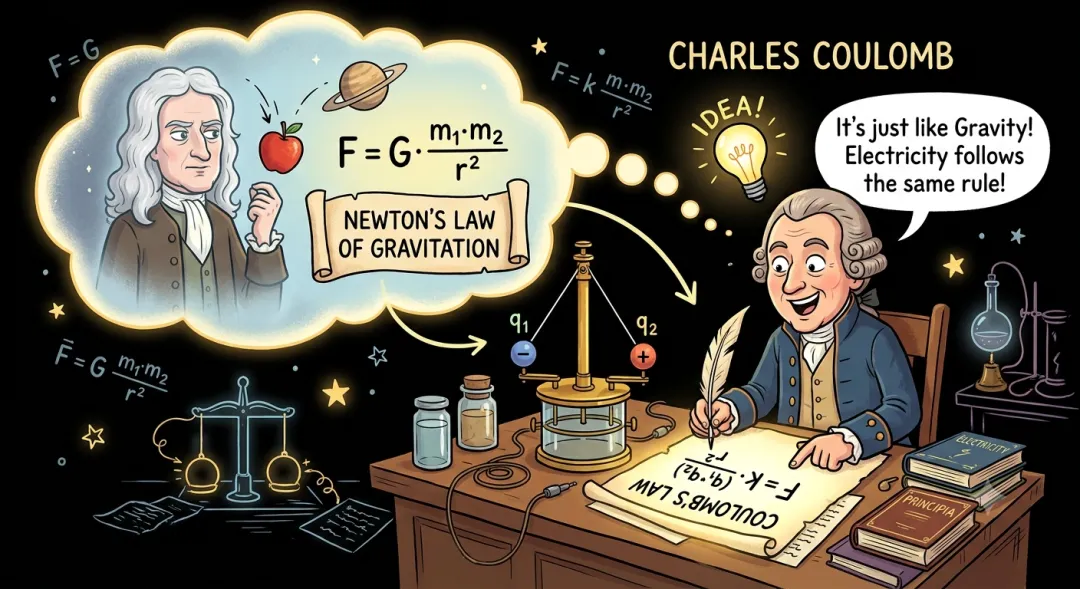
Figure 1-a: Cube was inspired by Newton's gravitational model of thinking and proposed Cube's law.
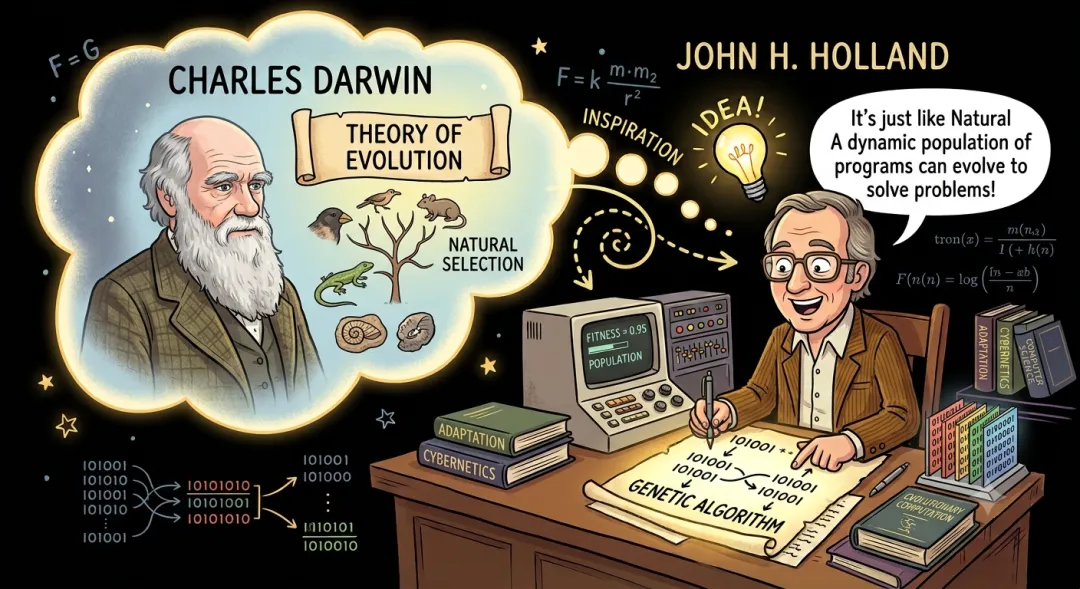
Figure 1-b: Hollande used Darwin's natural selection logic to develop genetic algorithms.
Inspiration for learning: the evolutionary plane of cognition
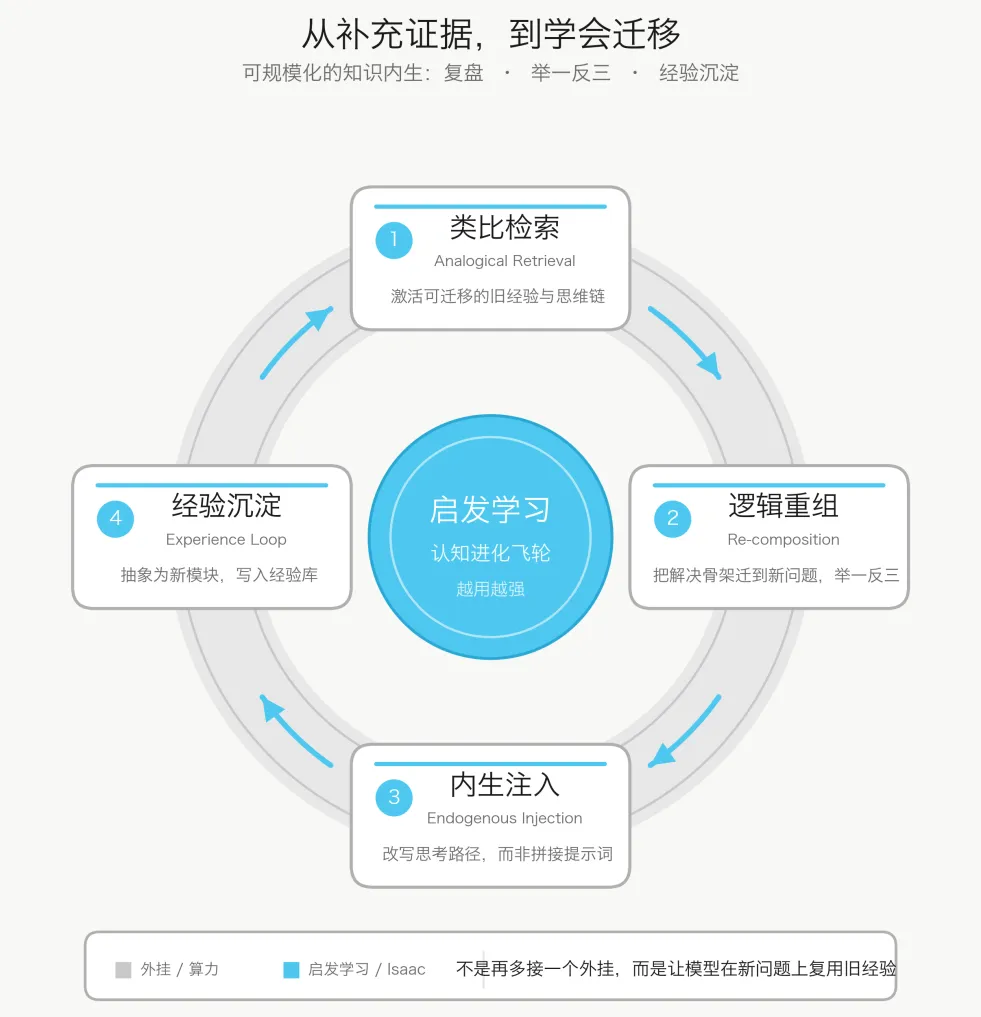
Figure 2: A cognitive evolutionary flyer inspired by learning. An analogy of retrieval, logical rearrangement, intrinsic injecting and experiential seduction form a closed loop.
Figure 2 gives four steps that inspire learning: analogue retrieval, logical rearrangement, re-composition, and intrinsic injecting.