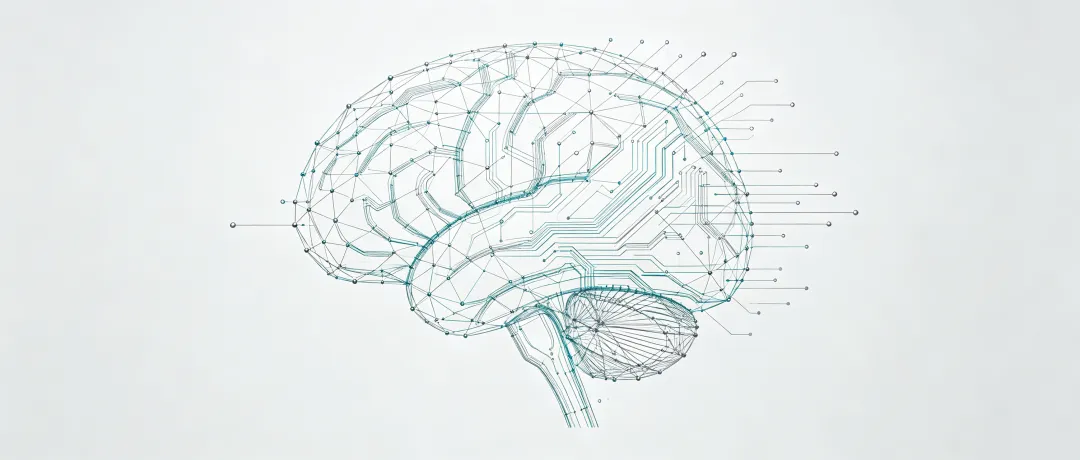
“ The technology underpinning China's brain-machine interface.
In 2026, brainstorming was included for the first time in government work reports, and along with the future of energy, quantum technology, biotechnology, manufacturing, physical intelligence, 6G, etc., was clearly identified as a future industry to foster development. A year earlier, seven departments, including the Ministry of Industry and Communications, had issued a special policy for the brainstorming industry, proposing breakthroughs in key areas such as electrodes, chips and integrated circuits by 2027.
But China's study of brain-machine interfaces is not a fresh start.
Taking the time 30 years back, in 1995, the HQ team began exploring brain interfaces in China; in 1999, the team independently developed the four-target steady-state vision induced electricity (SSVEP) brain interfaces, which could now be moved by brain-controlled signals. After that, the brain interfaces extended from early brain electricity collection and decoding, all the way to neural electrodes, special chips, implantation systems, neural control, large models and clinical rehabilitation.
Some research forces still revolve around the professors' team, continuing the technological path of decades or even twenty years; some have been upgraded to nationally focused laboratories, institutes and provincial research platforms; and more and more universities, hospitals and businesses are bringing their own devices, algorithms, clinical scenarios and engineering capabilities into the same joint laboratory.
They do not have the same problems in their studies.
Some have continued to improve the transmission of information without creating brain power, some have placed flexible electrodes in the brain, some have stopped outside the hard-brain membrane, some have attacked high-channel chips, some have started to study ultrasound, neural regulation, and some are solving increasingly critical data problems in brain-machine interfaces.
Putting these institutions together is a more complete picture of China's brain-machine interfaces.
Based on public data from universities, research institutes, hospitals and related institutions, this paper identifies a number of representative laboratories and research platforms in the country with clear research directions on brain-machine interfaces, ongoing scientific results or progress in clinical transformation.
01.
The core laboratory led by Prof.
The technological underpinnings of domestic brain machine interfaces
The Chinese University Neuroscience Laboratory is located in Beijing.
Research directions: brain-machine interfaces, neural signal processing, neural network dynamics, and the neural mechanisms of human brain language.
Representative researchers: high-volume, high-wavelength, and more
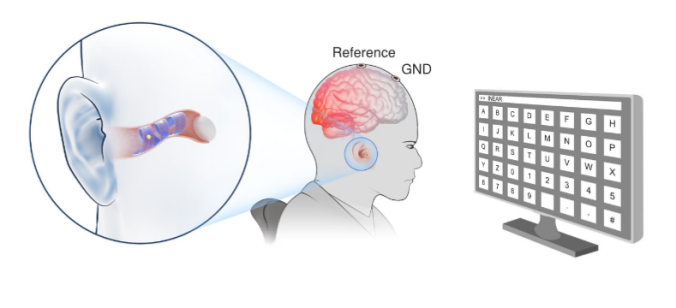 Brain-machine interface technology studied by the Neuroscience Lab
SSVEP connects to non-invasive brain machines
Directions of research: non-invasive brain machine interfaces, SSVEP, neural signal detection and processing, brain machine communication, new types of neural interfaces
The Neuroengineering Laboratory at Tsinghua University is one of the earliest continuing research forces in the country to conduct research on brain-machine interfaces.
He is one of the most representative researchers, currently a professor at Tsinghua University, and a researcher at Tsinghua-IDG/Magovan Institute of Brain Sciences, with long-standing involvement in brain-machine interfaces and neural signal processing.
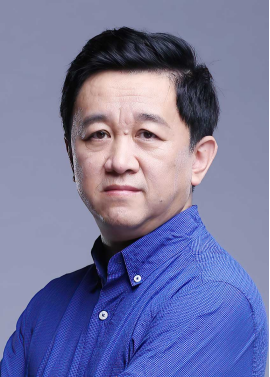 Height and size
His research on brain machine interfaces in Qingdao dates back to 1995. The most representative technological route is the steady-state visual induced electric brain machine interfaces, or SSVEP.
Simply put, the brain's visual cortex produces a corresponding frequency electrical response when a person looks at a different frequency blinking visual target. By identifying this response, the system can judge which target a person is staring at and then convert this choice into input or control directions.
In 1999, the team developed four-target SSVEP brain interfaces with the goal of manipulating optical signals. Over the next two decades, the team continued to improve the number of targeted non-invasive visual brain interfaces, the speed of identification and the rate of information transmission.
This technology line was later widely used in scenarios such as brain-controlled typing, device control, human-computer interaction, and became an important technical paradigm for non-invasive brain-machine interfaces.
In recent years, the scope of research has expanded beyond the scalp.
In February 2026, a new implanted brain-machine interface study was published by a team of researchers from the University of Hawaiʻi at Mānoa, Liu Xiaobo, and Chen Chong, who proposed a side-brain lamp-type implanted electrode program to try to use new implant locations and electrode structures to achieve long-term stable neural signal recording.
In other words, from the early SSVEP to new implanted neural interfaces, the HQ team spanned almost the entire cycle of development of Chinese brain machine interfaces.
Its industrial connections have also emerged. Public information indicates that the core team of Zen Dance Technology comes from the Qingdao Neural Engineering Laboratory, where Cao Wei is the chief scientist; the Qingdao Biomedical Engineering College also lists the innovative, micro-creative brain machine interface equipment developed jointly by Cao Wei, Hongpo and Boricon as representatives of the college's medical instrument transformation outcomes.
This line is important because it illustrates a basic fact: the brain-computer interface industry we see today did not start out abruptly from implanted clinical trials. Much of China's algorithms, electrical power collection and brain-computer communication capabilities come from earlier non-invasive BCI research.
Hongbo team: Wireless microcrane brain interface and clinical transformation
Directions of research: wireless micromachine interfaces, motor function compensation, human brain language mechanisms, brain network dynamics
If Cao Wei represents an important academic source of China's non-invasive brain machine interface, Hongbo's representative work for more than a decade has gone deeper into implantation systems and clinical transformation.
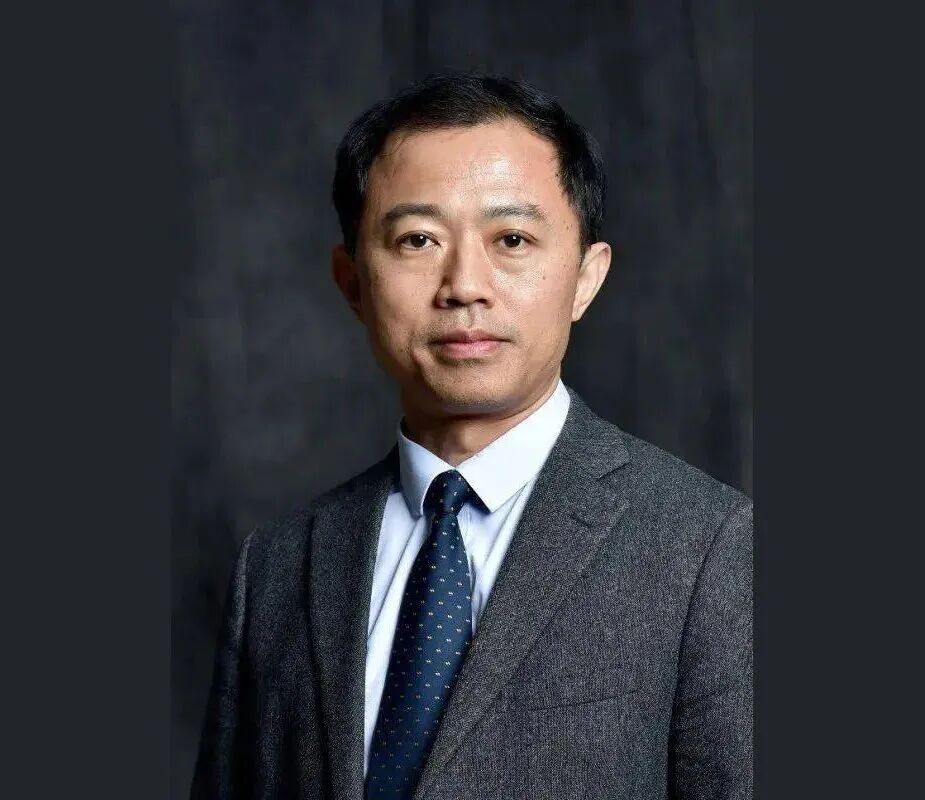
The Hunger Games
Honpo is currently a professor in the School of Biomedical Engineering at Tsinghua University, where his research interests include brain-machine interfaces, neural engineering, human brain language mechanisms, and brain network dynamics.
NEO chose a different pathway to be implanted into the cortex. Its electrodes are not inserted into the brain tissue, but placed outside the cerebral membrane; the brain interface processor is embedded in the cerebellum, completing wireless power and data transmission through close-field matching, and then using algorithms to decode the patient's motion intent from motion brain region signals.
In October 2023, NEO completed its first human implantation and subsequently entered multi-center clinical validation.
Prior to the launch of the product, NEO had completed 32 clinical implants in 11 hospitals nationwide for patients with spinal cord injuries. In March 2026, the National Drug Enforcement Administration approved the introduction of the first invasive brain-interface medical devices on the market worldwide.
From long-term technological research and development in China, to the completion of product development by Boricon, and clinical verification in several neurosurgery centers across the country, NEO has now formed a more complete domestic brain-machine interface for scientific research and clinical therapy product conversion chain.
Chinese University Laboratory of Biomolectronics (Team of Dai Shui)
Directions of research: flexible neural electrodes, implanted brain-machine interfaces, bioelectronic interfaces, cyborg tissue
Head of Mission: Daicho Kawa
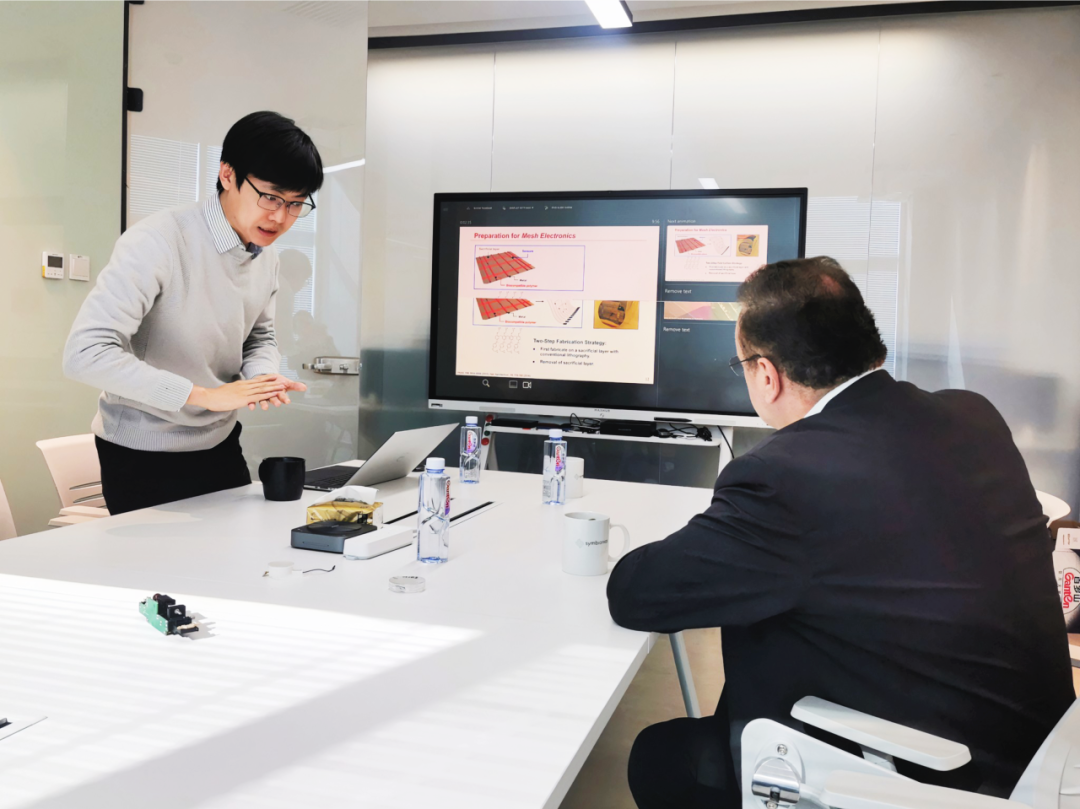
It's the first time I've seen this.
One of the most fundamental questions that the team was trying to solve was how long the electrode would stay there after entering the brain.
Brain tissue is soft, and small movements occur with breathing, blood flow, and physical activity. There are significant mechanical differences between conventional electronic devices and brain tissue, and after long-term implantation, tissue reactions, interface stability, and signal degradation are all problems.
In July 2026, his team is still working on the issue of implanted neural electromagnetic long-term stability.
The industrial association behind this technological route is with Zhejiang.
It is on two different routes with the Neo-Boricon. The former is more focused on flexible neural interfaces and implant systems, and the latter has completed product registration along the extra-hard membrane microstructure route.
Qinghua has thus formed a highly representative brain-machine interface research spectrum: Long-term non-invasive brain-machine and neural signal decoding; long-wave progression to extracranial microimpact and clinical transformation; and long-term deepening of the neural interface.
These three lines do not replace each other, but they correspond to several core questions that have been around for a long time: how to read faster, how to plant more safely, and how to stay longer.
Shanghai University of Transportation: Center for the Study of Brain Computing and Machine Intelligence (BCMI)
Directions of research: Emotional brain machine interfaces, C.E.C., computational neuroscience, multimodal brain electrical data
The main head of the group is Liu Xiaobo, Liu Xiaobo.
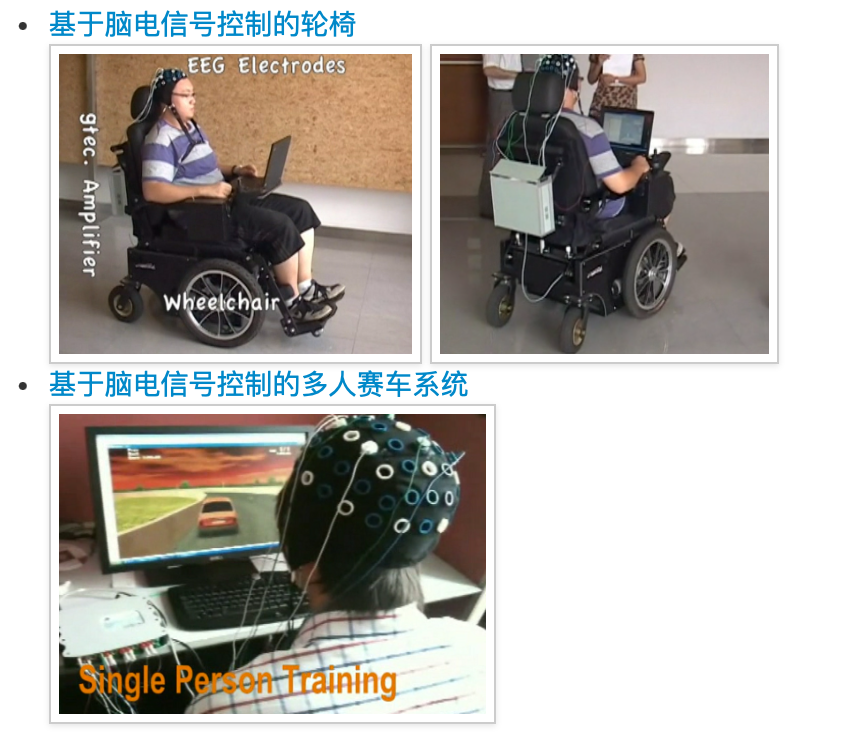
Demonstration of laboratory brain machine interfaces and processing of brain electrical signals
The Center for Brain Computing and Machine Intelligence (BCMI) at the Shanghai University of Transportation is taking a different path.
Its most famous achievement is not an electrode or a brain machine, but a set of brain electrical data sets called SEEDs.
SEED was first developed around emotional electronics, and has since expanded to various neuroscience tasks such as vision, fatigue, and sleep. According to the latest public laboratory data, as of July 2025, the SEED series has been used by more than 2,901 university applications from 99 countries around the world, totaling 8,777 applications, with 2,736 papers citing these data.
The significance behind this number is increasing with the emergence of a large electrical model.
In the past, many brain-machine interface algorithms were trained on small samples of dozens of subjects, a lab-made model, and a new batch of people, a new device, may need to be rearranged.
If machine-to-machine interface algorithms move further into large-scale pre-training in the future, larger, more standardized, and richer human brain data will become an important infrastructure in itself.
This is the level of capacity that BCMI has accumulated over the long term.
02.
From key laboratories to research institutes
Larger research platforms are starting to carry brain-machine interfaces
At the University of Tianjin, the human brain interacts with the human brain in a merger with the Sea River Laboratory.
Research directions: new neural signal perception theory and detection, biomechanical tissue engineering neurons, a new generation of high-volume brain-machine interaction, human-machine fusion core device development and transformation
Head of Mission: Mingdong
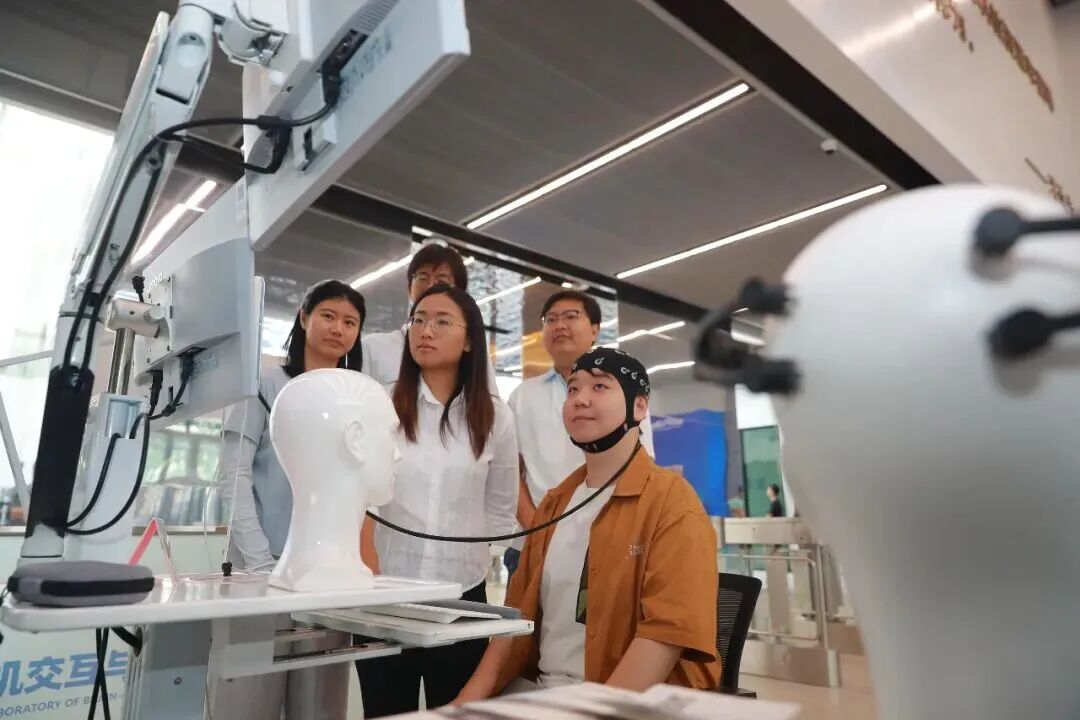
Visitors to the lab experience brain-machine interface equipment
Tianjin is one of the more systematic regions of the domestic brain machine interface research layout, one of its core carriers being the brain machine interaction and human-machine fusion Sea River Laboratory.
As early as 2022, Tianjin had begun to build the laboratory, which was officially unveiled in March 2023. The current laboratory, supported by Tianjin University as its core, with Ming Dong as its director, focuses on non-creative brain machine interfaces and extends to neural rehabilitation, aerospace, core devices and system platforms.
The laboratory has produced a series of more prominent results, including a series of neural rehabilitation equipment, and a five-generation space station brain interaction system. In a 2026 public report from the University of Tianjin, the laboratory also showed neural rhinoceroses, which assist patients in completing muscular functional rehabilitation through a brain-machine interface.
She is one of the representative researchers in the system.
He is currently a lecturer at the University of Tianjin, Vice Dean of the Faculty of Medicine, a long-time researcher in brain machine interfaces, a technical leader in the development of the integrated open source software MetaBCI for brain machine interfaces, and is involved in the development of a number of research projects such as Uranus II in orbital brain machine interfaces, artificial neural rehabilitation robots, and brain-speaking mouse chips.
The University of Tianjin is also continuing to expand its scientific research to develop talent.
In 2024, the Bachelor's Degree in Brain Machine Interfaces will be opened; in 2025, a new Master's Degree in Brain Machine Interfaces will be added; in 2025, the Bachelor's Degree in Brain Machine Science and Technology will be officially approved; in June of the same year, the National Brain Machine Interfaces Education Federation, headed by Tianjin University, was established and the first 14 universities will join.
From research platforms, open-source software, rehabilitation equipment, to aerospace applications and talent training, Tianjin has developed a relatively complete brain-machine interface research system.
Zhejiang University is a nationally focused laboratory for brain-machine intelligence.
Directions of research: brain-machine interfaces, decoding of neural signals, implanted electrodes and micro-systems, brain computing
Head of Mission: Panjaro
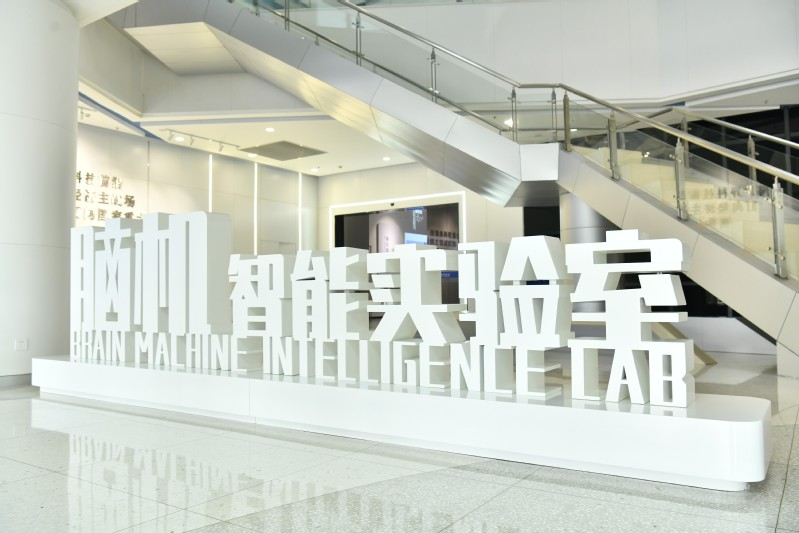
The National Key Laboratory for Brain Machine Intelligence is an important national-level research platform in the field of brain machine interfaces at Zhejiang University.
Dr. Pangu, director of the lab, has long researched artificial intelligence, brain-machine interfaces, and class-brain computing; the lab's researcher Liu Yi clearly focuses on implanted brain-machine interfaces, brain-machine interfaces, electrodes and microsystems, and animal and clinical applications.
This also makes the large brain machine's layout naturally intersect at two ends: one that connects computing and artificial intelligence, and one that connects electrodes and clinical systems that actually enter the nervous system.
In 2020, a team from Zhejiang University, Zhejiang University, completed the country's first implanted brain-machine interface clinical transformation study, in which high-altitude cutting-edge patients completed three-dimensional grabbing and eating movements using a motor cortical signal controlled by a mechanical arm and a mechanical hand.
Brain-machine interface research has since moved into higher-level platforms, ranging from neural signal decoding to implanted electrodes, microsystems, class-brain computing and clinical applications.
In addition, Zhejiang University and Hangzhou's Hangzhou metropolitan area have also co-founded the South Lake Brain Machine Interface Institute, focusing on the four areas of brain machine interfaces, innovative brain medicines, brain disease mechanisms and brain machine materials, to further expand cross-disciplinary research into brain science and brain machine interfaces.
The Center for Brain Excellence at the Chinese Academy of Sciences and the Center for Brain Machine Interface Research
Directions of research: movement/language functional replacement, sensory repair, precise closed-loop neural regulation, advanced cognitive innovation applications
This is the first time I've seen this.
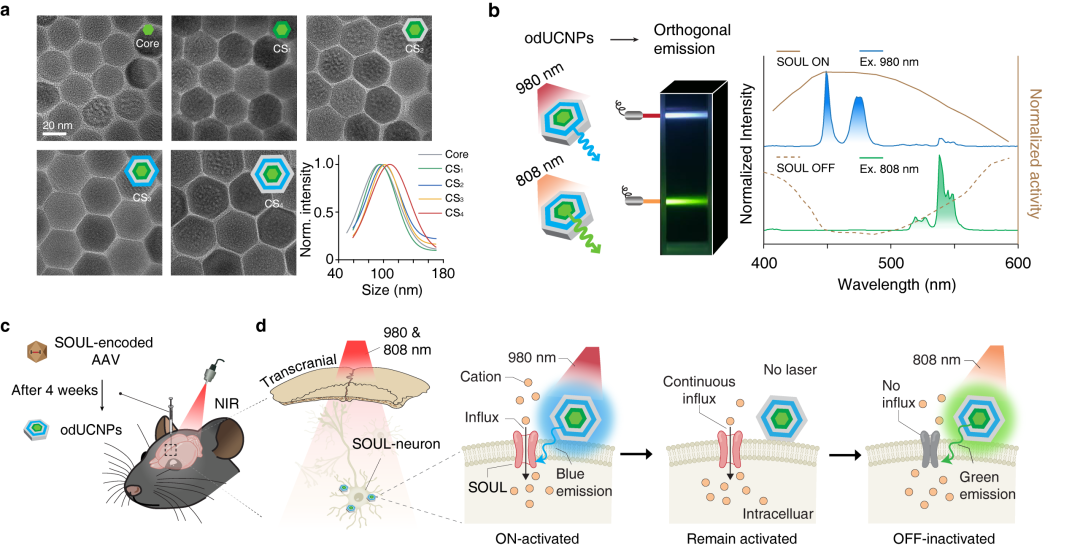
The Center for Brain Excellence has developed a binary near-infrared "neural activity switch"
On July 23, 2026, the Center for Brain Interface Research at the Center for Excellence in Innovation in Brain Sciences and Intelligent Technology of the Chinese Academy of Sciences was officially established in Shanghai. The research center sets motion/language functional alternatives, perceptual repair, precision closed-loop neural regulation, and advanced cognitive innovation applications across four broad areas, from basic research to clinical transformation.
The director of the Center for Implanted Brain Machine Interfaces and Flexible Neural Interfaces has long been engaged in research. His team has developed an implanted neural electrode array that covers about one-fifth of Neuralink-related products and has developed the first fully implanted brain control system in the country to enter the clinical stage.
On the clinical side, the Center for Brain Excellence has joined forces with Residency University-affiliated HCMG to conduct invasive brain-machine interface human trials. The second patient completed the implantation in June 2025, after training not only to control computer graphics and tablet equipment, but also to control intelligent wheelchairs and machine dogs through the high-throughput wireless invasive brain-machine interface system WRS01, extending brain-machine control from two-dimensional screens to real three-dimensional environments.
In other words, this newly established research center in 2026, not from scratch. Flexible neural electrodes, fully implanted brain control systems and human experiments, have already constituted its previous technological accumulation.
Beijing University's brain-machine interface with mental health regulation is a key laboratory in Beijing.
Directions of research: neural coding mechanisms, flexible interface materials, brain type chips, system integration, emotional brain interface and mental health regulation
Head of Mission: The Square
In June 2026, the Brain Machine Interface was officially launched by the Beijing Center for Mental Health Control Laboratory. Its organization typically reflects the cross-attributes of brain machine interfaces.
The laboratory is based on the construction of Peking University, with the participation of the Faculty of Psychology and Cognitive Sciences, the Faculty of Future Technology, the Faculty of Materials Science and Engineering, the Faculty of Chemical and Molecular Engineering, the Faculty of Integrated Circuits, the Institute of Artificial Intelligence, the Faculty of Medicine and the First Hospital of Peking University.
Based on the combined strength of his research, his research has spanned flexible neural interfaces, high-channel implanted brain machine interfaces, neural signal collection of chips, neural coding and decoding, and emotional brain machine interfaces and mental health regulation.
For example, in 2026, a team at Beijing University's Institute of Artificial Intelligence announced a multi-dimensional neural signal interface SoC aimed at high-channel brain machine interfaces, which integrates neural signal simulation frontend and 256 channel feature extractor, and processes compressed data output on slices.
The biggest features of this type of platform are multidisciplinary collaboration. Psychology studies brain states and cognitive mechanisms, material teams develop neural interfaces, integrated circuit teams attack chips, AI is responsible for decoding and modeling, and medical systems further connect clinical research.
China University of Science and Technology and the Brain Machine Interface Institute
Directions of research: brain machine interface basic science, critical technology, systems engineering, clinical transformation and ethical governance
Head of Mission: Tangzhou-ping
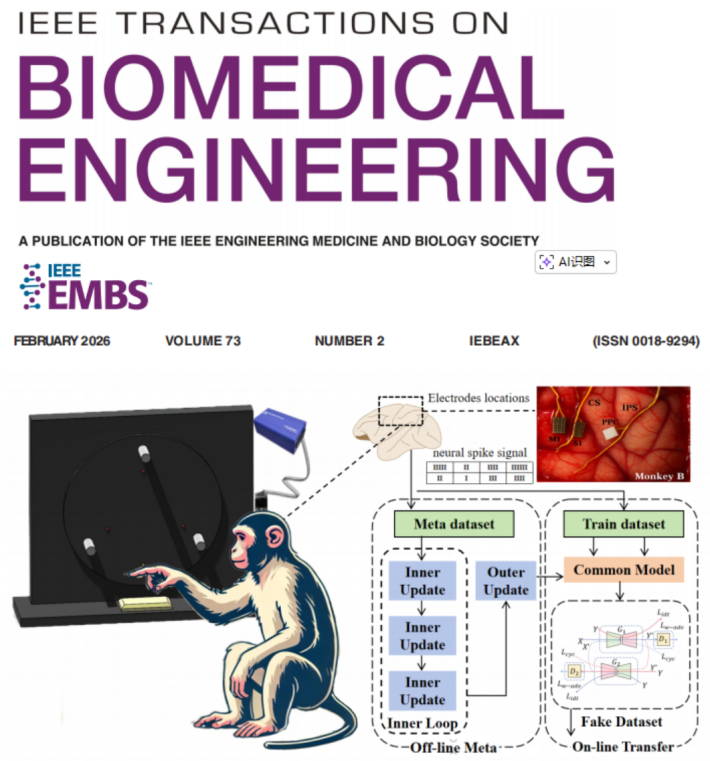
Breakthrough advances in implanted neural decoding and adaptation to small samples
On January 25, 2026, the University of Science and Technology of China formally established the Brain Machine Interface Research Institute. The institute integrated the strengths of the entire university and proposed the establishment of a framework for the administration of clinical silicon in silicon engineering in accordance with silicon science and silicon technology.
It has a feature that is not very similar to many university brainstorming platforms: clinical power was put into the core system from the very beginning of the institute.
The institute is deeply involved in clinical systems such as the Faculty of Medicine, Faculty of Medicine, Faculty of Medicine, Faculty of Medicine, Faculty of Medicine, Faculty of Medicine, Faculty of Medicine, Faculty of Medicine, Faculty of Medicine, Faculty of Medicine, Faculty of Medicine, Faculty of Medicine, Faculty of Medicine, Faculty of Medicine, Faculty of Medicine, Faculty of Medicine, Faculty of Medicine, Faculty of Medicine, Faculty of Medicine, Faculty of Medicine, Faculty of Medicine, and Faculty of Medicine.
The structure of this organization is related to Wuhan's current research base in brain-machine interfaces. In addition to university research institutes, Wuhan hospitals have established brain-machine clinical medical research centers, joint laboratories of hospitals and specialized brain-machine interfaces.
Researchers at the Nanjing University of Brain Machine Interfaces
Directions of research: uncreated brain machine interfaces, brain neural imaging, brain information decoding, electrode arrays and related core devices
This is the first time that I've ever been in the same situation.
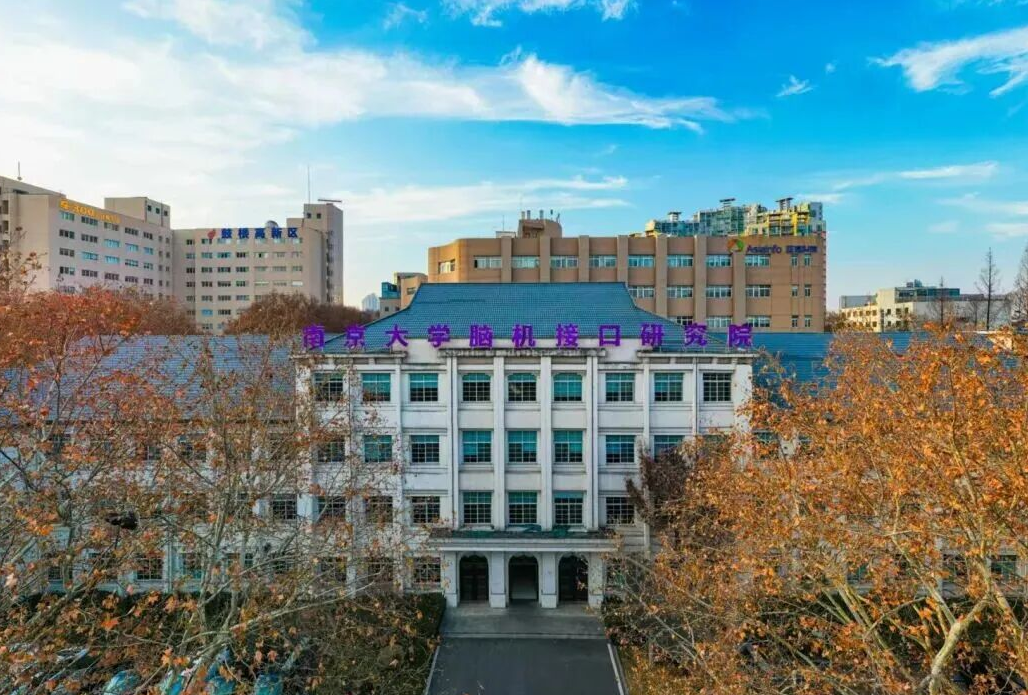
The Institute of Brain Machine Interfaces at Nanjing University was unveiled in July 2025, and is housed in the School of Electronic Sciences and Engineering, headed by Liu Heyang.
Public planning shows that the Institute's focus is on innovative brain machine interfaces, conducting research around electrode arrays, neural imaging, and brain information decoding, while developing autonomous brain machine interface systems and equipment.
The special thing about Nanjing is that it has not only established a university research institute.
At the same time, platforms such as the Nanjing University Brain Machine Interface Institute and the Nanjing City Brain Machine Interface Innovation Consortium were also promoted; the Nanjing Machine Interface Institute participated in the construction of units such as the People's Hospital of Jiangsu Province, with greater emphasis on clinical research, testing and results transformation.
This has resulted in two focused carriers: the Nanjing University Institute for Basic Applied Research and Core Technology, and the Jiangsu Machine Interface Institute for more connected medical and industrial transformation.
03.
Joint Laboratory
Bringing industrial and clinical issues into scientific research early
In addition to the university's own laboratories, another type of brain-machine research organization is increasingly worthy of the attention of the Joint Research Laboratory.
Their value lies not in the fact that the two words are combined in the name, but in the fact that the partners often decide directly on the research issue.
When chip enterprises enter, the laboratory first clogs up chips and electrodes; when recovery enterprises enter, the problem quickly falls to patients, robots and the recovery process; when medical groups are involved, clinical scenarios even exist in the early days of the laboratory's establishment.
University of Beijing × Trinity Biology
Joint Laboratory for Brain Machine Interfaces in the Northern Territory

Established in April 2026..
The lab has two technological routes at the same time.
One is invasive visual brain-machine interfaces that seek visual reconstruction through visual cortical microwave stimulation; the other focuses on mental health issues such as sleep and mood, developing non-invasive brain-machine interfaces and neural feedback.
In other words, in the same joint laboratory, there are both visual prosthetics that need to be implanted in the brain, and there are also completely inventive mental health brains.
It reflects the fact that brain-machine interfaces are now a very real-life situation, and it is becoming increasingly difficult to simply classify brain-invasive brain cells or brain-non-invasive brain cells, and many teams are deploying different technologies at the same time depending on the disease and the scenario.
Beijing University × Supervisory View
Joint Laboratory of the North Dakota Supervisory Brain Machine
On April 2, 2026, the Joint Laboratory for Supervisory Brain Machines at the North Tower was officially unveiled.
The laboratory is a collaboration of several teams at Peking University and the Supervisory Board to conduct research around the reading, interpretation, writing, and simulation of brain-machine interface information, including the analysis of brain-magnetic signals, multimodal neural information decoding, intervention regulation, and brain modeling.
Rather than simply pursuing a particular type of brain signal collection device, the Joint Laboratory's scope is closer to a complete information loop, which extends from brain information collection to decoding, interventions and model construction.
University of Beijing × New mile
Joint Laboratory for the New Mile Brain Machine Interface in Northeast China

On July 9, 2026, the Joint Laboratory of Brain Machine Interfaces North Big-New Mile was unveiled at Beijing University, and the collaboration period has entered the list of university-owned joint research and development platforms officially registered by Beijing University.
Its direction of choice is very specific to non-invasive brain-machine interfaces+rehabilitation robots.
The laboratory has developed three routes around brainwashing machines + exoskeleton robots + brainwashing machines + finger joints robots + cognitive closed-loop neural control training, based on the research capacity of the Beijing University College of Psychological and Cognitive Sciences, as well as the new medical scenario of about 30,000 beds for its shareholders.
Rather than simply improving the accuracy of brain recognition, the questions that need to be answered further will be closer to medical reality: can patients use it for long periods of time? can brain machines stabilize access to the external bone marrow? do doctors not need to change treatment processes? can different hospitals re-deploy it?
University of Jiangnan X Mechanical and Mechanical Engineering
Joint Laboratory of Machinery and Mechanical Engineering of Jiangnan University
The joint laboratory was officially unveiled on July 8, 2026, with the director of the laboratory serving as the vice-dean of Jiangnan University's School of Integrated Circuits, Jiang Zemin.
The co-development unit shows the technological importance of the project.
Jiangnan University's School of Integrated Circuits will leverage the advantages of integrated circuit design, micronation manufacturing and intelligent sensing, with the lab focused on high-channel neural signal collection chips, flexible microwave arrays, and real-time neural signal decoding algorithms.
Compared to the final demonstration of a patient's brain-controlled mechanical arm, the laboratory relies on lower parts such as the electrode, simulated front end, chip collection, power consumption, packaging, and signal processing.
This is the most direct technological advantage of the integrated circuit school after entering the brain-machine interface.
Xiaoyu Medical University of Wenzhou
Brain Interface Rehabilitation Lab
In July 2026, Xiangyu Medical and Wenzhou Medical University signed a strategic partnership agreement and unveiled the Brain Interface Rehabilitation Laboratory, which focuses on stroke bias, cognitive impairment, rebuilding motor function and non-invasive brain-machine interaction rehabilitation.
The technical focus of the laboratory is also determined by the ability of the two partners. Wenzhou Medical University provides medical, rehabilitation research and clinical resources; Xiangyu Medical is itself a rehabilitation medical equipment enterprise.
Therefore, its focus is not primarily on implant materials or high-throughput chips, but on how brain electrical signals get into existing rehabilitation devices, rehabilitation robots, and patient treatment processes.
The Joint Laboratory here is more like an engineering interface that connects university research with existing medical product systems.
This is the first time that the Chinese government has made such a move.
Wuhan Association and Hospitals committed to the Joint Laboratory of the Chinese Brain Laboratory
Hospitals and businesses are also directly co-creating brain-machine labs.
In February 2025, the Chinese University of Science and Technology (CUST) and the Medical University of Jiangxi affiliated hospital established a joint laboratory with Wuhan's Chinese Brain Machine Institute, with plans to invest 20 million yuan in three years of specialized research funding to collaborate on the X-ray 7+X-ray project. Open directions include neuroplastic tumor machine interfaces, soft hard cerebrospinal interfaces, artificial vision, artificial cervical membranes, and others.
This collaboration has already had a clinical basis.
In 2024, the two sides signed a strategic partnership; the partnership subsequently launched clinical trials of domestic high-throughput brain machine interfaces at hospitals and completed multiple implants of Wuhan-produced pump brain machine interfaces in 2025.
The biggest difference between this type of laboratory and a general university laboratory is that the clinical needs themselves can be a direct starting point for research. That is, the problems that doctors encounter do not need to be passed on to engineers after a long period of information and feedback, but can be directly entered into joint research and development.
04.
Written at the end
In 2026, 31 years have passed since the early exploration of brain-machine interfaces by HQ and HQ.
Over the past 31 years, domestic brain machine interfaces have ranged from early brain electricity collection and scanning to flexible electrodes, dedicated chips, implant systems, neural controls, and human clinics. The format of the laboratory has also expanded from a group of professors to nationally focused laboratories, laboratories, clinical research centers, and a growing number of cross-university, hospital, and enterprise collaborative platforms.
But it's still hard to really get out of the lab.
NEO's approval provides a rare and complete sample: from the long-term technological research and development of the Qingdao team, to the completion of product engineering at Boricon, to multi-centre clinical testing at neurosurgery centers across the country, and finally to the registration of medical devices for the market.
Professor Hongbo was also quite restrained when interviewed after the approval of the NEO in March this year: the landing of the first prototype does not mean that China is at the forefront of brain-computer interface technology.
This phrase is perhaps the most appropriate measure to look at these brain-machine interface labs today.
The real value of a laboratory, years or even decades later, is whether it leaves behind more stable neural interfaces, autonomous chips and devices, recyclable data and algorithms, clinical results that can be validated for a long time in the human body, or products that actually end up in hospitals.
Today, these answers are still scattered in different laboratories.
The real technological barriers to China's future brainstorming interfaces are likely to grow out of the problems that these labs are solving.
NOTE: This article provides information statistics as of August 2026. Brain interface is a highly cross-cutting area of rapid development, focusing on the selection of more complete public data, research teams, laboratories, laboratories, joint laboratories and clinical research platforms with clear research directions and representative results, not ranking, nor representing the exhaustion of the scientific power of all brain interface in the country.