Active Microdrivers have self-driving mobility, but in the micro-world, it's not the hardest thing to get it up and running. More importantly, how to turn the original random motion into a controllable directional, trackable, continuous motion that allows the Microdrivers to truly travel along a set route to a destination.
A programmable path light pattern consists of a series of virtual paths that can be generated, moved and reconstructed at any time. The micromads travel along the photovoltaic arc, turn around at the intersection, head off, or wait for the temporary stop; once the front path conditions change, they can also adjust the route in time. Even if multiple micromads are simultaneously sent, they can travel separately to different target areas without interfering with each other.
Recently, a team of professors at Beijing University of Technology, Wang Xiaoping, proposed an AI-assisted photo-electric field control strategy for controlling the movement of dynamic micromads.
The strategy uses the synergy of multiple electromechanical mechanisms to transform random self-driving movements into all-directional movements that can be designed and predicted; while using AI algorithms to predict the movement trends of micromads, and to rebuild guided light patterns based on the dynamics of navigation missions, ultimately enabling multiple dynamic micromads to navigate independently and operate in parallel in complex environments.
The results of the study, titled AI-assisted optoelectrokinetic control of active self-propelling micromotors for independent navigation with multimode motions, were published in the journal Science Advances.
01.
Three electro-mechanical mechanisms work together to make light patterns embodied in an invisible orbit.
The research team prepared the Janus dynamic microwave, consisting of a semiconductor hemisphere and a metal hemisphere. When an alternating electric field is applied on both sides of the chip, the metal hemisphere and the semiconductor hemisphere have different polarization responses to the electric field. The microwave surface thus forms an induced charge and generates an induced charge current in the surrounding liquid; due to the space asymmetry of the Janus structure itself, significant fluid differences between the two sides result in stable net propulsion, which gives the microwave a continuous drive.
When a light pattern is projected onto a photosensitive layer, the local electrical conductivity changes with it, forming a spatially non-uniform electric field in the liquid. Thus, light patterns of different shapes, widths and spatial positions are no longer merely illuminated, but are transformed into shapeless orbits that can guide direction, regulate speed, and switch motion states. In a point-shaped light pattern, micromads can rotate along an orbit like a helium planet's axis; in close-range optical patterns, they maintain a certain horizontal bias, and the light advances along the pattern. By changing the size of the light pattern, the team can also further regulate the radius, distance, and velocity of motion.
There are three different electromechanical mechanisms that play different roles in this series of photovoltaic systems:
Inducing ICEP to give Microdrive the ability to drive actively;
N-DEP) pushes micrometers away from lighting areas, creating virtual boundaries;
The AC effect (ACEO) attracts micromads closer to light patterns, causing them to shift horizontally.
The ingeniousness of the study was that three interacting electrical forces were converted into synchronous mobility: the ICEP was responsible for advancing forward, the DEP was responsible for constructing boundaries, and the ACEO was responsible for shifting.
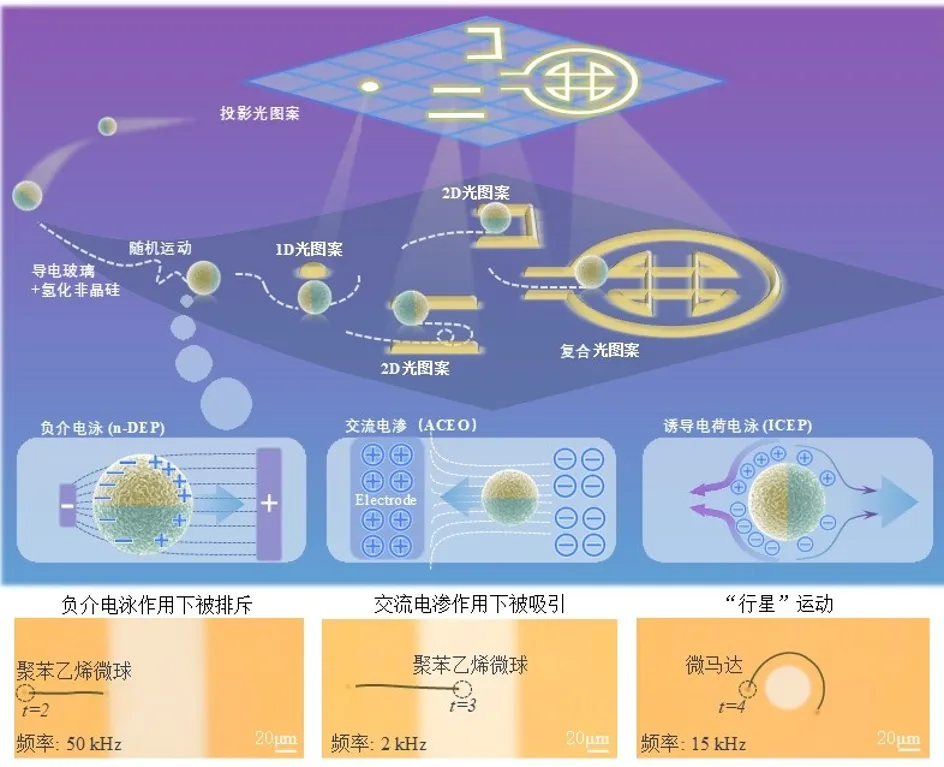
Microdemobility under the influence of three electromechanical mechanisms
02.
Decomposing complex navigation into combined steam-powered base commands
For a vehicle to travel through a complex transport network, it must not only move forward; likewise, a dynamic micromotor to complete long-distance navigation, it must also have the ability to turn, turn, turn, stop and restart.
For this purpose, the research team constructed four types of flexible call base movements for micrometers by combining two or more light patterns.
1) Forward trajectory: without physical boundaries, and can be steadily pivoted along the path. Two parallel but differing width photographic patterns can construct a viable path with a virtual boundary. Negative median electrical flows bind the micrometers inside the path, while inducing the electroelectric flows effect continues to provide forward momentum, allowing them to move steadily along lines, arcs and even corners.
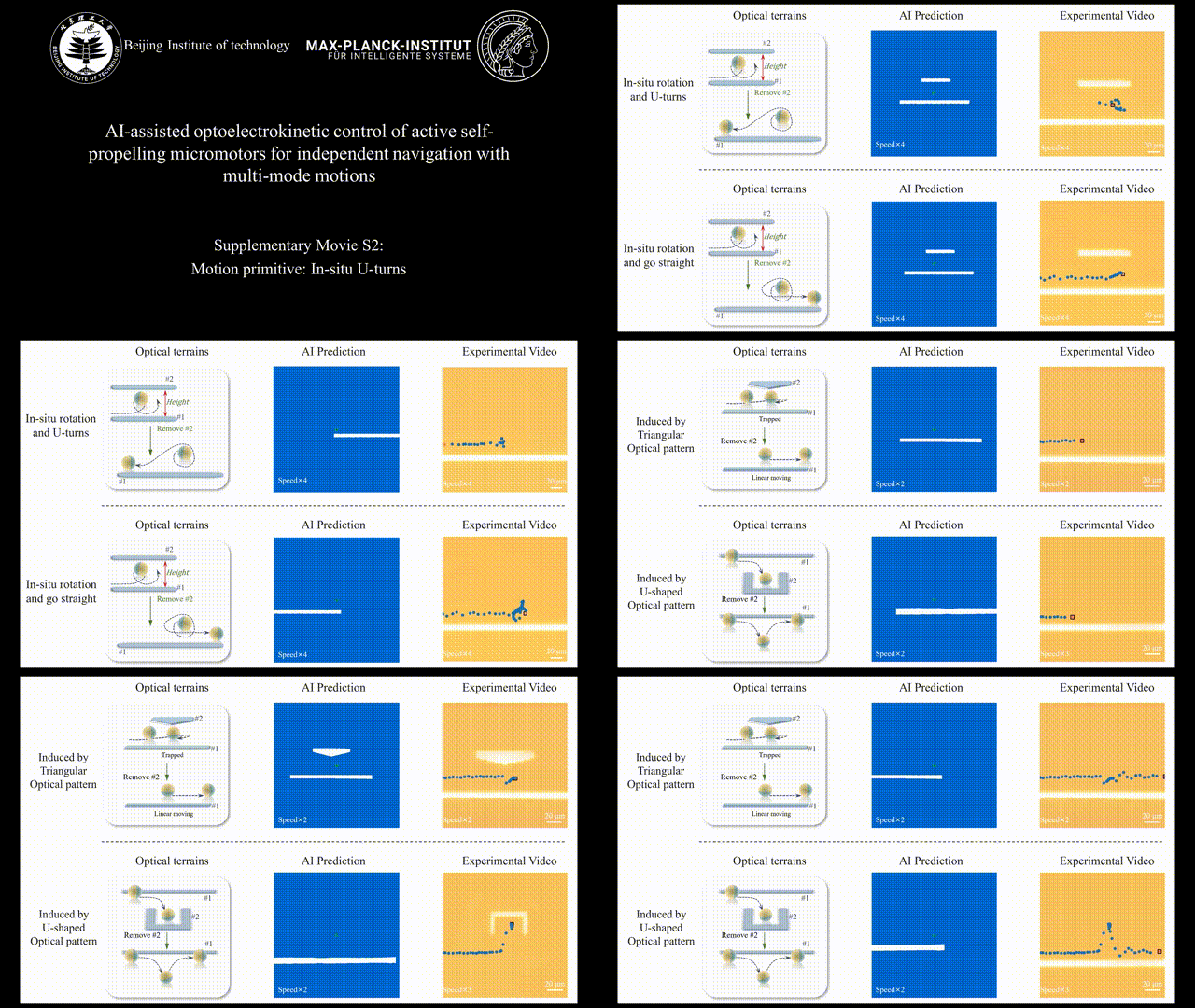
When the two light patterns are close to the width, the micromada can rotate in the local area; it is necessary to control the removal timing of one of the light patterns, and the micromada can both complete the turn of the head in the original location.
3) Flexible switching: By means of the AC voltage effect, trajectory coupling is achieved. When the adjacent light patterns have different widths and angles, the flow of AC voltage generated by the wider light pattern guides the microphone to a new location, helping it connect to the adjacent orbit and completing the microphone's rapid rotation within a small range.
U-shaped or triangular photographic patterns can construct a force-balancing zone in the local region to stabilize the microphone; after the removal of a specific photographic pattern, the microphone can restore motion, equivalent to setting a photographic parking space for it with no physical structure required.
These four types of movements together constitute a set of crawling action bases in the micro-world. By combining forward, reverse, pause, release, and reverse movements, continuous, flexible long-distance routes can be joined together, transforming complex navigation from a one-time design into a sequence of movements that can be reconstructed on demand.
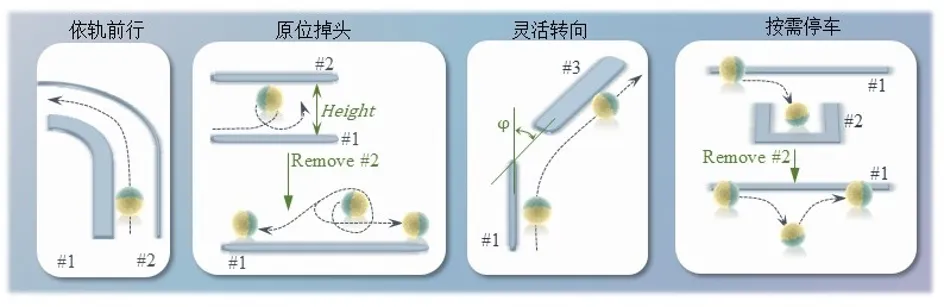
Multivariate movement base of active micromads
03.
We're going to do a preview in AI, and then we're going to get Microdomains on track.
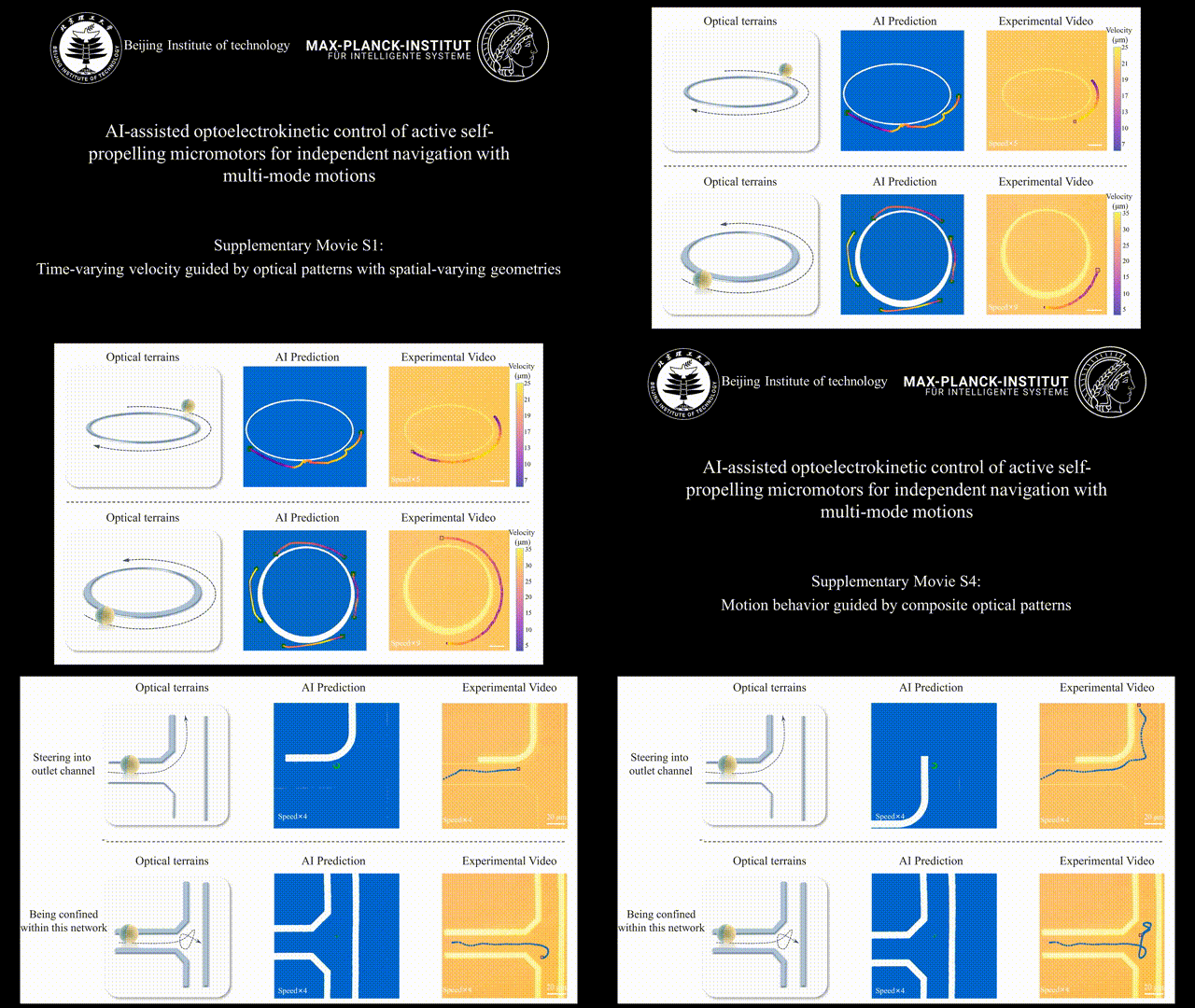
However, as the combinations of photometric patterns become more complex, the motion of the micrometers becomes more difficult to predict. Small variations in the width, curvature and relative position between the photometers and photometers can cause significant differences in motion and trajectory; when multiple photometers work together, multiple electrodynamic effects combine further to make trajectory evolution more complex. How to accurately predict the behavior of micrometers in different photometric environments becomes an important prerequisite for long-term stable navigation.
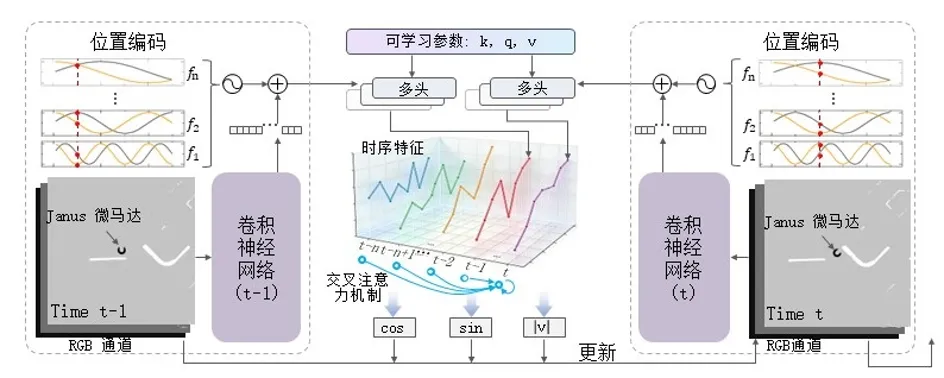
For this purpose, the research team constructed the CNN-Transformer space-time motion prediction model. By combining residual network modules with spatial attention mechanisms, they extracted two-dimensional light patterns and spatial characteristics associated with the relative positions of the microphone; they introduced the Transformer module to model the timing of sequential moments of space information with the state of the historical motion of the microphone, thus learning the laws of time-space evolution of the microphone movement guided by the light pattern.
Based on this model, the research team was not only able to predict the direction and speed of the instantaneous motion of the microwave, but was also able to further develop the long-term motion trajectory of the microwave under the influence of a composite photoproton, providing a predictive basis for the parametric selection, photoproton configuration and optimization of the dynamic guidance program of the motion base.
Microdynamics predictions based on AI
04.
From single-engine to multi-engine navigation in parallel, allowing multiple micromads to truly navigate their paths.
Based on the flexible regulation and precise prediction of the evolution of individual micromodels, the research team explored the possibility of multiple micromodels moving flexibly in complex spaces. By dynamically combining and reconstructing light patterns, the team constructed a variety of light-electric navigation networks, such as fluorescent pumps, parking garage pumps and helium labyrinth pumps, in which micromodels were able to complete path selection, stop-location, and dynamic transformation, and further achieve the independent navigation of multiple micromodels.
In a grid with one entrance and five exits, the micromata can enter any branch and exit from any branch as required. In a grid with four micromata can enter different parking lots and re-start in any order. The first to stop and the first to leave can be arranged according to the task. More challenging tests come from a maze with a shifting route. Three micromata travel along different routes; when the previously available branch is suddenly blocked, the system quickly reconfigures the light patterns, re-planning the route for the micromata to bypass the obstacles. If there is a potential collision risk along the narrow section of the route, the system also activates the button on the temporary stop button, allowing the micromata to stop at the intersection of the map and re-start the light path.
From selecting routes, parking lots, to changing lanes and avoiding obstacles, the lighting design builds a lighting grid that can be reconstructed in real-time with micromedia locations and environmental changes.
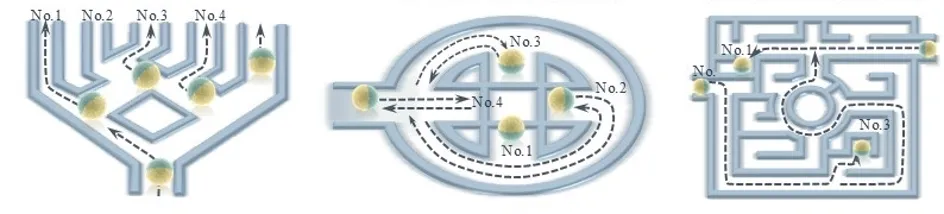
Maybe a path, a ring path, a labyrinth path.
Multi-micrometer operation in parallel with independent navigation
05.
What is the meaning of this verse?
This study integrates multiple electromechanical effects in the photoelectric field into a set of motion capabilities that can be called on demand: inducing the electrode-swimming effect to provide propulsion, inter-electric swimming to construct boundaries, AC voltage effect to complete attraction and reversal; dynamic restructuring strategies to connect different motion native languages into continuous paths, and AI algorithms to achieve predictive and iterative optimization of motion trajectories.
As a result, the dynamic Micramada, which was originally more dynamic and random, has not only learned to choose its own route, wait for parking and change dynamic paths, but also has the ability to navigate in parallel with multiple machines and independently.
This achievement propels proactive micromanaging from self-driving pumps to predictive, decision-making pumps that offer new possibilities for small-scale freight transport, cell-to-particle operations and multi-micro robot collaboration tasks.
In the future, when more and more proactive micromads enter the same operating space, they may actually be like a team of smart cars running in an orderly fashion, running their way to their targets, parallel to each other, each in their respective roles, along a micro path built into a programmable light-calling field.