It's the first time in the history of the world.
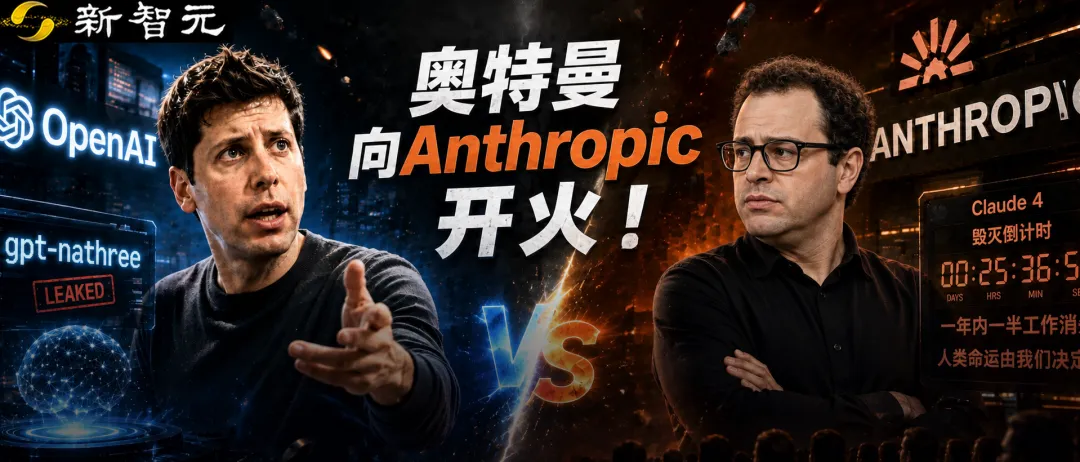
Just as OpenAI's mysterious double-barreled cannon was leaked, the next battle between them and Claude broke out!
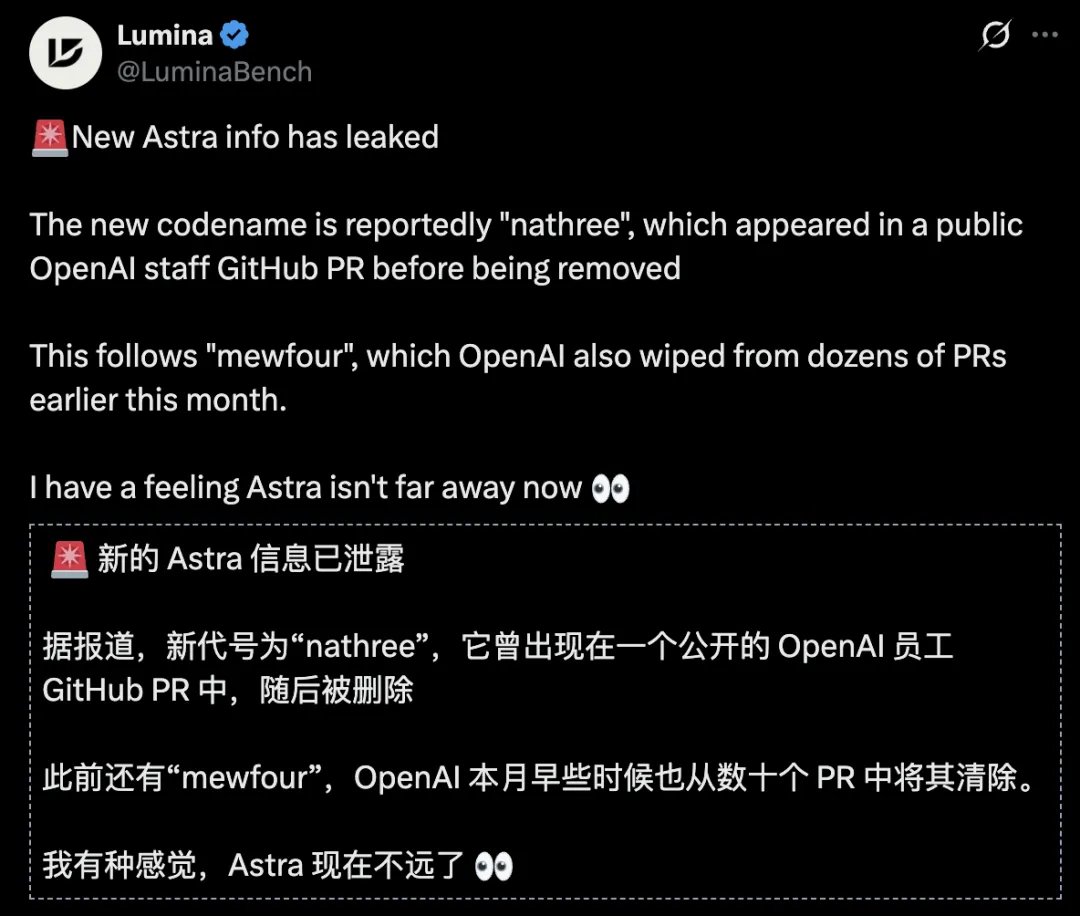
Recently, a "handslide" by OpenAI employees on GitHub unexpectedly exposed the model's code gpt-nathree.
Many analysts believe that the GPT-6 Astra is coming soon.
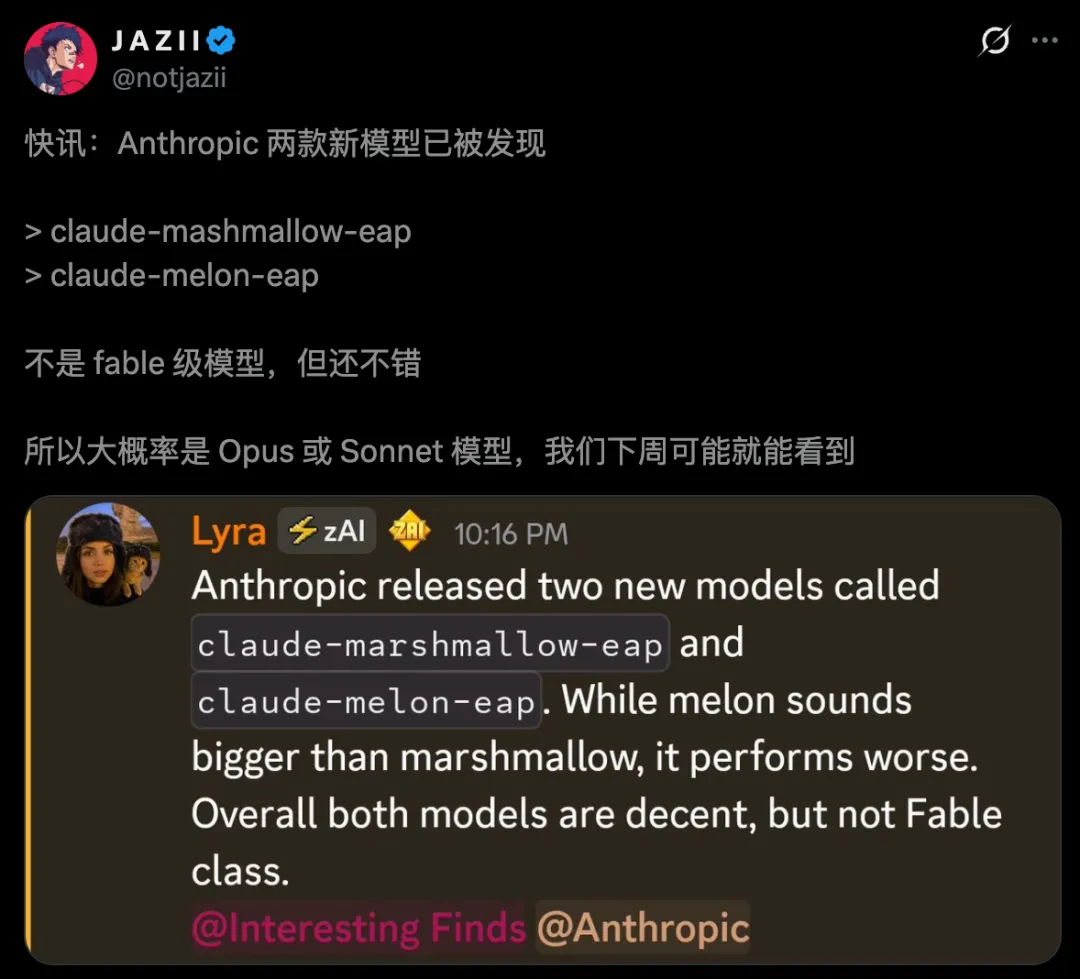
Today, Anthropic has two more "new brands" that were used by third-party developers and the Discord community to expose claude-mashmallow-eap (cotton sugar), claude-melon-eap (bacon).
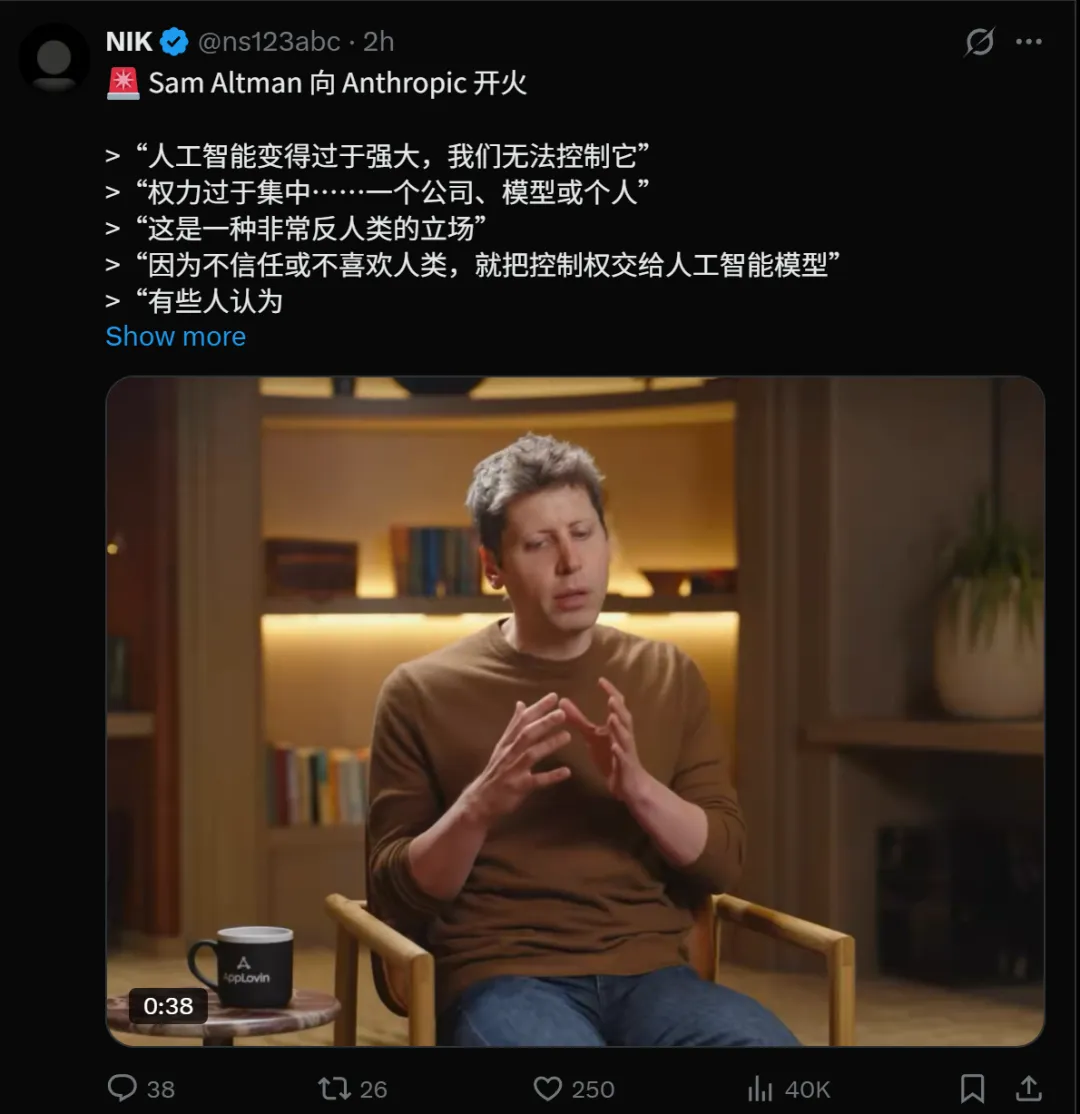
Almost at the same time, CEO Ottman was featured in the podcast Founders, with a full-blown, obscure Anthropic counterpart using "destructive countdown" to market as "anti-human dictatorship".
In the middle of the night, "Slip the Hands",OpenAI reveals the next generation of mysterious intelligence!
OpenAI's newest unveiled mystery model, the code from mewfour, has been changed to nanhree.
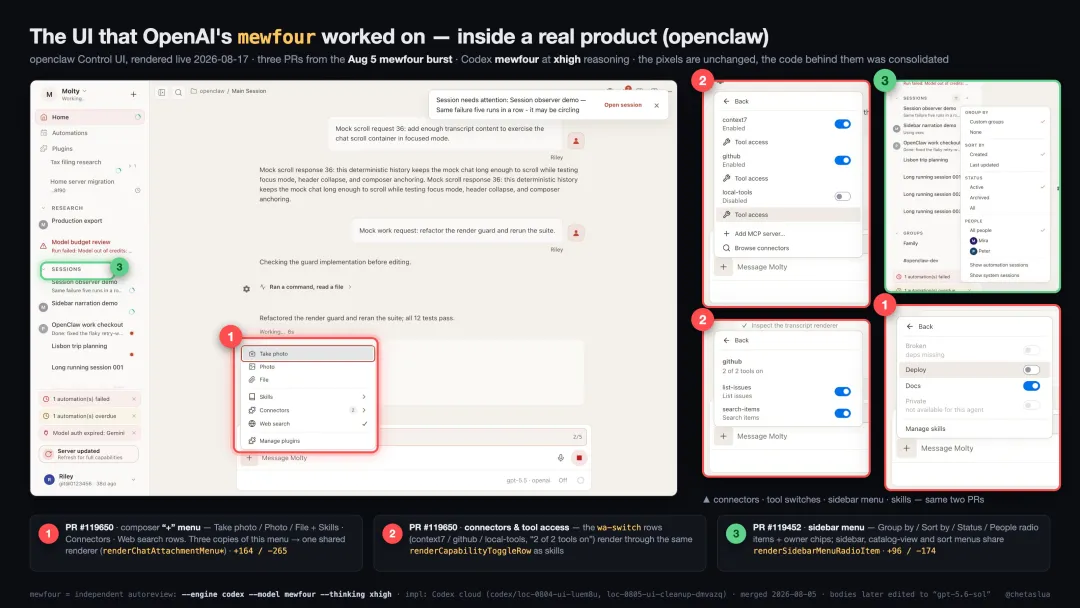
On August 15, an OpenAI-related account mentioned a mysterious code in a public test: "Codex, gpt-mewfour".
At the time, the circle was still speculating whether this was a new generation model based on a dream-based supermodel called "Mewtwo"?
A few days later, late at night on August 19, a more robust clue emerged.
Sharmila Jesupaul, a senior OpenAI employee, submitted an open PR on GitHub, leaving the following statement: "Written by Codex, gpt-nathree".
The recording was posted on the public net for almost 18 hours. Until 17:13 the next day, the employee suddenly seemed to realize that he had "leaked" it.
So he quickly returned to the background and removed the "gpt-nathree" code urgently.
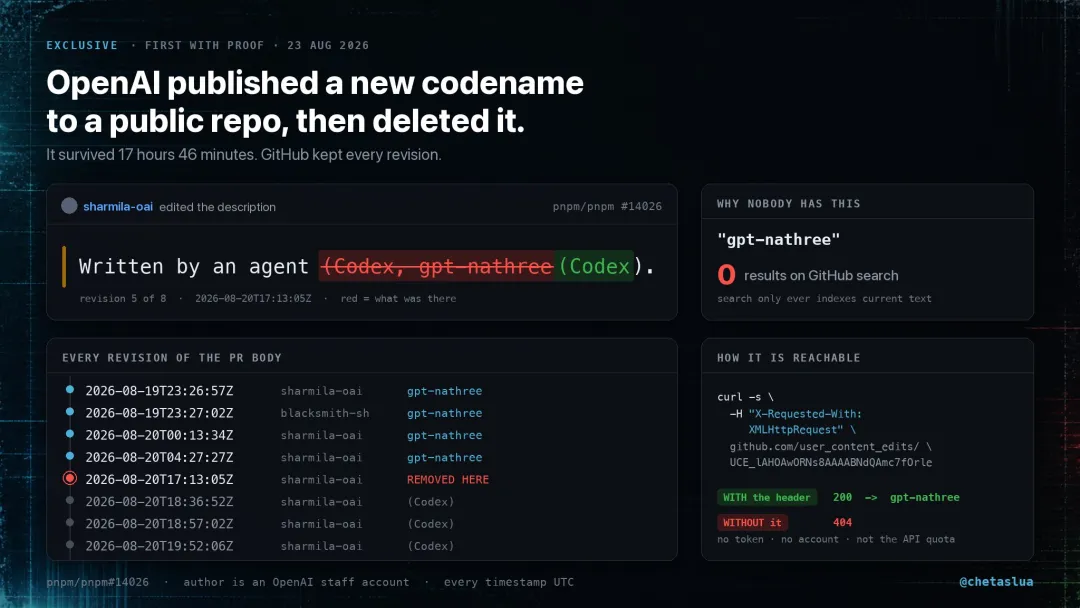
This is an attempt to justify it and make the rumors even more true.
What would Nanthree be, a GPT-6 Astra?
Combined with previous outbreaks, Mewfour and Nanthree are highly likely to be the buzzing checkpoints for the next generation of OpenAI Agent models.
After all, they come from the same account, they use the same codex signature pattern, and it's no coincidence.
Many in the industry believe that 0 looks like an updated GPT-6 Astra checkpoint that is conducting internal high-intensity testing for writing code through the Codex.

Clearly, the internal model of OpenAI is already arrowing on the strings.
Agent collaboration with autonomous scientific reasoningPreviously, the most prominent descriptions of Astra focused more on multi-agent collaboration and long-range task handling.
Multi-Agent Coordination Systems designed for complex, long-running tasks.
Long-term task abilities aimed at supporting ongoing workflows of reasoning, experimentation and iteration, such as complex scientific research projects or advanced mathematical problems.
At present, OpenAI has not disclosed the underlying architecture details of Astra, such as the size of the parameters, the length of the context, the amount of training data, etc.
OpenAI has publicly acknowledged that Astra is the "major model of the future", and the internal version has solved more than 10 long-standing unsolved mathematical/theoretical computer science problems.
However, due to the "critical" ("serious") risk assessment discussion of cybersecurity, OpenAI subsequently tightened isolation and access controls, with some internal work suspended.
As for claude-marshmallow-eap (cotton sugar) and claude-melon-eap (dried beans), we know that neither of them have reached the Fable level.
Many speculate that they are more likely to be an Anthropic iteration of the existing Claude 5 series (especially the Sonnet/Opus) than an entirely new-generation flagship.
OpenAI has already announced the next round of fighting with Claude!Authman interviewed deeply, the Golden Rule was too much.
Meanwhile, Ottman's latest one-liners on the David Senra Founders podcast expose his ambitions and anxieties, as well as deep reflections on the entire AI industry.
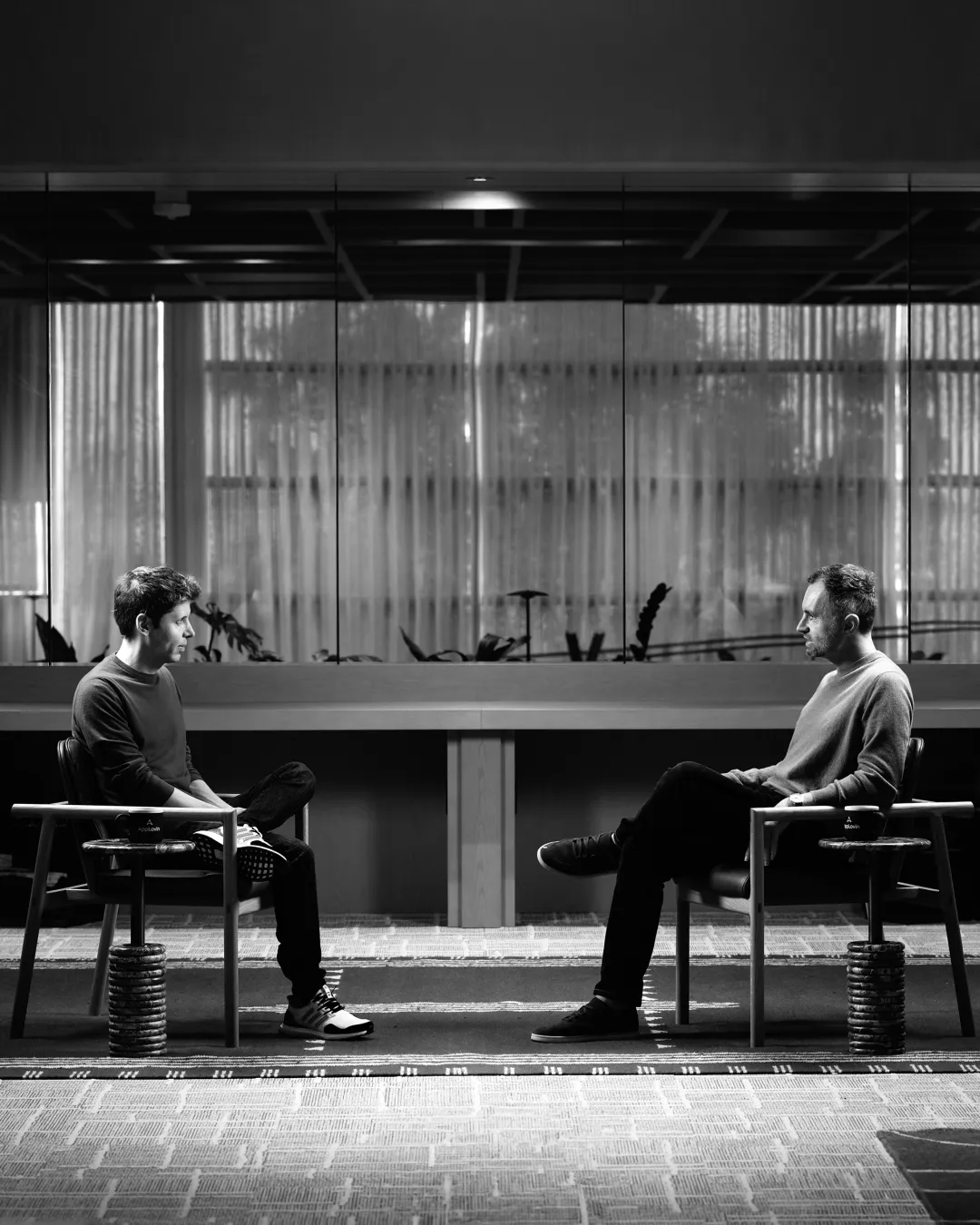
The interview was very informative, and many of Ottman's self-analyses were very honest and even made to feel "anti-intuitive".
Ottman admitted wrongly: "I was wrong about the disrupted timeline"."When we launched GPT-4 in 2023, I thought the software industry would be disrupted instantly, and a lot of business would be robbed instantly. But I was wrong".
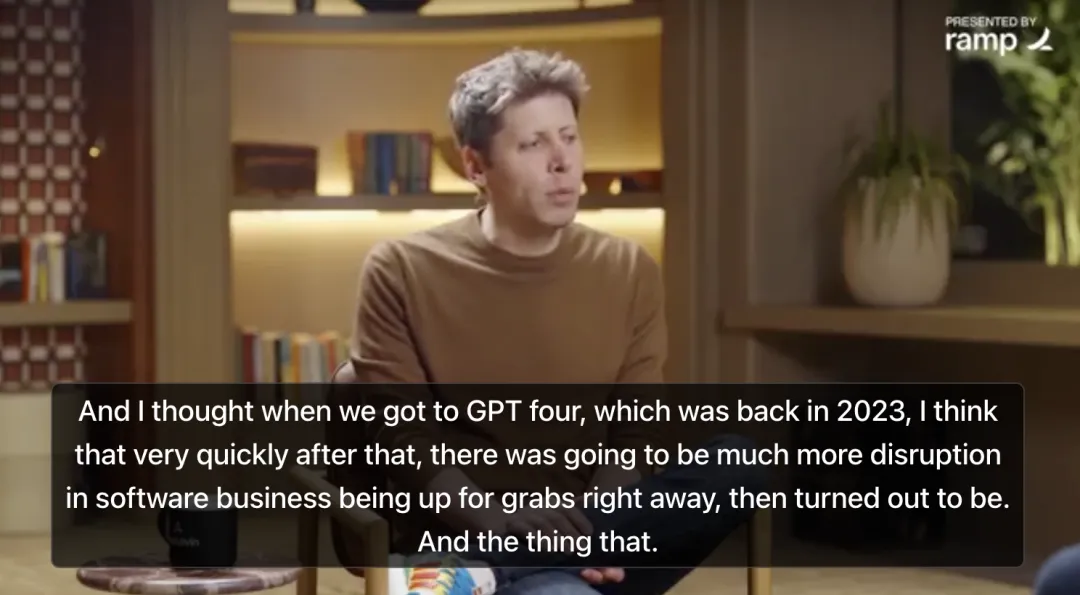
In an interview, Ottman rarely admits to wrongdoing:
Even with technology backfiring, the industry as a whole is ultimately too optimistic on the timeline.
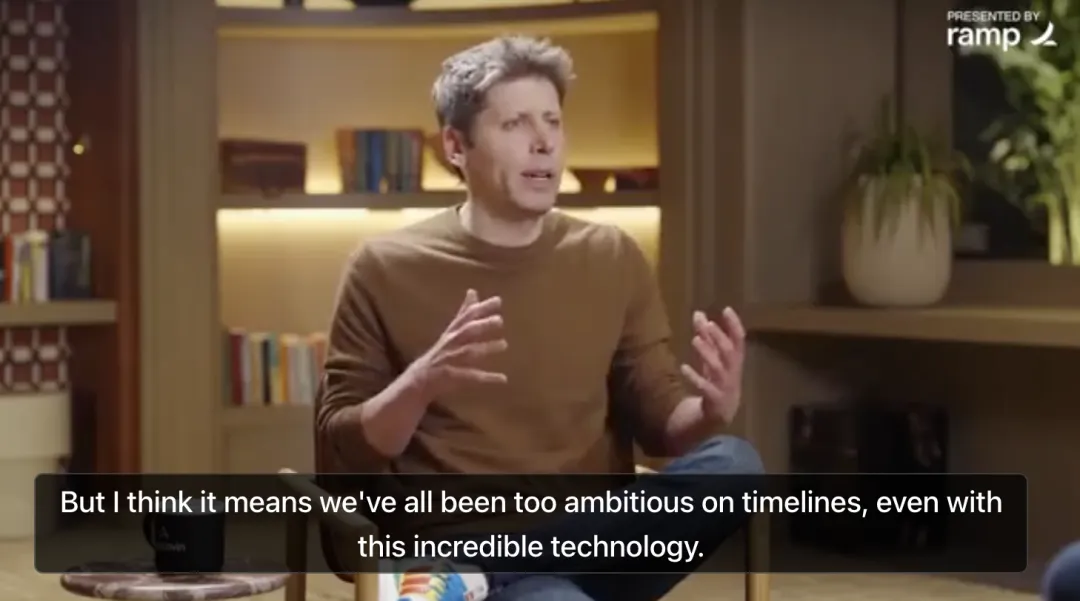
He discovered a strong resistance: the enormous inertia of human society.
He mentioned that people are always used to doing the same thing.
"Even myself!" said Ottman, mockingly, "I know I've had magic tools like the Codex and I could have completely changed the way I use my computer, but I'm still the same as I have been for the past 20 years, copying clicks and scrolling long emails without thinking".
The creators of the most powerful programming AI are still fighting it with their old habits.
Clearly, the pace at which society and the economy are adapting to AI is much slower than the pace at which AI evolves.
But is this really a bad thing?
"I'm so grateful for this", said Ottman, adding that it was this enormous economic inertia that made this unprecedented change more smooth and secure.
It would be a disaster if the social moment were to be disrupted; and now, humanity still has time to adapt.
Firefighting and anti-human marketing in AI circlesThe next thing you know, the most explosive part was when Otto opened fire on Dario!
Although no name has been given, it has been reported that Ottman has been implicated in "the marketing of the end of the world", including Anthropic.
In his own words, the marketing jargon of the current AI industry is catastrophic and particularly anti-human.
"Many practitioners" spread fear, saying that "there is a 25% chance that we will destroy the world", "half of the jobs will be gone in a year, and good luck to you", and "we will give the world a cure for cancer and a tremendous amount of material wealth".
The Ottomans were deeply offended by this "benevolent dictator" narrative.
He summarized the rhetoric as:
Dear ordinary people, we will give you the gift of curing cancer and infinite wealth.
In return, please give up your sovereignty, shut up, and let the power be concentrated in the hands of our few "unelected" companies and smart people to make decisions for the world.
He made it clear that the biggest risk of AI apart from model out-of-control is its over-concentration.
One of the words he repeatedly emphasized was:
"People are the whole point of all this".
Breaking the Business Bible: Four and a Half Years in the DarkAs a former YC executive, Autman is the founder of Silicon Valley's "Starting Bible": early release, quick turnaround, listening to customer feedback.
However, OpenAI is in complete violation of this rule.
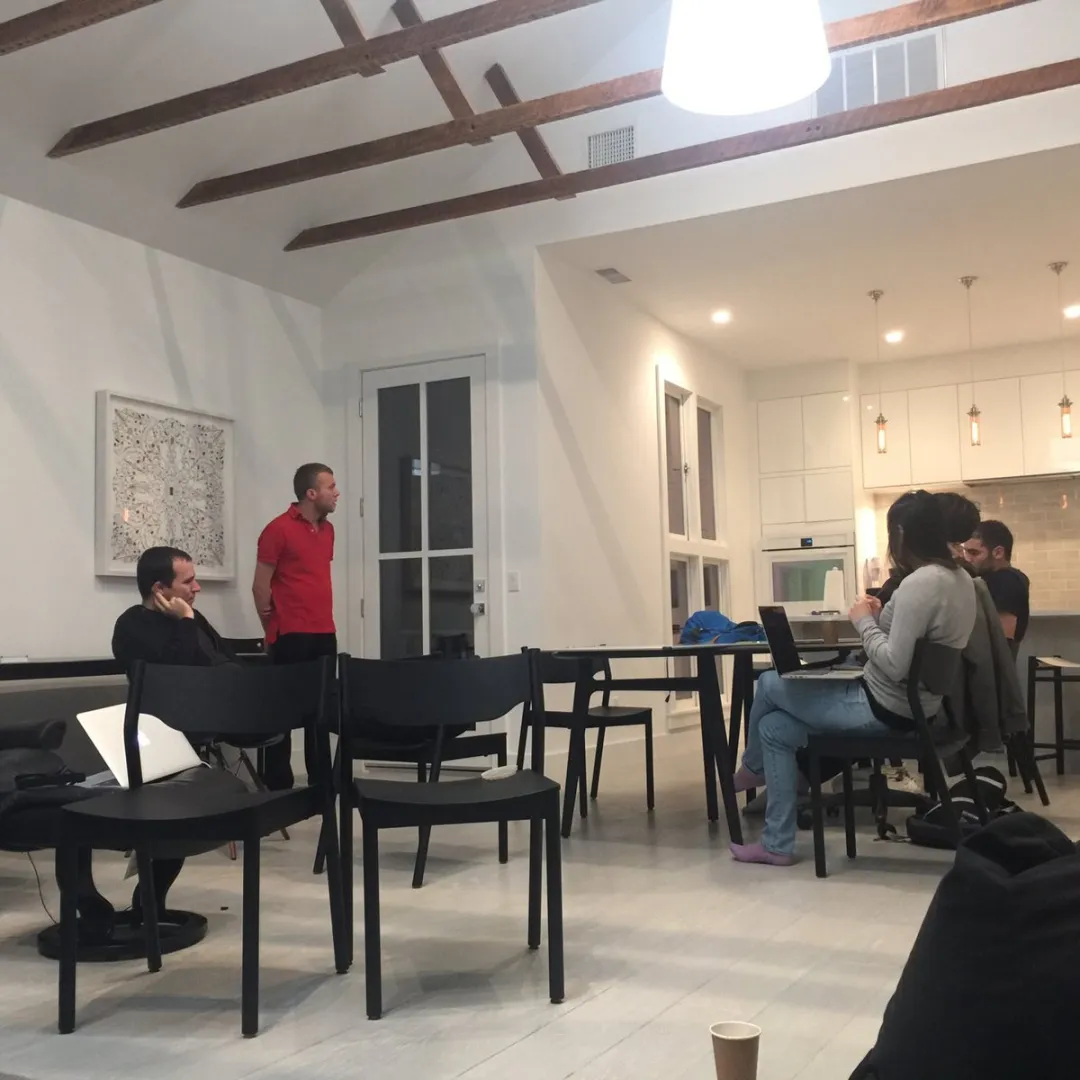
Ottman recalled the first day of OpenAI's announcement in early 2016. He and dozens of brilliant people, including Greg Brockman, gathered in an apartment in the same atmosphere as the first day of school.
"Everyone looks at each other, and someone asks, 'What are we going to do now?' Then someone goes to buy a whiteboard.
At the time, most people didn't know what they were doing, and there was chaos in their minds.
It's more counterintuitive that OpenAI has been in the dark for four and a half years, from the company's inception to the launch of its first real product.
This is a "suicide" in Silicon Valley, known for its speed of pursuit.
ChatGPT was a fast-growing platform when it first launched, but many people inside felt:
"Growth is strong, but it feels unstable, it's low value. Should we change direction? We've listed five or six other things we can do".
At the time, Peter Thiel was quoted as saying, "Anything but continuing to do this is obviously wrong".
He also likened ChatGPT to a Google search box: a blank inbox, where you type anything, and it does everything right.
Ottman listened and went to his best.
Without customer feedback, without market signals, they can only invent various rankings and internal testing methods to blindly touch progress.
After a series of "chaos failures", Scaling Law ultimately led to the success of GPT.
This reaffirms the Ottoman idea that the greatest things always start with a lack of consensus. When the world thinks you're crazy, that it's impossible to do, that's probably the best chance.
The underlying logic of the AI era is still "human".Finally, the host asked, "What do humans need if AI, even podcasts, can do better than us?"
Ottman's answer was convincing: "Humanity will still long for real humanity".
He firmly believes that no matter how super-intelligent AI develops, the things that are good about human connectivity, about people-to-people, will not only devalue, but will become more expensive and more valuable.
"I don't like to read e-books, I like paper books; I don't like Zoom meetings, I like face-to-face communication.
AI is not meant to replace humans, it's just a tool to inspire a wave of small business startups.