
In April 2024, the spacecraft officially unveiled the Marvin series of power-controlled man-made two-arms robots, equipped with self-developed resistance control, two-arms synchronous barrier avoidance and other algorithms that allow for smooth power-control interaction between the two arms, and with a single controller to control the 14 joints of the two arms.
In 2025, the aircraft officially completed the entire process of power control arm from small batch verification to engineered delivery, achieving delivery of over 2,000 power control man-made arms in four months.
Earlier this year, Skyliner expanded the Marvin series' power-controlled mannequin load from 3 kg, 6 kg, to 20 kg, creating a lightweight arm M6S Lite with a load-to-weight of 62.5%; a long-arm M3S Long with a working radius of nearly 1 m; and a single-arm M20S with a load of 20 kg, perfecting the product matrix and garnering over 10,000 orders.
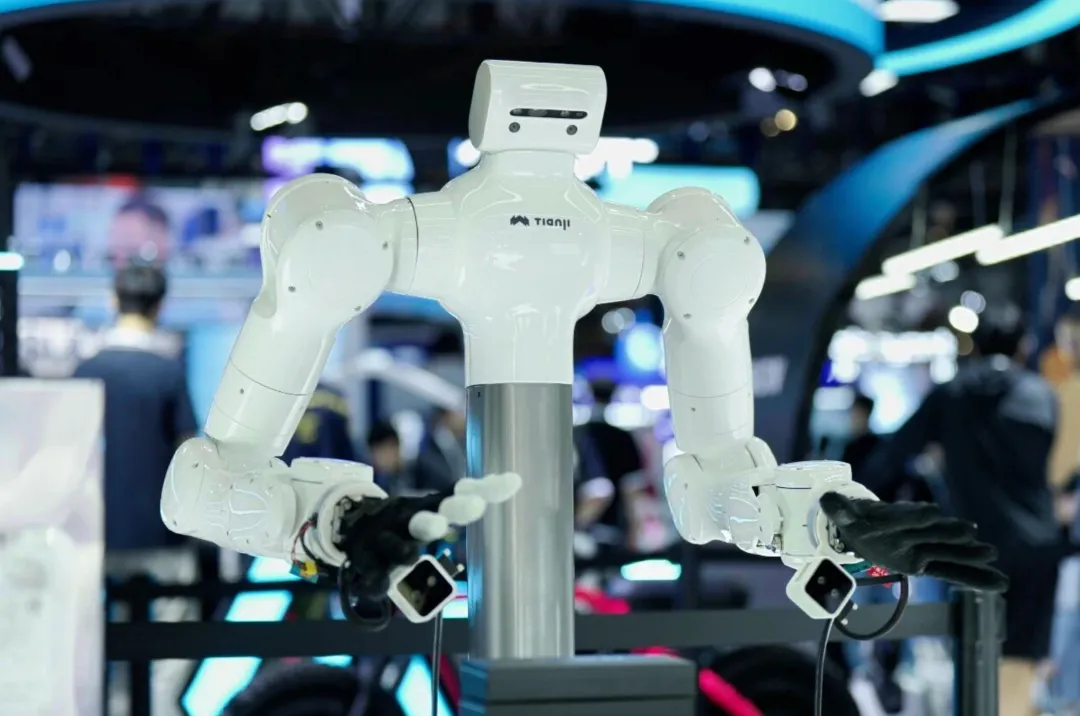
By verifying the adaptation to the scenario, the aircraft has given a completely new definition to the strain-controlled human arm brake product: industrial-grade precision, complete joint smoothness control, lightweight bodywork, human arm-like structure, a reliable human-shaped robotic arm, the above four conditions are indispensable.
Professional humanoid arms have become a key leap forward for the large-scale mass production of humanoid robots and the deployment of technology models at the forefront of the laboratory.
If the WRC's focus over the past two years has been on the mass-production engineering capabilities of the whole machine, the smooth trajectory of the program, then this year's test will focus more on the accuracy and generalization of the task of performing the master tasks of a smart, well-equipped, intelligent large model.
This sideways reflects the lack of high-quality data in the industry, and the data plane of the Scaling Law is not yet in operation: data collection lacks a standardized SOP; core hardware performance is insufficient; equipment assembly leads to an inadequate degree of hardware engineering systematization that can't really get into the training pipeline... ultimately resulting in training performance and success rates that are not as expected.
How reliable a physical carrier would a large, intelligent model need?
When the actual deployment of the model fails after training, is it the large model that fails, or is it the physical or the ingenious hand that fails?
These questions point to the fact that at a time when the intelligent brain is in desperate need of landing, the hardware of the humanoid robot is no longer just a combination of "heels, legs, wheels, bottom plates", but a physical platform for perception, decision-making and execution, the core vehicle for the collection of real data, verification of algorithm security and generalization capabilities.
Instead of making an arm, Gento Skye responds with a sky plane.
What kind of exercise does the brain need?
In order to return to the pain points of the current industry, the spacecraft did not stop at this link, but went on to release the humanoid robot embroidery brand, using the Gento series of humanoid robots, to provide intelligent robot model verification, scenario landing carrier adaptation answers: industrial-grade operational accuracy, flexible space mobility, extremely fast response speeds, rich dual-development interfaces and ecology.
While there are endless layers of data collection devices such as UMI, Ego, and others, real-time remote control is still at the top of the data pyramid, and real-time mapping movements can collect a large amount of raw data such as joint location, speed, torque, gesture, and power information, without the need for complex processing, and can be used directly for model training.
The Gento Skye wheeled humanoid robot, released by Sky, is designed for training, data collection, and multi-site verification.
Gento Skye is a robotic development platform that integrates the concept of brainwashed ready-to-wear design with a fully articulated human arm, lifting device, and a wheeled chassis, with fully open articulation control and underlying control supporting reinforcement learning and real-world application validation.
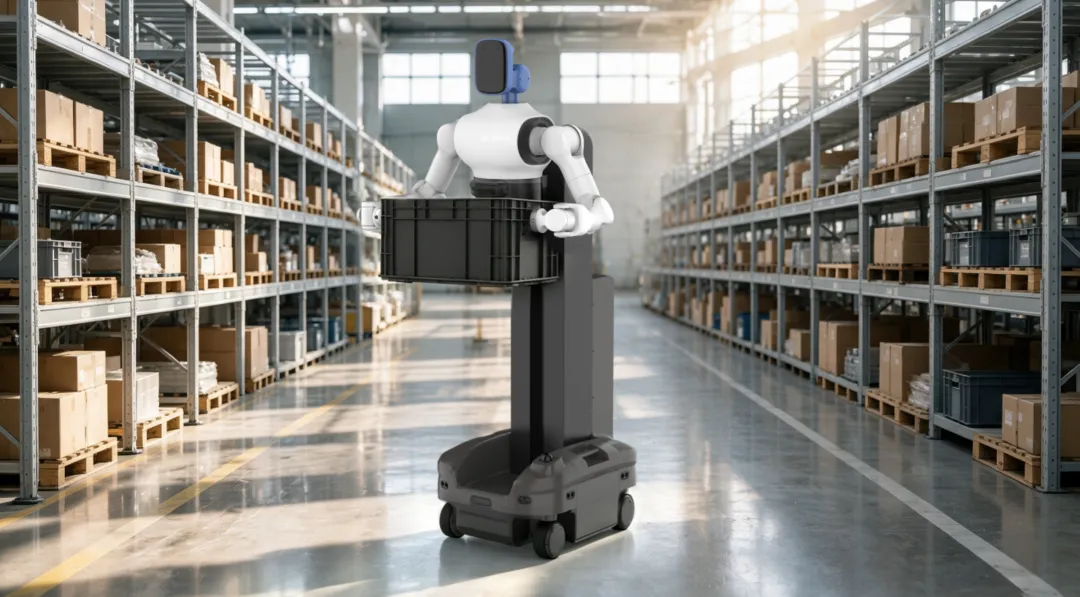
At the level of model and algorithm deployment, Skye identifies the Great Britain Jetson Orin 32G/64G computing platform, fully supports open-source frameworks such as ROS2, and provides a complete SDK and dual-development interface, whether VLA models, visual models, reinforcement learning strategies, or world action models, to quickly deploy verification on Skye, so that algorithm innovation is no longer confined to hardware control.
Skye's arm uses the M6S-696 series of skyscrapers, with repeatable positioning accuracy of up to ±0.03mm, as well as the 809/920 series of extended armrests to further extend the range of operation. Skye's elevator structure can be adjusted from 785mm-1695mm, and can be used in small spaces such as homes, as well as at high altitudes in factories, to accommodate a variety of environmental and operational tasks.
In order to achieve a stable, repeatable operational task, Skye has systematically designed a 7×24-hour continuous operation to heat small silicon hardware, long-term stability of key components, and temperature fluctuations of power sensors in wide temperature ranges.
Skye is not an executing machine, but a smart carrier that continues to accumulate real-world data assets.
From Skye to Luna
Filling up the final puzzle of the body-equipped smart pump R&D, verification and deployment
If the Gento Skye is aimed at the gymnasium, the Gento Luna is aimed at the gymnasium.
Faced with the Gap between Sim2Real, the Luna series of folding rotary humanoid robots are the kind of applications that accumulate data feedback for real-life scenarios and make up for the shortcomings of models that mimic insufficient data.
The Luna has 26 degrees of freedom and can be adjusted from 0.79m to 1.7m in height, with easy folding to allow for easy passage when entering elevators, narrow doors and storage compartments. When the Luna is fully unfolded, the workspace can cover a height of 0 m to 2.1 m from the ground, which is unlike the working range of an adult running along the floor.
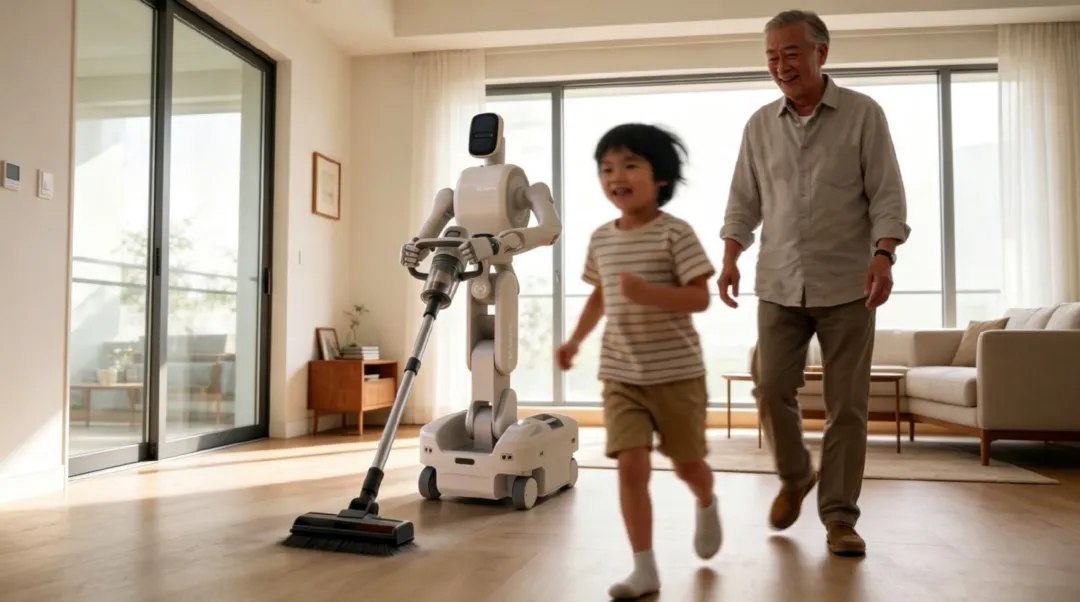
Luna's arm is identified as a 615mm arm span, 5KG loaded M6S Lite model, with a repeatable positioning accuracy of ±0.03mm, and a choice of 680 and 750 with two longer arm extensions to suit a variety of scenarios.
In response to the application requirements of the real-world physical world scenario, Luna's waist and leg combined for six degrees of freedom, in addition to the 14 joints of her arms, have also adopted force-control joints. This systemic force-control design has two meanings:
Second, the arm, waist, and leg force controls, which can record data in real time and adjust the direction and size of the output force, which can be fine tuned with the weight of the arm, compensate for the external force on the task, improve the stability and success rate of the task.

Secondly, the above-mentioned parts of the joints are equipped with resistance control functions, which can instantly reduce the stiffness of the joints during human-machine contact, presenting a natural elastic buffer action, really taking into account the safe interaction in industrial, commercial and other environments.
While the two products share the same set of full-body control technologies, they chose a completely different form route:
Skye focuses on R&D, training and verification, with "lift + stability" at its core, solving the problem of multi-level task adaptation and long-term training reliability.
Luna focuses on scenario adaptation and application exploration, with "folding" at its core, solving the problem of space adaptation and safe manned spacecraft coexistence.
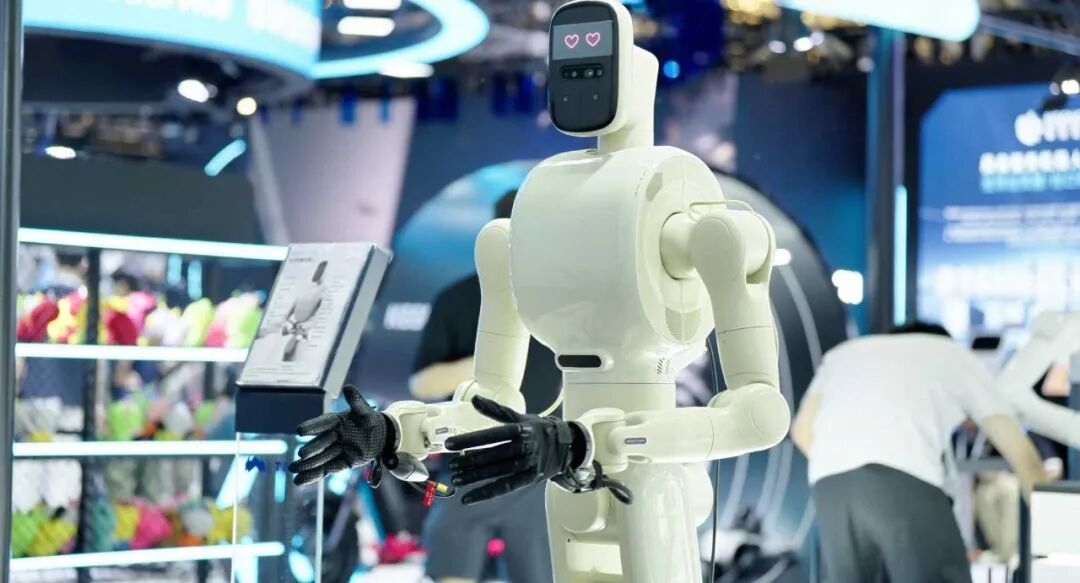
The complementary positioning of the two largest products in the Gento series covers the key needs of intelligent design, from technological development to real-world applications, from data collection, model training in the laboratory, to services in real-world scenarios, surveys, and research, forming a complete "R&D-verification-deployment" loop.
From superhardware to generalized models
How airplanes become an infrastructure platform for the physical industry
Large models and operational control systems are stronger, without a good body to execute, and are airborne. The body and operational control systems are improved, without a strong model to make decisions and generalize, and cannot function properly.
In an age of smartness, mere institutional construction is not enough to build a walled city. Understanding the big model, adapting to the data closure capabilities, is the key to determining whether the body can sustain itself or not.
At the WAIC in Shanghai a month ago, the spacecraft first exhibited its self-developed models, the VA-dexine, and the AnyGrasp, both from the Commodore algorithm team.
AnyGrasp focuses on autonomous planning and reasoning for long-time sequence tasks, with robots facing scattered material stacks that require their own judgement of sequence, location, and operation strategies. AnyGrasp is good at dealing with real-time sequencing of arbitrary unknown objects and has the ability to generalize.

AnyGrasp model of generalized crawling
Faced with the random placement of different shapes, objects of different materials, screwdrivers, test tubes, flexible objects, etc., robots rely on arm vision cameras to identify and adjust gesture crawling and successfully complete crawling. For objects of different soft hard materials, large models allow robots to have different response strategies, flexible objects to apply a softer strength, hard objects to rigid movements.
Around the pain point of customer access to real-world data, Tianjin provides VR remote-operating device hardware, remote-operating data pipeline systems, an open-source simulation and secondary development suite of intelligent development tools. Through the deployment of 100 Marvin Pro machines, Tianjin is able to collect more than 600,000 high-quality machine data annually to provide scarce physical world data assets for partner brainwashing training.
In a cycle of hydrogen-data-modeling training, using self-developed systems from technical verification to product verification, to achieve the transformation of humanoid robots from hydrogen-powered runners to hydrogen-powered dry runners, it is no longer the pursuit of a mere technological shutdown, but the provider of a physically intelligent infrastructure platform.
What is the meaning of this verse?
At the WRC Forum, the head of technology for more than 20 billion human-to-human enterprises said that the future of artificial intelligence is definitely ahead, with the only problem being the commercialization of landfills.
From the Marvin-series humanoid arm to the GentoSkye, the Gento Luna humanoid integrated platform, to the massive model with the ability to amplify itself, the spacecraft is working to solve what it has been trying to do over the past year, to make the most of the smart models that have landed in the cloud, really landed in the physical world, and broke through from a single point of view, finally achieving commercial landing, and actually entering factories and even thousands of families.
In this long-running race of physical intelligence, the value of infrastructure is never less than the highest level of intelligence. The endgame of physical intelligence, not only belongs to the hardware vendors who are going to make the leg up, but also to the team of model algorithms who are good at writing code.
The noise of the WRC is constantly spreading, and the questions remain unchanged. Who can pull the big models from the cloud to reality at a controlled cost, with the highest efficiency?