On August 17, RoboScience Machine Science officially released the REX G1, a wheeled, humanoid, general-purpose operating robot that is positioned as the next generation's smart productivity partner.
As the first robot to be released by RoboScience Machine Science, the REX G1 features its self-developed VLOA architectural general-purpose model Visics, designed for logistics, factories, retail and home-like scenarios, to complete the complete loop from task understanding to execution in an unstructured, highly dynamic real world, driving the robot from an alternative to a single process to undertake complete tasks.
The exterior design of the REX G1 is based on "force-controllable, stable, soft, close, reliable and easy-to-maintenance", and the integrated system uses the "1+1" form of the integrated circuit, which is composed of a large-scale intrinsically powered powertrain, a small-scale head unit responsible for directing output and information interaction. The body-wide circular transition eliminates sharp edge edges and supports sand surface processing, while taking into account the visual and touch requirements in close-to-person scenarios; the ink screen serves as the main information interface, providing input only when necessary.
It's all about creating an omnipotent form.
Liquid Continuous Operations Extremely Efficient
In industrial scenarios, mobility and long-term operations are the ability of two sets of interconnections. Mobile robots represented by AGV solve the problem of material displacement, but it is difficult to undertake precise tasks such as sorting and removing; industrial mechanical arms have sufficient precision of operation, but are limited to fixed locations, and cannot move with the scene. In the field of extremely narrow channels, dense shelves and dynamic changes, there is a real need for a general type terminal that combines mobility and operation.
The REX G1 integrates mobility and operation to create an all-encompassing shape and highly efficient production partner. The REX G1 has 22 degrees of freedom (two heads, seven x two arms, two waists, one lift and three basses), 10 kg of freedom for the body and arms.
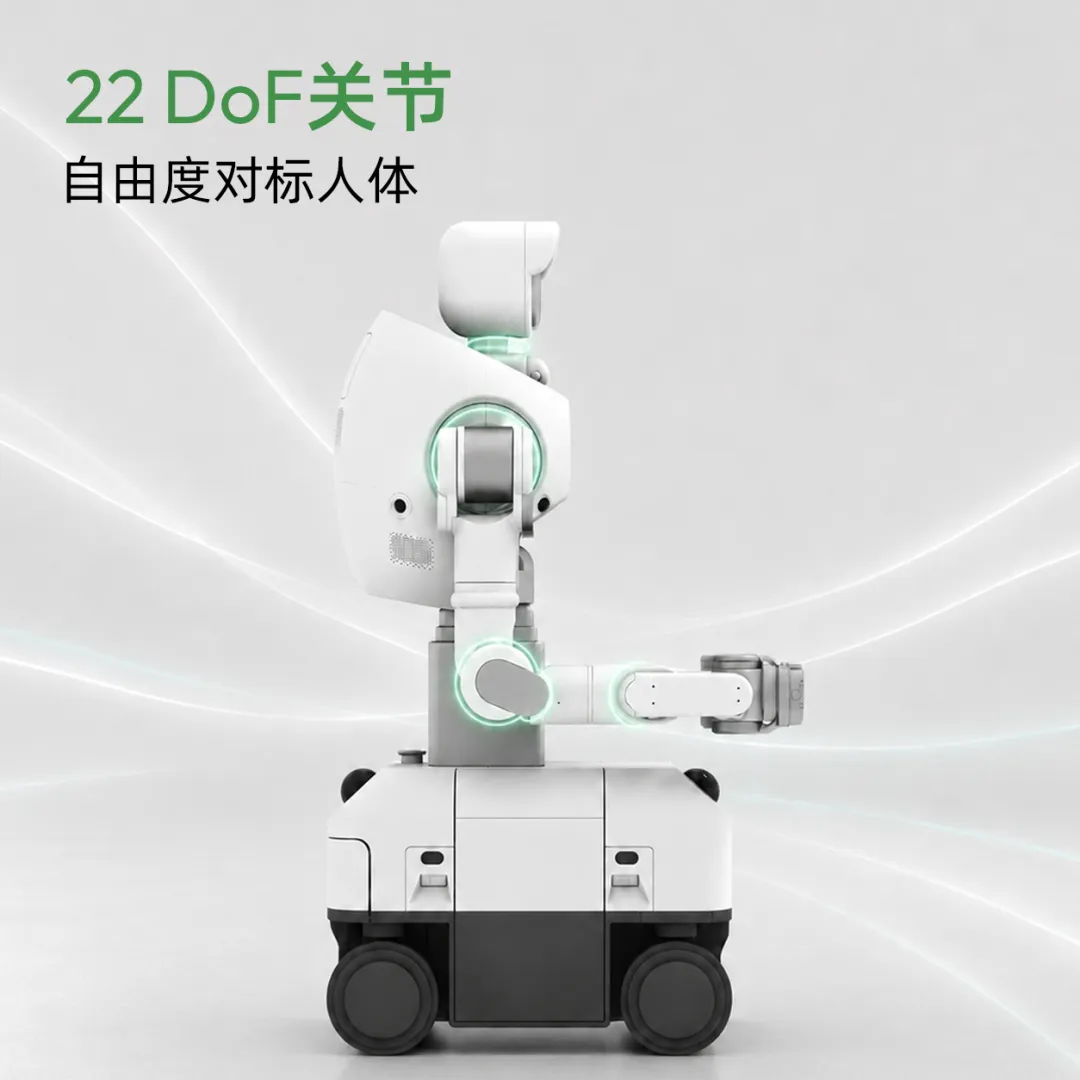
Within the restricted space, the REX G1 can maintain terminal stability through zero-space control, work in sync with the dashboard, elevator and two-arms, and complete target positioning in the process simultaneously with crawling, reducing the time it takes for traditional robots to frequently stop, adjust and reposition themselves.
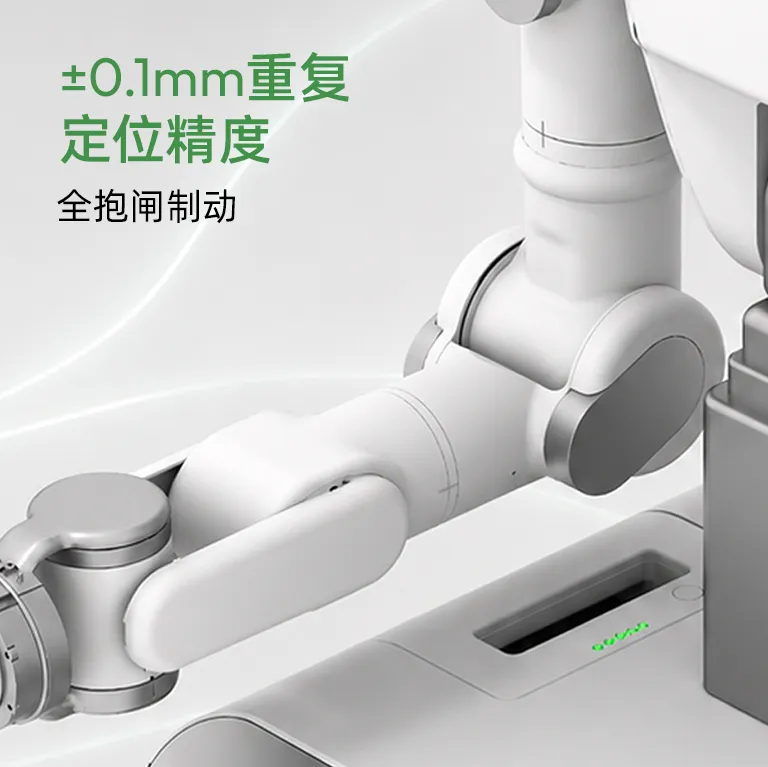
In terms of precision operation, the REX G1 supports ±0.1mm repeated positioning accuracy, is capable of performing precision operations such as high-frequency object crawling, placement, and combines visual capability with a secondary calibration of the crawling cache code to provide more stable operation accuracy for continuous operation.
Adapting to the real production environment:
It's not about changing the scenery, it's about getting into the field.
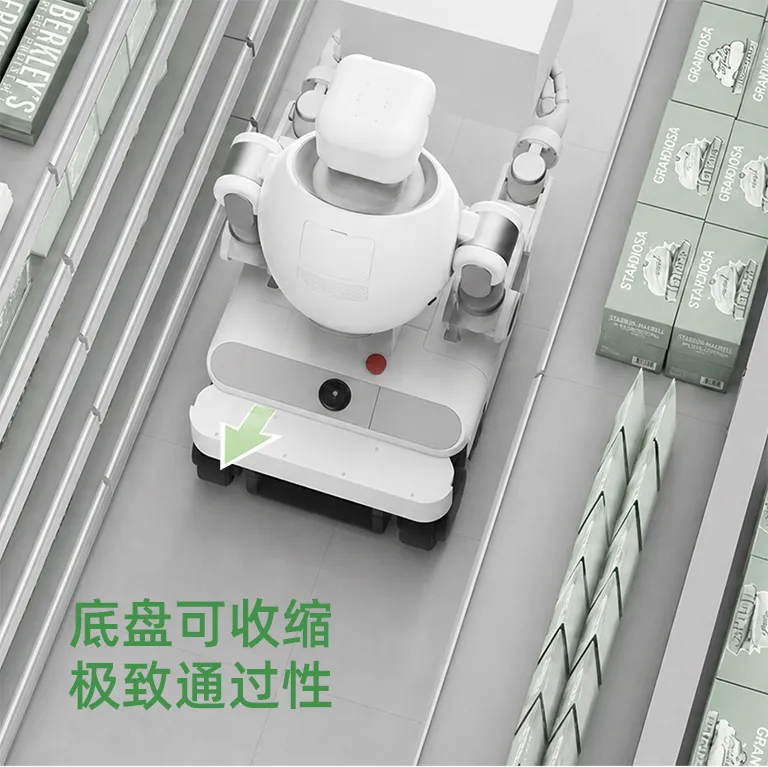
Traditional warehouse robots often need to make some modifications to the site, such as widening the passageway, adjusting the shelf spacing, reserving the turn radius, etc. The opposite is true with REX G1: allowing the robot to adapt to existing space rather than allowing space to adapt to the robot first.
In terms of spatial adaptation, the REX G1 integrated width is only 540 mm, the length can be adjusted between 540 mm and 640 mm, and the height covers 1100 mm and 1700 mm. Combined with the ability to fully move forward, backward, transverse, and ground rotation, the REX G1 integrated width can be adjusted between 540 mm and 540 mm. The REX G1 operational height covers 0.1 m2.0 m, allowing continuous working space from low to high, thus adapting directly to the original spatial layout in the field.
The REX G1 is the only robot in the industry that can "go into the narrow lane + get to the full shelf", and the application of the REX G1 directly improves the efficiency of warehousing.
In addition to physical size and mobility, the lighting, visibility and network conditions in real production environments also affect the operating stability of robots. For complex vision conditions such as darkroom shadows, shelf vertical reflections, packaging film reflections common in industrial environments, the REX G1 is equipped with full-frame sensing and 360° non-dead-angle vertical vision sensing, and can cope with a variety of lighting conditions. Even in low-light environments such as at night, the REX G1 supports adaptive lighting, which can be adjusted according to the dynamics of the target area without the need for external spotlight sources.
In complex network environments such as factories and warehouses, the REX G1 relies on 2070 TFLOPS end-to-end computing to bring perception, decision-making and control capabilities further down to the robot body, reducing reliance on high-frequency communication in the cloud.
This is the first time I've seen this video.
From fixed scenarios, single projects, to understanding real tasks
The powerful intrinsic capabilities determine what the REX G1 can do, while RoboScience's general-purpose machine-science model Visics allows the robot to fully understand the physical world, see the edge, drive the edge, operate the edge, perform complex and precise operations, and have a powerful generalization capability. The REX G1 is equipped with RoboScience's self-developed general-purpose model Visics, and combines end-to-end computing to achieve complete chain closures ranging from environmental sensing, mission understanding, to action planning and execution controls.
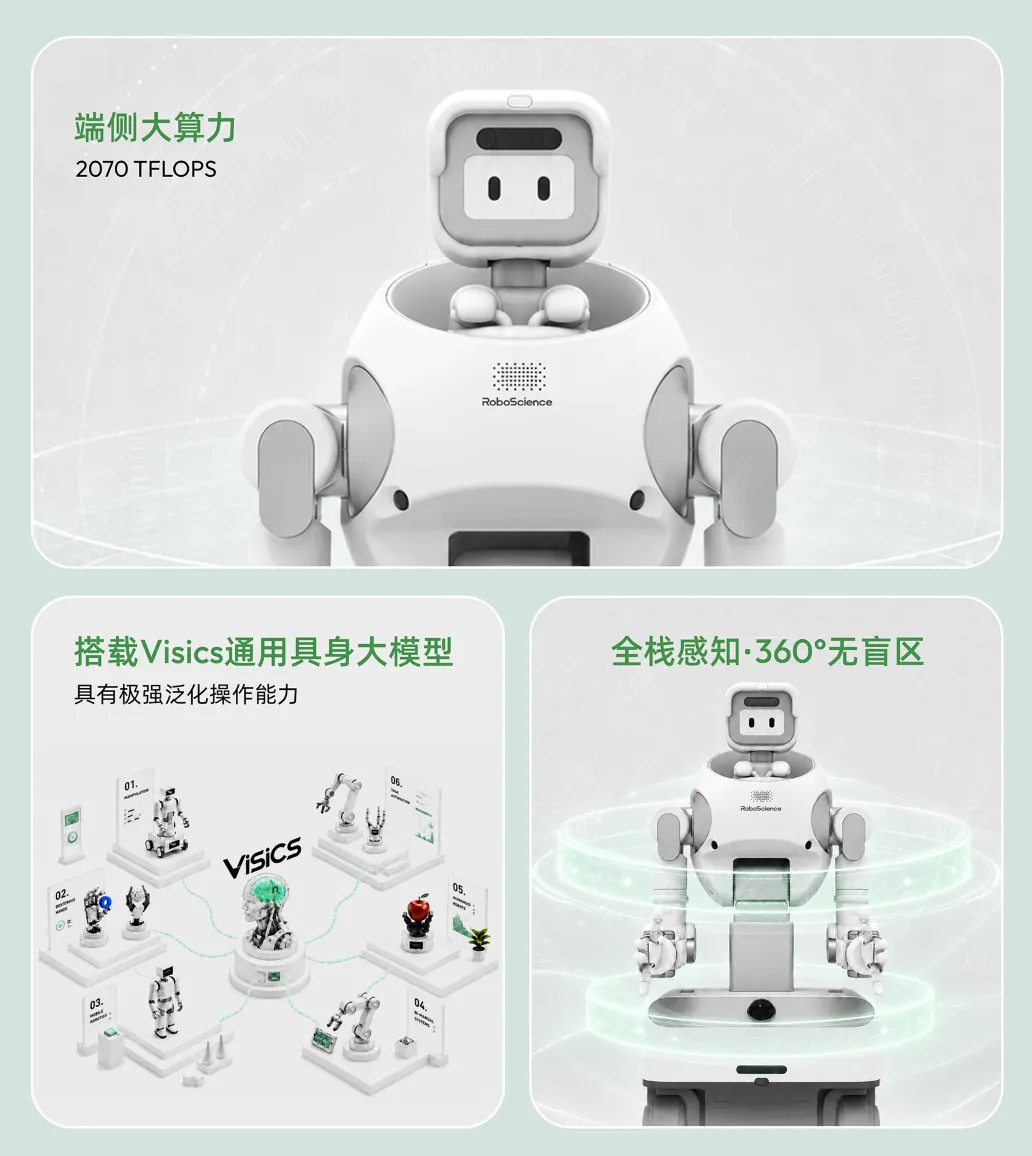
Visics uses an object-centered VLOA (Vision-Language-Object-Action) architecture that extends from visual perception, language instruction input, to a complete chain of robot action outputs. The model is driven internally by a twin-engine clutch: the body world model is responsible for understanding the physical world and visualizing the object's 3D dynamic trajectory; the general operating model is responsible for converting the precision of the pre-performance trajectory into the underlying physical control signals of different robot entities.
Based on this architecture, the Visics general object-size model unravels the semantics of high-level tasks with the underlying physical execution capabilities, and completes pre-training through bulk video and simulation data, further forming the generalization capabilities of cross-bodies, cross-object, cross-tasks.
Based on the Visics general-purpose model, the REX G1 is able to understand more open task instructions and real-time adjustments based on changes in the field, breaking the more common pattern in the industry of an entity corresponding to a set of models, one scenario corresponding to a state of a project. At the same time, the REX G1 deploys core intelligence capabilities on the entity's side, relying on 2070 TFLOPS computing, to form a closed loop of perception, decision making and control, and is able to complete all kinds of complex tasks.
From Demo to Real Production:
Let robots continue to create value
Robots are truly productive partners, not only to see if they can complete a task, but also to see if they can continue and participate effectively in the real workflow.
The REX G1 has a single life span of up to 4 hours, while supporting a heat exchanger and a power switch. During the whole power switch process, no switches are needed, and the battery can be restored to operation as soon as 5 seconds after replacing it, thus meeting the demand for long-term continuous operation. In high-frequency operating scenarios such as logistics storage, this means that the robot can continue to participate in the workflow by switching power quickly, reducing the time loss caused by the charging stop, allowing the robot to move further from a one-time task executor to a productivity terminal that can continue to work.
The new generation of general-purpose operating robots represented by REX G1 is changing the way robots enter the real world:
Robots begin to adapt to the environment instead of allowing the environment to adapt to robots;
Begin to understand tasks rather than just execute fixed programs;
Start working continuously instead of just completing a demo.
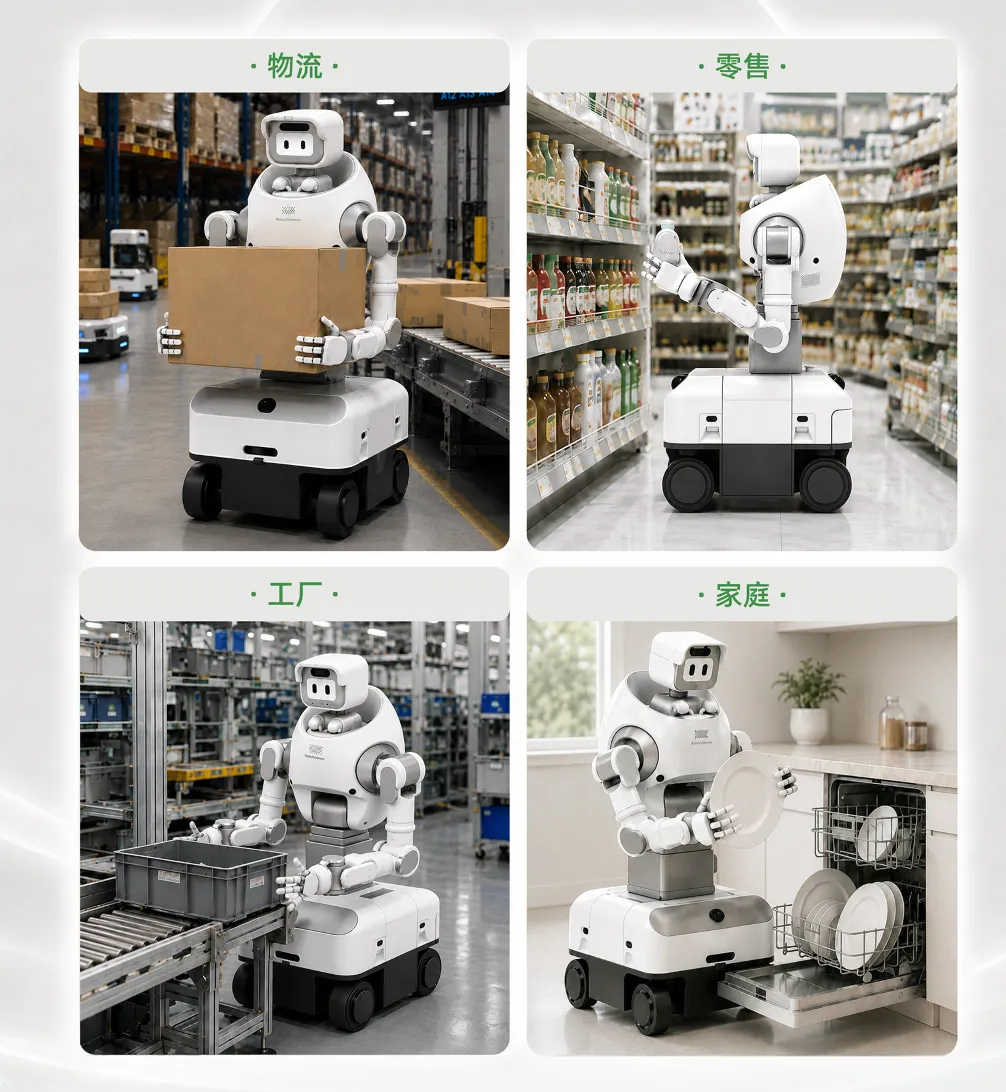
From logistics storage, to flexible manufacturing; from retail pre-storage, to the future of home service, RoboScience wants to bring physical intelligence into more real scenarios, allowing robots to go from hydrogen to complete tasks and gradually move to hydrogen to continue creating value. REX G1 is not just a robot product, it's a RoboScience machine science practice to move towards general-purpose intelligent productivity.