
This is the first time we've ever seen a car enter the market, and the first time we've seen it.
Scenes for supply chain security with industrial capital
The bet in the automotive industry chain is the most understandable sign that the blue dot touches the next few rounds of financing.
On the production side, Guangzhou is one of the first companies in the country to introduce humanoid robots into automotive manufacturing. In 2025, it launched the third generation of autonomously developed humanoid robot GoMate, with plans to achieve full-sized and small-scale production by 2026.
This means that Guangzhou's demand for power sensors is double: on the one hand, from the entire assembly line, the assembly line and the production line of integrated piston grinding, and on the other hand, from the overall power control needs of self-developed humanoid robots.
Look again at the Ningde era. The power-battery giant has deployed humanoid robotic pencil ink on the PACK production line, and the core goal of investing in blue-point touch is to lock the power-control perception link between the smart manufacture of the power-battery and the life-style of the humanoid machine. As the CEO of Blue-point touch Moon says: The Ningde era itself is also an important application scenario.
Shanghai is another path. Through gold control, investment platform, Shanghai has invested in blue point touch, intelligent robots, polymer robots, step-by-step power, galaxy general, critical points, and other enterprises, from humanoid robots to core components, from physically intelligent models to agile hands, an eco-network that revolves around the collaboration of the automotive industry. In this network, sensors are an essential knowledge base.
The introduction of the German stock added to this corner of energy storage manufacturing. Its inverter and energy storage product production involves precision assembly and testing processes, and force control sensors are newly needed components for product line inspection and assembly automation. The addition of the German stock also completes the puzzle of this triangle ecology, which is that automotive companies provide the whole machine and production line scenarios, batteries and storage provide the precision manufacturing scenarios, and the three parties together constitute the densest demand for sensors in the region.
In this regard, the Blue Point Touch's portfolio of shareholders has also formed a multi-complete industrial chain covering everything from power batteries (NIND era) to car manufacturing (GANZ, Shanghai), from general-purpose plumbing (CIO robots, Galaxy General) to semiconductor high-end manufacturing (Central Core) to the new energy storage industry (German share).
The common characteristic of these companies is that they are both shareholders of Bluepoint Touch and can provide them with application scenarios. Investments are only a means, and the security of the supply chain is the real calculator. From the battery PACK line to the complete car assembly line, from the integrated pressurized grinder grinding to the man-made power control, the power sensors with Bluepoint Touch have been embedded in the automotive industry for forging car frames and forging robot frames.
According to high-tech robots, a growing number of automotive companies such as Chongqing, Chang'an, Guangzhou, Cheri, and Xiaomi are starting to set up independent robotics companies, while sensors serve as the intersection of two trillion-track racetracks of Chongqing+ robots, whose strategic card values are being revalued by industrial capital.
What is it?
From high-tech to high-tech, robots are just entering the market.
The bet on industrial capital is based on a clear industry judgment: AI is becoming a much-needed gateway to robot-scale landings.
In June, he reviewed the industry's cognitive changes over the past two years: from 2023 to 2024, it is felt that power sensors are highly competitive. By 2025, as large models enter the phase of large-scale application, power sensors have become a central link.
Why? Because the problems faced by robots after entering the real world are very specific.
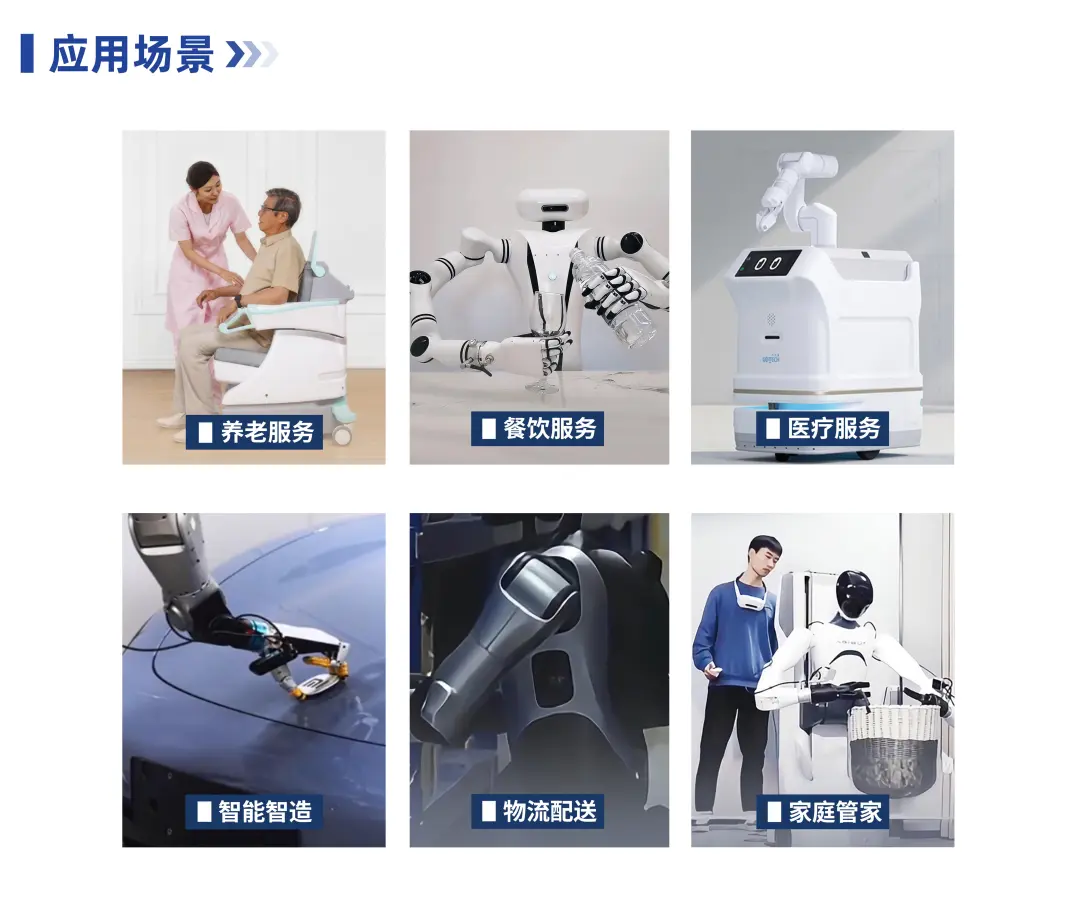
Vision can help robots see the world around them: where objects are, on which shelves. But the ultimate contact with force control must be done by real-time sensing. Drink a glass of water, pinch an egg, pick up a bag of chips on a supermarket shelf without crushing them. These are easy for humans, but extremely challenging for robots.
During the first half of this year, Atom, a Vietnamese humanoid robot in a Shenzhen movie theater, sold popcorn on its own, working 14 hours a day and earning over 20,000 yuan.
And the premise of being able to do so is to be strong.
Behind this ruling, Blue Dot touches on more than seven years of technological accumulation. Its core team comes from top scientific research institutions such as the Space Science Group, the Institute of Technology, North Aviation, and Western Industrial University, and uses high-precision sensing technology developed in the space scene to reduce its application to the robotics field.
Since its inception in 2019, Blue Point Touch has built four major platform technologies, including high-performance resilience body design, embedded hardware circuits, high-precision structural decomposition algorithms, and six-dimensional synchronization calibration, and has formed a complete product matrix covering humanoid robot six-dimensional sensors, general six-dimensional sensors, joint torque sensors, and pulse pressure sensors.
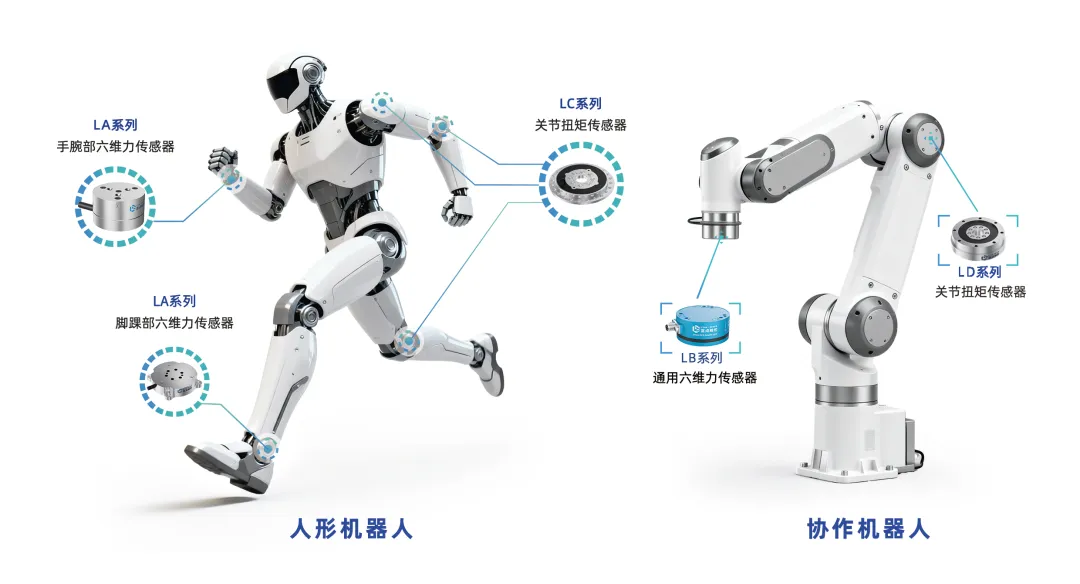
At the product level, its six-dimensional sensors and joint-force torque sensors achieved 0.1% FS accuracy, high-frequency response of more than 10 kHz, and 500% anti-overload capability. On core metrics such as sequence suppression, the detection data has surpassed foreign-invested brands. More importantly, the sensor volume has shrunk by 90%, and weight has decreased by 80%, which means that robots can gain near-human sensitivity without adding additional load.
Determination of over 70% market share
If the technical indicator is a solid-state nuclear reactor, the mass production capacity is a nuclear reactor that rewrites the rules of the game.
Data from the Institute of Advanced Robotics Industry (GGII) shows that in the third quarter of 2025, Blue Point Touch accounted for 72.6% of the domestic human-robot six-dimensional sensor market share.
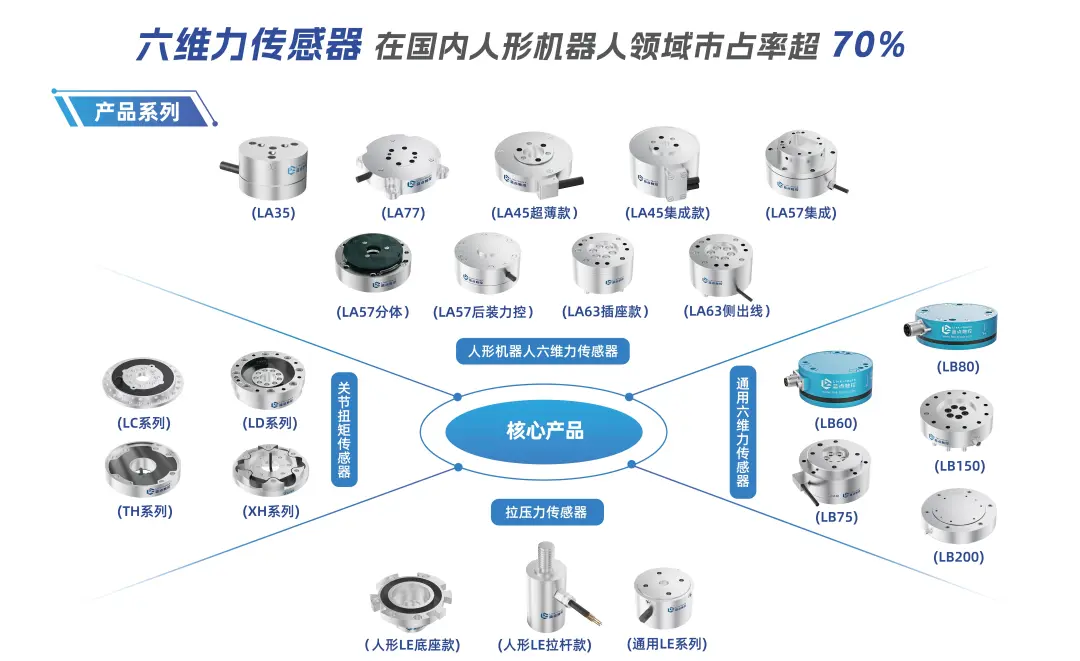
This customer list is itself the most powerful market verification. In 2025, the global shipment of humanoid robots exceeds 5,100 units, accounting for about 28% of the global market share. As the core customer of Blue Point Touch, Xi'an has upgraded from a customer to a strategic shareholder in the C+ round, with clear intentions: to lock the core power sensor supply chain, guarantee the total volume of machine production deliveries, and control costs.
The transition from customer profits to shareholder profits, the essence of which is the long-term use of customer credentials, the logical chain of customer loyalty, business loyalty, and eco-binding loyalty.
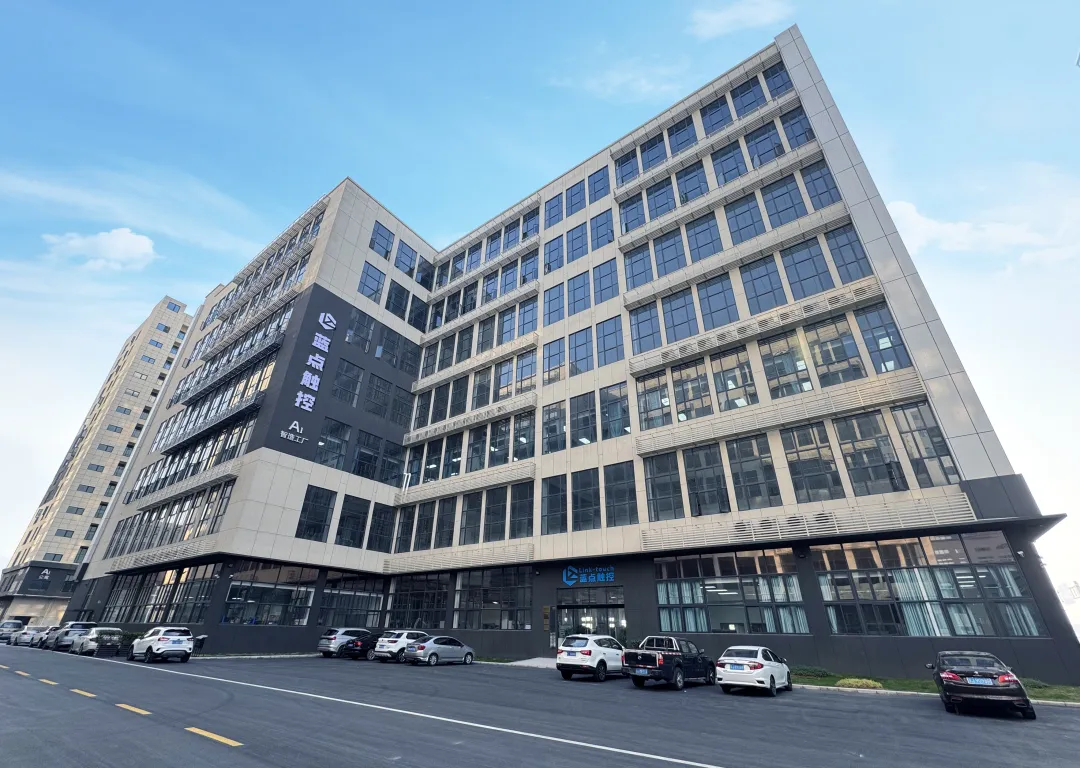
Supporting this market position is the Blue Point Touch superfactory located in Guangdong and the country's first fully automated power sensor production line. Designed to reach one million sets of joint power sensors per year, 200,000 sets of end-to-end six-dimensional sensors, the supply of power sensors is pulled from the crankshaft workshop into the era of bulk, standardized industrial manufacturing.
The leap in capacity has led to a double shift in cost and efficiency: the price of six-dimensional sensors has dropped to less than half the price of imported products, and the delivery cycle has been squeezed from 6-8 weeks to 2-3 weeks. While foreign brands are still grinding the sensors at the pace of Silicon Art brands, Blue Point Touch has already been using Silicon Industrial at a faster rate, laying the foundation for the transition of humanoid robots from 1000 to 100,000.
The deep binding of customers is the validation of the end of the market. On the supply end and the financial end, the blue-point touch also yields hard indicators.
The company's revenues have grown two to three times per year over the past two years, doubling sales revenue for three consecutive years and achieving profitability, profit and cash flow.
From replacement of domestic products to global services
Back to the original question: Why do we keep betting on industrial capital?
The answer is clear, and the motion sensor is moving from the pivotal point of the robotic industry chain to the pivotal point of a large-scale landing. On this critical card slot, blue-point touch has established an unshakable advantage.
The company's vision is not to stay in the domestic market. The goal of June is clear: to become an important partner and core supplier of the leading human-robot enterprises overseas in 2026, and to achieve a higher market share in the global market from 2027 to 2028.
When the human-robot industry moves from the 1,000th to the 100,000th level, whoever has the power to perceive this much-needed entry holds the key to industrialization.
From aerospace to civil engineering, from domestic product replacement to global service, Blue Point Touch is doing what it is doing to increase China's power to the global robotics industry.