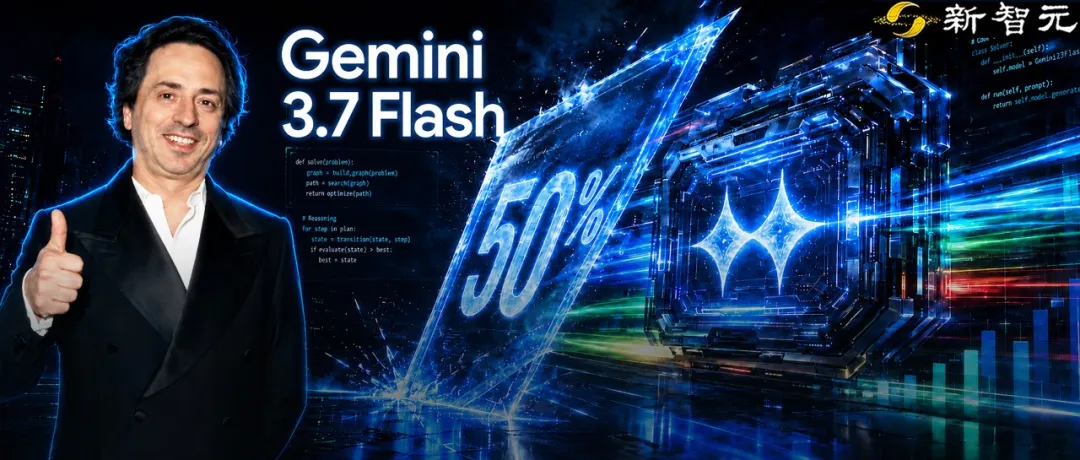
It's the first time in the history of the world.
Google DeepMind has just released Gemini 3.7 Flash!
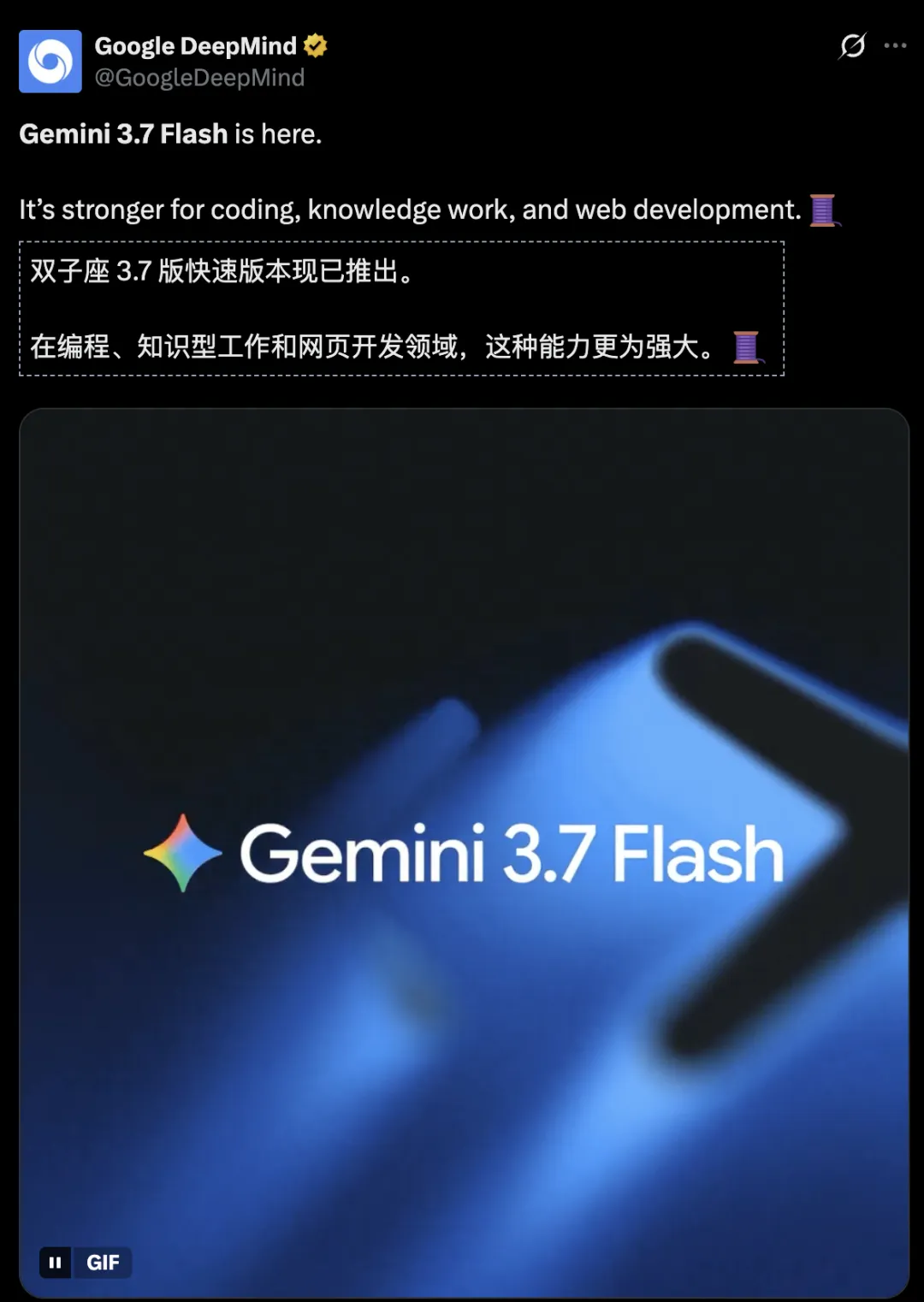
Core reasoning capabilities are fully upgraded while offering a half-price strategy: input $0.75, output $3.75/million tokens, and return to normal at the end of the year.
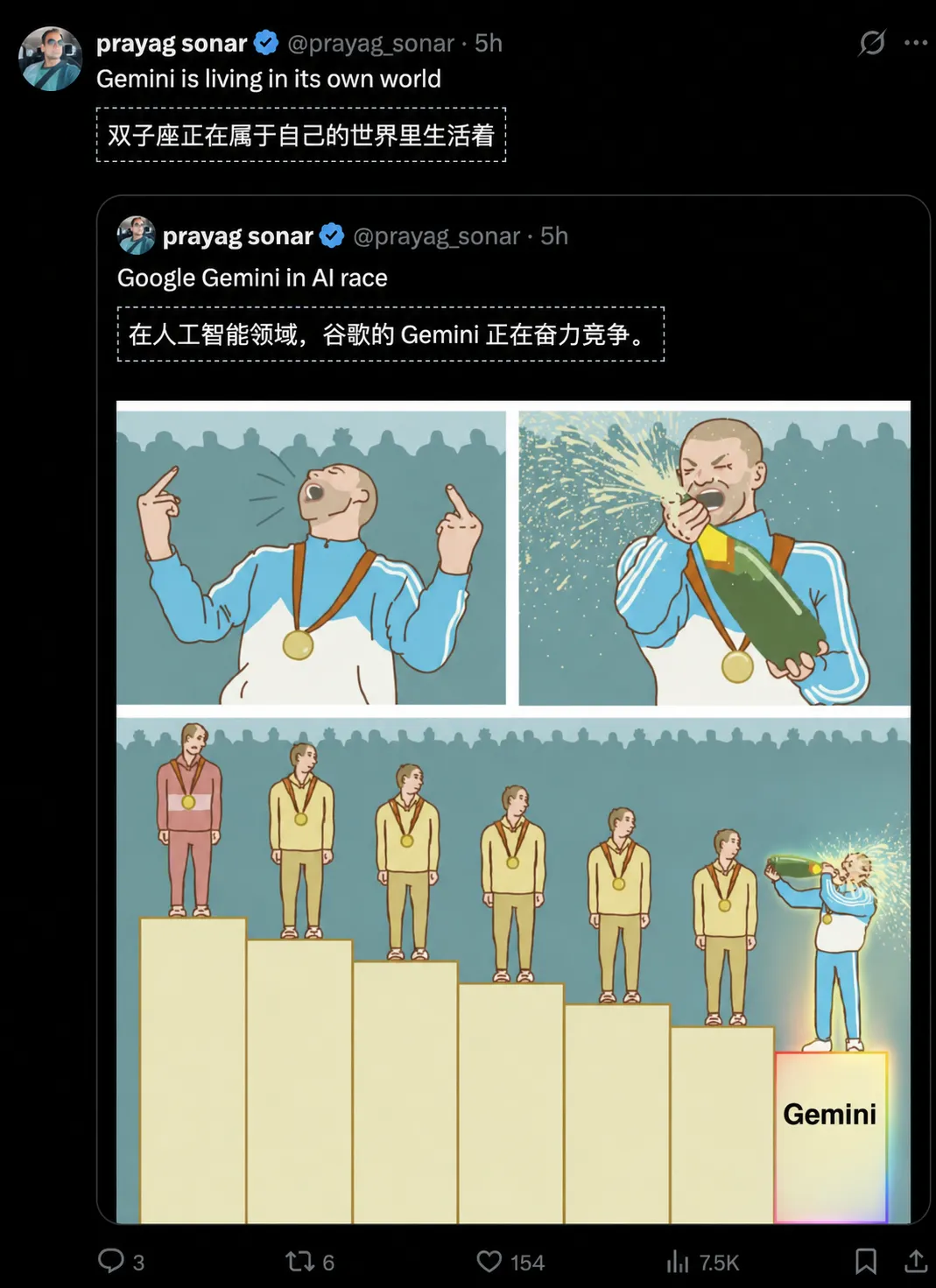
In the meantime, other companies are rolling out performance, and Google is starting a price fight.
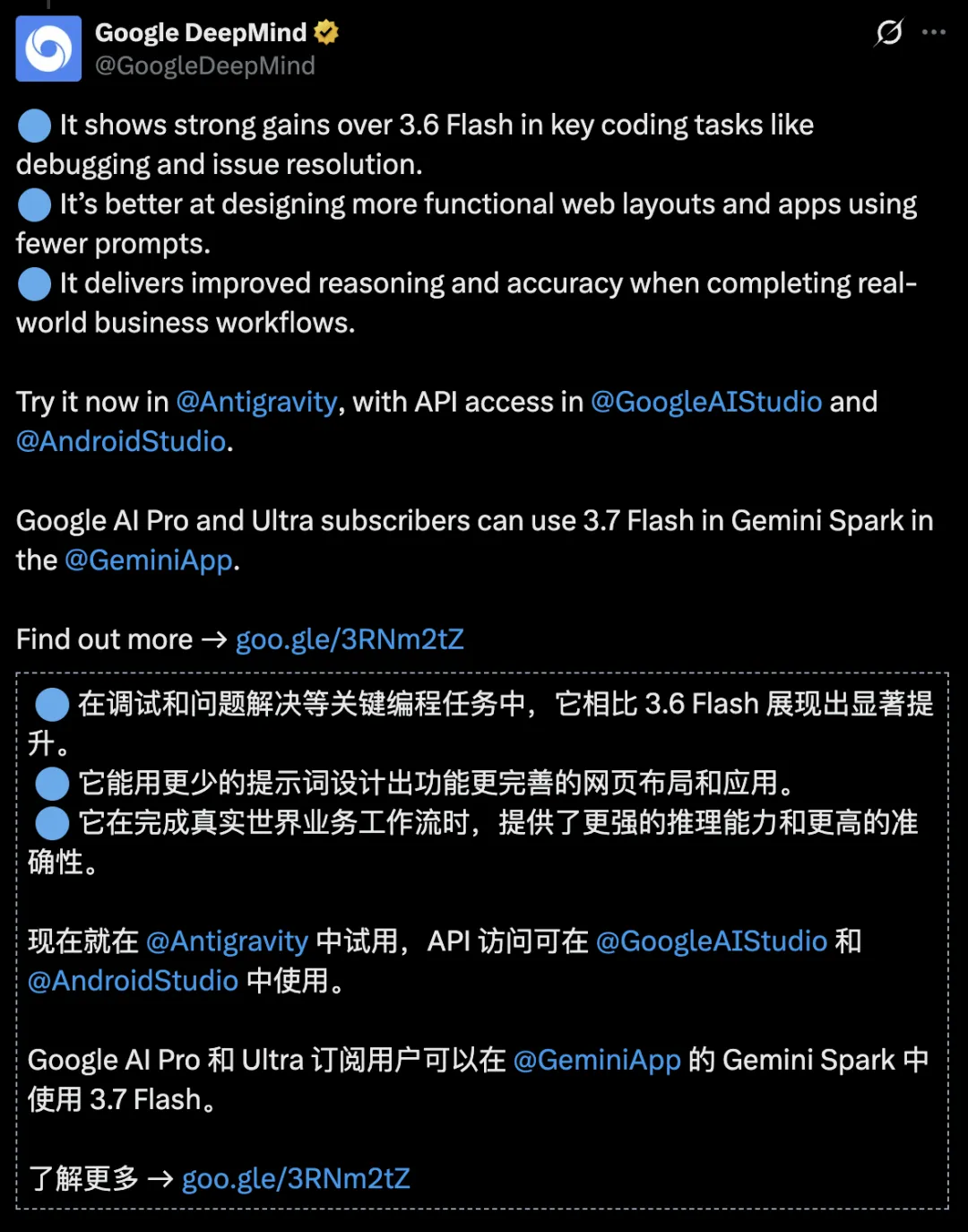
Let's take a look at the main purchases made by Google:
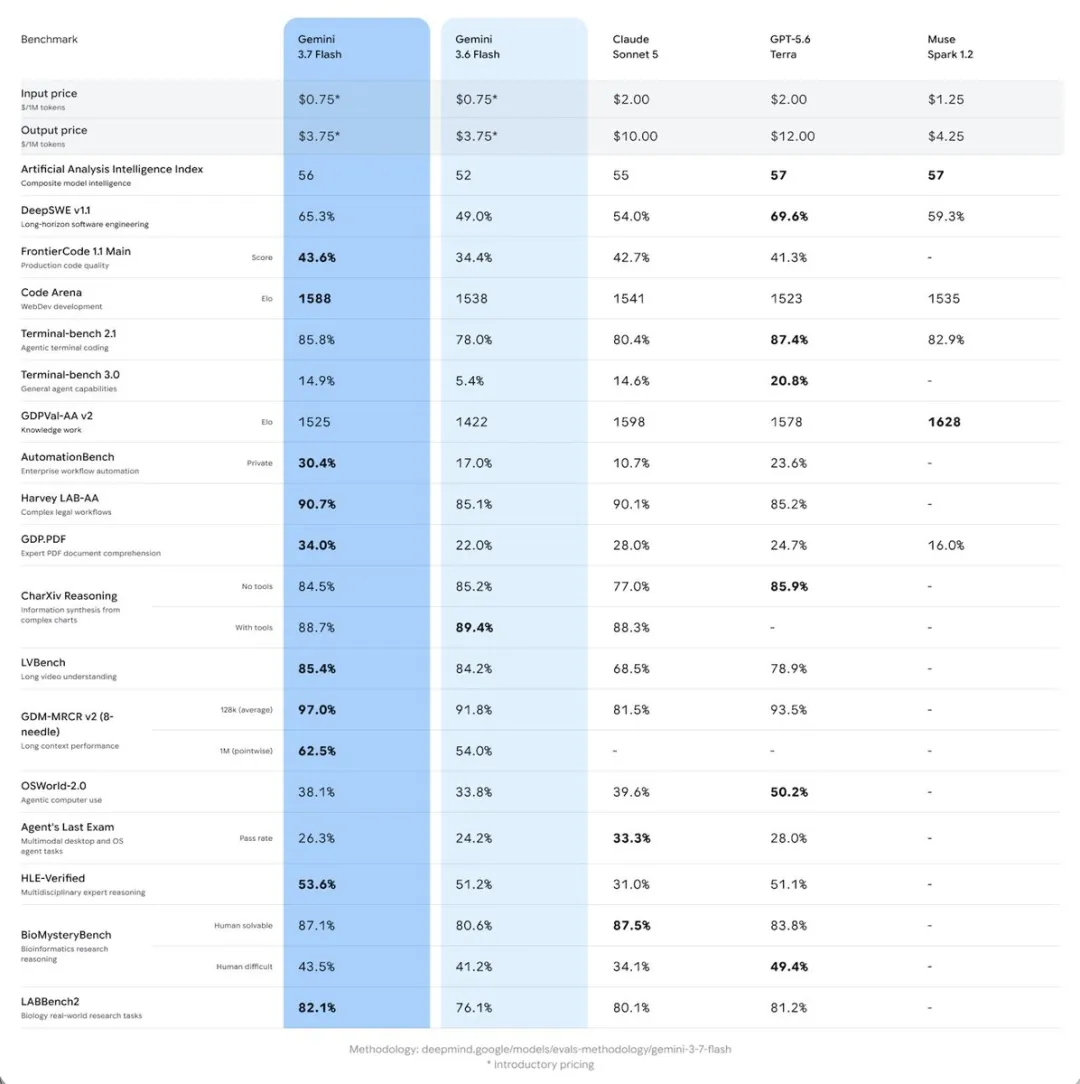
It showed a strong improvement over 3.6 Flash in key coding tasks (such as debugging and troubleshooting).
It is capable of designing more functional web layouts and applications with fewer hints.
It provides better reasoning and accuracy in completing real business workflows.
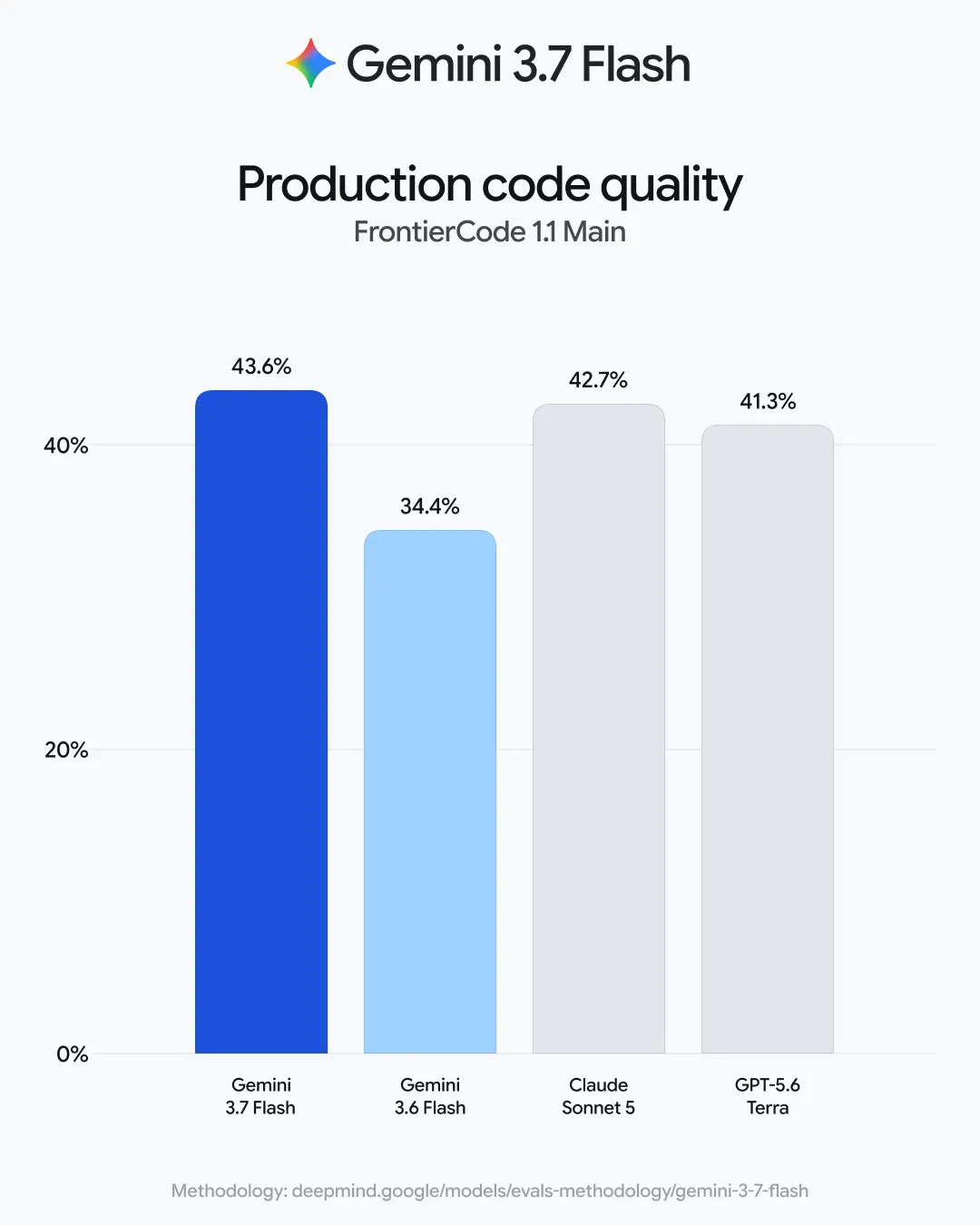
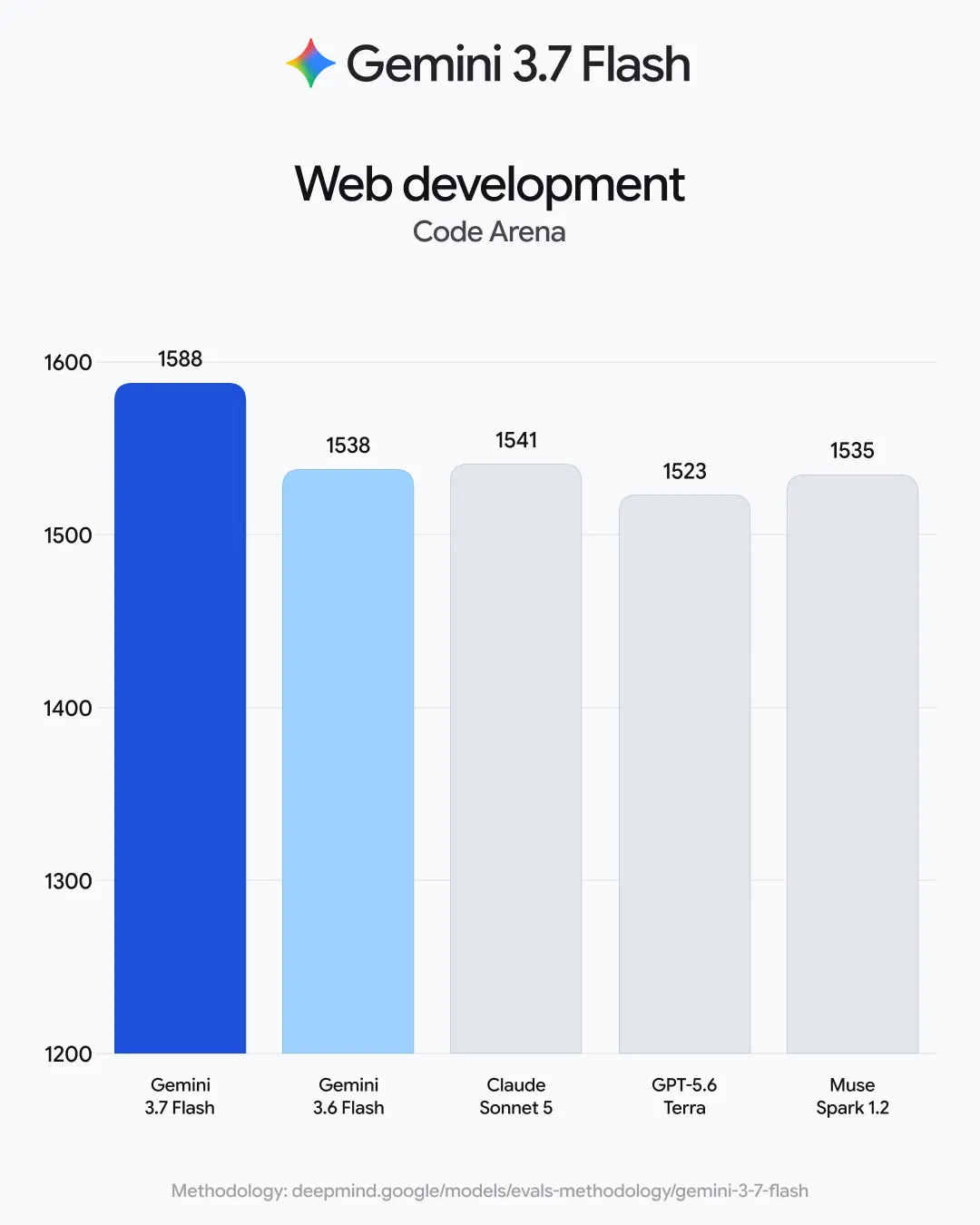
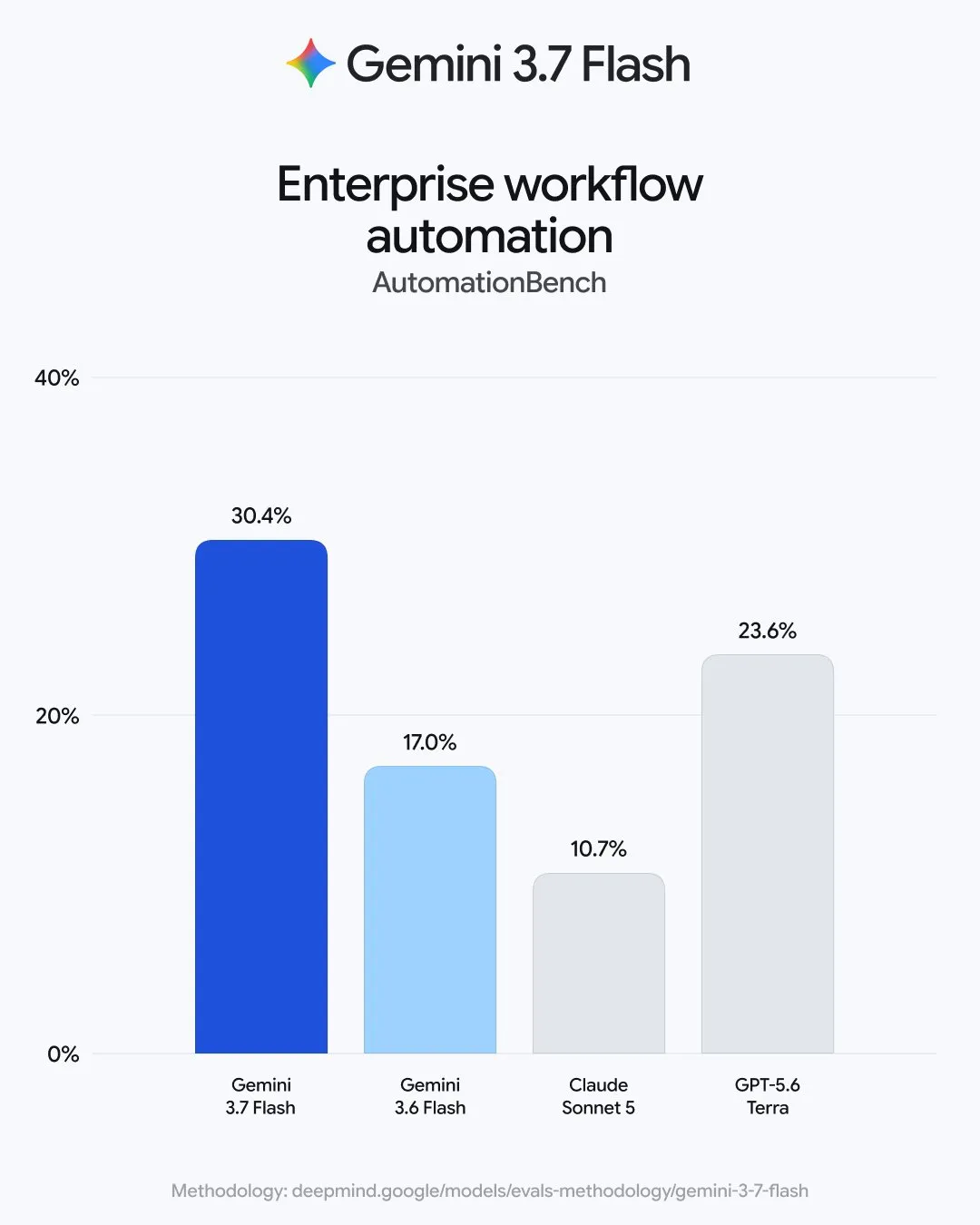
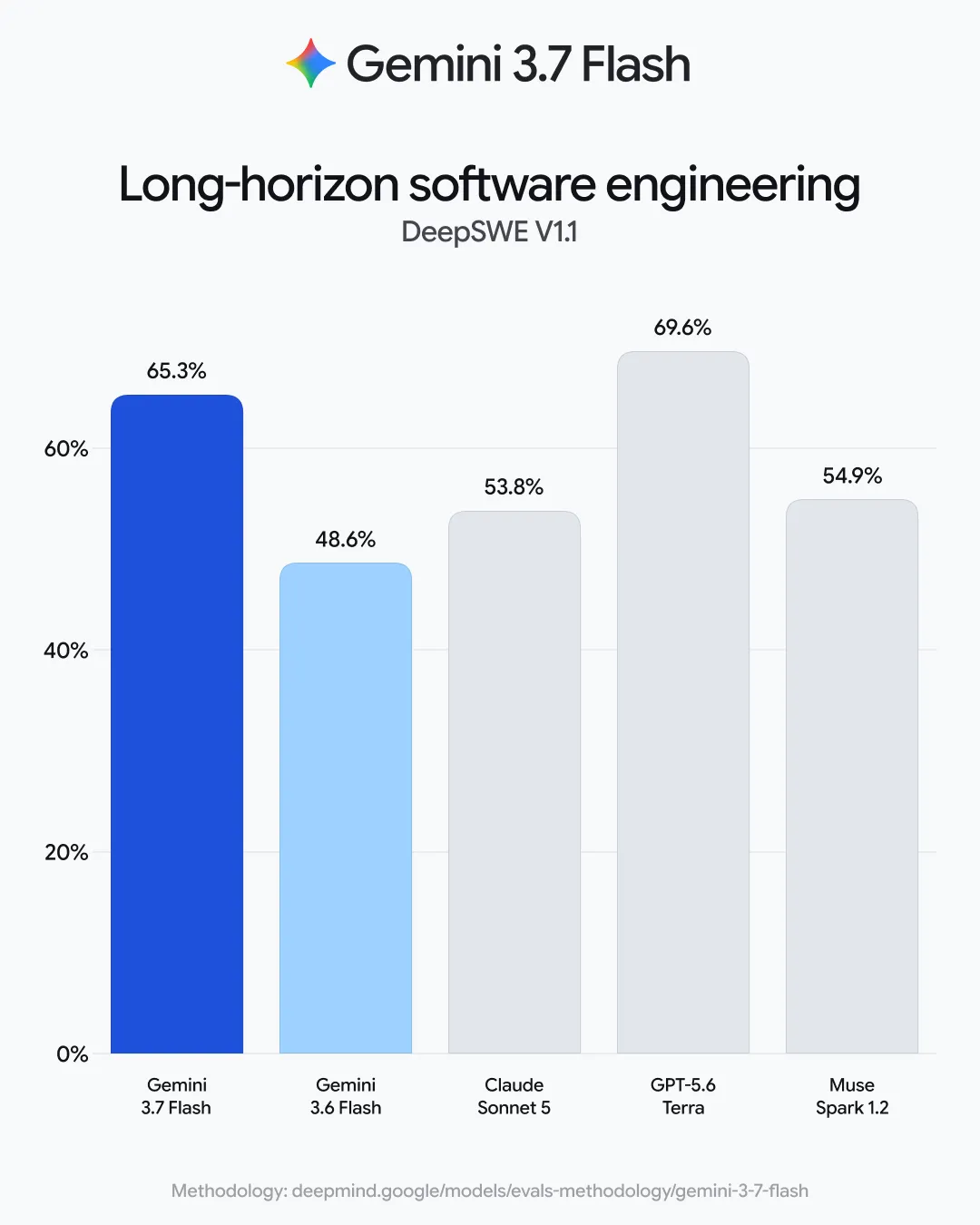

Slide to the left and look at the picture

FrontierCode's production code quality jumped from 34.4% of 3.6 to 43.6%, earning nearly 27%. DeepSWE long-term software engineering jumped from 49% to 65.3%, gaining over 34%. Code Arena Elo jumped to 1588, and Terminal-bench 2.1 dropped 85.8%.
With both the coding and the intelligent body, 3.7 Flash almost fricts 3.6 Flash to the ground, so to speak, without adding value.
At the functional level, 3.7 Flash supports customizable thinking configurations, allowing developers to adjust "how long to think" for themselves, finding a balance between quality, cost and latency.
Multimodal input covers text, images, audio, video, 1M Token in the above context window, with a maximum output of 64K.
The Gemini App, AI Studio, Gemini API, and Antigravity are available as of March 2026.
The half-price strategy is worth looking at. The price of $0.75/million tokens to be entered and $3.75/million tokens to be issued remained flat until December 31, 2026, after which they returned to $1.50/7.50 per ton and 3.6 Flash standard prices.
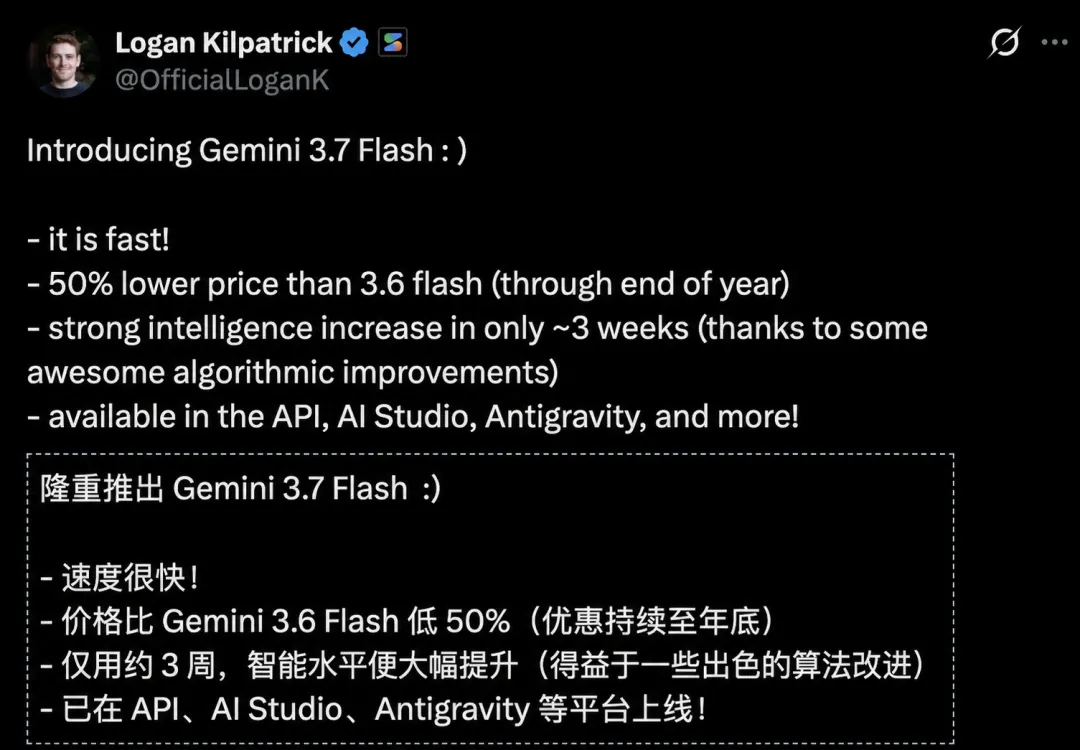
Google's calculations are clear: the cost of moving the developer's projects into Gemini's ecosystem at a low price before the end of the year is high enough to restore the original price.
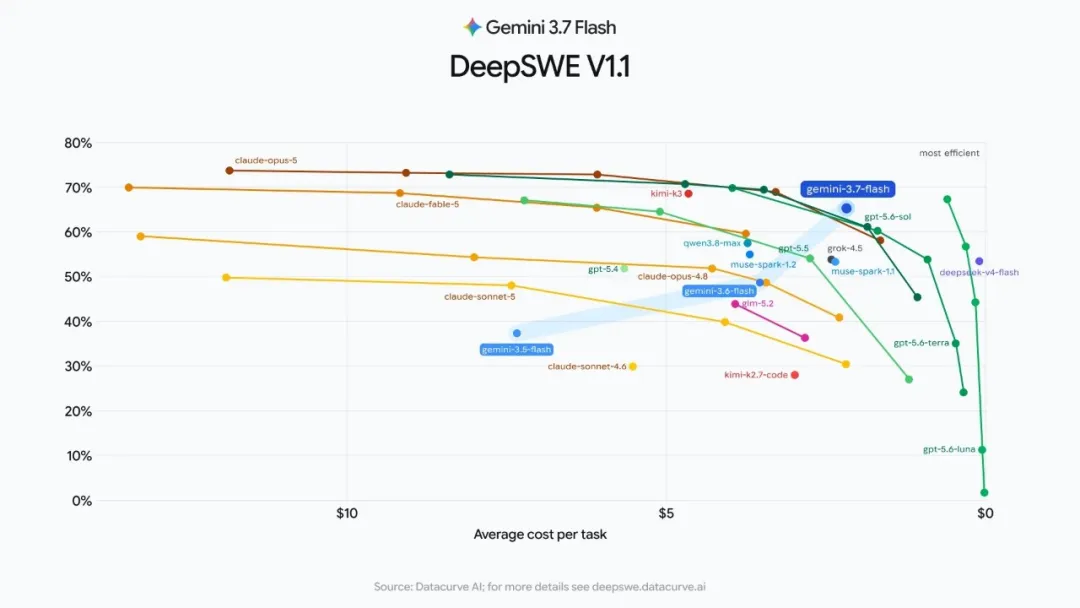
But don't hurry to shout, "Google won".
3.7 Flash's knowledge expires in March, meaning it has no idea what has happened over the past five months.
There have been comments from netizens that the Gemini 3.7-flash only performs normally in software engineering benchmarks, even at a lower price than the Sonnet-5.
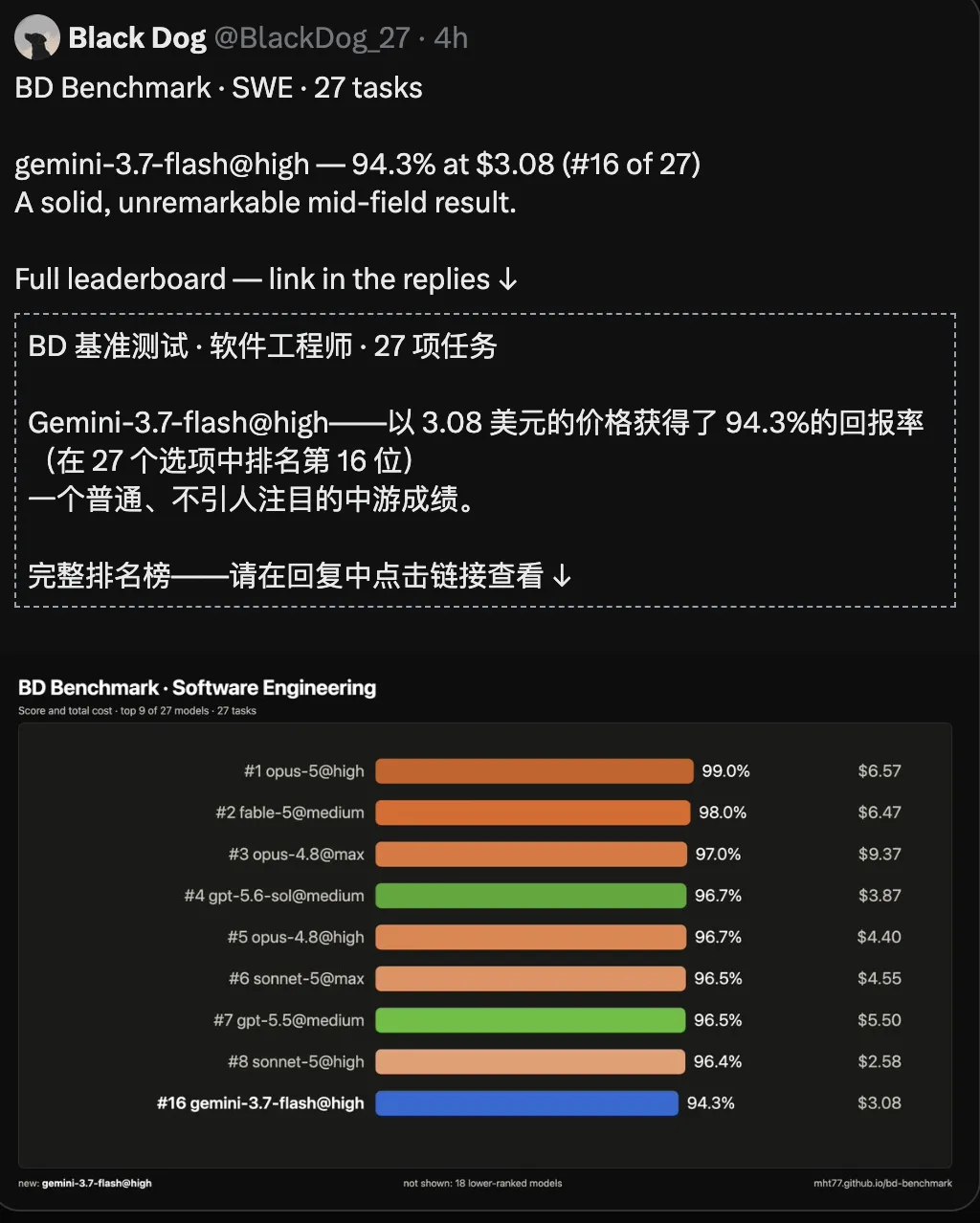
More importantly, Flash is Google's lightweight product line. The real battle is at the Pro and Ultra levels, where Claude and GPT are rivals.
3.5 Pro is gone and Google is panicking.The Gemini 3.5 Pro has reportedly been abandoned by Google Gemini, with most teams working on Gemini 4. This is also seen as Google DeepMind's last chance to build top-notch AI.
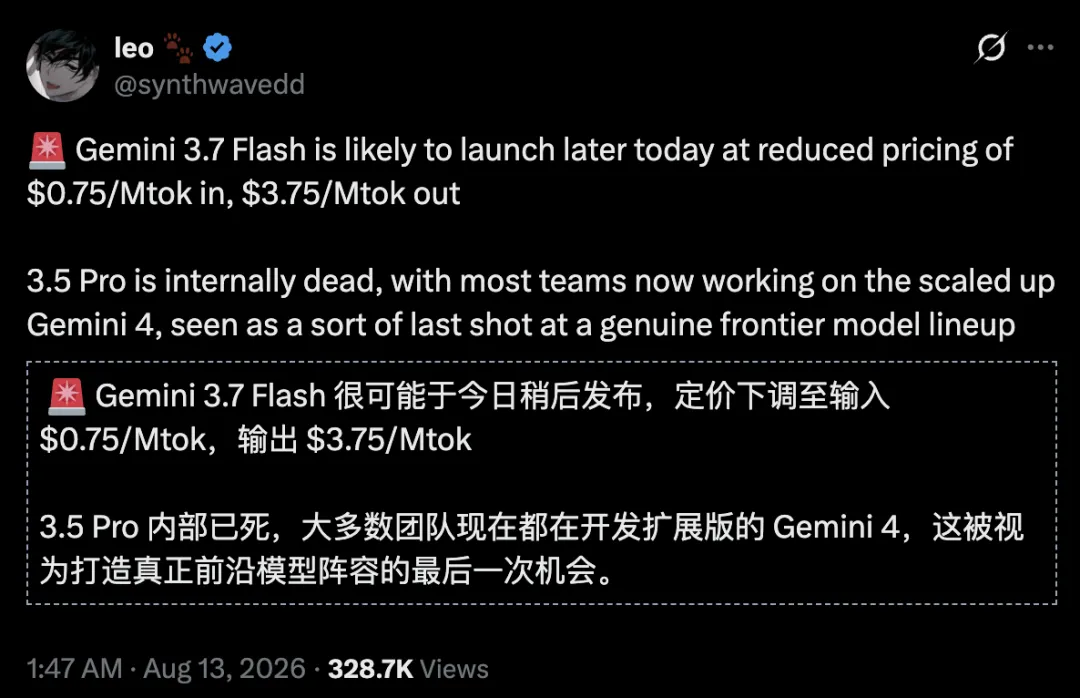
Sergey Brin, the 52-year-old co-founder of Google, reportedly said: "Either accelerate or die!"
According to Reuters exclusive, Google co-founder Sergey Brin has repeatedly urged the core AI team in recent months to focus on Gemini to catch up with Anthropic and OpenAI.
He explicitly asked the team to speed up at the DeepMind staff meeting in April, after which the company made major leadership adjustments to DeepMind, and the Gemini flagship version was delayed for two months due to performance delays.
During the restructuring of Google, Sergey Brin was desperate to give his employees a kick out of it, as he rushed to push for a reprise of Google's war-torn old days when ChatGPT was born in 2022.
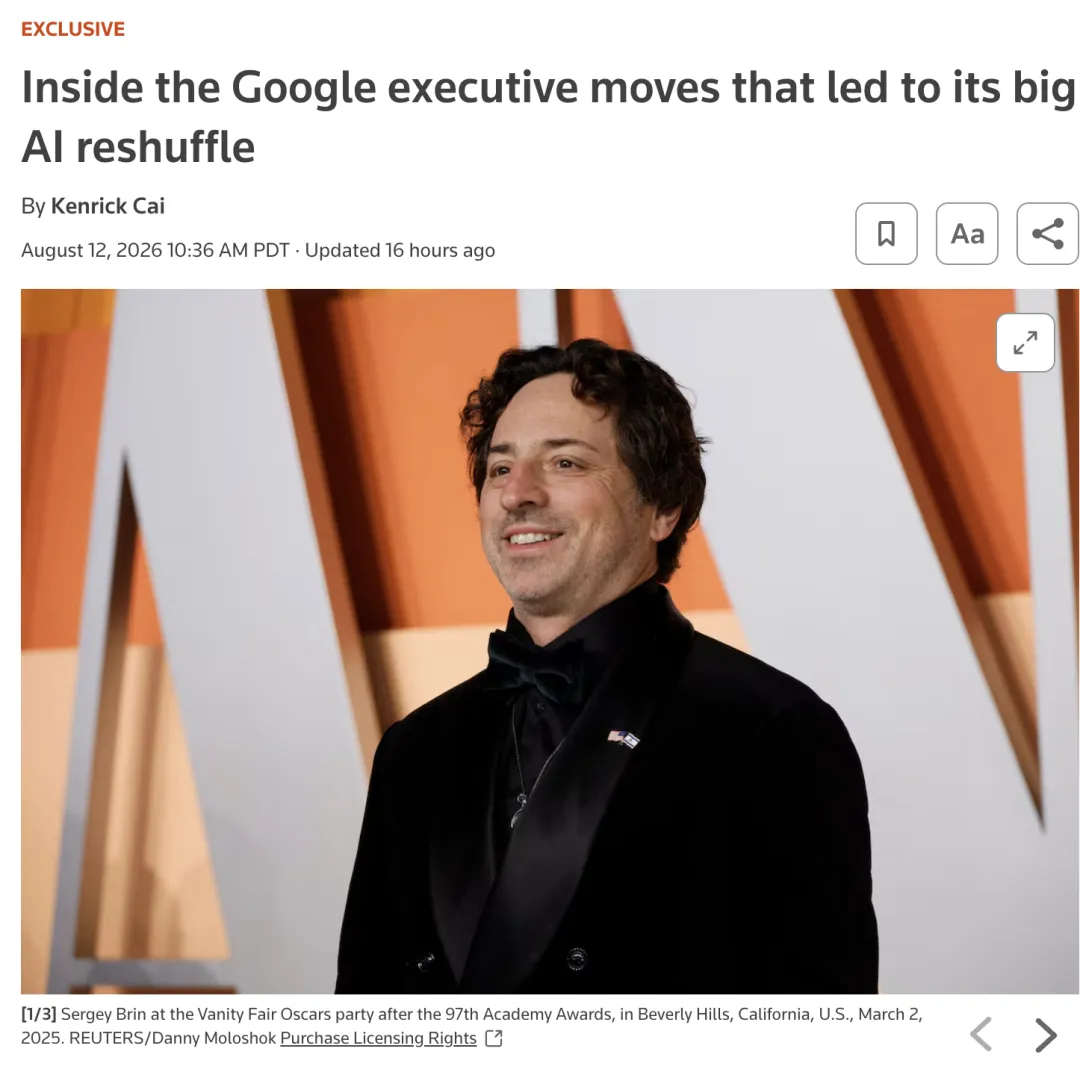
Today, Sergey Brin, who has no official title, is the 52-year-old "co-founder" of the company.
In the past few months, he has repeatedly instructed the core team that AI must be pursued and at the forefront of AI. He is particularly keen on "retrograde self-improvement" so that technology can evolve without human intervention.
In November last year, Google's Gemini model briefly outperformed its competitors, but the subsequent releases of Anthropic and OpenAI once again brought Google into the spotlight.
As of August, due to internal testing showing Gemini's performance in areas such as programming, Google has delayed the next generation of its flagship Gemini by two months.
On 5 August, Demis Hassabis stepped down from the role and was replaced by his deputy Koray Kavukcuoglu. At the same time, Gemini's two original technical co-chairs resigned to co-found a startup company.
According to two sources, Hassabis and Kavukcuoglu told employees that some non-technical teams would move from DeepMind to Google's corporate reporting system.
For an organization that once encouraged its employees to explore ancillary research projects, the information required to regain model leadership is now very clear.