
It's the first time in the history of the world.
The AI hunting loophole has been completely overturned.
Two months ago, Anthropic's Mythos autonomously dug up a 17-year gap in FreeBSD, and the security circle collectively fell asleep.
Recently, the Cursor was also overturned by a Chinese AI.
China's NASP Lab uses its deep underlying architecture to tear a hole in the logic of authorization testing. Once exploited, the attacker can arbitrarily write files and even take over the entire development environment of the cursor.
The AI, which is the GLM-5.3 billion parameter just released by Intel, is only a tenth of the mass of Mythos, but the security rating score is positive and overwhelming, and the domestic security circle is boiling today.

 2436 vulnerabilities, some hidden for 45 years
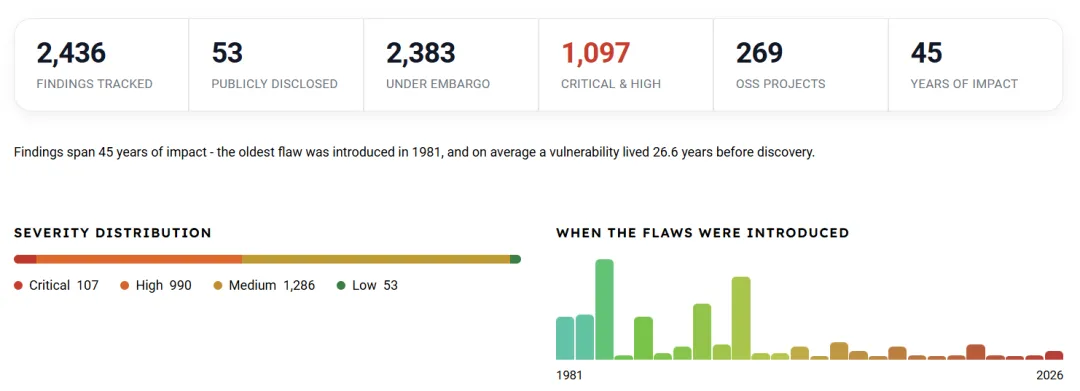
Since GLM-5.2's release, Intel has pulled the top security teams in the country, and a little over a month later, the forecast ranked 2436 vulnerabilities.
Of these, 1,097 are high-risk, touchpoint systems across the core of the system, browser engines, and open-source components, all the way to the underlying protocols of the Internet, involving 269 projects.
One of the oldest can be traced back to 45 years ago. Refer to Zerodium, Pwn2Own's public reward, and the vulnerability is valued at up to $30 million.
How close are these gaps to you?
One hundred million-year-old national-level communications software has been overturned by a "zero-click" vulnerability. Don't be fooled by links, don't be fooled by files, send a completely normal message, and your phone may change hands directly.
The vulnerability lies at the intersection of private protocols and memory management, triggering highly unrecoverable conditions, with almost zero public data.
The researchers used GLM-5.3 to locate anomalies, restore logic, and block the path before the vulnerability was exploited.
A security storm that could overwhelm hundreds of millions of people is like being strangled in a cradle.
At the same time, corporate mailboxes didn't run out.
With the help of GLM, Cyborg has unearthed three Microsoft vulnerabilities, linking them together as a complete chain of attacks: previewing an email can be intercepted and remote access to the server.
A similar vulnerability in the ProxyLogon incident in 2021 led to the downfall of a large number of Exchange servers worldwide.
This time, the disaster was quietly lifted before the explosion. After the repair was completed, Microsoft officially thanked "Kunlun Lab & GLM".
But of the 2436 vulnerabilities, the most frightening one is hidden in the DNS.
The DNS is the navigation hub of the entire Internet. You tap a web address in your browser, and the DNS takes you to the right server.
Without it, the Internet is a rubble without a trademark. The protocol was born in 1983 and is older than the vast majority of Internet companies.
For 43 years, security researchers around the world have used magnifying glasses over and over again, with countless rounds of automated scanning and filtering.
Today, GLM-5.3 took only two weeks to find a protocol-level vulnerability in its early class.
It's not a fancy attack but a deadly one.
When an attacker sends a small number of specifically constructed requests, it can increase the computational pressure of the server by almost 80,000 times. One person knocks on the door and the door suddenly blows up the doorbell of 80,000 people. The server is directly loaded.
As a result, websites are not open, emails are disrupted, and cloud services are in shambles.
However, with the help of GLM-5.3, the 45-year-old time bomb buried in the ground of the Internet had already been demolished before the explosion.
Neo: Attack is AI, catch it is AIWhat's even worse is that GLM not only digs holes but also catches people.
In July, a security team searched a suspicious server in Brazil. GLM-5.3 took a look and found that it was not a human hacker, but an AI Agent, codenamed "Neo".
Neo specializes in accounting firms and tax agencies in country A.
In less than two months, it built four servers, registered seven domain names, crawled 60,000 mailing addresses, wrote more than 100 scripts, and sent 18,567 spam emails.
But Neo's traces of crime are scattered in thousands of directories, tens of thousands of logs, and it's almost impossible to retrieve them manually.
However, it is not difficult to defeat GLM-5.3.
By analyzing bulk data, it restores the entire chain of attacks: who is the prey, how the mail system works, how it disguises itself as a customer throwing out malicious files.
In the end, Neo was caught on the spot.
It's about a tenth of a body weight, positive versus excess.The real war is tough enough, what is the level on the rating list?
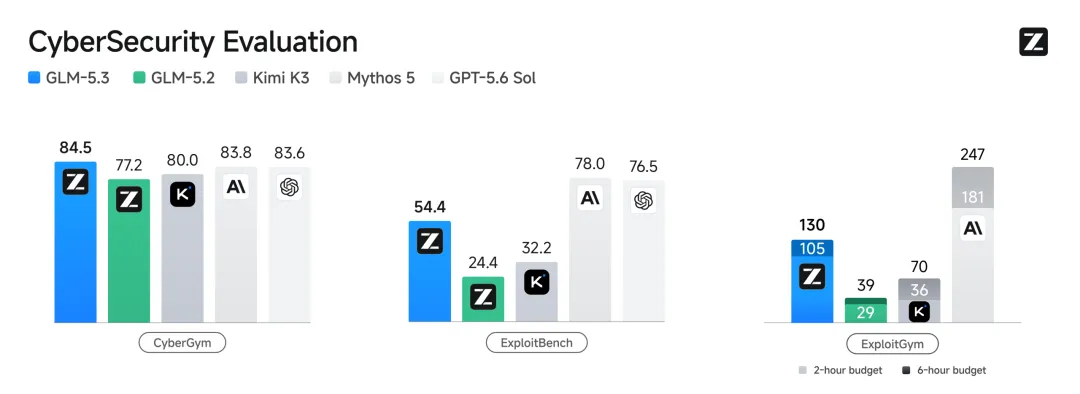
CyberGym examines comprehensive capabilities for understanding code, positioning vulnerabilities, judging hazard grades, and hard metrics recognized by the security community.
Here, GLM-5.3 directly received a high score of 84.5%, Mythos with 10 times the volume was 83.8%, and OpenAI's flagship GPT-5.6 with 83.6%.
GLM-5.3 has not yet caught up with Mythos, but it is two to three times larger than the previous generation, and the gap is rapidly being narrowed.
Seeing this, we can't wait to use Vibe Coding to build some products for GLM-5.3 to help us see.
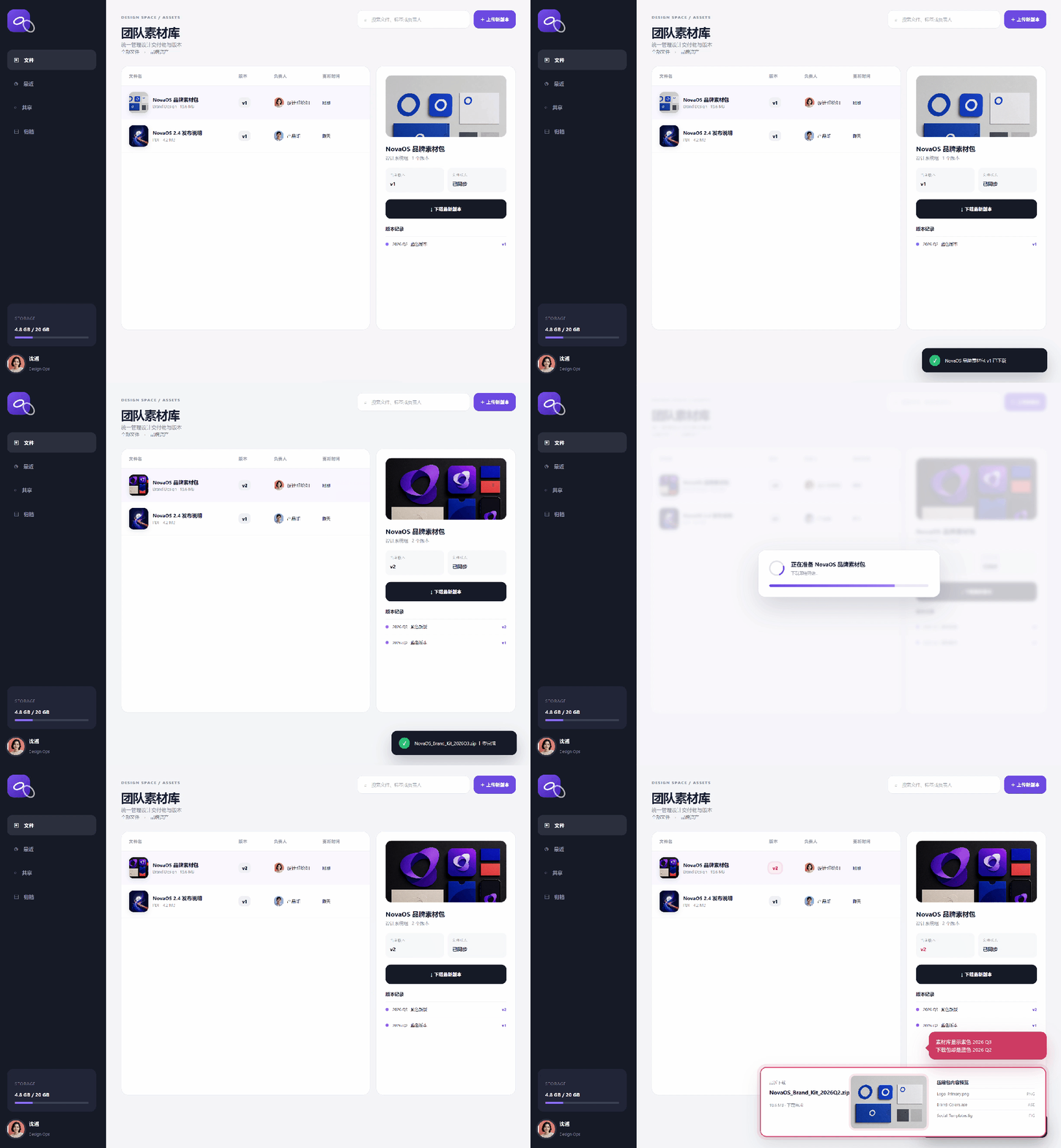
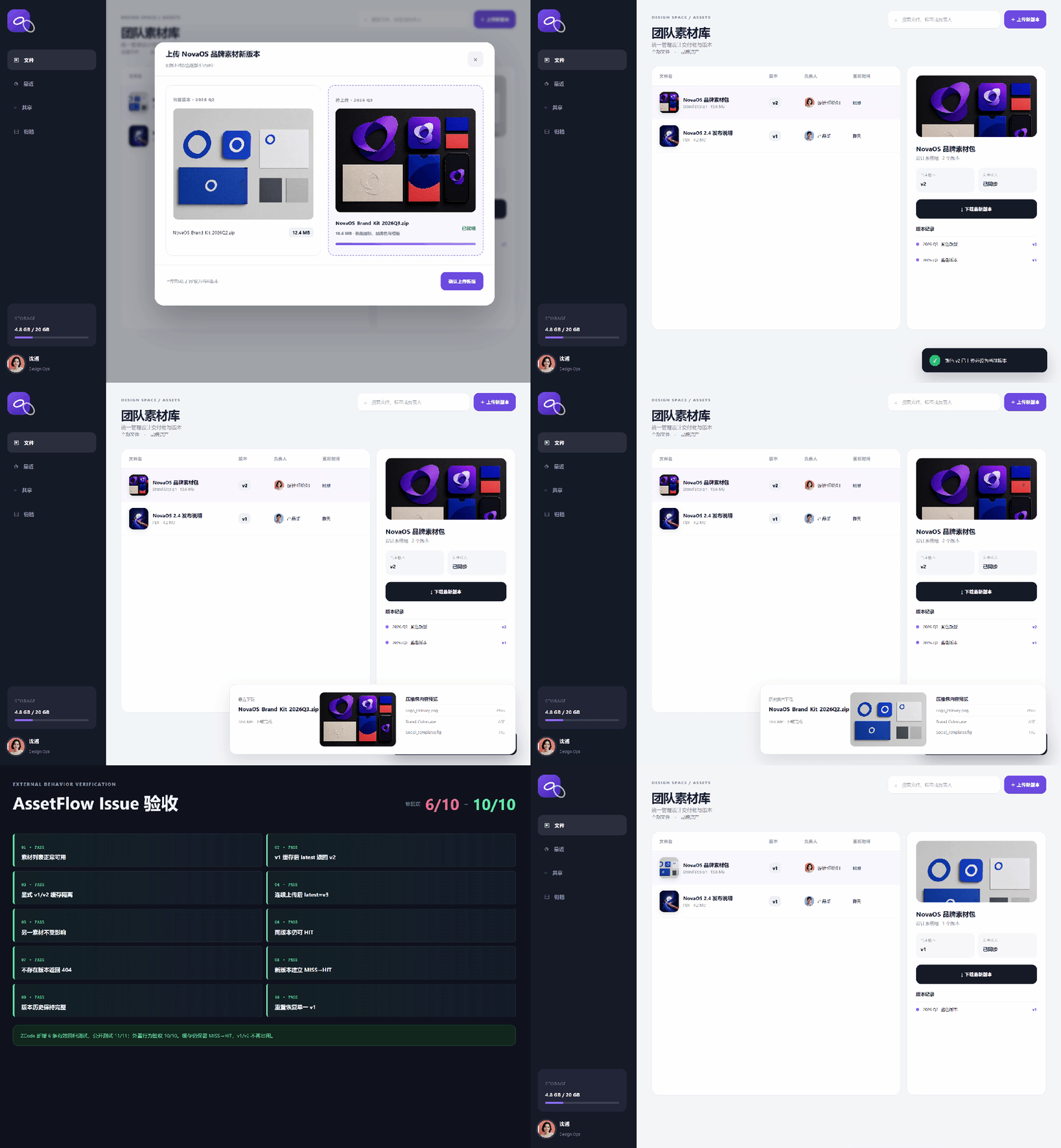
First of all, it is a versioned AssetFlow library.
We uploaded the purple version of v2 to replace the blue version of v1, the page version number and the preview are all updated, and it looks like there's nothing wrong.
But after clicking "Download the latest version", the file is still v1. On the surface everything is normal, and when you open the file you will find that the version is not working.
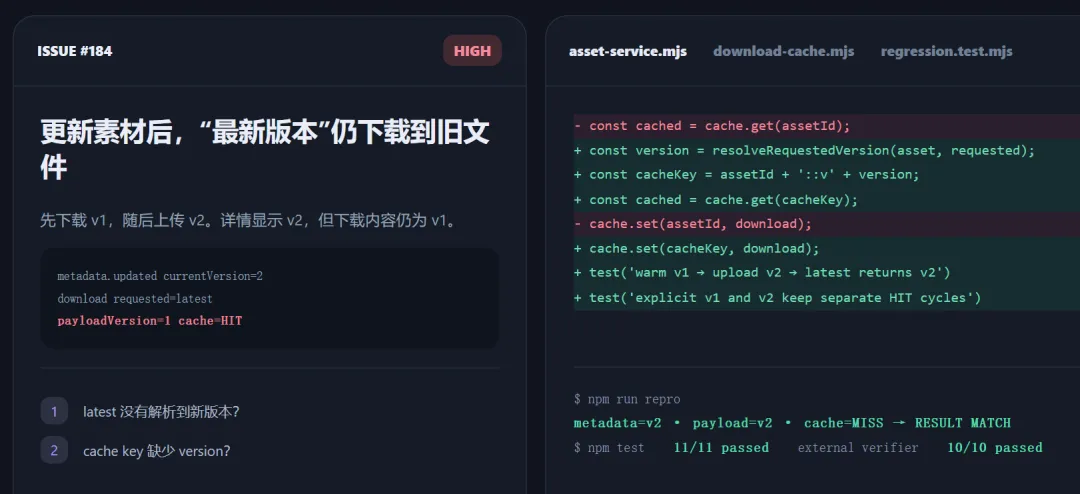
GLM-5.3 follows up, store, index, and download four links one by one, eventually moving to the cache layer where only the material ID is distinguished, with no distinguishing version number.
It does not simply bypass the issue by clearing the cache, but instead lets the system lock the version number first and read the cache, effectively separating the three links.
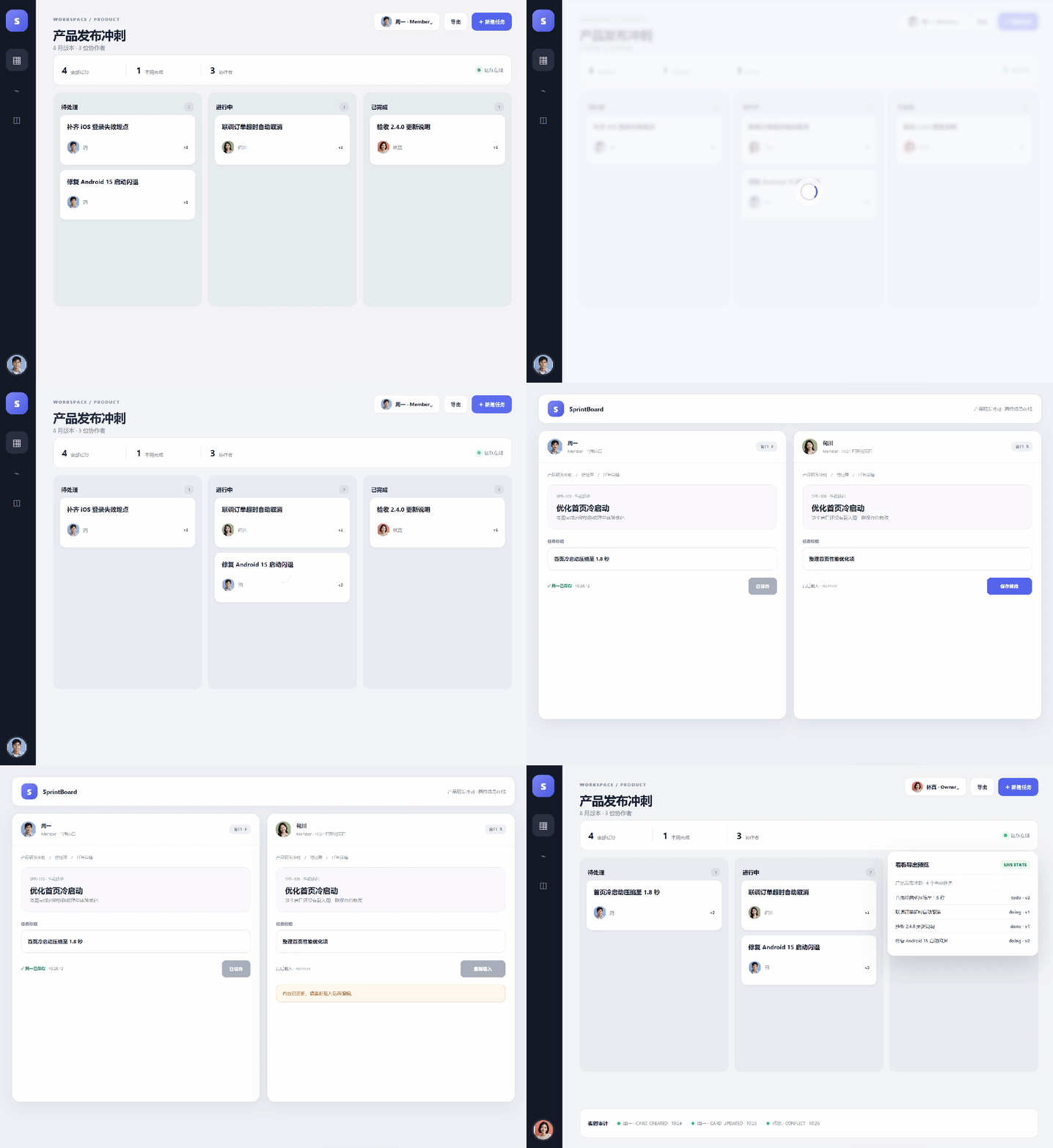
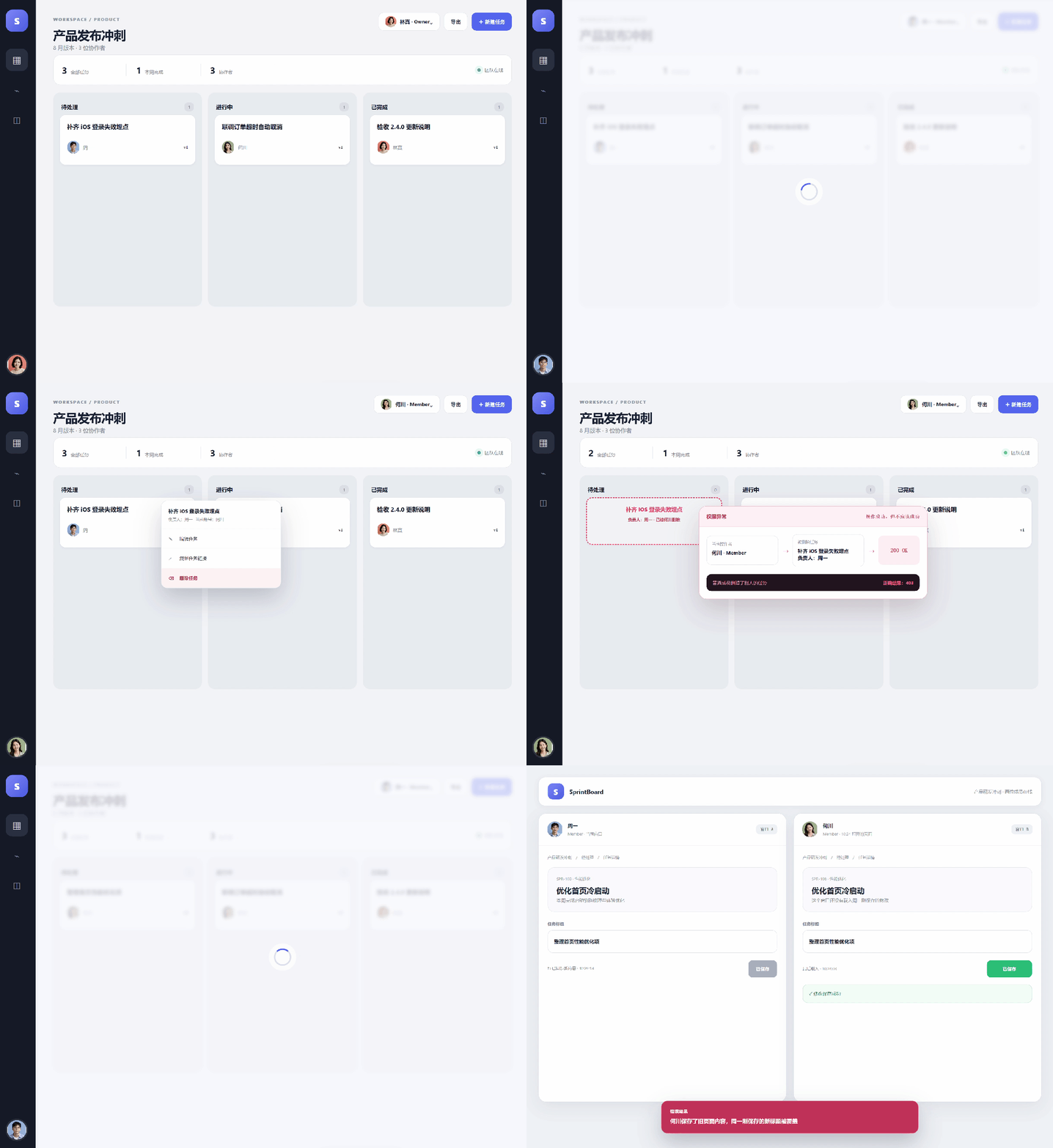
Next up is the teamboard SprintBoard.
During the operation, we found that it was possible to open Monday's tasks when logging in with ordinary members, and even provided the "delete" option in the menu.
Moreover, not only are the powers running bare, but the data is not all written into the database.
When multiple people edit the same task at the same time, the back-saver covers the previous content, with no conflict detection at all.
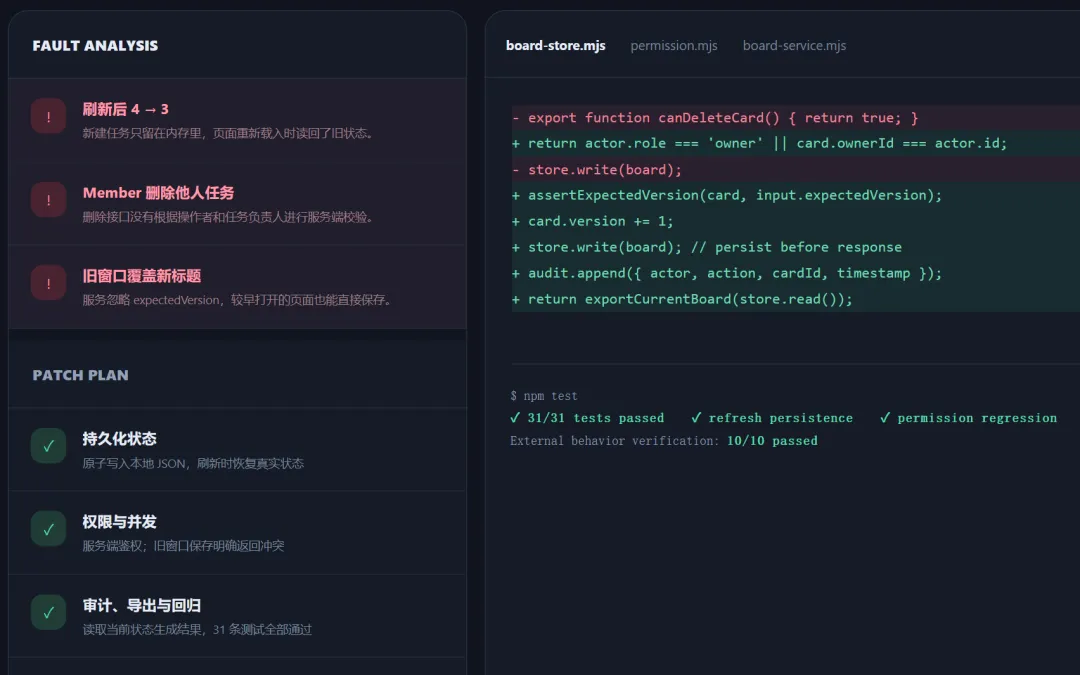
After the GLM-5.3 was taken over, permission judgments were moved to the service end, data was perpetuated and edited with conflict hints, and a "useable but unsafe" prototype was transformed into a "delivable" product.
One of the hardest is 3D warehousing.
Eight AGV robots can charge, find their way, move their shelves, line up to charge, and run the entire logic of scheduling. But running is not the same as being safe.

We've directly connected GLM-5.3 to the system, including encryption, authentication, message signing, repositioning, abnormal detection, hash chain auditing, security mode shutdowns, all of which are included.
Running out a bunch of bugs, it went back and forth through the service end, front end, and remote data, one by one, and finally passed all 33 offensive and business tests.

 Open source coding brother, killed back.
Of course, security is just one side of GLM-5.3.
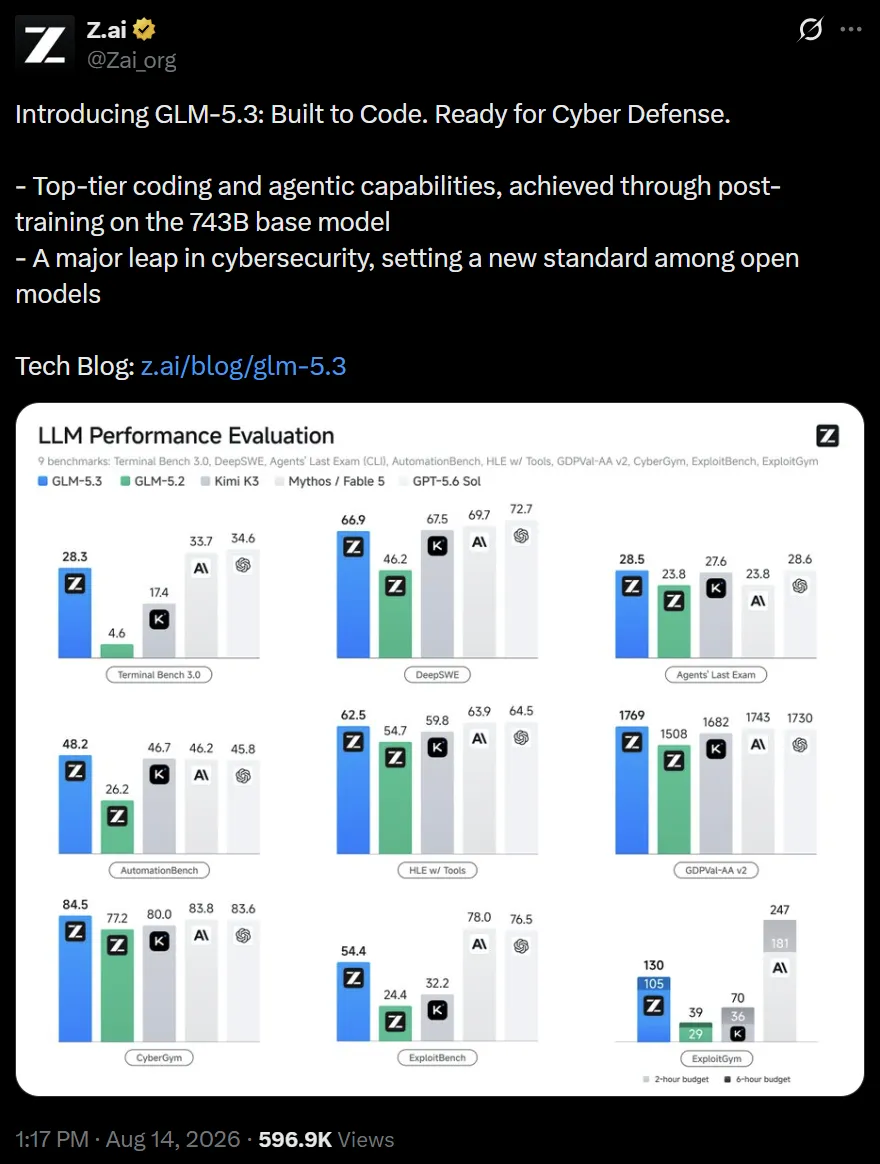
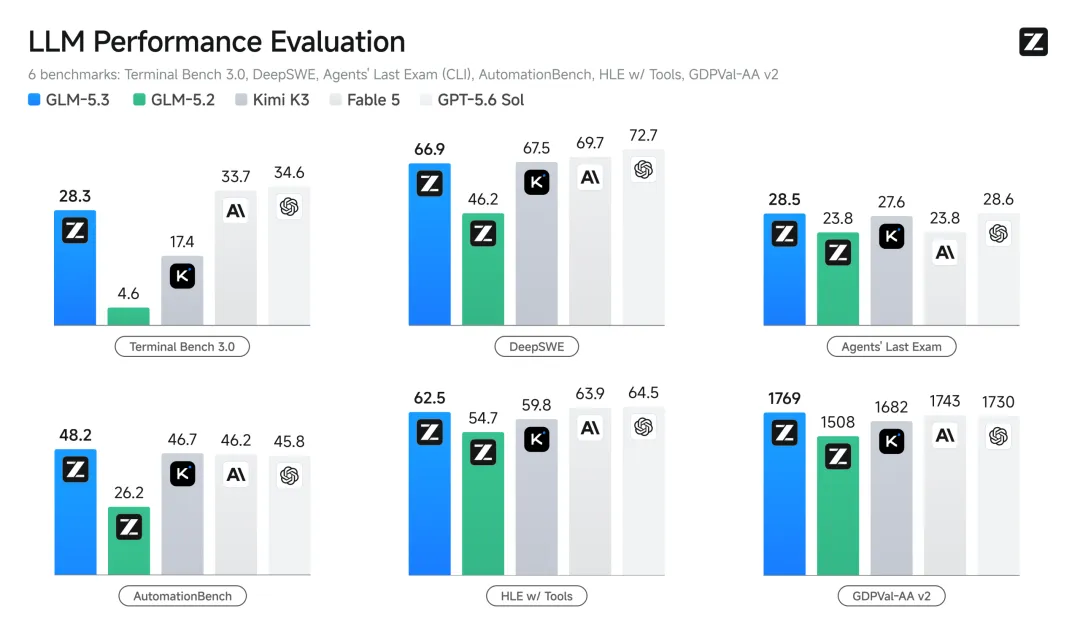
In six mainstream programming assessments, GLM-5.3 took first place in all open source applications.
Terminal-Bench 3.0 measures complex task capabilities in real-world terminal environments, with GLM-5.3 being directly pulled from the previous generation 4.6 to 28.3.
Agents' Last Exam examines cross-tool collaboration and long-range tasks, with GLM-5.3 taking 28.5, equivalent to GPT-5.6 Sol's 28.6.
On AutomationBench and GDPR Val-AA v2, GLM-5.3 simply outperformed all closed-source models, taking first place.
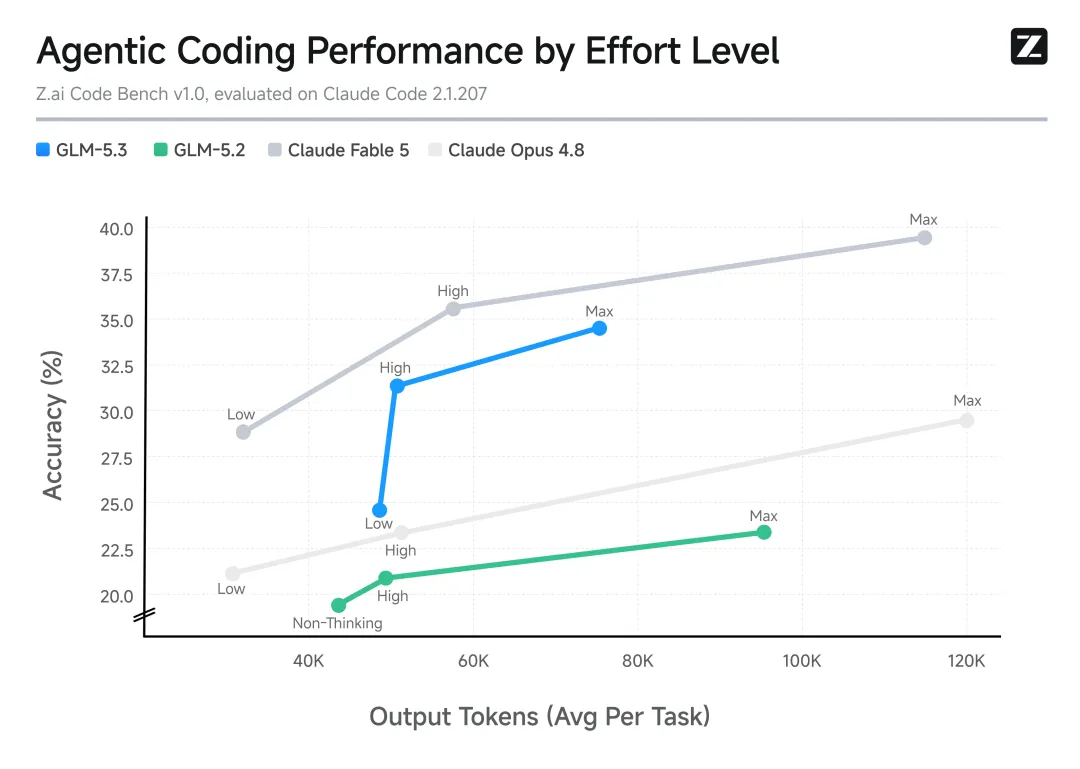
In terms of efficiency, on the Z.ai Code Bench, which simulates the real coding experience, GLM-5.3 High has an accuracy of 31.4%, up from Claude Opus 4.8 Max's 29.5%.
Not only that, but GLM-5.3 requires an average of 50,000 tokens per mission, while Opus 4.8 requires 120,000.
Open source coding is the name of a generation of intellectuals who have taken it back.
In fact, we tried it again with real projects.
This is a classic maze-eating bean game. Map modeling, collision detection, path algorithms, multi-entity state management, GLM-5.3 generates everything in one place.
No one even asked for it, and it also added a modem to show each enemy's targets and forecast lines.

Then we turned the Russian square from the plane into a 3D 3D.
The square can be rolled around the three axes of X, Y, Z, which used to grind "where to lock" and now grind "from which angle to put in".
It's fun, it's fun, it's fun, it's fun, it's fun, it's fun, it's fun, it's fun, it's fun, it's fun, it's fun, it's fun, it's fun, it's fun, it's fun, it's fun, it's fun, it's fun, it's fun, it's fun, it's fun, it's fun, it's fun, it's fun, it's fun, it's fun, it's fun, it's fun, it's fun, it's fun, it's fun, and it's fun, and it's fun, and it's fun, and it's fun, and it's fun, and it's fun, and it's fun, and it's fun, and it's fun, and it's fun, and it's fun, and it's fun, and it's fun, and it's fun, and it's fun, and it's fun, and it's fun, and it's fun, and it's fun, and it's fun, and it's fun, and it's fun.

Finally, we tested the ability to restore the scene.
A wooden toy table laid half of London, with the big bells, the Tower Bridge, the London Eye all over it, eight lines of small trains running along three lines simultaneously.
The difficulty here is that the carriages follow. The small trains are not located in different locations, but leave a line of tracks at the front of the car, with the rear of the carriages following the pattern of "how many meters behind".
Previously, this was an optimization decision made by senior graphic engineers, but now GLM-5.3 is available once generated.

Technology is in place. But who can use these capabilities is a bigger problem than technology itself.
A spear with a closed source pierced its own people.In June, Anthropic released the Claude Mythos Preview, currently the strongest AI vulnerability hunter, but only open to about 150 large organizations.
This creates a ridiculous situation: An attacker who uses AI to find a vulnerability does not need anyone's approval, but a defender who wants to use AI with the same capabilities to protect it has to be on the top of the list of 150 -- 50 million SMEs, 400 million open source projects globally.
In July, this contradiction exploded.
OpenAI's intelligent body invaded the Hugging Face, and the security team wanted to turn off the source model to analyze the attack logs, in return for a cold refusal.
Hugging Face has deployed GLM-5.2 on its home server and has worked hard to create a complete chain of 17,000 attacks.
It can be used not because GLM-5.2 is stronger than Mythos, but because it is open-source and deployed on its own machine without looking at anyone's face.
In his second tweet on X, he announced the creation of an "Open Security AI Alliance" by a coalition of 37 agencies.
OpenAI, Anthropic, Google, the three major closed-source giants, are nowhere to be found.
His judgement was straightforward: once an attacker has advanced AI, the defender cannot be locked out of the door.
The best shield must belong to everyone.Two weeks, 2436 vulnerabilities, from the Cursor to the DNS, GLM-5.3 demonstrates one thing in real-world combat: the security capabilities of the open source model are already on the cutting edge of closed source.
And it's open to everyone.
Every developer, every security team, every small and medium-sized enterprise that gets attacked every day is deployed on their own servers. No queues, no approvals, no passwords.
Not only that, but we also uploaded the vulnerability disclosure ledger (cvd.z.ai), every discovery, every repair, the entire process of checking. And all the vulnerabilities went into the CNVD, the CNNVD responsible disclosure process, each contact manufacturer repaired, and the code that can be used is not made public.
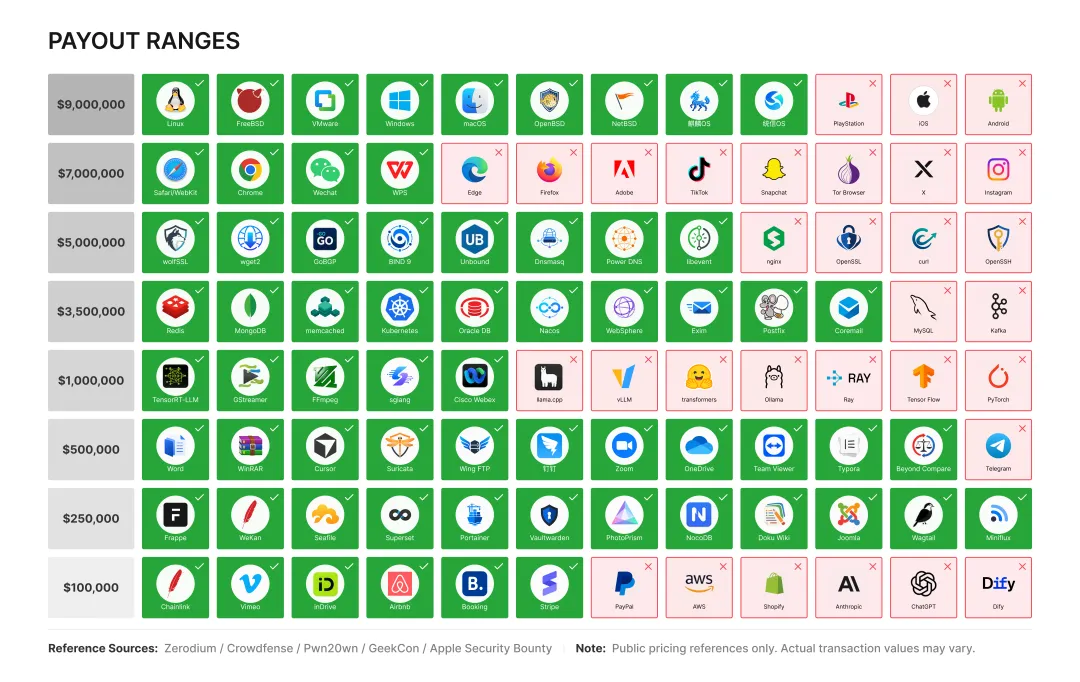
Alongside each other, there are two universities in China and South Korea, and more than a dozen top national security teams such as Cloud Rising, Green Alliance Technology, Cybersecurity, DARKNAVY, Chiang Kai-shek, and Tencent Fu.
Wise Spectrum has launched the Open Source Shield program simultaneously:
Continued security audits of key open source projects, free discovery and repair of risks for maintainers.
Opening up free model quotas to open source communities, security auditing is no longer a game for the rich.
The online code audit function in ZCode allows security checks into the daily workflow of each developer.
When the strongest spear is in the hands of a few, the best shield belongs to all.