It's the first time in the history of the world.
AI is making an earthquake in mathematics again!
The next generation of OpenAI's most powerful model, the Astra, has made significant progress on 10 long-term unresolved issues, some of which may be enough to earn a nomination for the Feltz Prize.
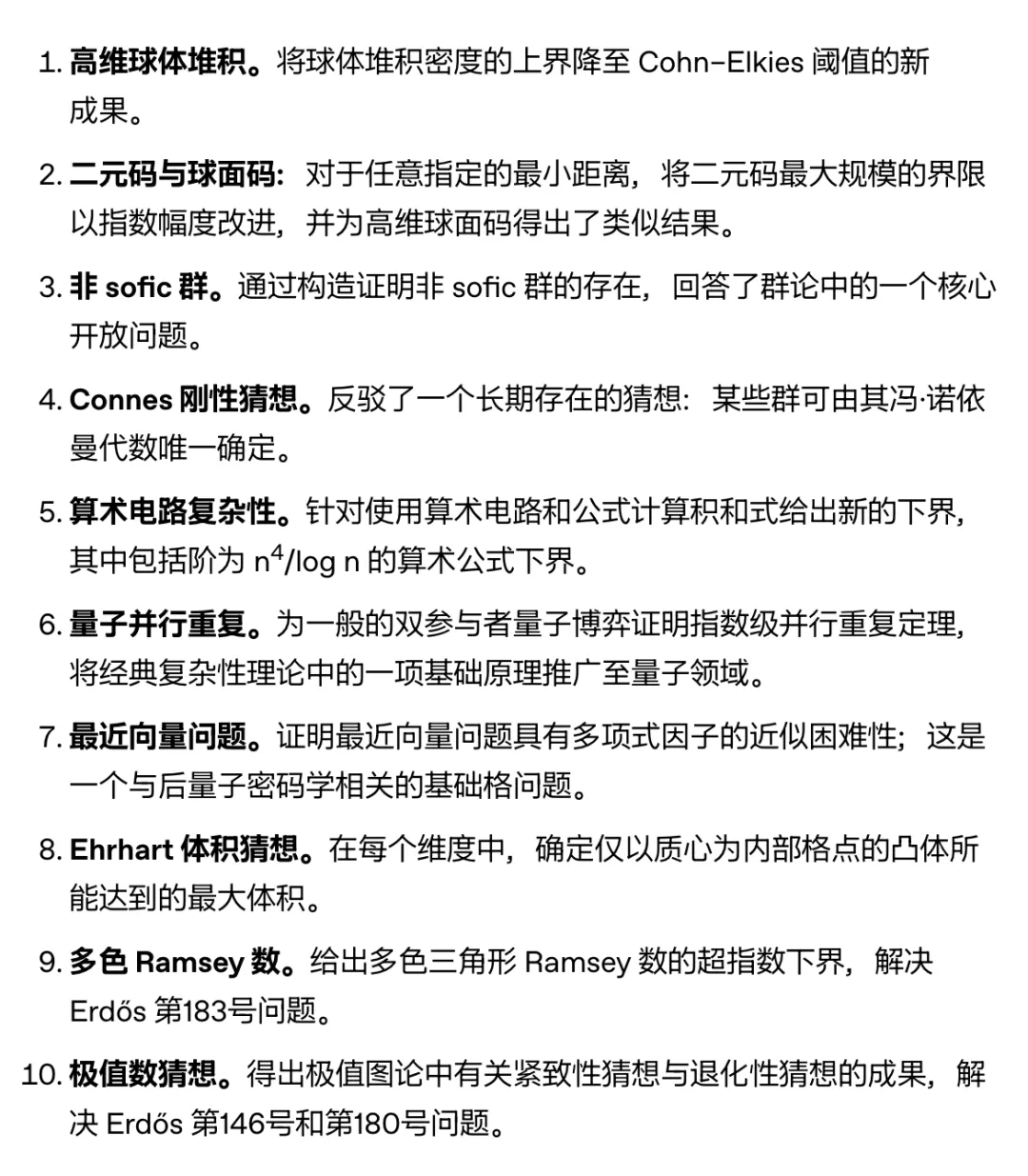
OpenAI says that giving credit to humans will distort the fact, so all the glory goes to AI:
Each mathematical argument is generated by an internal version of Astra, while humans assist in the preparation of the manuscript and the examination of the formalized content.
The news, like a bomb, sparked a new wave of unrest in mathematics.
In the face of this drastic change that is reshaping the entire field, mathematicians have had to rethink their world.
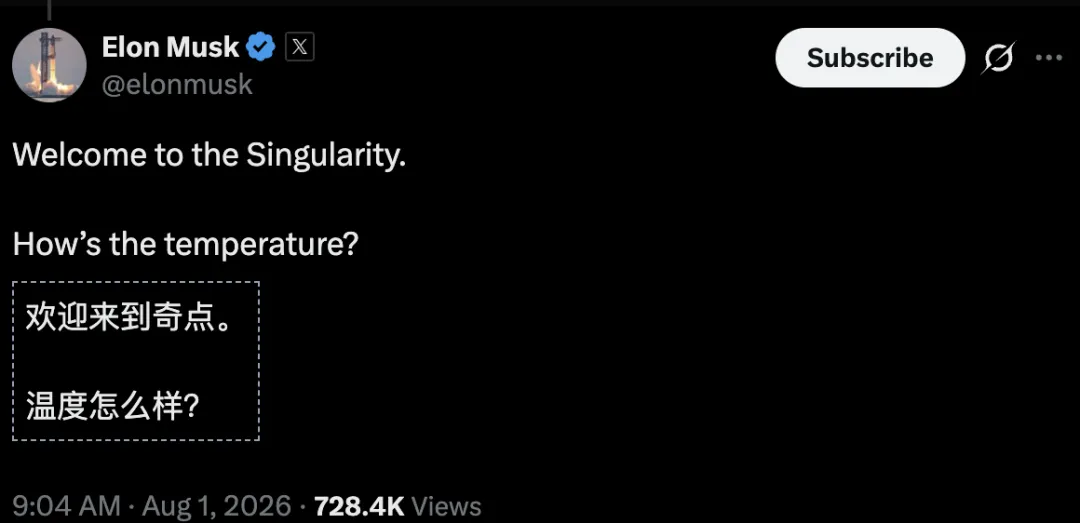
Musk even claims that this means that humanity has entered a "strange point".
More strikingly, Claude made a major breakthrough in Liman's conjecture: raising the lower bound of the zero-point ratio of the Limanz function from 41.6% to 67.2%.
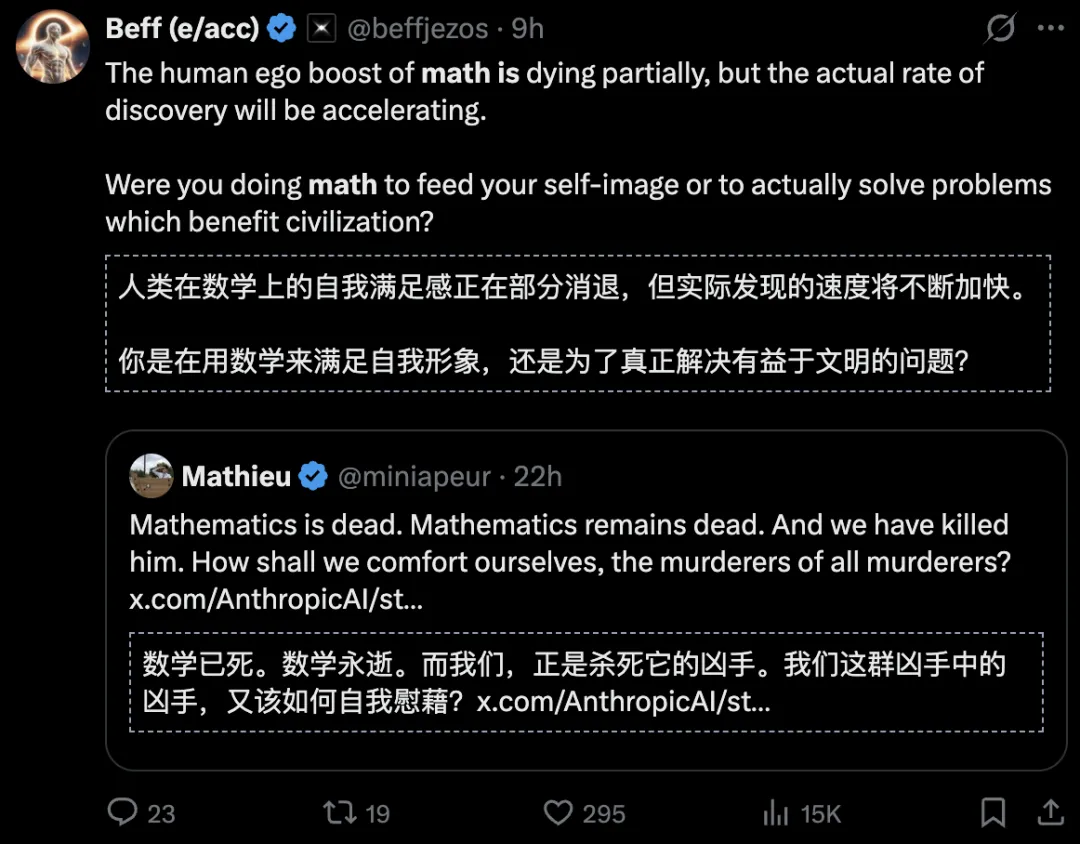
Unsurprisingly, words like "mathematics will die" are often heard.
First of all, although there is a formal proof by Lean, no mathematician has stood up to say that these proofs are true.
However, OpenAI's "Moonlight Hour" lasted only five days.
Several top mathematicians at the forefront of scientific research have joined forces to tear apart the splendid public relations package on the surface of Astra's "miracle".
Stephen Miller, a mathematician at Yeshiva University, pointed out unequivocally in an interview with the American Institute of Molecular Sciences:
They are ruthlessly trampling the achievements of their predecessors. This is not an accidental omission, but a systematic academic error.
Francisco Fournier-Facio, a group theorist at the University of Cambridge, is more straightforward: this is just a story.It's a low-level abstract component puzzle.

AI is just putting together hard-working wooden boards, but under the spotlight claims to have "built an entire forest".
Why would a logically flawless "perfect miracle" in a matter of days turn into a moral storm of academic theft, technological dominance and intellectual degradation?
To understand the anger of mathematicians, we need to first look at the two levels of mathematical difficulty that Astra claims to attack:"High-dimensional Sphere Packing" and "Non-sofic Group".。
The first is the problem of spherical accumulation.
It was a very classic geometric puzzle that extended to hundreds or even thousands of dimensions: how do you put an infinite sphere of the same size into a box with the highest density in multidimensional space?
This is a field that tests the limits of human space imagination.
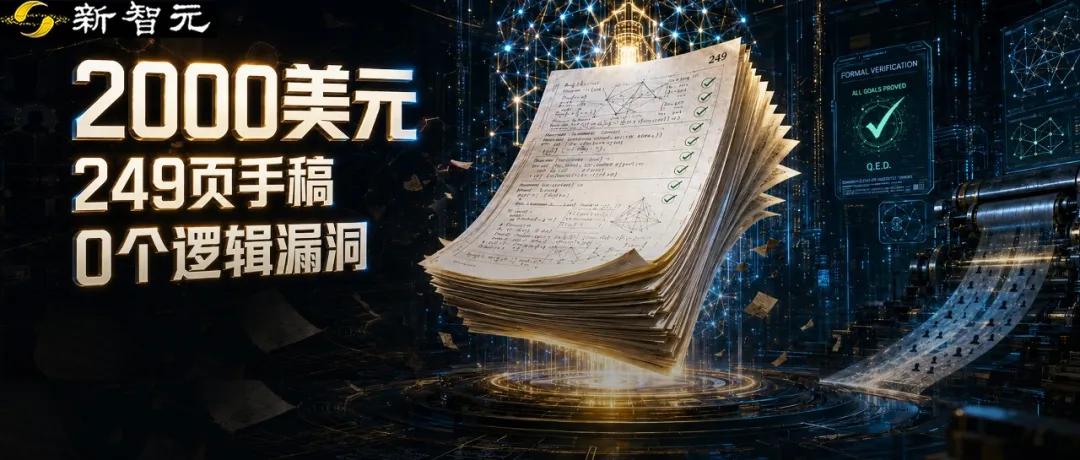
In a 249-page report by OpenAI, Astra provides a surprising demonstration that it has greatly improved the previous record for high globular density. The media hailed it as "a historic crossover of decades".
But when the mathematician Steven Miller read the more than 200-page PDF carefully, he was shocked.
It's the most central, the most ingenious, and the most comprehensive of all the arguments for "genius light".The full text comes from an academic paper Miller and his colleagues published in 2016.。
The original version of OpenAI does not mention Miller's name, nor does the 2016 paper. AstraZeneca presents this core argument as its own mind-boggling "original discovery".
There is no singularity, another "greatest breakthrough in mathematics since 1999"."Proof of the existence of non-sofic groups"It's the same dirt, too.
The Nobel Prize winner Mikhail Gromov proposed the "Sofic Group" in 199.
For nearly three decades, group theorists have widely believed in the existence of "non-sofic groups" in the world, but to construct a concrete, finite example in a truly "hand-crafted" way is as difficult as making a tiny Taj Mahal in the sand.
Astra claims to have done so, and it gives an impeccable proof of constructivity.
However, the University of Cambridge's Founier-Fassiou pointed out bluntly: "Astra's so-called breakthrough, with all of its foundations and key components, comes from two papers by Hungarian mathematician Gabor Kun on the nature of the expansion diagram in 2016 and Andreas Thomzai's 2019 paper on the nature of Kazhdan (T)".
What Astra did, in fact, was extremely subtle and patiently "reorganize" Kun's theory of expansion graph decomposition, and Thom's theory of centralization.

This is the most secretive and brutal intellectual exploitation of the digital age.
In history, mathematicians have lost.Augustin-Louis Cauchy, a 19th-century French mathematician who published nearly 800 papers in his lifetime, was a leading figure in the movement for mathematical rigor and a renowned king of the run.
In order to gain theoretical priority in the academy, he often threw the unpublished semi-finished work directly to the editorial department.
In 1821, Korsy asserted in a string analysis lesson: the sequence of consecutive functions whose limits must be consecutive. Five years later, in a letter to his teacher in Oslo, the Norwegian mathematician Abel noted that the theorem "exists as an exception" and gave an example.
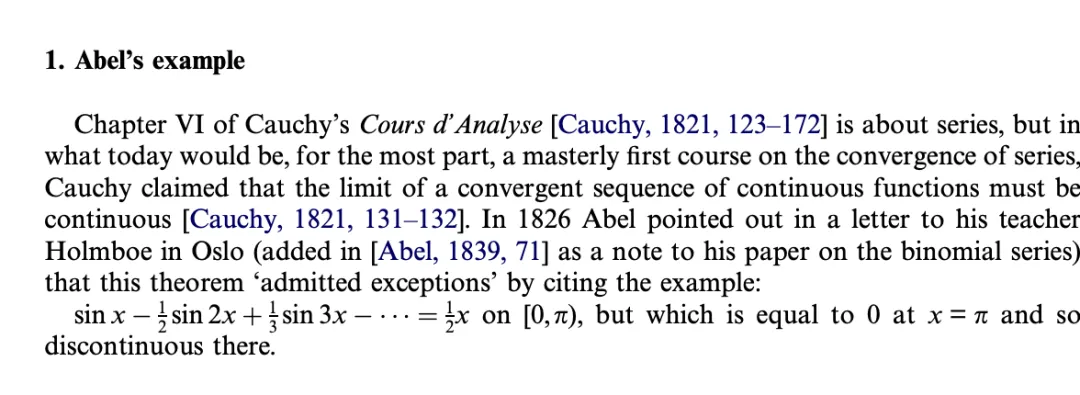
What was Corsi's reaction? He twisted the definition with a very small post and patched it up as if the hole had never existed.
And in 2026, when the mathematical community demanded that OpenAI replace the citation question, the official response was: Responsible for the correctness of the results will be a "small update" to the paper, while minimizing the press release's statements about "a decade without progress".
For two hundred years, from a pencil to a trillionth parameter, the arrogance of the robber in the face of accusations has not changed a word.
The second offense in mathematics is "No Soul".
249 pages Lean code gets a full green light from the machine, but no human can read anything out of hundreds of thousands of lines of formalized statements.
It proves the answer, but it takes away the revelation.
The great proof should have given explanatory insight to tell you why this is true and what symmetry lies behind it.
This accusation is powerful, but it is not the first time it has been made.
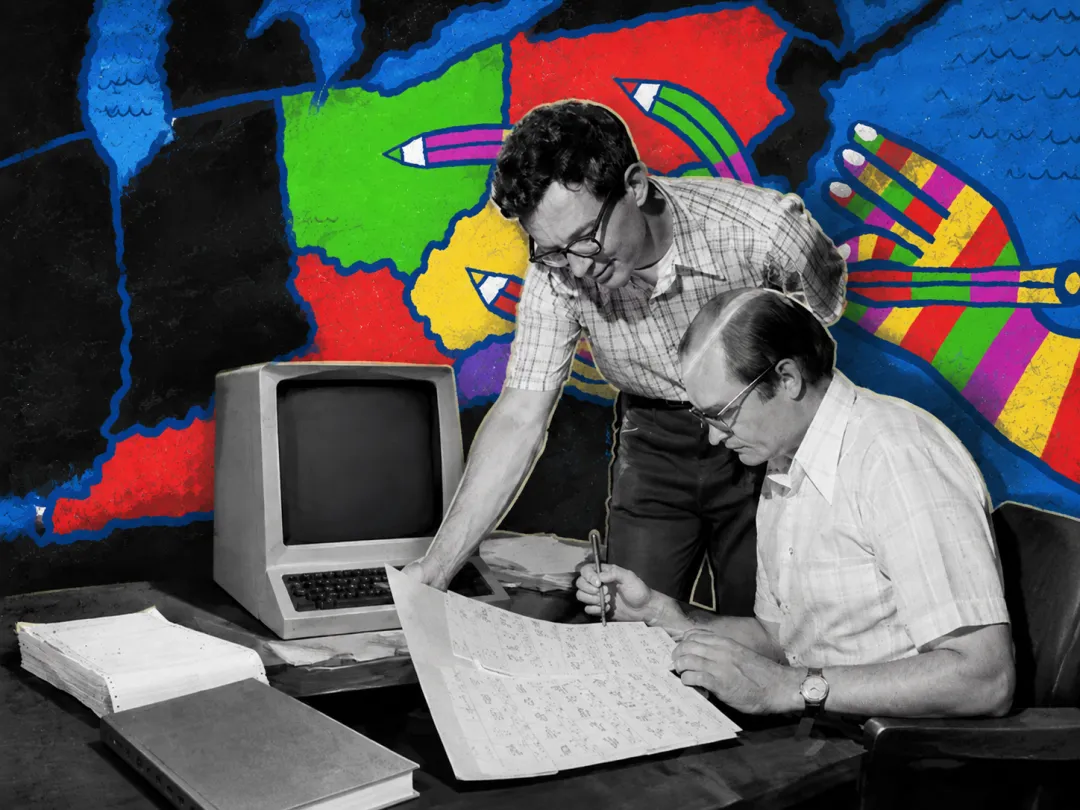
In 1976, Kenneth Apel and Wolfgang Hacken made nearly 1,200 hours of violent calculations on 1936 examples, proving for the first time that they had troubled the mathematical world for over a hundred years.The Four Theories.
This is historical.For the first time, theoretical proofs primarily based on computers。
The mathematical community at the time was almost in shock, angry and today's word is not bad: it was not proof, it was a ledger that no one had read; machines made conclusions, they didn't understand; the soul of mathematics was drawn away.
Fifty years have passed.
The four-color theorem was written into the textbook. Formal verification became a positive direction of study.
The lean community was crowded with thriving young people. The anger of those people at the time is now usually just a joke.
So the accusation that "there is no soul" has been denied once. If the mathematical community shouts "machines don't understand mathematics" this time, the future is likely to end the same way.
So what's the real pain point for the Millers?
Mathematical depreciation of credible currencyIn the last three years, all the capabilities have claimed a common rib.The claimant is the only evaluator.。
Lists can be browsed, demos can be edited, test data can even be leaked, and the outside world can only scream, "Does this figure make sense?"
Currently, the mathematical continuum is the only credible currency that has not been compromised.
It has a nature that cannot be given in two other areas:Conclusions can be determined by machinesandClaimed to be extremely high。
OpenAI is distributing a 249-page manuscript+Lean 4 machine verifiable certificate for each result on GitHub.
This is the intergenerational replacement of public relations tools.
It's convincing from the very gesture of "I ask you to check it out":
I don't understand, I don't know what's wrong, but I believe AI is right, so you can check the Lean code.
This is the modern form of the "Charm Offensive", which is not a pleasant one, but a symbolic transfer of arbitration.
OpenAI really has three levels of purpose.
The U.S. regulators.
In recent years, Ottman has presented Astra to policymakers, but it has not yet been released.

An announcement without a product, without a date, whose primary function is to declare its position within the regulatory area: I am at the forefront and the rules should be made around me.
Capital markets. Note the number quoted repeatedly.
The cost of the 10 resulting tokens is roughly $2000, with an average of $200 each, depending on the GPT-5.6 Sol API.
This is for CFOs and LP's.Narrative pricing of unit economics。
The top talent.
About an hour after receiving the Feltz Prize, mathematician Jacob Tsimerman announced he was joining the OpenAI security team.
The only asset in this round of public relations is the credibility that "validity" brings.
When a reference norm is caught in a loophole, the loss is the asset itself. Lean can verify "proving to be true" rather than verifying "who owns the idea".
What's even more embarrassing is self-deprecating: OpenAI cited the Layton Declaration as its own attributed stance, and then published the results of peer-reviewed publications through the company's blog instead of peer-reviewed, which is exactly what the Declaration warned about.
In this era dominated by mathematics and algorithms, where AI has been stealthily stripped of its "crown title", perhaps not just a few mathematicians, but the original spirit on which we all rely to survive.