 With the advent of the ART series of industrial-grade human-powered control arms, every brain company has its own reliable body.
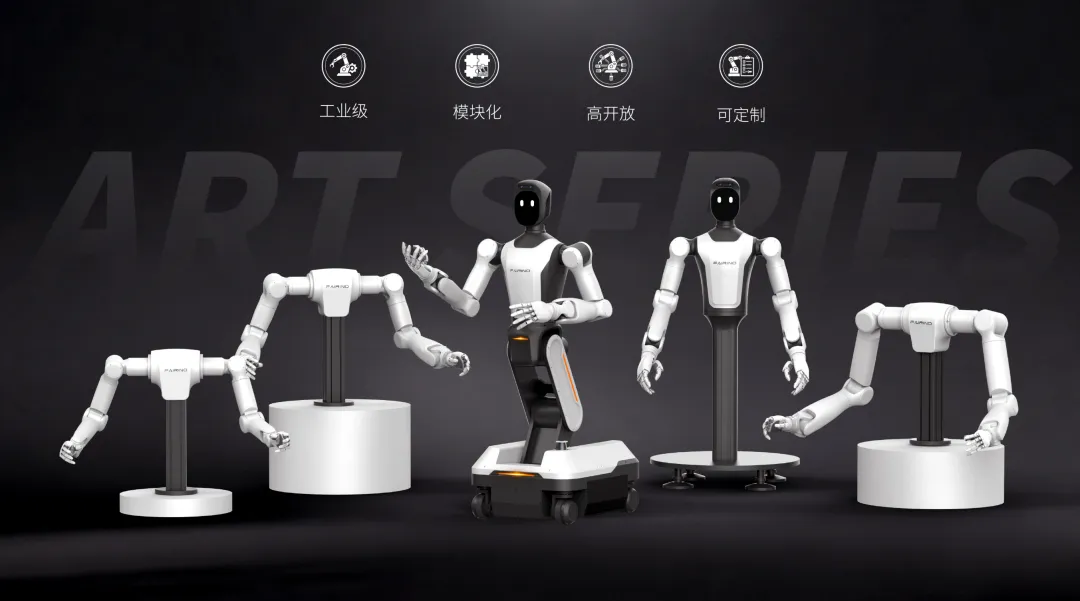
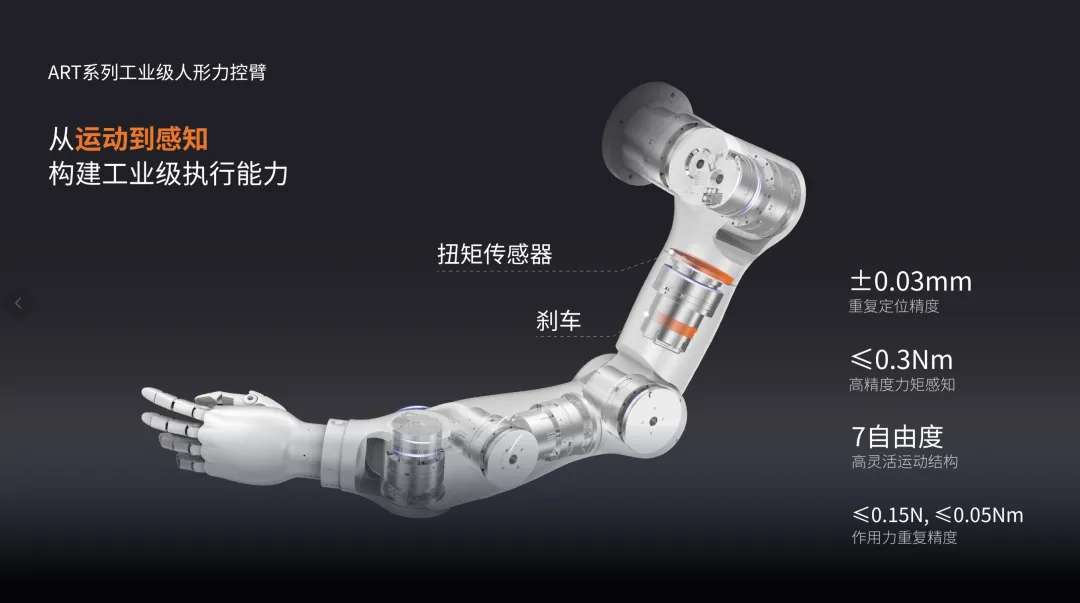
The ART7 general-purpose human-power control arm is a family main force arm, adopting a 7-joint all-power control+cross-cross bracelet design, rated load of 7 kg, maximum instantaneous load of 10 kg, single-arm span covering 714 mm close to the human structure, repeating positioning accuracy of ±0.03 mm, force repeating accuracy of ≤0.15N, ≤0.05Nm.
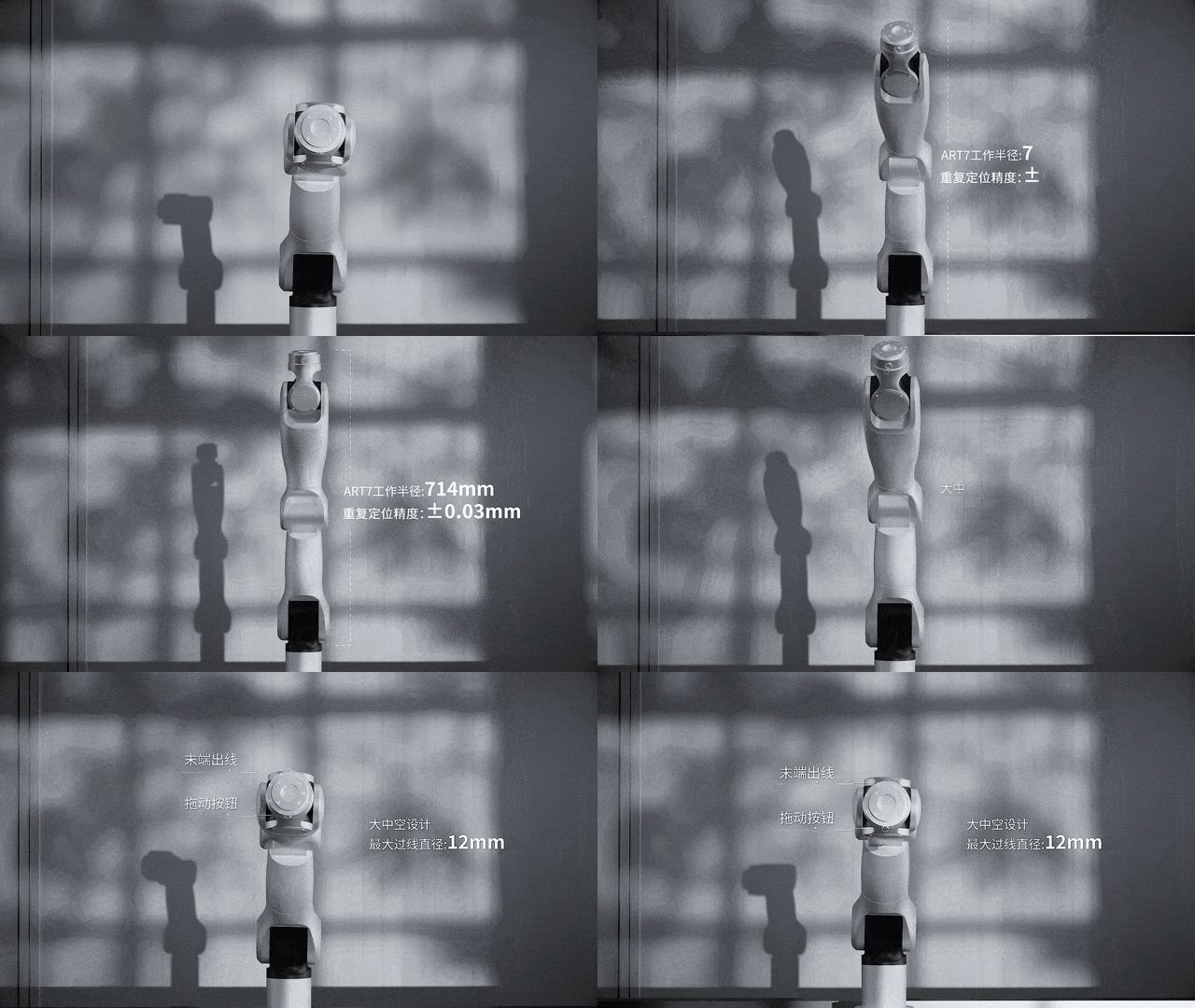
The ART series incorporates lightweight, highly agile characteristics, and through force-reaction compensation algorithms, with a force of less than 5N, smooth traction can be achieved, adapted to precision assembly, cutting-edge scientific research, medical laboratory displacement, and other lightweight tasks.

ART14 is a heavy-duty industrial-type human-powered control arm with a single-arm load of 14 kg and a maximum instantaneous load of 20 kg. It is designed for complex industrial tasks such as car assembly, large-scale parts transport.
Single-arms are activated cornerstones, both arms have become the main force, and now the two-arms robotics have been cut into the main battlefield in the real world, such as in PCB line plugging, bolt tightening locks, logistics package sorting and other scenarios.
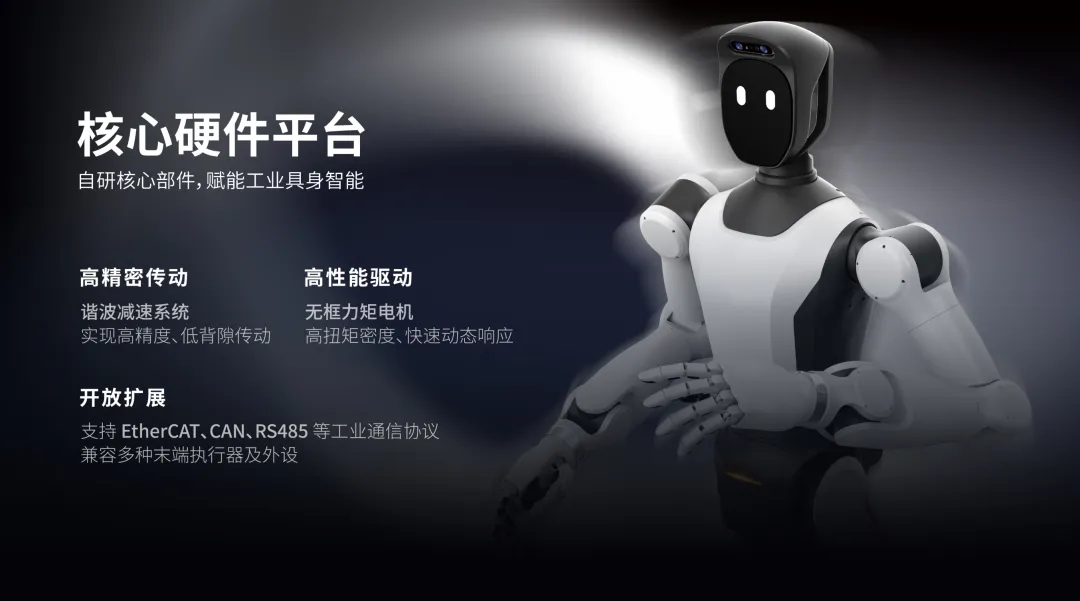
The AR-UB platform, which integrates the head, dryer and arm systems, adopts a sub-millimeter-level industrial precision design, with redundant precision reserved for high tolerance scenarios such as commercial and domestic, to meet the needs of algorithm verification, data collection, and specific scenario automation system R&D, and builds a well-perceived and operational base for long-series mission scenarios.

ART-RD is a reference design offering a flexible design of 24 degrees of freedom, with 14 degrees of freedom for both arms, combined with hip, waist, leg and movable chassis synchronous controls, which can be adapted to the needs of highly flexible and flexible movable industrial manufacturing, precision assembly, scientific research experiments, and other complex scenario operations and verification.
All of the above man-made arms are equipped with a self-produced unified joint module. The standardised man-made joint module of the ART-JM series is based on the six core components technologies of the company, with lightweight and high power torque density; large-space structure design, which supports lines with a diameter of up to 12 mm, facilitates the rapid expansion of vision cameras, power sensors, and end-end performers, improving functionality while guaranteeing visual beauty.
ART-JM series standardized man-made joint modules, including models such as FM-11, FM-14, FM-17, FM-20, built-in filtering wavelength reducers, integrated joint torque sensors support a torque sensing of ≤0.3Nm, allowing the entire arm to accurately capture fine-grained electromagnetic variations.
From joint modules to two arms, to man-made integrated design, the FAROART series of industrial man-made control arms offer a selectable, scalable, all-in-one flexibility.
The release of the ART series' industrial-grade human-powered control arm is not only an extension of its industrial-grade capabilities, but also a response to the industry's soul-searching dilemma:
When did the humanoid robot go from being a luxury luxury luxury luxury luxury luxury luxury luxury luxury luxury luxury luxury luxury luxury luxury luxury luxury luxury luxury luxury luxury product?
Can the parts with two arms withstand the high-intensity operational tests of 7*24 hours in the factory?
When will an intelligent big model find a body of arbitrary general exercising skills?
As the freshness of the craft declined, the market was calling for an industrial-grade hardware base that was both performance reliable, cost-controllable, and highly open.
1 million units sold annually for engineering deliveries
Let the big models train the boxes.
In the face of the difficulty of creating a reliable bridge to the physical world, why is it that the answer to the question of how to build an intelligent landing machine is given by a robotic robot?
The FARO robot ART series can bear the brunt of the underpinnings of industrial-grade humanoid robot platforms, and is based on several sets of data:First of all, Fao Robotics has industry-leading engineering capabilities: fully self-developed six core components, cumulative joint module deliveries of 250,000 units, joint module annual production capacity of 300,000+ units at scale; over 11,000 collaborative arm shipments per year covering all scenarios; exports to 100 countries and regions around the world, meeting the strict export certification values and security requirements of international markets such as the European Union and the United States; and a strong backlog of up to 7 billion yuan after multiple rounds of capital financing.
Fau was able to reuse this engineering ability in collaboration with robots in the field of human robots, creating ecologically open, reliable, versatile, affordable super-powered upper limbs.
ART-series industrial-grade human-power control arm uses a high-corrosion aluminium structure, coupled with ABS+PC lightweight coatings, while maintaining lightweight, the FATO robot has built-in high-precision torque sensing, real-time closed-loop control and smoothness control algorithms that maintain industrial-grade repositioning accuracy of ±0.03mm at 1:2 high-load self-weighting.
The self-developed resistance control and torque compensation algorithm, which allows the arm to be load-bearing rigid at the same time, has the ability to regulate the elasticity of the parameters of human-power control, and greatly ensures the safety of human-machine interaction in such scenarios as scientific research laboratories and installation sites.
The small control cabin is only 40mm x 80mm x 100mm in size and supports high-speed communication between the Gigabyte Ethernet network and the EtherCAT broadband, with a combination of controllers and branches that can support up to five power-controlled man-made arm synchronous controls to meet the complex group operation requirements of small man-made robot factories.
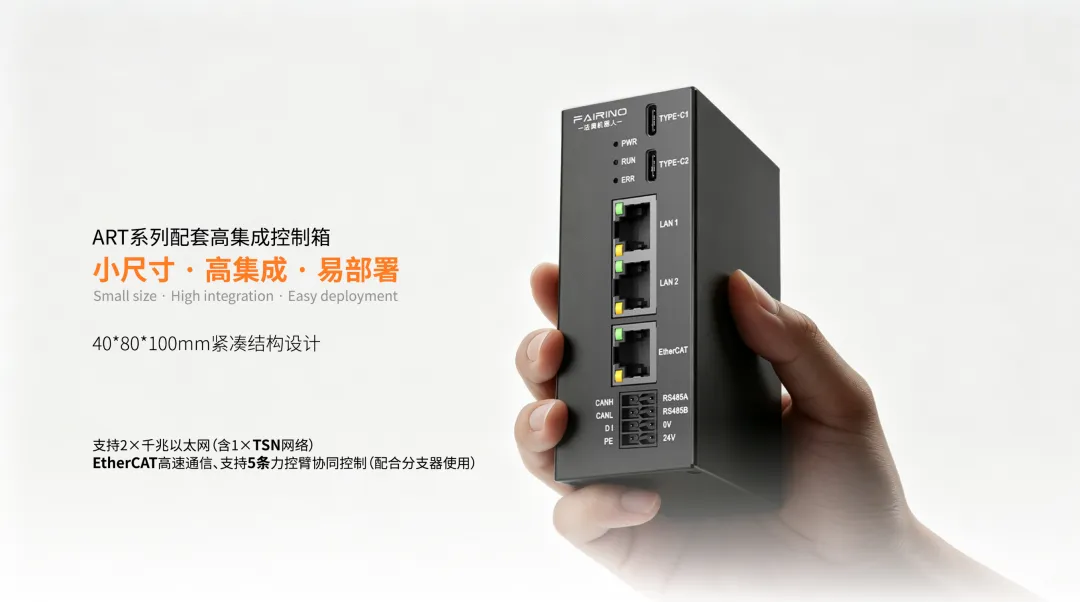
More importantly, in contrast to more than 90 percent of the laboratory-level demo products on the market, the Foo Robot's body-smart series of products have already been verified in several factories.
In the past year, Foo Robotics has been providing smart robot solutions to key customers in a variety of industries, including fashion, shoe manufacturing, electronics, smart logistics, and more, including a standardized smart base and a customized human-like robot control arm for OEMs.
For example, in the clothing flexible manufacturing scene, the global leader in smart silicon technology, Jack Tech, based on its complete global layout, the mass process scenario experience accumulated in the field of deep cultivation of smart silicon, based on the Fao industrial-grade human-power control arm, with self-developed VLA geometry domain size models, building silicon robot system solutions, accelerating the application of silicon robots in the silicon industry.

Jack Tech has a smart robot booth
For example, the collaboration between FARO Robotics and Bloomberg joint ventures, which builds on the strengths of Bosch's industrial resources and Galaxy's general robotics technology underpinnings, leverages robotics' self-development, vertical models, and software platforms through deep industrial know-how and engineering capabilities to build intelligent robot applications based on human-powered arms at the industrial level, driving robots from intelligent decision-making to physical execution capabilities.
Bloomberg Co-Founder of Smart Robot Transportation
The open ecosystem is the cornerstone for large models to complete diverse tasks. The AUART series of industrial-scale human-powered control arms uses modular development principles to standardize core capabilities such as joint modules, mechanical arms, arms, propellers, controllers, operational controls, and development interfaces, and provides the development foundation for SDKs, ROSs, URDFs to support partners in rapidly building intelligent robot programs with different shapes and application needs.
Modular reuse and flexible combination means that even adjustments to different production lines do not require a complete redesign, making robots as fast and convenient as brick-and-mortar brick-and-mortar and significantly reducing development costs.
This modular, reusable design not only significantly reduces development costs, but also achieves multi-use, mixed-use capability leaps, covering multiple scenarios such as precision assembly, intelligent sorting, autonomous transportation, allowing large-scale industrial landings of intelligent agents to hit the fast lane.
Industrial reliability, eco-openness, modularity and ease of maintenance can be described as an excellent product in the industry to meet the above three points, and Fao's advantage is more than that, its other big killer is the market pricing of the ART series.
It's not.The price of silicon in the tens of thousands of yuan defines the new benchmark for industrial manure
The robotic AI control arm of the FARO ART series has adopted a disruptive pricing strategy to raise the market price to 23800 yuan (single arm), not only allowing every brain company to have a proprietary, customized, reliable body, but also allowing factories that pursue ultra-high ROI (return on investment) to use it.
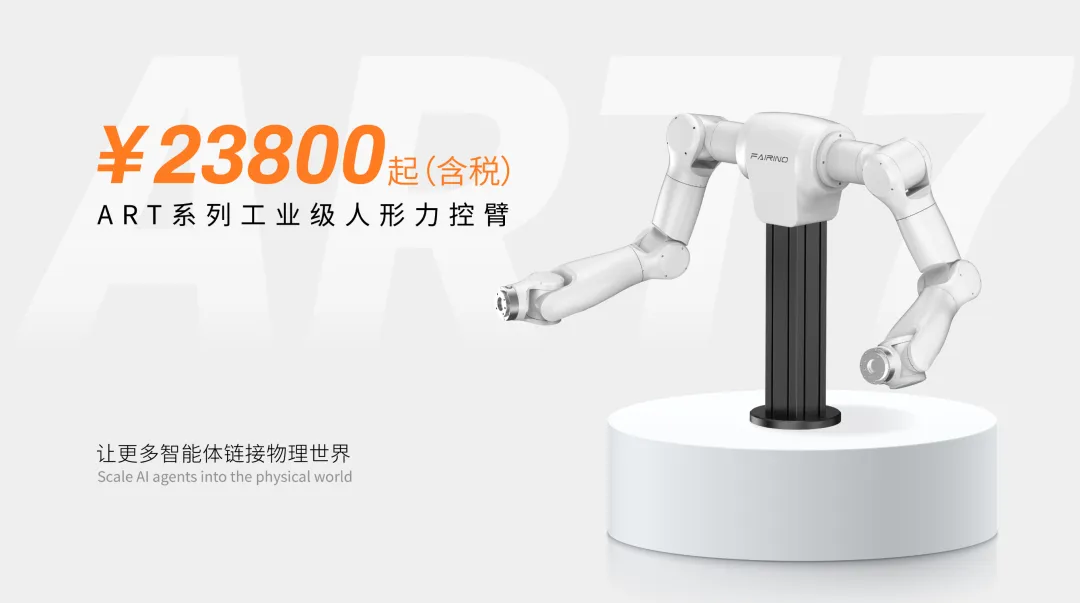
Compared to the 20-30 million yuan spent on hardware for traditional humanoid robots, less than a quarter of the cost of building an industrial-grade humanoid arm product enables smart startups to invest more resources in algorithmic iteration and scene verification.
The return of the power-controlled man-made two-armed platform to the 10,000-million-dollar silicon benchmark continues the beginnings of Foo Robot as a silicon robot popularizer.
Since the era of collaborative robots in the FR series, Fabio robots have insisted on defining product values with real application value and ROI reverse direction, driving the transformation of industrial robots from high-cost equipment to scalable, pervasive basic tools through the self-development of core components, standardized manufacturing and mass production.
Currently, intelligent robots have broken away from the traditional operating category of process + rigidity entities, robot entities have become a part of the learning curve of environmental perception - brain decision-making - agile operation - data collection - model training, and the same set of robot entities, by connecting different large models and application capabilities, can form completely different task capacities and business values.
Reducing the hardware barrier to artificial intelligence entering the physical world, driving robots from high-cost devices to basic tools that can be scaled up to become the new mission of robotics.
First of all, the core components of the robot are self-developed and self-produced, the transmission system is highly standardized and integrated, and the whole system of shock absorbing accelerator SKU is shortened to only 10 standardised general models, reducing the overall cost of using the core transmission components in the joint module.
Secondly, through a highly general standardized, modular design process, reducing the complexity of production and assembly links, making the assembly of integrated machinery less than the industry average, further achieving a reduction in cost, achieving the replicability and quantum production of industrial-grade silicone parts and integrated machinery.
Written at the end
Over the past year, the industry has debated form, crafting moves, stacking demos; and after WAIC, the topic of artificial intelligence has finally returned to its essence: can robots really work in factories? can robots work 7×24 hours? can factory owners calculate ROI?
With a price tag of up to 23,800 yuan, a cumulative supply of 250,000 sets of joint modules, an engineered synthesis of 300,000 joint modules per year, and a full-featured combination of single-armed, double-armed, double-armed, and semi-armoured brushed brushed brushed brushed brushed brushed brushed brushed brushed brushed brushed brushed brushed brushed brushed brushed brushed brushed brushed brushed brushed brushed brushed brushed brushed brushed brushed brushed brushed brushed brushed brushed with brushed brushed brushed brushed brushed brushed with brushed brushed brushed brushed brushed brushed brushed brushed with brushed brushed brushed brushed brushed brushed brushed brushed brushed with brushed brushed brushed brushed brushed brushed brush.The price of the body itselfDownWe're going to have to come down here and bring up the reliability of the shipping controls, and we're going to bring down the shipping controls.StandardizationThe interface is open.。
The launch of the ART series of industrial-grade human-powered control arms, a communal refinement of Foo Robotics from the real needs of customers' OEMs, is a scenario of forward-looking, bottom-up R&D thinking that will bring about a transformation in the upgrading of silicon infrastructure for the entire body-smart industry.
It demonstrates that real humanoid robots should move into factories, into production lines, and become the new cornerstone of advancing industrial intelligence, with reliable body armor and the price tag of their compatriots.

With its multi-million-selling fully autonomous hard nuclear power, domestic and international collaboration robots with double-choice awards, Foo Robotics has chosen a pragmatic path in the hype of being physically intelligent: not to strive to be a complete machine brand with the most powerful brains, but to make it possible for every brain to find the most reliable, economical, and suitable Tier-1 supplier for brains.
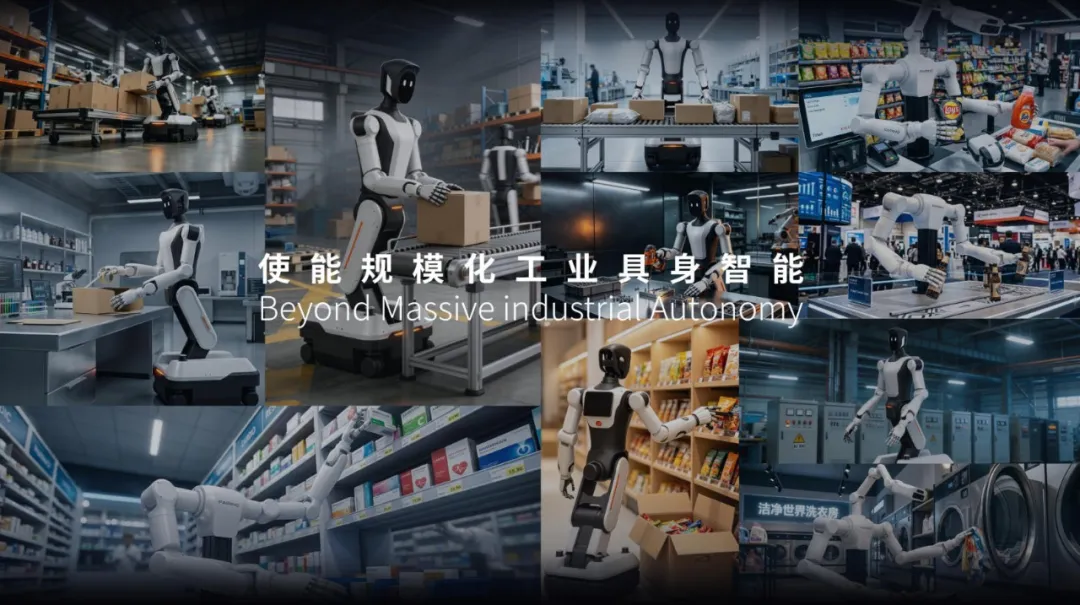
Beyond Massive Industrial Autonomy (BIA) is at the core of the mindset behind the ART series, which underscores the strategic ambition of the ART series as a physically intelligent Tier-1 robot: only to make the ART system reliable and familiar, the ART company can grow thousands of scenic applications on top of it, and a truly intelligent era can be accelerated.