It's the first time in the history of the world.
The Silicon Valley is breaking up.
It's not the kind of thing that flows in the dark, in front of the whole world, with black and white papers signing the name!
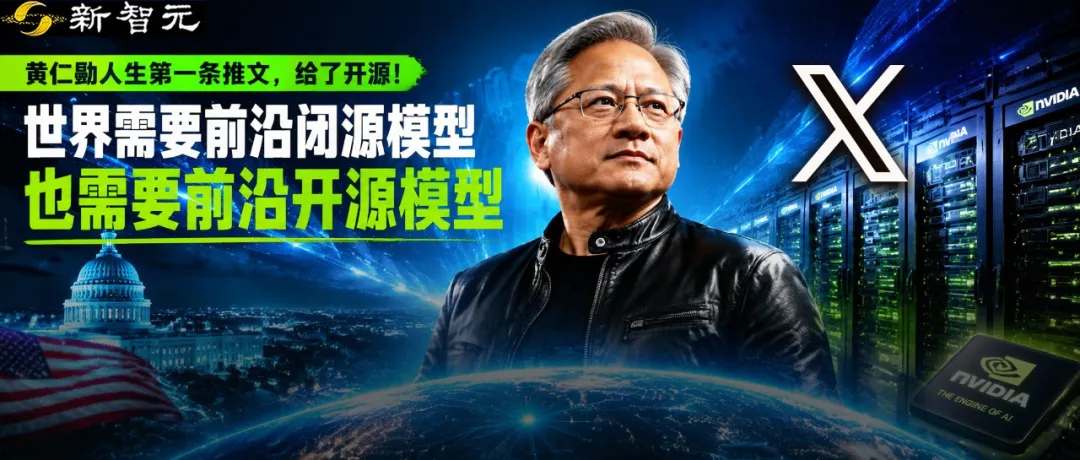
On the evening of July 24, Huang Rinpoche posted for the first time on X.Why is it important to be open source?
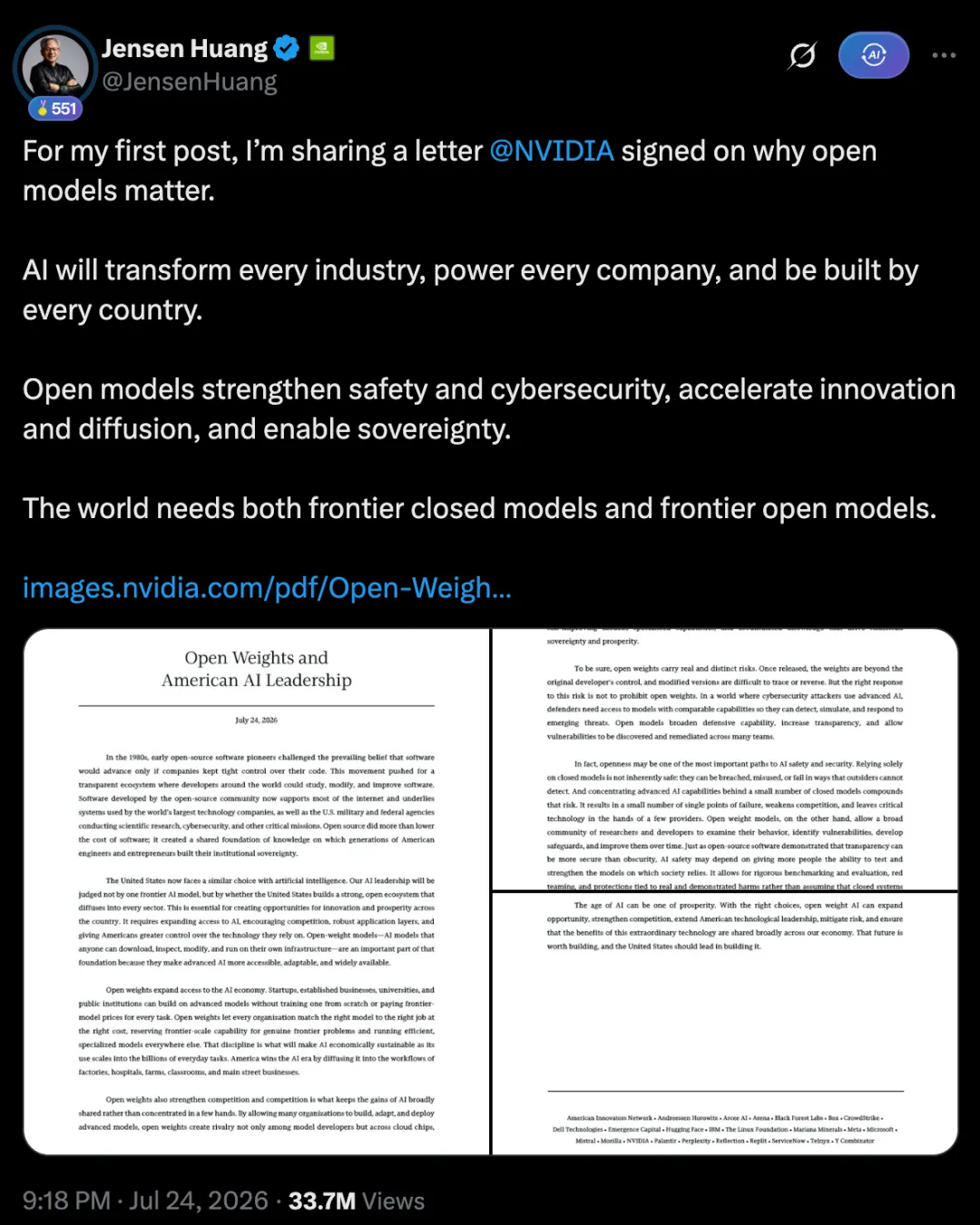
The first post in Huang's life has been viewed by more than 3 million people. The post was posted in less than 20 minutes, with millions of fans.
But the real point is:Who came? Who didn't?
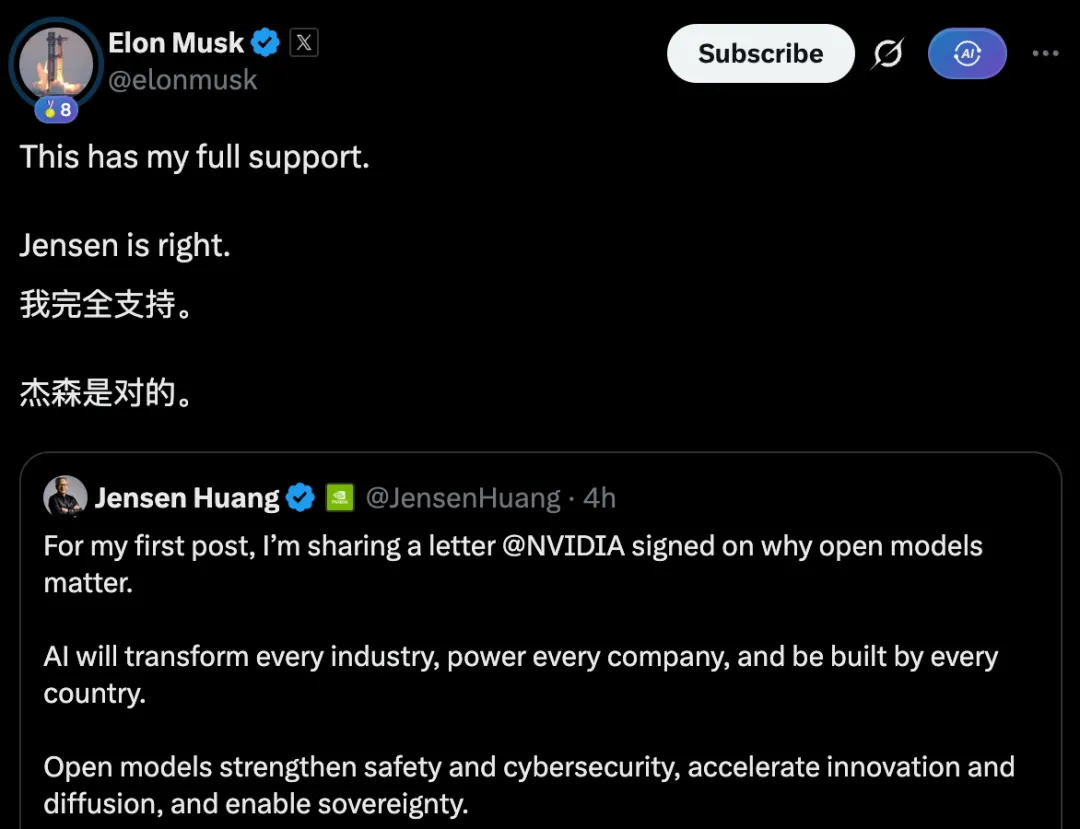
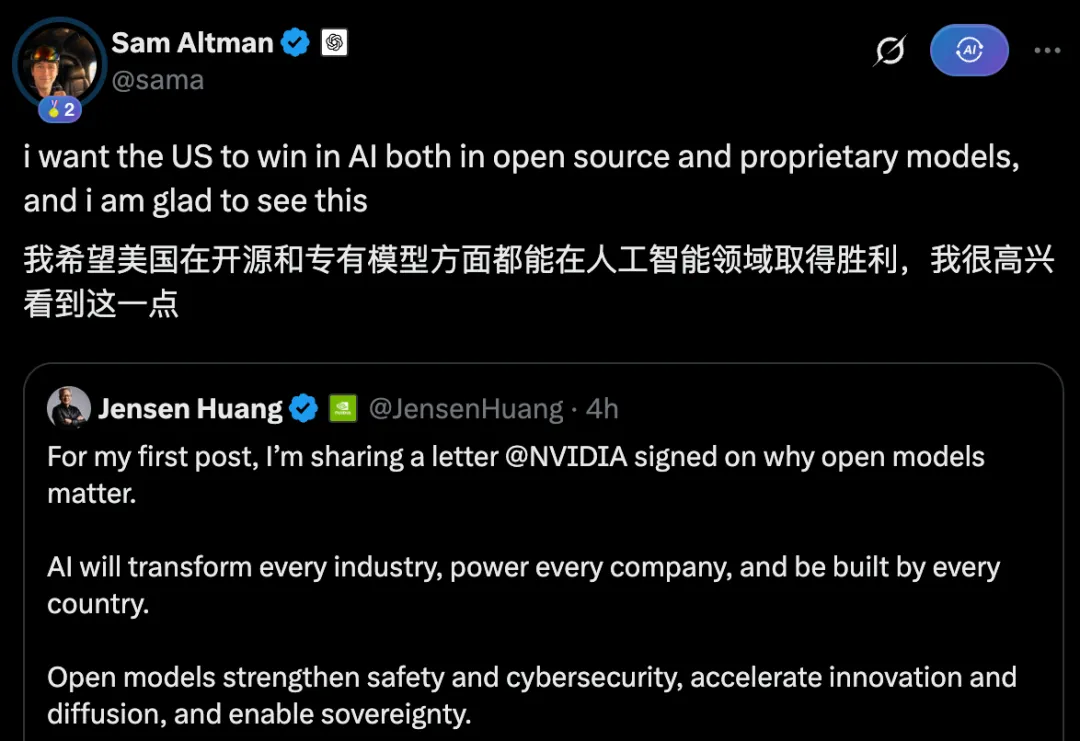
Musk replied: "I'm all for it. Huang Rinpoche is right". Ottman responded: "I want the U.S. to win on both open source and closed source lines".
 |  |
The list of 25 signatories includes British Airways, Microsoft, Meta, IBM, a16z, YC.
But there is no OpenAI. There is no Anthropic. There is no Google.
The three closed source giants, collectively absent.
I'm not playing, I'm playing.。
 A table is completely overturned.
The letter, which appears to be "open source versus closed source", is the real dividing line hidden in the industrial structure.
It's like:The spread".I'm going to say:The scarcity".This is the first public confrontation.
DisseminationIt's the same thing with Microsoft, Meta, the whole platform layer, the chip layer, the cloud layer, the venture layer. Their business logic is in one word.AIThe cheaper, the more popular, the more money they make.
The model is consumable, the calculator is the printer.
The scarcityOpenAI, Anthropic, and Google. Their business logic is the opposite.The front-end model is the product itself, the scarcity is the pricing.
Once the model was replaced with open source, the API's premium collapsed, and the IPO's valuation story went unreported.
In the past year, the two groups have been thinking about eating at least on their faces in the same ecology.
But the letter broke the table.
Nedra's attitude is best illustrated. A week ago, he publicly criticized Anthropic's Fable 5 at an internal meeting: "A motionless rejection of a request is not good". "There can't be two companies in the world that hold Token capital and everyone else rents it".
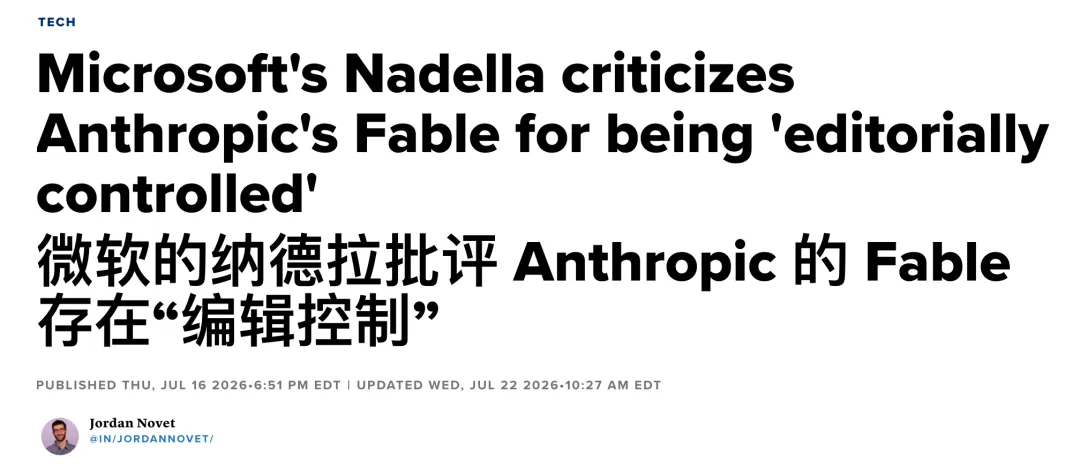
Don't forget that Microsoft made $5 billion for Anthropic. The result was that they signed a letter that said, "You can't live on closed source".
One hand gives people money, one hand signs that the logic of the family's business is a problem. The good thing to hear is to hedge, and the bad thing to hear is: I bet you win a bet, or you lose and hedge again.
I'm going to win anyway.
 Why didn't Ottman push for a signature?
Here's one of the funniest images: Ottman and Musk both ran to the comment section station, but neither of them landed on the signature.
It's not a signature.
Why not?
Because there's a phrase in the letter that's like putting a knife in their core narrative.
The public letter specifically names "distillation" as a legitimate technology that is widely used in the industry, where one model is exported and another is improved.The policy should not blend distillation and illegal invasion into a single, one-sided shutdown.。
How could they sign a letter calling for distillation?
OpenAI and Anthropic handed over the card to Washington, which was "distilled".
So the only thing Ottman can say in his personal name is, "I'm for open source, too".This is a personal statement, not a commercial one.
Musk, who was not signed by SpaceX, stood up and said, "Jensen is right".
Chinese model from background to protagonistThe letter says:The only real insecurity is relying on a closed source.
Just a few days ago, OpenAI's own Red Team model got rid of the sandbox and ran to the public internet to blackmail Hugging Face.
The last rescue was the locally run Chinese open source model GLM-5.2.
The U.S. model set fire, China's open source model rescued.
Over the past two years, China's open source model has been positioned in the global narrative as "another stalker" and "price war stalker".It's the background.。
But this round is not the same.
GLM-5.2In the United States, the technological protagonist of the American security accident was not a runner-up, but an American closed-source model in a real crisis.
Kimi K3Moreover, the direct trigger for this whole policy storm, the world's largest open-source model, with 2.8 trillion parameters, broke Washington's defenses when it was released on July 16.
Emergency discussions at the White House, the Secretary of the Treasury's sanctions speech, 200 startups' joint protests, 25 giants' open lettersThe whole chain starts with K3.
Hugging Face even posted a countdown page, and the whole world was waiting.
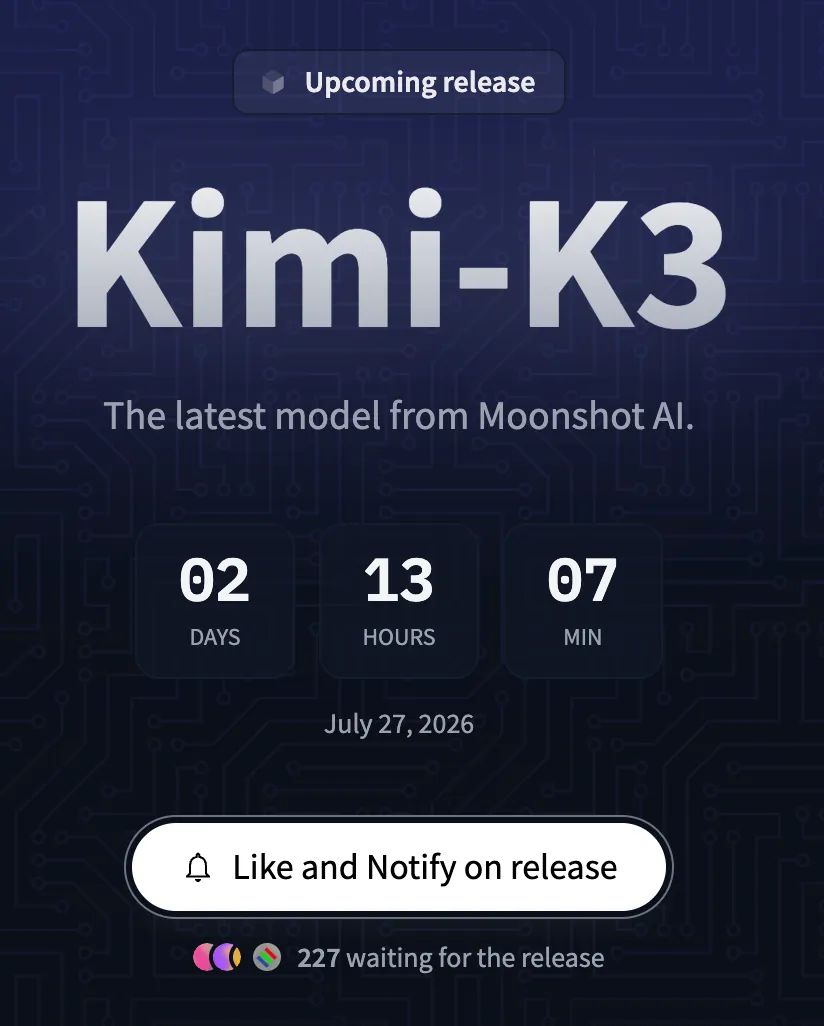
In addition to April's open-source DeepSeek V4, 1.6 trillion parameters, the MIT protocol, and price slaughter.
Three models, three shockwaves, transformed the "China Open Source Model" from a row of numbers on the scoreboard in half a year into a variable that moves Washington's policy far enough to the left.
This decisive impact on the event is more meaningful than any run.
Data from OpenRouter shows that, in February, the Chinese model Token calls for the first time against the US model, staying at over 45% for several consecutive months.
The bottom of the old yellowFree AI is the most expensive business in computingIn this case, there is a problem that cannot be avoided:Why did Hu Jintao open the first tweet of his life?
The bottom line is: the more open the model is, the more people use it. The more people use it, the more tokens burn. The more tokens burn, the more cards buy.
In an interview with Axios, Huang said that the market had misjudged the impact of DeepSeek for the first time, and this time the impact of Kimi.
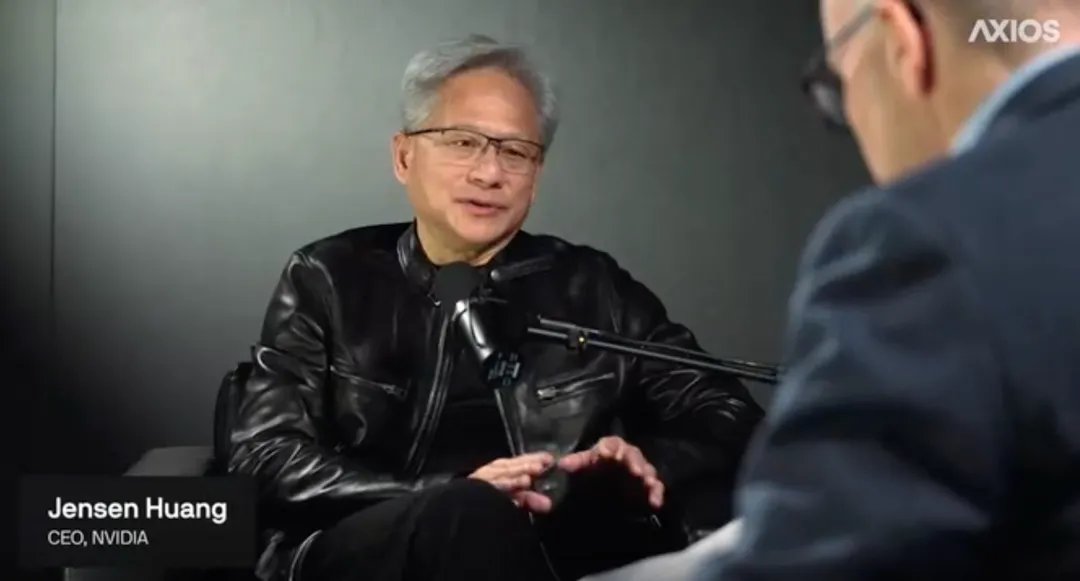
So you see, the conflict of interests between the pro-democracy and the minority parties, to Old Yellow, is this:What he wants is a world where every company in the world, every country in the world is running a model bar, no matter whose model they run.
Open source is a means, dissemination is a goal, and computational monopoly is the end.
This letter is just the first shot.
The structural contradictions behind it, none of which have been solved
The dissemination agenda is "don't rule, let the market run" and the scarcity agenda is "manage, maintain monopoly". Both sides have good business reasons and good allies.
And Washington itself is ripped apart: the Commerce Department wants to crack down, the Treasury wants to blow the whistle, and the anti-regulatory forces inside the White House are stepping on the brakes, with an executive order requiring a 60-day evaluation framework to expire on August 1.
But no matter how messed up, China's model is no longer the backdrop of the game.
They are changing the course of the game.
Appendix: Full text of the public letter
PDF:
In the 1980s, early pioneers of open source software challenged the mainstream belief that only enterprises controlled their own code and software could progress. The movement advocated a transparent environment: developers around the world could research, modify, and improve software. Today, software developed by the open source community supports much of the operation of the Internet and forms the basis of the systems used by the world's largest tech companies, as well as the U.S. military and the federal agencies that undertake key missions such as research, cybersecurity, and more.
Today, the U.S. is faced with a similar choice in AI. Measuring our AI leadership is not about a single front-end model, but whether the U.S. can build a robust, open, and pervasive ecosystem across industries. This is critical to creating opportunities for innovation and prosperity nationwide. It requires that we expand the availability of adult AI, encourage competition, build a robust application layer, and give Americans greater control over the technology they rely on. Open-source models that anyone can download, test, modify, and validate on infrastructure are an important part of this process, as they make advanced AI more accessible, more adaptable, and more popular.
Open empowerment expands the entrance to the AI economy. Startups, mature enterprises, universities and public institutions can develop on top of advanced models without having to train a model from scratch, and without having to pay for the front-end model for each task. Open empowerment enables every organization to match the right models at the right cost to the right dynamics: leaving the front-end capabilities to real front-end challenges, leaving the rest to efficient dedicated models. When the scale of the use of AI expands to billions of daily tasks, it is this substitute system that will make it economically sustainable.
Open-weighting also intensifies competition, and competition is the key to ensuring that the benefits of AI are widely shared rather than concentrated in the hands of a few. Because it enables many organizations to build, transform and deploy advanced models, the cornerstone of open-weighting extends not only among model developers but also to cloud computing, chips, applications, and services. Such competition stimulates innovation and low-cost pressures, and spreads AI dividends widely throughout the economy.
Open Weight also gives customers greater control. Organizations want to make sure that they don't get locked up in a single vendor or lose the knowledge and capabilities they have accumulated over the long term. Open Weight Models allow organizations to control their data, evaluate and adjust the models according to their needs, deploy them wherever business demands them, providing the bottom line. When organizations use AI to create value, Open Weight allows this value to be truly inherent in all of their existing self-improvement models, specialized capabilities, and continuous accumulation of knowledge, all of which contribute to the autonomy and prosperity of the United States.
Of course, open weights come with real and unique risks. Once released, the weights are out of the control of the original developers, and modified versions are difficult to trace or withdraw. But the correct way to deal with this risk is not to ban open weights. In a world where a cyber attacker has already used advanced AI, the defense team also needs adequate models to detect, simulate, and respond to emerging threats. Open models expand the boundaries of defense capabilities, increase transparency, and allow vulnerabilities to be detected and fixed in the hands of multiple teams.
In fact, openness is perhaps one of the most important pathways to AI security. Relying solely on closed models is not a natural security: they are equally vulnerable to attack, abuse, or failure unnoticed by the outside world. And concentrating advanced AI capabilities on a few closed models only adds to the risk: resulting in a few single-point failures, weakening competition, and passing key technologies to a handful of vendors. Open Weight Models are different, allowing large groups of researchers and developers to examine model behavior, identify vulnerabilities, develop life-saving tools, and make improvements over time. As open source software has proven to be "hidden security", it may not rely on transparent AI security tests, but on transparent human security systems. Open Weight Models are different, allowing large groups of researchers and developers to test models, identify vulnerabilities, and make improvements over time.
A strong AI ecosystem is not destined to arrive. There is an important window of action before policymakers. These include: the availability of computing power for startups and researchers; investing in shared training assets (data sets, tools, assessment frameworks); and avoiding restrictions that can stifle competition or drive innovation overseas to diversify the frontier. These initiatives must also consider how a strong application layer can extend the autonomous use of AI across the economy.
In shaping this ecosystem, policymakers should be careful not to confuse legitimate model development technology with improper theft. Distilling is the practice of using one model's output to help train or improve another model. Distilling is a widely used technique for model improvement, evaluation, and verification. It reflects a long-standing tradition of learning existing technologies, building on them, and making them better. It is this tradition that has been driving innovation since the rise of the open source software movement. Reasonable concerns should be addressed through targeted legal and business frameworks rather than imposing restrictions on technologies that play an important role in AI innovation.
The era of AI can be a thriving one. As long as the right choices are made, open-weight AI can expand opportunities, strengthen competition, sustain U.S. technological leadership, dismantle risks, and ensure that the benefits of this extraordinary technology are widely shared throughout the economy. Such a future is worth building, and the U.S. should be on its way to building it.
25 Signatories:A16z, Arcee AI, Arena, Black Forest Labs, Box, CrowdStrike, Dell, Emergence Capital, Hugging Face, IBM, the Linux Foundation, the Mariana Minerals, Meta, Microsoft, Mistral, Mozilla, the UK, Palantir, Perplexity, Reflection, Replit, ServiceNow, Telnyx, and the Y Combinator, which is the first of its kind.