The Chinese can fly, has become an unforgettable magic slogan this summer. Rappers are chanting, netizens are hitting the second beat, hot searches are on the screen, and even contestants have changed IDs into these five words.

From the abstract mythology that is spreading in the rap scene to the propaganda of the National Defence Times, the whole Internet has been following the swing of the swing. But what many people don't know is that when you brush up on the screens to see how the Chinese can fly, the Chinese robots are really flying.
It's not a toy, it's not a camera. From bird-like flying machines, to manned eVTOLs, to aerial robots that grow into mechanical arms, Chinese robots are breaking through the skies, flying into the city, into tangible tangible intelligences.
The Chinese can fly is an expression of cultural self-confidence, a rally of internet sentiment, while the Chinese robot can fly is the true foothold of industrial hard power, the answer to the power of hard technology.
In 2026, the sky is falling.
01.
It's not the same thing with a flying camera and a flying robot.
To understand flying robots, we must first tell the difference between them and drones.
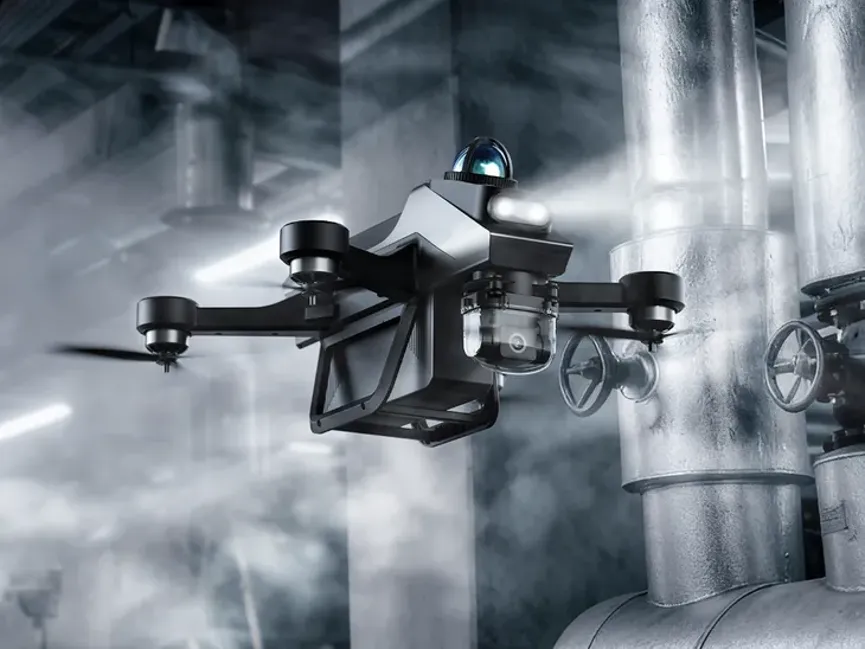
The founder of Intelligent Flying Highfly has a very precise overview: traditional drones are essentially controlled by remote controlled aircraft, relying on human operation or pre-set routes; while flying robots rely on core technologies such as autonomous navigation, intelligent brains, efficient micro-brains, and can accomplish tasks independently in unknown environments without GPS.
The Chinese Academy of Engineering has also pointed to the essence of this trend at the 2026 International Low-Air Economics Exhibition: In the past, we often saw drones as a flying tool platform, hanging out various operating tools.
In short, drones are passive steam tools, flying robots are active steam intelligent agents.
Although drones have played an important role in assisting in the recent Guangxi floods, there is still a long way to go from jumping tools to jumping smart cars. The real driver of this jumping path is the extension of intelligent technology from the ground to the sky.
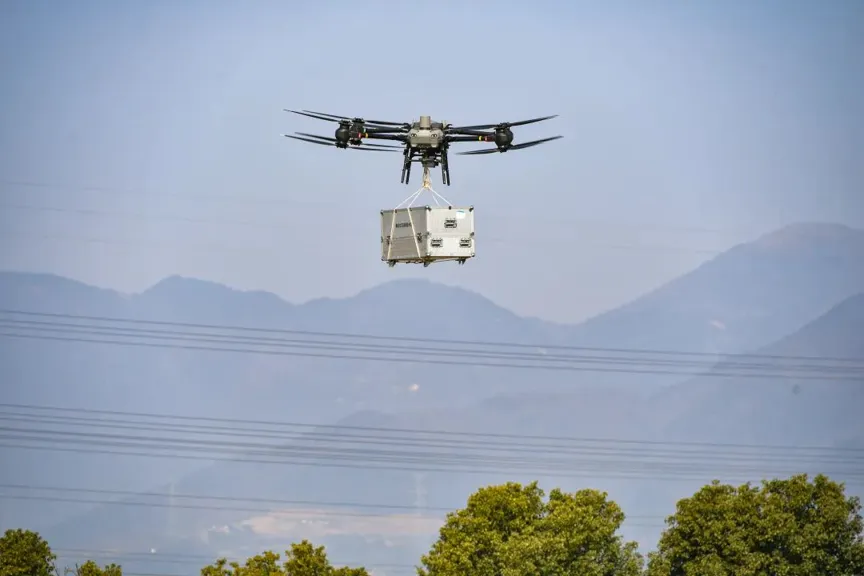
It is the intersection of two supercars. Low-power economy and physically intelligent, both of which have been written in the Cuban government's Work Report Cuban and Cuban 15th Cuban Planning Schedule, respectively, are listed as emerging pillars of industry and future industries.
The market is also responding simultaneously, with the pace of low vacancy opening accelerating, the demand for intelligent flying equipment with autonomous operational capabilities in multiple fields such as planting, patrol, rescue, logistics and more is exploding rapidly, and traditional drones that rely solely on artificial remote controls have become difficult to meet the demand for efficient operation in complex scenarios, which also makes it clear to distinguish between the concepts of traditional drones and flying robots, which is a prerequisite for the development of the entire industry landscape.
Data shows that the global AI aerospace robot market will reach $411 million in 2025 and is expected to rise to $901 million by 2032, with a compound annual growth rate of 12%. Among these, the Chinese market is particularly strong, with a domestic market of about $115 million in 2025, accounting for 28% of the global market, expected to reach $272 million in 2032, with a compound annual growth rate of 14.8%, the fastest growing single country market globally.
From a more macro perspective, the global aerospace robot market is expected to reach $35 billion by 2025, with commercial and industrial applications accounting for more than 70% of the market share.
Capital is also pouring in. Flying robots, as an airborne branch of physically intelligent robots, are grabbing the capital heat of humanoid robots.
02.
Four players, a growing flying robot map
The outline of any emerging industry, often drawn together by explorers from different technological routes, presents a rare multifaceted layout of the flying robot track in 2026. Four representative players take four completely different paths.
(a) Microscopic flight: brainstorming of the flying machine
Microsoft was founded in July 2024 as a technology company focused on flying equipment and physical intelligence. The founding team was led by Professor Gaofei of Zhejiang University.
On the technical path, Microscopic Intelligence focuses on the four dimensions of autonomous navigation, intelligent brain, efficient micro-brain and group intelligence, and proposes the concept of three brains: the brain responsible for environmental understanding, mission reasoning and decision-making, the micro-brain responsible for precise agile flight control, and the micro-brain responsible for multi-machine collaboration.
In May 2026, its 11 research results were selected for the ICRA 2026 Global Robotics Summit, covering the five dimensions of decision-making brains, agile brains, collaborative brains, high sensitivity, and agility. In July of the same year, Mitsubishi Flight and Zhejiang University Control Institute co-founded the Joint Laboratory for Flight Equipment and Intelligent Design, which further integrates production research and development.
At the product level, Intel has introduced products such as intelligent exploration flying robot P300, industrial applications P300 PRO, non-convex-α-convex instructional robot.
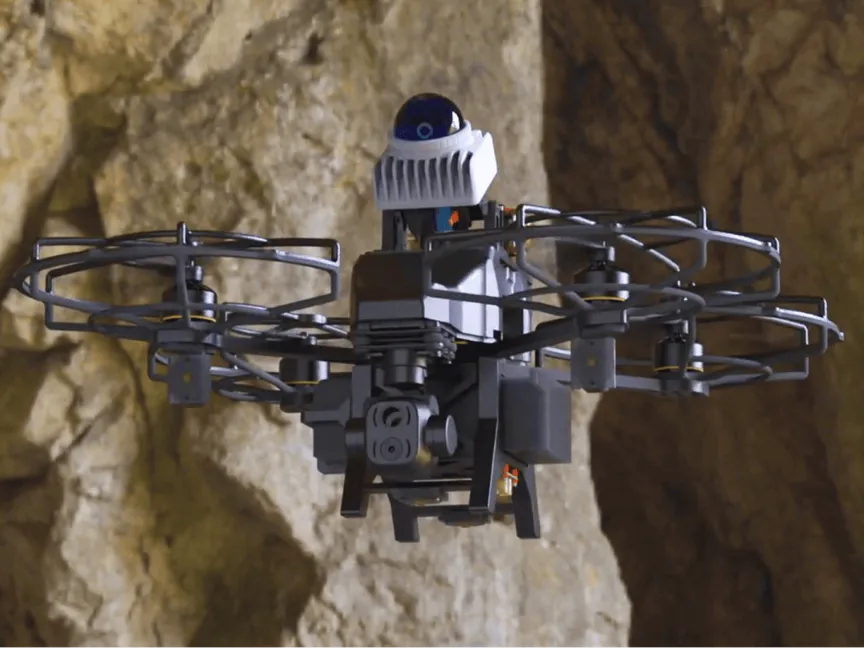
The company was founded in less than two years and has completed six rounds of financing totaling over 500 million yuan.
In a nutshell, Microsynthetic Flight went off an amazing trajectory on the flying robot trajectory, and it wanted to make flying robots have their own big brains.
(b) Simulation wing: Let robots fly like birds
Of all the routes of flying robots, the biomaterial wing is probably the most sexy, as it is not just a flying kite, but a flying kite like a creature.
The company, founded by a team of post-doctoral fellows, completed three rounds of financing in three months, totaling tens of millions of yuan. Investors include leading institutions such as Hebei, Shenzhen Capital, and Heavy Snow Capital.
In terms of products, the Intelligent Wing is developing a body-smart simulated wing robotic pumpkin, which weighs about 3 kilograms and has about 15 degrees of freedom, with both wings able to independently adjust angles, actively twist and fold like real birds. Its first consumer-grade product, the Eagle X pumpkin has completed over 3000 hours of flight testing, the core logic being the pump with fluid flight pumpkin, which is a hybrid model of sliding and hitting through the pumpkin structure, to take advantage of airflow.
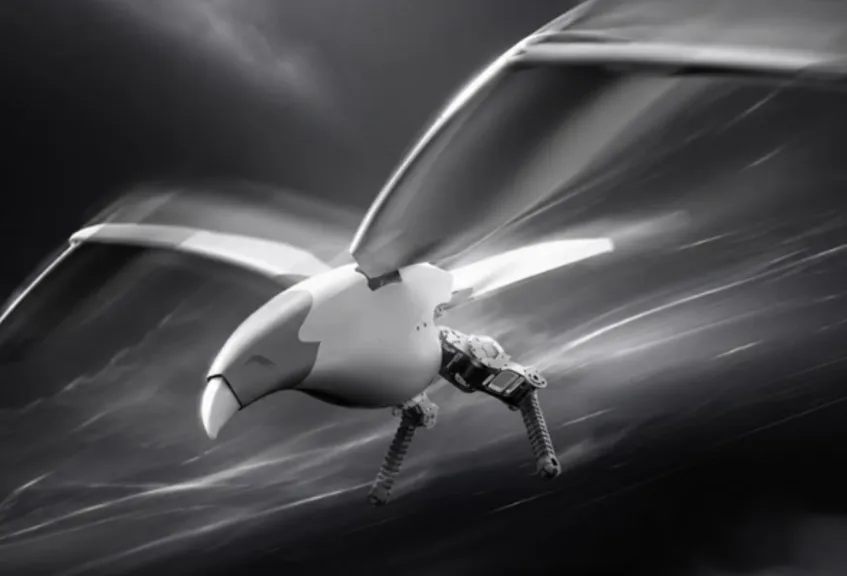
Of course, it's not just Chinese companies that are on the rise in this area. A study published in the journal Science Advances, by a team of professors at the Massachusetts Institute of Technology, demonstrates that a micro-wing robot weighing just 750 millimeters and 4 centimeters in diameter delivers flying performance comparable to real insects. Scientists at the German Institute of Mapping also released a flying robot called the Ph.D.Floaty robot on Ph.D.N.P. Robotics, capable of flying as efficiently as birds in the wind, with a power consumption of just 10W/kg, one degree lower than traditional propulsion systems.
The unique charm of the lifelike wing is that it does not compete with the air, but cooperates with the air.
(iii) EVTOL: Manned flying robot at the moment of launch
In the field of flying robots, the biomedical wing can be considered as a small and beautiful route exploration, while the EVTOL (electric vertical take-off and landing aircraft) is the main commercial battlefield in the larger and heavier direction. It is the heaviest link in the sequence of flying robots and the closest form of urban air traffic jams.
From the current development trends, eVTOL is accelerating mass production from concept to trend. Dozens of tech companies and startup teams have been involved in R&D and development at home and abroad, several models have completed manned flight testing, and some enterprises have advanced to the critical stage of airworthiness certification.
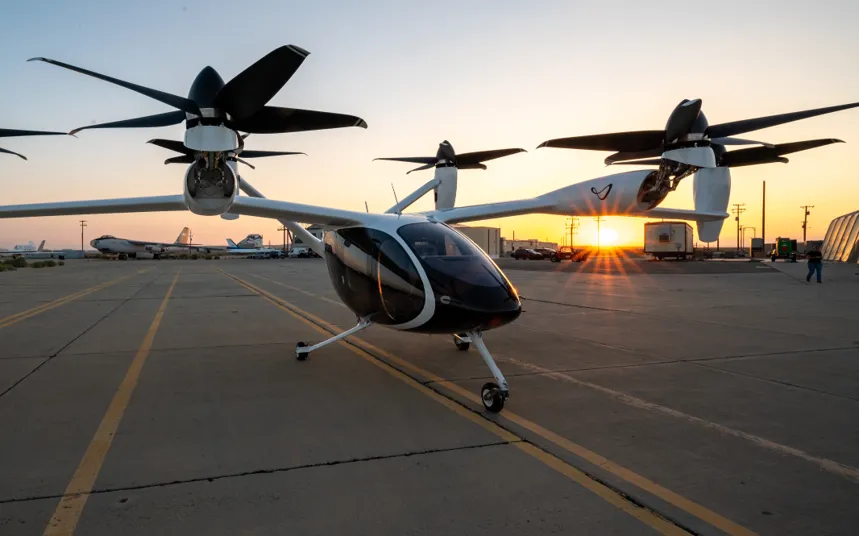
Medical emergencies are the most exciting application scenarios this year. For example, the eVTOL jet-powered airborne medical ambulance, developed jointly with Shanghai's Rykin Hospital, will make its first public appearance, with operating costs of only 15% of conventional helicopters and the cost of a single flight expected to drop from the traditional $30,000 to $70,000 to the 1000 level.
Inter-city transportation is also progressing rapidly. The VT35 complex wing eVTOL has a maximum take-off weight of 950 kg, a full-fledged range of 200 km, and has completed hundreds of millions of yuan in A+ rounds of financing.
Although the industry is still in its early stages of development, commercial orders are accumulating rapidly. Over the past year or two, the number of overseas orders from leading EVTOL enterprises in the country has cumulatively reached nearly a thousand.
(iv) Developing a flying robot with a handshake: from observation to operation
One of the most exciting breakthroughs in flying robots this year has been the emergence of flying robots.
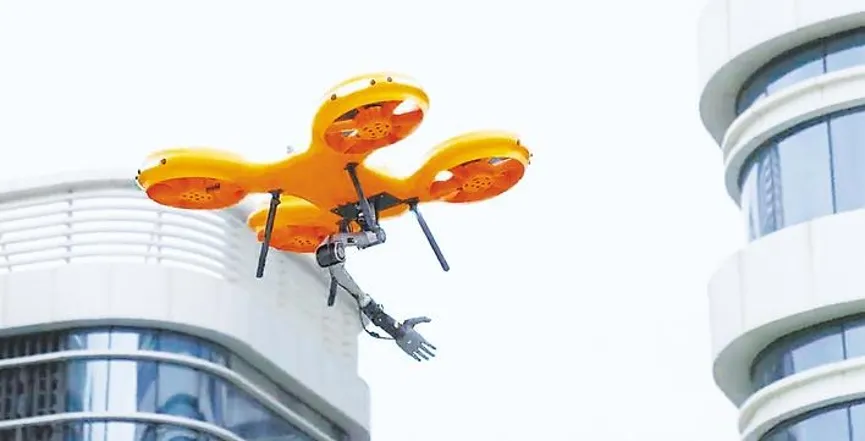
In May this year, Hubei Electrotechnology launched the country's first comprehensive-body intelligent flying robot at the 10th World UAV Congress. It uses orange paint, with a bending mechanical arm underneath, and a folding handle at the end. In a demonstration video, it can both rub glass for high-rise buildings and remove outdoor packaging from the balcony of residential buildings.
In Hangzhou, a two-year-old start-up company in Chengdu, China, has also installed handheld pads for the flight platform. Its multi-functional, mechanical-armed drones, which can rapidly replace pads like Lego bricks, replace pads to clean the electrical grid, replace pads to clean the outer walls of high-rise buildings, and replace detection detectors to complete wind shear detection.
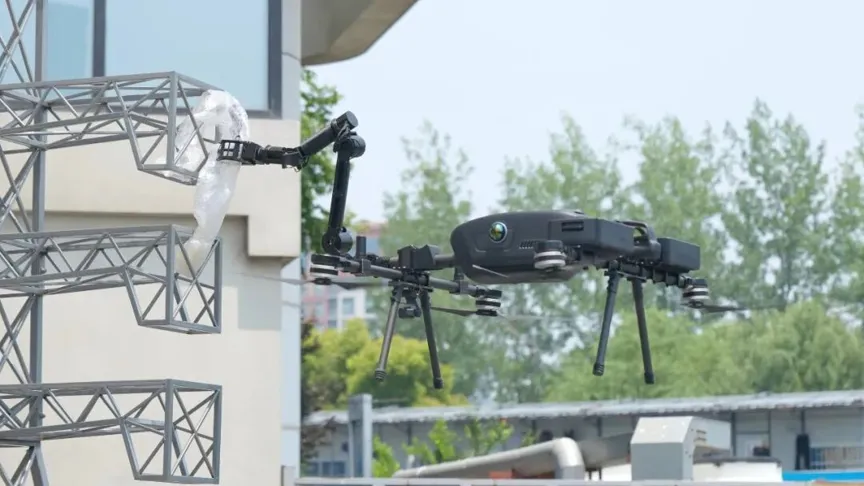
Higher exploration comes from academia. The HI-ARM hand-shaped flight-operating robot, published by Zhejiang University Control College's high-flying team on Zhejiang Nature Communications, is a landmark in the field. It abandoned the heavy architecture of the traditional Zhejiang flying platform + out-of-the-box mechanical armrests, and will grab the functionality deep into the flight's core. The entire system weighs only 556 grams (equivalent to a bottle of mineral water), but achieves multi-modal crawling from tight water bottles to finger-light paper towels.
The team at the Faculty of Space at Harbin Industrial University developed an aerial operating system based on a flying mechanical arm, with a large quad-drone equipped with a mechanical arm and a simulated hand, remotely operated via VR equipment, and successfully completed the cleaning of the campus street lights.
These explorations point in a common direction, where aerial robots are breaking the boundaries of the spectator's spectrum and becoming intelligent entities that can interact actively.
03.
Before you take off, climb three mountains.
Regardless of the evolution of the product form, flying robots will have to climb three great mountains to achieve real popularity.
The first mountain: energy. The aircraft is a typical silicon energy-sensitive silicon product, which consumes the battery every second. The battery's energy density, charging efficiency, electrical network, directly determines how far it can fly, carry multiple weights, and how complex it is.
Second mountain: safety. Car failures can be parked on the side, ship failures can be thrown off, but low-flying robots have to do multiple redundancies, power, communication, perception, control, lack of a loop. Safety is not only a technical problem, but also a problem of social acceptance. One serious accident could lead to the entire industry being criticized for stepping on brakes.
Although the newly amended Civil Aviation Act of July 1, which promotes the development of a low-cost airline, promotes the development of a low-cost airline, clarifies the aviation validation and operation rules of new types of manned aircraft, such as eVTOL, but there are still a lot of details waiting to be improved.
In addition, the founder of Micronational Flying Highfly has publicly discussed two core problems: the high cost of collecting flight data, the high risk of causing insufficient data accumulation; and the complexity of the scenarios, both indoors and outdoors, to refine general laws from significantly differentiated scenarios.
As a result, the flying robot industry needs to do its job on the ground, as well as on the ground, to manage airspace, take-off facilities and network services.
04.
It's not a flying robot fly, but a flying service fly.
It's often only a short distance between the air and the bubble that a flying robot can make money from.
In this regard, the Robotics Workshop has a judgement: robots that will fly in the future are likely to go to the toilet to serve the toilet.
Ordinary businesses and individuals will not actually buy and operate a fleet of flying robots, but will directly buy a jet air capability kit. For example, agricultural companies purchase jet service kit instead of the robot itself; electricity companies purchase jet patrol data kit instead of a jet patrol aircraft; city managers purchase jet air monitoring kit rather than an entire flight system; and ordinary citizens may, like online booking cars, book an EVTOL in the future.
The above types of players can also find their respective locations and become different roles in the same low-flying network. Micro-intelligence Flight companies provide customized flight platforms for flying brainscreens, bionic wing companies such as Intelligent Flight Flight Flight Flight Flight Flight Flight Flight Flight Flight Flight Flight Flight Flight Flight Flight Flight Flight Flight Flight Flight.
When flying robots are transformed from hardware products to subscription services, the imagination of a low-cost economy intersecting with a physically intelligent one is truly open.
From the Internet's rush to reality, from the Internet's rush to the landing of hard-technology, it's a wonderful time to be caught between flying Chinese people and flying Chinese robots.