In the field of intelligent driving, Tesla made a choice that year: it did not wait for an autonomous driving path to land, or build a data set based on a large number of non-real driving scenarios, but instead paved the way for mass-produced cars with cameras and calculators.
The difference is that Tesla chose on-board vision, but it was betting on robot touch. It didn't do large-scale data collection, and it didn't sell sensors to clever companies.
While almost the entire industry is betting on VLAs, world models, and the up-and-down routes driven by silicon data, the company, known as the Tomomi Fruit Robot, officially launched its intuitive, down-and-down routes in June of this year, and on August 10, Tomomi officially released its "Natus AGE-0 intuitive model" and announced the completion of its hundreds of millions of yuan angel rocket financing.
As a company with seven years of experience in self-development of touch sensors, Apple Wood's pioneers emphasized to high-tech robots that they are not a touch company, but a company that does general bodywork.
What are you talking about?
Actively removing the hottest labels on the capital market at this time sounds a bit unconventional. But following Apple's technological path downwards, you'll find that the more common path in the industry is to first have sensors, then to look for operational scenarios.
Engineering definition of hydrogen-powered hydrogen
In fact, in Apple's own technical system, Apple has a simpler engineering definition: to complete an operational task with the lowest energy consumption and highest efficiency.
In nature, people are at risk of flickering and retreating after experiencing pain. These instinctual responses are the best solution to the survival level. Robot operations should also follow the same logic. A robot catches something, which is essentially a physical confrontation, a confrontation with gravity, a confrontation with environmental disturbance, and also with the uncertainty of the object itself, which in a behavioral sense is two-dimensional.
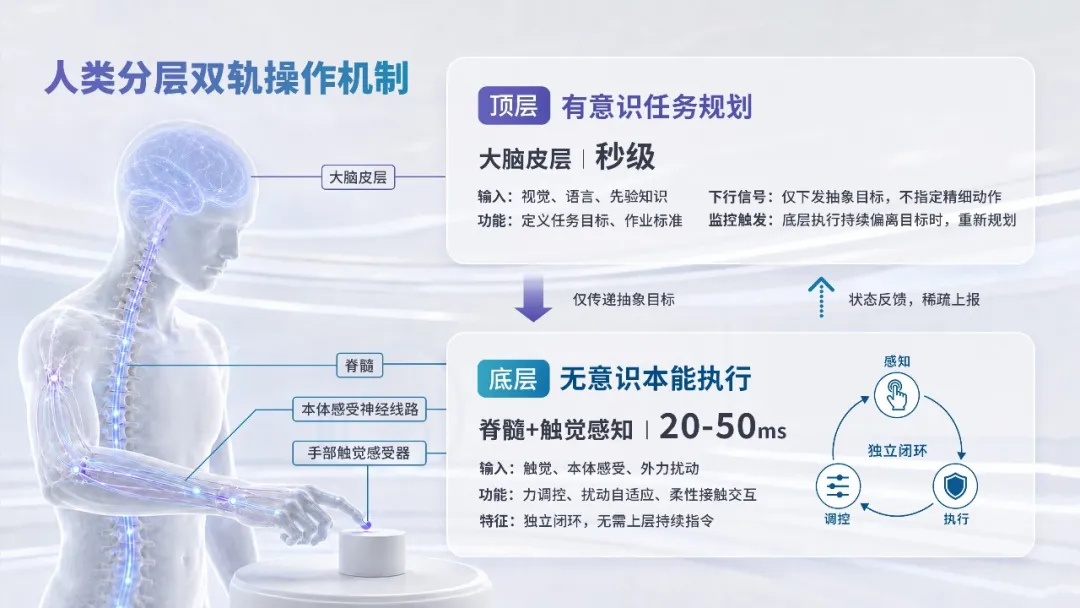
According to the button, there are three types of instinct: it has nothing to do with the hardware itself, it has nothing to do with the operating object, it has nothing to do with the working environment. It is the same set of instinct that apples and cell phones use, and it will not fail because of the change of a workpiece.
This definition also distinguishes between instinctive driving and data-driven: the former's limits of ability are determined by the depth of understanding of physical laws, while the latter's limits of ability depend more on the number of samples collected and the range of coverage.
It is difficult to say who is running fast, who is running slow in the short term. Since this is the case, the choice should be based not on current speed, but on technical limits.
Liu believes that as long as iteration is fast enough, the path of the highest upper limit will eventually approach the end. While it is inherently located at the bottom of the interaction with the hardware, objects, and working conditions, its upper limit comes from an understanding of the laws of physics, rather than the breadth of sample coverage.
Intuitive driving is not the same as not having data, on the contrary, TomTom applies the same importance to data wheels, only that the data is different in the system.
In this respect, physical operation should be closer to autonomous driving than to big language models. Big language models are the first to provide enough material to deliver the model, while autonomous driving is the first to allow the car to start up and then to allow the real model to run on a large scale. Liu believes that this path is difficult to follow if robots are not used in real conditions to train a general operating model based on data.
So there's an unwritten rule within Apple: not to collect and generate training data inside the company, all data comes only from real industrial scenarios. For two reasons: first, it's expensive to collect data yourself, and the data extracted isn't real enough; second, really valuable data can only come from interactions between robots and the real physical world in real working conditions, and these data are naturally generated after products are sold out.
The instinctive model at the end
Apple completely dissolves the task planning layer and the operation execution layer to enable the operation execution layer, which is the edge of Apple.InstinctModels by NatusIt's not in the cloud, and it's not in an outsourced computing module, but it's embedded in the end-user of the robot.
The three instincts that Natus built coincidentally addressed the three cardinal points of data-driven solutions on the flexible output line:
Instinct orientedFixed the problem of the positioning lattice of the workpiece. Directional intuition and visual synchronization guide the movement of the end to the target object. Upper-level task planning provides only the critical image lattice and semantic constraints, rather than the movement, with the remainder of the alignment and approximation being done by Natus instinct. In contrast, data driven programs typically require a set of data to be instructed locally, then trained, and start thresholds too high.
Explore your instinctsIt addresses the problem of unexpected friction, the moment the end touches the object, explores instinctual contact signals that rely on sliding, distributive forces, shape-shifting, etc., and independently explores the surface of the object to find positions that can be grabbed steadily. This is not predetermined action, nor is it imitating learning, and will not touch the boundaries of generalization due to the lack of samples.
Interacting instinctsSolved the Time-Variant problem. After exploring the instinct to construct a binding relationship, the interaction instinct to minimize lubrication of the brake or brake resistance matching brake is expected to be adjusted in real time, so that the end-end movements are updated in real time with physical changes, in response to real physical changes that are difficult to cover in simulation training, and improve interference resistance and operational stability.
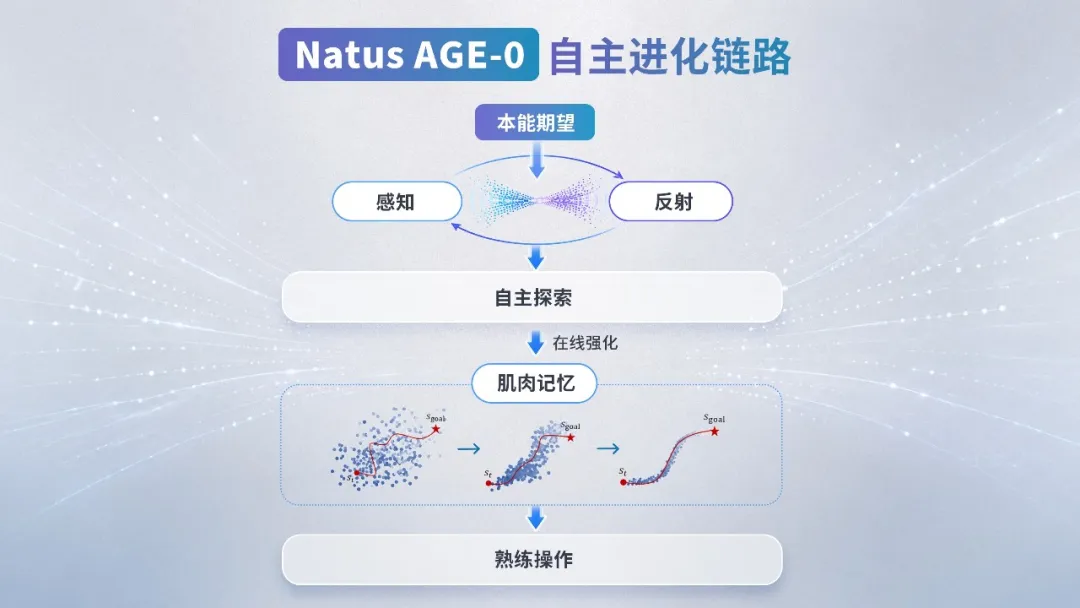
In addition, contact operations require hundreds of Hz-level real-time feedback, data-driven large model schemes, which are difficult to achieve such a fast instant response due to logical delays. While Natus runs on the edge, the control of the motor can reach 250 Hz, enough to support the real-time power control clutch.
But there are also limits to instinct: long-range planning, such as how to fold clothes, is inherently impossible, and that's a data-driven plot of land that needs to be done using the general skill model Magis.
Magis uses Natus's tactile, semantically meaningful data (weight, mass, friction coefficient) in real-world interaction to train the robot to move and generalize interbody, cross-tasking skills.Industrial decentralized manufacturing
The first landing point of instinct
Outside of the technical route, another alternative to the mainstream is the landing scene. Apple chose to focus on discrete manufacturing flexible operating scenarios, using industrial scenarios as the first benchmark for commercial closures.
Liu said that Apple does not intend to stabilize large-scale markets with existing industrial automation, they are still focused on changing production times, exposure to complex Contact-Rich, and flexible production scenarios that are difficult to change.
This selection is primarily related to the team's genetics, and the team consists of nine Ph.D. and postdoctoral fellows from the Department of Mechanical Engineering at Tsinghua University, who have accumulated nearly 15 years of experience in the field of industrial automation, with a deep understanding of the cost requirements, delivery standards and investment cycle of manufacturing enterprises.
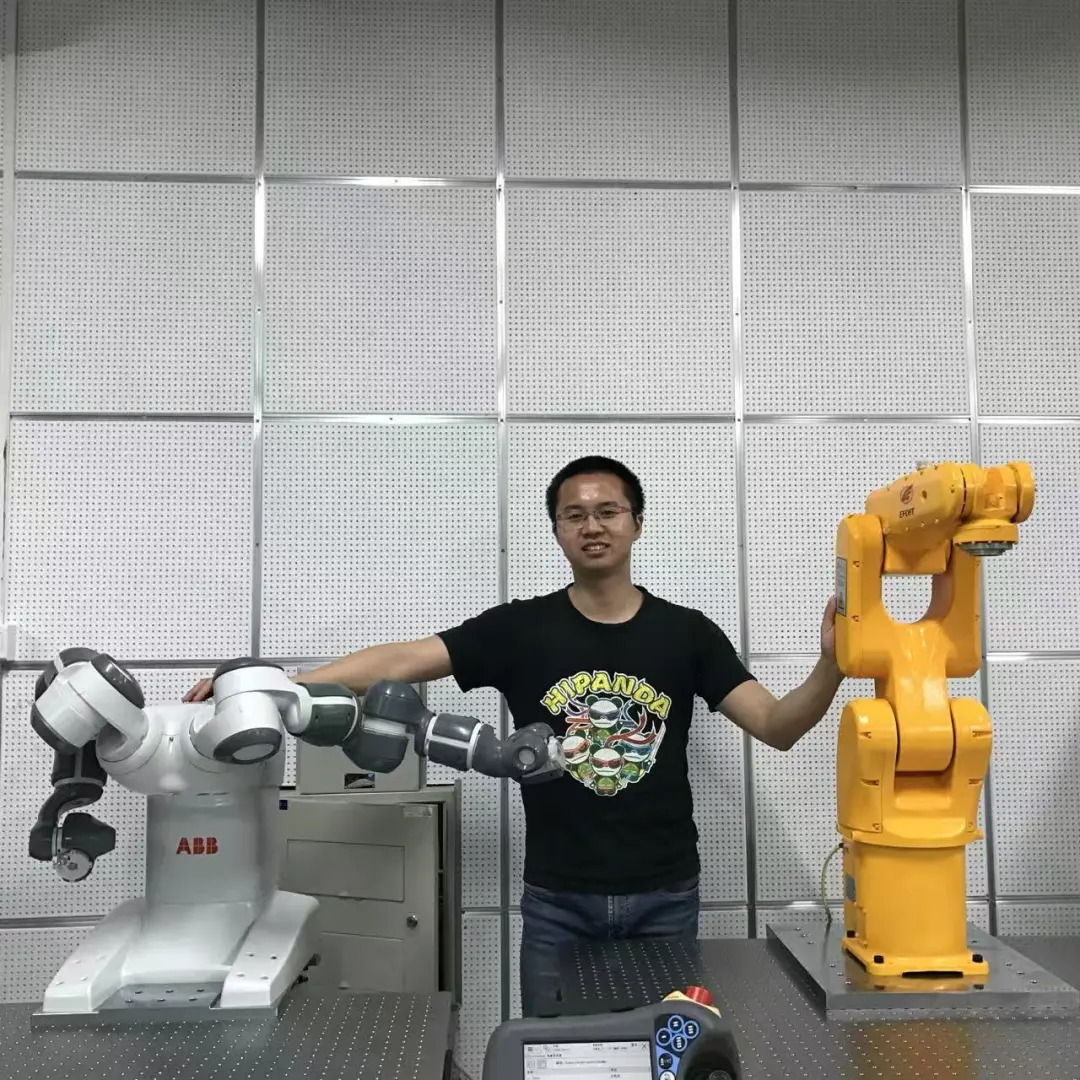
After returning to Qingdao in 2018, she set up a laboratory
Second, operational capabilities are more easily transformed into productivity in industrial scenarios. The complexity and uncertainty of domestic scenarios are significantly higher, where the industry is the first to be verified and settled for operating intelligence. More importantly, there is a lack of a solution to accommodate flexible production in the industrial scene.
Traditional industrial automation schemes are extremely efficient in large-scale stability scenarios, but in the face of frequent flexible production scenarios, such efficiency advantages no longer exist. Once a product is changed, the time of downtime modulation will be directly squeezed into the effective production time, and the overall utilization rate of equipment will decrease.
Current mainstream data drives take over a new workpiece, often requiring local re-collection of demonstration data and retrainment. While the intuitive drives offered by Apple are farewell training, cold start adaptation, robot on-site direct handling, and delivery cycles compressed by more than 70% compared to industry programs.
Convincing customers is actually the easiest part of the whole process, Liu said. It's enough for customers to see an instinctive adaptive capability on the ground, and the remaining efficiency, stability, and reliability are engineering tools that can last for generations.
Specifically, in terms of landing progress, Apple completed its first POC verification of the flexible production line in May 2026, running through the industrial scene for two months before and after use, and has now partnered with several key customers.
Natus is a car and Magis is self-driving.
In order to keep business running in a closed loop in an industrial scenario, Tomoku Fruit established three unbreakable rules.
No customization. Apple only delivers standard flexible production units, because once it is customized, it falls into the project system, re-delivery pit, scale is never mentioned.
For Apple, models are like OS, but robots must be soft-hard to work and run the business model successfully.
While Apple has arguably the best visual-touch sensors on the market, it offers a whole suite of solutions to customers because touch, end-to-end are deeply tied to the model, dismantled and sold, and value is lost instead.
Liu emphasized that TomTom's business model is closer to a complete car enterprise: Natus is the car itself, making it run first, creating value and data; Magis is self-driving, such as the mass terminal running in front of the line, real data flowing back, and the skill model being fueled. Each time customers switch, each time they grab, they are accumulating more corner cases for Magis.
As for how to create barriers to competition, Liu believes that technology is just a ticket, and the real barriers are the scale effect and user stiffness after the commercial shutdown. This year the industry has gradually developed a tactile sense of the need to build consensus. This is what they realized in 2019.
Let the real line of production turn the next round of the data flyer
In an industry that is accustomed to big data, big models and big computing, choosing to climb up and down from the bottom of physical interaction seems like an unpleasant narrative on the surface. But, as the name implies, its true value lies not in the moment of decline, but in whether it can penetrate the ground and continue to grow from there.
In terms of physical operation, this soil will not be an infinite layered demo, nor will it be a debate about the advancement of the technological route, but a real production line full of biases, disruptions and frequent product change requirements.
—END— Recent Activities
How far away is the time for the iPhone to show off welding technology? Half a quarter of a billion orders, shipyard output by 2030, ship welding robots entering a golden age?