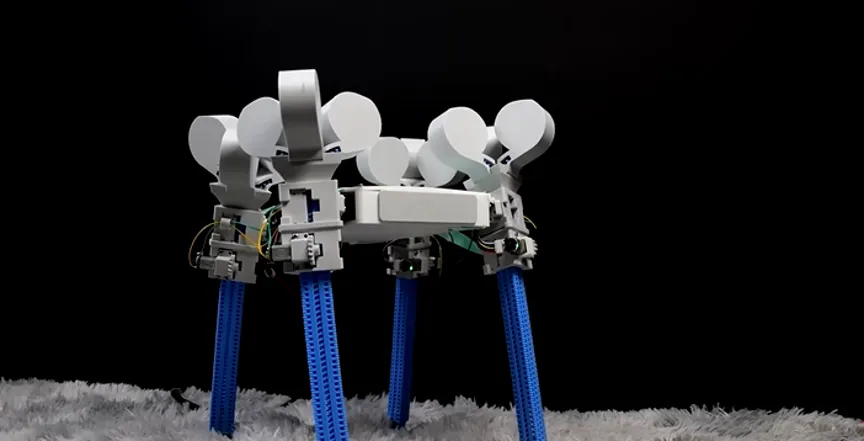
“ The chain patent, which was rejected 40 years ago, turned into the skeleton of a robot.
Recently, I watched a short video and saw a very special robot.
It has no conventional mechanical joints, and its four-legged body is an improved three-stroke chain.
The motor pushed the slide to stop, the legs slowly tightened and stiffened, the body was lengthened; the slide reversed, the teeth were untied, the stiffness instantly untied, and the legs softened and shortened.
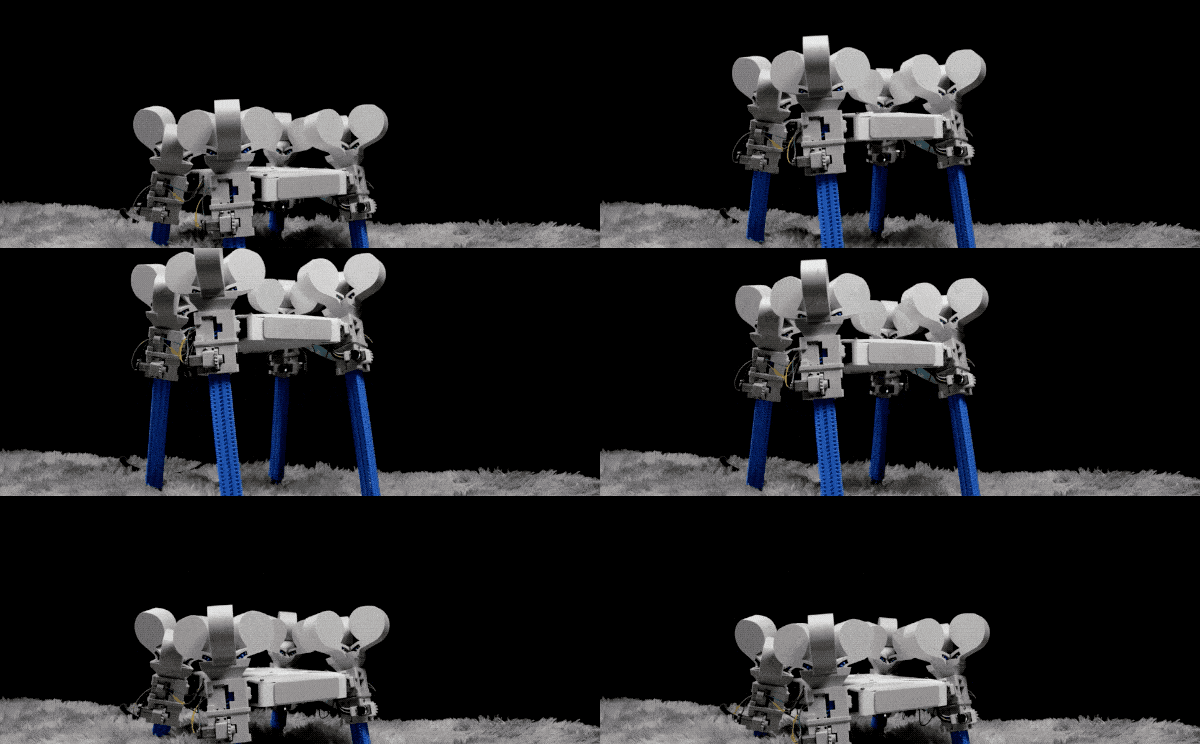
High- and low-lifting ground, low-slope, it can be smoothly adjusted, passing through through/drill through.
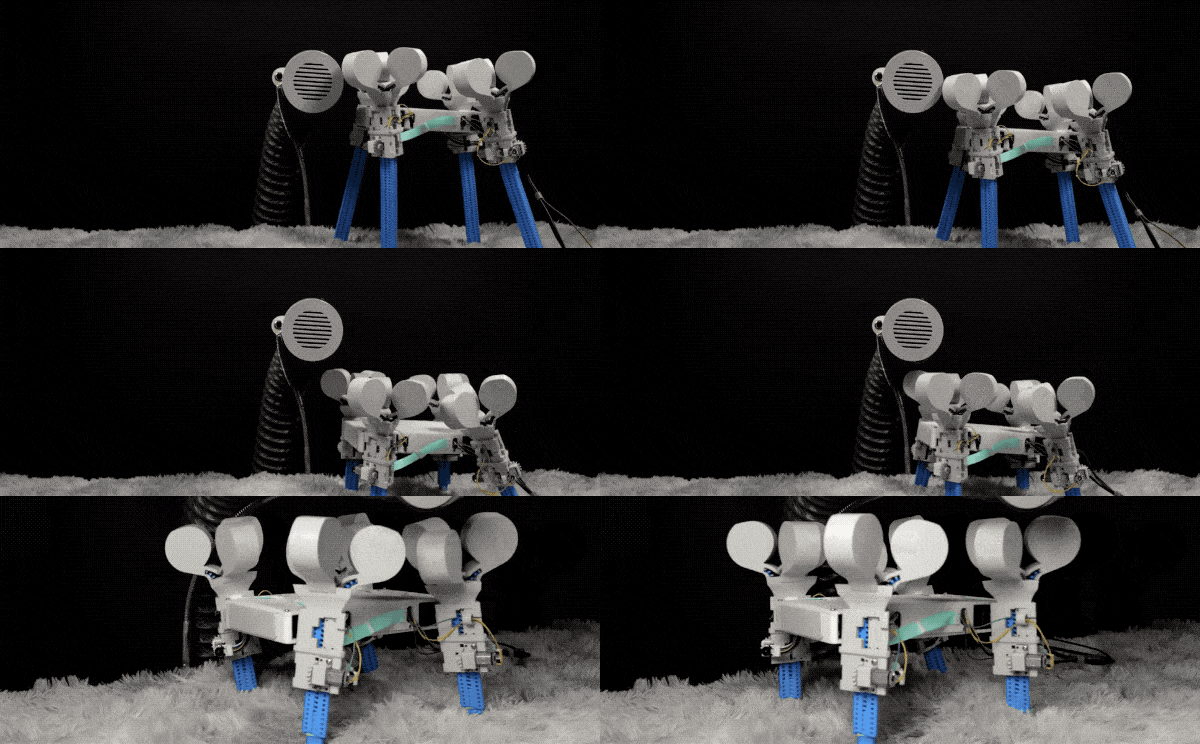
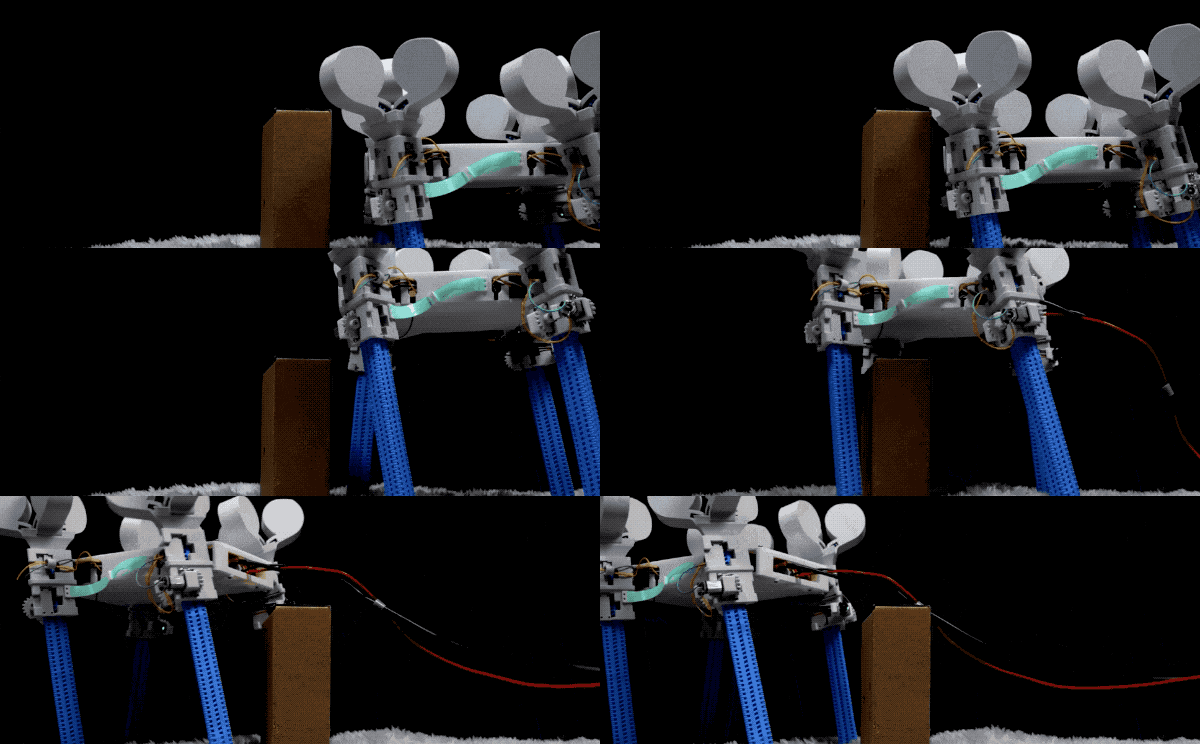
At first glance, I thought it was the hobby of creative enthusiasts, and I was curious to look around and see how it worked.
It's called the Y-zipper, and it's an official study of the CHI 2026 collection from the MIT Computer Science and Artificial Intelligence Laboratory (MIT CSAIL).
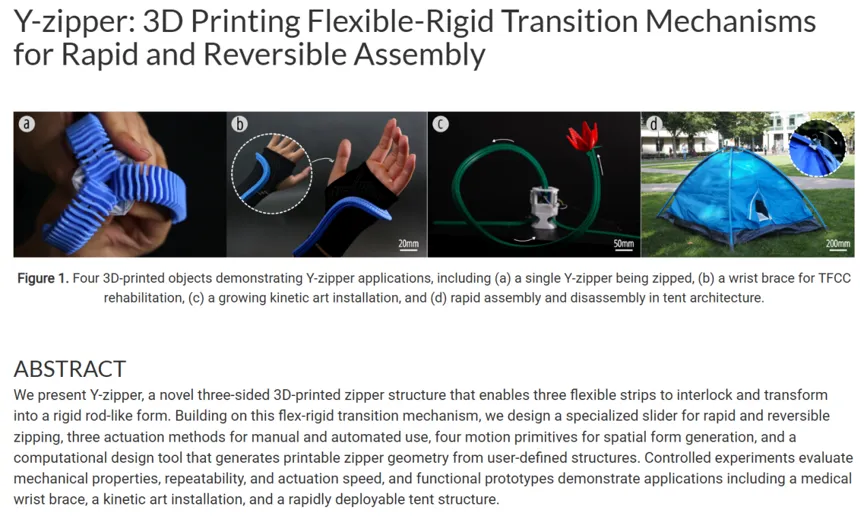
This is a dream that has been in the works for forty years and has only come true this year.
01.
In 1985, a strange chain that was rejected by the industry
Time travels back to 1985.
Bill Freeman was an electrical engineer at Beverly and later a member of the U.S. National Academy of Engineering. The imaging algorithms in our cell phones, and the underlying imaging techniques for the first black hole photographs of humans, came from his research.
At a creative rally that year, where everyone was grinding up on the best-selling consumer goods, he posed two subversive common-sense questions: Why can't there be only two chains?
The three-sided chain he envisioned was three independent elastic bands. When dispersed, it was soft, pliable, and coiled; the sliding, simultaneous bite of the three bands, locked into a triangular hollow-hearted stick.
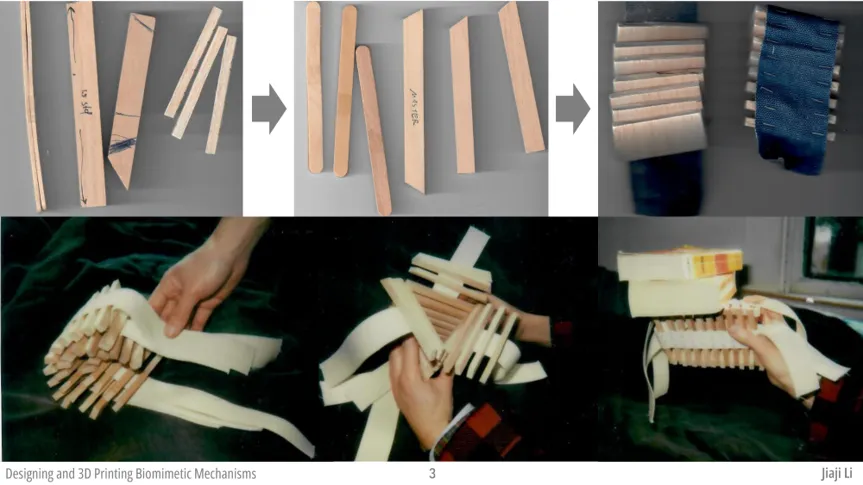
However, Bill Freeman applied for a patent for the prototype, which he received in his garage.
Jiaji Li, who has been a Freeman at MIT for nearly 40 years, actively engaged Jiaji Li, who is working on a rigid structure that can be adjusted, and reintroduced this multi-year three-stroke concept to the team.
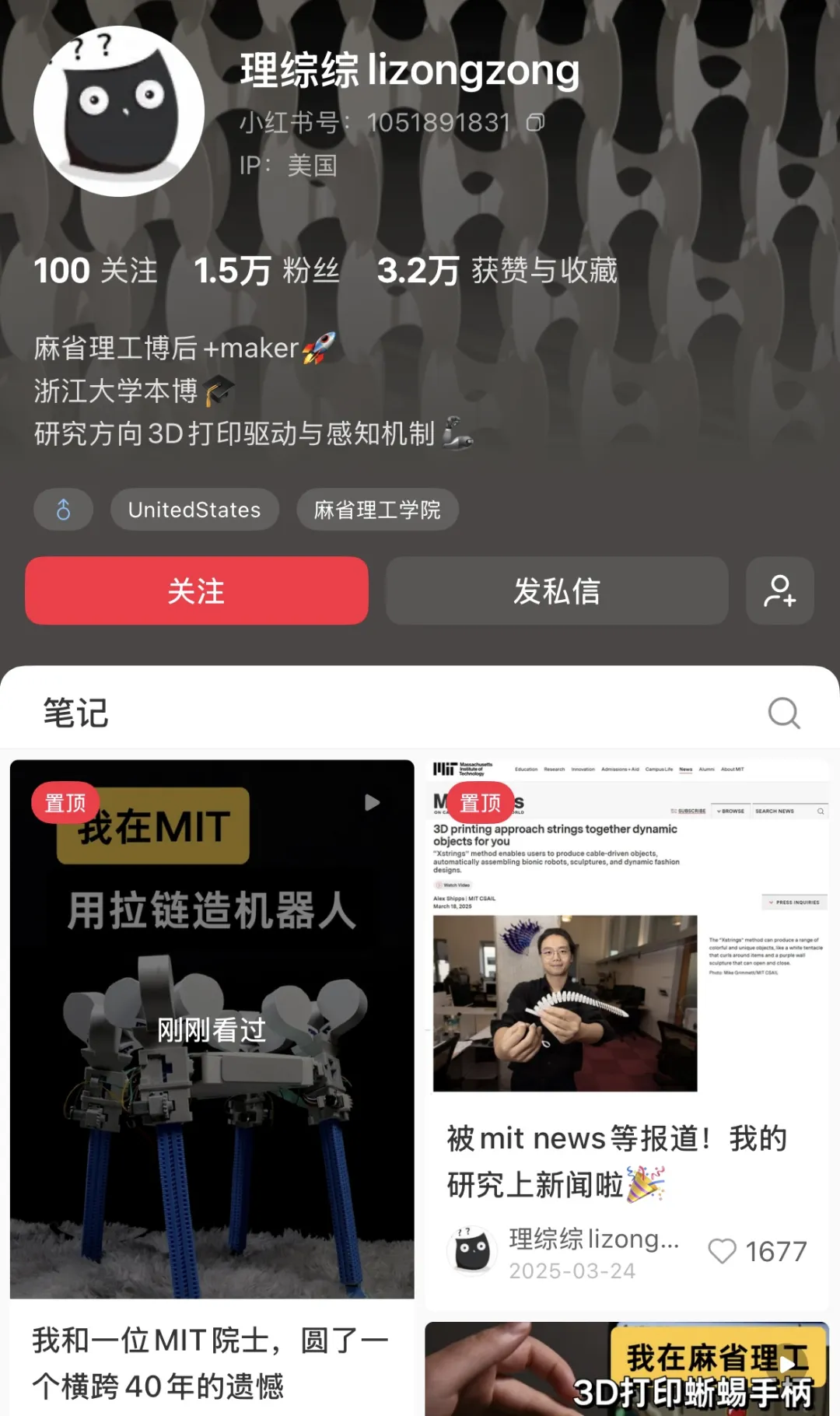
The first author of the study, Ph.D., authored the paper, which also included several researchers from the University of Tianjin, the University of Munich and MIT CSAIL.
02.
What is a Y-zipper?
The first prototype, completed in 3D printing in three days; the whole project, landed in just four months. This once-rejected brainhole, even by brands like YKK, Rimowa, was actively attracting attention after the official release of CHI 2026.
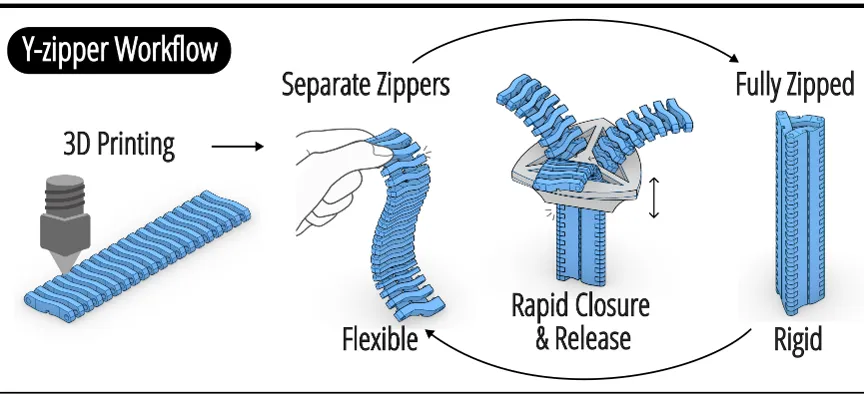
Y-zipper workflow: First 3D prints three tractor belts, then assembles them into Y-type tractor belts, using Y-type tractor sliders to switch between the flexible and rigid states.
A lot of people at first glance think it's more than just a string of string chains.
The core of the Y-zipper is a reversible, controllable flexible-rigid switching mechanism, documented in the paper, and after closing, the bending rigidity increases to a maximum of 160 times.
The whole structure consists of three strips of ribbon, a special two-way slide, and a ball lock. Each string consists of a string, a flexible bridge, a spherical knot, a ball lock, and a guideline.
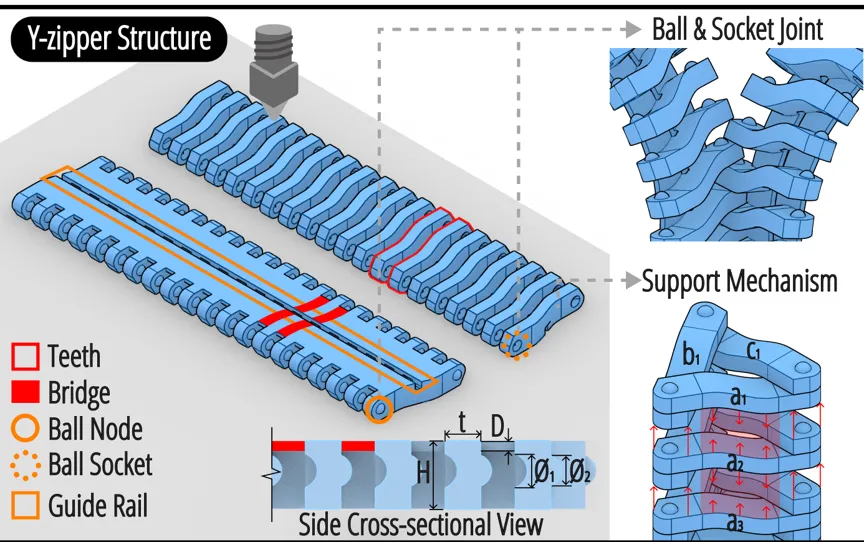
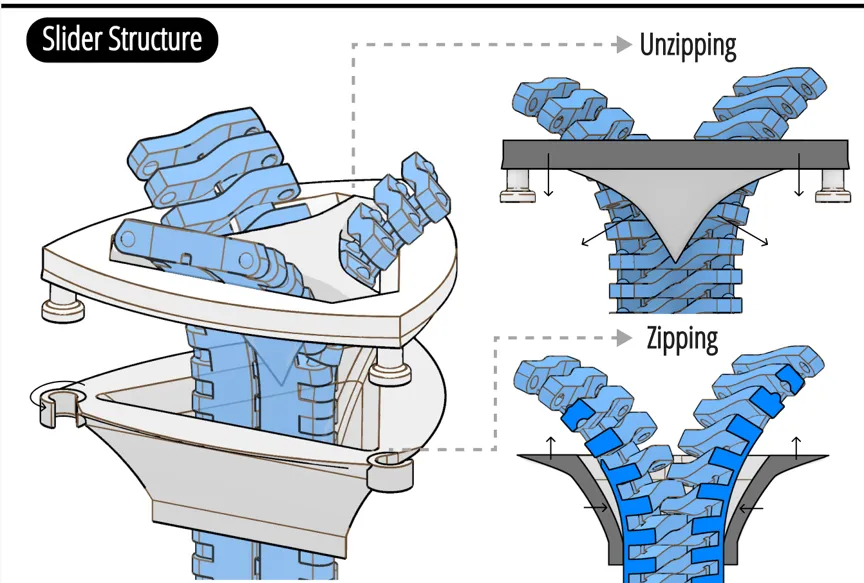
When pulled open, the TPU or textile flexible bridge holds loose, the three bands are unbound and can be rotated at will; when locked together, the sliders fuse the three bands together, the wave-shaped bridges are connected, while the ball-shaped knot card enters the slot, locking the slide horizontally. The three bands are surrounded by a stable triangle column, with the pressure divided by the three sides, which instantly becomes a bearing support.
The sliding block is the soul of the whole design, and the two modules are joined and separated by a rotating lock knob. The sliding block is securely tightened and smoothly separated when it is pulled backwards, ensuring that the sliding block does not break.
In addition, the team made three drives: a manual tow, a motor with dynamic drive with sliders crawling, and a static drive with fixed motor feed. Small to wearable wristbands, large to multi-meter tent frames, are suitable.
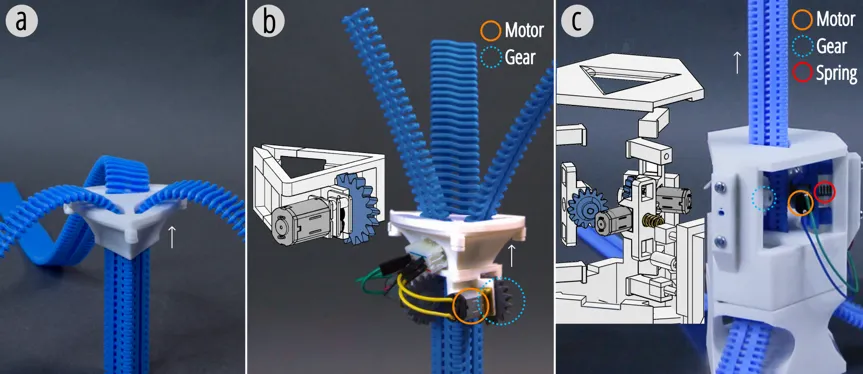
Y-zipper drives: (a) manual sliders; (b) dynamic drivers with a motor gearbox; (c) static drivers with three sets of motors, a gearbox and a spring.
They also defined four basic movements: straight, curved, spiral, and curve. In the Grasshopper design tool, you can select good shapes, input parameters, software automatically generates drag chain structures, directly output printable files, and long structures automatically segregate and reserve connections.
In other words, it is not a fixed-sized part, but a programmable deformable structural language.
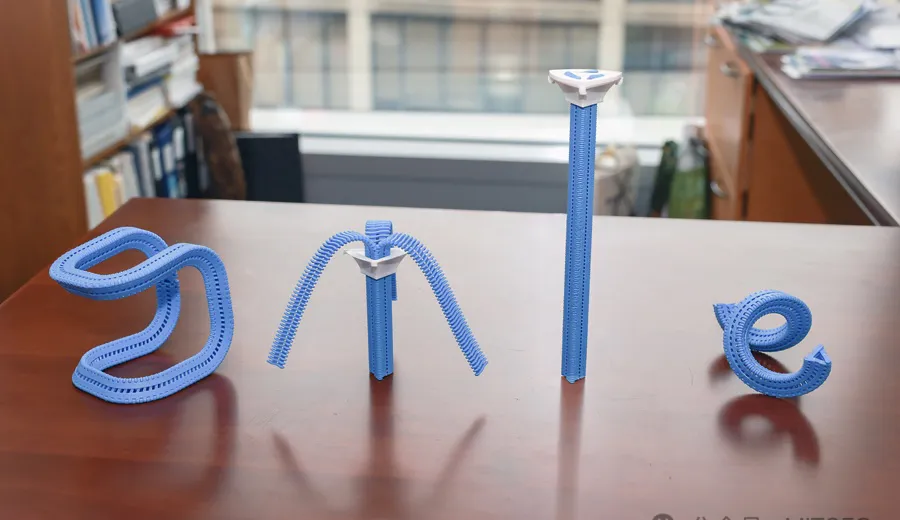
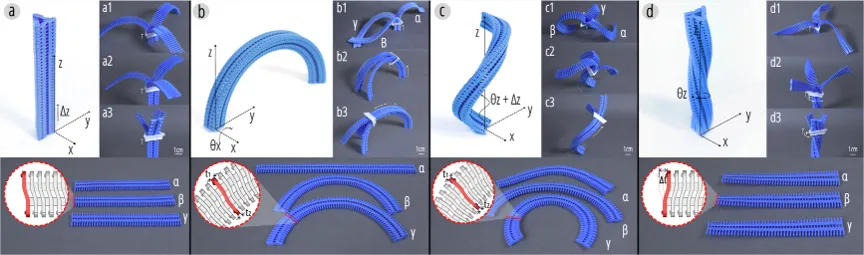
The four basic motions of the Y-zipper are: linear motion, curved motion, curved motion, and spiral motion.
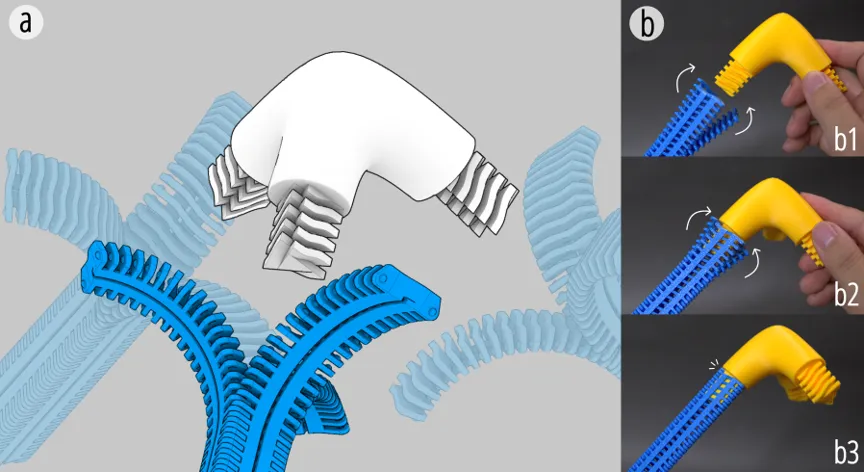
Designed to connect multiple Y-zippers.
03.
More than a machine leg, the application of imagination continues to expand
This four-legged prototype is the most intuitive answer to the Y-zipper.
Each leg is a separate 360mm Y-zipper lever. The N20 motor drives the slider, and the elbow coil incorporates a flexible strap. The chain is tightened, the legs are lengthened, the robot raises the body, crosses the block; the chain is pulled, the lever becomes softly contracted, the overall height is pressed down, and drills into the short gaps.
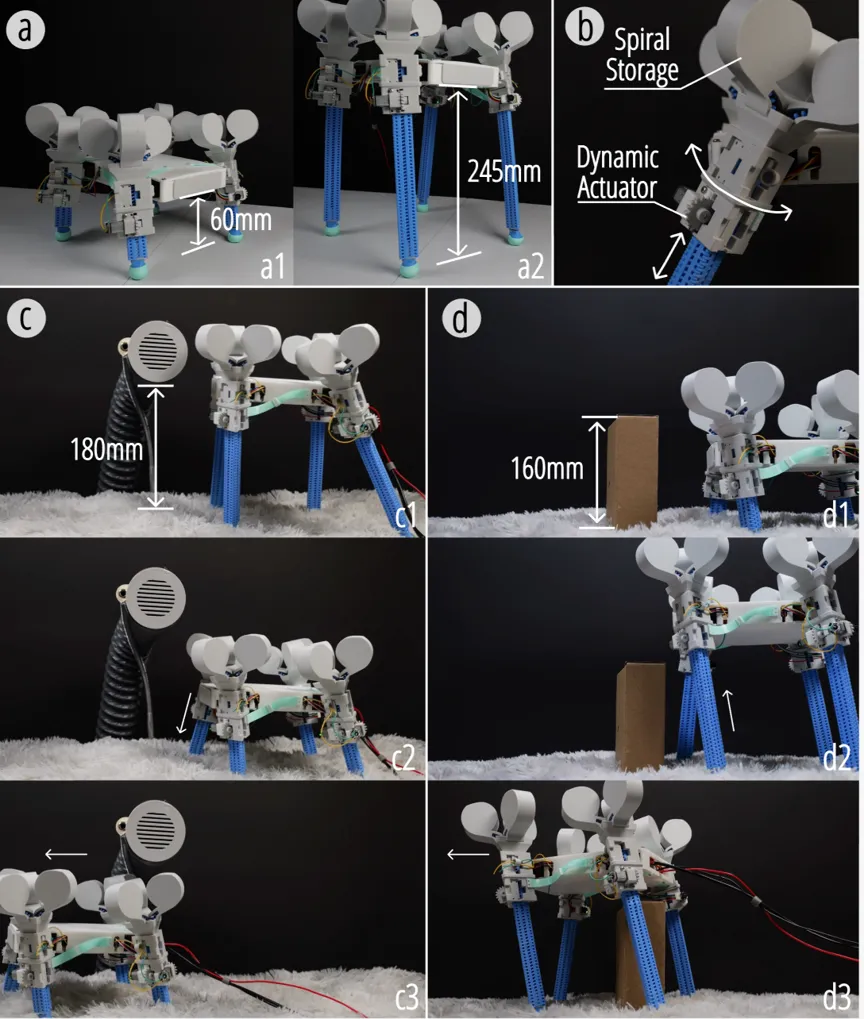
Y-zipper enables four-legged robots to actively adjust leg lengths: lowering and elevating configurations, single-legged modules, low-gap crawling and crossing.
It has a significant advantage over the mainstream program in the signage industry.
Self-locking, without the need for continuous supply of energy to maintain rigidity. The filling soft must be continuous supply of gas, the particulate blockage is not open to continuous negative pressure, after it is locked, the form stays stable;
Reversible switching, responsive control. Once the slider movement completes the soft-hard switching, the control frequency is higher than that of folding paper, shape memory material;
The form of the receiver is extremely narrow, the receiver is soft belt, the portable property is loaded.
Modular splicing, interconnected connections, and more than a single machine leg, can also be used to build large-scale reconstructible scaffolding.
Of course, it also has a short board, with the current 3D printed plastic version carrying a limited upper limit, a fatigue life of just over 10,000 cycles, and a distance from continuous operation of industrial-grade robots.
However, its application of imagined space has exploded.
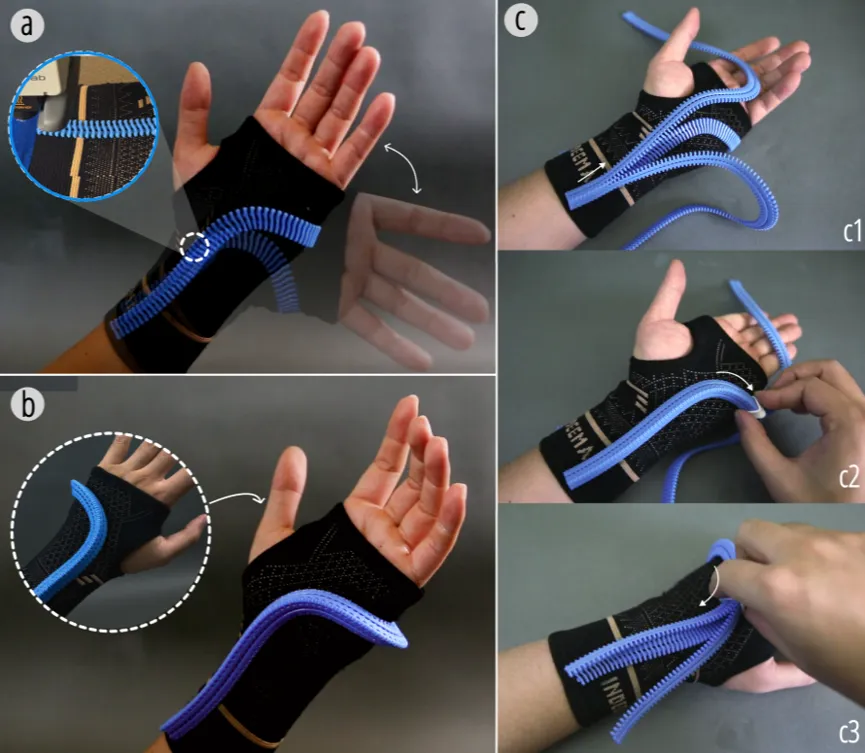
TFC Rehabilitation wristbands, daily soft attachment to the wrist free activity. Sleeping lock dead, rigid body guard, blocking excessive stretching and impact, can be operated alone, without repeatedly removing.
There are also dynamic devices that simulate the growth of vines, as well as high-speed tents, built in 1 minute 20 seconds and disassembled in just 40 seconds, which can be directly shortened into soft-bar packaging and taken away.
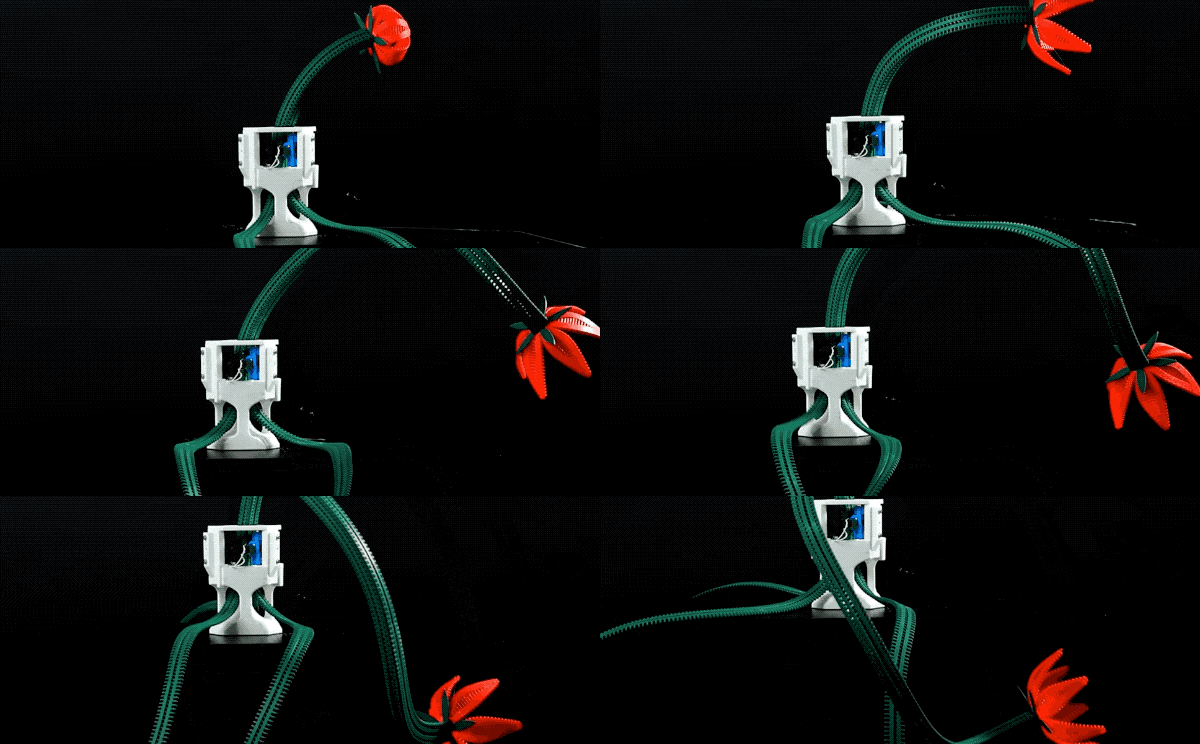
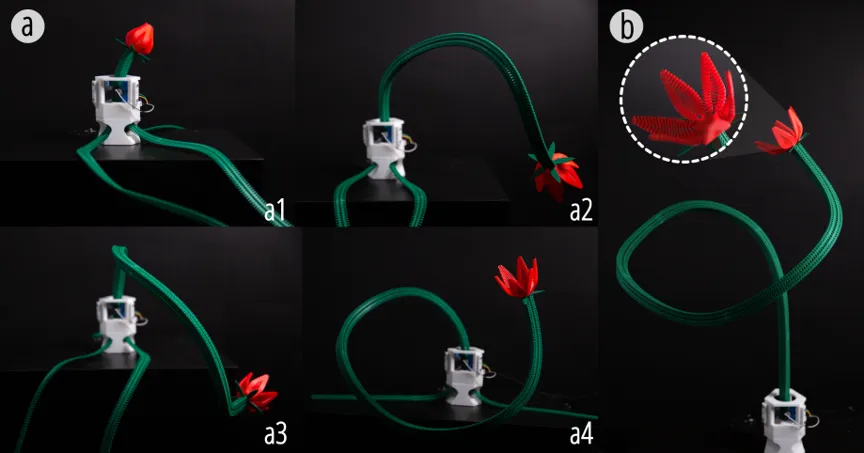
Using a dynamic art installation with a Y-zipper: three strands of string are held together to form a growing vines whose flowers open as they stretch.
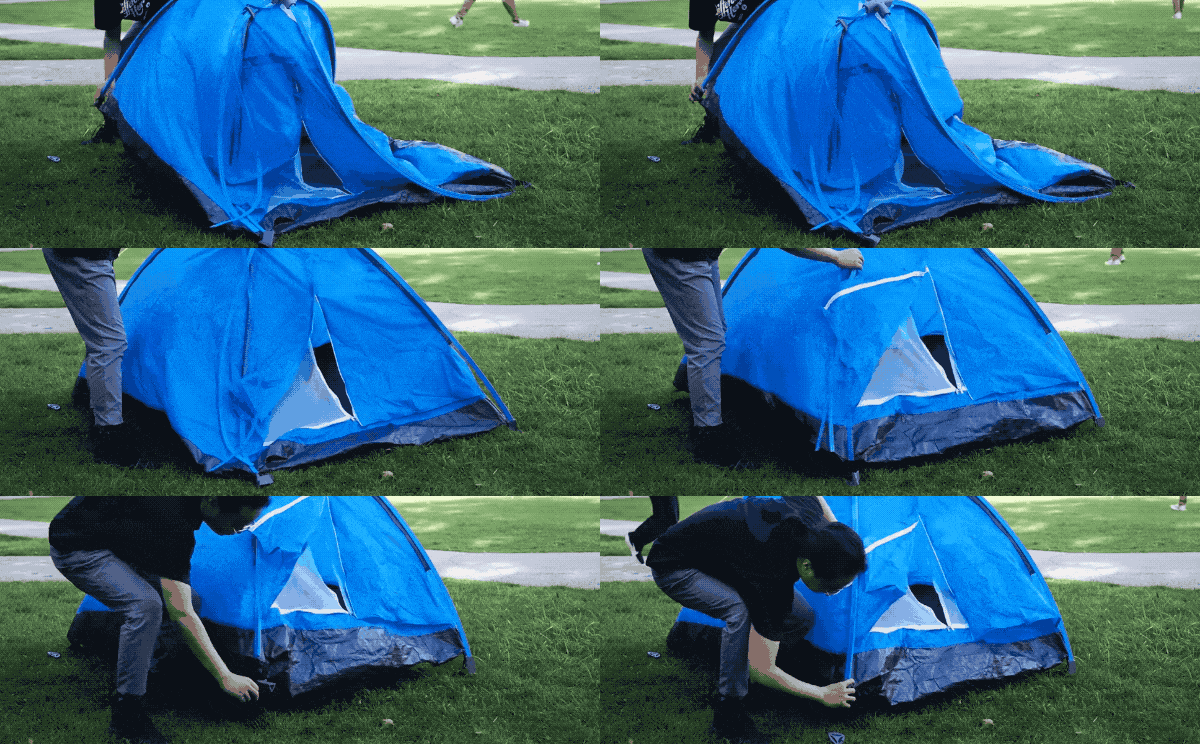
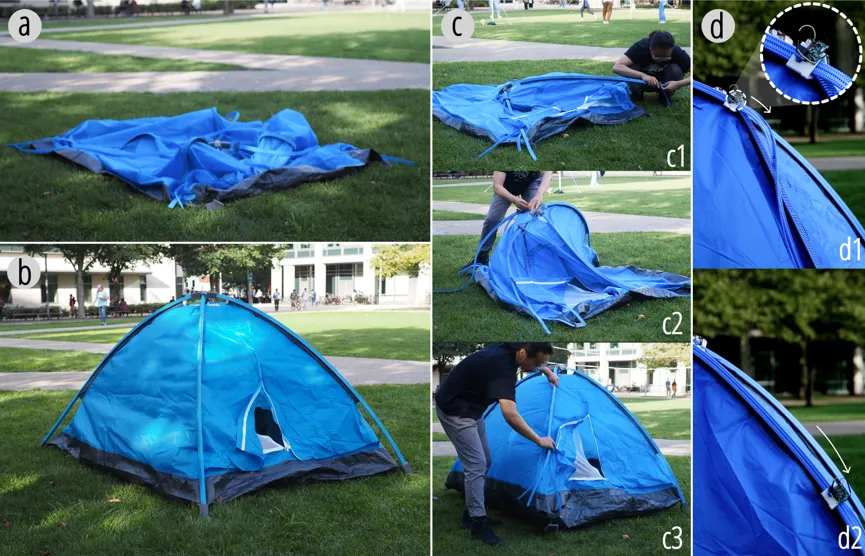
The tent assembly of the Y-zipper: (a) the initial state; (b) the completed tent structure; (c) the manual closing of the Y-zipper; (d) the dynamic closing of the four executors running in conjunction.
04.
A new approach to solving the problem has been introduced by the rigidity of the race track.
These applications are based on the same core principle: chain-linked rigidity.
Adjustable rigidity is a multi-year hardcore challenge on the path of deformed robots.
Conventional rigid robots have high power, high precision, but harshly frozen, are extremely vulnerable to collision damage or damage to the environment; software robots are safe, adapt to complex terrain, can be rigidly sluggish, and difficult to produce powerful operations. In the past, a large number of programs have either been repeatedly complex, control chains have been long, or can't be quickly reversed, and universality has been extremely poor.
Particle blocking, layer blocking is currently the most mature route, relying on extrusion medium friction locks, good at holding local small range. It is easy to wear particles, seals easy to fail, and it is difficult to make complex structures such as spirals and long curves.
The Y-zipper has a new way of switching the soft hardness freely with the use of a chain-linked structure, which can be extended step-by-step, creating a large size, repeatable deformation frame. Engineers can directly replicate this set of tractor-linked units, coupled with parametric design and 3D printing, rapidly changing the deformable structure, with the potential to be applied in emergency support and field equipment scenarios.
It's not the kind of black technology that's disrupting the industry, but it offers a very simple new idea: to be a transformative robot, you don't necessarily have to build hydraulics, air, and a lot of servo motors. Starting with this simple logic, you can make a low-cost, clean profit, replicable rigidity skeleton.
In the future, a large number of lightweight, modifiable robots may grow along this chain-linked approach.