“ Human robots are not the core assets, the sequence of scenes is the data.
Toyota is not a robot company, at least not now.
It has been making cars for nine decades, with a global production target of more than 10 million units by 2026, including Rexas. The three words "robot" were actually written into its annual budget in September this year, and the rule is that from 2028 onwards, 10 trillion yen will be thrown in and out every year, rolling down four years, and 400,000 robots will be on the production line.
Reuters folded the money into US$6.4 billion a year, making Toyota the most radical robot buyer in the world.
Why do we need so many robots?
The industry is focused on how many robotic pumps can be made, Toyota's computational pump is how many processes can be used to power pumps, and how much data assets can be left behind by humans.
01.
One of the costs of a miscalculation is process data.
Goldman Sachs gave an answer in its Physics of AI report: In automotive factories where processes have not yet been robotized, only about 2 percent of real robots are able to intervene directly at this stage, mainly in parts classification and simple logistics transport, and the remaining 98 percent will have to wait for AI brains, machine vision and clever hands to continue to break through.
This process gap of 98% is the most expensive thing in the entire industry for the next few years. This also means that the bottleneck in the robotics industry is shifting from the potassium to the potassium to the potassium that can't teach it to work.
The future of robotics and data assets could be divided into two parts. Goldman's account is the industry's most frequently cited algorithm for calculating robotics integration fees and ROI cycles.
Around 6.5 million humanoid robots worldwide in 2035, with sales of $138.3 billion, and an overall price of $213 million, the average price is declining, $418,000 in 2025, $380,000 in 2030, and the equivalent BOM cost decreased from $277,000 to $135,000. The $30,000 robot plus a 50% system integration fee, an initial investment of $450,000 to replace 0.8 full-time employees, a savings of $283,000 a year, and a recycling period of about 1.6 years.
This set of accounts is very detailed, and there is no such thing as a data asset cost threshold.
Toyota has 60 factories in Japan and abroad and 18,000 senior workers, but it only needs to collect data from one factory and concentrate it in a California laboratory to copy what it learns to global factories or sell it to other companies, which is the value of data assets.
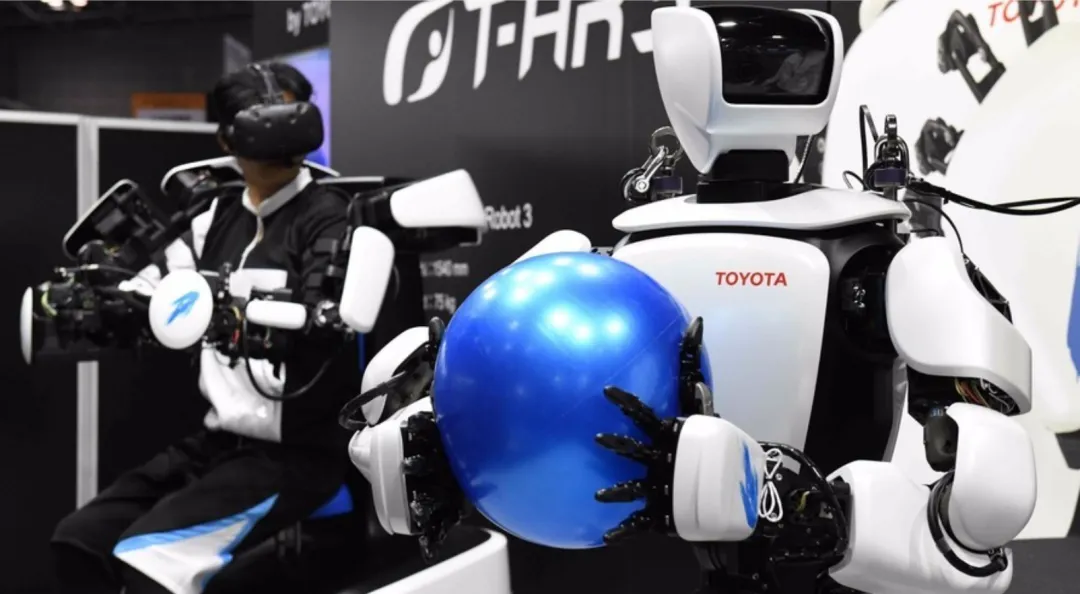
In September 2026, Toyota held a live demonstration at the European Headquarters Investor Exchange, where the robot spent two weeks practicing 1500 folding T-shirts, with an accuracy rate of close to 100 percent. Workers wore finger-shaped screws designed in the shape of ELEY's mechanical hands as a demonstration, and the robot learned to move from humans. 1,500 times divided into two weeks, it took 107 extractions per day to turn a process into an asset.
The base of this data asset is the LBM large-scale behavioral model, developed by Toyota in California to teach physics skills using distributed generation methods. Financial Times reported that the same model was giving Boston power to Atlas when the base. The 1,500 exercises left behind were not a video, but a set of strategies.
As a result, the structure of the accounts has changed. The main cost of Goldman Sachs is the integration of bodies and systems, and Toyota's main cost is for teachers to teach robots and turn processes into data.
Integration can be outsourced to the integrator, teaching can't buy, it can only train itself. Robots can buy, the core content of the production line can't buy.
Or maybe the teacher's coal has become a mine. But the first half of the mineral extraction has not been converted into capacity, which is the underlying reason why this account is not possible.
The number of Japanese manufacturing workers decreased from 10.46 million in 2024 to 10.33 million in 2025. Workers under 34 years of age decreased from 3.84 million in 2002 to 2.58 million in 2025, and over 65 years of age increased from 580,000 to 850,000 over the same period.
Among the companies reporting a shortage of people, 62.8% are lacking teachers, 54.4% are going to church, and 45.4% have no time at all. Teachers are retiring, there are fewer young people on duty, and there are fewer teachers than people who can work.
The most critical set of figures comes from the Japanese manufacturing white paper, where the percentage of landings from process data to actual performance dropped from about 70% to 40%. In more than half a year, the landing rate dropped by 30 percentage points.
Teacher Cook's technique is mining, which Japanese companies are actually doing in their own factories trying to improve the mining rate.
The body itself is on the path of devaluation, which has been written into the high-altitude curve.
The average price of the robot is going from $418,000 in 2025 to $213,000 in 2035, and the cost of the BOM is going from $277,000 to $135,000.
But the circle outside the body is rising.
Bernstein's Japanese senior analyst Masahiro Akita concluded more directly that Toyota's advantage might not be precision robotic hardware, but rather a more robust operating system that integrates robotics, AI and production processes into the product itself.
The price of the body is falling, the price of the process is falling.
02.
The shape of mining rights determines who can copy
Industry is a more knowledge-centric scenario, difficult to inherit and replicate, but with AI and robotics, this kind of craftsmanship is being quantitatively transformed into data and replicated on the industrial scene.
For example, Jiangsu Tianjin's Intelligent Machine Artificial Applications Laboratory, which has collected nearly 1,000 TB of valid data, with a total duration of more than 130,000 hours, has trained more than 100 robots in factories of companies such as Greater Phoenix, Gilly, BYD, Ideal, Cycles and others, and continues to collect data training. They are concentrating their efforts at this stage to allow robots to function well in specific locations and then to improve robot properties, software systems and even line programs to address on-site exposures.
Prof. Shimbun Taizon, from the School of Information at Shigangon University in Japan, took the joint project A-STEP Production Science for JST 2026, a data-driven joint study of the skills of Yamaha engines until March 2029.
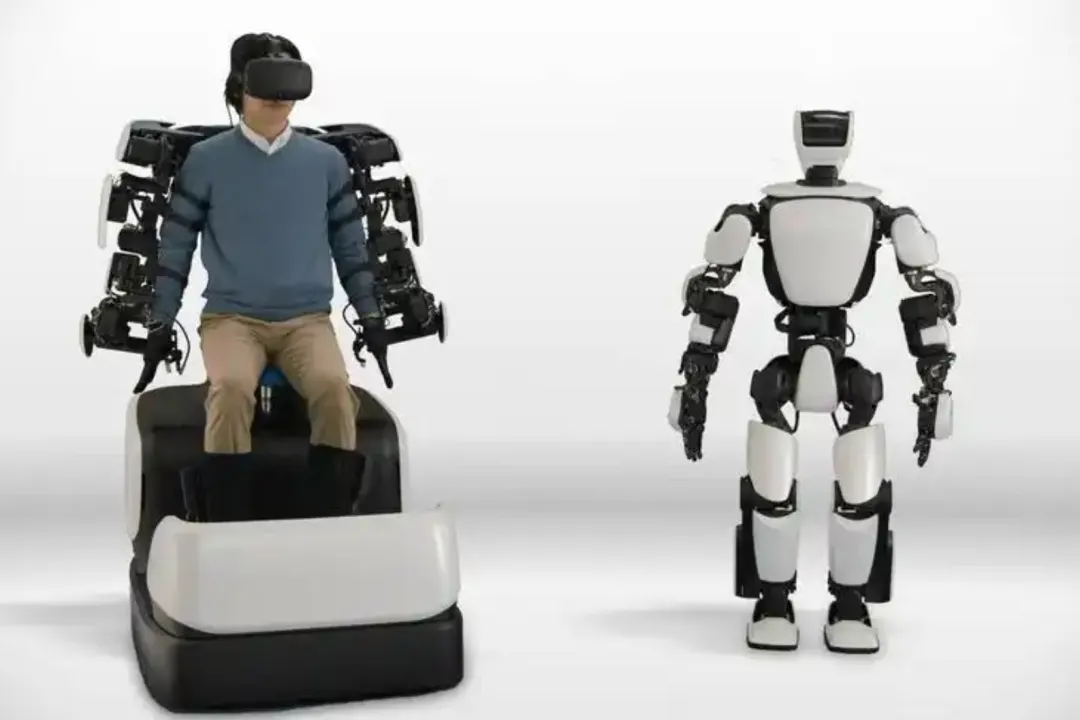
The factories are the real mines, where robots and smart people are mining, and teachers are starting to become the best data providers, turning apprenticeship into a data stream and optimizing data.
For example, an engineer at Xenhua Heavy Industries explained that the AI system, based on the identification of known types of defects, also detected a number of faint anomalous signals that had not previously been noticed by Professor Liu, which were identified as precursors to new defects after in-depth analysis, which in turn enriched the teacher Liu's experience system. At the same plant, Xenhua Heavy Industries also moved the detection from after welding to welding, and the detection response from 24 hours to 48 hours after welding to shortened milliseconds of torque in the welding process real-time feedback.
03.
The battle for form is the battle for cost
The reality in manufacturing is that the form of the process is cost-determined, not imagination-determined.
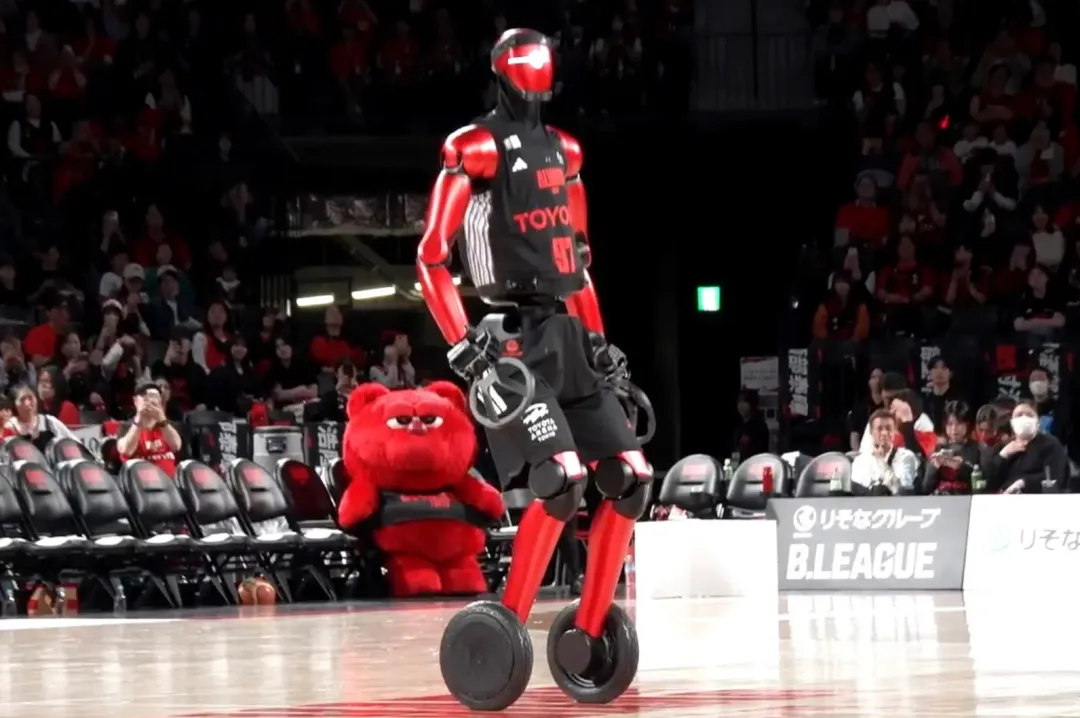
The answer to Toyota's own question is likely to be clear. ELEY first appeared on stage in December 2025, with no two legs but a wheeled chassis, two mechanical hands with two fingers each, the engine is 50 kg, 450 mm wide, working height between 939 and 1619 mm. In an official interview with Toyota's Future Generation Center, Yamamoto explained the shape selection, saying that in the era of physical AI, the body structure of robots is easier to mimic the movements of humans, so ELEY's joint spacing and arm circumference is determined by the average body type of Japanese adult males.
Goldman Sachs surveyed more than 80 companies, about 70 percent of which focused on a wide range of tasks, and 10 percent were clear about double-legged. Putting these two things together, it concluded that the mainstream processes at the automaker were fixed jobs; the same movement was repeated tens of thousands of times, and the ratio between jobs and heights was small. For a few processes to pay a higher structural cost, for most processes to pay a one-time cost, the latter better.
Toyota's calculation of 1 trillion yen is worth noting the figure of 400,000 but the 2% behind it. The industry is now accustomed to valuing robots as products and accounting for processes as costs.
Toyota is doing the opposite, taking processes and data as assets.
The next time will be in 2028. That year, Toyota will announce how many units have actually been executed and how many people have changed positions in those 18,000 hands.