A server cabinet the size of a refrigerator, weighing more than a pickup truck; by 2027, its peak power will be equivalent to 65 households using electricity at the same time; in order not to burn it, each cabinet will require the equivalent of 30 gas boilers.
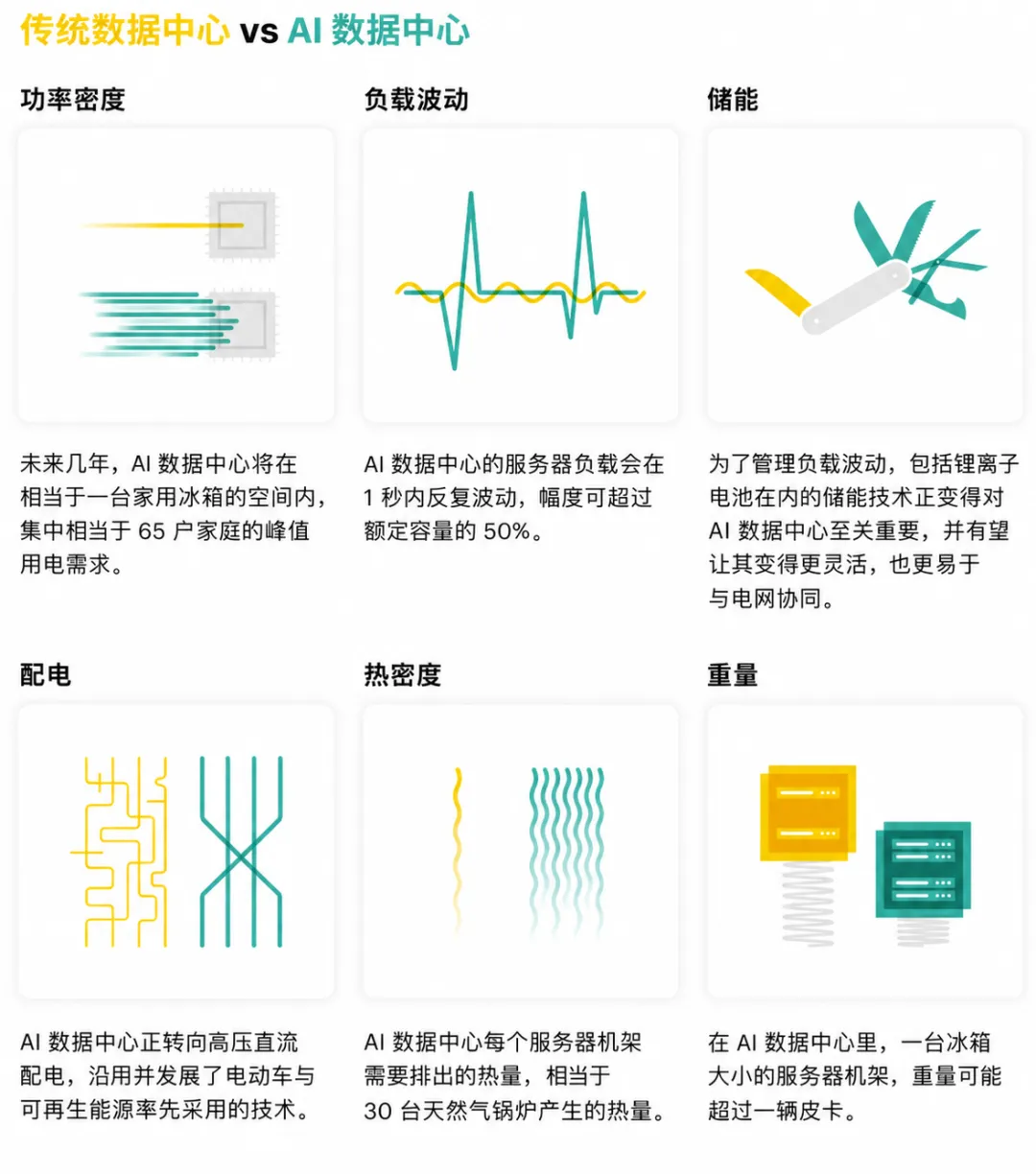
The Chinese version was produced by ChatGPT.
This seemingly science-fiction argument is actually a description of the next generation of AI data centers in the International Energy Agency's (IEA) April 2026 report. The report gives another set of figures: In 2025, the five tech giants spent more than $40 billion in capital spending, and in 2026, they will save another 75 percent, which is more than the total annual investment in global oil and gas extraction.
Over the past two years, "the end of computing is electricity" has become almost an industry consensus. This is true, but only half of the time. Electricity is of course a necessary condition to truly cling to AI expansion, often not just "there is no electricity", but a whole chain of generators, power grids, transformers, heat exchangers, storage, packaging, and capital, with a completely different construction speed for each link in the chain.
To clear this chain, the best way is to temporarily put off the "GPU arms race" and the "electrical anxiety" narrative, and go back to the most basic physical facts, counting backwards.
How did intelligence get burned?
If you take off all the commercial packaging, physically, what AI actually does is: it sends electricity into the transistor, drives the bits around, completes the matrix multiplication, and ultimately spews the Token.
In this way, the "effective intelligence" that a country or company can produce can be roughly written as a multiple of four factors:
How much power can be used x Hardware efficiency (how many operations can be performed per clock) x Algorithm efficiency (how many useful tokens can be exchanged per operation) x Utilization rate (how much time the machine actually operates)
The formula is not precise, but its advantage is that each factor corresponds to a specific layer of infrastructure. Electricity corresponds to power plants and power grids, hardware energy efficiency corresponds to chips, memory, packaging and connectivity, algorithm efficiency corresponds to model architectures and reasoning software, and utilization rate corresponds to the reliability of scheduling systems, heat dissipation and power supply.
Any one factor falls off the chain, and the other three do well will be dragged along. That's why the bottleneck of AI infrastructure will continue to "migrate": the first two years were not available for GPUs, then advanced packaging and high-bandwidth memory, and now it's up to transformers, gas turbines and parallel networks to line up.
First, let's look at two physical facts.
The first is energy conservation. The electricity consumed by the data center, except for a very small portion that turns into a light signal and mechanical vibration, almost all eventually turns into heat. This means that "power supply" and "heat dissipation" are essentially two sides of the same issue: how many kilowatts of heat you put into the cabinet and how many kilowatts of heat you have to move out of the cabinet.
The second is "moving data is more expensive than computing data". A classic measurement in the field of chip design is that in a 45nm process, a 32-bit floating point addition consumes about 0.9 pcs, while reading data of the same length from one DRAM unit consumes hundreds of pcs, with a gap of two to three numerical degrees.
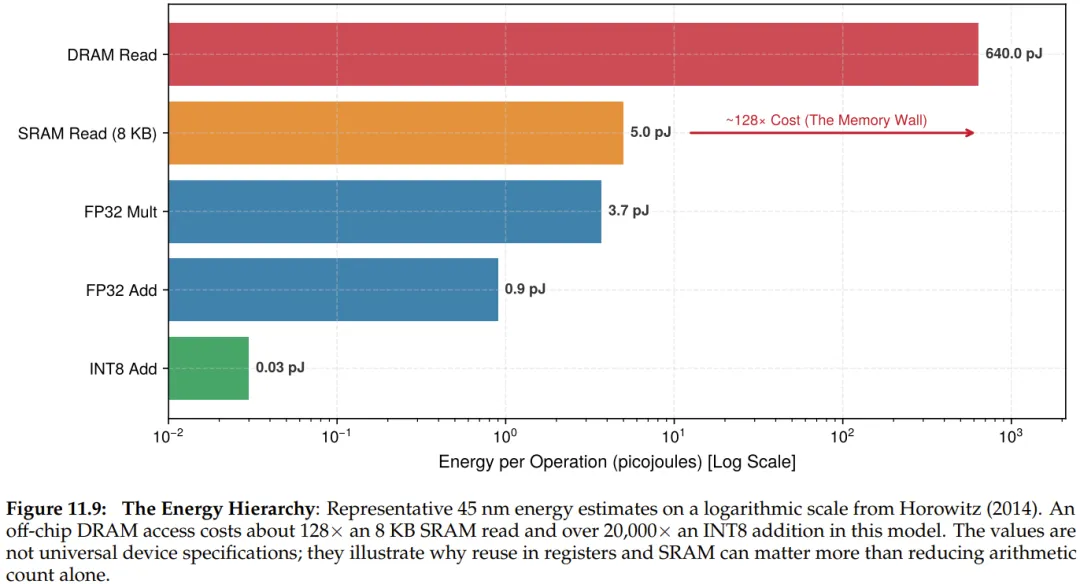
In other words, the power consumption of modern AI chips is often not "calculating" but "moving". From high-bandwidth memory (HBM), CoWoS advanced packaging, to NVLink high-speed connectivity, co-packaging optics, and "hypernode", the underlying logic of almost all hardware innovations over the past few years is the same: shortening the distance that data must travel.
Where is the physical limit? According to the Langdale Principle, the minimum energy required to erase a bit at room temperature is about 3×10⁻²¹ Joules. In the example of the Intelligent Rubin GPU, the FP4 reasoning power of a single package of about 50 PFLOPS, about 2 kW of power, roughly accounts for every FP4 operation at several tens of FP4 levels. Even if one operation is broken down into hundreds of bits of operations, there are still several numerical levels of space under the chip theory today (rough estimates, only as a quantum reference level).
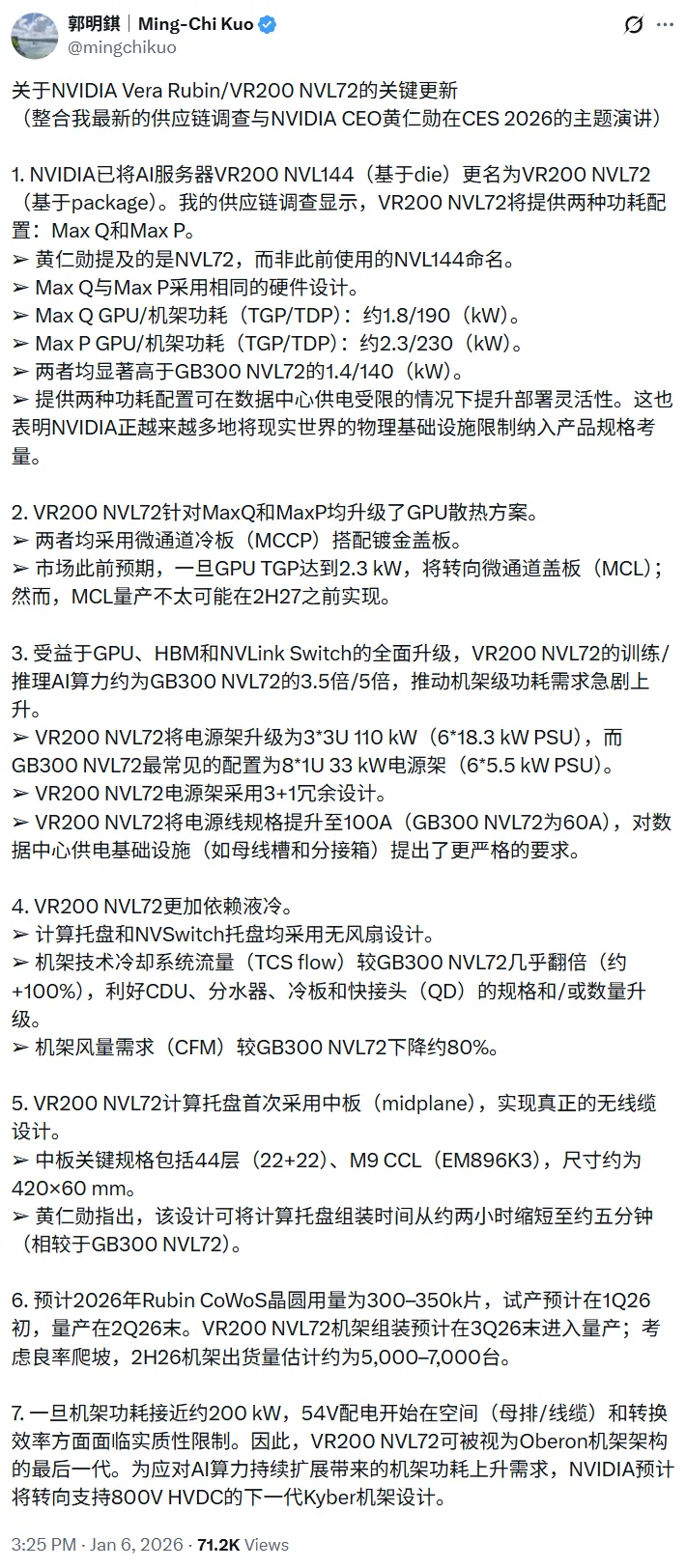
A tweet by Hong Kong-based Taiwan International Securities Analyst Guo Ming, said:
So the problem of AI's energy consumption is not "striking a physical wall", it's engineering, supply chains, and systems. This judgment is important because it determines where we should look, after all, the real constraints are in factory schedules, grid planning, and local council meeting records.
Demand: Efficiency increases tenfold per year, why is electricity used more and more?
Look at the other end of the bill: demand.
The IEA's latest measurements show that in 2025, global data center electricity consumption will increase by 17%, with AI-driven data centers growing by 50% and global total electricity consumption during the same period by only 3%. According to its benchmark scenario, data center electricity will double from 485 TWh in 2025 to 950 TWh in 2030, accounting for about 3% of global electricity consumption.
Interestingly, the same report also notes that AI's energy efficiency improvements in single-mission computing are unprecedented in the history of energy.
Efficiency is rampant and quantity is rampant, a classic Jevons paradox. The IEA breaks it down into three simultaneously accelerating forces: efficiency improvement, usage surge, and new use cases of capacity leap unlocking.
In video generation, reasoning models, and intelligent-body tasks, single-request power consumption can be hundreds to thousands of times that of simple text generation. When AI goes from "answering a question" to "half an hour to do something for you", the computational consumption of each interaction is no longer a metric.
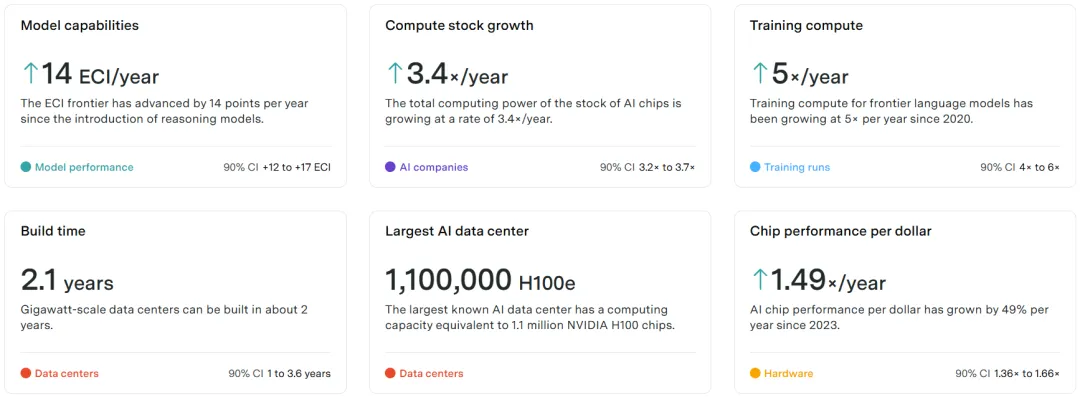
Training terminals are also expanding simultaneously. According to Epoch AI, the training capacity of front-end models has increased by about 4 to 5 times per year since 2020, and the power required for single front-end training is still growing at a rate of about 2.2 times per year, with the current maximum capacity exceeding 100 megawatts; if the trend continues, single training may require 4 to 16 gigawatt hours by 2030.
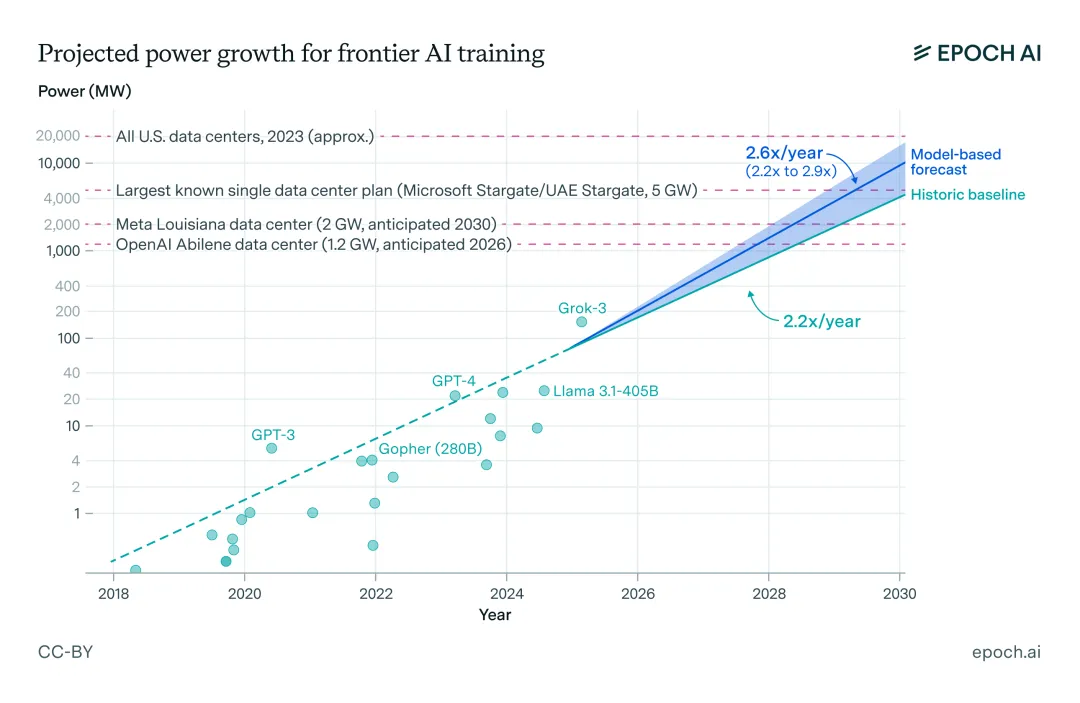
Another Epoch tracking shows that the total inventory of AI chips worldwide is growing at a rate of about 3.4 times per year.
China's data gives another boost to reasoning. In May 2026, the deputy director of the National Data Agency, Yu Ying, revealed that as of the end of March, China's daily Token calls had surpassed 140 trillion, up more than a thousand times from the end of 2024; and at the beginning of 2024, this figure was only about 100 billion.
The IEA estimates in its 2025 report that by 2030, U.S. data centers will account for nearly half of all U.S. electricity growth, and the amount of electricity used in U.S. data centers will exceed that of all high-energy industries such as lithium, steel, cement, and chemicals.
Electricity: When demand shifts by quarter, it hits a decade-planned grid
If you ask "is the world enough electricity?" the answer is yes. The problem is speed.
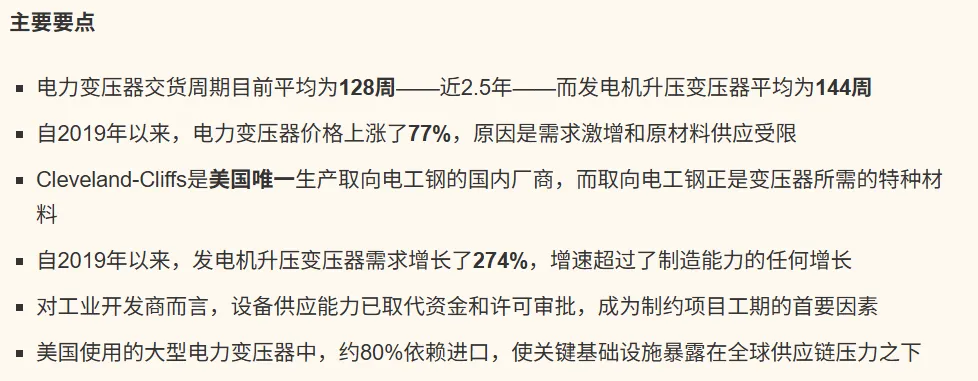
The construction cycle of AI data centers is shortening dramatically. Epoch AI observes that data centers can be built in about two years; the IEA says it takes two to three years. The pace of the power system is completely different: the delivery cycle of large power transformers has been extended to a maximum of four years in the United States, the delivery period of gas turbines is more than three years, and newly built nuclear power plants is ten years.
The most profound contradiction in AI infrastructure is the mismatch of three clocks: chips alternate yearly, data centers are built in two years, and power grids are planned in ten years. The IEA reports that the discrepancy between the speed of the AI revolution and the speed of the physical, social and economic systems that support it is growing.
Gas turbines are the most intuitive example of this mismatch. Global gas turbine orders surged by 70% in 2025. GE Vernova, the industry leader, revealed in its second-quarter earnings report in 2026 that its hand-ordered gas equipment reserves have reached 116 GW and are expected to reach at least 125 GW by the end of the year; at the same time, its annual capacity is expected to climb to 20 GW by the third quarter of 2026, to 24 GW in 2028, and to 30 GW in 2030.
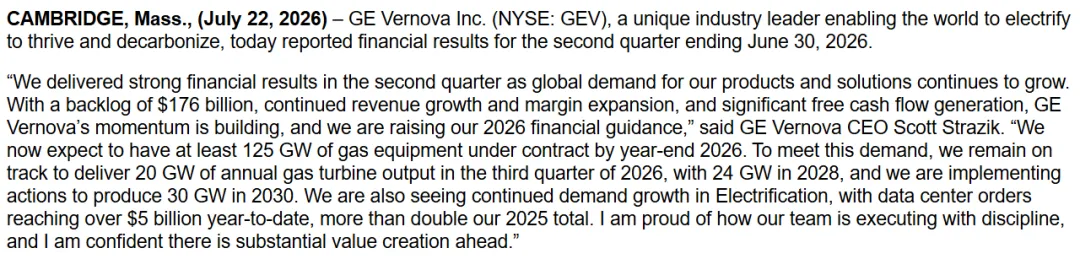
Simply put, the existing storage capacity is roughly equivalent to nearly six years of production. Some developers have switched to "sub-optimization" such as replicated internal combustion engines after 2028, when large units are ranked.
The story of the transformer is more subtle. It accounts for a small portion of the total cost of the data center, but may determine whether the entire project can be powered on schedule. The delivery cycle of large electrical transformers in the U.S. is estimated by PwC analysts to be as long as four years; further up, the transformer's steel core is required for steels in the U.S. only by a Cleveland-Cliffs native manufacturer. A supply chain that is "loaded and has basically not grown in two decades" will suddenly serve an expected customer every quarter.
In the face of grid alignment, the mainstream choice for U.S. developers is "self-connected power". The IEA's satellite tracking shows that about one-fifth of U.S. data center on-site gas power generation projects are either cleaned up or under construction; by 2030, on-site gas could provide 15 to 27 GW of power to data centers.
Nuclear Power is a longer-term bet. Microsoft and Constellation have signed a 20-year power purchase agreement to re-launch Unit 1 on Tripoli (now known as the Crane Clean Energy Center) and restart power as early as 2027; Meta and Constellation have signed contracts to purchase 1.1 GW of power from the Clinton Nuclear Power Plant starting in mid-2027; Amazon and Talen have extended agreements to lock up to 1.9 GW of nuclear power. According to third-party tracking, several major cloud manufacturers have signed nuclear power-related agreements of about 9.8 GW.
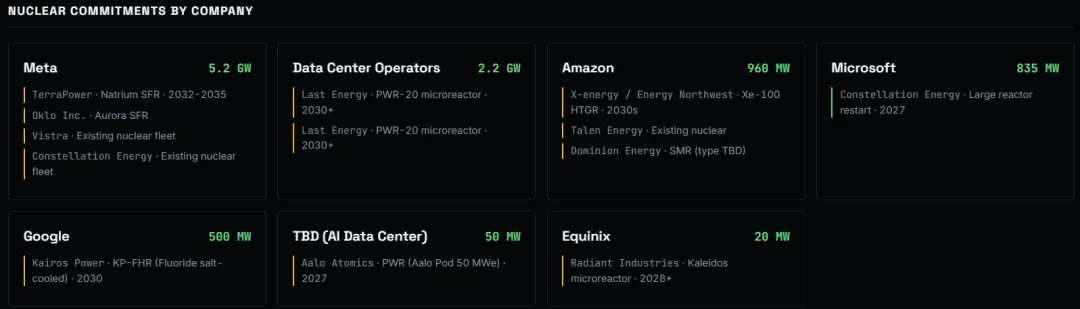
But the IEA warns that the first small modular reactors (SMRs) are not expected to be launched until before 2030. In other words, nuclear power solves the problems of the 2030s, not today.
The electricity shortage will eventually be transmitted in the form of prices. PJM, the largest electricity market in the United States, covers 13 states and Washington, D.C. Its capacity market clearance price jumps from $28.92 per megawatt-day in the 2024/25 delivery year to $329.17 in 2026/27. PJM's independent market surveillance agency estimates that about 40% of the total cost of the $1.4 billion auction round in December 2025 will be driven by data center loads.
Heat and density: the cabinet is turning into a small power station
If the power grid is the "external constraint" of AI infrastructure, the change that is happening inside the cabinet is another silent revolution.
Back to the physical fact of the first paragraph: In order to shorten the distance of data transport, the GPUs should be as close together as possible to form a larger high-speed network area. The larger the network area, the more chips embedded in the same cabinet, the higher the power density.
According to industry figures, the capacity of the Hopper-era cabinets is about 40 kW, while the Blackwell-era cabinets are up to 120 to 140 kW. Supply chain surveys by Global Wind analyst Guo Ming's show that the upcoming Vera Rubin NVL72 cabinets offered two power configurations: 190 kW and 230 kW, which are significantly higher than the GB300 NVL72's capacity of about 140 kW; the Rubin Ultra "Kyber" cabinets are generally expected to reach about 600 kW in 2027.
Ingrid's official blog describes the Vera Rubin NVL72 as an industrial device rather than a computer: the entire cabinet is comprised of about 1.3 million items, nearly 1,300 chips, and weighs about 4,000 pounds, roughly the equivalent of a pickup truck.
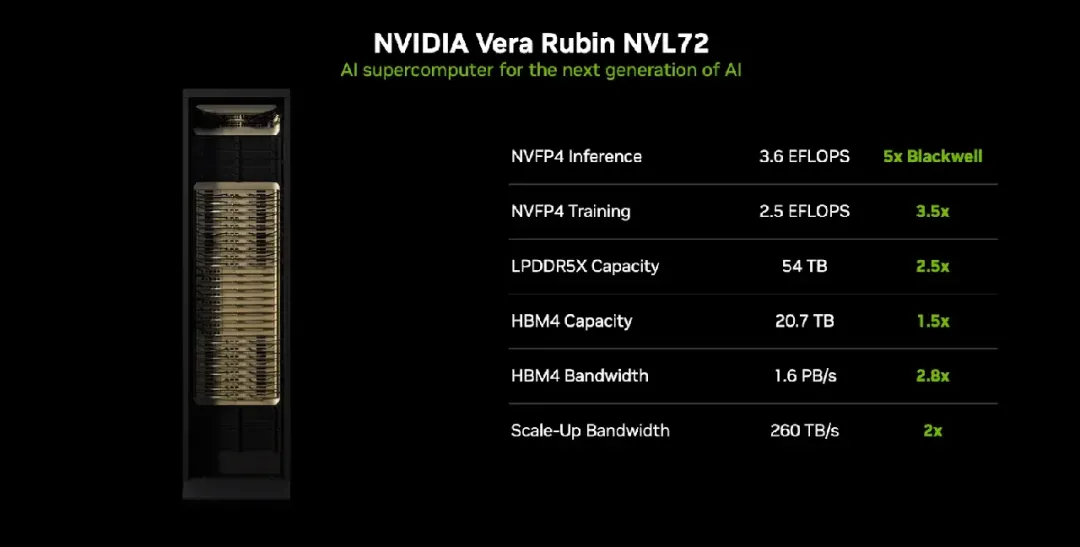
The rise in density is simultaneously striking the two systems of electricity supply and heat dissipation.
On the power supply side, Guo Mingqi pointed out that when the power of the cabinet is close to 200 kW, traditional 54 volt electricity is subjected to hard constraints in the mother line, cable space and conversion efficiency, Vera Rubin NVL72 may therefore be the last generation of the Oberon cabinet architecture. The physical principle behind it is simple: the transmission power is equal to the voltage multiplied by the current, and the line losses are proportional to the current, increasing the voltage to use more fine copper. This is why the industry is turning to 800 volt direct current, and the IEA also noted that AI data centers are borrowing technology from the electric car and new energy industries to move to high-voltage direct current.
On the dissipative side, hundreds of kilowatts of heat are well above the wind-cooled threshold, and full-liquid cooling is changing from optional to default.
There is also a new issue that is often overlooked: load fluctuations. The IEA finds that server loads in AI data centers fluctuate more than 50% of the rated capacity repeatedly within a second. Thousands of GPUs switch synchronously between the computing phase of training and the communication phase, as if a giant switch is constantly dialling to the power grid. Therefore, storage is becoming the hallmark of AI data centers, and it is expected that 20 to 25 gigawatt batteries may be installed inside global data centers by 2030, and if stimulated, they can become the counter-regulatory resources of the power grid.
One of the symbolic details of the device is that Guo Ming revealed that Vera Rubin provided "Max Q" and "Max P" power configurations to adapt to different data center power conditions. The chip specification began to compromise with the electrical reality of the machine, which was rare in the past.
Core: Why the bottleneck moved memory and packaging from the GPU
One of the most counterintuitive phenomena of the past two years is that the most scarce parts of AI chips are often not computational cores.
The reason is still to go back to "moving data is more expensive than computing data". Large model reasoning, especially the decoding phase of generating tokens one by one, is typically about how quickly the model weight and context cache can be moved out of memory, which is called a "memory wall".
The solution is to stack the DRAM chip vertically into an HBM, and then use an advanced packaging such as CoWoS to place it and the GPU in the same middle layer, shortening the data path from centimeter to millimeter.
The cost of this technological route is to drag the entire storage industry into a shortage. The IEA noted in its April 2026 report that the shortage of HBMs formed rapidly in the first half of this year and is expected to continue until at least the end of 2027.