In the second half of 2026, China's robotics industry presents two non-parallel curves.
One curve points to the acceleration of the supply end, the annual shipment of U-tree-like robots exceeds 5,000 units, and the single-engine operation control capability is becoming more mature, leading to the production of molten lead. Another curve points to the testing of the application end, when the production of molten lead enters a garage, such as the release of tinplate, Shanghai General Motors, and other workshops, facing the rigorous cranking of the crankshaft.
When the body's intelligence is embedded in a real workshop full of dirt, harsh rhythms, multi-machine confusion, why does this last kilometer of the tunnel have to complement the Internet of Things? Understanding this threshold requires first clarifying the complementary relationship between the Internet of Things and the body's intelligence.
In industrial settings, the Internet of Things provides robots with environmental information, device status and business data through sensing devices, communication networks and data platforms, supporting their accuracy, access, and transmission; while physical intelligence enables robots to perceive, make decisions, and act in the physical environment, becoming the Internet of Things' execution terminal and mobile carrier, transforming the tasks in the digital system into real-world actions, and providing real-time feedback systems with operational results and changes in the field.
After all, physical intelligence is the hub of IoT's intelligent terminals that operate in the physical world, while IoT is the hub of the silicon system that supports robots running steadily on the production line.
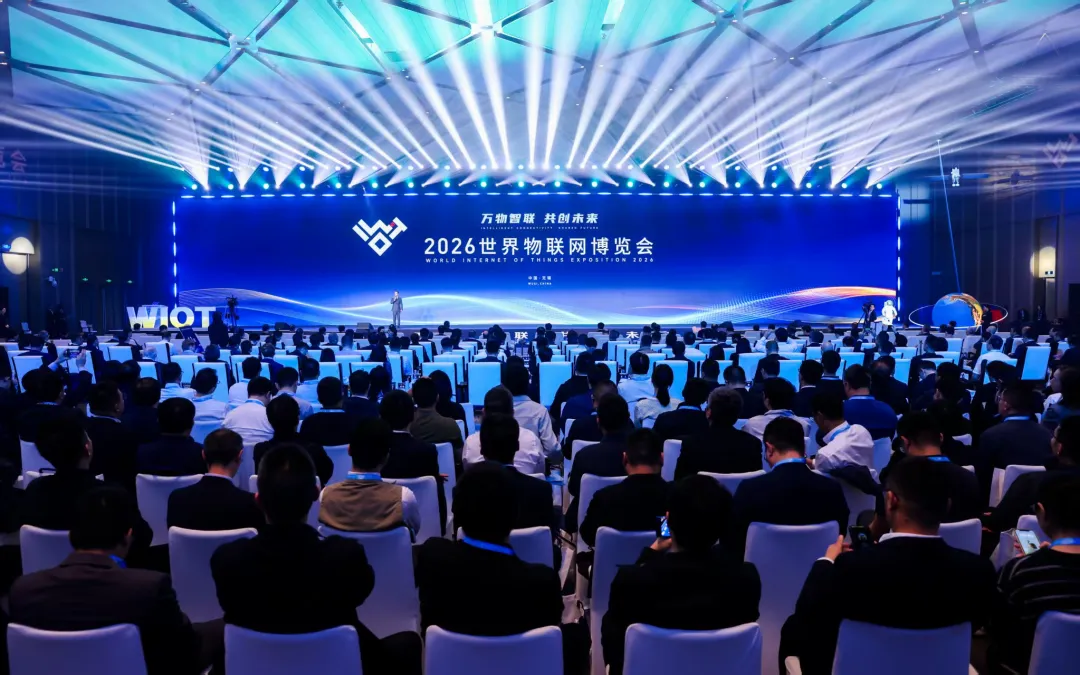
As the first regional market in the country to be approved as a national pioneer in the application of innovation in the AI industry, Wuxi has an IoT industry with a turnover of 318.4 billion yuan in 2025, and a growth rate of 33.4% in the core industry compared to the first half of this year. The 2026 World IoT Expo was held in Wuxi on October 30 and November 2.
01.
After crossing thousands of tonnes of delivery trucks, physically intelligent people are stopped by real environments.
In terms of delivery data, the supply of hardware with physical intelligence is at an important turning point. In 2025, the shipment of more than 5,500 U-tech humanoid robots, with a global market share of 32.4%, is the first in the world, and the four-legged robot continues to lead with 60% and 70% of the global share, with a cumulative sales of more than 33,000 units. As hardware hardware hardware is gradually becoming a standard, the industry's competitive focus is shifting from the manufacture of physical hardware to the acceleration of deep farming and adaptation to the scene. But there is a meditation gap between the supply and technology demonstration of the progress rate and the real stage continuous scene.
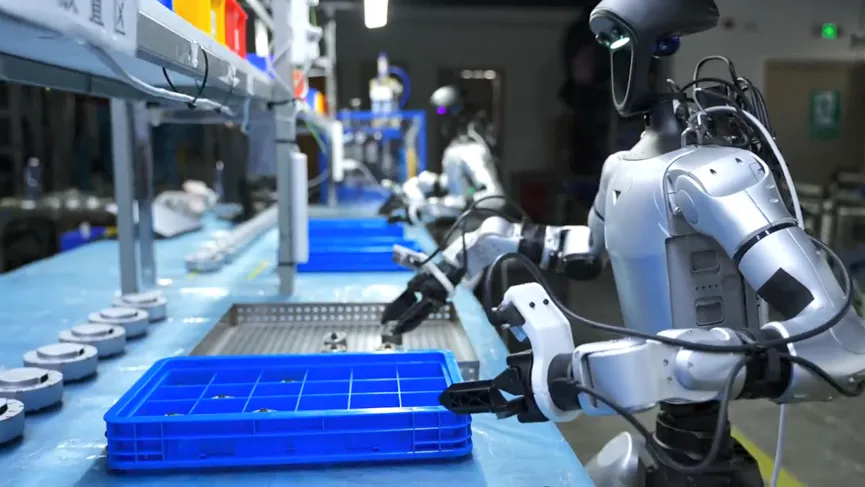
U-tree body models in the factory to make robots
Source: The Tree of Life
This also explains why this year, from the Ministry to the local level, there has been a strong push for real-life learning.
In the past, models that used to be built in the laboratory and trained in grabbing fruit baskets to enter unstructured workshops were often difficult to replicate. While smart bricks need to be trained in the real scenes of industrial manufacturing, life-saving services, special operations. This is the deep reason why the Ministry of Industry, the National Finance Commission have jointly launched this year a special operation to train human robots with smart real-world bricks, and the State Council has tightened the penetration of smart terminals.
Jiangsu Province from the launch of Xi'an on the implementation of recommendations to accelerate the development of the body-smart robot industry, to the holding of Xi'an 6+6 tonne conference on high-quality development of the industry, to the establishment of a fund for the development of the body-smart robot industry in Jiangsu Province by the Ministry of Industry and Communications and the Ministry of Finance.
As a rapidly developing AI ecosystem, as a national AI industry innovation application pioneer zone approved in August this year, Ningxi has brought together 13 families of AI integrators, 182 companies in the chain, and owns the Jiangsu province's Intelligent Robotics Innovation Center (Rongshui), as well as key enterprises such as Tianjin Galaxy, Guangxi Intelligent Manufacturing, China's Technology, Ningxi, Shanghai, and Shanghai, and has a deep foundation in the manufacturing and Internet of Things industry that has been in demand for over two decades.
When the robot itself is no longer scarce, the decision that it can't stay on the production line is that it is the interface between the silicon system and the real environment. This is precisely the problem that the Internet of Things has been deeply cultivating for twenty years and that needs to be solved in synergy with physical intelligence.
02.
How the Internet of Things rebuilds the underlying logic of robots entering the factory?
Around the main line of autonomous decision-making in the field of advanced communication and perception, the IoT exhibition deeply combines the full spectrum of IoT capabilities with smart factory entry points, rebuilding the technological path from the bottom up through robotics to the workshops.
(1) The first can-environmental perception: definitive perception from pure vision to multimodal + time-space parameters
The environment in which automotive parts are produced is unfriendly to robotic vision. High-reflective coatings, oil-filled coverings, deep-frame disorderly stacking and fine-grained threads, any of which are enough to cause a bias in the pure vision of the program.
In touch sensing and gesture control, Pasini focuses on how touch sensing becomes the core sensing hub for robots, combined with high-precision calibration by the Hexagon Intelligent Touch Sensors, and multi-specific touch sensors, to provide sensing and power control support for complex touch tasks such as wiring insertion; North Microsensing relies on multi-sensory fusion position position navigation units to maintain dynamic balance.
In resistance to disturbances and positioning, the Intelligent Micro-Infrared Detector (reduced by 74% in volume, double AEC-Q100 certification) provides full-weather vision redundancy; the Xiao position brings the Beirut time zone into the body area, and the FindCM level of accuracy reaches 2 cm.
At the bottom of the gateway, the Zhejiang sensor is fully injected, and the Yonge River motor, the SushiSensor, has 10 kilometers of communication and 10 years of battery life.
According to China's 92.4 billion yuan smart sensor cluster, a new batch of sensors, such as the Chilean, Arrowhead, and Water Bear, is emerging.
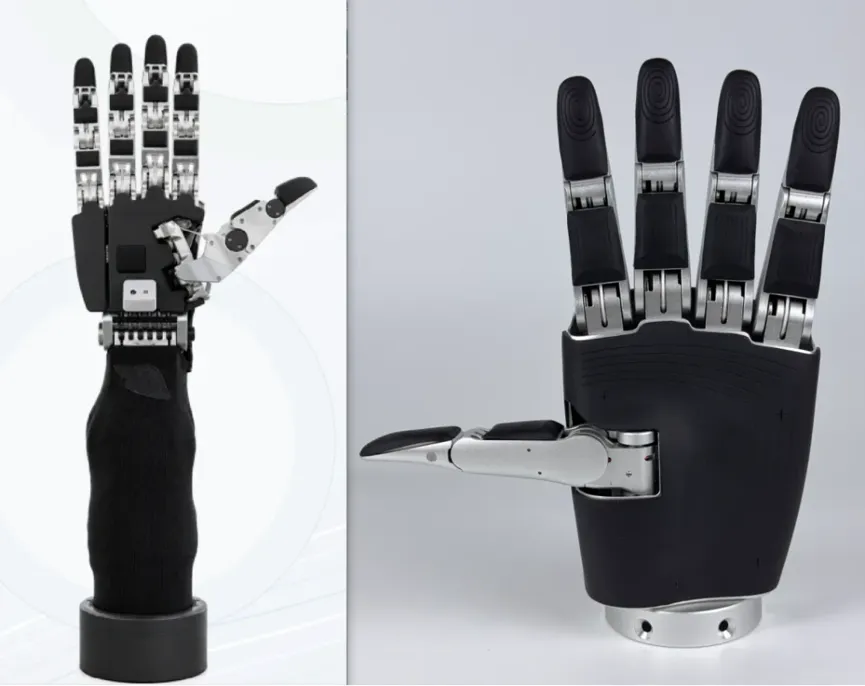
He is the Mighty, the Wise.
It's the first time I've ever heard of it.
(2) Second way of connecting CAN devices: from the main line within the unit to microsecond-level determination networks with isotope
Within the robot, tens of degrees of freedom of high-frequency power control if fully connected to a linear beam, weight and fatigue wear will become a bottleneck at the same time; Outside the robot, dozens of brands of AGVs, mechanical arms, machinery in factories fight each other, and the piping platforms often need to fit more than 140 protocols in order to open.
In terms of physical neural reconfiguration and workshop connectivity, Huawei's NearLink brings a minimum of 20 microseconds, 4096 units and a combined network indicator, terminal trillion units, and the development of the new generation of the Flash 2.0 chip for smart robot applications is accelerating and is expected to be officially launched in early 2027; the R&D&D&D&D&D&D&D&D&D&D&D&D&D&D&D&D&D&D&D&D&D&D&D&D&D&D&D&D&D&D&D&D&D&D&D&D&D&D&D&D&D&D&D&D&D&D&D&D&D&D&D&D&D&D&D&D&D&D&D&D&D&D&D&D&D&D&D&D&D&D&D&D&D&D&D&D&D&D&D&D&D&D&D&D&D&D&D&D&D&D&D&D&D&D&D&D&D&D&D&D&D&D&D&D&D&D&D&D&D&D&D&D&D&D&D&D&D&D&D&D&D&D&D&D&D&D&D&D&D&D&D&D&D&D&D&D&D&D&D&D&D&D&D&D&D&D&D&D&D&D&D&D&D&D&D&D&D&D&D&D&D&D&D&D&D&D&D&D&D&D&D&D&D&D&D&D&D&D&D&D&D&D&D&D&D&D&D&D&D&D&D&D&D&D&D&D&D&D&D&D&D&D&D&D&D&D&D&D&D&D&D&D&D&D&D&
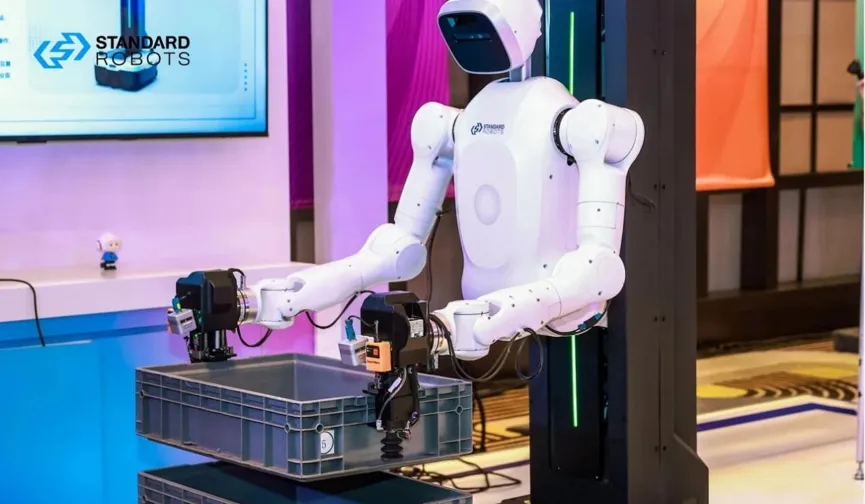
Standing Robot DARWIN-Lift
I'm not sure what I'm saying.
(3) Third-way Can Business Access: From action to process closure
The production line needs to be compatible with 5 types of workpieces, ±0.1 millimeters of precision, ±90 seconds of timing, and to differentiate between good and bad codes, relaying the MES system. Large model reasoning comes with probability, whereas industrial manufacturing requires certainty, which needs to be filled with high-quality industrial data + simulation preview + industrial agent single-drive pumps to fill, industrial intelligence to make the cork head of robots, and the safety cork to make the movements with high-responsibility digital cork.
With the launch of the first industrial-grade high-quality personalized smart data set in the country through the UMI non-physical acquisition program, China will cut costs to one-third, improve efficiency by three times, and provide technical support for robots to train, verify and migrate to real-world environments through the UMI non-physical acquisition program. The AIRBOT machine arm has been exported to Europe in bulk.
The company will launch a new generation of body-smart robots, the Lansing S3.
It's the first time I've ever heard of it.
(4) Fourth, CAN collaboration: from selling single hardware (CAPEX) to cluster scheduling with RaaS (OPEX)
One robot works on a stand and a demo is no different, one hundred heterogeneous robots in the same space do not lock each other in the same space, according to single synergies, dynamic replenishment, it is only possible to talk about commercialization. The experience of moving the Internet of Things to run a network pump to run a robot fleet pump is driving the industry from selling single machine hardware (CAPEX) to cluster scheduling and RaaS (OPEX) operations.
In the industrial and warehousing conglomerate, Jidong Logistics exhibited the largest superbrain model + wolf family robot conglomerate arrays (landing 24 smart wolf warehouses, double first in number); the first fully automated closed loop pre-contracted warehouse in the world with the help of the fast and slow dual system VLA; the first fully automated closed loop pre-contracted warehouse in Jidong Landing; the first exhibition of the unconstructed robot conglomerate collaborative operating system by Jidong Logistics.
These four platforms are closely intertwined with the mainstream of perception, advanced communication, and autonomous decision-making, with the Internet of Things providing on-the-spot perception, connectivity and data support, and the intelligent ability to convert this information into physical actions, and workflow feedback back into data accumulation and system optimization, driving robots from single display to production system collaboration.
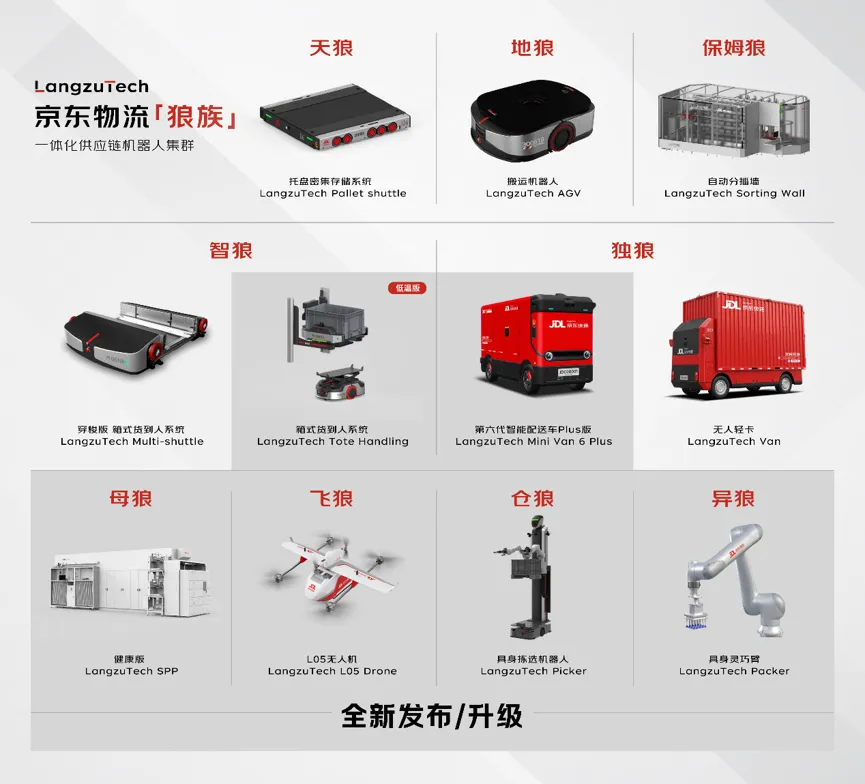
Group of robots from the logistics wolf tribe in Jindong
Sources: Beijing Logistics Blackboard newspaper
03.
A contest to write a test on the auto parts production line
In 2024-2025, the production of humanoid robots is concentrated in the main plant assembly line, with stronger PoC properties. On October 30 and October 31, the Jiangsu Province Smart Robot Application Scenes Unveiling Tour, held simultaneously, directly moved the venue into the deep water area of automotive parts manufacturing, where it was jointly created by Liberation Power, Shanghai Jiao Tong Scenes Branch, micro-research refineries, Yangtze New Quality, Xi'an Intelligent, Yuke's Intelligent.
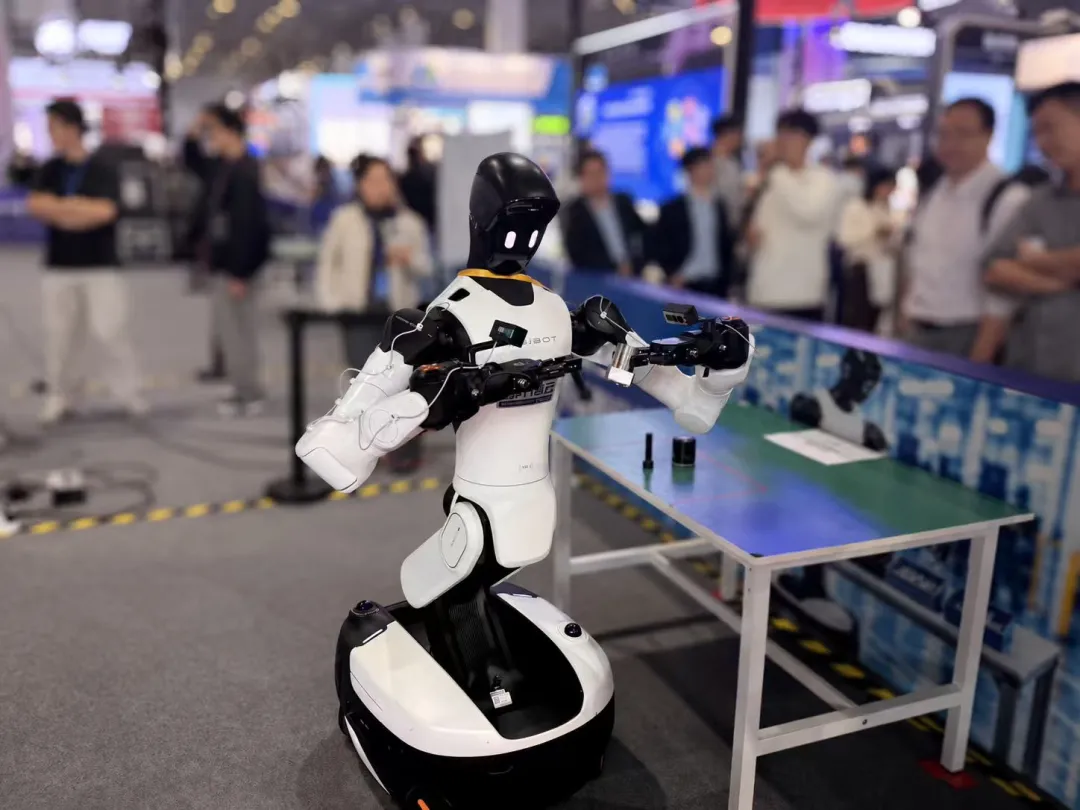
Auto parts workshops are commonly faced with multiple varieties, small batches, frequent line changes, oil spills, high cost of rigid automation, and man-made recruitment difficulties. For robotics companies, this is a real battlefield that can solve the need to replace ROI and unleash the need for large-scale procurement.
The purpose of the Expo is to rely on this scenario, based directly on how many types of workpieces are compatible with the specific processes of the manufacturing enterprise, allowing for a lot of work rhythms, how high recognition and positioning accuracy is required, and to convert the level of abstract intelligence into verifiable engineering objectives. The basis for the answer to the question is to bring the perception, communication, models, simulations, real and system integration resources to the same field, through the collection of programs, pre-competition testing and real-world matching, and to establish a link between supply and demand matching for subsequent scenarios.
04.
Dismantling of exams: translating braces into the language of manufacturing
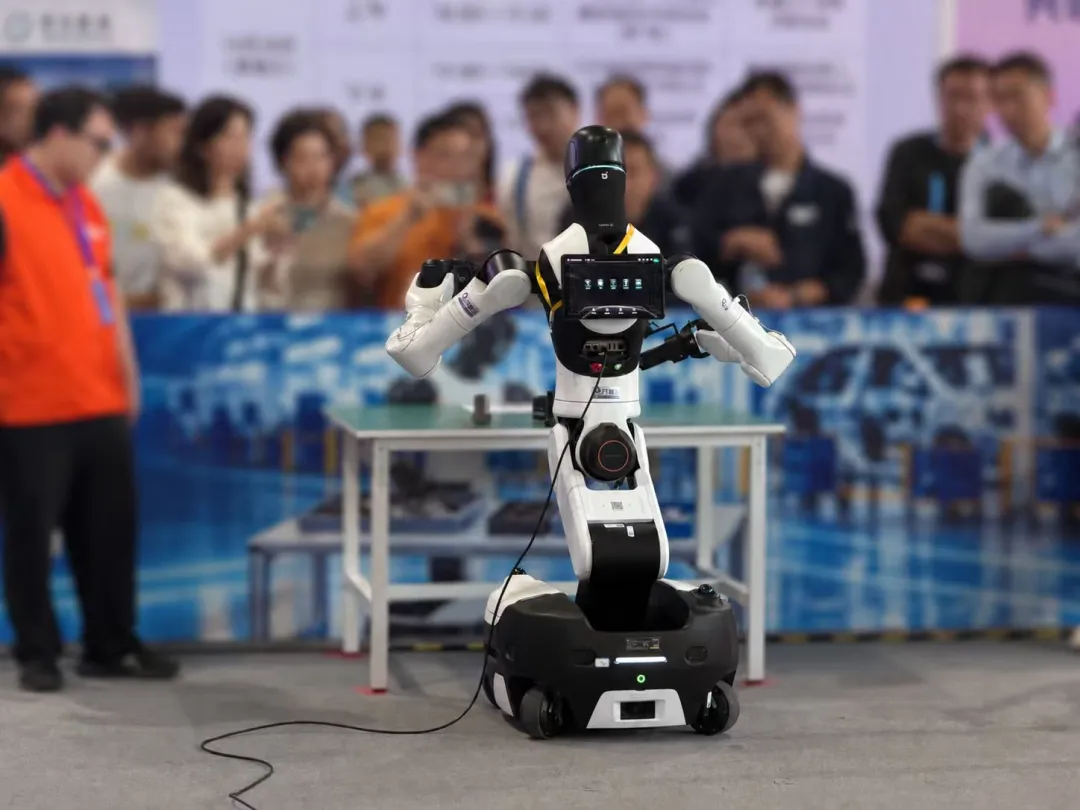
In addition to the three open scenarios of transportation, sorting and patrol, eight special offensive scenarios will translate the fittings into manufacturing specific work requirements: one is to test extreme accuracy and smoothness control; two is to test extreme beat and mixed flow generalization; and three is to test extreme working conditions resistance to disruption and multi-machine coordination.
After intensive moderation and screening during the preliminary period of 20 October and 29 October, the entering team performed field trials during the exhibition. From a longer period of view, the identification, operation and abnormal disposal problems of the competition tests will be further transformed into the research and development direction of data collection, model training and system integration, promoting the validation of mature solutions into replicable process modules.
05.
Ecological mapping observation: What do robot industry chains see at the exhibition?
For integrated and large-scale model enterprises, the core demands are to look for opponents, find scenarios, take action. The scenarios empowerment and outdoor exhibition area of the International Exhibition Center in the Lake is the core position. The center focuses on AI empowering advanced manufacturing, concentrating on bringing together humanoid and wheel-armed robots, collaborative robots, AGV mobile robots, water-surface special robots and industrial autonomous operating programs; the outdoor exhibition area revolves around industrial manufacturing, tourism, social governance, and the four main areas of special operations.
In addition to its peer-to-peer technical routes and on-premises performance, integrated enterprises can focus on combining real procurement needs from the eight major auto parts scenarios, as well as the opening of 25 5G plants and four lighthouse plants in Ningbo.
For core components, sensors and communications control companies, the opportunity lies in cutting into integrated support and new supply chains. The 13 families of integrated sensors and 182 companies in the chain, which are continuing to release locally based support dividends from pulsed wave reducers (such as the twin-curve pulsed wave reducer developed by RONSEK OVERY), joint modules, and the industrial base of sensors, are continuing to release locally based support dividends.
As the core design of the Expo Zhengzhou + Zhengzhou, the conference will be held simultaneously with a multi-thematic and eco-sphere event on October 30th and November 2nd, to help upstream enterprises transform the stand to look at samples in the supply chain. The Zhengzhou 2026 Smart Sensors Innovation and Development Conference, organized by the Long Triangle Institute of Technology, will rank robots as one of the three main focus areas of smart sensors, with sensors and component manufacturers able to connect the power, touch, and visualisation needs of the entire machine plant on the ground.
For system integrators and industrial software/smart body enterprises, it is essential for smart enterprises to understand the process. AI+ manufacturing technology in Warsaw, AI+ supply and demand pairing events, car network industry development congresses, AI smart body industry chain supply and supply and demand pairing events, as well as close to 30 topics in the field of pairing with international procurement, is the integration of the IoT platform + Industrial Agent + robots to the manufacturing enterprises.
06.
What is the meaning of this verse?
In the past two years, China's robotics industry has used high-efficiency engineered speeds to answer the question of whether or not hydrogen can be made or dropped in the first half of the year.
And in the late autumn of 2026, the World's Fair for the Internet of Things is trying to answer three more tricky questions in the second half of the year: Is it possible to do well in oil and millimetre distances? Is it possible to handle 100 different mixtures? Is it possible to calculate and scale copies?
Half of the answers to these three questions are written in algorithms with physical intelligence, and the other half are written in the backdrop of years of deep-rooting the Internet of Things. When the demand-driven manufacturing companies, the providers of capabilities, and the teams participating in the verification exchanges revolve around the same set of questions at the 2026 IoT Expo, the Internet of Things and physical intelligence are accelerating from a technical portfolio to engineering collaboration with a clear focus on real needs, in order to verify feedback and drive technological change to support replicable application experiences to support industry upgrades.
The road to a large-scale industrial landing is becoming increasingly clear with the booming silicon production line in Wuxi.