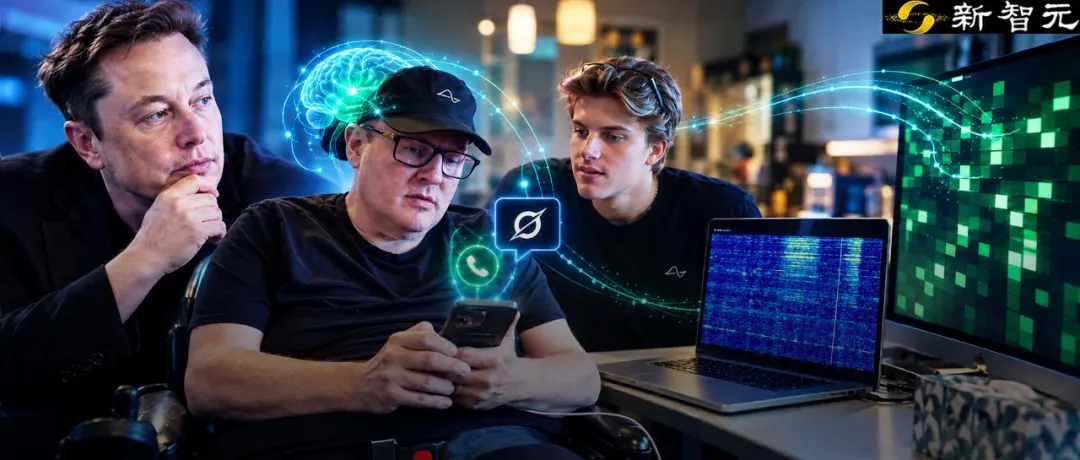
It's the first time in the history of the world.
In the science fiction film The Hacking Empire, a bridge section of the super-experimental hackers, Musk is moving a little bit into reality.
Today, Neuralink has uncovered a new development that is a bit shocking.
This time, Musk took Grok from SpaceXSI directly into the human brain!
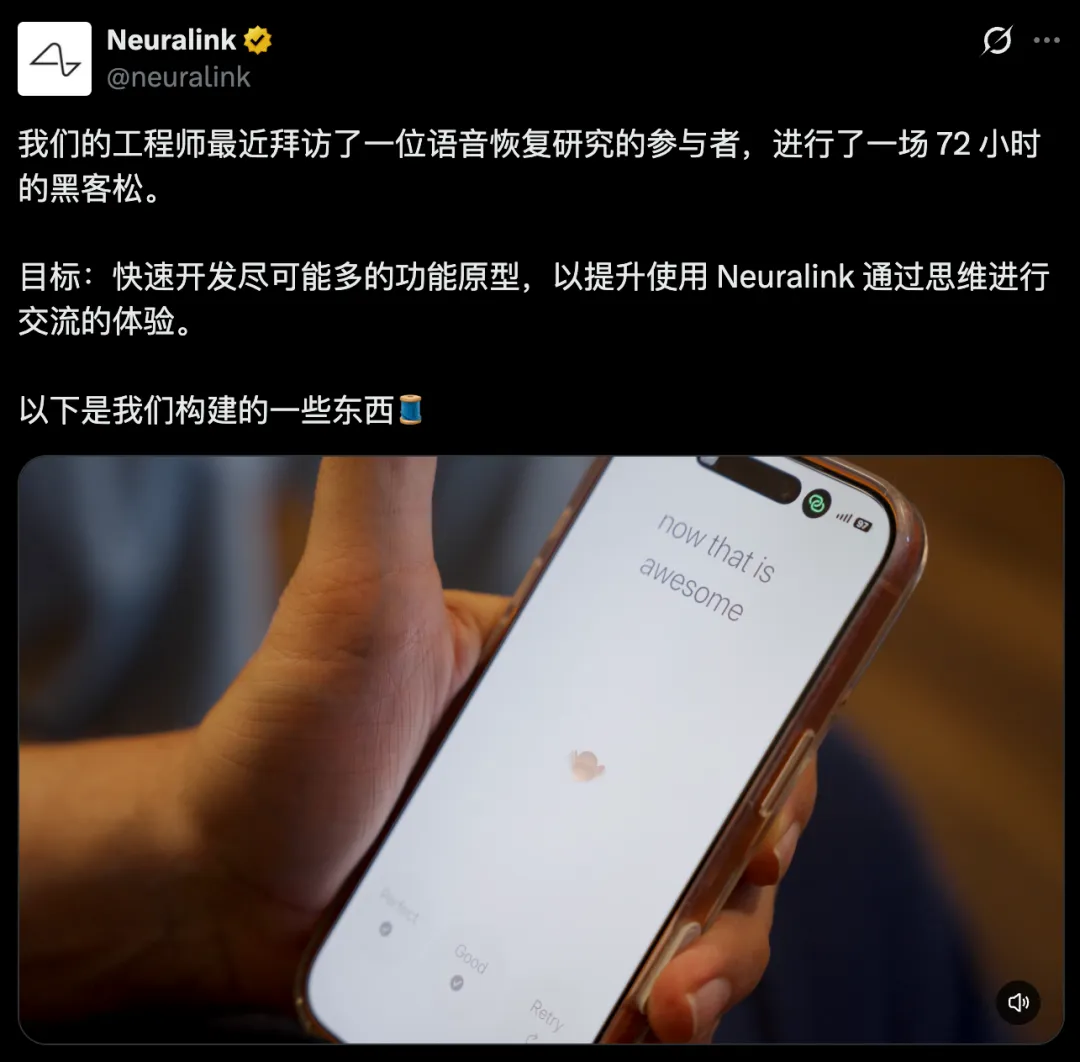
As soon as the patient remembers the words "Hey Neuralink" and thinks about what to do, the Grok Agent on the computer is instantly awakened.
Grok will then take over the screen automatically and go directly to YouTube.

There's also one of the most boring scenes, a special phone call.
The chips in the brains of severely deaf people directly convert "what they want to say" into pure audio streams, injecting them into the bottom of the iPhone's microphone.
Seven years later, he finally got ready to call his wife.

Humanity has taken an incredibly crazy step away from the real "mechanical elevation".
72 hours of enclosed entries"Brain Machine Interface" is one of the best upgrades ever.All of this is possible thanks to a "hard battle" that the Neuralink team fought a few days ago.
Several core engineers packed their luggage directly into the subjects' homes, ate with them, and worked on the 72-hour limit shutdown development.
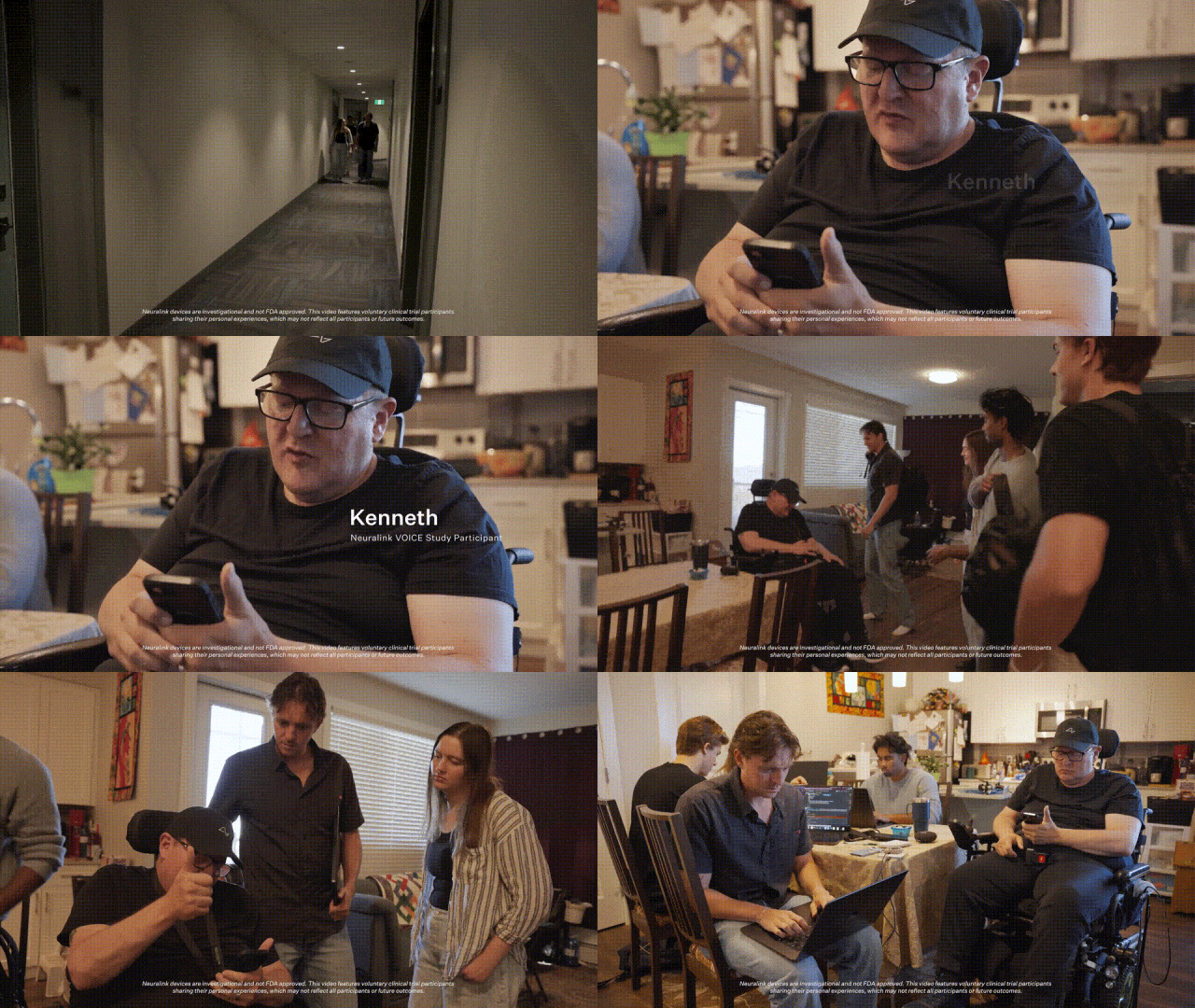
Over the course of three days and three nights, they spent the usual few weeks of their lives in a matter of hours giving birth to eight new functions.
In the past, our understanding of brain machine interfaces has been based on "readiness to move mouse lights".
After 72 hours, the brain officially became the native input of AI.
The patient, Kenneth, had been diagnosed with ALS for seven years and was a Neuralink P21 patient.
Along the way, he was particularly optimistic, as he often said, "ALS is bad, but my life is not".
 He cried in his head, and Grok was alive.
The most science fiction-focused feature, of course, is Grok.
A brain-machine patient can only imagine saying "Hey Neuralink" in their brain, in addition to the task they want to complete, to trigger a Grok, which is executed autonomously on the computer.

Hands don't have to tap the keyboard, mouths don't have to actually speak, and instructions come from this end of the nerve.
Disconnecting the link makes it easy to understand: the brain machine interface is responsible for converting the expression of intent into the available input, and the Grok intelligent body takes over the task and then operates the computer.
The so-called "access" is essentially a complete reconstruction of an interaction dimension:
The idea of controlling traffic lightsThe brain produces a low-level movement, like "to the left, to the right, to the right", which takes tens of hundreds of steps to complete a task.
The idea drives AgentThe brain produces only one "intent", breaks down the steps, operates the interface, and handes it all over to AI.
The biggest bottleneck in the brain machine interface has always been the bandwidth: the number of electrodes and the speed of encoding have physical limits.
The value of the agent is that it combines the word "magnify" into a series of operations without adding an electrode to magnify what each idea can accomplish.
As Neuralink himself says, it's just an early glimpse, but it shows in real life:
As long as the communication between the brain and the computer is smooth, the gap between "thinking" and "doing" can be erased.
The dismantling of the eight core technologiesEight prototypes were born in 72 hours, capturing signals from the bottom, opening up system-level interactions, and eventually entering the top-level AI model.
Neural Voice Activity Detection (VAD): Disconnect the physical switch completely
Before this hack, if Kenneth wants to talk about his intentions, he's faced with an awkward paradox: you have to manually press the button, tell the software, "I'm starting to think about it", and then stop recording again.
For people with ALS or high-speed amyotrophic lateral sclerosis, pressing this button itself is a huge burden.
To do this, engineers directly rewrote a "Neural VAD" system directly from the bottom up.
The algorithm is like a 24-hour neurotransmitter that monitors the brain's electrical signals that are transmitted back to the implant in real time.
It can distinguish extremely sharply whether the brain is in a state of stillness at this time, or whether it has moved the motor cortex, "ready to speak openly".
Once the intent pulse of the speech is captured, the APP automatically unlocks the decoder in milliseconds; the system automatically falls asleep as soon as the speech sounds.
It's all zero-keyed, zero-handed, and it's really about the pure idea of "the door is coming".
Real-time visualization of neural signals: Patients and models "train together"
In the field of brain-machine interfaces, there has always been a painful black box problem: even the subjects themselves don't know how to "think" in their brains to trigger the strongest, clearest neuron electricity.
It should be noted that the higher the message noise of the input signal, the more accurate the rear-end machine learning decoder is.
The team used the signal intensity and spatial distribution detected by the implants to provide real-time feedback to Kenneth, who could change the flowers to "speak in the brain" to see which way moves the most neural activity.
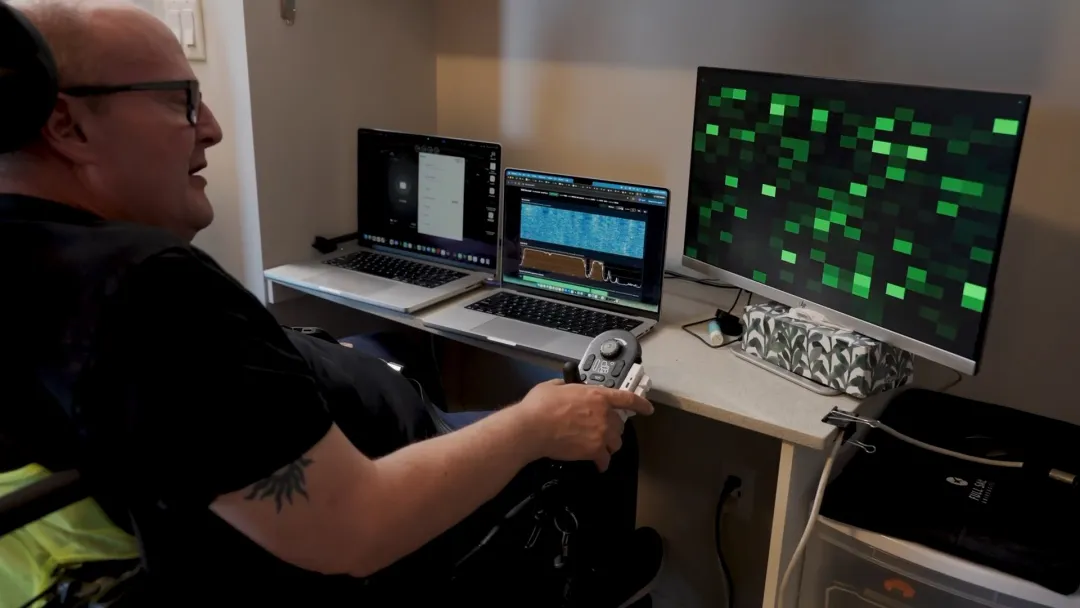
In neuroscience, this belongs to closed-loop neural feedback: not only does the model adapt to the brain, but the brain adapts to the model in turn.
The original unseen, untouchable tuning became an instantly-feedback "game of thrones".
Phone-pointed coffee with no hands.For the past few months, Neuralink has been working on a proprietary application called Bloom, with only one goal: to decode a massive speech brain system into a mobile phone.
With this hack, the engineers simply pushed Kenneth out of the house and took Bloom to a noisy public place.
In a real cafe, for the first time, Kenneth didn't talk from the sidelines, but through Bloom on his cell phone, intending to make himself a cup of coffee.
And this is just the beginning.
For ALS patients, Apple's portable soft keyboard and Siri voice recording were almost unusable. The team called the underlying iOS interface directly and developed a system-level brain input method: BCI Keyboard Dictation.
As soon as the keyboard is switched on, what Kenneth had in mind would be neuro-coded, like a stream of water, continuously entering any app on the iPhone.
Writing memos, sending back messages, browsing social networks, all without having to switch back and forth between modes.
Of course, decoding is inevitable.
To this end, the engineers reworked several versions of the error-correcting interface during the hackathon, eventually embedding a set of predictable modification processes directly into the keyboard: once a bias was identified, several high-probability candidate words would pop up immediately on the keyboard, and Kenneth was prepared to wipe out "light-speed replacement" in any App.
There is also a detail that reduces the opening threshold for daily communication to almost zero.
Engineers cleverly borrowed the iPhone's "real-time activity" and Flexibility Island mechanism to keep Bloom on the lock screen interface.
Without unlocking the phone, Kenneth's screen lights up to see the current state of the brain's connection; his mind moves to open a "talk" directly on a locked screen, effectively making a "second call".
He worked for seven years.Finally ready to make a phone callOf all the features, the technical difficulty of "ready to make a phone call" is not the highest, but it is a tear-jerk everywhere.
Technically, the team switched on Bluetooth and iPhone calls, allowing the voice generated by the brain interface to directly access the microphone audio stream.
But the extent of this is not in technology, but in the story.
Kenneth and his wife's love for each other began on the phone. When they first met, they began to talk slowly over the phone. The phone line was the most important link between them.
Later, because of illness, he was unable to open his mouth.
This time, just as the engineers had made the call, he picked up the phone and called his wife.
The phone connects. He doesn't open his mouth. What he wants to say in his head is captured by an implant, translated by a decoder, then combined into a voice, and sent directly into the phone line.
He heard the sound of his wife's laughter.
The two of them started playing each other, fighting each other, just like they were talking about love on the phone that year.
Neuralink later said that this was one of the most memorable moments of the entire week.
In engineering, there's little more accomplished than this. You look at a person who uses the code you wrote that morning to go and talk to someone you love.
Ideas driving AI into realityIn the past, the brain's bandwidth was so narrow that people could only use one letter at a time to "push" a toothpaste on a machine.
Now, the brain only needs to output one sentence of intent, and the rest is dismantled, executed, operated, and handed over to AI. When Grock accesses the brain's machine interface, the brain is expected to be the first direct input of AI.
This will be a major step forward in human-to-human interaction.
In the future, with more electrodes, faster decoding, and smarter agents, "think about it and do it" may be moving into more people's daily lives from the lab.
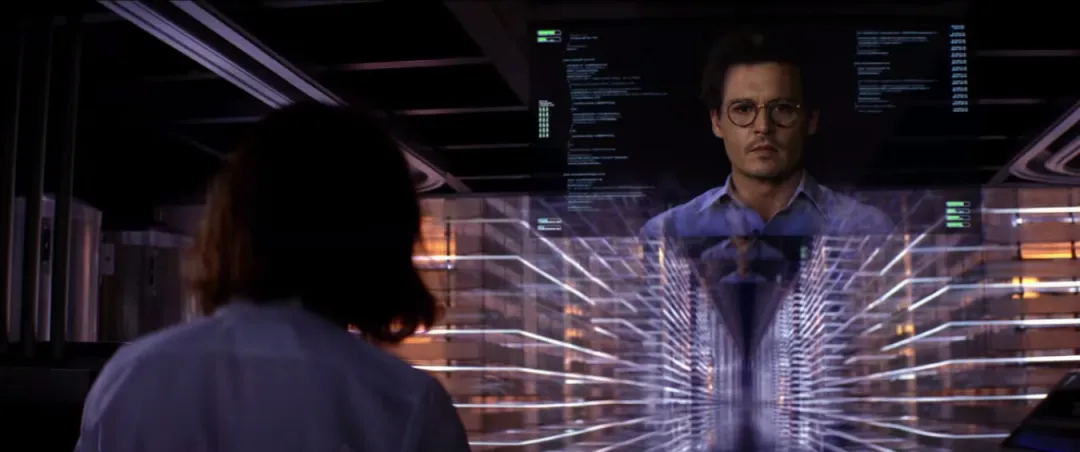
In "The Hacking Empire", Neo learns how to do it in a matter of seconds; in "Super Experimental Hacking", human consciousness is connected to a network that can directly manipulate the entire digital world.
These images, which once belonged only to the screen, are being written into reality a bit.