“ Vehicle-level technology, rebuilding industry number of adoptions.
The warmth of the industry, which is physically intelligent, is moving from the stands to the factories. But the closer to the real production line, the more the practitioners can feel the bones of reality.
Significant success rates in the laboratory, often showing ups and downs on the production line. Scenes are difficult to open, production can't stop, real data collection is becoming a three-way reality link between physical intelligence and industrial landings. More and more practitioners are realizing that algorithmic evolution is only the first half, and the ability to verify scenarios with engineering is the core of the second half.
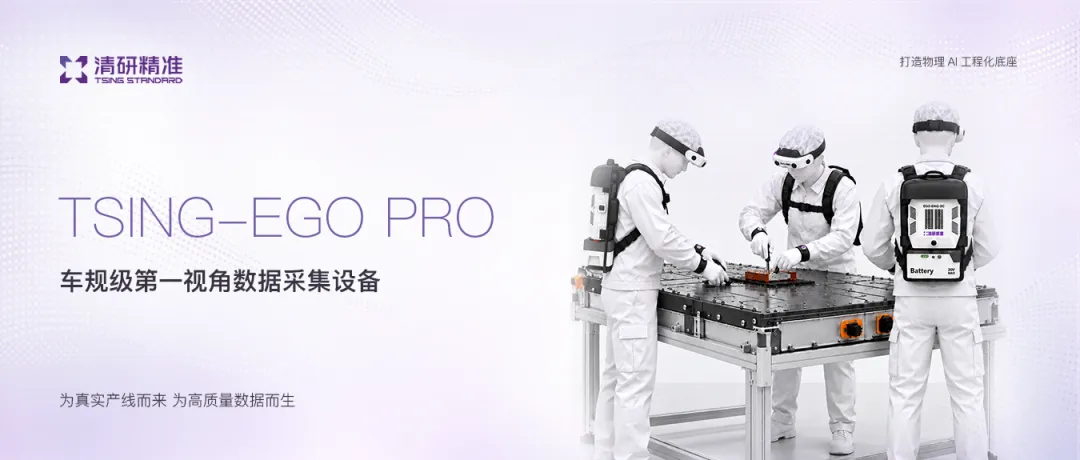
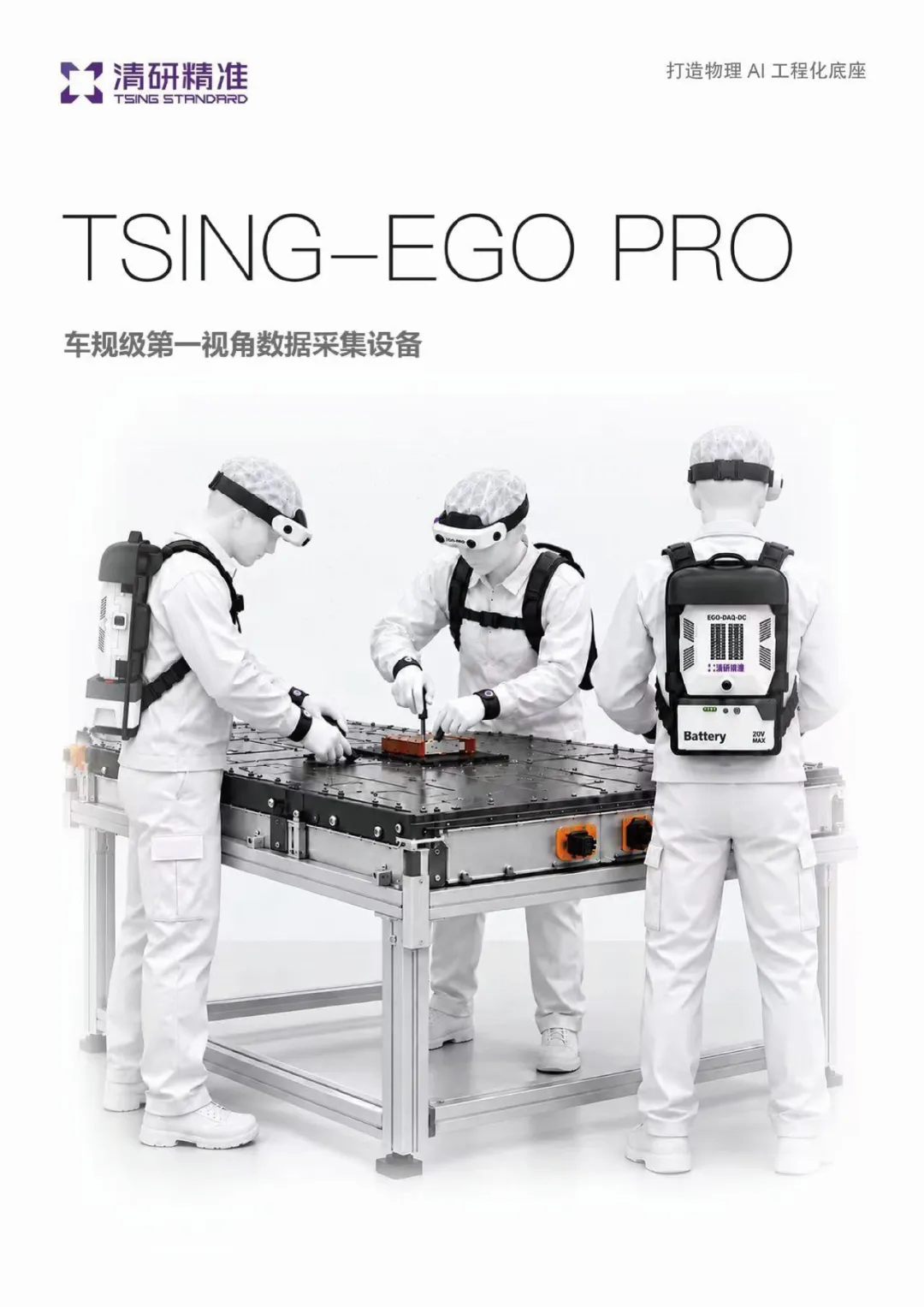
To address this gap, on 27 October, CINR accurately launched the first point-of-view data collection system Tsing-Ego Pro, which introduces a mature vehicle-level technology system in the automotive field. This hardware product is backed by its pioneering Robot-in-the-Loop (RIL) testing system.
01.
There are three ways to enter the factory: scene, stop, and data.
The first barrier is never technology, but access to the scene.
For manufacturing companies, the production line is the core capacity carrier, the workplace rhythm, process parameters, and quality standards are all core business information. Unverified robot programs want to enter data collection and debugging operations, there is a very high confidence threshold in itself. Most teams can only verify in the laboratory with simplified versions of the workplace.
Even if you get an entry qualification, there's a second way: the production line can't be turned off for debugging.
In a laboratory environment, robots can repeat mistakes dozens of times, hundreds of times, and fail to reposition at any time. But on the mass production line, a single action error, a round of device modulation, can disrupt the production rhythm of the entire production line, resulting in direct loss of capacity.
The last one, however, falls on data collection itself. Even if the two previous restrictions are overcome, the number of tools available is difficult to adapt to the rigorous requirements of the industrial landscape.
Currently, mainstream digital adoption schemes are largely out of step with consumer or laboratory-level products, and shortcuts are obvious when faced with complex workplace environments: multi-faceted data depends on software play time and alignment, the time lag often reaches tens of milliseconds, the motion picture and operation trajectory are incorrect, directly causing the availability of the data set to decline; ordinary transmission wires are weakly resistant to electromagnetic interference, and high-power equipment in the workplace is easily lost and disconnected when running; encountering power outages can even cause the loss of entire data.
More realistic problems come from the adaptation of human machines. On the market, a lot of headgear collection equipment is overweight, with operators wearing for half an hour causing obvious neck fatigue, not being able to work continuously for long periods of time; in addition to limited durability, in the face of more time-consuming complete industrial processes, can only be collected in stages, and data integrity is not guaranteed.
02.
How to restructure the number of industrial adoptions?
The idea of a thoroughly researched and accurate solution is to validate the automotive industry's ability to regulate vehicles over many years, moving to industrial numerical scenarios, from accuracy, reliability, adaptability, and intelligence in four dimensions, to solve the core pain points of existing tools.
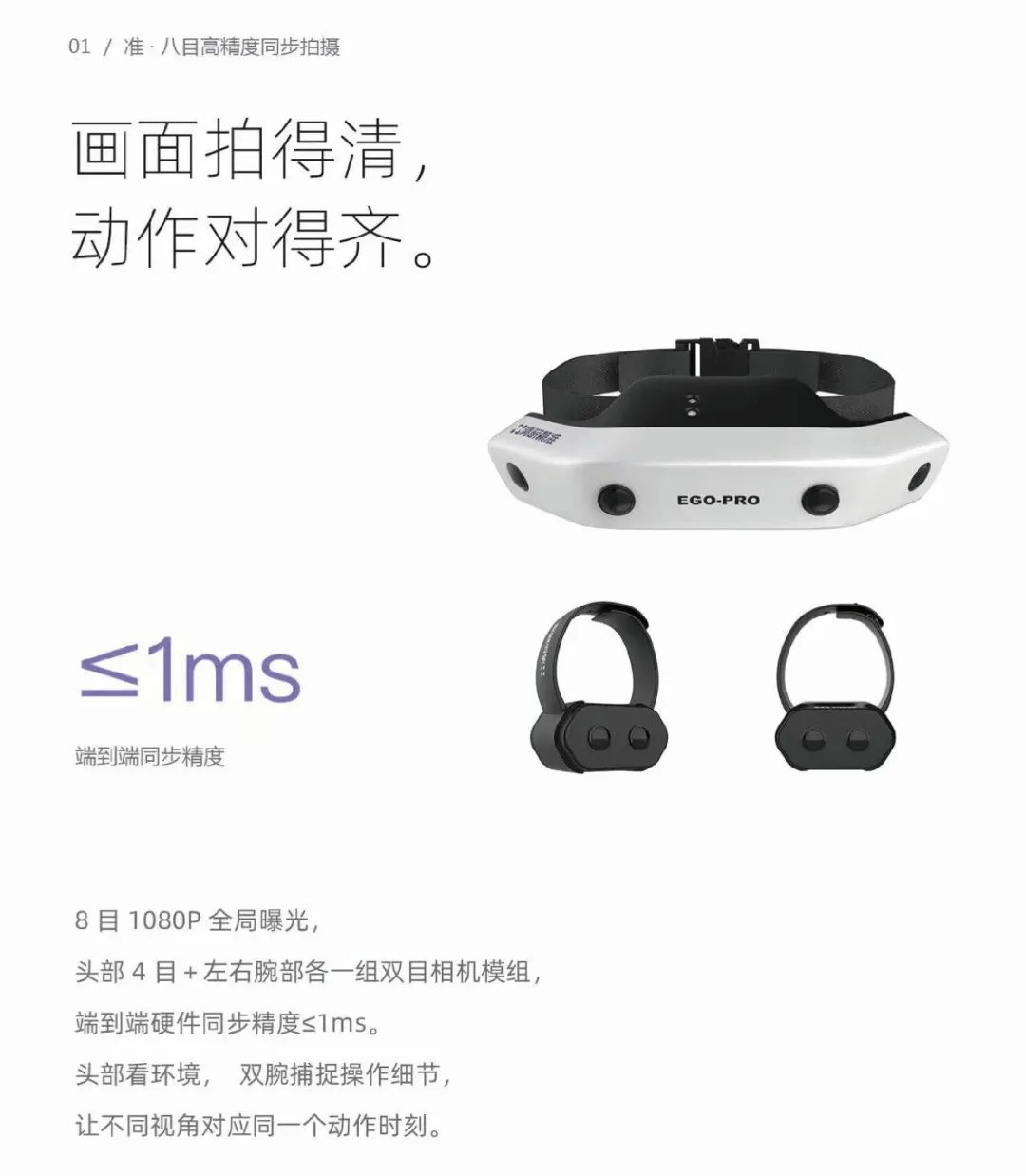
In terms of data synchronization accuracy, the Tsing-Ego Pro uses the Eighth Hardware Synchronization Architecture, which triggers a unified controlled multi-track camera exposure through external hardware, coupled with an upstart hardware timeline, to achieve a synchronization accuracy of the head and both wrists to the end≤1ms.
In the lens layout, the product uses a combination of a set of binoculars on the wrist around the 4th + top of the head: the head camera covers the overall operating environment, the wrist camera captures the hand's precise operation, the overall perspective and the operating perspective are collected simultaneously under the same time frame.
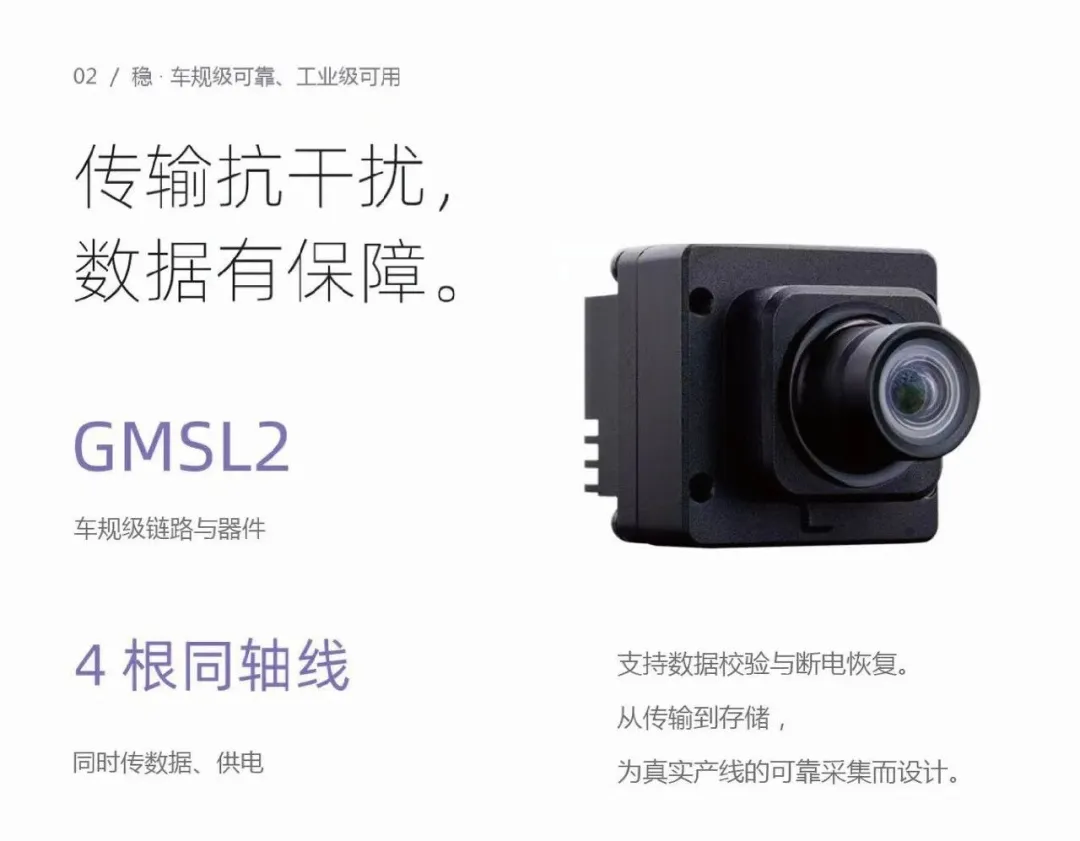
To meet the reliability requirements of the industrial scene, the entire product line uses GMSL2 vehicle standard coaxial links as the video mainstream. Single-root coaxial lines can simultaneously transmit video signals, control instructions and power supply, standard configuration requires only 4 threads to cover 8 way video and extension sensors, while the beam is streamlined, and the ability to resist electromagnetic interference is better suited to complex work in the workshop.
For long-term continuous operation, the Tsing-Ego Pro uses a backpack splitter design, calculation, storage and battery units all integrated into the backpack, with headgear front-end weight control within 200g, significantly reducing the wear burden of the operator.
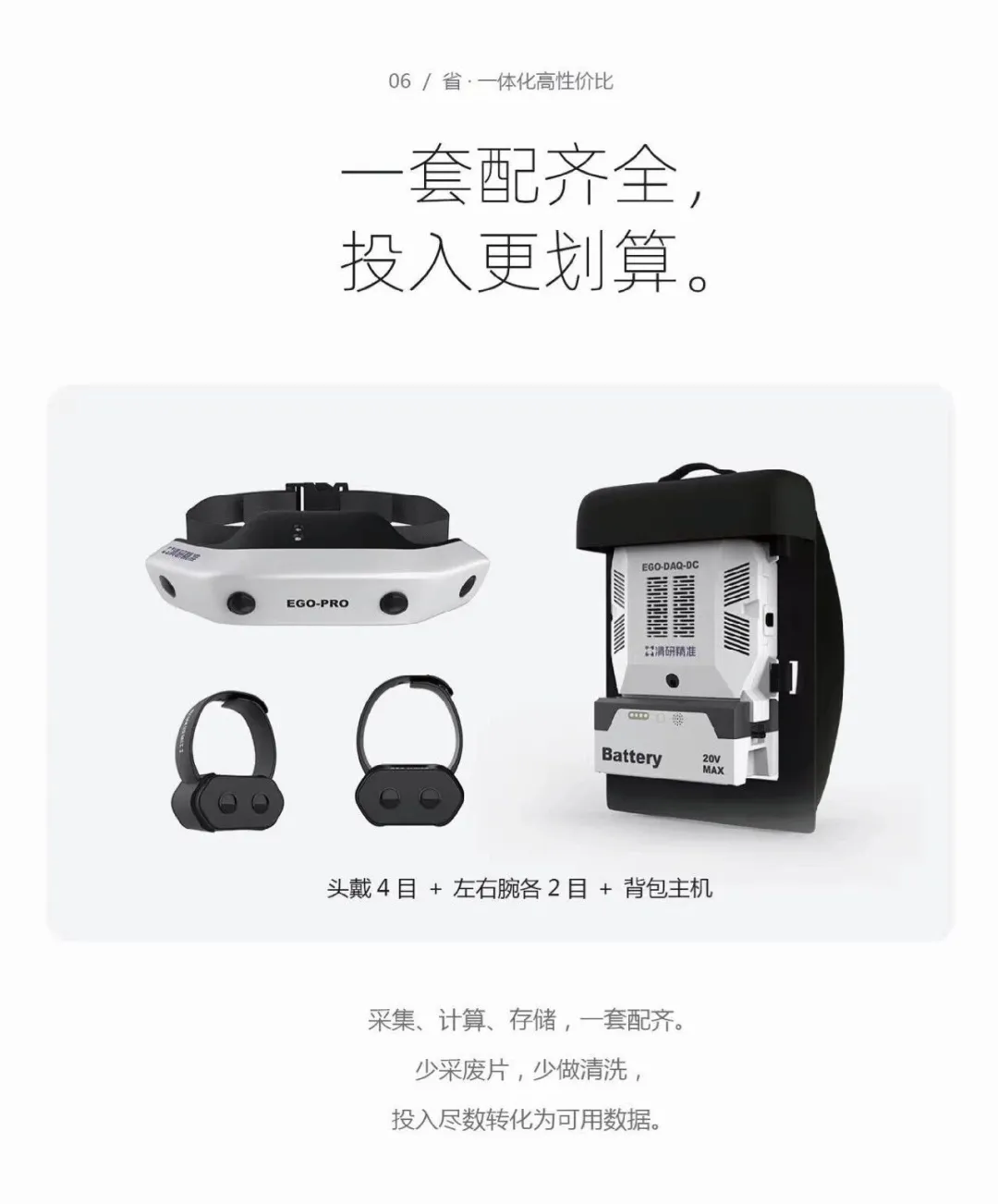
However, the biggest difference is that quality checks have shifted from cleaning the sink to a real-time sink.
The implicit cost of traditional computation is that everything looks normal when collected, returns to the laboratory to find synchronous abnormalities, moves to draw, over-exposed light, and large amounts of data can only be discarded.
Tsing-Ego Pro built-in 80 TOPS end-to-end computing power, which puts exceptional judgments on the collection site. Synchronous anomalies, insufficient storage, moving drawings, light anomalies, on-site voice reminders, operators can immediately adjust or retrieve. This key feature, which changes the cost structure. Inefficient data is intercepted at the moment it is generated, does not need to occupy the relay bandwidth, does not need to enter the later cleaning line, and does not need to be exposed to an expensive return at the training stage.
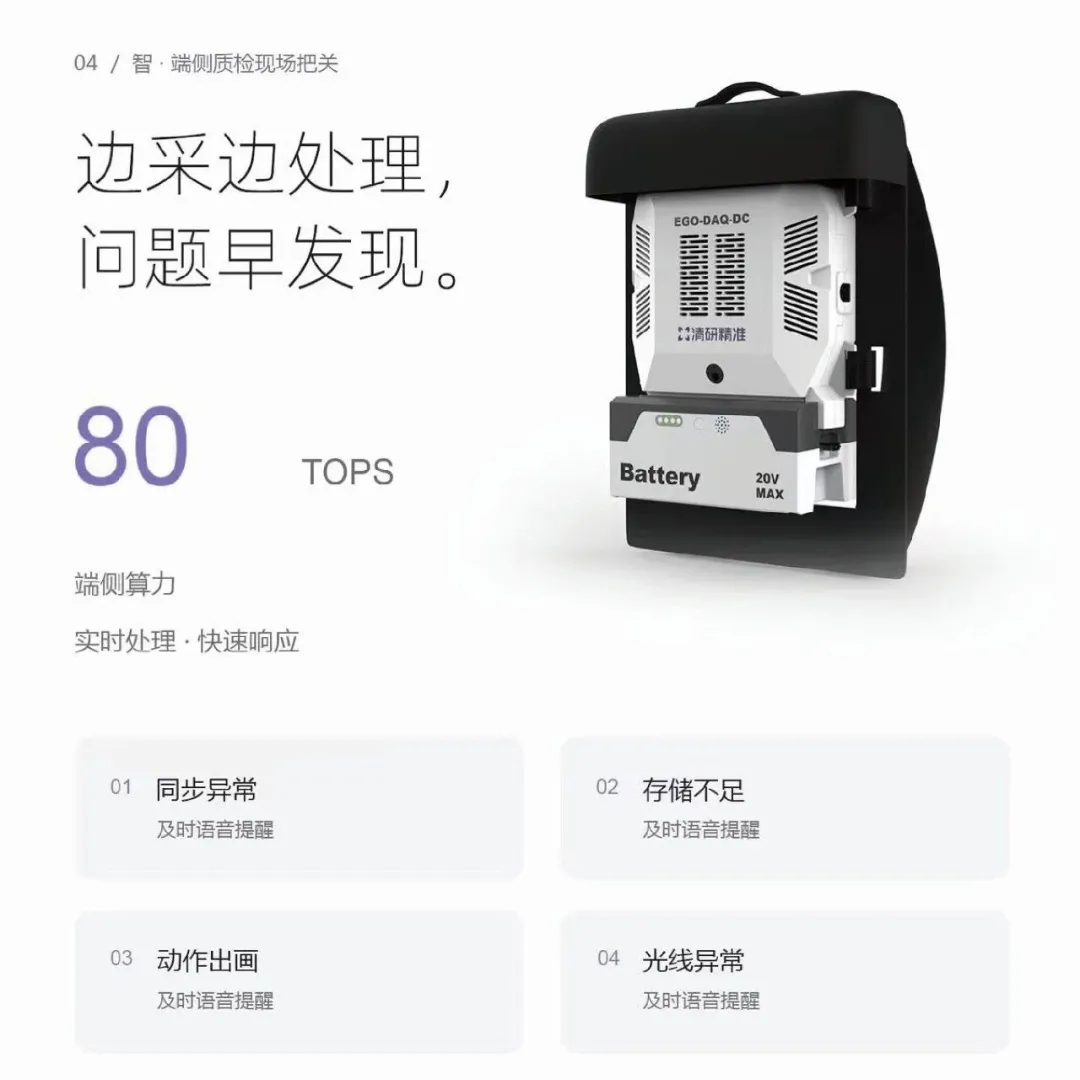
This edge-to-edge testing model puts data quality control from the back-end cleaning link in front of the collection site, effectively reducing inefficient collection time and reducing subsequent data processing costs. In addition, the product provides a white box SDK supporting secondary development, data format compatible with mainstream hardware smart data set standards, soft-hard integrated complete package delivery, and also saves customers self-built and adapted links.
03.
RIL is the core layout, not just the hardware.
The equipment solves the problem of well-developed pumps, but to solve the problem of failure of pumps and pumps in industrial sites, a test-and-error verification system is needed to replace the actual production line.
This resulted in a well-researched, precision-built core layout RIL (Robot-in-the-Loop, Robot in the Loop, Robot in the Loop) testing system. The concept draws on automotive hardware (HIL) but is more complex. A well-researched, precision-built RIL is to place the robot's body, controller, in a 1:1 replicated industrial environment. In this controllable, measurable, replicable physical loop, the complete chain of data production, post-training and industrial verification is securely completed, thus opening up the Sim (Virtual Simulation) → RIL (Real Machine in the Ring) → Real Real Real Deployment.
Among the many physically intelligent participants today, why is research and accuracy at the forefront of running RIL?
This is due to its unique industrial position. Its equipment and solutions have been deployed in more than 100 leading manufacturing plants for eight years.
This means that precision testing itself stands at the entrance to the real production line. Its detection equipment is not only a tool in the factory, but also a natural source of data. During the operation of the equipment, it naturally connects real-world scenarios, jobs, equipment and operational data. This deep customer trust is tied to the scenarios, allowing precision testing to combine numerical adoption with in-house testing.
04.
In the second half of the year, we're going to have a lot of engineering skills.
As physical intelligence gradually emerges from the conceptual era, the competitive logic of the industry is steadily changing.
Early racetracks were characterized by model parameters, demo completeness, and attention could be gained as long as a bright demonstration could be made; but entering the landing stage, engineering skills, scenic understanding skills, and the ability to provide reproducible and verifiable landing cases were tested.
Over the past few decades, China's automotive industry has embraced mature vehicle-level reliability standards, a complete test-verification system and the ability to deliver large-scale engineering. These industry experiences are overflowing into the field of physical intelligence and are becoming an important driver of industry landfall.
In an industry where algorithms are commonly intertwined with real-world circuits, cutting from the infrastructure of data and verification is a differentiated pathway. After all, physical intelligence is truly transformed into industrial productivity, which is never dependent on single-point technological breakthroughs, but on a complete engineering system.
The launch of the Tsing-Ego Pro is a signal that vehicle regulation technology is entering the field of body counting; while the advancement of the RIL test system provides a reference engineering path for intelligent industrial landings. When more and more industrial engineering capabilities are injected into racetracks, the technology in the laboratory has the potential to go to production lines.