
It's the first time in the history of the world.
I've just downloaded 5,000 of them!
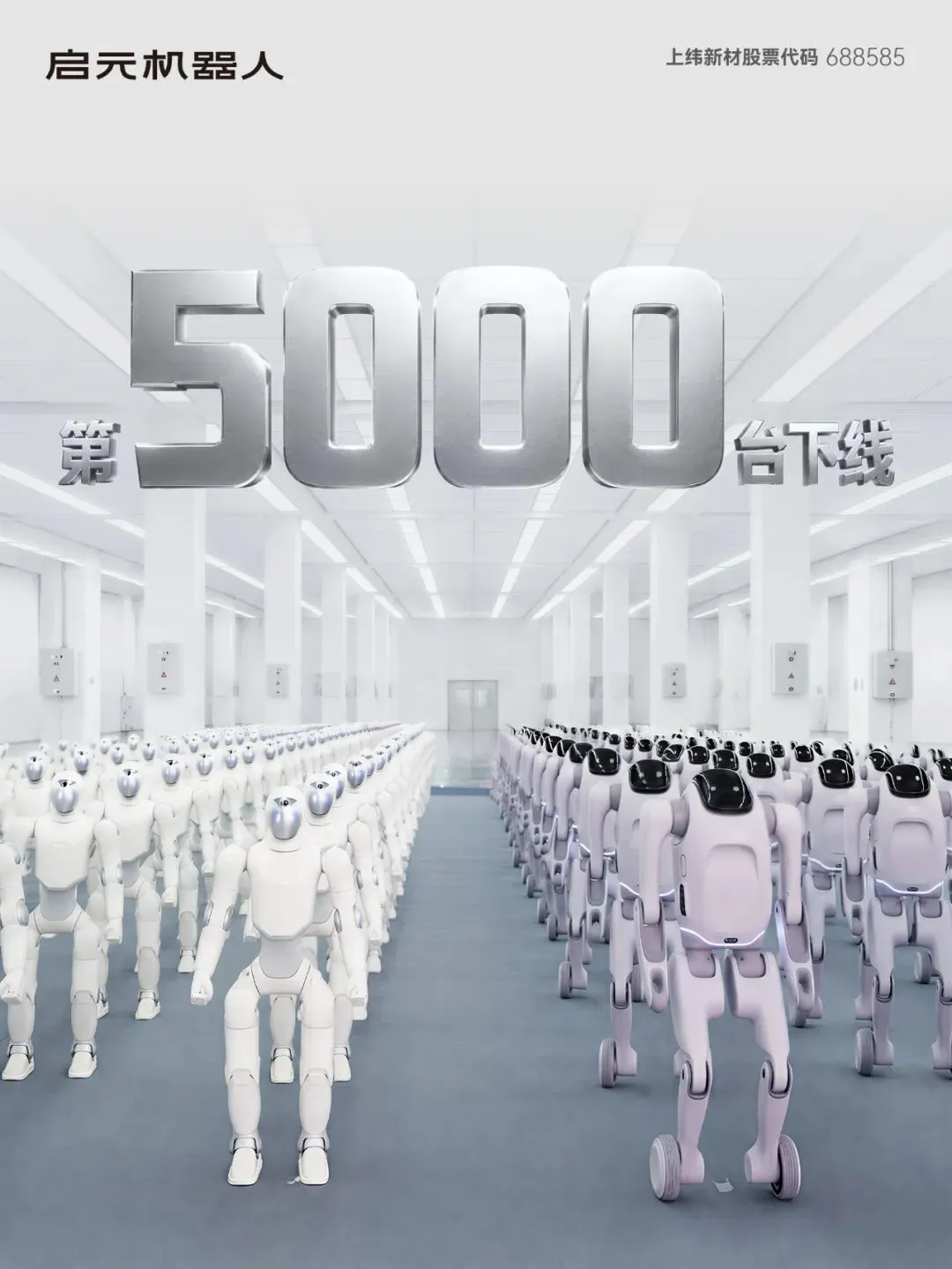
The Intelligent Robotics Research Center undertakes research and development of underlying algorithms, setting a clear goal for the outside world: to make the first physical AI robot sold to an individual.
While the industry is generally focused on futuristic humanoid robots, the Enlightenment team judges that Physical AI is the key intermediate link in the big language model's path to the real physical world, or the key breakthrough window in 2027.
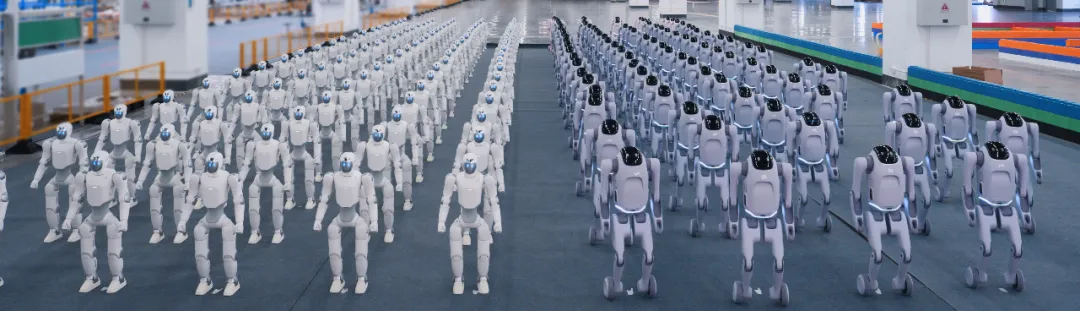
The mass-produced Q1, T1 is the first generation of hardware delivered to the C-end, but it does not see these two machines as the end of the writer-to-be robot.
Q1 focuses on small-sized, full-body human-controlled robots, T1 main wheel-to-quad-foot variable shapes, both of which address more problems of hardware stability, secure access, and companion interaction; the H-series of wheeled robots that are really geared toward homework capabilities are still evolving, and the accompanying "opening brains" are at the core of the entire system.
In contrast to overseas routes, π routes rely on real-machine repeat trials and errors, mission success rates are high, but it is difficult to scale; generalization is limited; UMI handheld collection is easy to scale, generalization is good, but mission success rates are difficult to fill naturally.
It attempts to merge the two routes to ensure the success rate of the real machine, while solving the problem of scalability through portable collection.
 It's time to move on.The general model is the coach, and the self-taught VLA is the athlete.
The Enlightenment's technological framework is based on the rapidly-slow division of the brain, which draws on the cognitive logic of human binary systems to separate thought and execution from the processing of robots.
GPT-6 Astra and other large language models are positioned as S2 slow-brains, performing higher-level task understanding, logical reasoning, long-task planning, memory scheduling, equivalent to the thinking center of a robot.
In the video demonstration, the robot must understand the complex rules of the game and be able to switch between overlapping tasks and returning to the game after completing the operation. The cognitive capacity for long cycles of cross-tasking is the value of the slow brain.
But the team made it clear that the general large model is not good at directly taking over the execution of the underlying movements. If it is entirely reliant on the GPT-class model to do this kind of fine-grabbing and organizing of the desktop, each step of the micro-move requires repeated reasoning, which can take up to half an hour each time, while bringing extremely high Token costs.
And other more complex operations are difficult to accomplish, as the thinking brain lacks a "working hand". Higher planning is given to the slow brain, real-world action generation, to be given to the self-developed S1 fast-brain vision-language-action model VLA.
VLA is responsible for overlapping clothing, organizing desktops, handling flexible objects, receiving slow-moving task instructions, and rapidly producing high-frequency continuous movements. Similar to human brain divisions, the two form a collaboration: slow brain targeting, and VLA for landing execution.
GPT is more like an off-the-field general-purpose coach, an athlete who actually performs on the field, a VLA, a robot body, and remote operation around the body, UMI demonstration data. General-purpose large model iterations can amplify the existing model capabilities, but cannot replace this set and the hardware deeply bound physical capabilities.
The team also pointed out that in the short term, it is difficult to come up with a VLA model that can eat all the hardware. Similar to autonomous driving, even if the scenic complexity is less than the physical interaction of the mechanical arm, the industry still does not have a truly universal autonomous driving model across models.
For robots to face friction, deformation, flexible objects and close contact, VLAs must be trained to combine with specific entities, and models, data, and hardware must be tied to iterations. In the future, whether the base model comes from internal self-development or external collaboration, data collection, training, and verification must be done on their own hardware platforms.
Currently, GPT is used only as an API call, and in the long run, if the large general model can read video streams, spatial relationships and sequences of actions, it has the opportunity to serve as a Reward module in reinforcement learning, as a general monitoring signal, to help accelerate the success rate of household tasks.
It's the first time I've ever been in a relationship with a woman.Hil-UMI rebuilds the robotic data production chainA big real-world bottle of robots with bodies comes from data collection. If just a simple stack of demonstration data does not equal the replenishment of a model shortboard, the difficulty lies in the precise positioning of the model and the targeted replenishment of samples.
Traditional HG-DAgger models and their derivative methods require robots to perform tasks first, then be corrected by humans after mistakes, and corrective data backflow models trained to continuously modify the model effect, bringing the success rate to close to 100%.
However, this set of processes is highly tied to the real machine, the speed of generation is limited by the speed of hardware execution, the collection efficiency is difficult to pull up, it is difficult to deploy hundreds, thousands or even thousands of machines to different locations.
UMI itself is a set of non-native portable claw claw claw claw claw claw claw claw claw claw claw claw claw claw claw claw claw claw claw claw claw claw claw claw claw claw claw claw claw claw claw claw claw claw claw claw claw claw claw claw claw claw claw claw claw claw claw claw claw claw claw claw claw claw claw claw claw claw claw claw claw claw claw claw claw claw claw claw claw claw claw claw claw claw claw claw claw claw claw claw claw claw claw claw claw claw claw claw claw claw claw claw claw claw claw claw claw claw claw claw claw claw claw claw claw claw claw claw claw claw claw claw claw claw claw claw claw claw claw claw claw claw claw claw claw claw claw claw claw claw claw claw claw claw claw claw claw claw claw claw claw claw claw claw claw claw claw claw claw claw claw claw claw claw claw claw claw claw claw claw claw claw claw claw claw claw claw claw claw claw claw claw claw claw claw claw claw claw claw claw claw claw claw claw claw claw claw claw claw claw claw claw claw claw claw claw claw claw claw claw claw claw claw claw claw claw claw claw claw claw claw claw claw claw claw claw claw claw claw claw claw claw claw claw claw claw claw claw claw claw claw claw claw claw claw claw claw c claw claw claw claw claw claw claw claw claw claw claw c
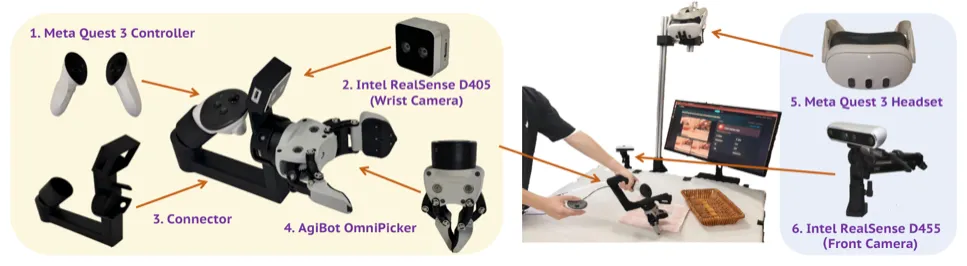
Hil-UMI further enhances weak link recognition mechanisms: in the process of collecting data from human digitizers, model analyses when which actions need to be further strengthened; command human digitizers to supplement data.
In control experiments organized on a desktop, the data collection efficiency of the Hil-UMI was 5.63 times higher than that of the traditional real-time HG-DAgger, and the final completion of the task was even higher.
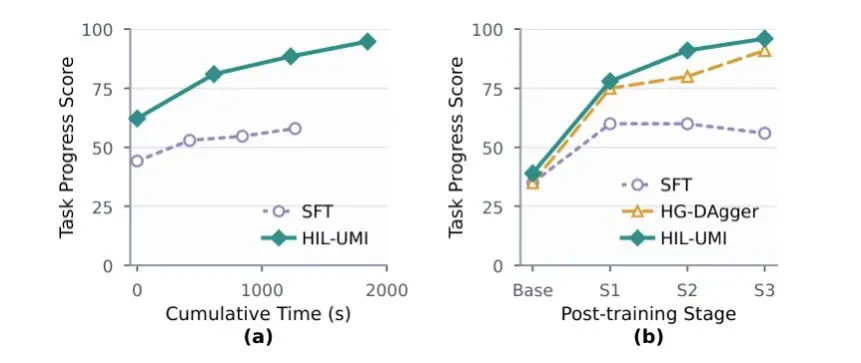
The left-hand graph shows the average change in cumulative collection time for four tasks; the right-hand graph shows the performance of each method in organizing a desktop task as a training phase.
This mechanism no longer passively waits for robots to make mistakes, and the collection phase targets the model blind zone. Newly collected data is updated before the model, newly collected samples are mixed into training, forming a closed loop of "recognition of short boards-directed collection-model updates-re-recognition of short boards".
As previously mentioned, the UMI claw itself has a certain inherent decomposition capability, which makes it possible to replace the French disc with a different mechanical arm. This is a backdrop for future collecting packages: it does not require large quantities of mechanical equipment to be transported everywhere, only distributes portable collection units, and can collect human operations tracks in thousands of different homes and environments.
He also repeatedly emphasized that data quality is prioritized over quantity. Poor quality samples are more human-power-consuming than wasteful GPU computing, resulting in training Loss abnormalities. Therefore, the algorithm team and the data collection team work together from source to source, prioritizing the prior knowledge required by the model to the collection link.
The team used AlphaGo, the big model RLHF, to make a comparison: it's hard to learn how to demonstrate data beyond human levels, and robots need training and reinforcement as well.
The core of the HIL-UMI paradigm is not about which underlying model to use, but rather about demonstrating that UMI can be used to extract links and post-training to improve mission success rates without relying too heavily on real machines.
Based on data, math and training:Millions of hours is just a phased threshold.In line with the current climbing pace, Yuan hopes that by 2027 its own data will hit the million-hour level. But the team is aware that millions of hours away from true general-purpose intelligence is still a long way away. If the physical world wants to approach the GPT-6/GPT-7 level, it will require tens of millions or even hundreds of billions of hours of quantitative data.
For example, if you want to achieve a steady generalization of household scenes, you need to cover at least 10,000 households and hundreds of thousands of different clothes. Data capacity improvement is not a simple linear growth, and when a single scene data flood and after, the number of hours continues to increase, marginal gains decline rapidly, the key is to look at the diversity of tasks, objects, and environments.
At the computational level, enlightenment is now in the thousands of card clusters, not much compared to large model companies, but there are substantial differences between intelligent training and large language models: the training subjects are high redundant video streams, large amounts of information are repeated between chips and chips, and the effective information density is low. Under the conditions of 5,000 card sizes, 40% MFU utilization, it is traditionally not done with special optimization training, and it takes 3-6 months to complete an Epoch.
This has created an urgent need for video training infrastructure. Training pipelines that can't simply replicate images, large text models, need to be filtered, compressed, and rendered.
The future goal is to extend the context window from a few tens of seconds to hours, even sky level, so that the model can fully digest the robot's day-long task experience, which will lead to a change in the quality of In‐Context Learning.
C. Commercialization:95% are household products and linesThe biggest trap for consumer-grade household robots is the gap between laboratory demonstrations and real-life family experiences.
Enhanced robots give a harsh judgement: C-end functionality for ordinary households requires more than 95% completion of tasks to have commercialized conditions, 89%, 94% are still unqualified semi-finished products for users, and consumers will not pay for products that require frequent artificial intervention.
Therefore, the company's strategy is not to pursue the overall task at first, but to concentrate resources first through a family Killer Application. For example, clothing processing, the complete closure includes laundry, delivery, unloading, folding into the entire chain, and single-point fragmentation functions have no product value.
Q1·T1 has been mass-produced, but they are not native to domestic operations. The next generation of domestic operations is the new generation H-series, with stronger arms, load and freedom.
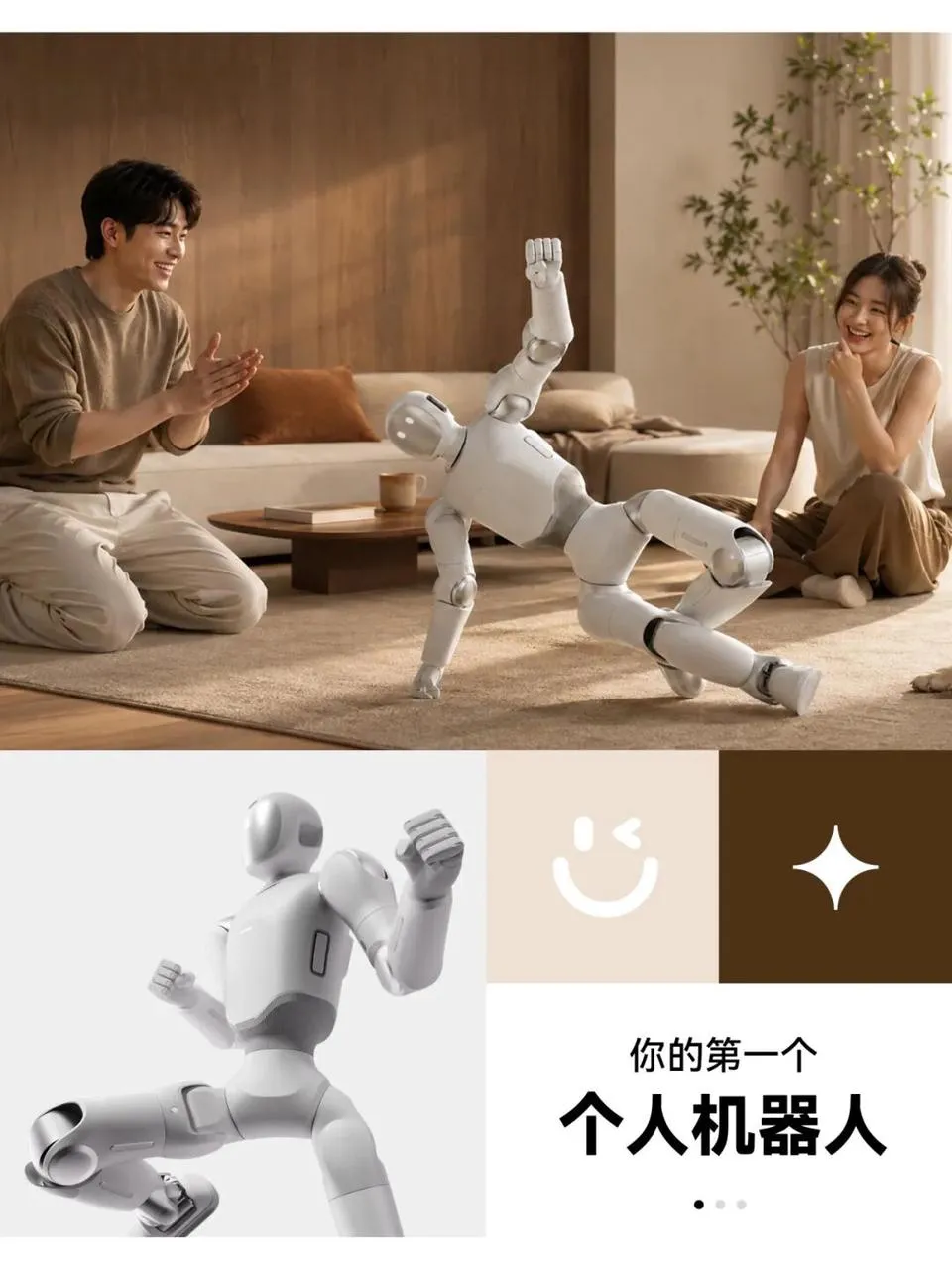
Activate the Q1
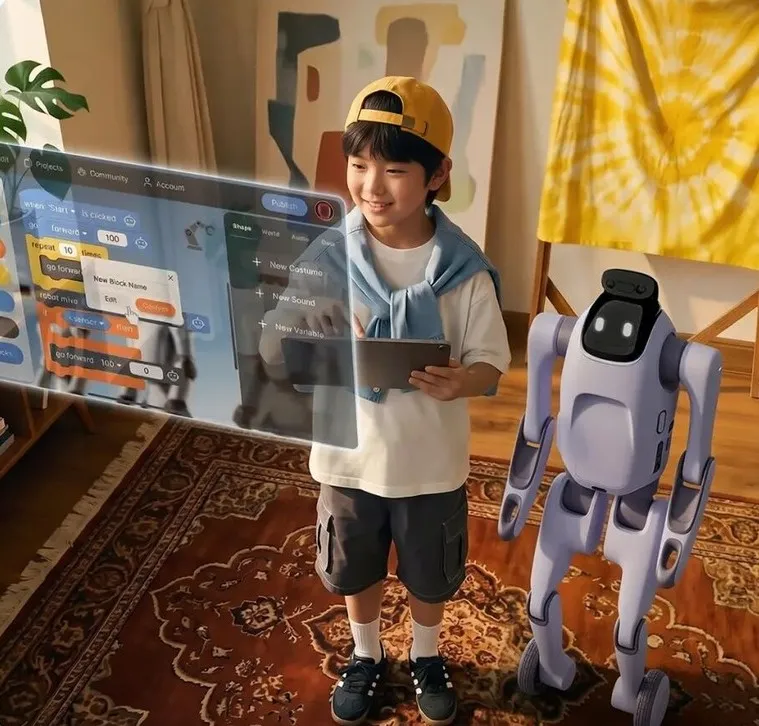
Start the T1
In addition to direct home scenarios, the team is also looking for a "homemade environment": structured spaces such as hotels, templates, and task complexity that can be controlled and used as a commercial verification platform.
Another long-range route is the Robot-Ready Home. It is difficult for robots to adapt to all stored households, in turn, to control the boundaries of generalization and allow robots to adapt to the home environment.
In the first half of 2026, the company launched a joint venture to explore and combine home furnishings and real estate. First, the ability to polish between border controlled samples and then penetrate into ordinary households. The version will be rolled out, with plans to release initial brain results by the end of 2026, followed by the continuation of the Zero-Shot generalization benchmark test.
To C itself has a layer of value that is easily overlooked: it is itself the infrastructure of the era of Physical AI, similar to the GPUs of the era of big models. When the terminal scale reaches 10,000, 100,000 levels, subject to compliance, explicit user authorization, the volume of video and image data that the terminal streams back will far exceed the data that can be obtained from outsourcing or B-end projects.
Of course, Q1/T1 data at this stage cannot be trained directly and will have to wait for the acquisition of equipment to support the transformation and then through the "Bot Development Program" to guide users to voluntarily participate in data contributions.
From dozens of samples to thousands of units, delivery, efficiency, supply chain, manufacturing and model iteration collaboration, every step is difficult.
Competition: The big public model is public resources.Barriers falling in the hardware-data-paradigm closed loopThere is a general question in the market: will the GPT-7 and GPT-8 capabilities, even built-in VLA capabilities, directly eat up the livelihood of startups with robots?
The judgment was that large models such as GPT belonged to the public resources of the industry and could be used by everyone.
The real difference is not "can't use a stronger general model", but if you don't have a supporting body, a high-quality operating data set, a complete training loop.
Large-scale language models provide a high level of cognition, but lack "fuel" logic, i.e. physical interaction data tied to the hardware, and a stronger planning capability. OpenAI itself also deploys hardware, due to the same logic.
Computing is not the main bottleneck at the moment, and the current phase of the micro-to-micro-cluster is basically sufficient. The real scarcity in the industry is high-quality physical data, more efficient data collection and post-training paradigms.
In contrast to overseas routes, π routes rely on real-machine repeat trials and errors, mission success rates are high, but it is difficult to scale; generalization is limited; UMI handheld collection is easy to scale up, generalization is good, but mission success rates are difficult to naturally fill.
The complete Physical AI system is divided into three levels: S0 motion control, S1 execution level VLA, and S2 high-level cognitive planning.
The Intel robot team has extensive model training experience and has processed hundreds of thousands of hours of data. The ideal shape of the future is similar to Apple's model: a deep fusion of the three: hardware terminals, data inputs, and model capabilities, rather than a simple output algorithm model.
The risks are equally clear: whether millions of hours of data can slip through the cracks; the engineering difficulties of training infrastructure; the mass productivity of C-end hardware; whether household scenarios cannot cross the 95% experience threshold; whether the business model for robots-ready homes and real estate will run.
Physical AI is a long chain, and any link that lags behind will drag the overall landing rhythm.
For Enlightenment, Q1 and T1 are just tickets, and the real war on physical AI takes place in a closed loop of hardware, data, and models biting each other.