It's the first time in the history of the world.
A world-class puzzle that has plagued the mathematical world for more than 30 years has been solved by three-dimensional Ghys guesses!
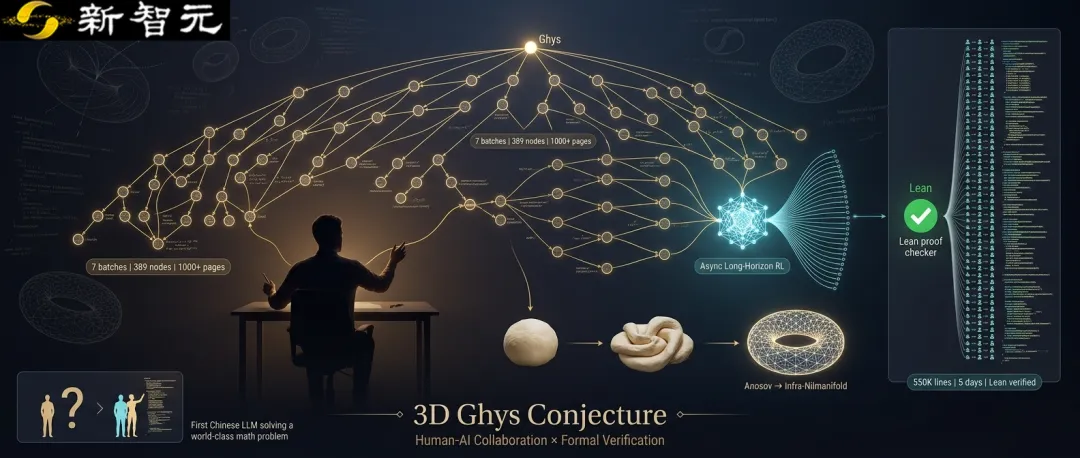
With the help of a large multi-modal model of Chinese science, a team of professors from the University of the Greater Bay Area completed the three-dimensional proof of Ghys conjecture in collaboration with a human machine.
The "Ghys conjecture" was proposed in 1995 by French mathematician Étienne Ghys, who suggested that the conjecture that every complete Anosov system on a tightly composite fluid is completely symmetrical to a complete imitation of itself on a composite infraround zero fluid. The problem has both theoretical complexity and the semantic value of the discipline, and is considered by mathematicians in the field of dynamical systems to be one of the most important long-term open problems in the field, and is a test piece for mathematical reasoning ability.
The paper has been published on the pre-print platform arXiv, and its formalized code has been made public on the Github platform.
Link to the paper:https://arxiv.org/pdf/2609.37695
Formal code:https://github.com/frenzymath/HolomorphicAnosov
Ghys guessesLooking for "underlying code" for a system of chaos
In 1995, the French mathematician Étienne Ghys proposed the Ghys conjecture, at the heart of which was:Whether the existence of a chaotic dynamical system can determine a geometric classification.
This is an important problem in the field of dynamical systems. If this conjecture is true, the problem of chaotic dynamical trajectories can be "reduced" into a simple, orderly standard algebraic model.
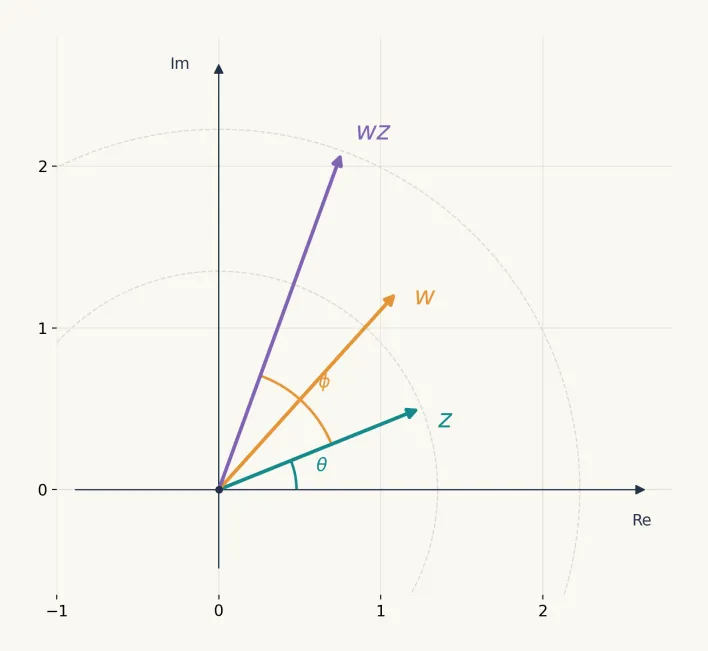
How do you understand Ghys's conjecture? Imagine a "world" in a closed, limited, borderless world where every little bit follows the rules of multiplication.
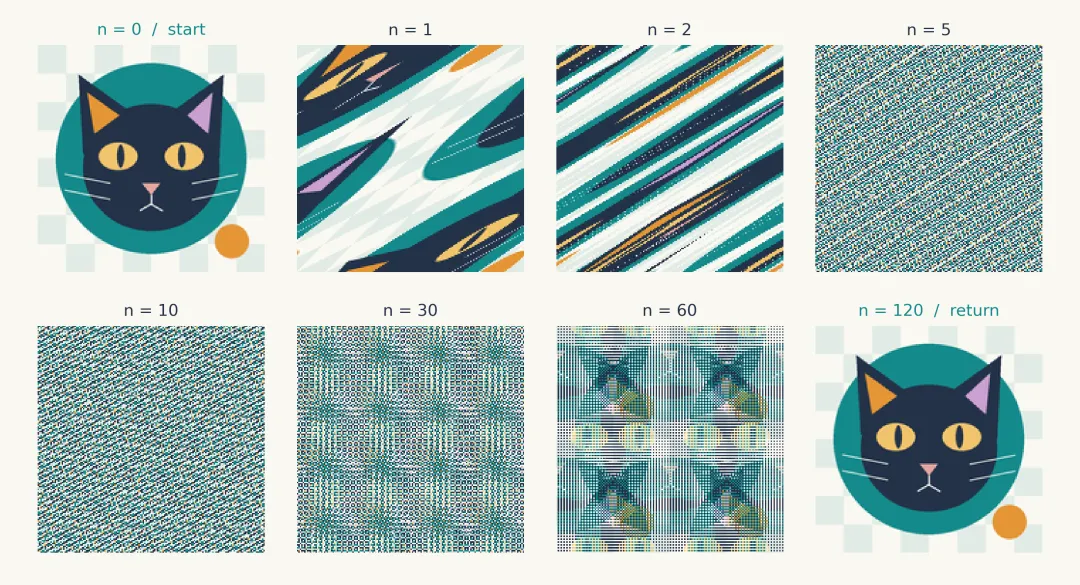
For the Anosov system, surface analogies can be used: by pressing, stretching, folding the grain, some directions are stretched and some directions are compressed. The stretch effect allows the initial proximity points to quickly separate the grain from the initial conditions of the grain, resulting in very different evolutionary results.

Ghys speculates that as long as there is such a movement as "both surface and complete rules", the "world" can only be a highly ordered shape spelled out repeatedly by simple rules, like crystalline shapes.
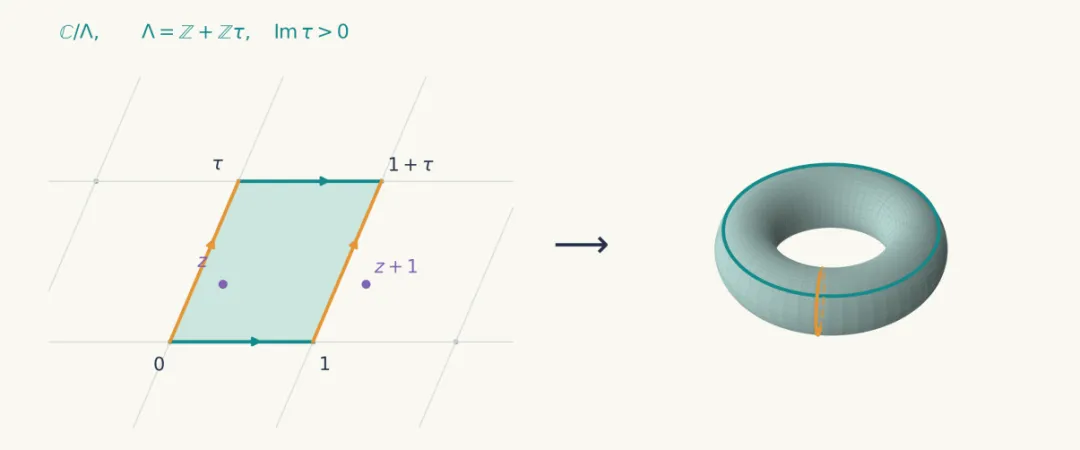
From another perspective, the movement is essentially a simple flattening, rotation or scaling of the "world" - that is, the mode of movement is so chaotic that it will in turn determine what shape the world will become.
Professor She Jun Ji, 45 Minutes Reporter at the International Congress of Mathematicians of 2026 at the Beijing International Mathematical Research Center, University of Beijing, said: "The difficulty of Ghis's conjecture is that similar assertions to his corresponding real (numerical) versions are still well-known as fully open problems, complex case problems become more rigid, and are important problems in the study of rigidity phenomena in reactive systems, very difficult".
Professor Xu, who worked with his mentor, Fields Award winner, Professor Avila, to study three-dimensional situations, but did not develop an effective proof thinking; he then worked with his student, Dr. Zhang Chen, to obtain some of the weakly correlated results of Ghys's conjectures in three-dimensional situations, which were published in the leading mathematical journal of the European Mathematical Society, JEMS.
Seven sequels and 389 nodes.Pilot collaboration achieves key breakthroughs
"Scientific discoveries are the ultimate test of intelligence".
The older the problem, the more fundamental the space for AI to be implemented, the greater the number of single-clone antibodies, protein folding, and the unresolved Millennium Navi-Stokes equation.
In March 2026, Prof. Xu Xian formed a joint team with a research team in an AI laboratory in the country, and simultaneously built the Harness system, which is geared towards the mathematical research scenario. Prof. Xu Xian combined his mathematical research experience to accurately point out the shortcuts of the model and the system's capabilities.
The model produced a 400-page inference report for the first round of reasoning on 3D Ghy's conjecture.
At the training strategy level, the research team adheres to the "general integration" technology pathway, on the basis of a large-scale scientific knowledge pre-training model, carefully constructing post-research training data, including large-scale problems from mathematical papers and reliable proof-of-concept schemes, improving the model's professionalism, rigorousness and normalisation in research-level mathematics.
At the training algorithm level, the research team broke through the asynchronous long-range reasoning reinforcement learning training methodology, solving a series of fundamental problems such as error index accumulation, long-term state maintenance, self-correction with verifiable rewards; the team also developed an automated algorithm to enhance Harness's ability to reverse-distille back-to-back models, and to continue to obtain effective monitoring signals on problems of high difficulty that greatly exceed the limits of model rectangularity, and to advance autonomous improvement of model capabilities.
According to Prof. Xu Zheng's team, basic modeling skills have a basic level to help research teams tackle research-level mathematics problems, but the key to breakthrough is closer human-machine collaboration, far from truly solving world-class problems.
Large models and supporting systems take advantage of long-chain mass-driving, laying out multiple lines of synchronous attempts, dismantling complex propositions, speculating on different ideas, taking on bulky derivative work that yields bulk experimental results each turn;
The researchers are responsible for taking the big direction, determining which ideas are worth digging deep, which paths are dead ends, giving some intuitive suggestions, as instructions for the next iteration of the system. The two are not unilateral, independent guidelines, but human-machine collaboration, through multiple rounds of dialogue and feedback, to iterate in close interaction.
Multi-cycle interaction processes of the system and recursive solution structures in each cycle of interaction. In these, the sides represent only the decomposition relation of the subproblem, not the context-dependent relation; each node can be accessed in chronological order before the entire global context of that node.
On the basis of the first round of exploration by AI, mathematicians Xu Yan and Zhang Jianjin acutely grasped the key breakthroughs, continuing to give feedback, calibrate the direction of exploration, and guide the model towards deepening valuable thinking.
In the course of the offensive, the Big Model completed seven successive iterations, expanding the problem graph from 15 nodes to 389 with a rigorous introduction of thousands of pages of output, while generating dozens of novel theoretical ideas that successfully helped the team solve this world-class mathematical puzzle, which was rated by leading international scholars in this direction as "Thinking Deeply Beyond Expectations".
Interestingly, before the paper was published on the pre-print website arXiv, the aforementioned propulsion system expert, Professor She Jun Jiang, also tried to challenge the problem with GPT-6 and found no proof. "This not only underscores the unique value of the domestic model in this pioneering mathematical exploration, but also conveys a signal loop.China's big model is also capable of standing on the cutting edge of mathematics, helping to tackle world-class problems.。」
North Korean team gives professional formalized verification
Have the results of AI-enabled products been verified?
The formal verification of all four main theorems in this paper has been completed by a team of professors from Peking University, Dr. Dong Zheng, and demonstrated by Lean as an interactive theoretical proof system capable of rigorous logical verification of formal proofs.
The entire process took about five days, peaked at 100 and produced around 550,000 lines of Lean code, demonstrating a large parallel scale and extremely fast verification speed.Experts confirm that the formalized statement is consistent with the main theoretical semantics of the paper, and Lean verifies this to ensure its strict correctness.
The difficulty of formalizing comes first of all from mathematics itself: natural language proofs often rely on the reader's mathematical knowledge to complete the conditions and reasoning, while formalization must be implemented as a complete proof that can be checked by a computer. If the results cited in the paper do not enter the basic theoretical library, it is necessary to supplement the formalized proof, or to find an alternative route to exploit the results already available.
In the field of power systems, in particular, there is a lack of formal infrastructure, and this work supplements a large amount of infrastructure, covering the many documentation results on which the papers depend.
For research-level mathematics, these works involve accurate expression of definitions, the dismantling of structures and the selection of mathematical tools; when a large number of intelligent agents are parallel, it is also necessary to ensure that the definitions, statements and dependencies of each part are interconnected, and local proofs form a complete proof chain.
To organize this process, the Northeastern team used the self-developed SHEAF framework: multiple intelligences organized the propositions, definitions, and dependencies in the paper into a seamless map of the layers from the goal theorems to the underlying theorems.
The model participates in the structure of propositional decomposition and formalized proofs, the team organizes the work around the diagram, tracks the statements of the nodes, proofs and cuts, and breaks down large-scale formalized tasks into interconnected, verifiable steps.
Even before the big model was released in 2021, the team of Prof. Dong Zheng of Beijing University's Beijing International Mathematical Research Center was keenly aware that AI would reshape the paradigm of mathematical research.
The Northeastern Math Team was one of the first international AI for Math research teams to build a complete technology chain covering high-difficulty assessment sets (FATE), large-scale mathematical knowledge retrieval (Matlas/LeanSearch), automated reasoning and formalized verification (Rethlas/Archon/Danus/Iteris);
The AI system it developed successfully tackled the open mathematical difficulty of Anderson's conjecture, achieving the first in the country and the first internationally dominated university team to independently break through major mathematical conjectures based on AI. Recently, the team has also completed formal verification of Pongaly's conjecture independently.
The purpose of this study is also to validate a new scientific paradigm. Traditional mathematical research relies on the long haul of individual genius, and this approach introduces experts to the intuitive systematic approach to machine-solving circuits, forming the "system-exploring feedback loop in which experts judge the results of accumulation of feedback corrections".
This paradigm can be replicated and extended to more basic research areas where "search space is huge and experts are scarce", achieving more original innovation breakthroughs "from 0 to 1".。