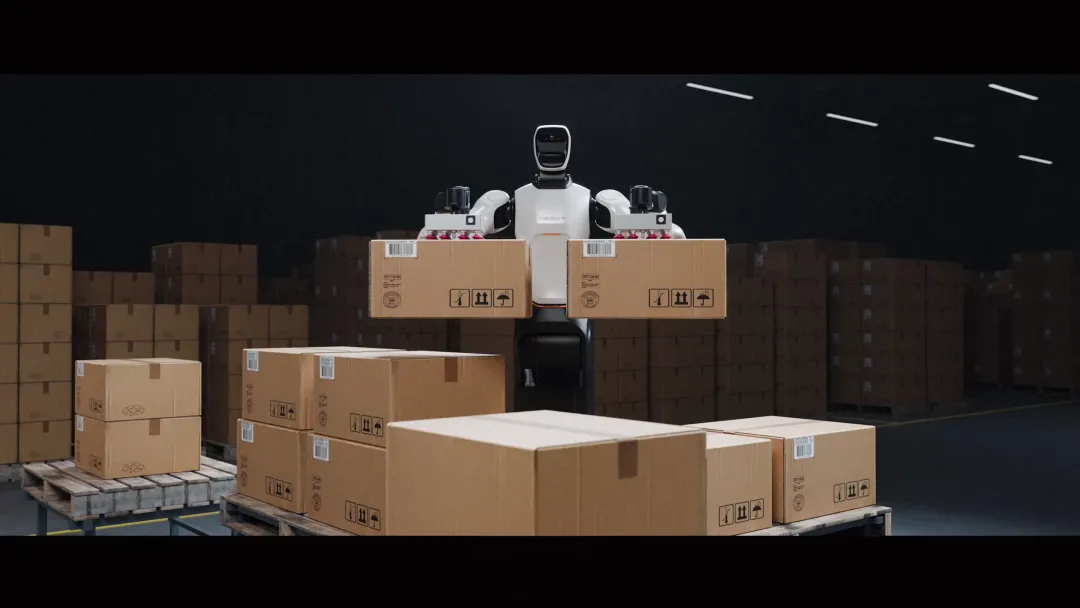
“ Xiao officially launched the G2 Max, a security-grade heavy-duty robot.
At three o'clock in the morning, a workshop in Henan's Yangtze River was still lit. At the peak of the Twenty-first Supply Chain, a box of packaged leisure food was pouring out of the production line, waiting for the codes to be loaded into the warehouse.
On October 26, Xiao officially launched the G2 Max, a security-grade rechargeable robot elf. Unlike many previously released and backlogged technology products, the new product has been put into testing and application in three real production lines, covering the three core scenarios of high-end manufacturing, storage logistics, and fast consumption.
As the heat of physical intelligence gradually moves from conceptual demonstration to the industrial landscape, the industrial scene is becoming the first runway for commercialized value.
01.
Why isn't there a perfect solution to the problem of the paradoxical triangle of industrial transport?
In manufacturing and warehousing logistics systems, material transport is the basic link through the entire process. From raw materials to warehouses, supply lines to finished product codes, warehouse transfers, almost every process is inseparable from the movement movement.
In the past, the mainstream solutions in the industry have been roughly divided into three categories, but each category has a clear boundary of capability that is not always compatible with efficiency, flexibility and cost.
The first class is the traditional fixed industrial mechanical arm. This type of equipment has a strong load capacity, high repositioning accuracy, and is the main force of the precision manufacturing scenario. But they rely on fixed-base installation, the range of operation is strictly limited, and can only perform fixed movements at a single site, unable to cope with the demand for multi-site, cross-regional transportation.
The second category is AGV/AMR mobile robots. They solve the problem of long-distance transportation, can autonomously navigate within the plant area, flexible scheduling, but does not have the capacity to take off the end, can only complete the level transport of pumps from point A to point B, the overloading and decommissioning of pumps still require man-made or other equipment.
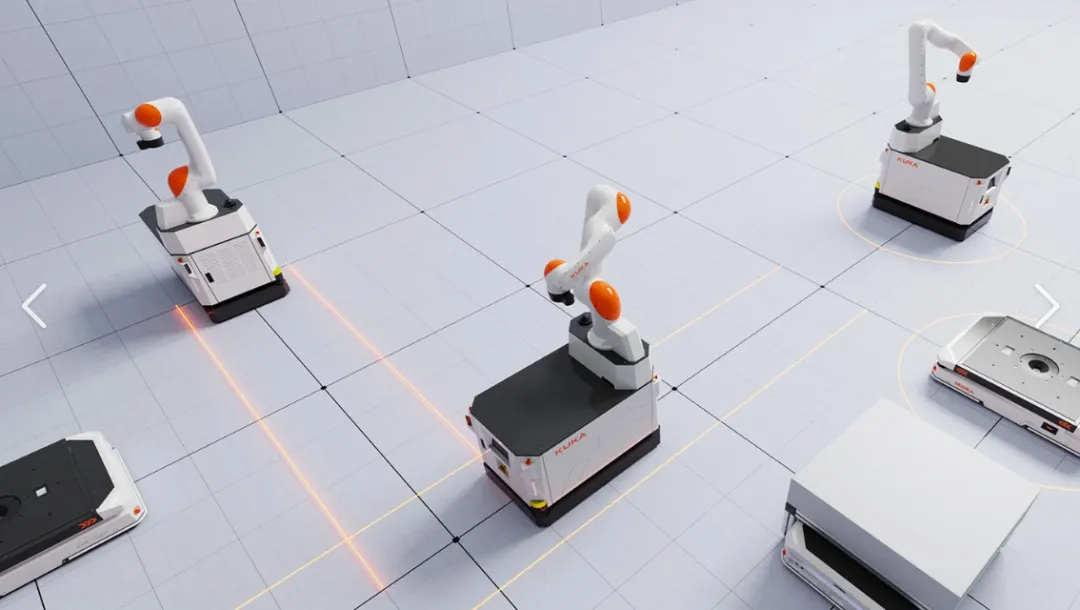
The third class is dedicated coding equipment. This type of product is dedicated to coding scene design, fast, load-bearing, but highly functional, and can only handle fixed specification boxes, and once the product is changed, it needs to be re-modulated or even hardware modified, adaptability is extremely low. At the same time, these devices usually require independent enclosed workspaces, the demands on the site space are harsh, and it is difficult to embed existing production line layouts.
A deeper industry contradiction is the long-term imbalance between heavy-duty aluminum and fine aluminum. Equipment capable of moving tens of kilograms of heavy material, often with poor accuracy, unregulated cladding, still requiring manual sorting; equipment capable of reaching a precision level of millimeters, with a large number of loads limited, and unable to handle heavy container transport. This leads to the factories transport links are always half-automated aluminum, the state of artificial replenishment of half-aluminum, the efficiency and cost are difficult to optimize.
In the past, these three things required three devices, or even three groups of people, to work together, and not only the length and efficiency of the links, but also the ease with which they could be processed.
This is precisely the market gap targeted by the G2 Max: using a body-shaped industrial robot that covers overhead, precision and mobility while completing the final piece of the puzzle of industrial transport automation.
02.
G2 Max combines the brass and brass into one device.
The G2 Max, as a major in-house product designed for the industrial landscape, clearly identifies itself as a loading precision operating platform in the industrial landscape. It does not continue the fixed route of traditional industrial robots, nor is it a simple mobile transportation tool, but instead incorporates a robot-like system architecture that integrates power, precision, dynamics and safety into the same device.
Recharging and fine-tuning for the first time on a mobile platform
Loading capacity is at the core of the G2 Max. At the parametric level, its single-arm rated load is 20 kg, its two-arm rated load is 40 kg, and its two-arm peak load is up to 50 kg. This load level covers more than 95% of the weight of common industrial containers, whether it is a car parts rotary box or a complete box of food and solar products.
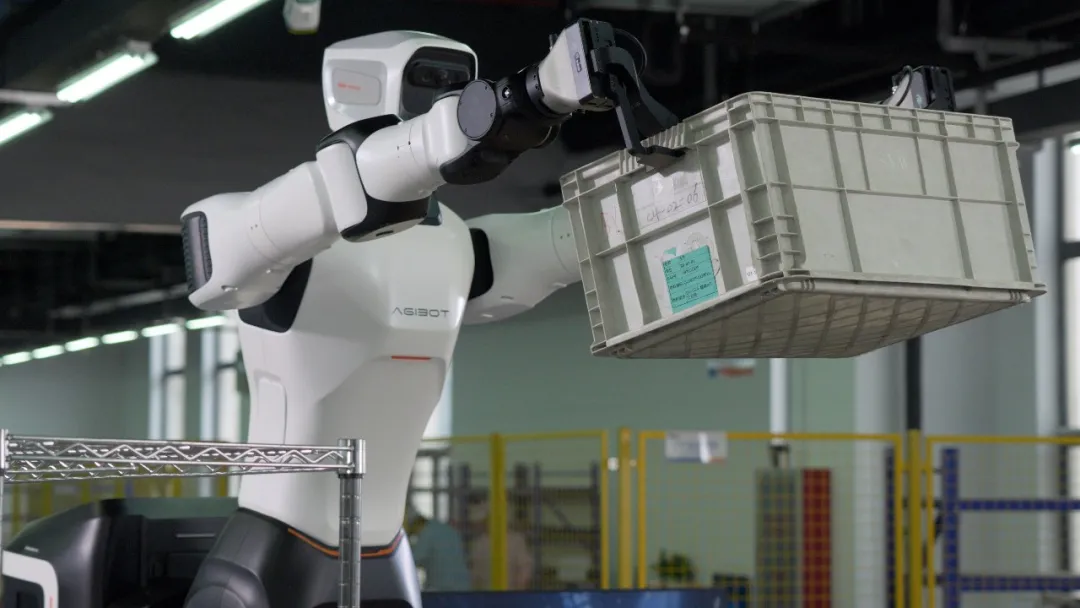
More importantly, it still maintains high accuracy at full load. Depending on the 7-frequency power control arm and visual guidance system, the G2 Max's repeat positioning accuracy reaches ±0.5 mm, reaching the sub-millimeter operating range. This means that it can not only stabilize tens of kilograms of feed boxes, but also accurately align the positioning, alignment of the trays, and even be able to directly connect the feed to the precision assembly plant, without affecting the assembly refinement due to displacement biases.
This ability of the pump to load without reducing the accuracy of the pump is a common pain point in the industry. In the past, many load-carrying equipment can only put the pump onto the tray, then either manually reorganize the second time, or cannot fit the standardised tray requirements of the 3D repository.
Full area coverage and redefinition of spatial utilization
Inadequate vertical operation is another major shortcut for traditional composite robots. Due to the limitations of the underpants and mechanical arm structure, the high-speed operation of most composite robots is limited, and high-speed codes often require additional lift pillars to be installed to achieve high-speed codes, both increasing the overall cost and affecting operational stability.
The G2 Max's overall vertical operating range ranges from 0.1 m to 2.5 m, and can be fully covered from ground low pick-up to high-level shelf enclosure, without the need for additional auxiliary devices. Supporting this capability is its high-precision waist-facing motor, which can greatly expand the robot's position by actively tilting forward, lifting and adjusting posture.
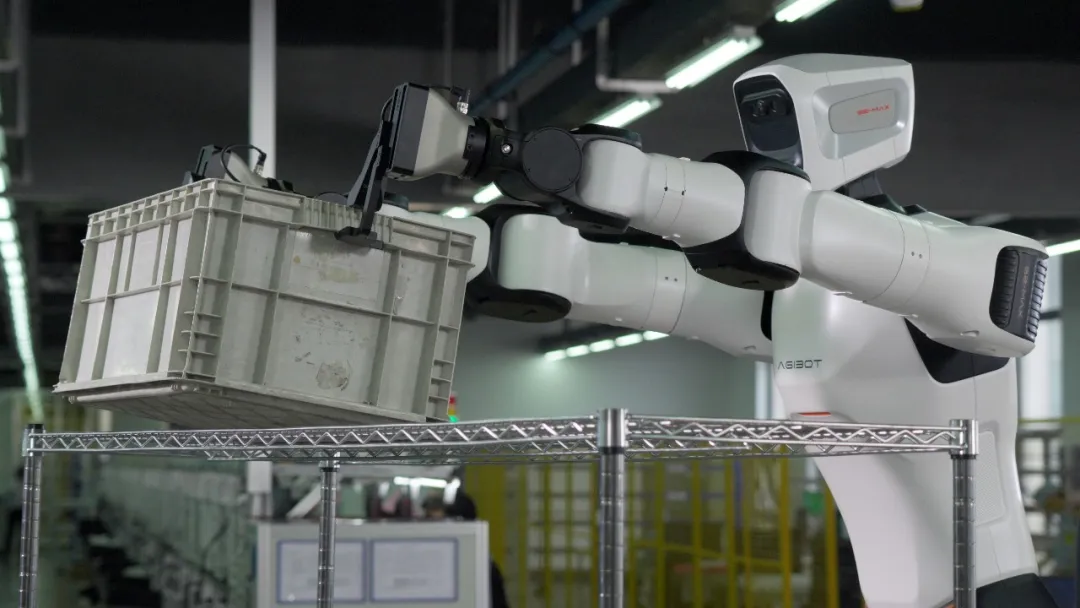
Another direct benefit of this design was the improved utilization of factory space. Traditional robot operations typically require about 1.5 meters of physical exercise space around the tray; while the G2 Max, with its waist-lifting capability, can achieve single-sided detachment of tight walls, reliable wall placement of the tray, no reserved work space behind, and very intuitive efficiency improvements for factories and warehouses.
In terms of mobility, the G2 Max uses a four-wheel all-wheel-drive undercarriage that supports a variety of mobility modes such as ground-to-ground overturning and steering, and can move at speeds of up to 1.5m/s while fully loaded and up to 1.0m/s when fully loaded, allowing it to navigate flexibly through the narrow corridors of production lines and warehouses, adapting to different plant area layouts without the need for large-scale conversion sites.
Unmanned Aerial Vehicles (UAVs) and Unmanned Aerial Vehicles
Safety is the bottom line of industrial equipment, and it's also the entrance ticket for mobile robots to open production lines.
G2 Max has built a multi-level security protection system according to industrial safety standards. At the perception level, equipped with 2D/3D laser radar, double-eyed camera, fish eye camera, ultrasound radar and other types of sensors, it forms a 360-degree non-dead angle environmental sensing, which can identify people, equipment and obstacles in real time, and actively reduce the speed of obstacles.
The security system enables the G2 Max to be directly deployed in manned mixed-use industrial scenarios without the need for independent security fences, which is also the core premise of its ability to quickly embed existing production lines without the need for large-scale site transformation.
7×24 hours of continuous production adapted to industrial production
For factories and warehouses, the continuous operational capability of the equipment is directly related to the return on investment. G2 Max uses a dual-cell heat-extraction design to meet the demand for multi-sectional, continuous production in industrial settings, which allows the replacement of batteries during operation, coupled with multiple alternatives such as automatic recharging and autonomous power switching, to achieve 7×24 hours of uninterrupted operation.
This means that it can be connected without overtime and overnight work, during high load times such as rush hour, order peak, and maintain a stable output, without the same physical and occupational constraints as humans. At the same time, relying on the Genie Studio 2.0 smart operating platform, G2 Max supports high-speed deployment, without the need for structural transformation of existing production lines, it can quickly adapt to new scenarios and tasks, and is particularly friendly to the SKU changing, frequently changing consumer electronics and fast food industry.
03.
Three genuine production lines to verify the value of the product on the ground
The conference did not take the form of a stage presentation, but through a three-dimensional link, directly demonstrating the working reality of G2 Max on three real production lines. For industrial robots, the parameters are paper strength, and stable performance on the production line is the real hard currency.
At the Kunsan Fluorescent Plant, G2 Max is transporting T1 related parts to take part in the robo-engineered robo-engineering project.
The lighting plant's lighting T1 production line itself is very fast-paced, the whole machine continues downline at a 2.5 minute beat, and the material supply window at the joint assembly worksite is not spacious. If there is a noticeable delay or disruption in the rhythm of the supply, downstream assembly is easy to wait, and the whole line rhythm is affected.
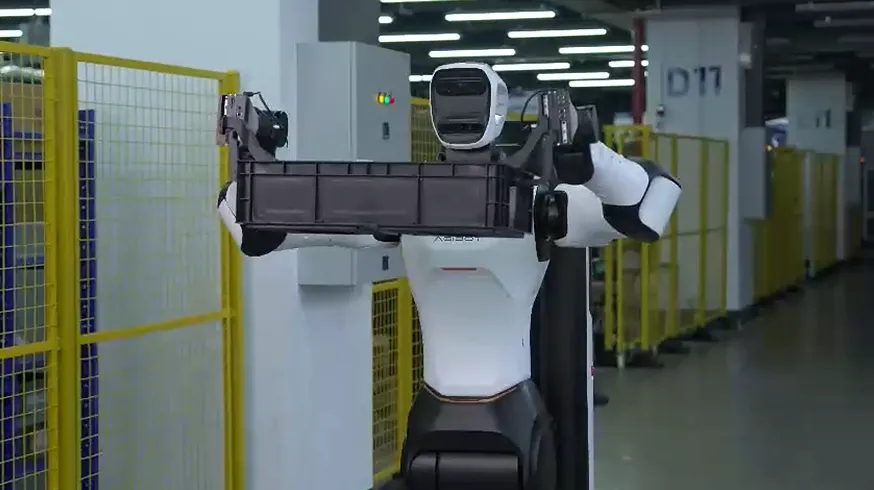
In a food factory, G2 Max participated in the decoding of finished products, demonstrating the ability to be continuously transported and adapted to different box types.
It is known that G2 Max in this factory has achieved a drag-and-drop delivery, a drag-and-drop multiple-tray mixed-line codes are in progress; the single-tray operation time is ≤35 seconds, overall success rate is ≥99.9%, can be quickly adapted to different specification packaging, support multi-product mixed operation.
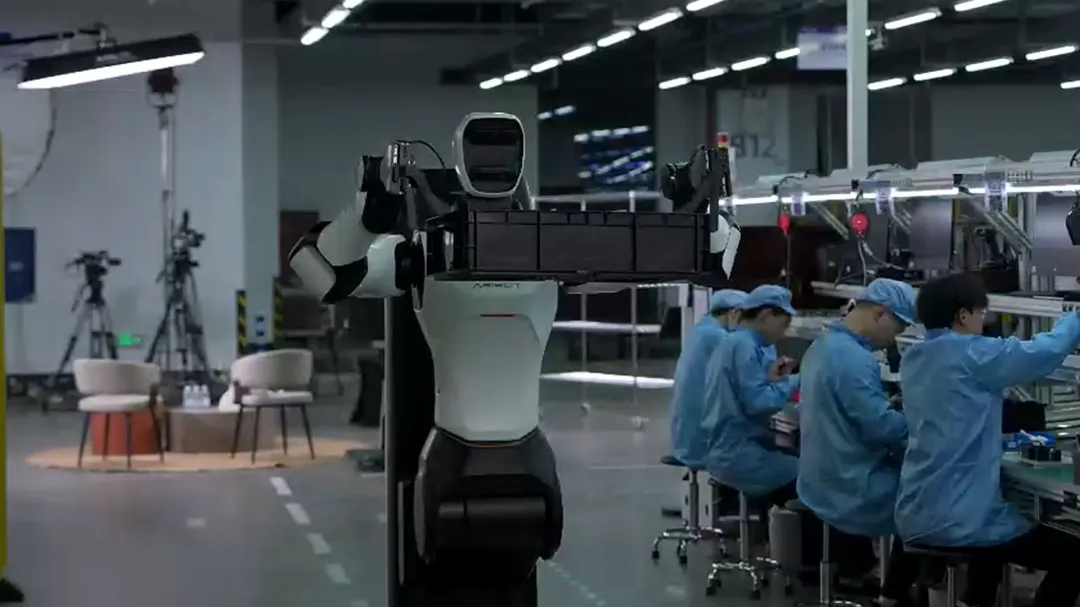
In some logistics warehouses, G2 Max is responsible for the dismantling and containment of the library connections.
Inboxing is one of the few links in the warehouse chain that has three indicators that require heavy loading + fine + continuous filling at the same time: high-load feed boxes are removed from high positions, high-precision feed boxes are stably laid down, and this is done continuously. Currently, G2 Max can achieve full boxes to disassemble into the warehouse, empty feed boxes can cover the entire process, and the success rate from connecting the container to the human feed selection system is > 99%; disassemble up to 80 boxes per hour, code up to 75 boxes per hour.
In addition, G2 Max covers disassembly, open-boxing, coating, and recycling processes such as casing, film, and empty-box recycling, supporting multi-specific box mixing and identification rates of up to 100%; in head food enterprises, single-box operations take up to 35 seconds, with an overall success rate of no less than 99.9%, and continues to expand into multi-tray and mixed-box operations.
From precision manufacturing to storage logistics to rapid decommissioning production, the deployment of these scenarios confirms G2 Max's ability to adapt to different industrial environments.
04.
Intelligent industrial responses
In the past few years, artificial intelligence and robotics have been popular in the field of technology, but many products remain in the stage of laboratory demonstrations, exhibitions, really entering the field of industry, and there are not many products that replace artificial standardization.
One of the main reasons for this is that many products go through the pipeline of hydrogen technology: first to make a general-purpose robot prototype and then to look for a landing scene. However, the needs of the industrial scene are very specific, with clear rhythms, precision, safety and cost requirements in each job, and general-purpose prototypes are often difficult to directly adapt.
Xi'an's landing path is different from this. It follows the product definition and landing rhythm of the G2 Max: first, locking down the common industrial transportation path, then targeting the overload, precision, safety, and durability of these core capabilities, and finally landing directly on the customer product line.
It does not require the pursuit of human appearance, nor the accumulation of fancy skills, but only the transportation of materials to help clients solve real problems of recruitment difficulties, low efficiency and high cost, to quickly generate commercial value.
On the other hand, the landing of the G2 Max also confirms the open ecological trend of physical intelligence. Its positioning is not to replace existing automation equipment in the factory, but to work in collaboration with AGV, cubic storage and production line equipment, to fill in the blanks that traditional automation cannot cover. As in the logistics warehouse in Jindong, the G2 Max and the Shiloh systems jointly complete the entire storage process; in the fluorescent plant, the G2 Max combines existing production lines to become a standard workplace in the production system.
This kind of integration, not disruption, is the key to the industrial landscape. Factories don't need to push back the technological revolution, they just need to be able to embed existing processes into production tools that are actually improving productivity.
G2 Max's launch and landing is more like an industry signal: body robots are no longer a concept-driven future product kit, but a productivity tool that has begun to take on specific tasks in industrial settings.
Subsequently, as more scenes are copied and polished, this type of re-loaded, sophisticated robot is expected to enter more factories and warehouses, gradually replacing high-intensity, high-repeatability, and high-risk transportation positions.