
It's the first time in the history of the world.
Recently, an Anthropic researcher gave a bowl of cold water to a global PhD student.
Your career is overnight!

The title of the talk was "The End of Mankind", and it gave a series of touching and surprising data.
Over the past decade, the computational capacity required for training models has increased by 10 million times.
The time it takes for AI to complete tasks independently doubles every few months;
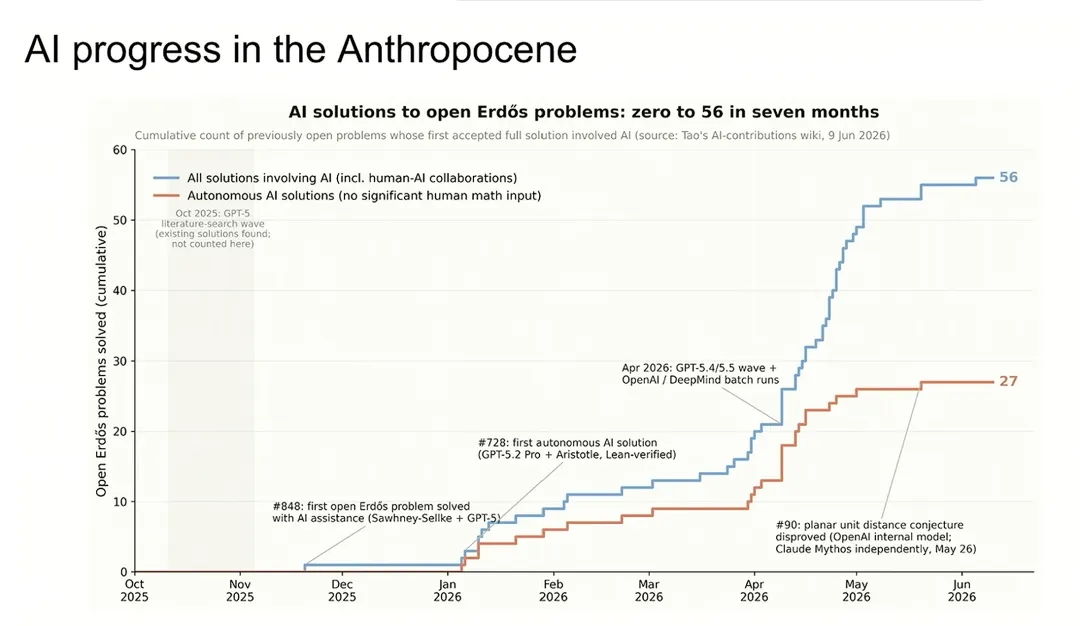
Over the past seven months, the model has been solving mathematical problems that mathematicians have not been able to master before.
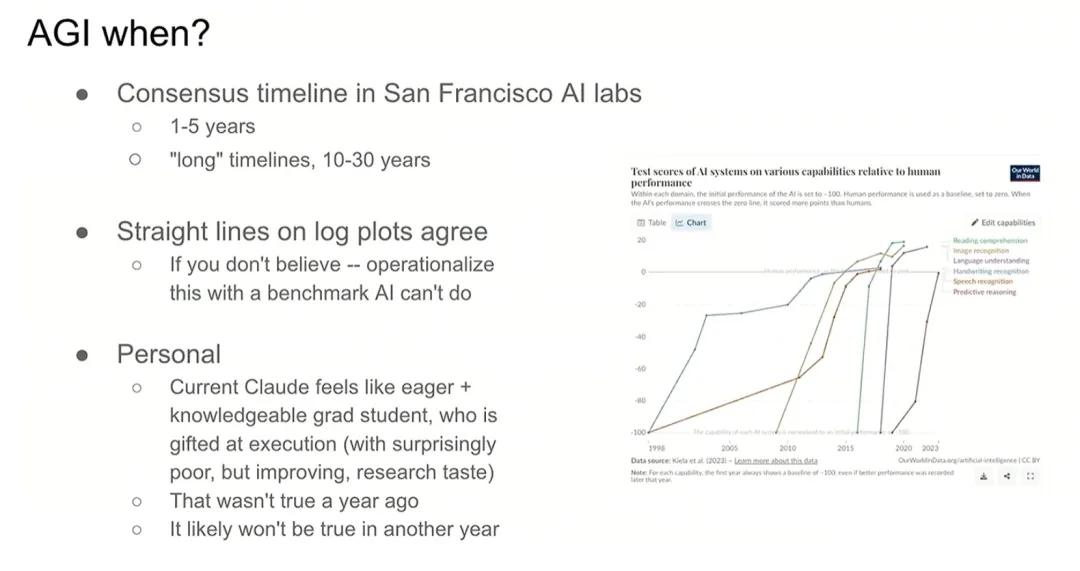
In Silicon Valley, having a "long-term timeline" means that AGI will arrive in 10 years.
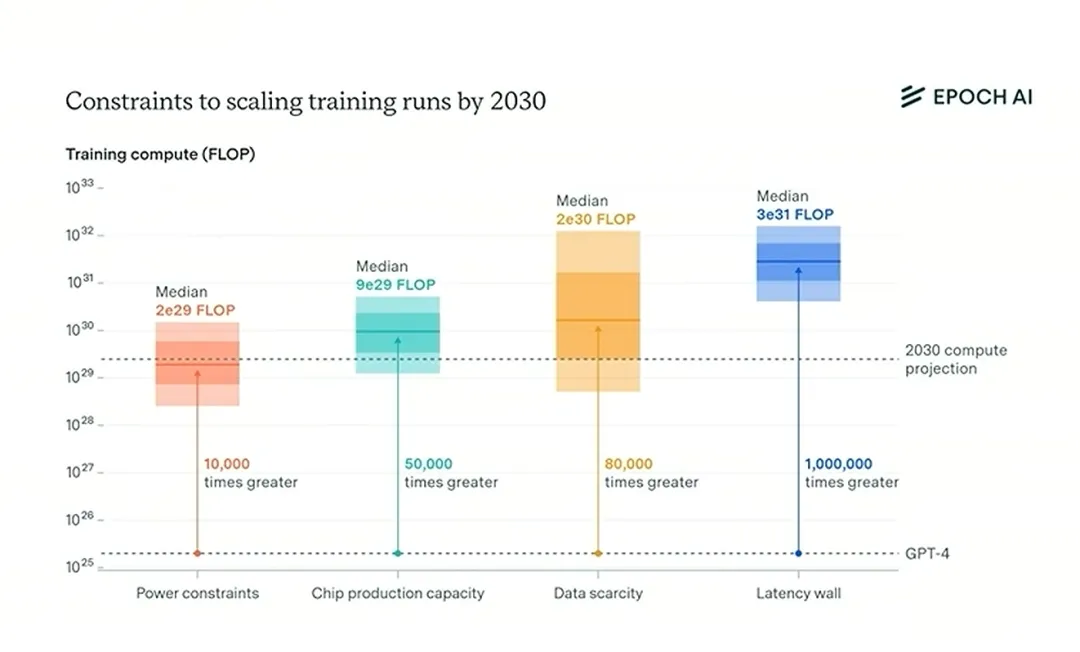
According to the presentation by EpochAI,By 2030, the global computing capacity will be 10,000 times greater than in 2025!
Our position on the graph will be so small that we can't tell with the naked eye. Now, we haven't even crossed this curve.
We are still at the beginning of the growth of the index!
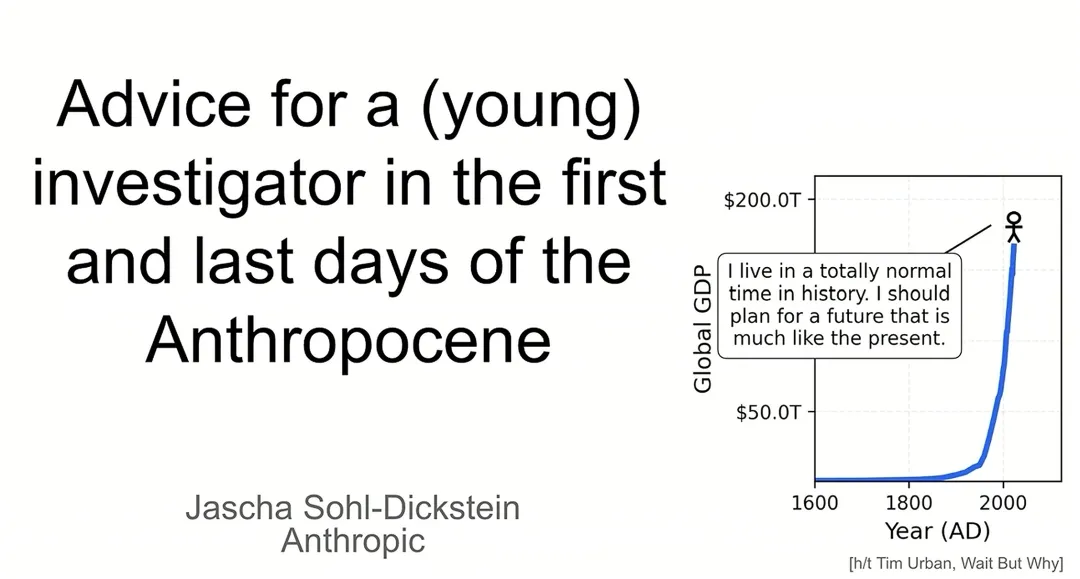
From beginning to end, the speech continues to unleash cold, shocking technical data.
The central point of anthropic researcher Jascha Sohl-Dickstein is that:In the coming days of the AGI, the traditional career plans that you originally envisioned have completely disappeared.
Some of the world's top doctoral students complained that their careers might have been really cool.
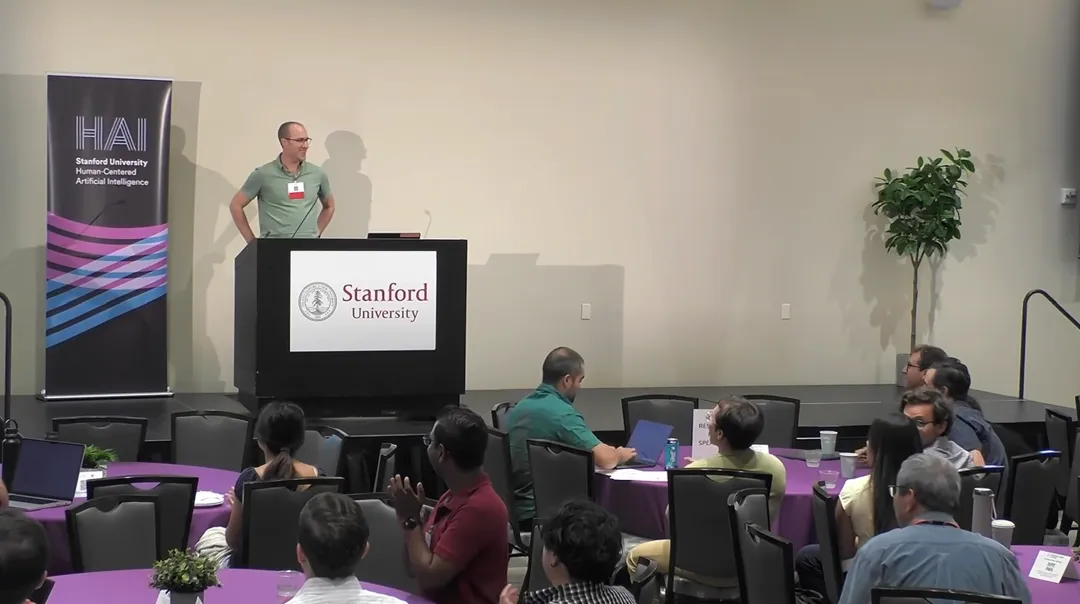
"Look at this chart of GDP changes over time", Jascha points to the big screen.
"The person at the top of the curve is you. You think the world is normal, the future is just a linear extension of the present. But this is a big mistake".
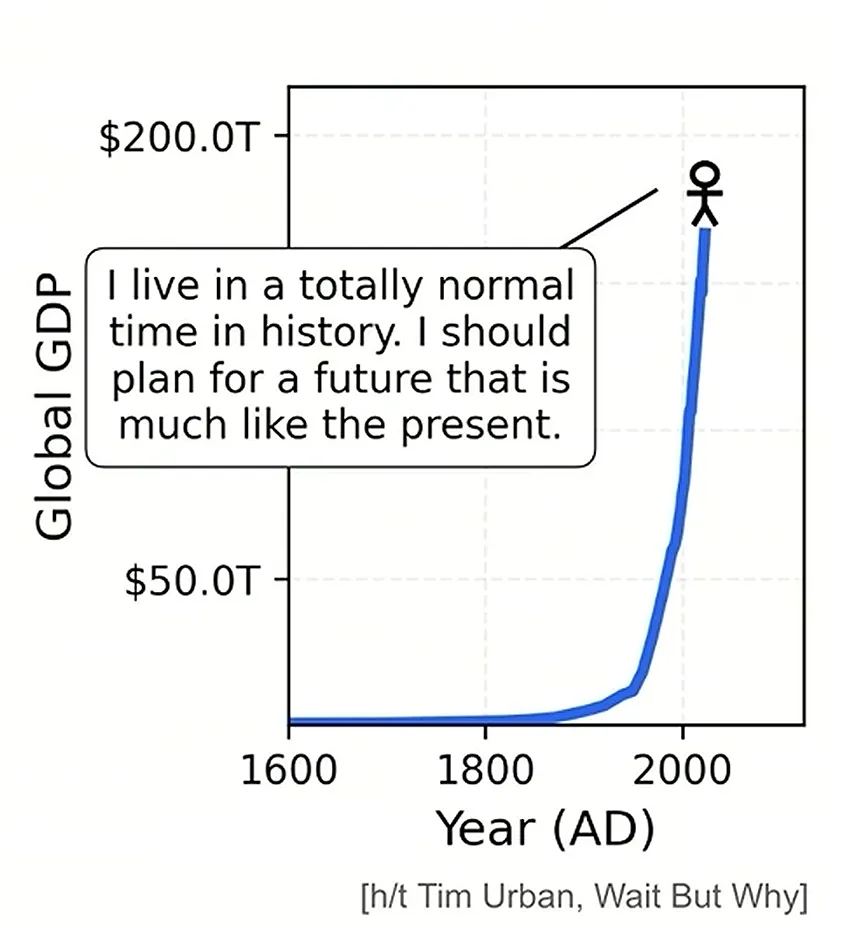
The GDP graph changes over time and the curve in the graph rises exponentially after 1950, while humanity stands on the edge of the historical cliff.
In order to break this "linear illusion", Jascha threw out a surprising set of data.
1. 10 million times the decade of the computational typhoon
Since the beginning of the so-called "human world" in 1950, over the past decade, the number of computers used to train top AI models has risen 10 million times!
He used a circle to mark the maximum computational capacity of the human brain for a lifetime of about 1 trillion petaflops.
And now, the computational power of AI models has approached and even surpassed, in some dimensions, that of "human lifetime intelligence".
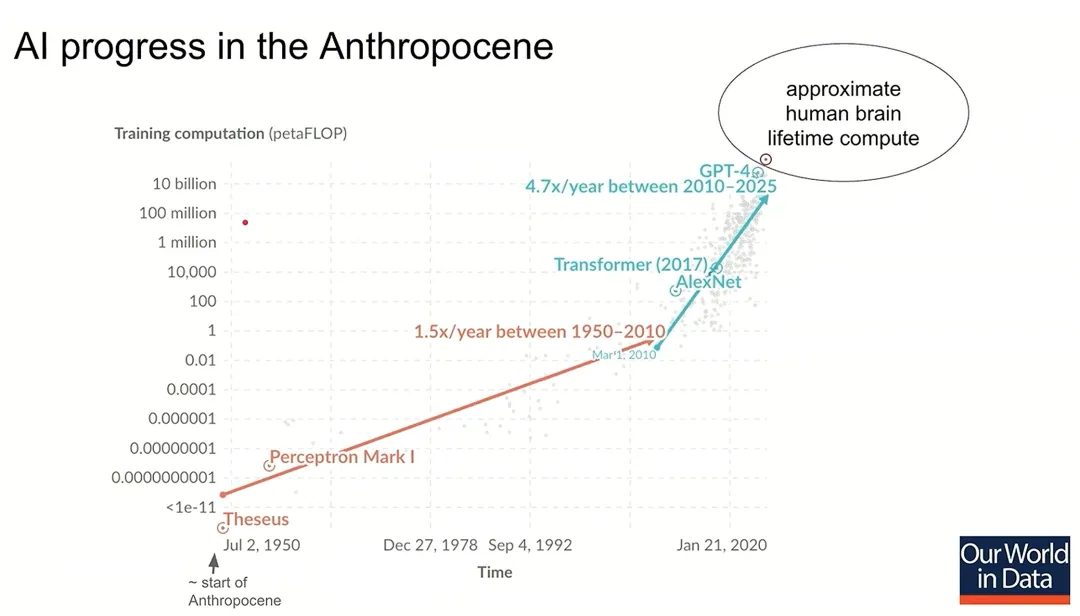
The scale of the AI model is numerical, and the circle in the upper right-hand corner represents the maximum amount of computation the human brain will have over its lifetime.
2. Leap in the time index for completion of tasks
"The time scale is not how fast AI completes tasks, but how long it takes humans to do the same software tasks".
Jascha showed a chart showingAI's ability to complete tasks independently without assistance (more than 50% success rate) is rising exponentially.
"When I gave this talk less than a year ago, I expected the model to complete the equivalent of a full day's work as a software engineer in 2026 or 2027".
"And now, less than a year later, this indicator is up 10 times, and we've crossed that node!"
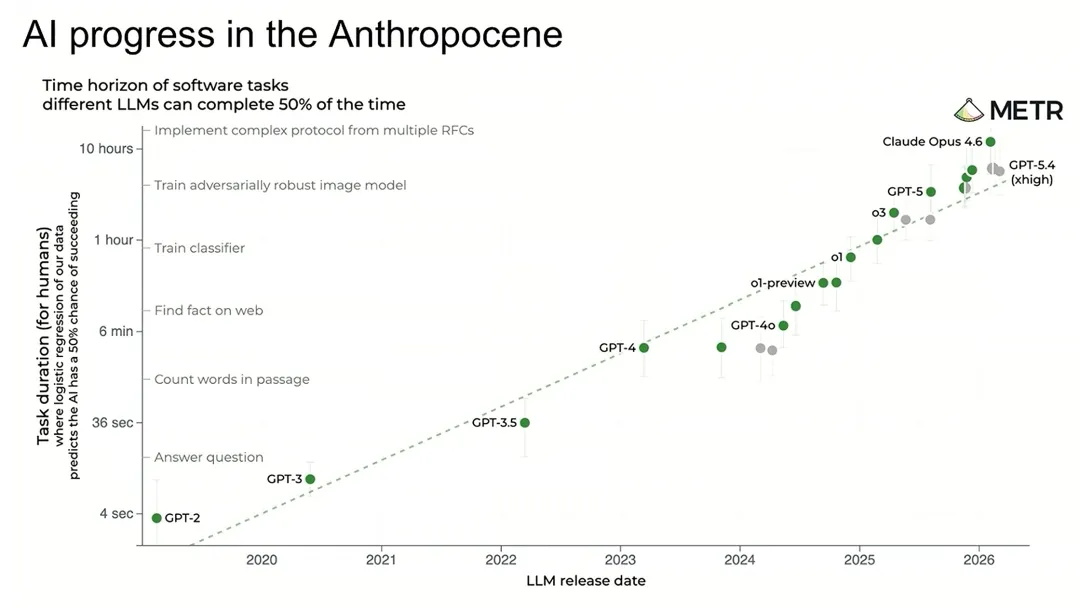
Chart of the ability of AI to complete different software tasks published by Meter organization ("X axis is the year the model was released, and Y axis is the time scale required for humans to complete the task")
3. "AI can only do a quiz in a training set?"
Many people console themselves by saying, "AI has no real creativity, it can only solve the problems it has encountered".
Paul Erdős left behind a lot of unresolved mathematical conjectures that the real top mathematicians are trying to solve.
"In the last seven months alone, AI models have begun to solve the problems that Erdoğan left behind. AI is pushing the boundaries of human mathematics!"
In the core technology circle of Silicon Valley, the consensus on AGI is that it will take years.
Some would say they are more conservative about AGI's timeline. Then ask and know that what they call "conservative" refers to 10 years.
Jascha makes an amazing prediction:By 2030, the global computing capacity will be 10,000 times greater than in 2025!
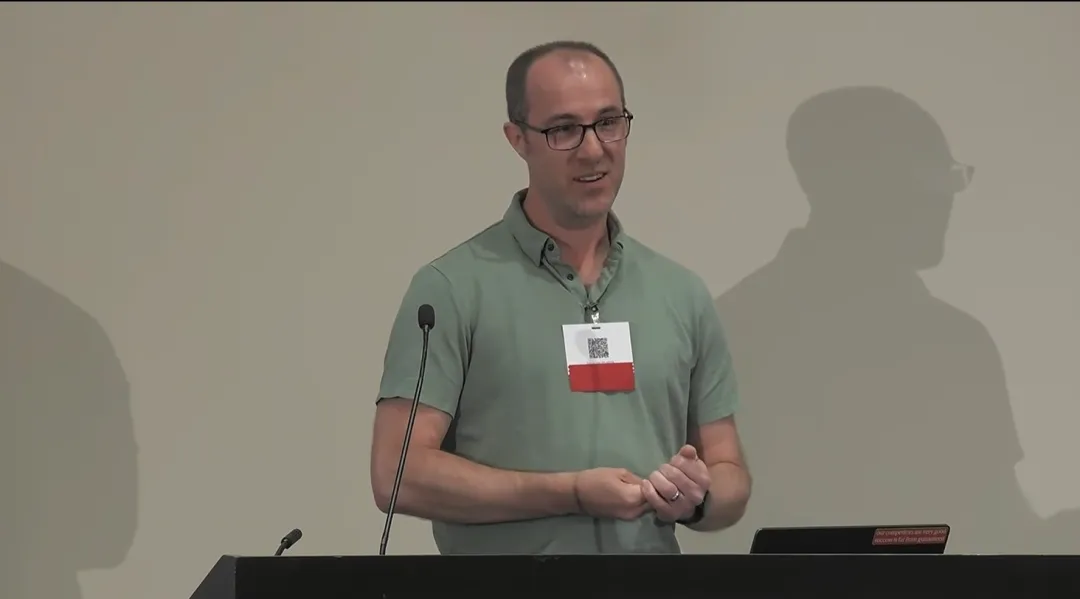
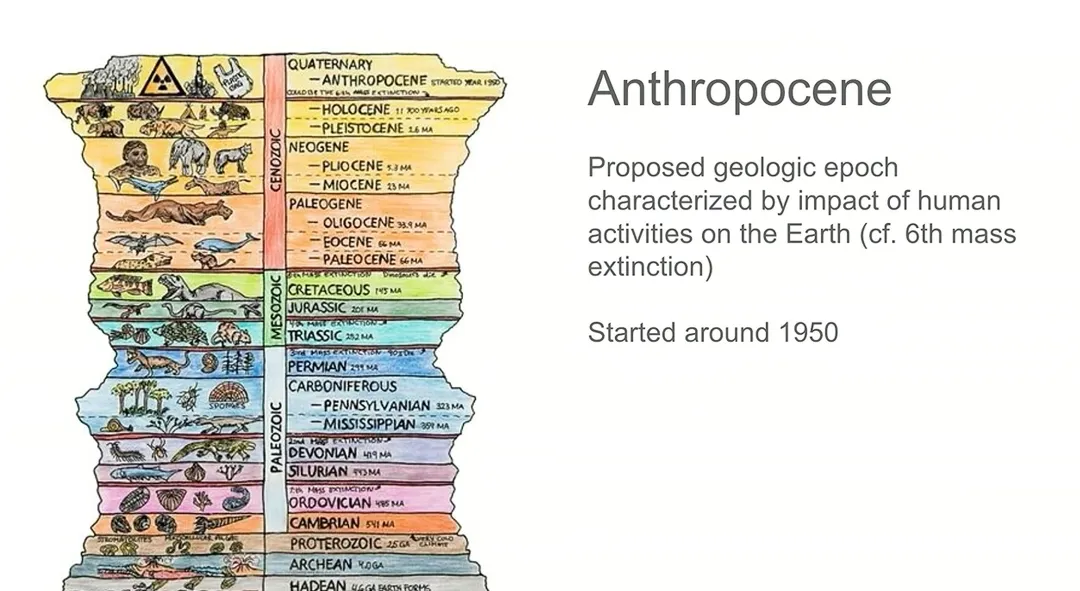
In this speech, Jascha proposed an entirely new concept: "The Anthropocene".
In geology, human activity has profoundly changed the Earth, and in billions of years from now, nuclear explosive radioactive isotopes in the Earth's crust will prove that we have existed.
But Jascha believes that this "human world" that is being transformed by humans as the primary intelligence-driven world could be an extremely short geological era.
Less than a year ago, while giving a similar talk at Harvard, he received a hostile email: "This is just crazy!"
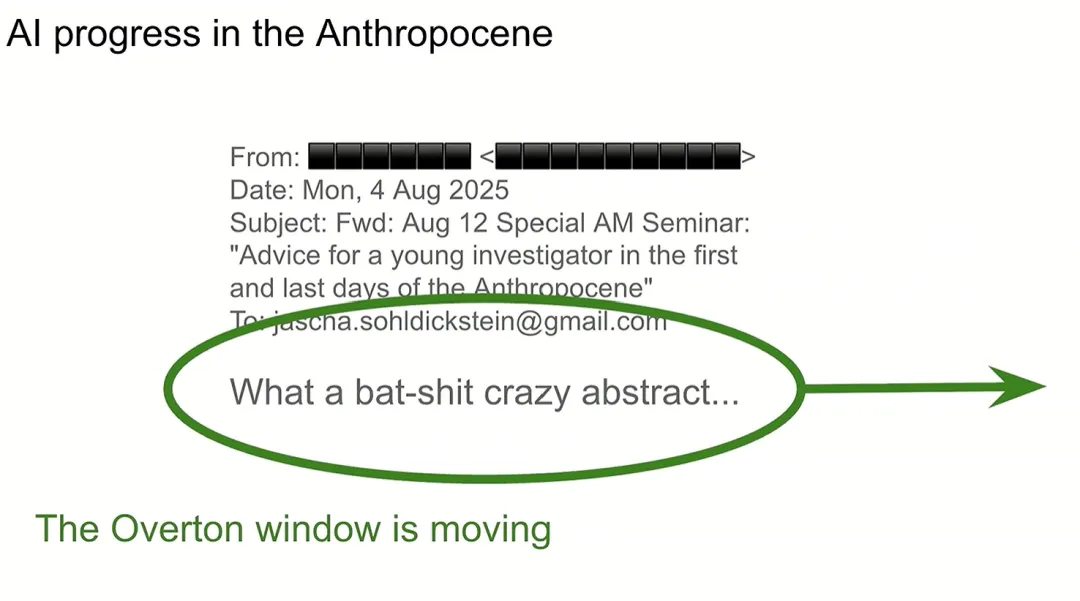
In sociology, the term "Offerton Window" refers to the range of views that the public can accept.
A year ago, public talk about "AGI is coming, humanity will be replaced" was also seen as the crazy thing about falling out of Overton's window.
But now, it's natural.
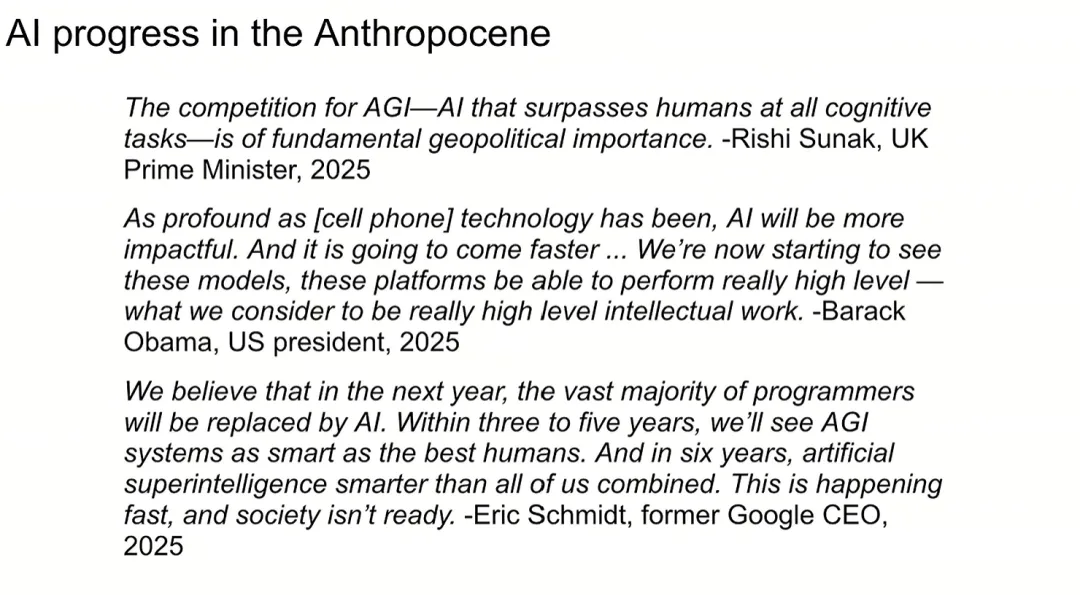
Jascha lists a series of large backbooks.
UK Prime Minister John Soaneck said: "It is of fundamental importance to compete for AGIs that go beyond human cognition".
"AI is more destructive than mobile technology, and it's coming faster, and it's replacing what we think is high-powered brain labor", Obama said.
Eric Schmidt, former CEO of Google, said: "In the next three to five years, we're going to see an AGI that's as smart as the top humans; in six years, we're going to see a super-intelligence that surpasses the sum total of humanity.
The government and top capitalists have no doubts about this.
In this speech, Jascha prophesied to the top U.S. cattle doctors in attendance.
Your doctoral program is over!
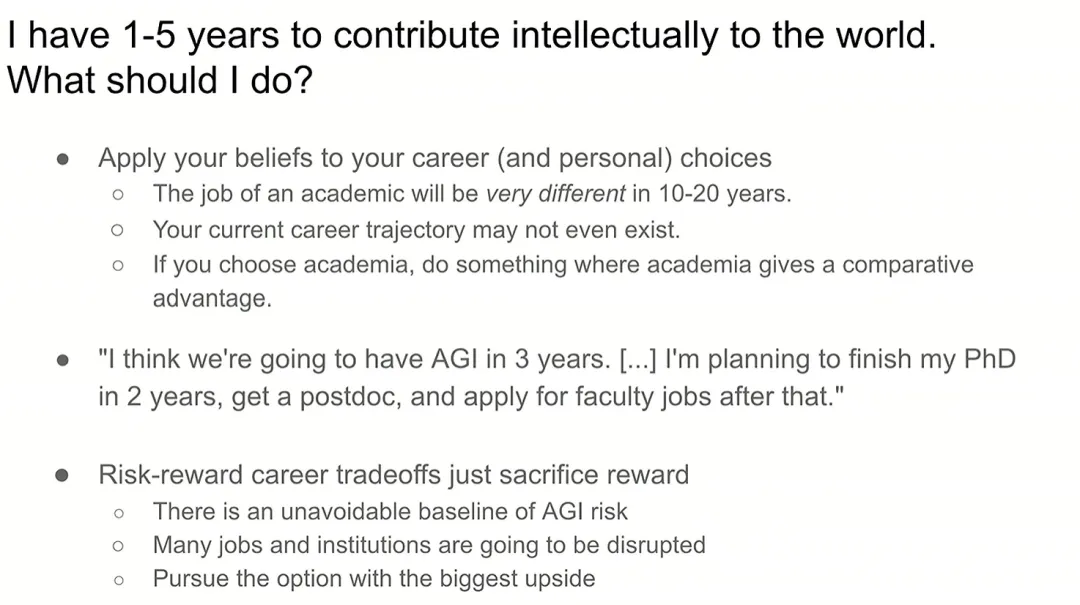
At one point, he had a conversation with a doctoral student who acknowledged that AGI would be achieved in three years, but said: "I plan on completing my PhD in two years and then going to work as a blogger and then applying for a university teaching position"...
Jascha was silent at the scene.
"I don't know what academic work will be like 10 or 20 years from now, I don't even know what any job will be like 10 years from now, but I'm pretty sure it definitely won't be what it is today".
No matter what the profession, all the doctor's career plans are available overnight.
How about that?
He proposed three rules of survival to all the researchers and workers present.
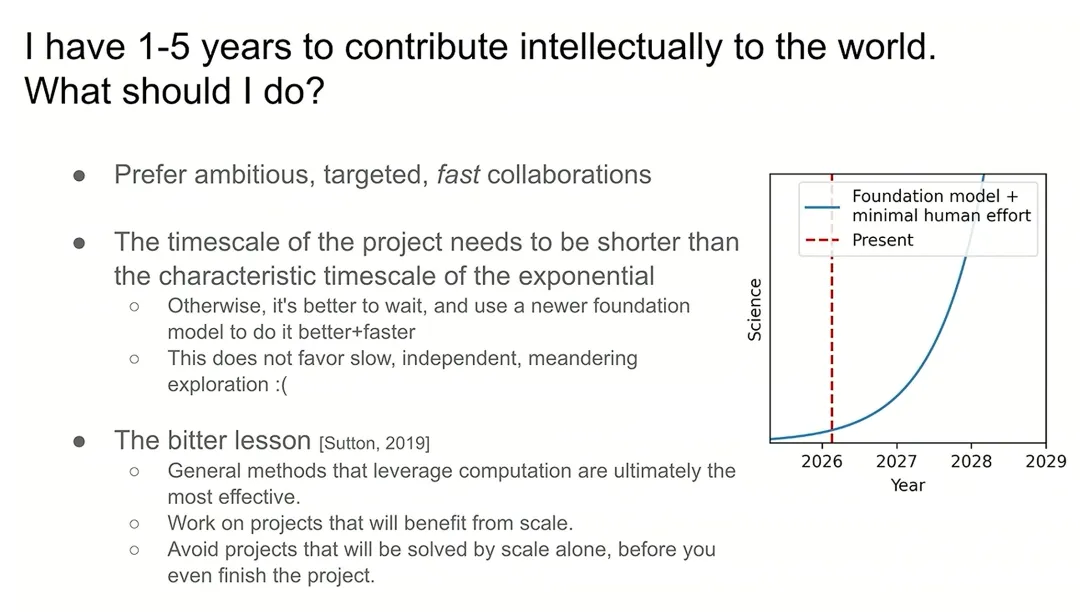
The first rule of survival: don't do "slow-motion exploration", do something that can be mathematically magnified!
There is a well-known "bitter lesson" in the scientific community: using a universal method of powerful computation will ultimately defeat all sophisticated human design.
Jascha warns: "One of the worst pitfalls you'll have to avoid is that you've worked hard for two years and made linear progress. But before you're done, someone randomly writes a Prompt to the big model, and the results are better than your two years of heart bleeding!"
Your subject direction must be rebranded, giving up themes that are easily overwhelmed by scalable computing, and looking for areas that can become stronger as computing grows.
The second rule of survival: stop fantasizing about "stable careers", and the sense of security can no longer be bought.
Many people are accustomed to sacrificing high returns to reduce risk when making life choices, such as choosing an institution to teach for life.
But Jascha pointed to the bloodline and said:If AI triggers massive social restructuring, the underlying risk of society is too high to be avoided. What you think is a "security option" is not safe at all.」
Since there's no turning back, it's better to do things that are really fun, even high-risk, high-reward.
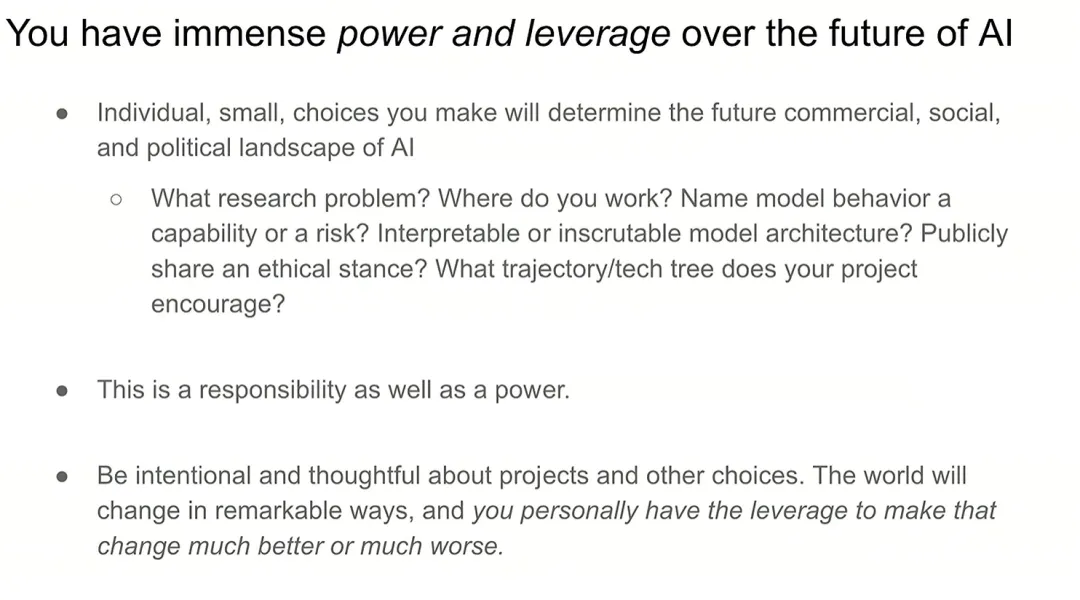
Rule of Survival 3: Stand on the index curve and you'll never fall behind.
"I'm working with Cladue every day and I feel like I'm a super graduate student who's extremely eager to execute, talented, but who's got a taste for science right now.
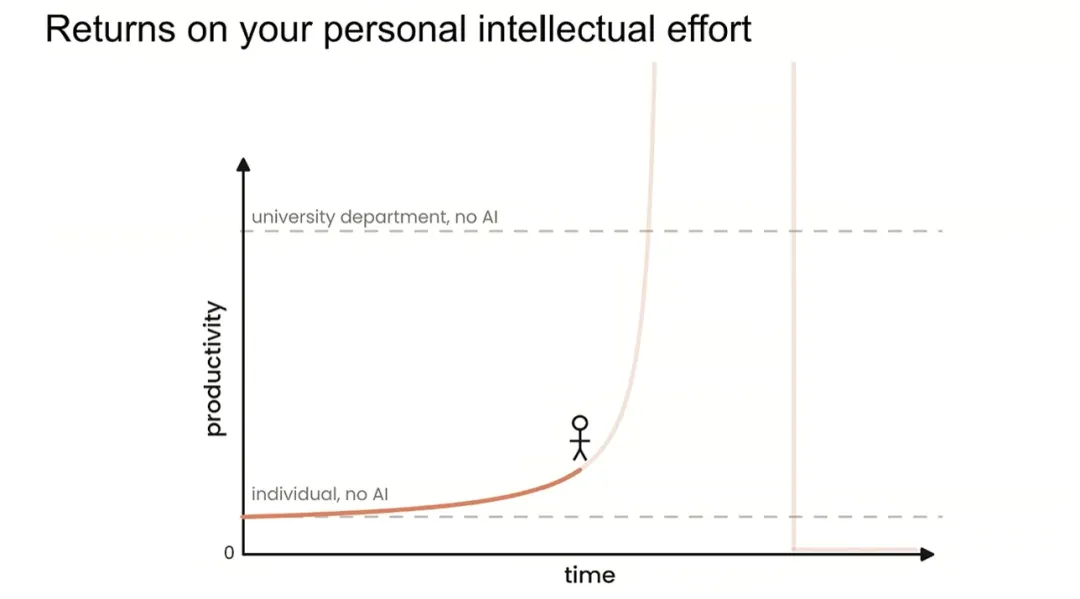
If you don't use AI, you'll be left far behind by the index curve.
You have to force yourself to use AI tools every day. Take them as your subordinates, practice how to be a boss, how to clearly define tasks, communicate expectations.
As long as you stand on this exponentially growing highway and use its power to take off, you won't be pulled out of the car.
However, Jascha has also issued a warning.
"Writing is thinking. Please don't let AI write the first draft for you, you can let it help you make mistakes. But if you outsource writing, you outsource thinking".
After hearing this, you may feel a profound sense of powerlessness: Does it make sense for us to struggle individually in the face of such a huge historical wheel?
Jascha replied: "No".
He stressed:That's because we're still in the very early stages of the index curve, and you've got a huge leverage in your hand.
Looking back on history, in the early days of the growth of the index, the small decisions of a few people can change the future radically.
In 1980, two scientists developed a standardization protocol for e-mail, the only one that exists today.
It's been a decade since chat software was standardized, and that's why we're still building a wall between different apps today.
The inventor of the synthetic ammonia technology, Harber-Boschfa, has created the most lethal explosive that could feed billions of people on the planet.
"Every little decision you make: What problems do you choose to study? Do you call a technology 'capacity' or 'risk'? Do you advocate open source or closed source? All of these at this early stage will have a huge butterfly effect on the future business, social and political landscape".
Finally, Jascha paints a picture of a future that is both grim and sad.
"In the near future, there will be a short-livedThe Golden AgeDuring this period, you will become the "complement" and "unlocker" of a large number of Agents.In a week, you can unlock what you haven't accomplished in your entire career.」
"But there will surely come a time after that".You will no longer have a 'unique direction' that no AI can replace, and you will no longer be able to unlock the work that no AI can do.」
"So please enjoy this last golden age that is still dominated by humanity!"
"Go do something that you can look back on and be proud of in the sun-enveloped Dyson Villa until you're old".