
It's the first time in the history of the world.
ChatGPT has also learned how to work with the "Shakers" team!
On October 16, OpenAI announced an upgrade to the GPT-6 Astra Pro in ChatGPT:
Faster responses, improved use of plugins and tools, and the ability for multiple smart entities to handle the same task.
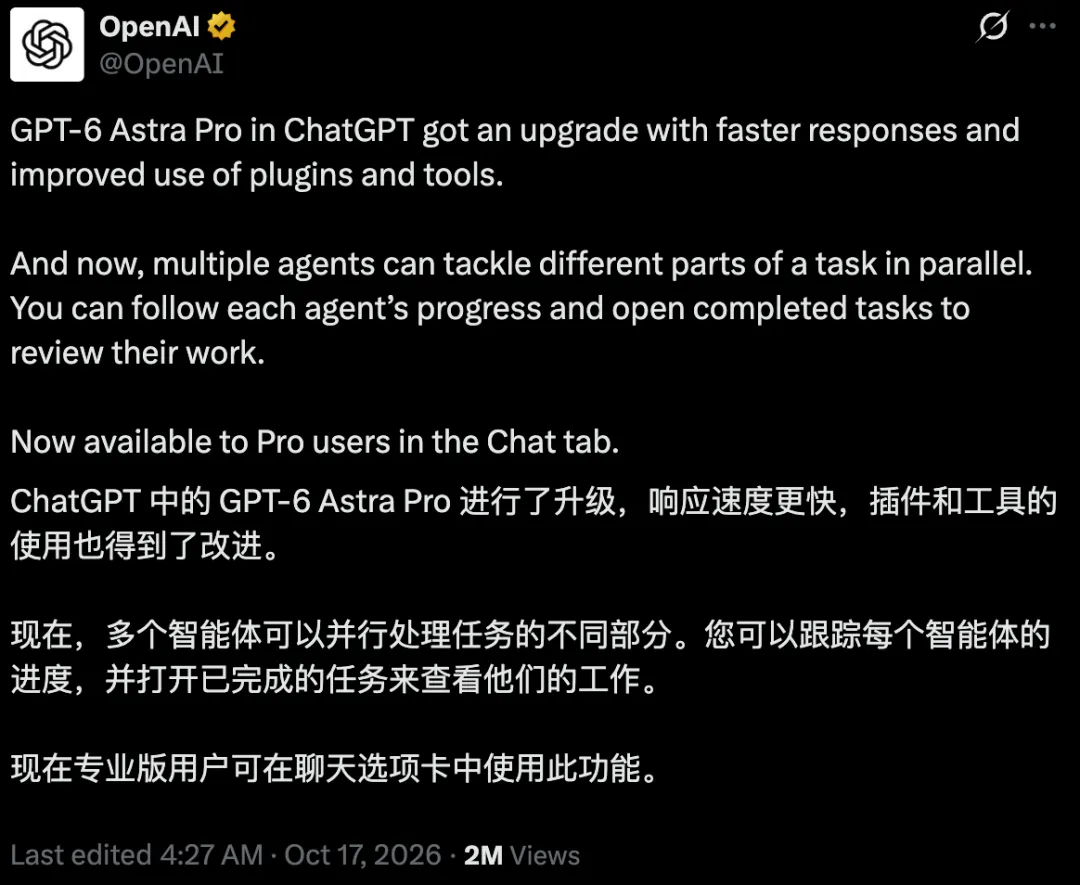
A complex task is handed out, and several AIs can handle one piece at a time.
You can also keep track of the progress of each person in the conversation, individually highlight the tasks that have been completed, and check the results.
The module executes, tracks progress, looks at results, and these links are integrated into the same chat entry.
Currently, the update is open to eligible Pro users. Whether the company or team account is available, whether the administrator has set it up, and whether it has been pushed.
The more AI works for you, the more tasks you need to do.
@Sebasti54919704 said: "Parallel intelligence is good, but following progress is the part that makes him collapse".
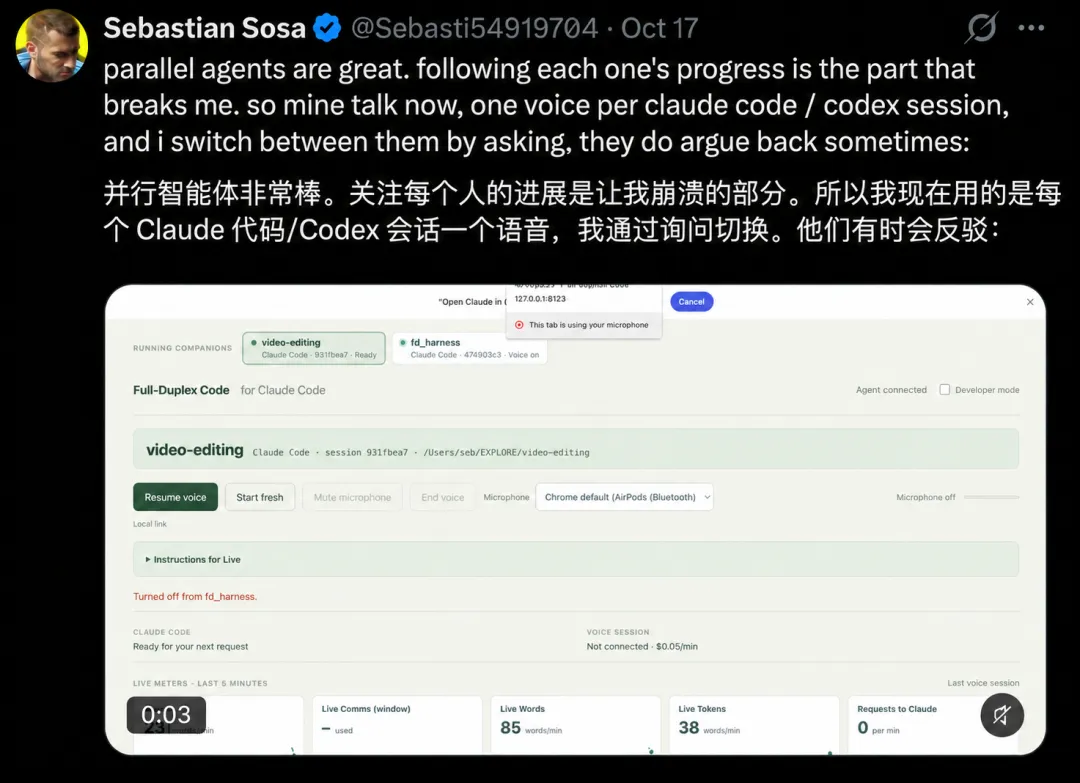
He asked for his Claude Code and Codex conversations to be voiced and opened the door to inquire about progress and switch sessions.
At times, these intelligent beings also contradict him.
Several AI's are running at the same time, but people may be busy staying ahead, completing tasks, and occasionally having to deal with AI's "top of the mouth".
The AI team is not good at it, but it can also see if it allows users to spend less time tracking progress, transmitting information, coordinating tasks.
How does this AI team work?Enter the Chat Tag page at ChatGPT.
According to the official help documentation, in the model menu, select GPT-6, then drag the Thinking mouse to the Pro file, using the GPT-6 Astra-powered GPT-6 Pro.
Instant, Medium, High and Extra High are powered by GPT-6 Sol.
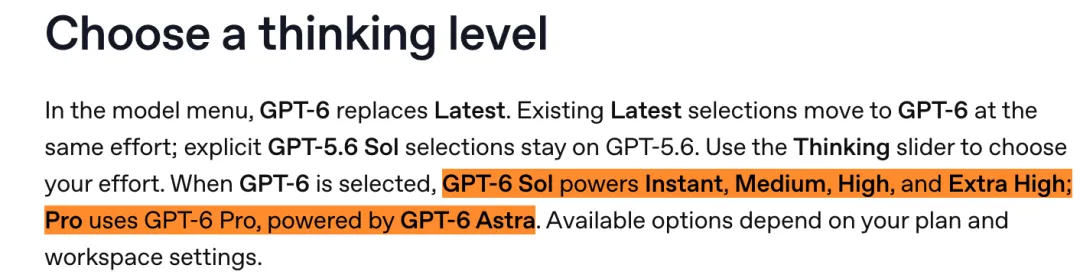
The standard grade of GPT-6 is supported by Sol and the Pro grade by Astra.
This upgrade made three major changes.
The first is speed.
According to OpenAI, the response has been quicker. In terms of how fast, how much time can be saved to complete a task, the official figures have not been released.
The second is the use of tools.
AI can't make a living, and it depends on how well the tools are used.
Netizens @Rossisonx spit out that the plugins sometimes get into the loop, the card is in place, and it seems to be consuming the quantity.
This year, OpenAI announces improvements in the usability of plugins and tools, and how they work is also seen as "effective".
If the tool needs to access external services, the user still needs to connect the account first, complete the authorization, and the AI can only operate within the permissions allowed.
The most fundamental change is:Multiple intelligent agents are functioning simultaneously.
For example, if you want to choose one of the three AI tools, you need to compare features, prices, and usage limits.
The AI collects data for each product and aligns the terms of the monthly, annual, free and paid versions.
The user @rubenssoto_a also shared his own attempts:
I made it do research, then exported product requirements documentation and task sheet, and the results were great.
From looking at the data to writing requirements, listing tasks, the results of the research can be transformed into the next step in the execution plan.
However, as with a human team, AI can do the work at the same time, depending on the order in which it is done.
For example, read the material first, program again, modify the document last, then use the results of the previous step, and multiple AIs cannot be skipped.
It's a chance to shorten the wait by removing the part that can really move simultaneously.
It's hard to tell if you're going to make it out alive and if you're going to make it out alive.
Users can track each of the smart entities in the main conversation and then turn on the results of the check.
Netizens @wushanyunyu1 commented on the change, saying, "It's gone from chat to live".
In his opinion, the next challenge is who can manage the work of multiple intelligent agents, make fewer mistakes, and return to work.
He wanted to see how many Pro users would need to go back to work after completing a set of real tasks with it.

Many AIs are interacting at the same time and people may never see them.
@leolaoshuai reminds us: "The speed at which the card is accepted by you is the speed at which it is accepted".
If each result were to be checked from scratch, the saved waiting time could be spent on receipt.

His suggestion was to write a clear "how to get it done" before sending, with a direct verifiable basis for delivery.
The results of the smart body, not only to be able to check, it is better to list clearly what has been done, depending on where, so that users spend less time checking and verifying.
The announcement did not elaborate on whether or not multiple devices could be running simultaneously, whether or not they could be triggered by default, or how the results could be combined.
Claude has already assembled an army of intelligent agents.Twitter user @FinallySomeRest said in the comments section: "This, Claude, has been around for a long time".

When it comes to AI teams, Claude has been practicing for a long time.
Claude Research, which opened to the public in June 2025, will be led by a team of main intelligences to have multiple sub-intelligences conduct research and then summarize the findings.
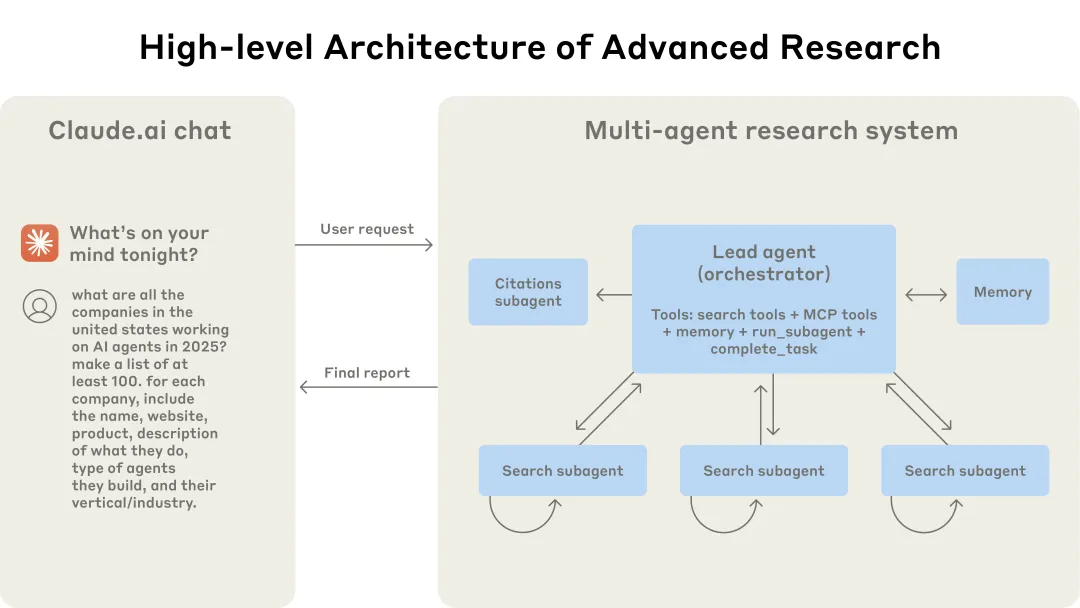
The main intelligences allocate research tasks, multiple sub-intelligences simultaneously search and then aggregate findings. Source: Anthropic
On September 17, 2026, a new edition of Claude Code Projects began publication, extending the collaboration to ongoing projects.
You switch objectives in a project conversation, and Claude is responsible for dismantling tasks, coordinating multiple threads, and accumulating project memory.
On October 10, it was officially announced that Pro and Max users on the Projects waiting list would be released.
At the same time, the Managed Agents dynamic workflow opened up the publicity and released a set of bug tests:
In 116,000 lines of code, 70 bugs were pre-buried, with each smartphone running three times to find 14, 15 and 27, respectively; in exchange for a dynamic workflow, 66 were found on all three occasions.
From scanning data to coordinating multiple task lines, Claude and ChatGPT are taking on more division and collaboration.
When it comes to "who comes, what comes first, how the results come together", the implementation and public details vary from house to house.
AI can divide itself, get results, and people can be less of a spokesperson.
It's time to get back to work.But dismantling the mission is just the beginning.
If multiple AIs go through the same data, it looks like they're busy in the heat of the day, but they're actually repeating the work.
If one branch uses the latest data while the other is still referring to the old version, the resulting report may also conflict back and forth.
Anthropic has shared a lesson in introducing multi-intelligent research systems:
The two sub-intelligences surveyed the same weight in the same direction, while the other looked at different year issues.
So, when it comes to division of labor, it's important to be clear:Each person checks what, to what extent, and in what format the results are delivered.The more blurred the mission boundaries, the easier it is to repeat searches or miss key content.
It's the first time we've checked and then we've got to align the results.
Teamo said: "Parallels are not difficult on their own; it is difficult to finally merge".
In addition to looking at progress, he hopes to see where the results of several branches are conflicting.

Reporting, data timing, pricing, and comparison calibration are consistent; code, interface, and naming are consistent.
Otherwise, the AI branch is done, and people have to start checking, fixing, and rewriting.
Anthropic also warns in its official explanation of the Claude Code that closely-dependent steps are not suitable for forced disassembly, and that multiple smart entities modifying the same file at the same time can easily lead to conflict.
The task is too small, and the division of tasks and interconnections can compensate for the time spent in parallel.
It's cool.But we also have to look at the quantity.It's up to the user to figure out how much they can use.
According to official help, Plus users can use Astra in Work and Codex, but cannot use GPT-6 Pro in Chat.
This multi-smart body upgrade in Chat is currently being rolled out to eligible Pro users, and Plus users are not available for the time being.
Netizens @WhosCinq complained about Plus users in the comments section, questioning the update and excluding them.

Users who have already paid are also concerned about the price.
Netizens @JcCastaneda05 unveiled their own Pro subscription and volume page, appealing for a sentence:
Please make it cheaper.
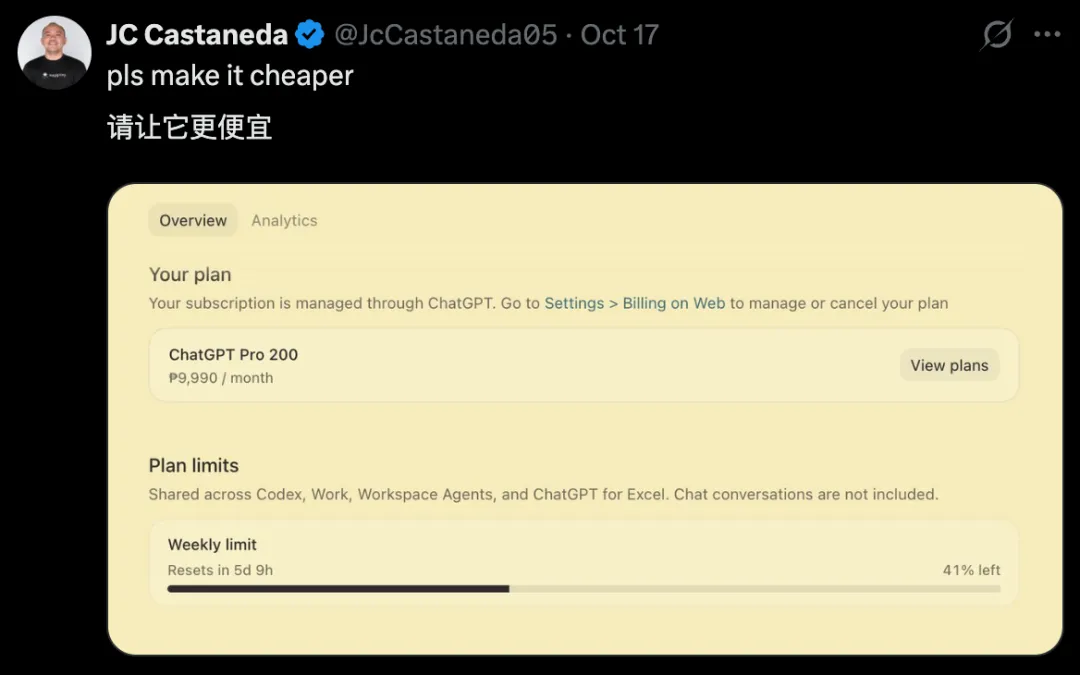
Opening Pro doesn't mean letting go of the running game.
Let's see where it goes.
The Pro model message limit in Chat is calculated separately from the use pool shared by the Work, Codex.
The user snapshot above also shows that the share volume does not include Chat conversations.
Then see which file to subscribe to.
Current official help documentation shows that the $200 GPT-6 Pro has a weekly limit; the $100 GPT-6 Pro and the GPT-5.6 Sol Pro share a weekly limit.
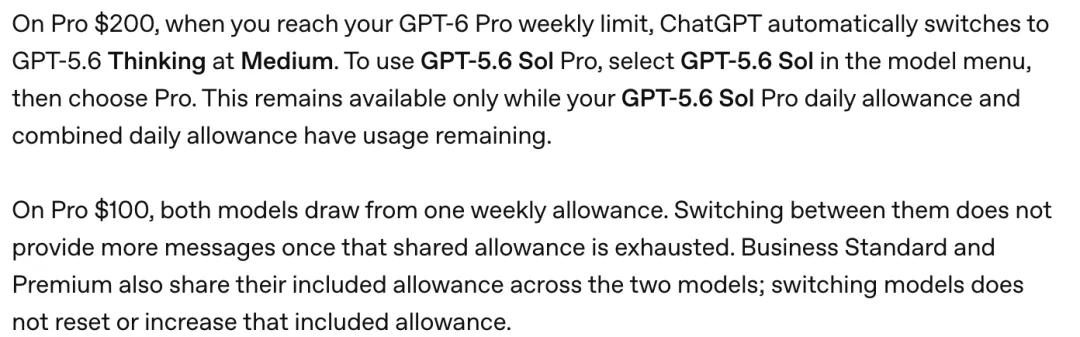
The $200 GPT-6 Pro has a weekly limit; the $100 GPT-6 Pro has a weekly limit for both Pro models.
In addition to the insufficient quantity, users also want every consumption to be clear.
Netizens @aiertixue said their Codex weekly quota was suddenly reduced from about 60% to 0%, but was not used accordingly, hoping the team would investigate and restore the quota.
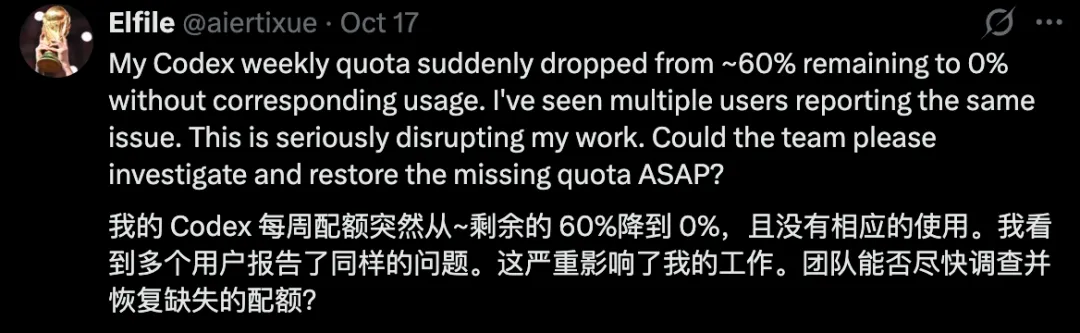
This feedback suggests that the Codex can't judge how many smart entities in Chat will deduct the quotas.
There is a real need behind this:Before the task is done, the user needs to know where the quota is spent.
After the AI rollsHow many more pits do people need to fill?A small AI team is not good at looking at the total amount of time, quantities consumed, and how many checks and modifications are needed from receiving the task to delivering the qualified results.
The user @cooolernemesis made a specific assessment request:
How fast is the entire project, with the same quality requirements, to coordinate expenses and repeat tool calls?
After all, AI is running fast, which doesn't mean users can get their jobs early.
Give the same information, the same complex needs to ChatGPT and Claude, see who is missing less information, whose conclusions are valid, and see how many requests the user has to fill and how long it takes to get back to work.
Track progress, see which lines are stuck; open completed tasks, check for missing data, misspelled code.
If these designs can save money, it's up to us to see if they can help users identify problems faster and get qualified results.
AI is not the end of the job.
People check, change, the results can really be used, the whole task is to be completed.