Recently, Meta has taken a beautiful turn for the worse, with its all-new personal AI smartphone Muse quickly becoming a phenomenon since its launch.
According to Sensor Tower estimates, Meta Muse reached 5 million downloads in the U.S. about 22 days after its launch on September 8, faster than the historical estimate of ChatGPT/Grok/Claude, and topped the free app store list in the U.S. for several consecutive days.
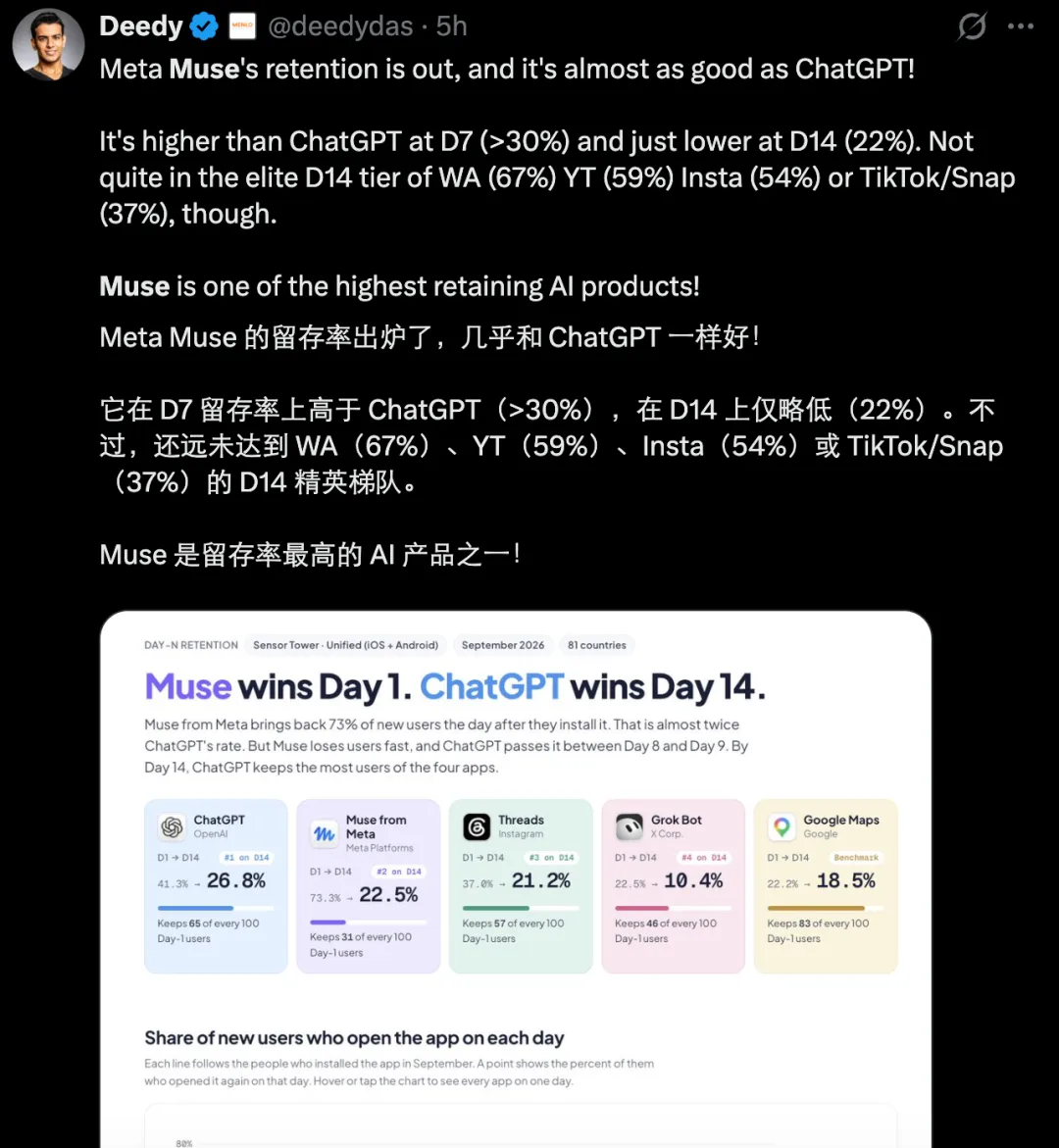
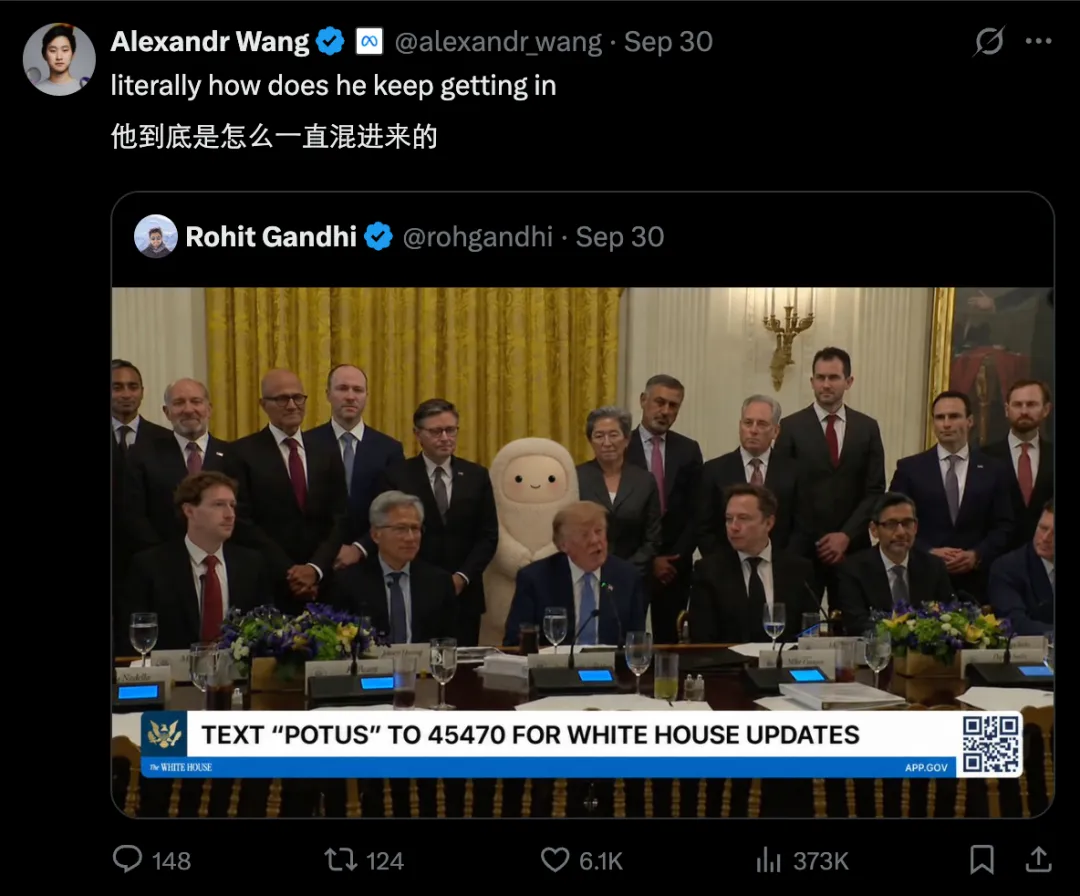
And the game's game-changer, Alexander Wang, head of Meta's super-intelligence laboratory, recently had to get out of the loop of the product. After the launch of Muse, he went into a "crazy" state on X: high frequency infarction, playing himself off the field.
Recently, Wang received a lengthy in-depth interview and for the first time completed a complete review of the beginning of the birth of Muse.
At the beginning of the year, when the entire industry was crowding out coding agents on this track, and everyone was convinced that "that's the only thing that matters", why did Meta turn to a personal scene?
At the beginning of the year, the fire spread all over the net and quickly cooled, and most of the experience was gone. What made Wang decide that this was the "last consumer" and why did Muse feel that it was an exception?
What is the real temptation for many of the world's top researchers to get paid "not so much"?
Why is the team being deliberately squeezed under 200 people when it is considered "the most important product of the year" by the entire company?
The distribution of 3.5 billion users is in the hands, so why should the cold start be started by Wang himself?
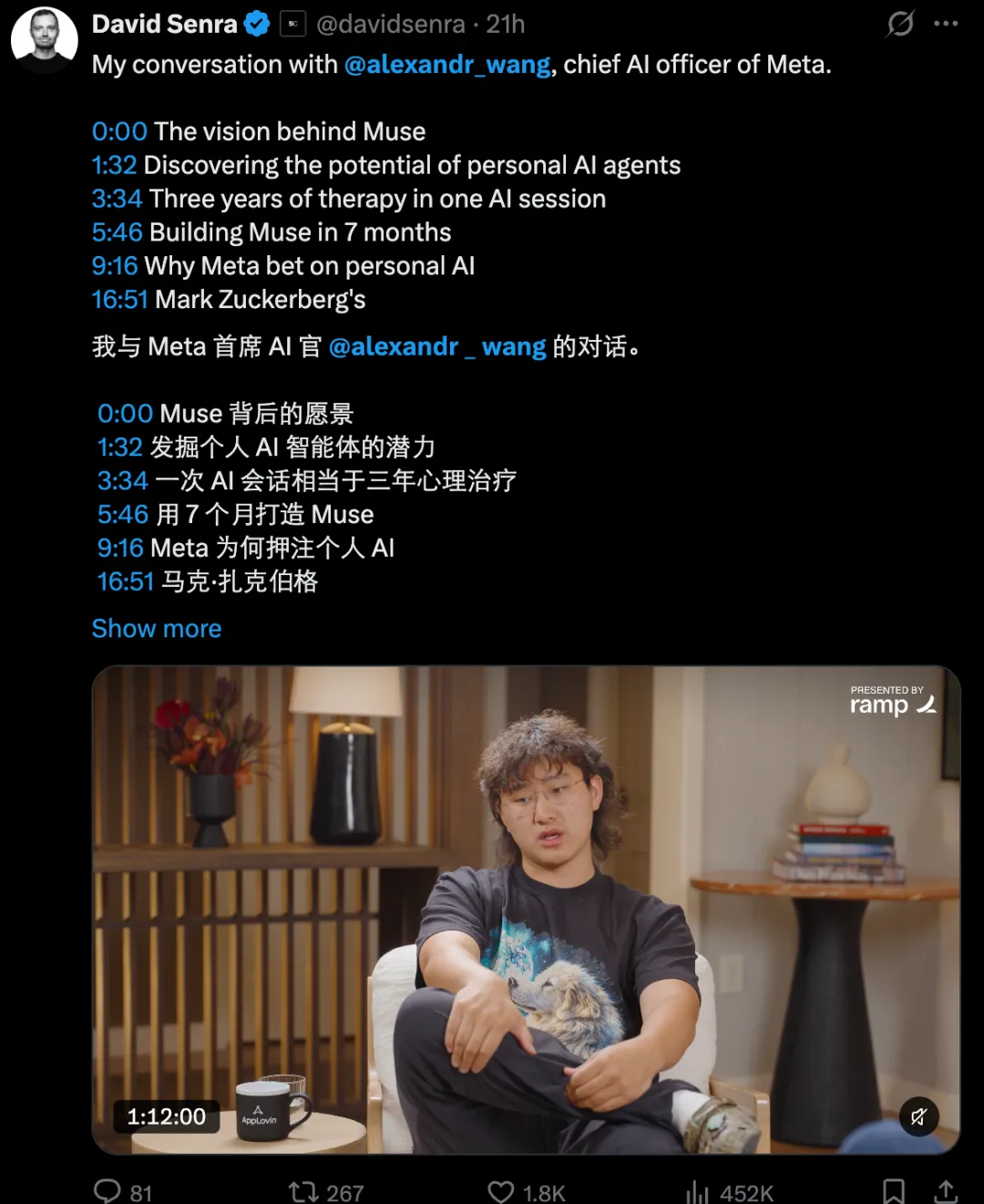
The address of the video:
Here are some of the things we've put together:
When everyone flies to the coding agent,
They saw another signal.
It's time to go back to the beginning of the year. In Wang's words, that's "the beginning of the Anthropic takeover industry": Opus 4.5 and Claude are far ahead in programming, and the consensus across the industry is that coding agents are the only important form, if not the only important capability.
At this point, Nat Friedman of MSL became the first person inside to use OpenClaw deeply. Wang describes his experience as "between fear and fanaticism": he tells his own OpenClaw that he wants to drink more water, and the Agent looks at him through a monitor screen in his home drinking water, and when he drinks, he boasts that he is "beautiful".
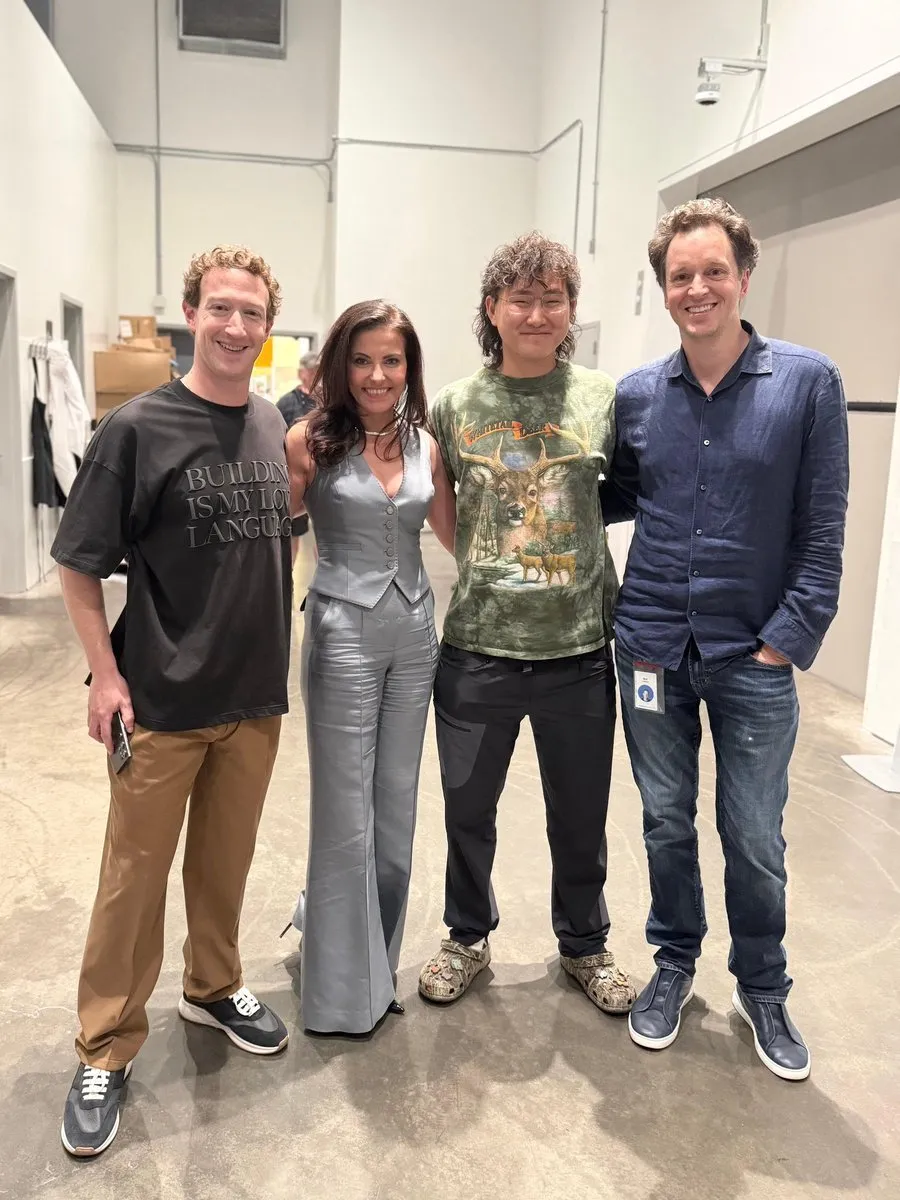
The one on the right is Nat Friedman, former GitHub CEO, one of Muse's souls.
The first thing he did was run a "psychological analysis" tip that Nat wrote: "Because the Agent can access his emails, photos, and search the Internet himself, he can do a few rounds of in-depth questioning and, in his own words, "it's the equivalent of squeezing three years of psychotherapy into one moment".
The key is Nat Friedman's "wind direction": he was one of Stripe's earliest customers, one of the founders of GitHub Copilot, and has long been at the forefront of the developer wave. So when he says, "there's really something here", Wang takes it as a clear signal.
In February of this year, the two men each wrote a memo and submitted it to the Meta board. Wang's core viewpoint was quite bold: Personal Super Agent, probably the "final form" of consumer goods. A week or two later, the prototype was made, directly demoed to the board. And many of the core decisions in the final edition of Muse already existed in the prototype that came out that week.
The inspiration lies in: where consensus is the most crowded, and often the most overwhelming, of signals. When everyone is staring at the coding list, the real opportunity lies in the moment when "ordinary people give their lives to AI for the first time".
OpenClaw is hot and cold.
What makes Muse think she's the exception?
This is the sharpest question in the interview: the phenomenon of OpenClaw is happening fast and fast, and most people disappear after a few "magic moments", so why are you different?
Wang's answer was unequivocal: OpenClaw was a work of genius, and they had great respect for Peter Steinberger.
The release standard is also digital, and each line has a "launch blocking threshold", with several checkpoints being "80 rows of green, 20 rows of red", and they know that's not enough - until the first full-green version of MuseSpark 1.3, which was specifically trained for Muse, and the team's hands-on experience, "Obviously better than all previous releases, the product was released".
The reason behind this is a judgement on the nature of the brand: Personal Agent is a "brand on the edge of the knife". If it can deliver a magic experience, it will be one of the greatest consumer products of all time. But the model is uncertain, Agent will make mistakes, collapse, and users will immediately judge you to be garbage once you encounter a series of unreliable experiences.
Thus, the gap between OpenClaw and Muse is never "there's no magic moment", but the goodness of the magic moment.
Why a personal scene?
A mathematical question about "what do you want to do?"
Bypassing coding is about choosing personal scenarios, not just product judgments, but Wang's strategic judgment of Meta.
His logic is beautiful: AI's promise that everyone will spend almost no more time doing "what they have to do", leaving all of their time to do "what they want to do". Meta's product matrix, Instagram, WhatsApp, Facebook, is exactly what people want to do: interests, hobbies, friends, and people.
In other words, if AGI really came along, where would the time that people have been freed from "must-do" flow to? to Meta's plates. In a business perspective: Meta's applications reach 3.5 billion people every day, and the natural home is consumer-grade AI, not work, not programming.
This judgment is a wake-up call for all those who make AI products: rather than hanging around in someone else's home, think about how your own genes and distribution determine which battlefield belongs to you.
The company's most important products are:
It was given to less than 200 people.
From the prototype's release in February to September, Muse spent seven months. Wang said: "Seven months doesn't sound long, but seven months in the AI industry is the equivalent of a decade out there". During this time, the mainstream narrative on Wall Street was "Meta is burning money", "Jack can't win AI", and the company was full of suspicion.
He never disguises himself as a personal agent at a call-in meeting, then covers up all the questions, and the team grinds things out.
But what's even more surprising is the way it's organized: models plus products, a total of less than 200 people. And it's deliberate restraint. Everyone at the company knows that this might be Meta's most important product this year, but it's just because it's important that it can't be expanded into a project that "most companies are always in demand".
Wang used an idiomatic phrase: "Muse must be a complete work" ("a single work of art"). He taunted the fabrication of the factory's products with Frankenstein-style concoctions, or, in his own words, "some kind of Conanberg-style hybrid" ("a mixture of biological and non-biological flesh and blood, a transmutation of border dissolved flesh"). Each PM wanted to stuff his own stuff into the product and finally make it into a glass of milkshake.
In the interview, which coincided with the 15th anniversary of Jobs' death, the host added a line: "Apple is the ten thousand lives of Jobs", while Muse's "single point of view", Wang said, comes largely from Nat Friedman's tastes.
The easiest mistake big companies make in innovating is to kill the integrity of their work on a large scale.
The truth about excavators:
Money is just a ticket.
Earlier in the day, the press of the Meta sky-digging AI researcher brushed the screen, and the first reaction from the outside world was basically "people make more money".
Speaking of money, he believes that the outside world is ignoring a context: OpenAI and Anthropic are valued too high, and if these top researchers had stayed in the country, their holdings would have been astronomical numbers.
Wang lists three things: one is the opportunity to build a lab from scratch, where the team is small enough to really leave a mark on the individual; the second is a clear Arctic star, and his original idea is that almost everyone who does AI wants this technology to ultimately make sense to their grandparents; and the third is that it's not restricted.
As for why Zuckerberg was willing to spend a seemingly odd amount of money on a small group of people, the host summed up the logic for him: the top talent will attract the top talent, but you have to have the "species" first. Wang agreed.
After the excavation, the focus was on how to use it. MSL's organizational design was almost at odds with mainstream practice:
More than 200 direct reports. Wang is directly in charge of more than 200 people, called "anti-bureaucrats". The recruiters have proven that they can do brilliant work, so "they don't need a manager, they need a good environment" and need a "room to cook".
Wang has contrasted two roles: at Scale, he is the founder of the "every detail shows its own will", and as a result, he has become a bottleneck; at MSL, his job is to pinpoint the North Pole, identify the special talent in the team, and then provide the environment and resources to maximize their talents.
He divided the business into two paradigms: one is "Gay skyscrapers", which are linear, with the intent of extracting 1% and 2% efficiencies from each link; the other is "Diamond mining", which is distributed lawfully, and most attempts fail, but few succeed. AI research is obviously the latter, because humans don't know where the limits of the capabilities of these models are, so it's not operational engineering, it's real research, and testing must be tolerated.
The host added a quote from Bezos: "There are not many cattle in the big companies, but if the cattle don't know how to build something, they will leave". Wang deeply believed that this was the starting point of all MSL designs.
There are 3.5 billion users with insufficient distribution.
I'm going to have to come down here myself.
Muse's cold launch may be the best marketing case of the year.
Wang admitted that Meta's distribution guarantees that "everyone knows Muse", but it doesn't guarantee that it will "explode in a culturally permeable way".
So there's the "crazy" period of Wang on X. There are a few interesting things.
Muse has a little mascot Jolly. One day on the way to work, Wang created a picture of Jolly staring at a public letter bag with the caption "I'm at work on Monday", and he realized: this little thing can be put into countless scenes.
For a while, he couldn't concentrate on the meeting because he suddenly had a riddle in his mind: "I have to go out right away". He had dinner with his colleagues and ate half of it saying, "Wait a minute, I think about it". He noticed that the Internet rewarded adventure, rewarded expectations.
He doesn't quite understand ads from Anthropic and OpenAI: an icon and two people sitting at a table, "What does this crap mean?" (That's right.) You have a million real use cases in your hand, and the only thing advertising does is show what the product can bring to the user.
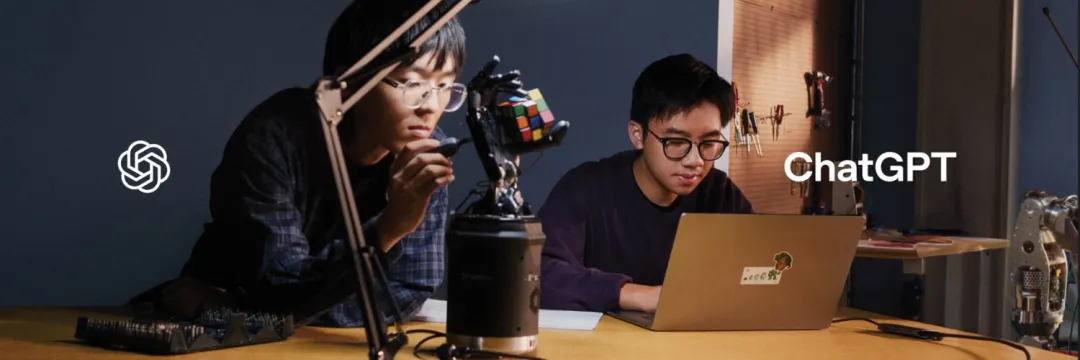
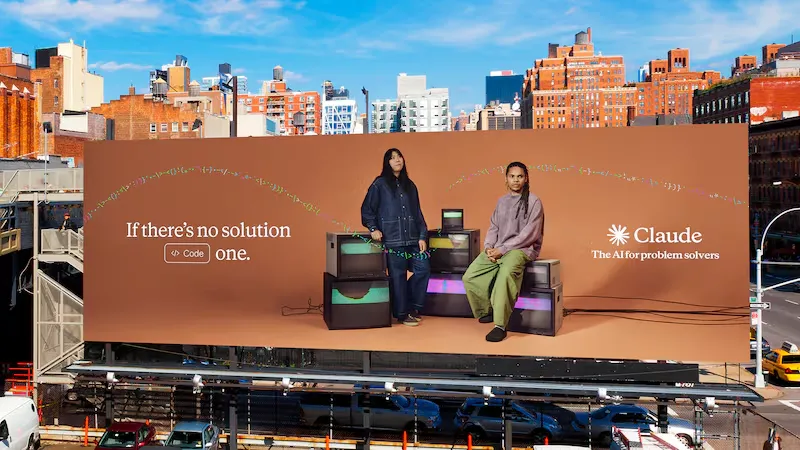
Is this an advertisement for Wang Spit?
This is the central idea behind the 1920s book Scientific Advertising: Nobody cares about your company, people only care about their own interests. Wang's version is: "Why would someone care?"
Another interesting point is that screenshots are disseminated. Modern consumer marketing is "screensharing-driven": your product has to be able to screenshot in groups, in mouths, on social media, to screen your own legs. The host gives an example: his friend dropped his ID on a private plane and said directly to Muse, "I don't want to be a part of this process, you do it yourself".
The founder himself came out as the "first chart officer" sounded disrespectful, but when distribution failed to solve the problem of "being remembered", a person-tasting, adventurous voice was precisely the most scarce asset.
It's the "trust ladder" that users leave behind.
The marketing solution is "download" and the remainder depends on another mechanism. Wang calls it trust fall:
Users don't trust the Agent at first, but they're a little curious, so they give it a little something, and it does it; then they give it a little something, and it does it again; and then they keep coding. Each time they succeed, they're giving the next one more trust.
This also explains why the product experience is extremely sensitive to model quality. In A/B testing, the reliability of the model's completion of tasks, and the reliability of user communication, and the reliability of actively confirming when guided, breaks the trust ladder for any drop in the chain.
To get users out of "chatbots" in a simple way is not an educational shock, but a well-designed climbing curve: the sooner the better the first wow, the better the next step.
For more details, please see the original video.
© THE