Every year, the trade fair is a typhoon for the robotics industry, but this year's wind is changing somewhat.
In the past few years, the narrative of physical intelligence and robotics has been almost fixed. A humanoid robot walks onto the stage, performs some actions of grabbing, walking, voice interaction, clapping, and video brushing. But these demonstrations demonstrate, in essence, that a single robot has the ability to perform a single action in a controlled environment, from a mouse to a mouse to complete a set of production processes, separated by more than a technical distance.
At the twenty-sixth Industrial Expo, the fifth generation of secondary education did little of the same.
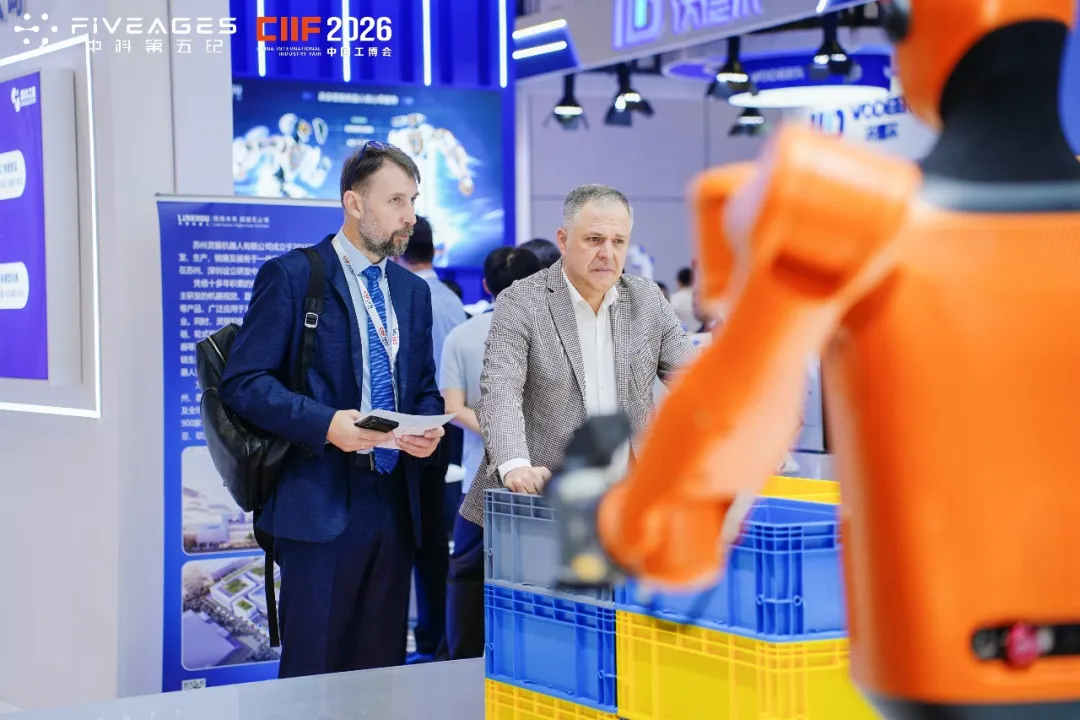
The three Jilin-L1 twin-armed robots collaborated on the stage around the material flow and independently completed the entire process of disassembling boxes, feeders, feeders, codes, without the need for artificial intervention.
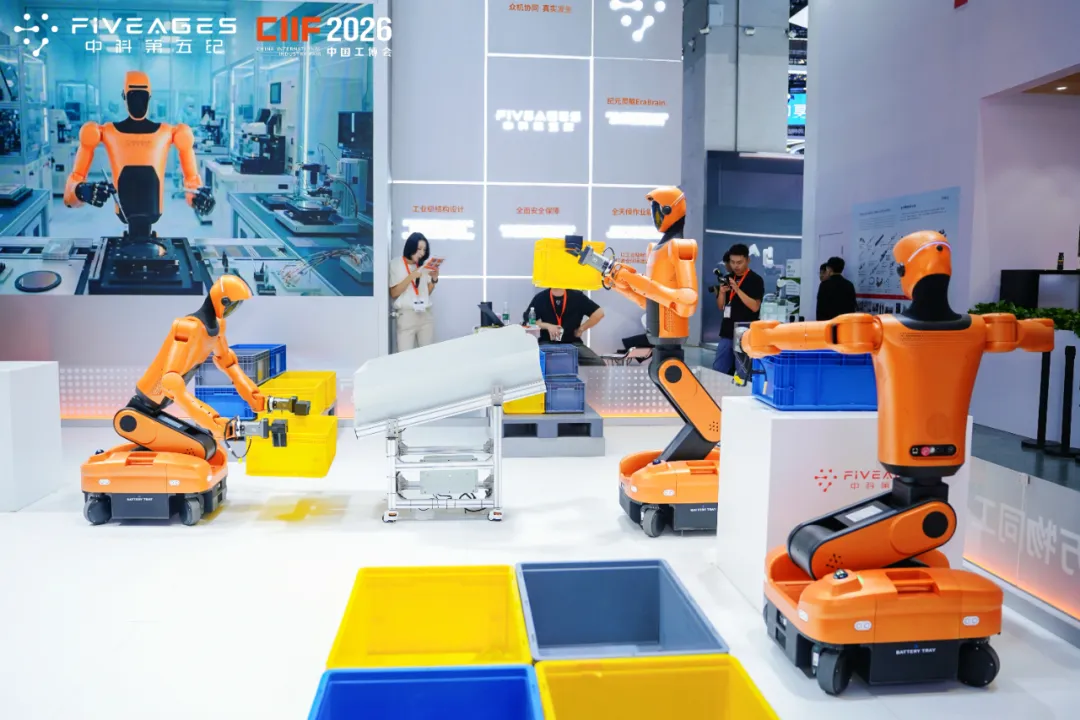
This detail is noteworthy because it touches on the core and most difficult questions of intelligent industrialization: how robots move from independent workplaces to process collaboration, and how to integrate single-engine capabilities into overall production.
01.
From moving a box to completing a process
Moving a box and completing a set of material processing processes is a very different requirement for a robot.
The former tests the ability to grab, move, and place a single operation; the latter involves task division, material interconnection, and timing co-operation between different operations. Multiple robots only complete their respective tasks and interact with upstream and downstream movements in order to form a true continuous operation.
This sounds like an engineering problem, but it's actually a systemic problem. In a multi-machine collaboration scenario, every robot's decision needs to take into account the state and movements of other robots, the timing window at the points of interconnection of materials is extremely narrow, and any delay or deviation from one robot can be transmitted to the entire process.
It is worth noting that the technological breakthrough of multi-machine collaboration is not only the creation of multiple robots at the same time, but also the creation of a closed loop for the execution of multiple robots, which is the key transformation from a smart display model to an application model.
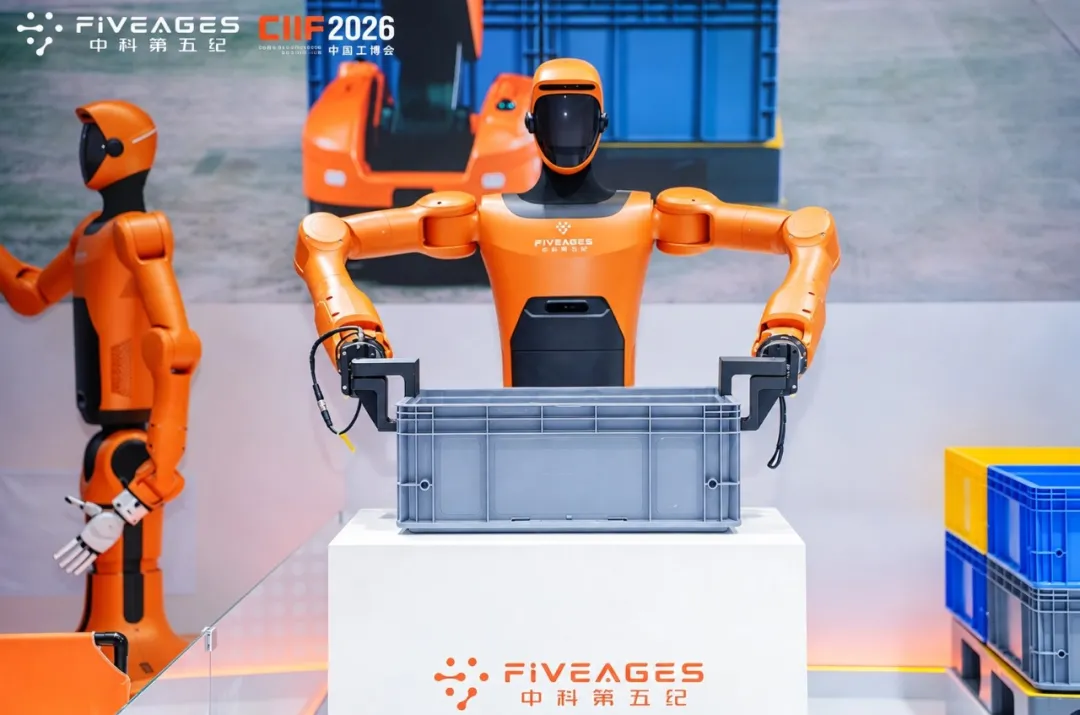
From an industry perspective, since 2025, many enterprises have been pushing multi-machine collaboration from the laboratory to the factory. From multi-core multi-scenario multi-tasking autonomous collaboration operations at the Beijing Human Robot Innovation Center to multi-human robot collaboration training at the Poole 5G Smart Factory, the Zhong Group Smart Machine is becoming the next key word in the physical intelligent industrial landscape.
02.
The Age of Enlightenment: Why transnational universality is the threshold of industrialization
The technical underpinning of this collaborative workflow is the 5th-century Ming Dynasty brainchild.
Its core breakthrough lies in two capabilities: cross-bodied general and low-sample learning. These two capabilities directly point to the two most realistic points of physical intelligence industrialization, capability for reuse and task adaptation.
Speaking of cross-bodied generalization, the current physical intelligence industry faces an embarrassing reality: each robot hardware needs to be trained and adapted to a model separately, and one device has to be changed over and over again.
The core of this technology is: no longer to allow the model to directly learn the linking instructions of a specific robot, but to uniquely encode the sequence of movements of different entities into a sequence of movements, to learn the rules of motion of the movements themselves, to learn to grab, move, place, and so on, forming a shared general-purpose functional language. The general-purpose compiler serves as an operator translator, first reading the number of nodes, frequency configurations, connectivity sizes, and then using the general language to translate the specific instructions that each robot can execute.
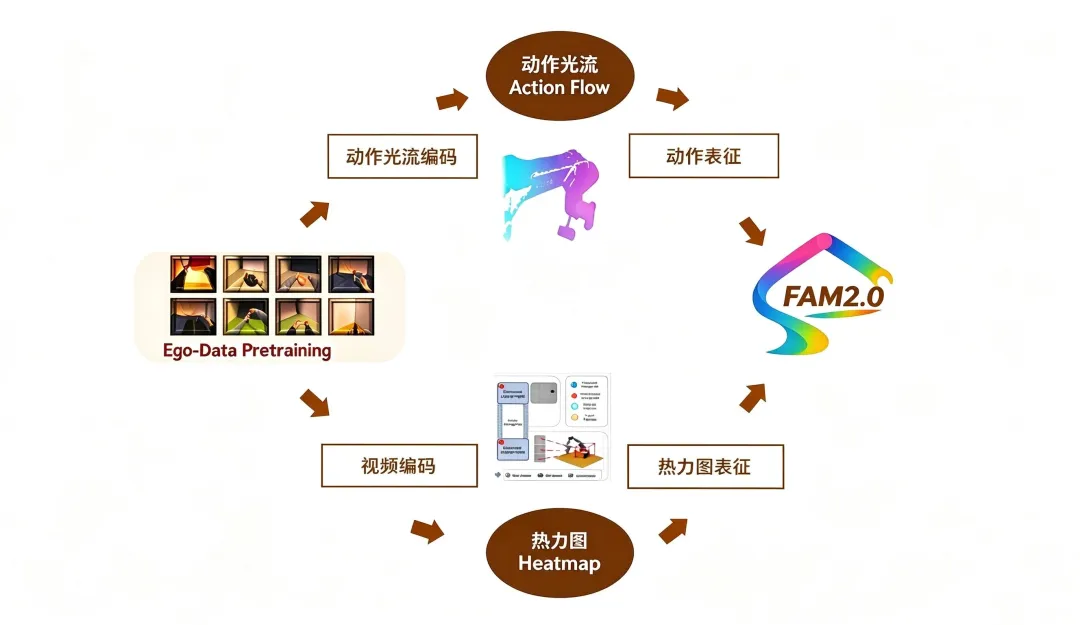
In more general terms, the model learns how to do a thing, rather than how to do a specific robot. This means that the same model capabilities can be migrated and replicated between mechanical arms, humanoid robots, and rotary robots. This architectural idea, proposed by a joint research team from Ingrid, Harvard and others, is that the Hydra-0 framework is at variance with the workplace. Hydra-0 is also used to unify the world of motion modeling and control, reducing the error of robot movement by 90.4%.
Not to mention sample learning. Using unique thermal graphing techniques, the FAM series models retain and use three-dimensional geometry to improve the utilization efficiency of finite sample data. In practical deployments, it takes only 3 to 5 real samples per task to achieve a basic task success rate of up to 97%, reducing data requirements to 1% of traditional methods.
In the factory workshops, these two figures determine deployment costs and time. Traditional body model movements require thousands or even tens of thousands of demonstration data to train new tasks, which means that a large amount of time and manpower is spent on data collection and model optimization each time a new product line enters.
03.
Jilin-S1: Finding an industrial-scale body shell for brains with bodies
But it's not enough to have a brain, it's also necessary to match the industrial landscape.
Simultaneously released with the Age of Reason Brain, the S1 Series is a completely new product form introduced to the industrial scene in the 5th century CE. It features the Age of Reason brain, which combines the ability to learn tasks with the space coverage, precision operation and flexible change of production required for industrial operations.
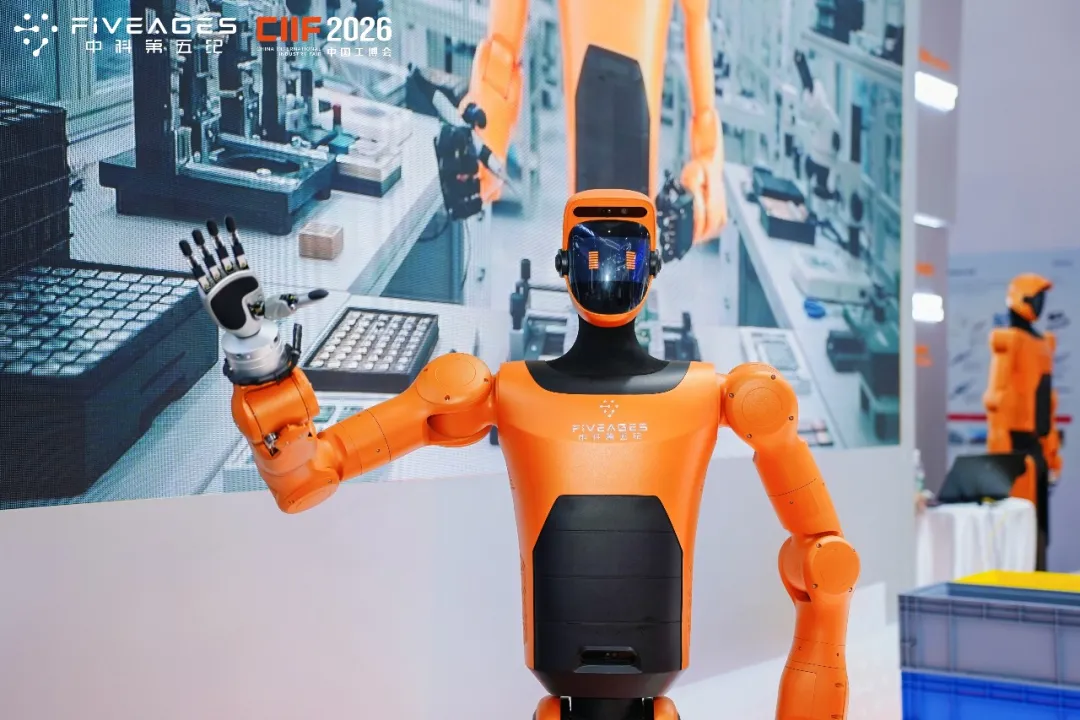
In terms of parameters, the Xinjiang-S1 has 19 degrees of freedom and builds ultra-large three-dimensional operating spaces through vertical lift and 360° waist rotation, adapting to the operating requirements of different heights and directions; combined with high-precision power control to support precision operation; and through end-modular acceleration to adapt to different tools and processes to meet the needs of flexible product switching.
Behind these technical parameters, there is a more substantial problem: the body-brain needs an industrial execution carrier oriented to actual production. The wheeled two-armed robot Diary-L1 is suitable for mobile operations and multi-machine synchronization, while the vertical Diary-S1 is better suited for precision assembly and production line operations in fixed locations. The two forms have a wide range of applications, which together expand the application of the body-brain.
04.
Capital and orders, supporting commercialisation
If we look at the technological breakthroughs of the fifth millennium of the Middle Ages in their pace of development, it will be clearer.
Founded in September 2024, the company was founded by a team from the Chinese Academy of Sciences' Autonomous Institute of the United Qingdao University. Its founder and CEO, Liu Feng, is a Ph.D. candidate at the Chinese Academy of Sciences, with a Master's Degree in Computer Science from the Chinese Academy of Sciences; its chief scientist, Sun Fu-chun, is a professor of computer science at the Chinese Academy of Sciences, an IEEE/CAA/CAAI Fellow, and a recipient of the National Distinguished Youth Fund; its co-founder and young chief scientist, Huang Xia, is one of the youngest senior researchers at the Chinese Academy of Sciences.
In February 2026, the company completed the Pre-A and Pre-A+ rounds of financing in a single month, followed by the Pre-A rounds of financing of hundreds of millions of yuan in May, followed by the A1 and A2 rounds of more than 1 billion yuan in August, and joint investments such as the Bank of China-owned AIC Fund and Core Energy Investments.
In the domestic market, the company has served more than a dozen core customers in the petrochemical group, zero-sports cars, etc. In the field of power patrol, the company has previously disclosed that robots equipped with their body-operating brains have completed high-precision patrol tasks indoors and outdoors at a power station, with an operating success rate of more than 96%, reducing the frequency of man-made field operations by 70%.
The overseas market is also accelerating. The company has completed the real-world verification of rolling stock in the headquarters of a global manufacturing enterprise in Germany in the face of random placement, specification of different rolling stock, robot-free continuous identification, crawling and transportation. Currently, hundreds of millions of overseas orders have been received, overseas operations are entering the actual delivery phase, and it is planned to complete the market layout in Europe, Australia, New Zealand, and Japan within six months.
In an interview, Shenzhen cited a judgment that the European manufacturing industry is facing changes in the workforce structure and a new round of automation upgrades, which offers new market opportunities for Chinese smart enterprises. Behind this is a larger logic: the demand for automation upgrades in global manufacturing is moving from fixed-process to flexible smart grids, and smart grids are precisely at the crossroads of this demand.
05.
What is the meaning of this verse?
On the one hand, the technological demonstration level is endless, and the capital heat continues to warm; on the other hand, the gap between hydrogen demonstration and hydrogen production is still significant. The demonstration of cloud flow water on the platform, entering the actual production line, will also face a series of real-world tests such as pace requirements, stability verification, material changes, deployment costs.
According to the announcement of this trade fair, the idea of the fifth century of secondary education is clear. With a body brain at its core, the transnational replication of model capabilities upwards and the rapid adaptation of small samples, downwards through the interaction of robotic product shapes and functional processes.
On the other hand, the Fifth Century Craftsman presented a convincing phased answer at the World's Fair: When the mind is no longer satisfied with moving a box of chips, but begins to solve the problem of letting multiple robots work together to turn a set of materials, it is only when the mind actually starts to touch the core meaning of the three words "productivity chips".