Set up a complete product chain
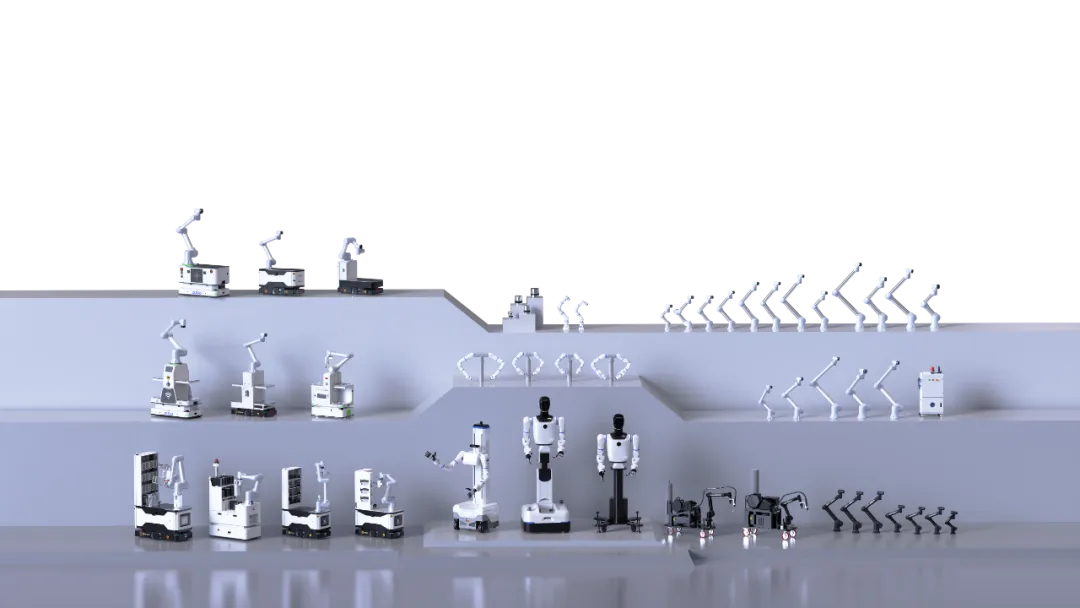
From the lowest joint module, to the middle mechanical arm, and to the highest man-made structure, the Doco robot is not a single item, but a complete body-smart product chain.
The most basic part of the system is the simulated humanoid integrated joint module. Doco robots showcase joint module models such as BSJ11, BSJ14, BSJ17, BSJ20, covering different torque levels. The BSJ series of joint modules integrate mN-grade high-precision torque sensors, using a dual encoder architecture, with full-load repeat positioning accuracy of not more than 0.001°, and protection level IP54.
On top of the joint module, there is a seven-axis biomechanical arm that controls complex movements. The Doko robot unveils several products such as BR-R73P, BR-R73S, BR-R76S, BR-R712S, covering different loads and working radii, with each joint equipped with a high-precision torque rectal sensor. The product is positioned as an important motion execution platform for the VLA model in the future.
On the upper level, there is more emphasis on lightweight, highly integrated and fast deployment of lifelike lightweight six-axis mechanical arms. The products BR-R63 and BR-R63R use a mid-air line with IP54 protection and a dedicated camera line interface at the end. It can be used both independently and as a core execution unit for mobile robots or flexible manufacturing systems.
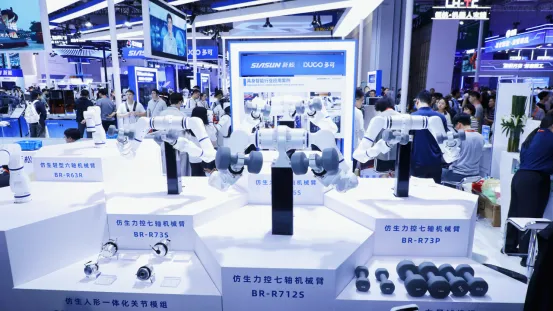
To date, the Doco robot's mechanical arm product line has formed a combination of tensile-controlled seven-axis and light six-axis brakes, respectively, to meet the needs of high-precision force-control tasks and lightweight flexible deployments. When core components and execution units are available, the overall mechanical shape naturally becomes an extension of the system.
The BR-MR73A all-wheel-drive humanoid robot has 21 degrees of freedom, with a mobile dashboard, support for two-arms collaboration, multiple sensing integration systems, including vision, laser radar, voice interaction, and more. It is geared towards smart patrol, material transportation, production assistance, and commercial services, all of which require mobility.
Another BR-DR73 upper-half-body humanoid robot is equipped with a dual seven-axis controlled biomechanical arm, mainly precision assembly, electronics manufacturing, automotive parts production and laboratory automation, with two-arm synchronization, flexible grip and complex task operation capabilities. One partially mobile operation, one partially precision operation, the two integrated machines perfectly cover the two typical needs of humanoid robots in the industrial scene.
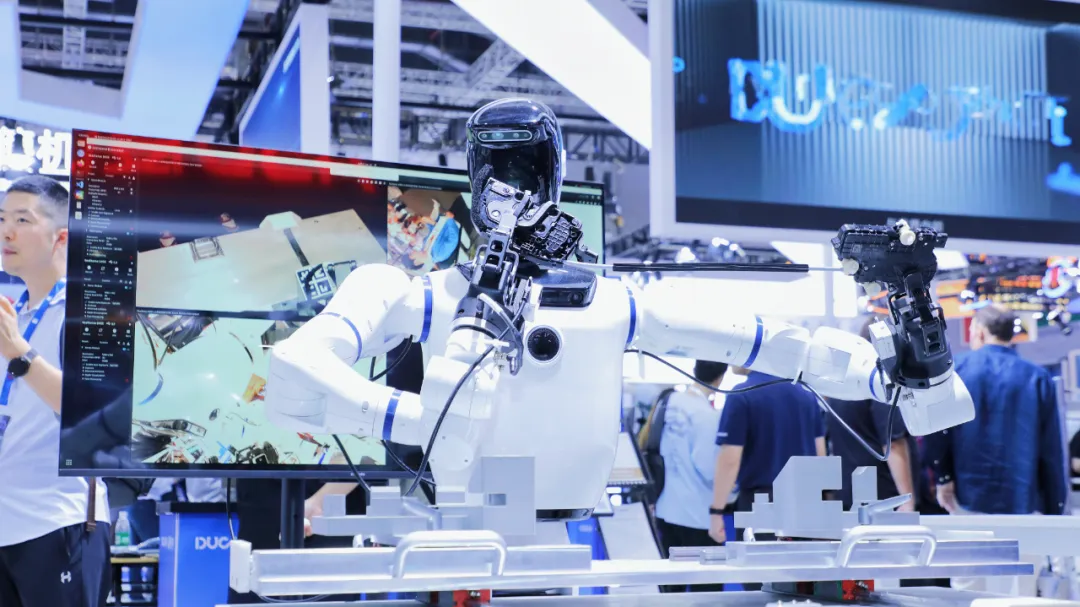
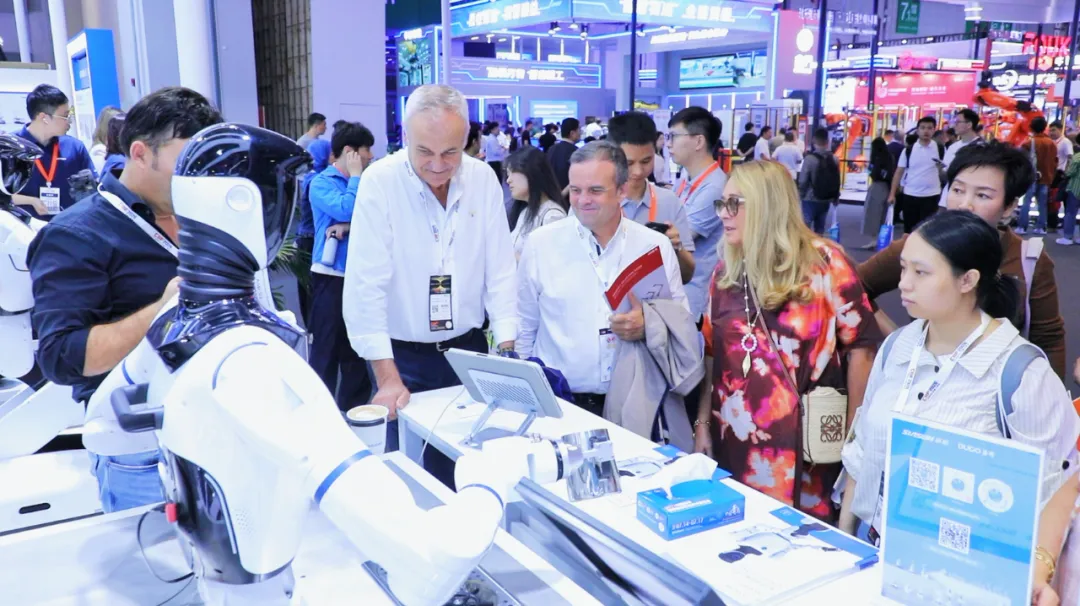
To see if the product system is established, it is ultimately up to the real-world application. Doko Robot demonstrates applications such as human-robot two-armed coffee blossoms, vehicle lock detection, semiconductor assembly, and more, all of which illustrate one thing: environmental perception, task understanding, motion control, two-armed coordination and task execution, all of which need to be online at the same time.
Building a complete product chain is only the first step, and the real determinant of success is the industrial landscape.
The general capacity is just a ticket.
Industry know-how is the watershed.
The industrial landscape has its own characteristics: it is very different.
The production process, process requirements, and application environment of semiconductor workshops and automotive assembly workshops are completely different, as are the requirements for the stability, precision, flexibility, and scenic adaptation of robots. This means that a general set of capabilities cannot be suitable for all scenarios.
The solution to multi-robotics is: a deep knowledge-how in the vertical field of general intelligent robotics product capability + knowledge to further transform general robotics capabilities into products and solutions for specific industrial tasks.
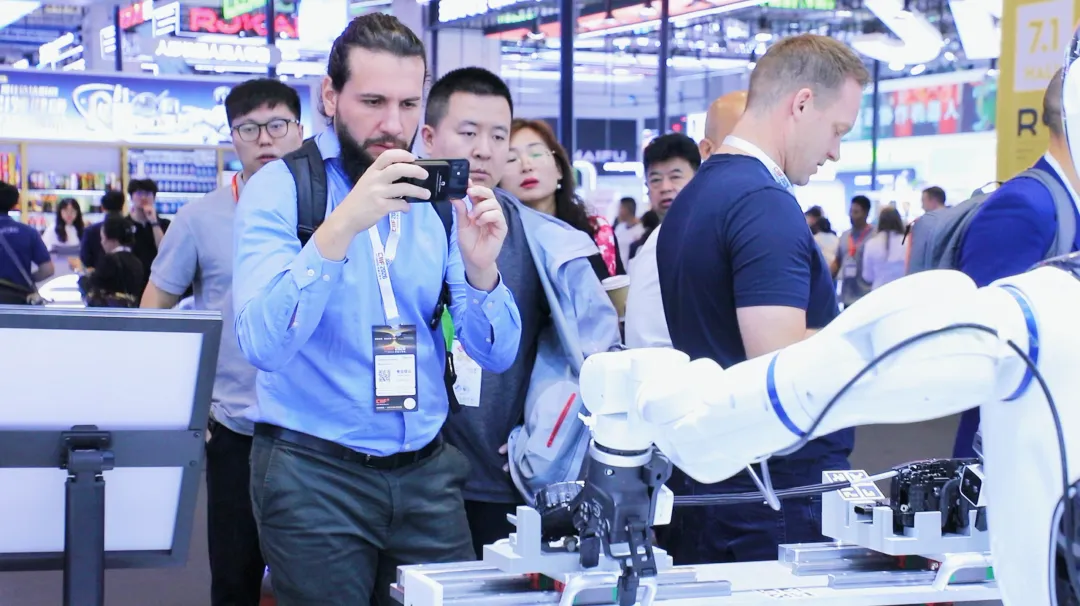
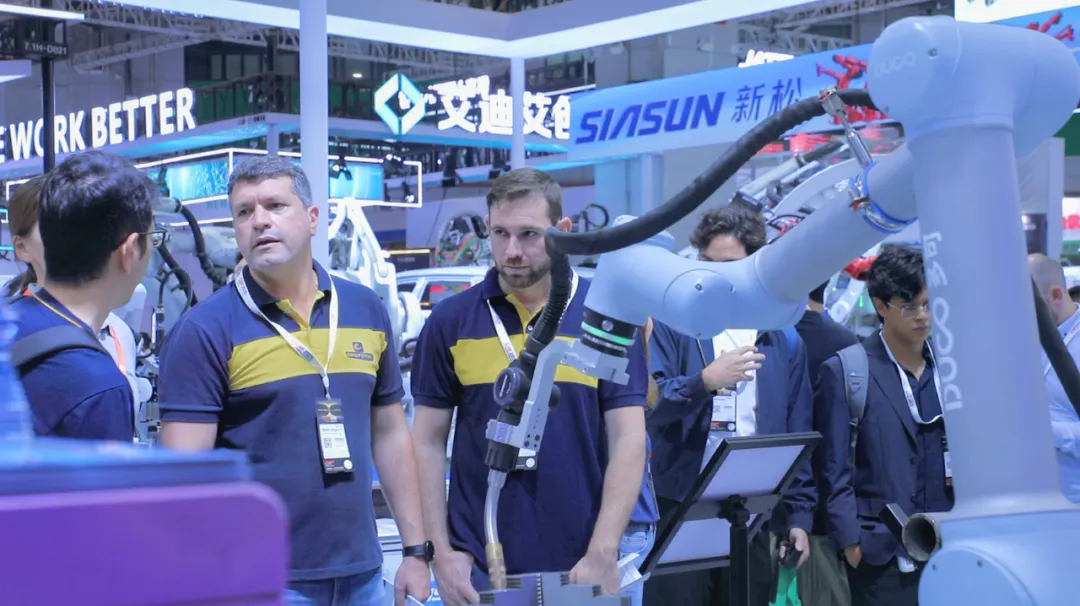
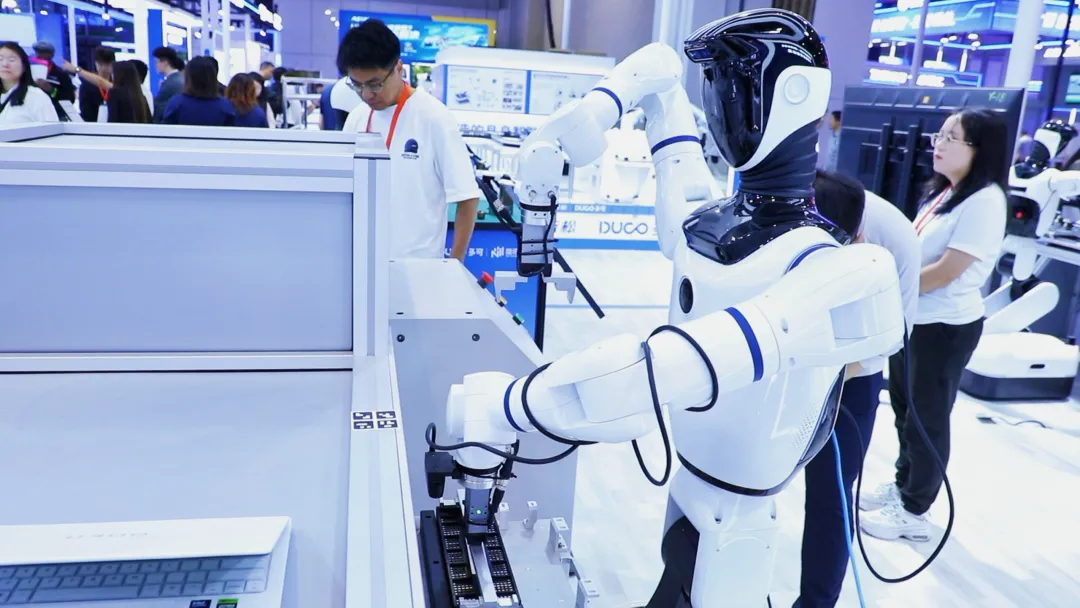
Scrolling left and right to see more
The solution is based on two layers of support.
One layer is the technological underpinning. Doko robotics revolves around core components, systems, intelligent perception, cognitive decision-making and industrial-scenario expert systems, which are fully self-developed with industry-scarce full-frame R&D capabilities.
The other layer is industry accumulation. Doko robotics has more than a decade of technical accumulation and engineering experience in the field of collaborative arms, which is being systematically applied to the industrial hardware and intelligent business. Especially in high-end manufacturing scenarios such as semiconductor AMHS logistics, precision intelligent assembly, flexible adaptive welding, which has absorbed a lot of first-line process data and complex process landing experience.
The technological underpinnings and industry accumulation form a unique mixture of robotic data. Data, algorithms, hardware form a closed loop, data breeding algorithms run out in the field, algorithms are iterated back to the hardware, and the hardware runs out of new data in the field.
In a physically intelligent racecourse, there are many algorithm teams, but there are few that can really pinch algorithms and industrial scenarios together.
I'm not going to tell you what I'm doing.
Three scenes of how physical intelligence lands
In the field of semiconductors, smart welding, automotive and general industry, the Expo will focus on the use of multi-functional robots in a range of innovative applications such as material transport, assembly, welding, grinding, testing, graphing, and screw locking.
The three scenarios, respectively, correspond to the landing logic of robotics in different industrial categories.
If you look at the semiconductors, this scenario is a substitute for nationalisation.
The FinalTest process intelligent material transportation system, as well as the human-robot chip-enclosed solid crystal equipment, were featured prominently at the finishing workshops.
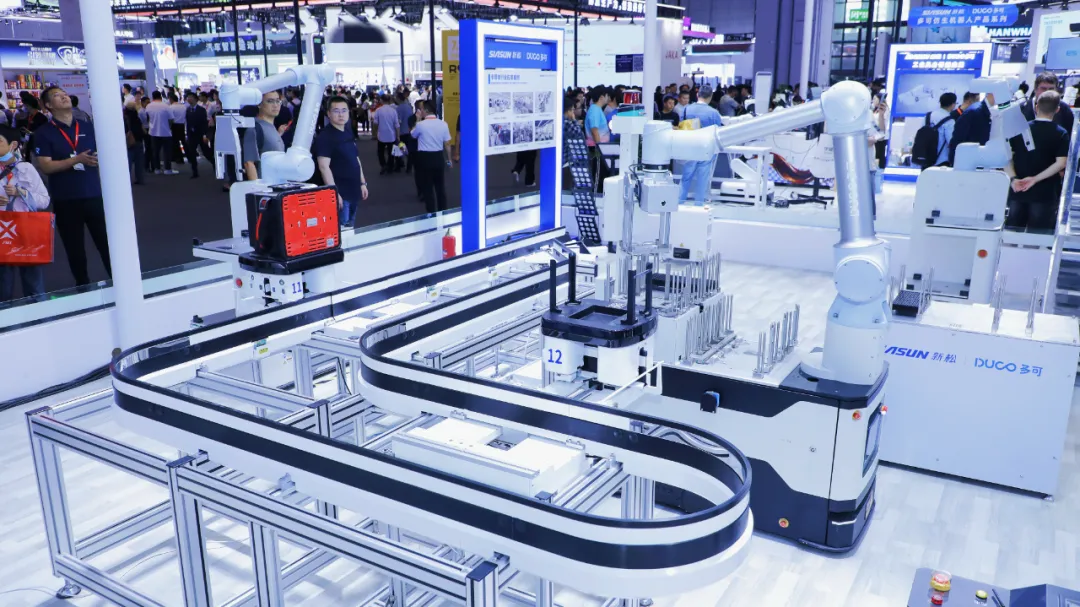
The semiconductor FinalTest process has a pain point: materials need to be efficiently transported and transferred between devices such as Stocker, electronic shelves and test handlers with precision.
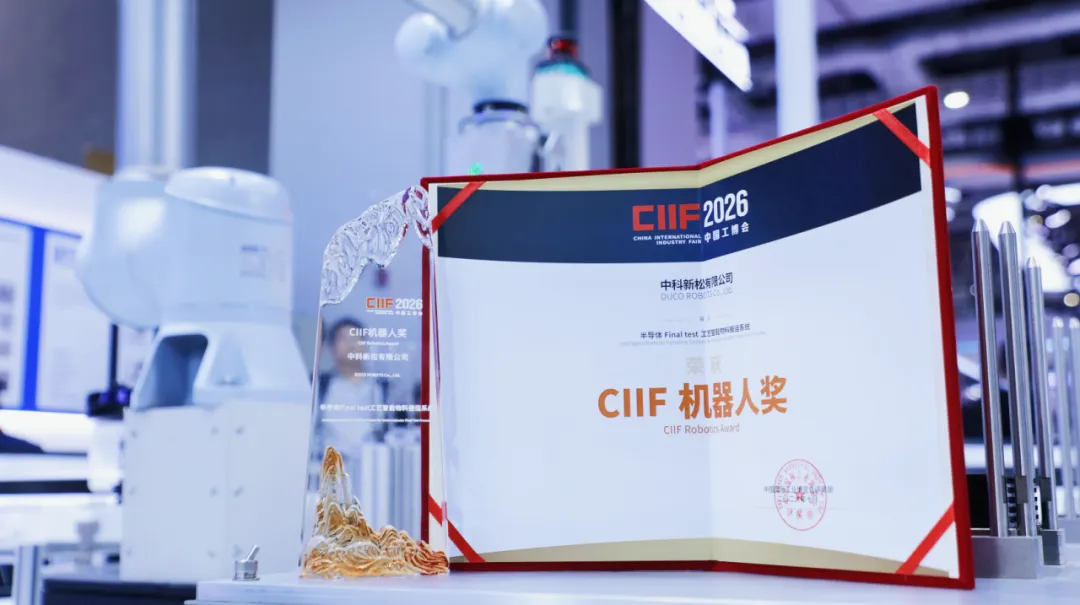
The CIIF Robot Award-winning FinalTest process intelligent material transportation system, using a space-integrated collaborative transportation architecture, technology innovation in various aspects such as 0HS, AMR baselines and MCs modulation software, further enhances the automation and intelligentization of semiconductor production logistics.
From the point of view of the industrial chain, the domestically produced FinalTest smart material transportation scheme breaks down the technical barriers to the overseas transfer of FinalTest equipment, complemented by the shortcut to the ability to seal domestic equipment. At the same time, the scheme also reduces the cost of equipment procurement and factory conversion, providing a new option for more SMEs to advance the upgrade of smart equipment.
And then there's welding, which is a process of accumulation.
Multi-core robots showcased new applications such as full-position arc automatic welding system, ship-free demonstration welding system, nine-axis collaboration welding system, arc arc welding collaboration robot system, which basically covers the entire welding scene.
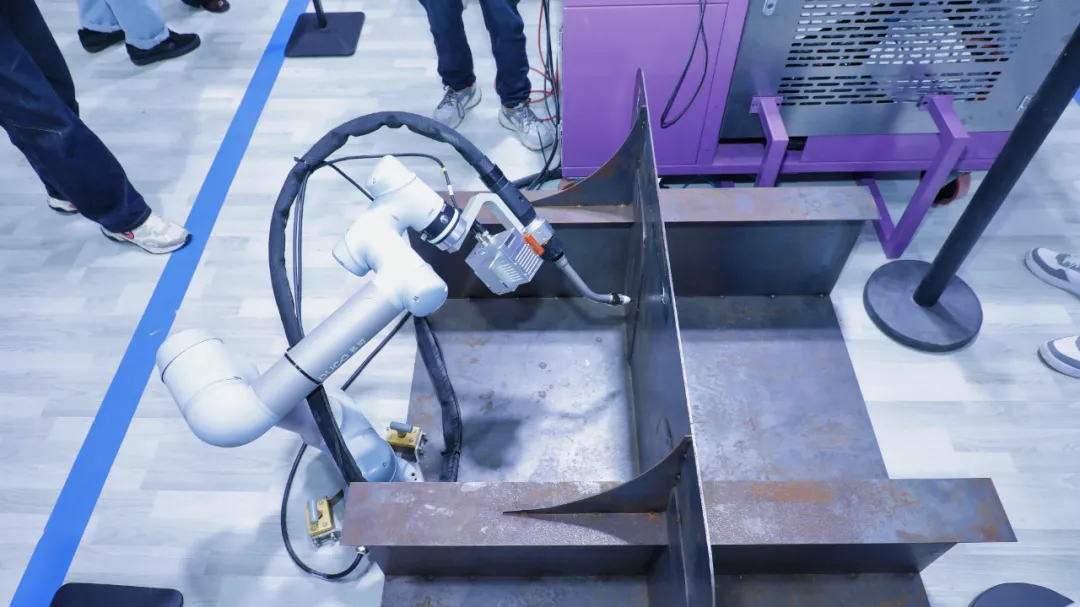
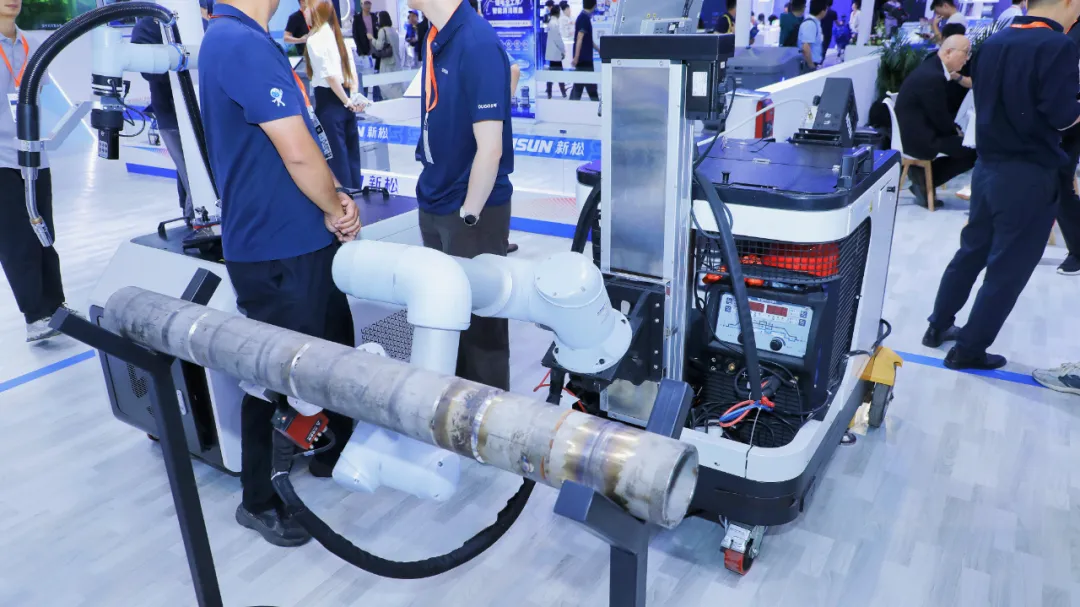
Welding is a typical industrial scenario, with high demands on robot motion control, trajectory planning, process adaptation and operational stability. At the same time, the industry also faces recruitment difficulties and high training costs.
The team has been deeply rooted in welding for decades, with a peak of 32 years, and has gone through a complete industry cycle from manual welding to automated welding. This means that they can identify what is painful and can break down decades of process experience into parameters and logic that can be summoned into software.
At the hardware level, the W series DUCO multi-collaborative welding robot, load range 3-10 kg, repeatable positioning accuracy of ±0.02mm~±0.03mm, protection grade IP65.
At the software level, the welding process package has been transformed into the V3.0 version, which integrates welding machine configuration, welding settings, process parameters settings, visual sensor settings, and various functions such as arc, arc, arc tracking, swinging, multi-layer multiplexing, touch positioning, laser positioning. In 2025, the welding process package added and optimized more than 200 features, with an average of one feature update or optimization landing in less than two days.
The director of robotic welding, Liu Bo, said that the ultimate goals of robotic welding are only two: first, to serve enterprises, to solve the problem of welding for enterprises, and second, to reduce labor intensity and improve the working environment of workers.
Finally, in the automotive and general industry, this scenario is a flexible adaptation.
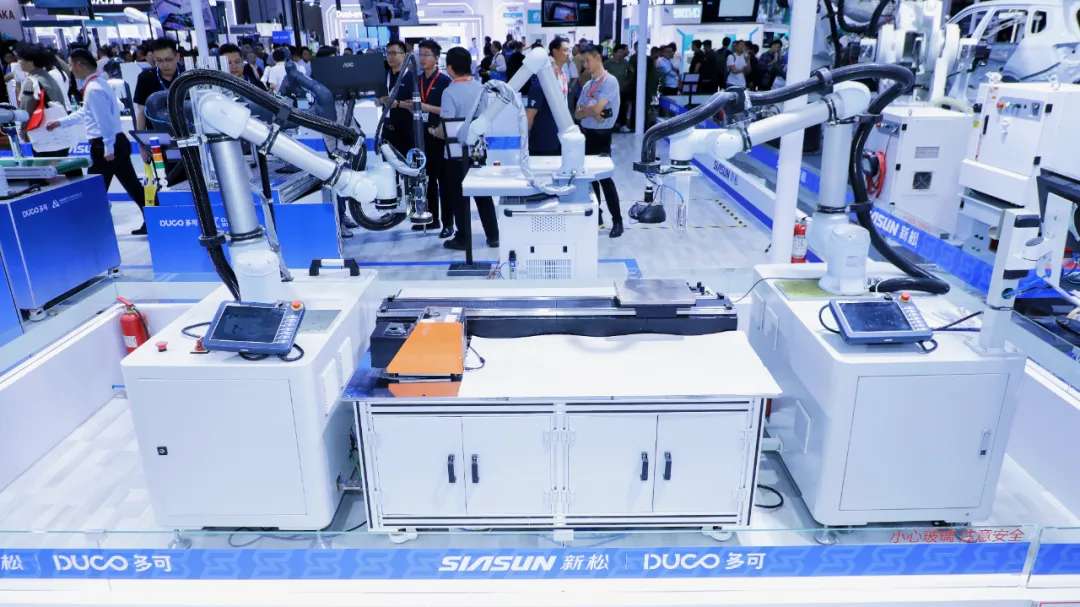
In the automotive and general industrial manufacturing landscape, multi-tasking robots have brought solutions such as grinding, moulding, flying inspection, assembly, and flexible graphite screw locking. These applications cover several typical links in production manufacturing, and reflect the evolution of robots from single job automation to more flexible, multi-tasking intelligent operations.
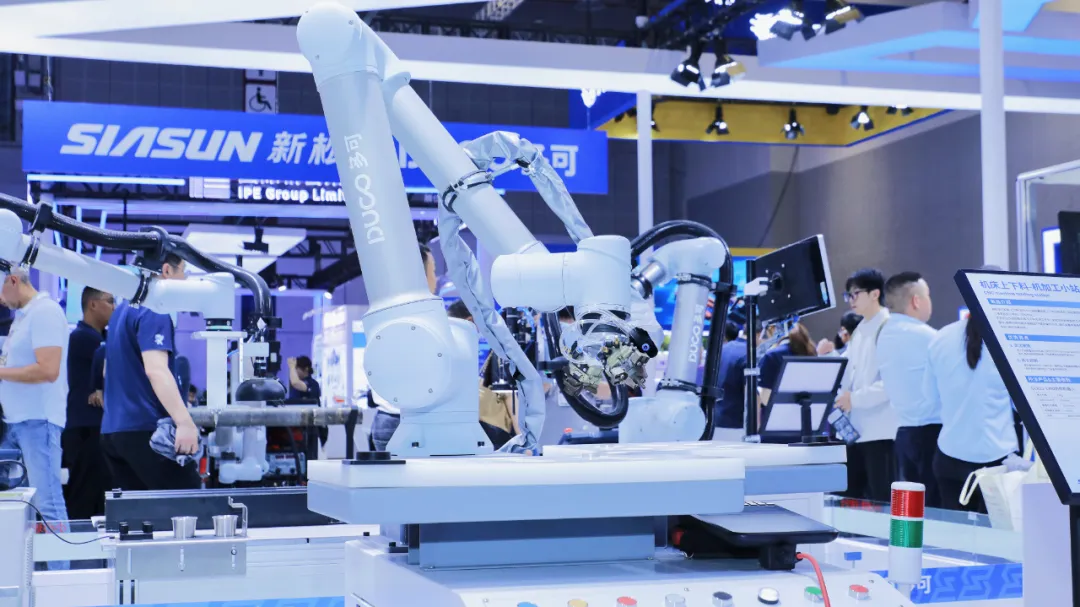
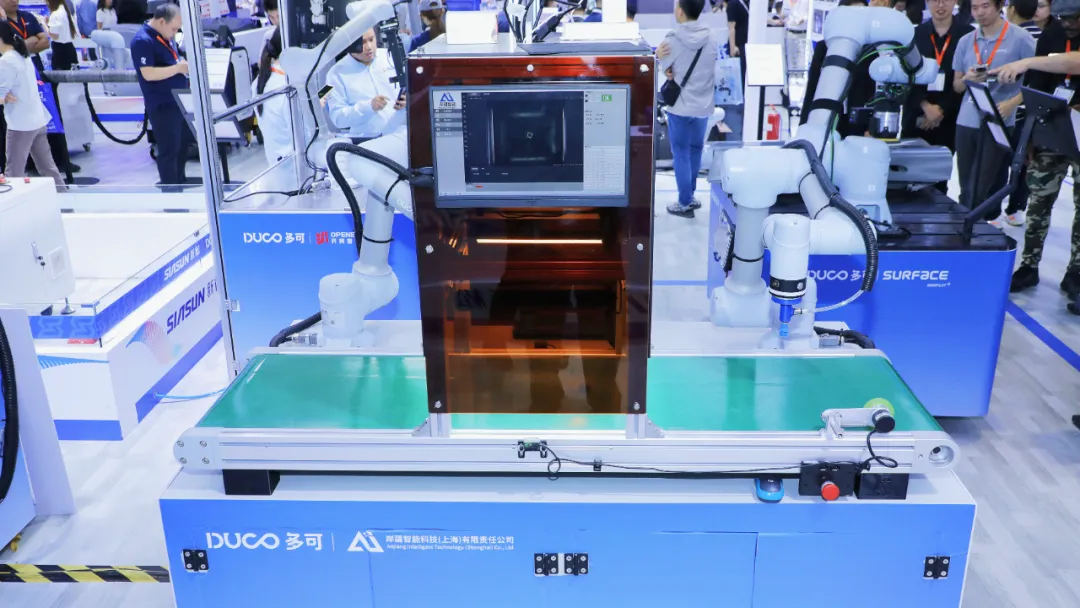
Scrolling left and right to see more
For example, two collaborative robots as the core execution unit, equipped with a wide FORCEMASTER power control system, present the intelligent solution for the assembly of the vehicle's ECU line. The process data of the assembly process is recorded in real time, fully traceable, reproducible and viable, providing the basis for continuous optimization of the process.
In three scenarios, this solution to the DRC robot is not on paper. The CIIF Robot Award is a chapter in the industry that covers this solution.
Industrial data is the key to success.
I'm testing this solution.
If the solution works, industrial data is the best proof.
It was founded in 2014 and completed its independent separation in 2023, focusing on semiconductor scenarios, smart welding and smart assembly scenarios, and developing a series of industrial furniture products based on actual industrial needs.
To date, Doko Robotics has provided a comprehensive program of intelligent upgrades to leading manufacturing companies in China and abroad, forming a complete service closure from technical research and development to project landings, with more than 5000+ landing and delivery scenarios. Especially on high-end circuits such as semiconductors, with years of collaboration with many of the world's leading customers, products are shipped to Southeast Asia, Europe, North America, etc.
In terms of product certification, it is synchronous with the South German TÜV certification, ultra-clean grade, SEMI industry certification, suitable for extreme pH special conditions, with high-end harsh scenario access gates.
The multi-robot industrial body product line covers human-robot integrators, high-performance control arm and core joint modules, of which the force-control arm products will be mass-delivered by 2026.
At the capital level, Doko Robotics successfully completed its A+ round of financing of hundreds of millions of yuan in June of this year, attracting well-known capital investments such as HongTai Fund, Liu Bei Joint Venture, Shenzhen Fund, Volkswagen Group, Guangzhou Shenzhen Yuan, and former shareholder Dongguan Capital.
Together, the path to the development of multi-tasking robots is clear: first, by building on decades of technological accumulation and engineering experience in the field of collaborative robotics, then by fully self-developing core components, control systems, intelligent perceptual decision-making and industrial scenarios expert systems, and then by using the closed-loop evolution of data mining algorithms to harness the hardware's capabilities to bring the technology to the production line.
Back to the beginning of the question: what kind of intelligent robots do the industrial landscape really need?
The answer was given at this trade fair: to give robots a stronger capacity for perception and understanding, a deeper integration of intelligence and control of movement, and better adaptation to real industrial environments and complex tasks.