It's the first time in the history of the world.
Google has finally removed the hardest part of the bone.
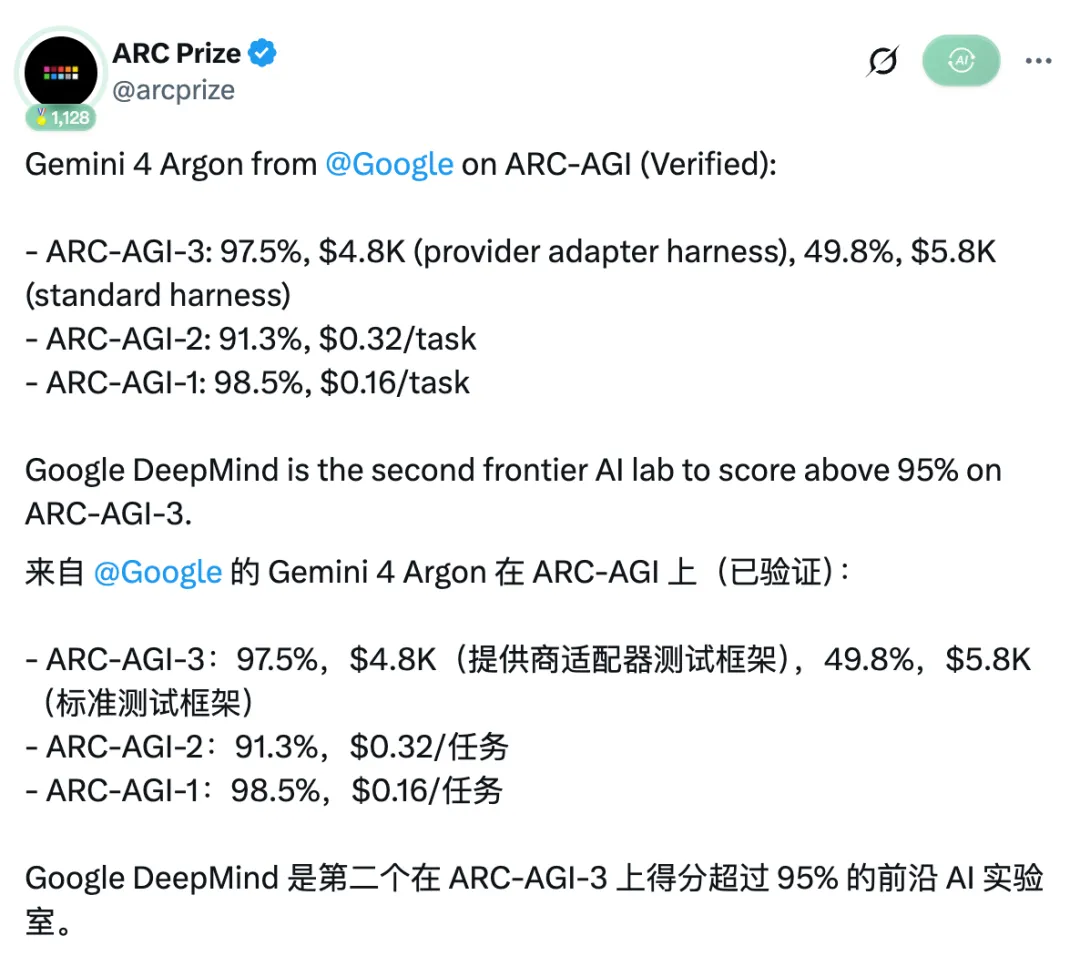
Recently, the ARC Prize officially released a scorecard on X:
The Gemini 4 Argon is based on the ARC-AGI-3 called the "AGI Final Landing".97.5%!
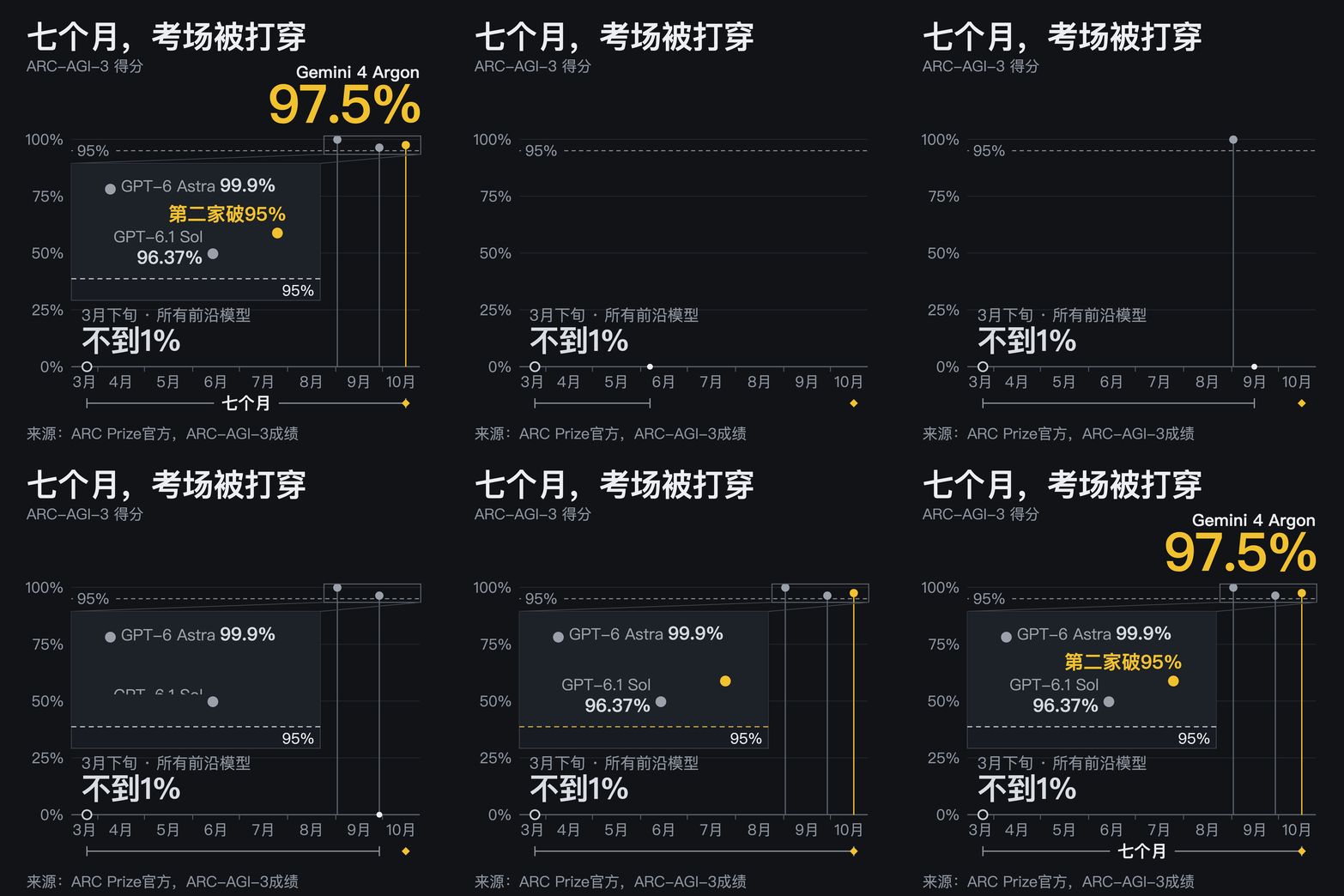
It's important to note that just seven months ago, when ARC-AGI-3 went live, all of the front-end model scores were complete.Less than 1%。
Seven months, from full membership to close to completion.
In the announcement, the ARC Prize added a special phrase:Google DeepMind is the second to break 95% on ARC-AGI-3.AIThe lab.
The first is OpenAI.
Google is back.
Three-generation test, one breath of fresh airThe Gemini 4 Argon's score is beautiful.
ARC-AGI-1The cost per question is $0.16.
ARC-AGI-2The cost per question is $0.32.
ARC-AGI-3It's 97.5 percent, and it costs $4,800 to run the whole thing.
All three exams are taken.
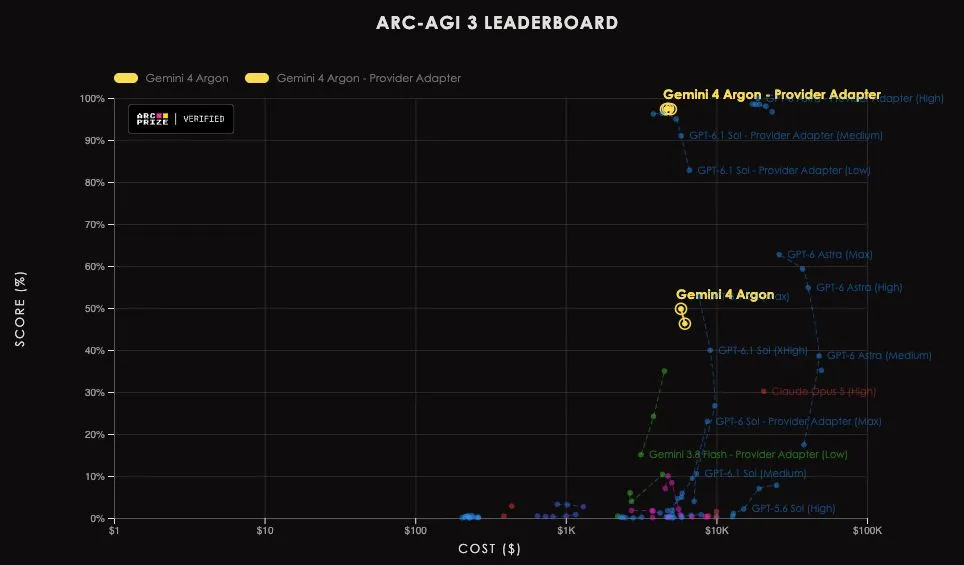
In the ranking, this 97.5% is only behind OpenAI's GPT-6 Astra: 99.9%.GPT-6.1 Sol was pressed by OpenAI at the end of September: 96.37%.。
In other words, Google is just one model that gets into the club.
When Argon was released on September 30, Google's blog was dominated by complex workflows, coding and cybersecurity, with Token output caps drawn to 1 million, with software engineering and Vals Index scores, not even mentioning ARC-AGI.
This time around, the results came close, and Google didn't say a word.
If you see 97.5%, you might think that you've made the list again.
It's different this time.
ARC-AGI-3 is not a conventional AI benchmark test to fill in the blanks. It is a complete set.Interactive game environmentsThere are no instructions, no pre-set instructions, and no one tells the model what the purpose of this link is.
The model is thrown into a completely unfamiliar little game, a 64×64 color scheme, with seven action buttons that don't even tell you what the button is for.
You have to try it yourself, you have to guess the rules, you have to figure out where the goal is, you have to plan for it.
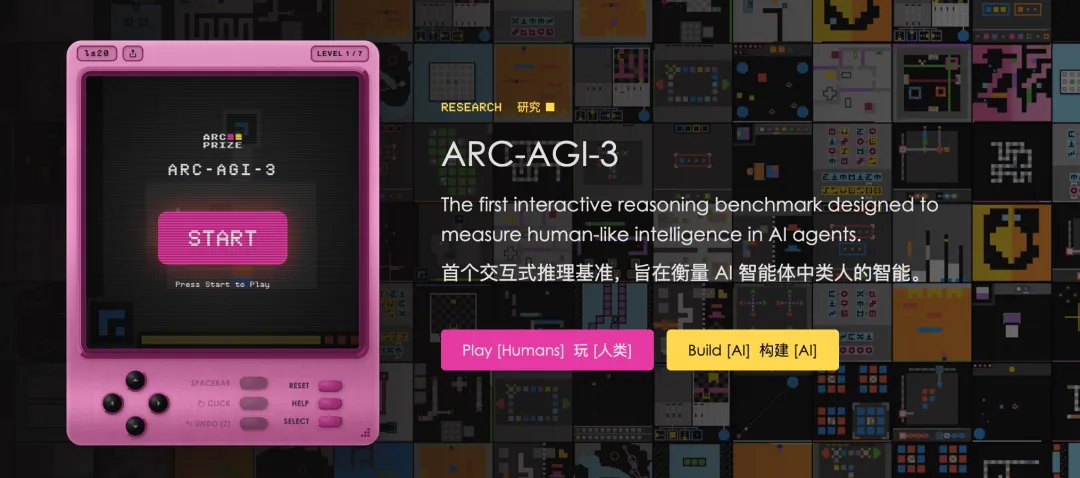
This is a model.In the face of what I've never seen before, I'm learning the reality of what I'm doing now.
This ability is inherent in humans. If you catch an ordinary person who hasn't played a game and throw it in for a while, chances are it will work.
But for AI, this is exactly what's most troubling. There is no backward data, no setup, and all knowledge has to be temporarily constructed in the process of "gaming".
For seven months, the campus was blown up.If you look back on the timeline, you can feel the incredible speed at which this happened.
End of MarchARC-AGI-3 is up and running with less than 1% of all front-end models.
September 2ndOpenAI's GPT-6 Astra led the way, hitting over 99.9% on the Provider Adapter setup, near completion, becoming the first laboratory to break 95%. Greg Brockman directly shouted at the launch: "Welcome to the AGI era".
29th of SeptemberOpenAI also released GPT-6.1 Sol, scoring 96.37%. Within a month, the two previous OpenAI models stood at over 95%.
30th of SeptemberGoogle has released the Gemini 4 Argon.
16th of OctoberThe ARC Prize officially announced the Argon validation score of 97.5%.
The problem can be explained by the efficiency data.
In 25 ARC-AGI-3 open games, the number of times Argon has been used.62% less than human baselineIn three of the games, it matched or even surpassed the speedrun record threshold, or the speedrun player's maximum score; in six others, the record gap was less than 10%.
In other words, AI has not only learned to play a game you haven't seen before, but also played better than most people, and a few have already touched the level of top speed gamers.
Mike Knoop, co-founder of the ARC Prize, reviewed Argon as the second ARC-AGI-3 family of models to be "effectively maximized" through the Provider Adapter, citing the "reverse-curve" efficiency improvement in performance, faster than expected.
A small letter on the scoreboardHowever, behind the scoreboard is a line of unusual numbers.
In the ARC Prize tweet, two sets of scoresand spelled together:
This is the first time that I've ever seen such a thing.
It's a lot of fun, but it's also a lot of fun.
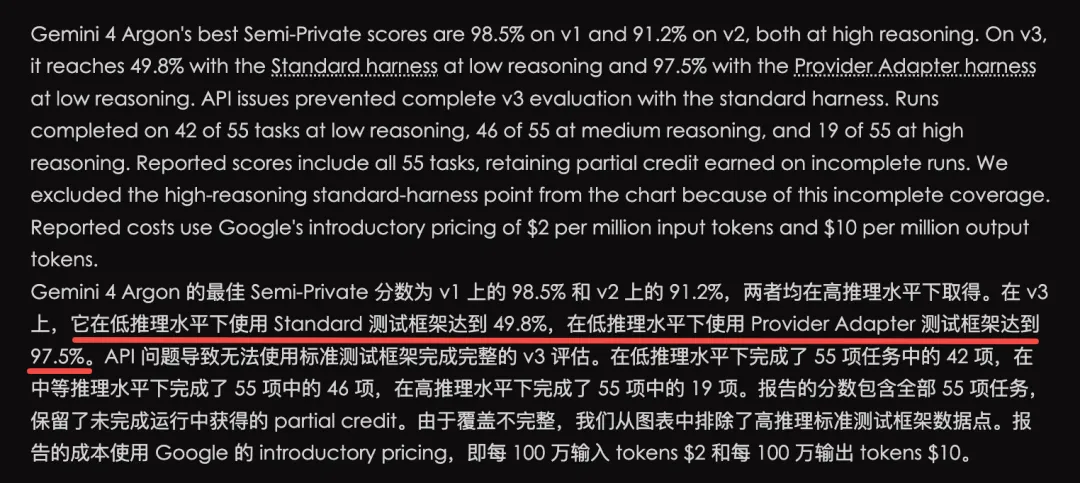
The same model, the same set of tests, a 97.5% and a 49.8%..
It's coming soon.48 pointsIt's all about a thing called a harness.
In interactive games, the model receives feedback from the environment every step of the way, and then decides the next step.
Provider Adapter, a customized access method for the manufacturer's own model; Standard harness, a set that the examiner gives to all competing models.
A more counterintuitive thing is that the standard harness costs money.More$5,800, which is $1,000 more than 97.5% at the time. Two percent more money was spent, but only half of the score was left.
Looking at the standard harness data, the low reasoning score was 49.8% ((55 games finished 42), the middle reasoning score was 46.3% ((46), and the high reasoning score was only 19 because the API ran out of problems.
After four games in the middleweight division, the overall score was 3.5 points lower.
This is not the case with the Argon family. The GPT-6 Astra, which topped the list at 99.9%, was also tested on the Provider Adapter; instead of the standard harness, the Astra only got 62.7%.
It's almost too late.Look at the other player. Anthropic's Claude series scored high on ARC-AGI-1 and ARC-AGI-2, reaching the ARC-AGI-3, where the score was either low or simply unpredictable.
The outside world is accustomed to seeing OpenAI and Anthropic as a double-edged sword, but at least in this field, it is now.Both OpenAI and Google's real estate。
But it's not just who scores high that really deserves to be honed.
A benchmark test called the "AGI Final Field", which enabled all front-end models to collapse collectively when it went online, was completed nearly seven months later by the two giants.
Measuring the measure of intelligence, the speed at which it is tracked is once faster than once.
And that 49.8 percent score line reminds everyone that today's comparison isn't about the model itself, it's about the model itself.The whole system of models + harnessWhoever gets on the operating table gets almost half the points.
So, if you look at the AI list later, don't just look at the scores.What harness is written in brackets is just as important as the score itself.