For humanoid robots, every millimeter of space, every gram of weight at the ends of the hands and the mechanical arms is precious.
Traditional 3D visual equipment is often larger in volume and difficult to integrate directly into space-limited locations such as smart hands. At the same time, the increased weight of the end can also affect the kinetic inertia, response speed and overall control performance of the mechanical arm.
The DM-Mini integrates three-dimensional visual perception capabilities into a compact machine body of only 60 x 29 x 30 mm, with an overall weight of about 80 g.
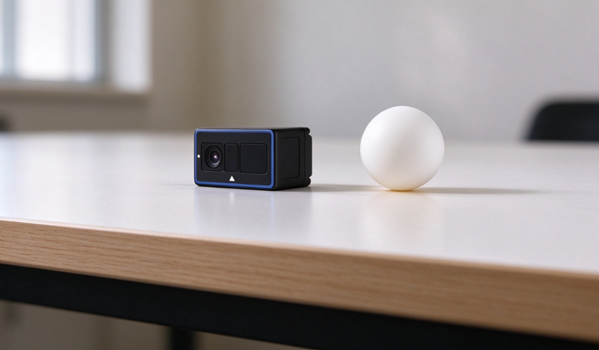
With its miniaturized design, the product can be flexibly deployed at the ends of robotic wrists, palms and mechanical arms, achieving three-dimensional visual perception in limited space, reducing the difficulty of integrating end-visual systems.
At the same time, the DM-Mini has an IP54 protection rating, supporting wide-temperature work at 20°C to 60°C, and can adapt to long-term robot operation and diverse application environments.
4cm ultra-close sensing
Breaking through the visual-blind area
For the skilled hand, the real challenge is not to see how far away it is, but to still accurately perceive the surroundings when only a few centimeters away from the target object.
In practical operations, skillful hands need to constantly approach the target object and complete gesture adjustment, grabbing and placement.
Traditional 3D cameras may experience problems such as measurement blind spots or a decrease in depth data quality when working at ultra-close distances, making it difficult to meet the perceptual needs of fine-grained operations at the end.
To address this pain point, the DM-Mini uses ToF (Flight Time) 3D imaging technology and combines close-up optical design optimized specifically for scenarios at the end of the robot.Depth perception range from 0.04m to 1m。
Its core advantages are reflected in its two key applications.
Sensing and collision prevention at the centimetre level
Fingers, palms, and surrounding structures may collide with obstacles in the environment when they approach a target object or perform complex movements.
The DM-Mini has a super-near-range detection capability of about 4 cm, providing near-field depth information to the end of the robot, assistive systems to identify potential collision hazards, and data support for agile collision prevention algorithms.
Millimeter-level high positioning accuracy and fine-grabbing
In the 0.5m to 1m working range, the DM-Mini can achieve depth measurement accuracy of 4mm, providing a reliable three-dimensional data base for spatial positioning of target objects, grabbing gesture adjustments and precise operations.
Whether it's picking up small parts or performing installation tasks that require a precise location, the DM-Mini can provide robots with more rich near-space information.
RGB-D Multimodal Viewing
Get robots to operate accurately
To accomplish complex crawling and operating tasks, robots need not only to know where objects are, but also to identify the shape, color, location and spatial relationships of objects.
The DM-Mini combines deep perception with RGB color imaging capabilities to support synchronous output of deep images with RGB images, providing robots with more rich multimodal visual information.
Product RGB image resolution up to maximum1600 x 1200 pixelsIt is equipped with an ISP image processing unit that can provide image data support for top-level visual algorithms.
By integrating RGB images with depth information, robot developers can further realize targets identification, 3D positioning, posture estimation, and point-to-point planning.
At the same time, the DM-Mini supportsMaximum real-time output of 30fpsIt is capable of providing timely visual feedback for dynamic capture, target tracking and continuous operation.
In addition, the product supports selectively integrated IMU inertial measurement modules, which provide supporting information for machine-arm motion estimation and visual inertial convergence algorithms, supporting the development of more complex dynamic operations applications.
SerDes High-Speed Interface
To make the signal more stable
For robotic automakers, the integration of visual systems depends not only on sensor performance, but also on factors such as wiring space, data transmission, system reliability, and automated structural design.
Especially inside robotic hands and mechanical arms, space tightness, numerous motion joints, and complex beam layouts can increase structural design difficulty and affect end-to-end motion performance.
In response to this real need, the DM-Mini has been adopted.SerDes high-speed data transmission interfaceHigh-speed data transmission is achieved through streamlined signal lines.
Compared to traditional multi-wire parallel transmission systems, the SerDes interface helps to reduce the number of cables, simplify the inner wiring of the mechanical arm, and improve the anti-interference capabilities of signal transmission.
For robotic manufacturers who need to deploy visual sensors at endpoints such as wrists, palms and so on, this design effectively reduces the complexity of system integration and facilitates the overall design and subsequent product development.
Facing Physical Intelligence
Expand the boundaries of robotic precision
With its compact structure, ultra-near-distance precision depth perception, multi-modal vision and high-speed data transmission capabilities, the DM-Mini is widely used in human-robot, agile hand and intelligent machine-arm data collection systems.
Scenario one: Hands grasped with skill
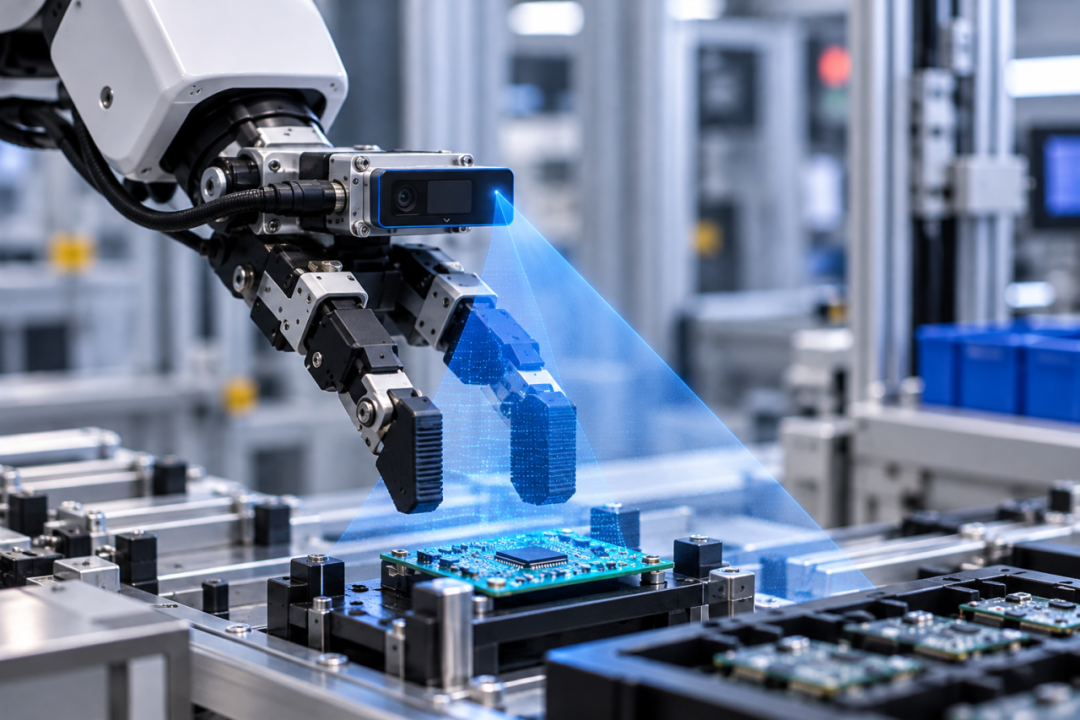
When robots grab electronic components, small parts, and other delicate objects, the DM-Mini provides close-to-three-dimensional information to help complete target positioning, grab gesture adjustment and grab-point planning, and enhance the precise operation of visual guidance.
Scenario 2: The end of the robot is collision resistant
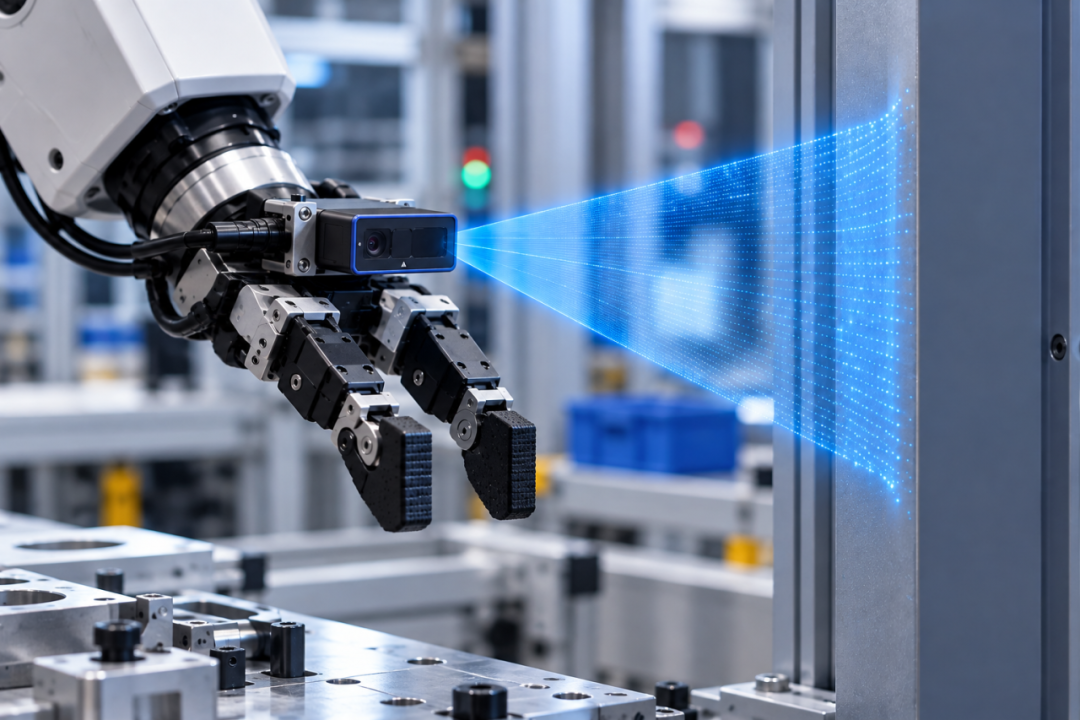
When approaching a target object, operating a stage or complex obstacles, using ultra-close depth perception capabilities, robots can assist in identifying changes in the spatial distance around the end and provide perceptual data for proactive obstacle avoidance and collision control.
Scenario 3: Two-armed collaboration with precision assembly
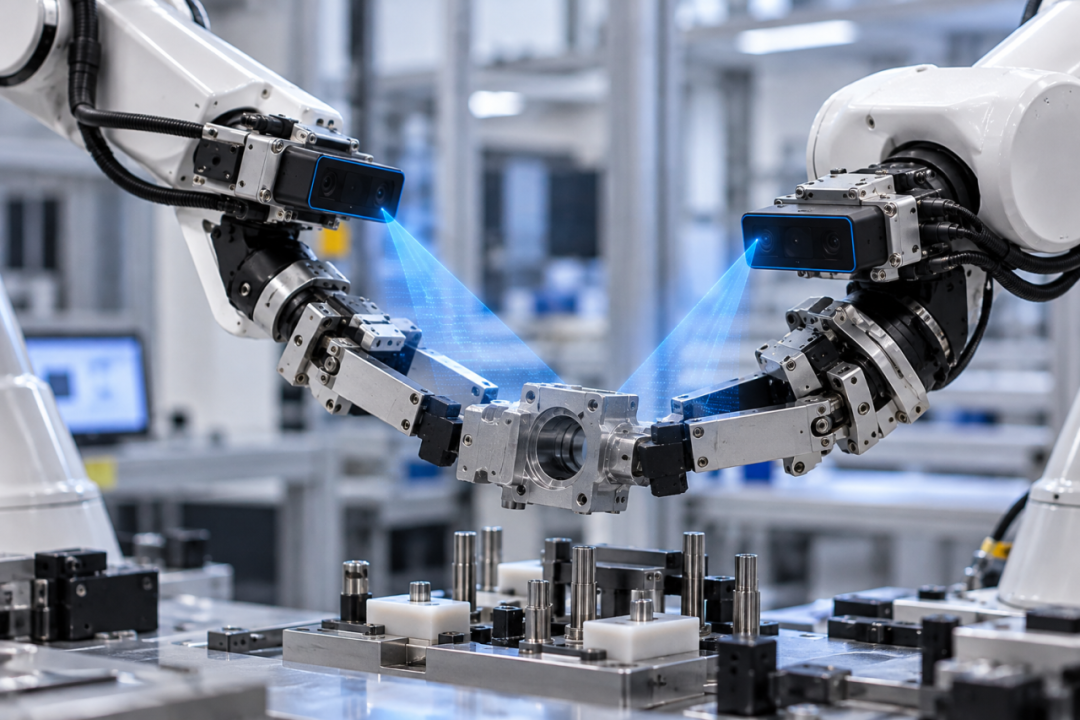
In tasks such as two-arm co-assembly, component positioning, and plug-in operations, the DM-Mini can provide the robot with three-dimensional spatial information about the target object, support the position adjustment under visual guidance, and ensure that the robot completes precise assembly tasks smoothly.
Scenario 4: Operation of narrow space
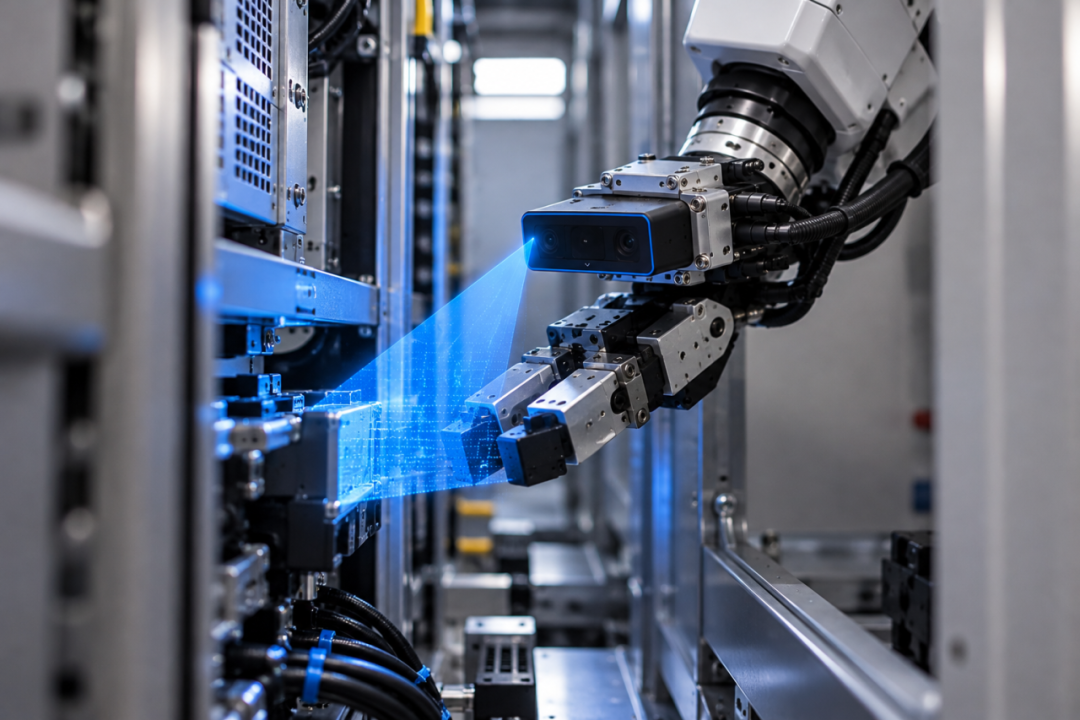
The miniaturized design of the DM-Mini and its near-distance sensing capabilities, designed for the needs of robots in complex environments such as the interior of the device, small working areas, help to deploy visual sensing units to restricted spaces where conventional cameras are difficult to install.
Scenario 5: Collecting data with physical intelligence
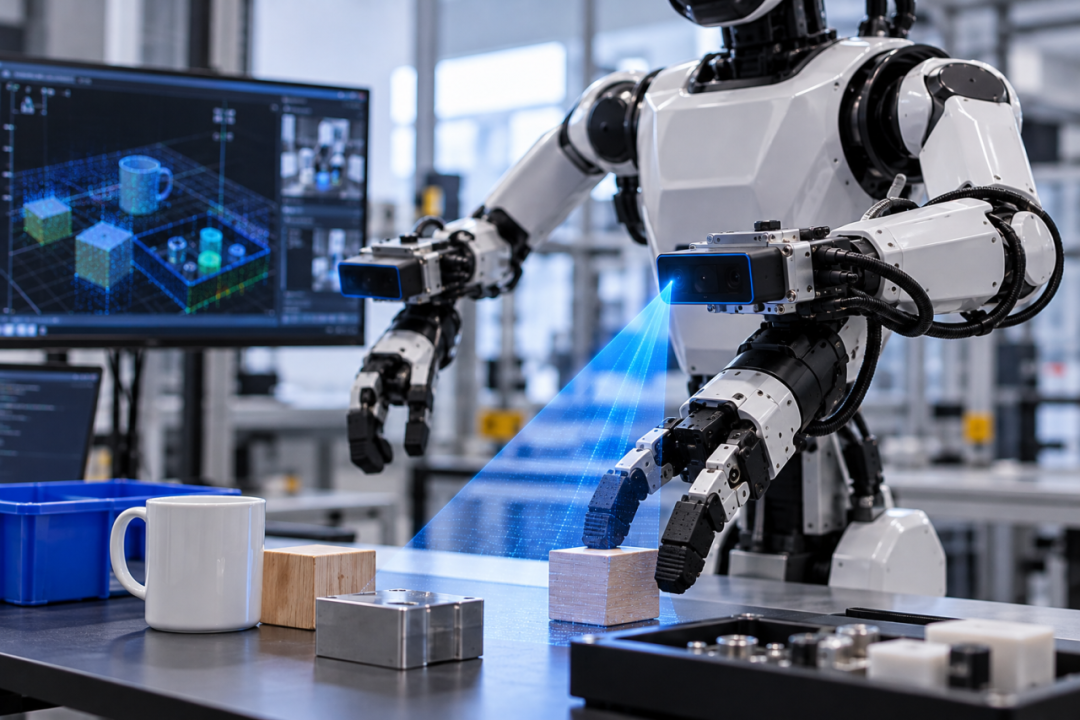
DM-Mini synchronizes the output of RGB and deep data to support research institutions and robotic enterprises in target identification, 3D perception, visual servers, crawling planning, and the research, verification and product development of various algorithms with physical intelligence.
Scrolling left and right to see more
From the precise perception of the end of the robot to the sophisticated operation of complex scenarios, the DM-Mini is dedicated to providing more flexible and efficient visual perception for the intelligent.
Open sampling applications and cooperation
Accelerated robot vision program landed
With the rapid development of robotics and the physically intelligent industry, robotic visual perception is evolving from traditional environmental observation towards near-distance, high-precision, end-to-end integration.
The launch of the DM-Mini 3D ToF camera by Lo Microtechnology is an important product layout for this technological development trend.
At the moment,DM-Mini is open to sample applications and technical cooperation consultations.
In addition to standard camera products, MicroTechnology can also provide modular delivery formats, supporting robotics integrated manufacturers, agile enterprises and research institutions to conduct customized integration and secondary development based on their own product architecture.
In the future, Lo Micro will continue to explore 3D visual perception technology in depth, drive product innovation around the need for robotic perception, and explore the potential for more applications of physical intelligence with industry partners.
It makes robots look closer, perceive more accurately, and operate more flexibly.
Microtechnology DM-Mini, with precise 3D vision, enables a new, physically intelligent future.
* This article is translated from Microtechnology