It's the first time in the history of the world.
Every week, more than 200 million 18- to 24-year-olds around the world use ChatGPT.
They are one of the most active users of ChatGPT and should have been able to use it as a fireplace.
However, on August 4, OpenAI released an astonishing number:
Even the most sophisticated users in this group are only 1% to 10% of "super users" with the ability to make actual calls.
In the same ChatGPT, super users are able to make a lot of effort, and most students don't even touch a single point.
This 1% to 10% is a "super user ratio", and it's not that students only use the ability of the 1% model.
But the conclusion is firm enough: most people hold an increasingly powerful machine in their hands, but only on the most basic keys.
The model is no longer a bottleneck, it is "not used".
So, OpenAI personally took the initiative and pulled out three plugins to smooth out the "not to use" door.
OpenAI has released three educational plugins for three categories of people:
K-12 teachers, college teachers, college students.
The "plugins" here are not the kind of extensions that are installed in the browser.
It's prepackaging applications, role skills, operating instructions, and a whole suite of regular workflows, "open-box-on-pack", so you don't have to be an expert in tips to get things done.
There's a shift behind it.
In the past, OpenAI taught you how to write prompts, but now it's just preparing classes, designing courses, testing, making learning plans, and preparing them directly for you.
Teachers turn on the computer in the morning, no longer worrying about the blank dialog box as a cue word, and turn on a template that has been prepared for the process and fill in the content.
There are three plugins, one each.
The K-12 teacher plug-ins handle the most time-consuming and trivial aspects of the teacher's life: homework translation, output of exit tickets, home school communication, practice tests, and a basic set of preparation processes.
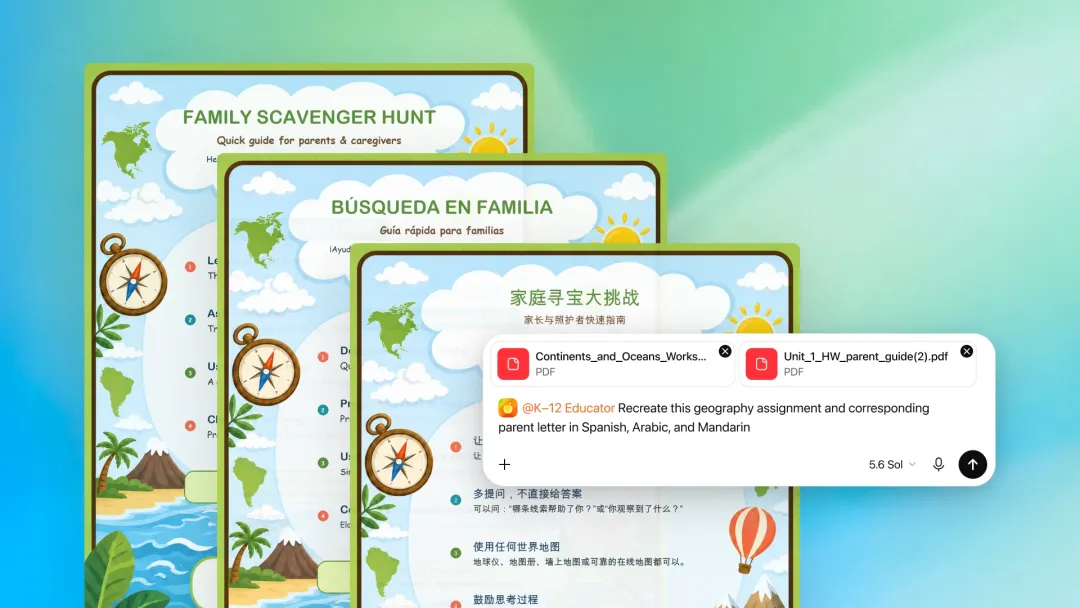
Examples of K-12 teacher plugins: homework translation, exit ticket nodes, home school communication, practice tests, a set of preparation courses.
It also has access to the Learning Commons, allowing the material generated to align with academic standards around the world, but scores and teaching judgments are still in the hands of teachers.
The university's teacher plug-ins go along with the "curriculum": changing the curriculum outline, generating interactive teaching websites, aligning the curriculum calendar, and encapsulating the teaching system (LMS) directly into the school.
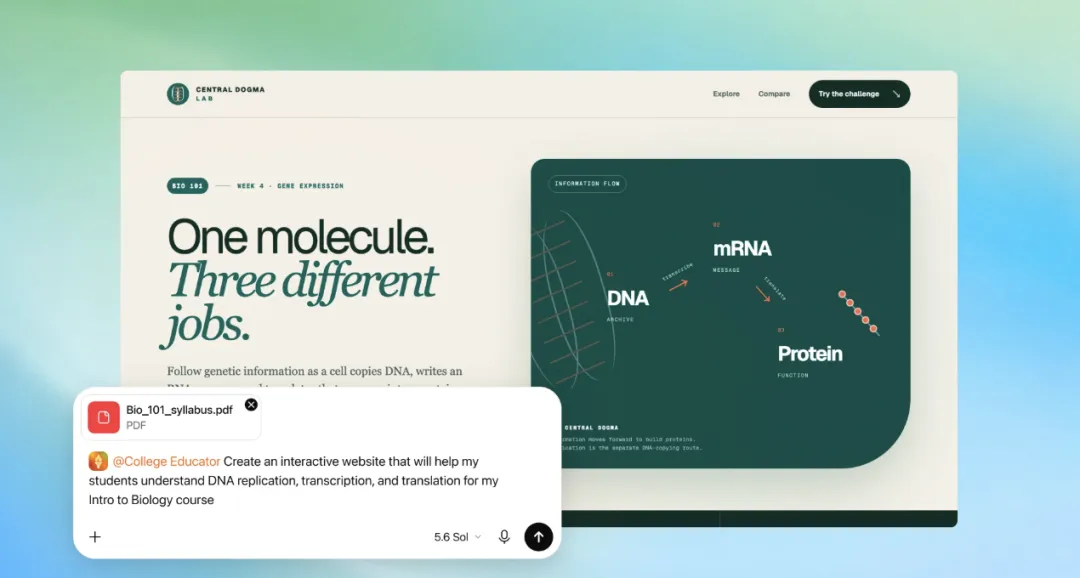
Examples of university teacher plugins: generate interactive teaching websites, curriculum calendars, course materials and posters.
University plugins, which focus on "learning": turning what they're learning into more personalized material, AI guidance, difficulty practice, automatically generating learning guides, tests, flashcards, and visual explanations.
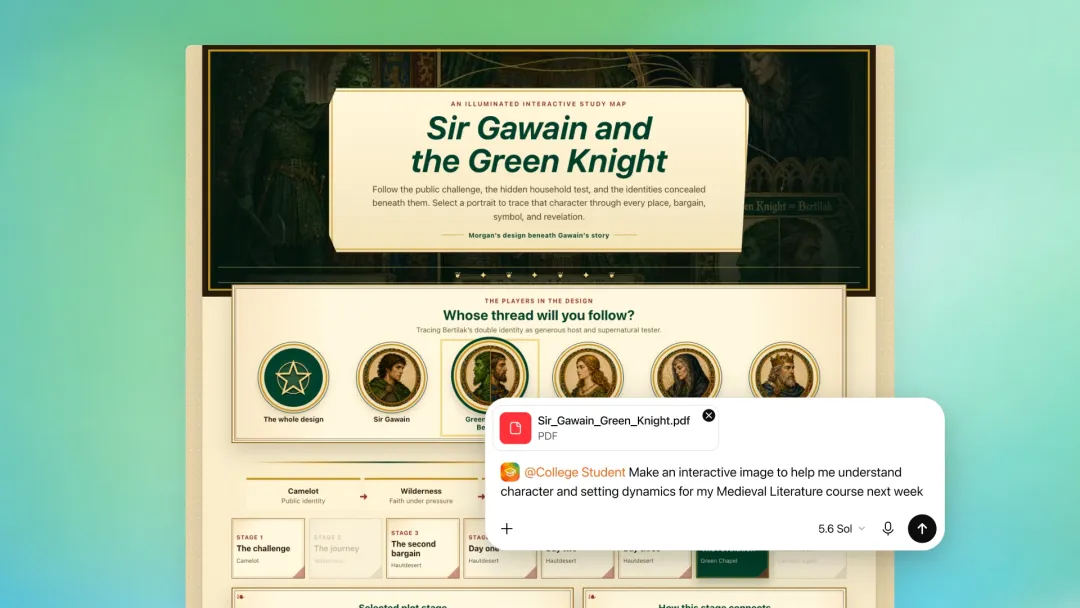
Examples of student plugins: Create interactive learning pages, flashcards, and learning plans from your choice of materials.
Well, these functions came out on their own, and ChatGPT could have done it.
But what's really changed is that OpenAI is preparing classes, assignments, and learning plans for these mature workflows ahead of time, saving most of the time that users use their own tips, tricks, and tweaks.
Don't use ChatGPT with "ask and answer".OpenAI has given it a name: Capability overhang.
Tools have evolved too quickly, and people are not able to use them, and the gap between them is widening.
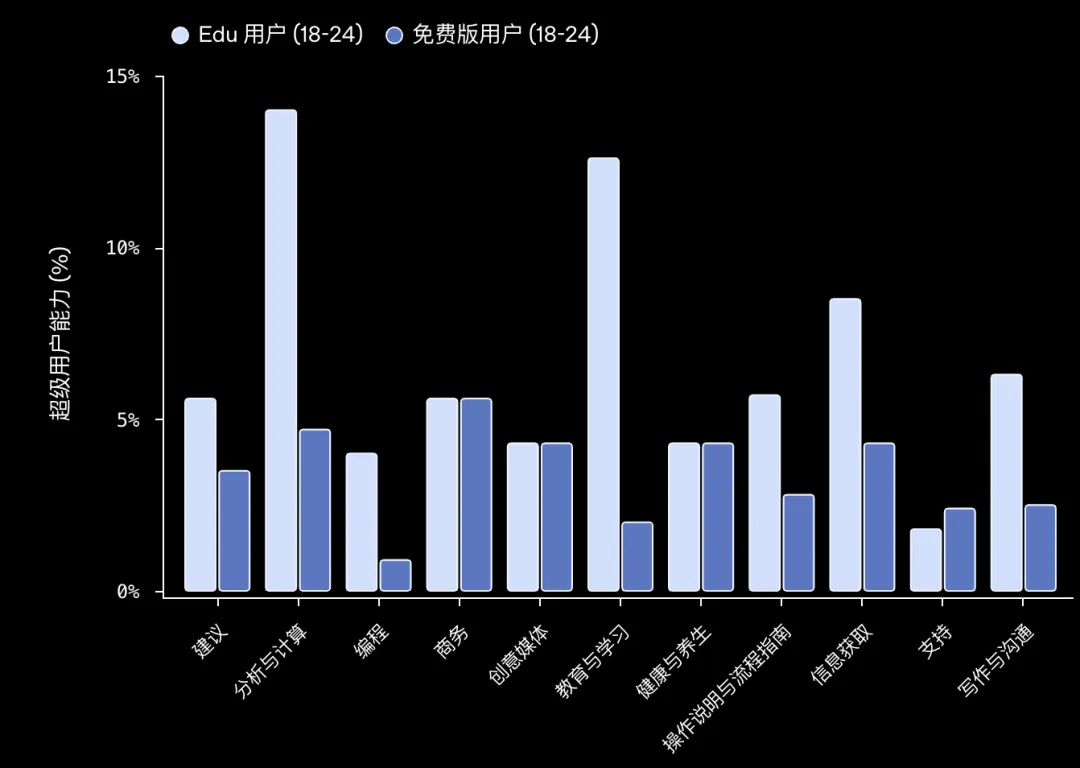
OpenAI's internal data: Using ChatGPT Edu, the majority of students are able to lead free users, analyze computing, and maximize learning gaps.
In order to fill this gap, the real thing to do is to lower the threshold of "will not be used".
OpenAI itself has also come up with evidence:
In the deployment of ChatGPT Edu, the longer the students use it, the more "super-users" rely on it, especially in the areas of analysis, computation and learning.
A super user may be letting ChatGPT connect data, run analytics, build a small workflow that can run automatically; while most students are still letting it "help me write an eight-hundred-word essay".
The more people use AI, the deeper they are using it; the less they use it, the more they stop at "ask a question, answer a question".
The same person, someone with, with a workflow that is already dependent on, who blindly touches himself, can finally use AI in what way, there is a big difference between the two.
This gap is not in his mind, and no one has ever told him that this game is still useful.
This is no longer an AI home school.If you look at what OpenAI has done in education this year, it's a closed loop.
Plug-ins are responsible for "use" and plug-ins are responsible for getting the work flow into the hands of teachers and students.
OpenAI is the founding partner of the National AI Teaching Academy, which plans to train 400,000 K-12 educators over five years.
According to the plan, after five years, one in 10 U.S. teachers should have been trained by it.
But this isn't a one-man show for OpenAI. The academy was co-founded by AFT (the American Federation of Teachers), UFT jointly with Microsoft, OpenAI and Anthropic, headed by Microsoft.
National projects are responsible for "paving".
Through Education for Countries, OpenAI is bringing ChatGPT Edu into the education system across countries.
In Estonia alone, OpenAI has revealed that more than 20,000 students and 4,600 teachers have been covered, as well as a long-term study in collaboration with the University of Tartu and Stanford.
There are also more subtle neural networks: student communities, online teacher workshops in eight cities, and a 12-month free work area for researchers.
The student community then proceeded to internships and job openings, linking the learned AI skills directly to early career opportunities.
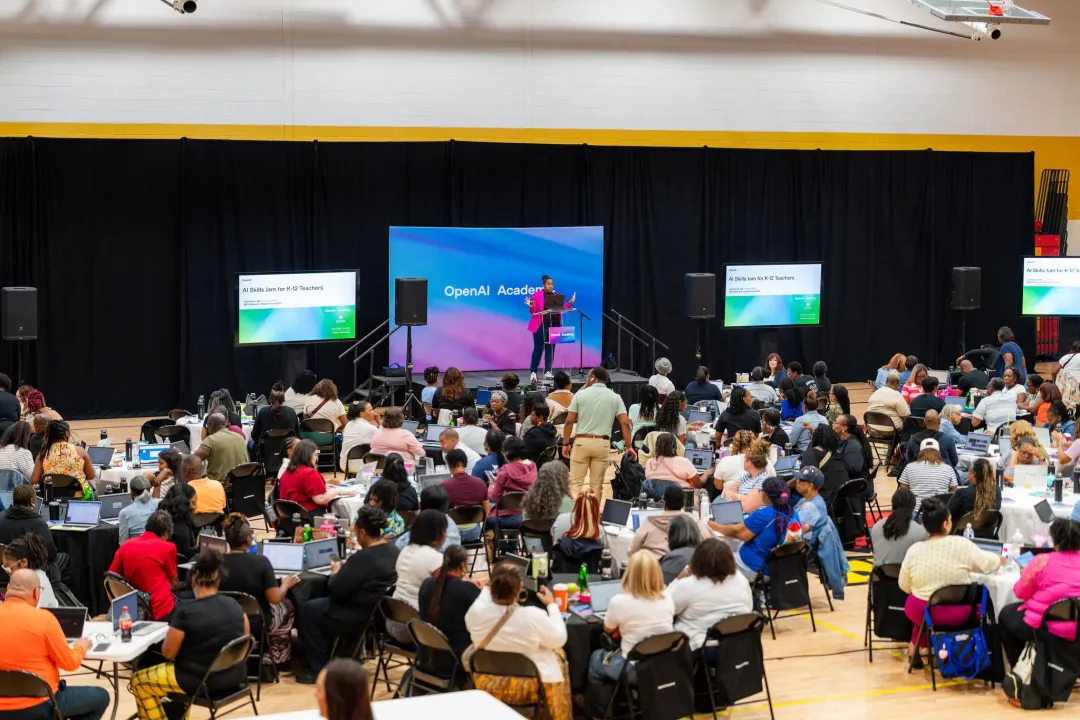
In July 2026, OpenAI will host a K-12 teacher training camp in Jonesboro, Georgia.
Finally, learning effectiveness is a measure of a suite of "reviews" to see if AI really improves learning, rather than just making people use it more and more often.
Using four sets of teaching, paving and evaluating together, it has long gone beyond the scale of an AI home teaching, and it is rooted in educational infrastructure.
OpenAI provides toolsWho has the right to teach?Here's one easy to overlook but crucial detail: None of the three plugins are currently available to all ChatGPT users.
Officials have made it clear that they are only available through the school district deployment of ChatGPT Edu and ChatGPT for Teachers.
This is a strategic choice that is clearer than the opposite.
Three weeks ago, on July 14, Anthropic launched Claude for Teachers, taking a different path: Individuals can take a free course to a single certified K-12 teacher in the United States.
This path was criticized by some in the education community as "leaping the decision-making ladder of school districts": school IT and administrators hadn't figured it out yet, and the tools were already in the hands of teachers.
OpenAI, on the other hand, is almost the opposite of OpenAI, which is building the entrance directly into the school district, making the institution a unified distributor, and it is fighting not for the favours of a few teachers, but for the unified entrance of the entire educational institution.
But taking the entrance shelf into the school district is not the same as taking away the right to teach.
In the classroom, how to use AI, how to score for students, teachers, schools and the government, no one is going to get their hands on it.
AFT also issued a death warrant for this: the content of the courses is not allowed by the technology companies, and the training environment is entirely governed by teachers.
A first-grade teacher has a very real example:
AI is like fire, it can cook, it can burn. It can read a subject, but it can't read the atmosphere in a classroom, and it can't judge where a child is right now.
So this battle, which looks like OpenAI is busy delivering plugins, credits, training, is really about "who defines how to use AI in classrooms".
For those 200 million young people and their teachers, the question has long gone from not using AI to using AI at home, how to teach and by whom to talk.