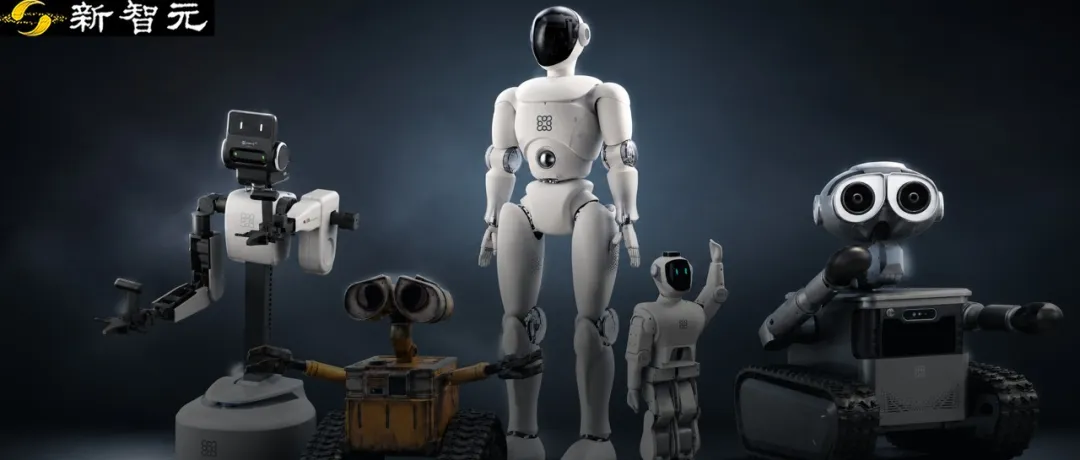
It's the first time in the history of the world.
"Optimus will be an epic product".
On August 3, Musk posted a numbered post on X for Tesla's robot route station.
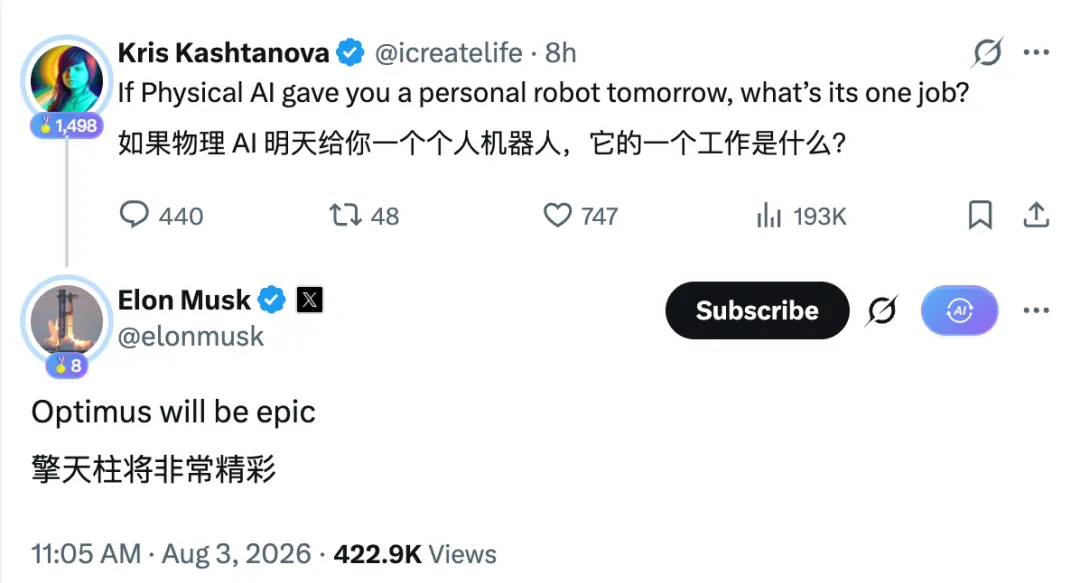
But you know how Musk operates. Optimus has no timetable, no technical details, no commercial nodes.
But for ordinary people, no matter what you shout, ask a question:
Can you get in the house when the robot is on fire?
Don't be in a hurry.
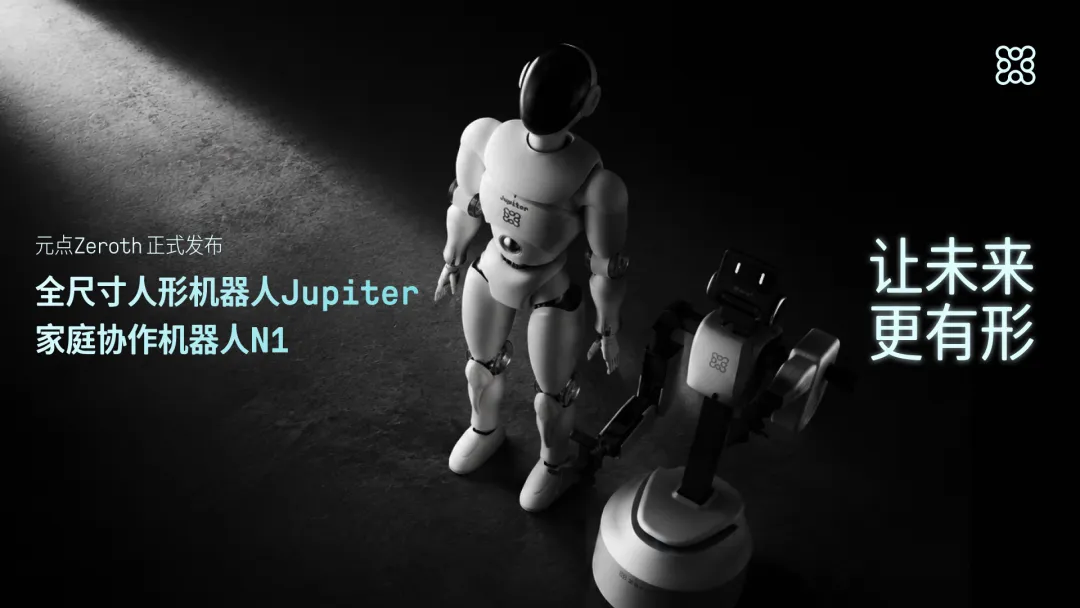
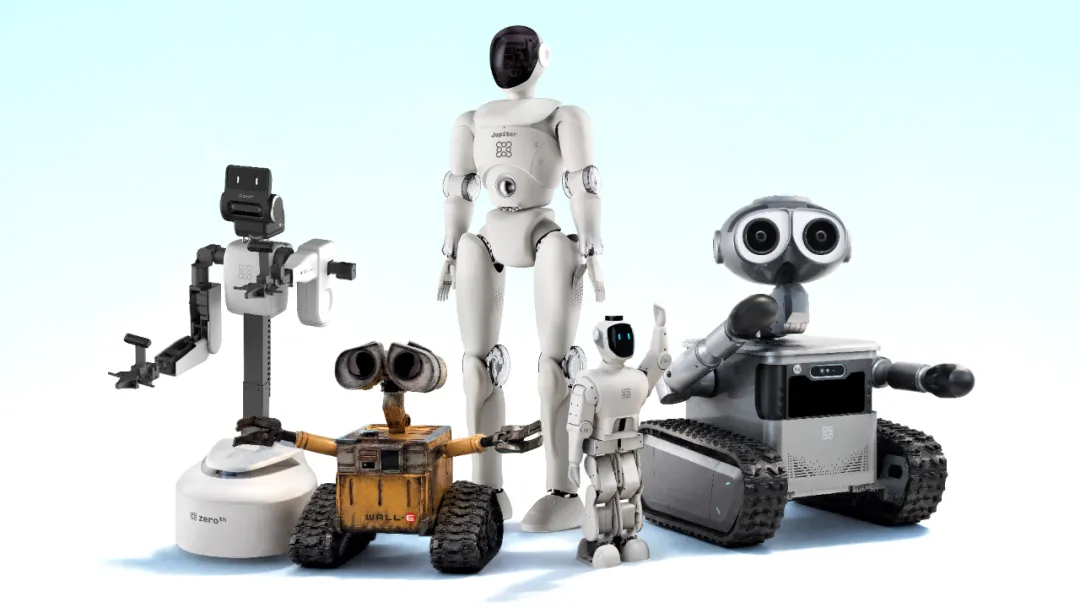
Recently, the family-owned smart brand Zeroth has launched two robots: a full-sized Jupiter doll about 165 cm tall, weighing about 55 kg, and the world's first homogeneous mechanical arm family collaboration robot, the N1.
The industry is talking about home robots, mostly stuck with the idea of "functional extension" or "workforce replacement".
But the hub robot wants to do differently: it focuses more on the long-term coexistence between robots and humans. A home robot should not be just a machine with instructions, but should be an intelligent mirror that can understand and remember your habits, preferences and emotions, and be an intimate member of your life, exploring the world, and communicating equally.
Perhaps it's because of this wheel of physical intelligence that a generation can bring the technology that can be engineered today into the living room of ordinary people.
From small to full-sized dollsThe entire lineup of the "Modepoint Robot Universe" debuts.Jupiter, the first full-sized humanoid robot with a focal point, is 165cm, 55kg, and is almost a skinny adult. It can walk, navigate, talk to you, and hit a carpet ladder.
But it's clear that Jupiter's ultimate goal isn't to take two steps at a conference, but to become a universal intelligent robot that can enter the family in the long run and exist as a partner.
In the words of the dot-com robot itself, true physical intelligence should not only be a tool for performing tasks, but should have the ability to perceive the environment, understand users, participate in life and grow together over time.
In addition to family scenes, Jupiter is also able to go to shopping malls, exhibit as a "cow", and support university research institutions to use it as a research vehicle.
Say N1. If Jupiter asks an omnipotent administrator, N1 is the "splitting assistant" in your kitchen and living room.
It uses the world's first isomorphic mechanical arm program to divide itself into two, small robots that work independently, share brains, and do everything. It's like asking for an assistant who can become two people at the same time helping you with your dishes and packing your table.
The N1 is also "family-friendly" enough: it covers only 0.2 square meters, which is about a block of clay, and the 0 turn radius means that it can also rotate flexibly in the kitchen corridor. The shoulder height can be adjusted between 63 cm and 128 cm, just covering the height area of the tea room to the bar counter. In other words, everything you can do in the house, you can sit down and stretch your hand, it works.
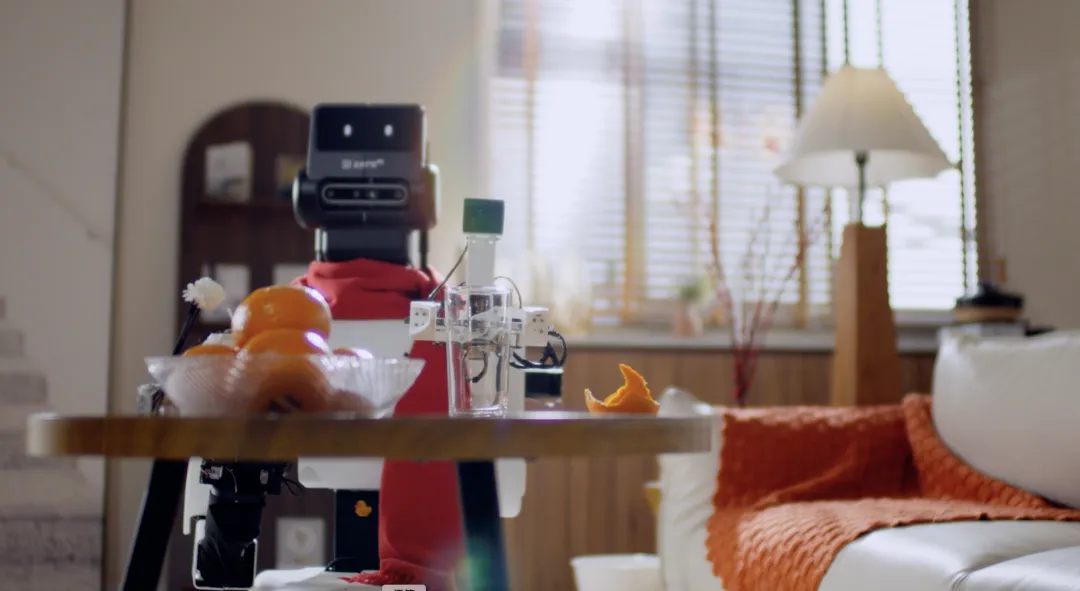
More importantly, N1 is equipped with a PSS physical space security system that can automatically plan routes, avoid dynamic obstacles, and provide a sense of security for the elderly and children in the home.
It's also equipped with a family-specific memory system of hub-point robots that can be used to learn more about your home's habits, which cups to put, and how many times to kiss a cat, and slowly remember. In these scenarios, organizing, moving, caring, assisting, and life services are pioneers in building a family collaboration that is available, reliable, and can last for generations.
It is worth mentioning that the company has come a long way. It was founded at the end of 2024, and its founder, Guo Jian, is a 97-year-old youth class player. At the age of 15, he entered the Xi'an Advanced Youth Class, then went to the London School of Economics for his master's degree, and at the age of 26 he became the executive president of the China Technology District, achieving revenues ranging from 0 to 6 billion in three years.
The launch of Jupiter and N1 also further outlines the product lines for point robots in the field of physical intelligence. Previously, the company has launched the world's first autonomous recharging robot M1 around the home scene, the wristband robot W1, covering children's companionship, elderly care, pet monitoring, home tours, outdoor walking, etc. Today, in addition to Jupiter and N1, point robots have formed a matrix of polymorphic products ranging from small dolls, wristband movements, family collaboration, and full-size humanoids.
There are many forms, and there is only one goal:Let's see.The robotsIt's a much safer, more natural, and more frequent way to enter the home.
 The six major technological trends are the ongoing battle of the family scene.
One thing the original robot wants to understand is that the key to a home robot is never "what it can do", but "how it enters your home".
When robots move from refrigeration to long-term companions, they require far more complex things than factory robots: higher safety boundaries, more natural ways of interacting, more sustained learning, and an understanding of the rhythm of family life.
It is only when technological capabilities, product experiences and family relationships are truly integrated that physical intelligence can become a part of everyday life from a novel device.
There are children running in the house, old people with bad legs, cats creeping around, couriers stacking up at the door, and carpets, stairs, and chair legs, the ever-changing "unmarked terrain". It's not enough to stand on your feet in an environment with an algorithm or a hardware highlight. You have to design the whole thing, you have to control the movement, you have to understand the environment, you have to understand the multi-modules, you have to collaborate on security.
To this end, the point robot has built a comprehensive technology system covering six core directions. Specifically:
Body structure and joint modules are responsible for "physical qualities" that keep robots running steadily, moving smoothly, and not touching things.
The lightweight mechanical arm solves "living on the hands" and performs flexible operations in this narrow space of the home, rather than being as large as the industrial mechanical arm;
The general-purpose model and the VLA are responsible for the "brain" so that the robot doesn't just "see a glass on the table", but understands "the owner is thirsty, he should pour a glass of water" and then actually does it.
The consciousness simulation model goes a step further, targeting long-term relationships that allow robots to evolve continuously in accompaniment, memory, emotional recognition, and personalized responses.
This set of technologies enabled point-based robots to simultaneously cover the core capabilities of both "body" and "intelligence" robots. The launch of Jupiter and N1 is the focus of this full-fledged capability in the full-size product direction.
As the founder Guo Jian said: "We hope that the family smart terminal will not only have 'memories' but will be able to understand a real person gradually in long-term companionship. It will remember your habits and sense your emotions. As you spend time together, it will become your family partner. Perhaps one day, it will even notice your fatigue, expectations and needs sooner than you do. At the same time, it will not only serve one person, but will be able to recognize the personalities, preferences and rhythms of different family members, and establish different ways of interacting with each person.
Generations brought "family" into the living room.For the industry, physical intelligence is entering a new phase from conceptual verification to product definition and scenario verification. Those who can understand real family needs sooner, who can shape a continuous transition between products, technology, supply chains and commercialization, are more likely to build a long-term competitive advantage.
Every few months, people shout "subversion", but the real question is always:What's your name?The robotsCan it be sent to users?
The dot robot chose a path that looked less sexy but extraordinarily pragmatic: progressive landing.
Guo Jian said: "High-dimensional technologies that can be engineered address the real needs of users, which equates to products that are large-scale. So we look for generations of technologies that can be engineered today, and what scenarios can be met today with these engineered technologies, to meet these needs".
From M1 to W1, then to N1 and Jupiter, each generation of products solved more problems than the previous generation, and even more into some family scenes.
In the thinking logic of point-bots, the end of physical intelligence is by no means a mere technological breakdown, but a reformulation of the relationship between "people, technology and living space". The value of family physical intelligence should not be confined to the front-line experience of a few people, but should really go into the tens of millions of ordinary families and become the technology benefits that everyone can enjoy. The meaning of technological progress is that complex algorithms are hidden from view, that technology's temperature is reflected in everyday life, and that life is more dignified and more warm.
Whether children in need of companionship, elderly people in need of protection, or everyone who desires to be understood and shared in everyday life, should enjoy the transformation brought about by AI on an equal footing so that AI is no longer a distant technological concept, but becomes the companionship, collaboration and protection available to ordinary families to truly achieve a more equal, inclusive and warmer intelligent future.