“ The gap has always existed.
On the eve of the 2008 Spring Festival, an undersea pipeline supplying natural gas to Tianjin was damaged, and the captain of the 2nd Squadron of the Sea Oil Engineering Submarine, Hongwei, led into the water.
This type of robbery does not have a standard operating procedure, and every step depends on the disposal of the land, and the wrong step can lead to a complete loss. The facilities to be repaired underwater are increasing and the people who can draw water are decreasing.
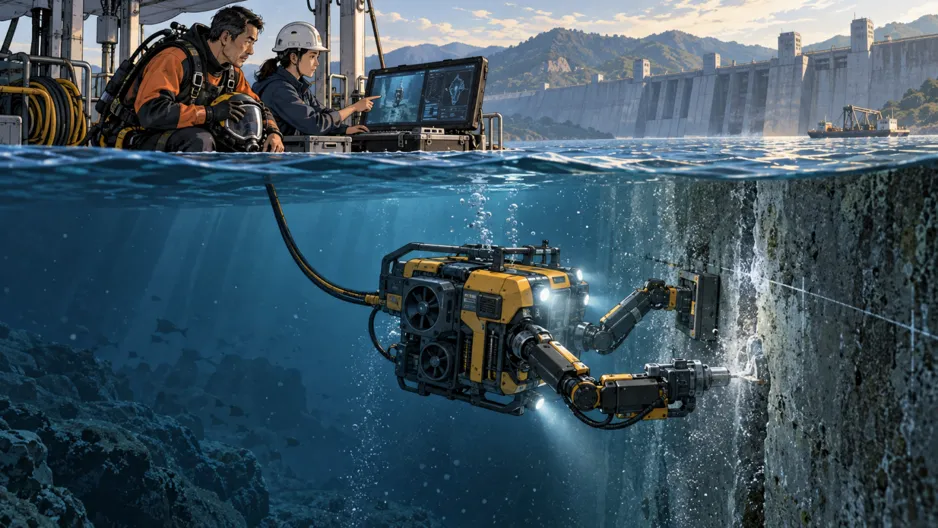
At the beginning of this year, submersible technology in Hangzhou took up the topic. The company, started by Professor Ray Yong of the Faculty of Mechanical Engineering at Zhejiang University and former U.S. investment executive Hu Xia, has a clear direction to get the machines into the hard-to-perform deep water, undertake complex underwater operations, and repair structural defects in underwater facilities.
The question is where and why it is now.
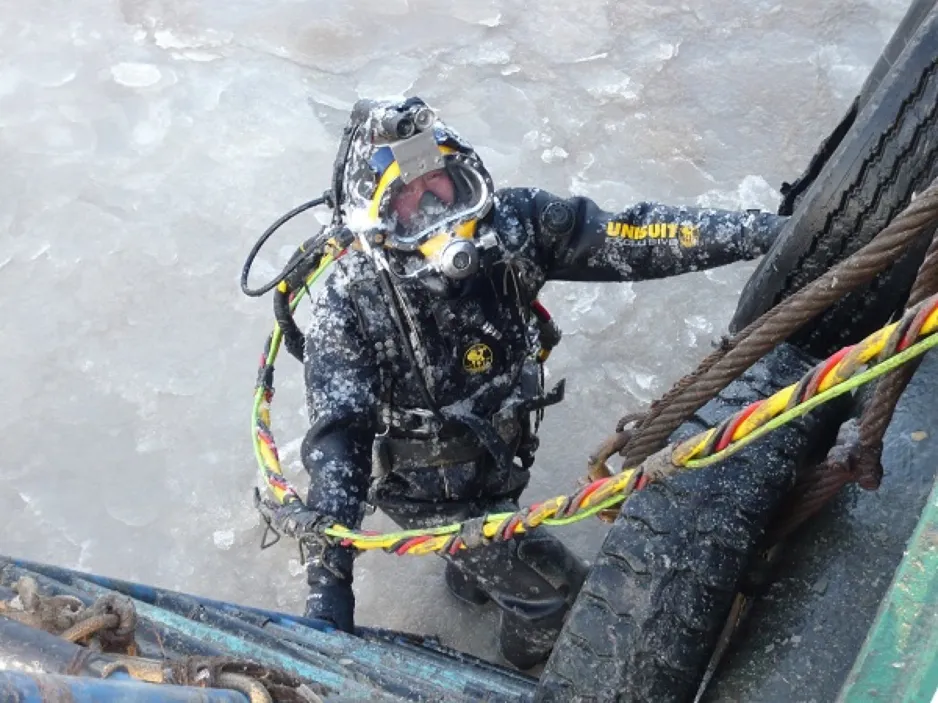
Image source: Ministry of Finance of the State Council of the People's Republic of China
01.
11,000 certified engineering divers nationwide
The total number of certified engineering divers nationwide is 11,108. This is the quality of training certification of the China Submarine Rescue Industry Association, reported by Xinhua in July 2024.
Huang Li has been underwater for more than 20 years, and his thumbs are thick, which is the trace left behind by ice melting countless times. He says he is "accustomed" to this habit, which can't be done quickly and can only accumulate from year to year underwater.
Chukin Yong is a national technical expert, with a total dive time of over 57,000 minutes and a 25-1 single point repair in the winter of 2009, he stayed underwater for 127 minutes and was only a few centimeters away from him when he was pulled aboard.
The Yellow Tiger is a mermaid and diver who spent 28 days in a lifeboat with a diameter of 2.5 meters and a length of 6 meters, stepping on the deck on August 5, 2022 to see the sun again.
All of them are from a Chinese oil personality profile published by the State Finance Commission on its website in June this year. What they have in common is that all of these things take time, from entering to dealing with complex work situations independently, usually on a yearly basis.
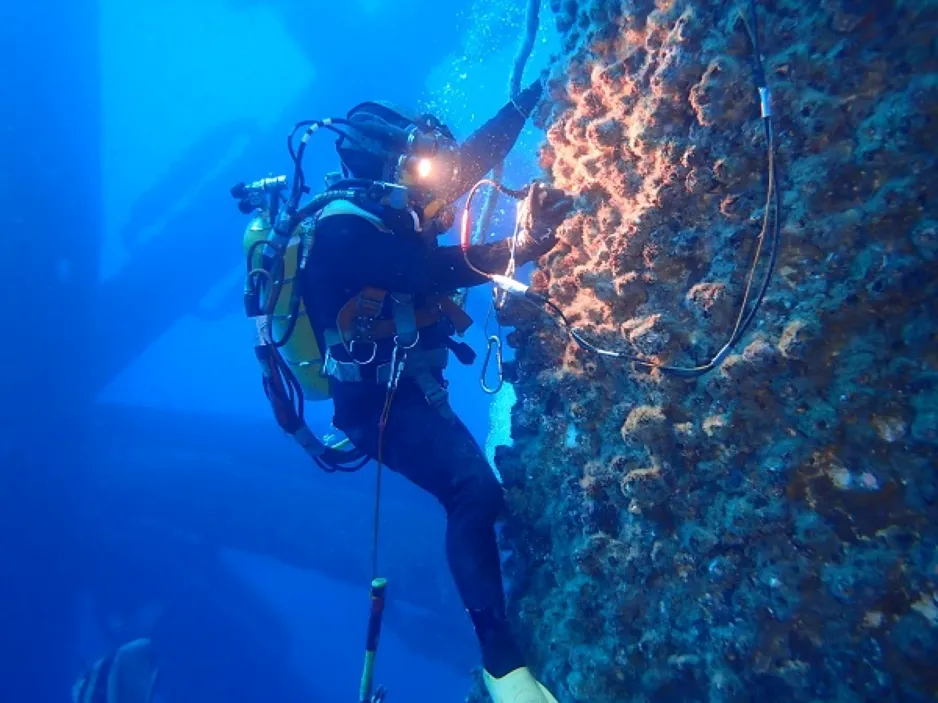
Note: Submarines are attached to underwater structures. Image source: State Department State Finance Commission
There are fewer people who can actually weld and cut underwater. The vice-secretary of the Chinese Association of Submarine Rescue Industries, Mr. Yong, explained that the association has trained less than 200 underwater workers in recent years.
The Association is considering a solution. In September this year, the first professional competitions for divers were held in Salt City, Jiangsu, where more than 40 engineering divers from more than 20 member units nationwide were selected to participate in underwater welding and cutting. During the competition, several companies actively approached highly skilled competitors.
According to the submersion method, engineering diving is roughly divided into three categories, the boundary being that people should not live for long periods of time in a pressure environment that increases with the depth of the water. Air diving uses compressed air, usually no more than 50 to 60 meters deep; mixed-gas diving can reach 60 to 120 meters; and downwards relies on sink and submersion. An expert in the field of long-term underwater engineering gave an example, using non-sink and submersion at a depth of 120 meters, an effective operating time can be as little as twenty-thirty minutes at a time, followed by reducing the pressure in more than six hours. According to China Sea Oil, a set of sinks and submersion systems is reported to be worth hundreds of billions, with a service life of about 15 years.
The total is increasing, the structure is aging. In a report by Xinhua in September this year, the Association's vice president and secretary-general, Chen Lian, said that the Association's training certified divers cumulatively exceeded 237,000, an increase of over 50% over the past five years. However, these 237,000 are the sum total of the Association's certified divers of all types, including engineering divers engaged in underwater engineering, with just over 10,000.
02.
This is a problem that can't be solved without water.
In our country's water-related infrastructure, reservoir dams are the most reflective of the bottom. The country has built 94,300 reservoirs of all kinds, with a total capacity of 10,222 billion cubic meters, 80 percent of which were built in the 1950s to 1970s, and more than 90 percent of which are limestone dams. This is the caliber of the Ministry of Water, and the limestone dams are just afraid to leak, need to be repaired underwater. This is not counting 318,000 km of levees, 90474 dams, 92602 pumping stations, and offshore wind turbines and cables, city pipelines, bridge dams.
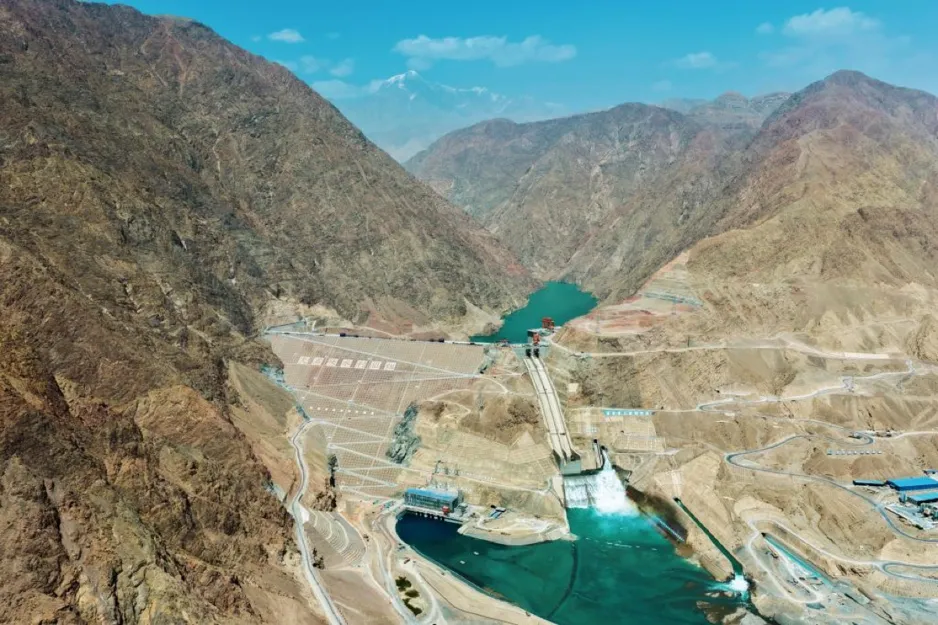
A large dam and a library area in the construction of a hydroelectric hub. Image source: Xinhua Development Corporation (China Can Build Guangzhou Great Barrier Reef Project)
Reservoirs take on the functions of generating electricity, water supply, irrigation and urban water use, and the cost of releasing reservoirs is too high. The fence is generally only calculated in new, pointed, shallow water projects, faced with the water damage of large reservoirs, most situations do not apply.
Marine wind power is another problem of increase. The base is frequently brushed in the ocean currents, the seawater cable is dragged under the sea, and damages must be repaired under water. Such facilities sink to a depth of tens of meters, and few people notice that once something happens, it is the cost of stopping.
Submarine cutting is a contact operation, not just a patrol. The patrol relies on the movement, observation and positioning that remote-controlled divers can handle; contact operations require robots to attach to the structure, stand up in the water stream, while enduring the counter-effect of drilling and cutting. According to DeepTech, deep tech reports, complex underwater operations that require hand-eye coordination, precision feedback and on-site judgement, are still unavailable to divers.
According to DeepTech DeepTech, the technical connections of the divers began after 2015 with underwater disc and climbing wall detection, 13-15 tests, 14-15 multi-process integration, and on-site testing in several large reservoirs and hydroelectric power stations.
Submarine robots are more than one form. According to DeepTech DeepTech, "rough work" for drilling and cutting requires steady pressure, and the team has basically solved it; mechanical drillers are facing a more difficult layer, attached to the structure by suction workstations, with their arms in charge of precise operations, handling more flexible, precise, non-standard, multi-processing operations that require on-site change.
At the product level, divers have both a large and complete integrated platform, and single-tool working robots and mechanical drillers, the last two lines are the focus of current research and development. The three lines are not mutually exclusive, which functions are needed depending on which of the different product lines.
03.
Those who water and those who stay on the shore
Under water, there is no light, visibility is often poor, nothing is visible, the diver still has to maintain his body, handle the power of the tools. From where to start, only the sense of direction formed by long-term work and familiarity with the equipment. This part of the experience is difficult to write in a manual, and it is not easy to teach on shore, can only follow the person down the water, one at a time accumulated.
With regard to the precision operational scenario, the existing ROVs are not yet able to catch up. Where the border is, the quality of China's own oil is clear. The mechanical hands on the ROV can screw caps, tie ropes, but can't perform precision human-level operations; narrow spaces can't be reached, and cameras can't be seen when the water is running. The pilot originally said, "Water, ROV can't be seen, but divers can touch".
Putting the "hands" and experience of the divers underwater is just the first step. A defect with what materials, in what order, is to be repaired, and the plans are to be determined by engineering and process experts on shore; these judgments can now only be passed through dialogue, a sentence to tens of meters underwater.
The path chosen by divers is a step-by-step progression. The first step is remote operation, allowing experienced divers and experts familiar with the field techniques to enter the operating end, to move judgments from underwater to shore, and to encounter complex situations. At this stage, robots take over the action, and humans retain judgments.
Industry experts estimate that underwater robots can reduce the burden of submersibles by 30 to 40 percent if they take on 20 percent more powerful, repetitive, and low-tech processes first.
04.
It's been a decade since I went from lab to engineering sample.
According to DeepTech DeepTech, the team entered the field of underwater robotics after 2015, going from detection to absorption, and then to multi-process integration. The company was incorporated in Hangzhou in February 2026, completed a ten-millionth seed wheel in June, and recently launched the Angel Wheel, with plans to launch a prototype machine gun in 2027.
A team of about 20 people, made up of R&D and market-based backgrounds, and other senior divers involved in process refinement. People with underwater experience decide which processes are suitable for machines, what to do, and what to do, rather than deriving from papers closer to the scene.
He has previously worked for many years in foreign investments in Merlin securities, through a number of technology projects. He was motivated by several things, the long-term trust, policy direction, and technical accumulation of cooperation with Ray Yong. There is also a judgment that a large number of underwater facilities are concentrated in a cycle that needs to be maintained.
Hongwei's body was frozen, the most concrete form of underwater work. People on the shore opened the pipes, pressed the light switch, and connected their hands to the water behind them.
Underwater operations are shifting from "people must water" to "people judge on shore, machines execute underwater". In this shift, divers are focusing on the hardest part, underwater repairs of defects.
This transformation has just begun, with people and machines working underwater also drawing the first line. The next step is for people to pass on their experiences, and more machines to be "prepared" for, after all, this gap is still waiting to be filled.