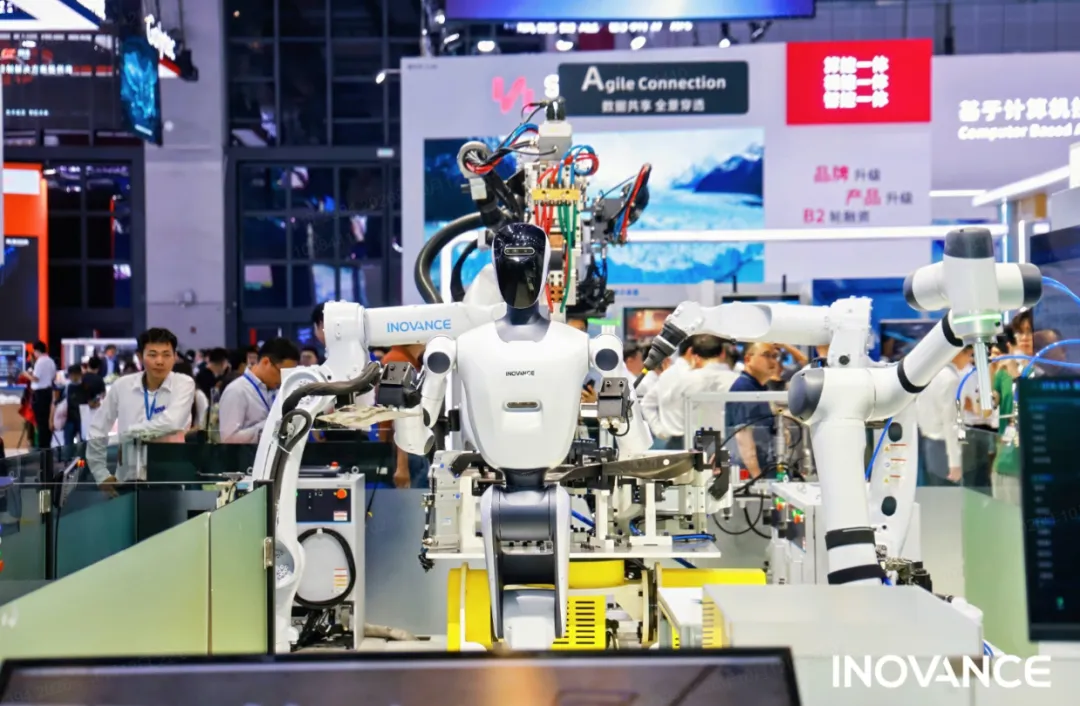
“ The lights at the trade fair are always three times brighter than in the factory.
If you walk around an industrial fair, you'll see a familiar sight. The robots on the stand are always as bright as new, the movements are cloud-flowing, the trajectories are perfect as if they were drawn with meters. In a well-defined world, they repeat movements accurately to millimeters.
But those who have really come down to the factory know that the world on the production line is never like this.
The source material has a gap, the positioning has drifted, and the teacher's workpiece position is less than half a centimeter, so the tooling of the previous procedure is so loose.
The real world's industrial landscape is inherently imperfect.
So when I was at the trade fair and saw the collaboration between Huawei Technology and Amio at the aluminum parts exhibition, I knew what it was showing was far more important than a robotic aluminum assembly piece.
In this scenario, what is undoubtedly most important is that the robot be able to cope with the uncontrollable clutter of industrial intelligence.
The collaboration between the two sides presents a complete flexible assembly scheme from the body to the intelligent system, and is one of the most realistic pieces of industrial equipment intelligence.
01.
The traditional automated pump is perfect assuming the pump is failing.
To understand the value of this scenario, one must first understand the fact that it is rarely discussed publicly in an industry.
The underlying logic of traditional automation schemes is to assume that the feed is standard, that the location is fixed, and that the environment is controllable, and then to pursue extreme efficiency in this closed system with fixed fixtures, fixed trajectories, and repetitions.
This logic was established in the era of single varieties, mass production, and even optimized. It underpinned the golden age of the automotive industry, supporting the miracles of electronics manufacturing at scale.
But let's assume it's not working.
The model of automotive parts is booming, and the conversion cycle of 3C products is constantly being squeezed, and the food and warehousing industry is facing a completely non-standardised material form.
When multiple varieties, small batches, frequent changes from special needs to the general norm, traditional automated conversion of a product requires redesigning a set of remedies, re-examining the cost structure of the process, and from acceptable to unbearable.
This is not a problem of insufficient performance of a single device, but of structural failure of the entire technological paradigm in the face of changing industrial demands.
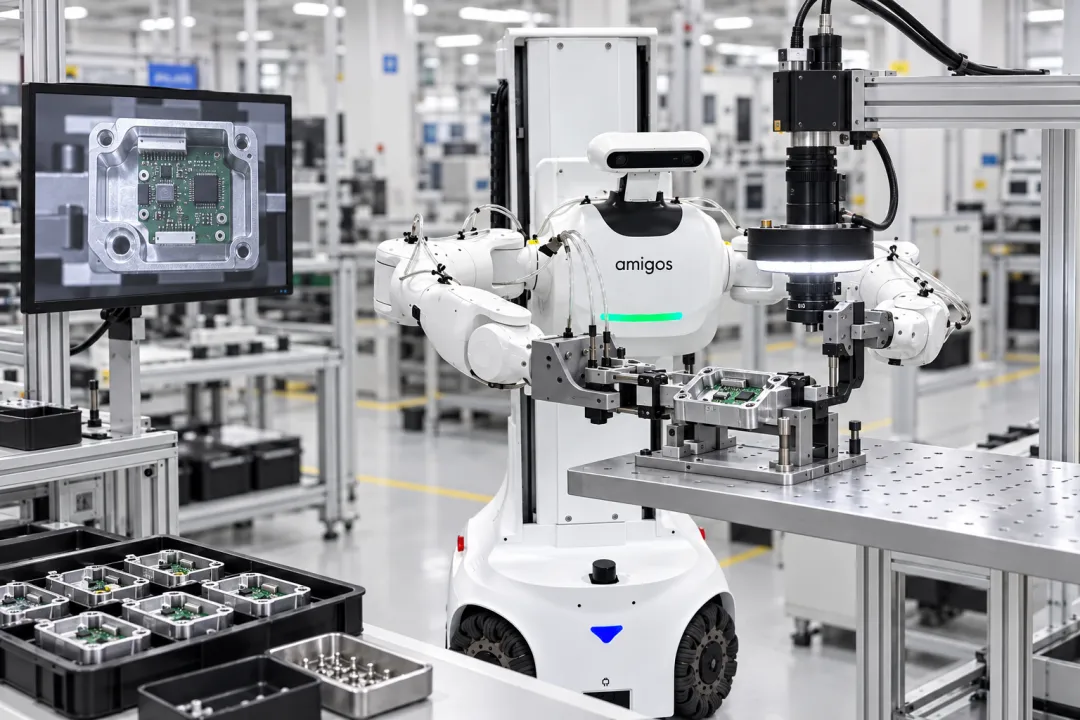
In fact, the industry has been aware of this problem very early on. In the past decades, flexible aluminum manufacturing smart production lines have been repeatedly discussed, but in fact, most of the so-called flexible solutions are essentially just a layer of soft aluminum on the rigid automation surface. Replacement products still require deep human involvement, the modeling cycle is still weekly or monthly, and the performance of the raw material fluctuations is still fragile.
Flexibility creates a real technological barrier that is never on mechanical structures, but on whether or not a closed loop can run under real working conditions in a vacuum. It requires robots to automatically complete the entire chain from identification, planning to control when faced with uncertain inputs.
This is exactly the direction that industrial AI is pointing.
02.
Behind the sub-millimeter installation is the closed-loop capability of the pump to sense-decide-perform the pump.
The most easily overlooked thing on the trade fair stand is the hardest thing.
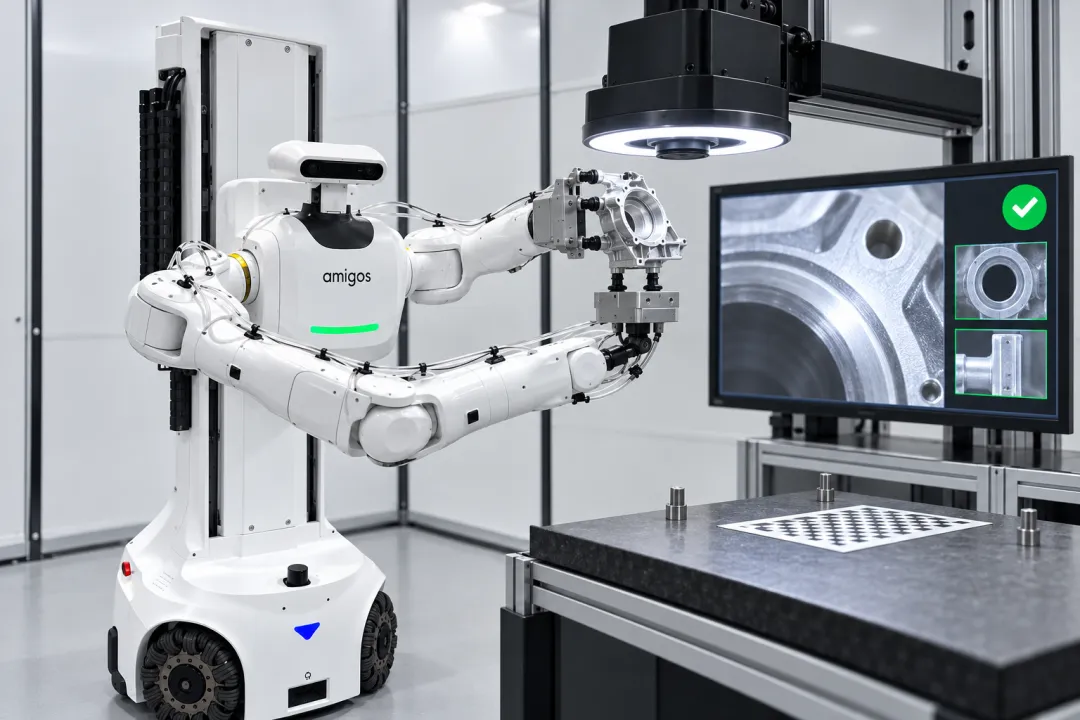
What the audience saw was that the robot skillfully grabbed a pointed metal piece, adjusted the posture, adjusted the position of the assembly, and then stably completed the assembly. But the insider noticed that in the process there was no mechanical positioning structure assisted, no guiding mechanism to put the workpiece in place, and the robot was faced with a real state of compression that could be described by using a random compression hammer.
The metal parts, which sound like a simple object, but are extremely difficult to serve in an industrial setting. The thin-walled structure means that the grip force is slightly deformed, the reflective surface means that visual recognition is easily defective, and the submillimeter-level assembly pass means that the final execution accuracy must be stricter than the repetitive positioning accuracy that most industrial robots label.
It should be noted here that achieving high accuracy under the conditions of fixed trajectories and fixed target positions is something that traditional industrial robots are already very good at. However, there is no prior information on the dynamic changes in the position of the target, the presence of posture, the need to be solved by visual real-time and to plan the trajectory of the movement in line to achieve sub-millimeter installation accuracy, a set of completely different dimensional capabilities.
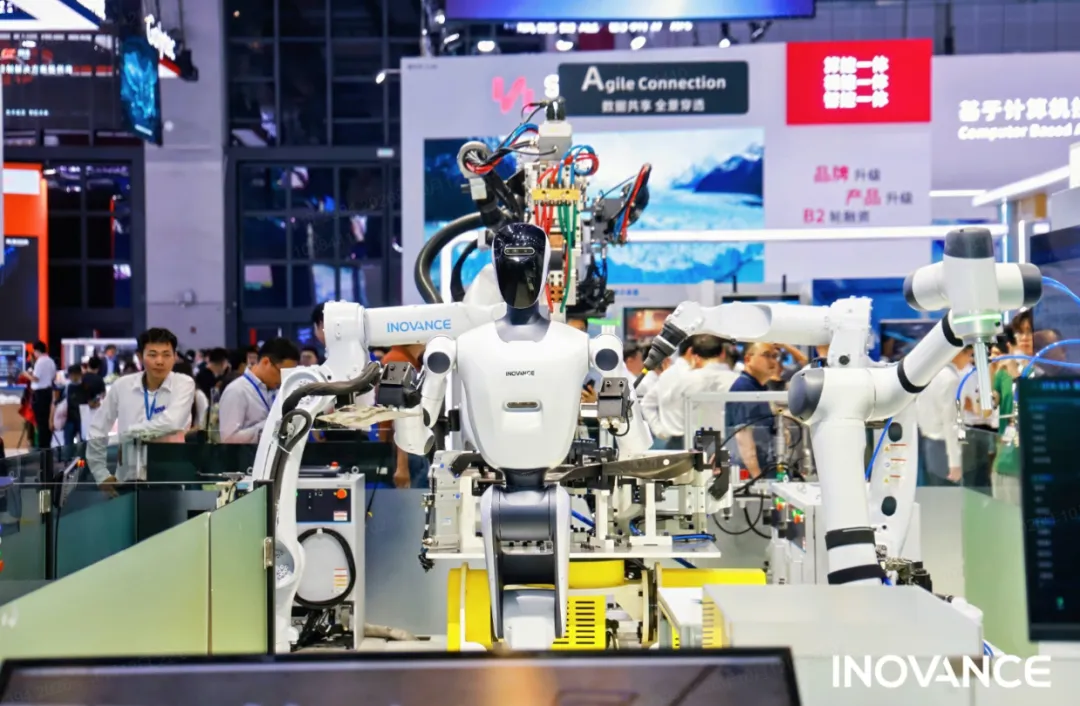
Summary: Huawei Technology and Amio are collaborating on the aluminum exhibition
The system, developed by Amio in collaboration with Huawei Technology, has several technical aspects that should be dismantled.
At the visual perception level, the system needs to complete real-time position recognition and position estimation under conditions where the workpiece gesture is uncertain, which tests the understanding of the state of the workpiece space; at the decision-making level, the robot needs to automatically adjust the capturing strategy and the installation path according to the perception results, rather than calling the preset procedure; at the execution level, the combination of visual servo and power control algorithms allows the robot to approach the final stage of the installation position and be able to rely on real-time feedback to complete the fine tuning.
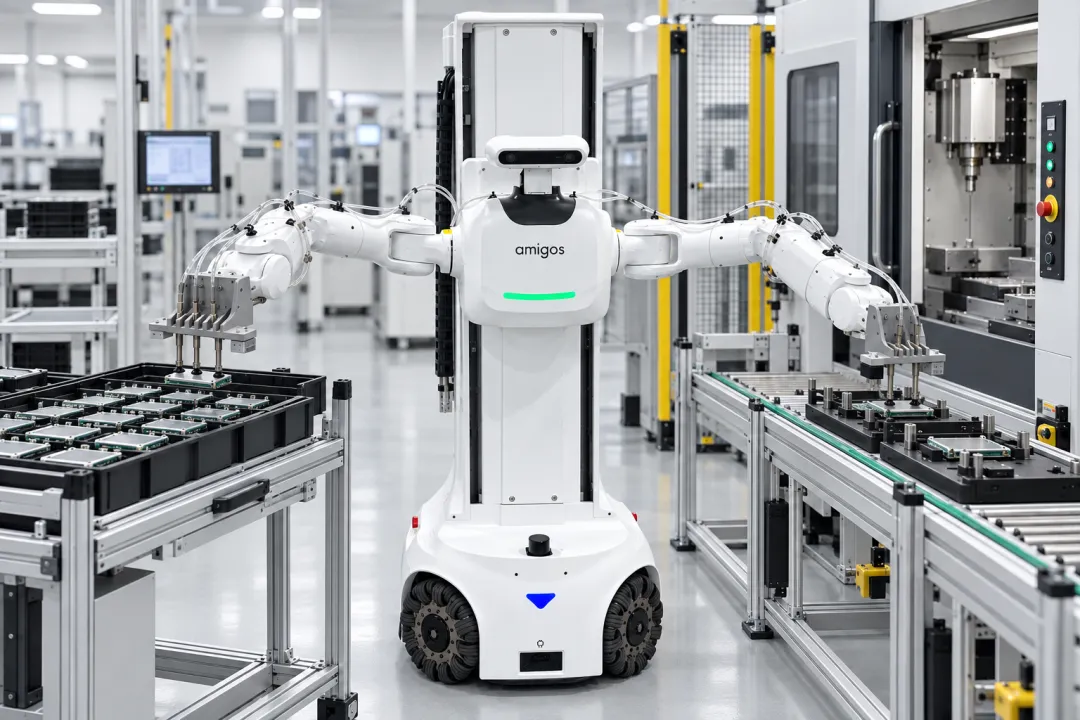
Also noteworthy is the introduction of two-arm coordination. Single-arm operation and two-arm coordination are not a measure of technical complexity. Two-arms means that the system needs to coordinate the motion relationships of the two mechanical arms in real time, achieving power point mixed control during installation, which is behind complex motion planning and real-time control architecture.
More importantly, the technology system has now become a general-purpose portable capability. According to Amio, the system can be adapted to multi-purpose kernels and can complete a new business deployment in three days on the customer's site.
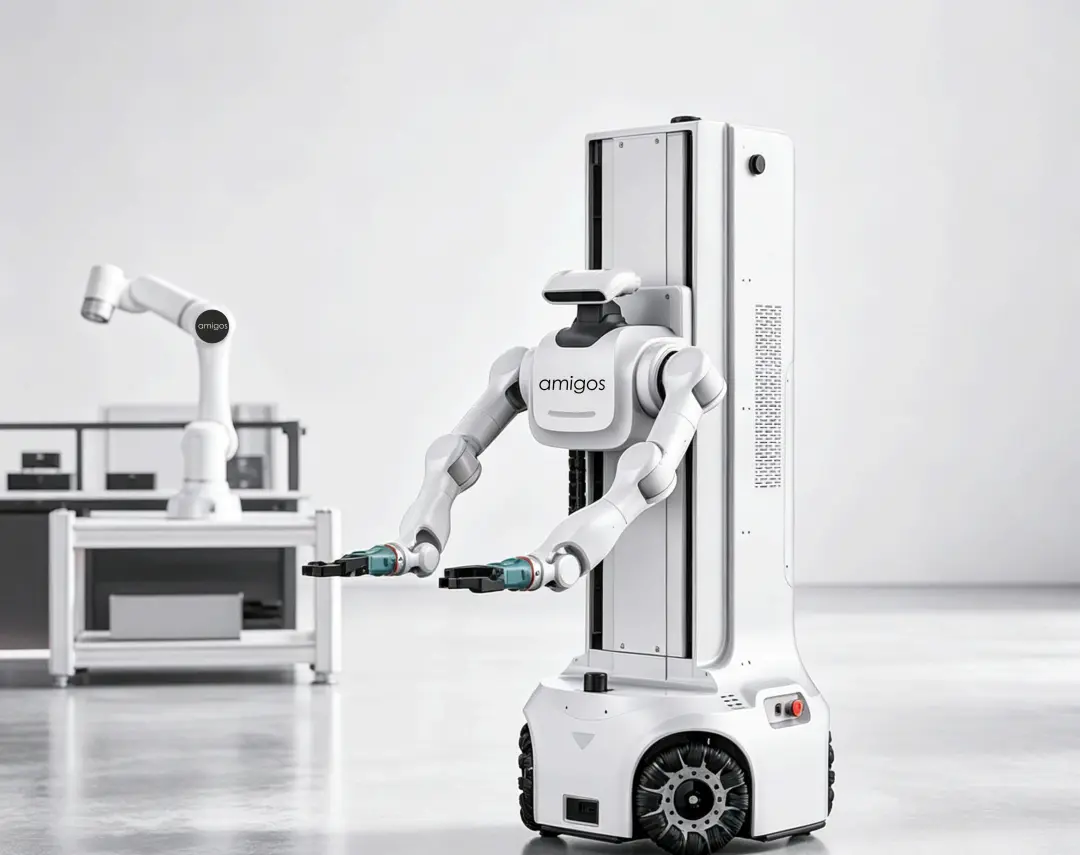
This portability is worth interpreting in two ways. First, three days ago, the figure in the field of industrial automation was counted in the minds of anyone who had done line-of-production modeling. It touches on the cost of the most sensitive neurotransmitter in flexible manufacturing.
The traditional program completes the evaluation, design, manufacture, installation, debugging, cyclical turnaround weeks of a new business. The three-day deployment rate means that the binding relationship between the robot's operational capabilities and the production line processes is being unraveled. This is a true breakthrough in flexible manufacturing.
Secondly, it is equally important for the system to be able to adapt to the technical characteristics of the multicomponent body.
The demand for the robot's body is highly fragmented. The 3C electronics line may require a wheeled chassis with lighter two-arms, automotive parts jobs may require greater load capacity and greater work space, and the storage scene may require a combination of mobile chassis and lifting facilities.
If the capabilities of a smart system are locked in a single body, its scenario covering the radius will be significantly reduced.
The AI program of Amio robots is to unravel the perception, decision-making, and control of these software capabilities from within itself into a mobile AI platform. This means that the same core algorithm capabilities can be deployed on different types of robots, such as wheeled arms, fixed bases, and even other possible forms in the future, depending on the needs of the customer's scenarios.
This transition from specially targeted aluminum to general-purpose aluminum is the key to getting rid of the customization trap and achieving large-scale landings.
It's worth mentioning that the idea of making the platform is not a pioneering one in the robotics industry. But Amio robots tied it together with the fast landing gear to form a compelling business narrative.
Starting from the scene, the capability flows between different hardware carriers like software.
Currently, Amio's AMI-02 twin-arm robot is equipped with the NVIDIA Thor chip, which supports lateral reasoning in the VLA model, which means that the robot can also complete a closed loop of perception and decision making in a production line environment without cloud connectivity.
03.
It's a young company that doesn't grow young, and it's chosen the hard and right path.
While Amio is a young company, its core team is not small in the field of robotics. This combination is actually quite interesting in the industry.
The two years of being physically intelligent have been so hot that most of the money and attention has been poured into an ultimate narrative-driven general-purpose humanoid robot that has reached thousands of millions of homes.
This vision is worth pursuing, of course, but from the time dimension of industrial landing, the industrial landscape is clearly the soil of more physically intelligent reality. There are clear demands, quantifiable performance indicators, willing customers to pay for it, and most importantly, endless real data.
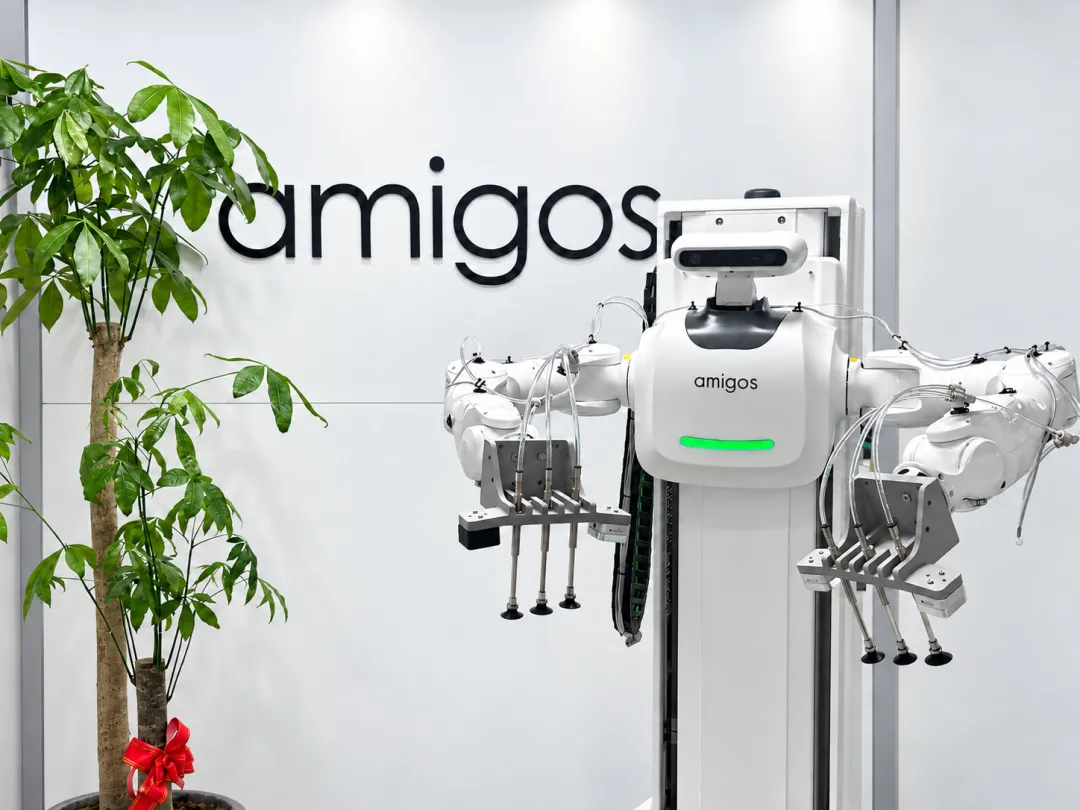
Instead of promoting a grand general robot narrative, it focused on the seemingly simpler field of industrial intelligence. But on this race track, they had to solve problems such as perceptual robustness in the real-world production line environment, precise operations for specific processes, engineering landings from the lab to the production line, and so on.
From an open source perspective, Amio robots already have real customer applications in 3C electronics, automotive and parts, food, storage logistics, etc. This is behind the portability of their brain capabilities, allowing customers to choose the robot's shape flexibly based on location needs without having to be locked by a single hardware program.
This information point deserves to be amplified. In the context of physical intelligence, the gap between the application of silicon and silicon labs is much wider than in most areas of artificial intelligence. Because there is no second chance on the production line.
Being able to survive on a real customer product line is more persuasive than any claim by any technical indicator. From a precise assembly in the lab to thousands of hours of continuous operation on the customer product line, with an engineered river in the middle.
04.
Link to the Future
In this industry, there are too many overused macroeconomics such as revolutionary slang and subversion of slang. But if the evolution of industrial automation is at an important turning point, I don't think it's an exaggeration.
What is the sign of the tipping point? It is not the explosion of a technical concept, not the pursuit of capital markets, but the technological capacity to really respond to an industry that has been around for a long time but has not always been effectively met.
The need for multiple varieties, small batches, frequent replacements in the automotive parts industry, and the resulting desire for precise operational capabilities to accommodate uncertainty, is what has existed for at least two decades but has not been well answered.
In these scenarios, the value of artificial intelligence lies in its ability to do better than traditional automation, which is more stable than artificial intelligence.
Of course, there is a considerable distance between the mass maturation of industrial and physical intelligence - cost problems, standardization problems, integration problems with existing production line architectures, and the ability to generalize between different process scenarios - all of which need time to be addressed.
However, the direction is no longer blurred. The paradigm shift from robots performing fixed programs to robots understanding tasks and automatically completing operational tasks is already a problem for robots who can do tasks faster.
In this transformation cycle, the most worthy of attention are the companies that do the most in the real world. Because in this area of industry, it only rewards the results. A system that runs steadily on a customer product line is more convincing than a hundred technical articles and ten thousand promotional videos.
Behind the flooded assembly action of the Amio robot is the latest footprint left by an industry on this long and difficult road of flexible manufacturing.
These footprints are shallow, but the direction is right.