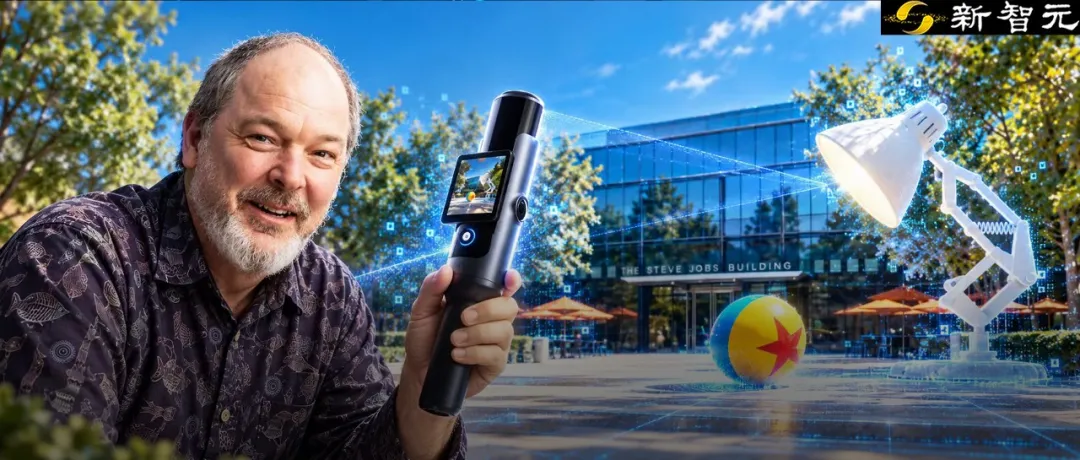
It's the first time in the history of the world.
The classic stained-glass lamp in Peaks Park was scanned by a Chinese camera into the 3D world.
The colored balls, trees, and even the shadows of the ground are also recorded.
The man with the knife is Dylan Sisson, creative director of Pixar's RenderMan.
If you scan a movie company's park into a computer, it looks like a technical trick. If you look down this line, you'll find it colliding with the hottest direction of the recent AI circle.
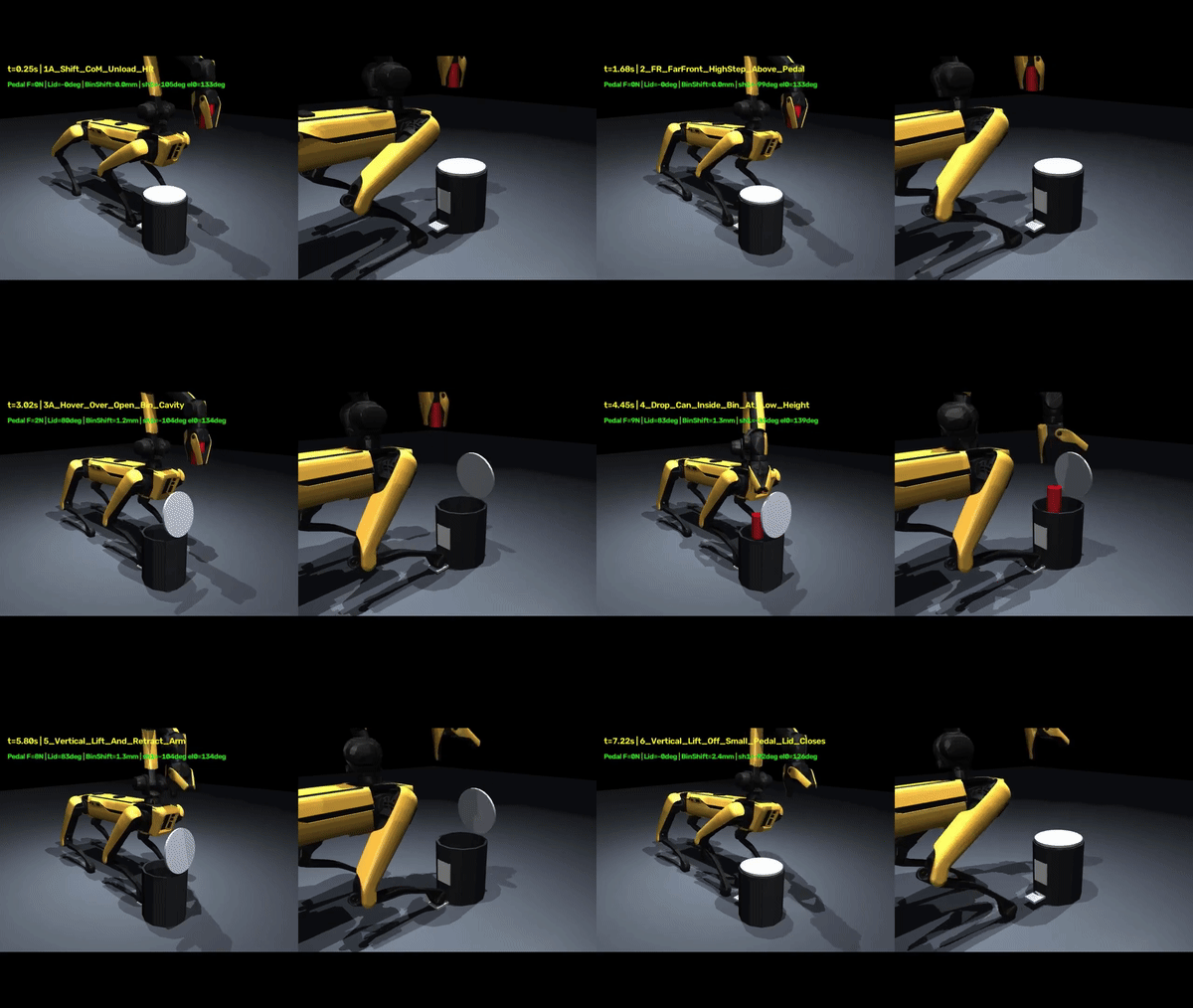
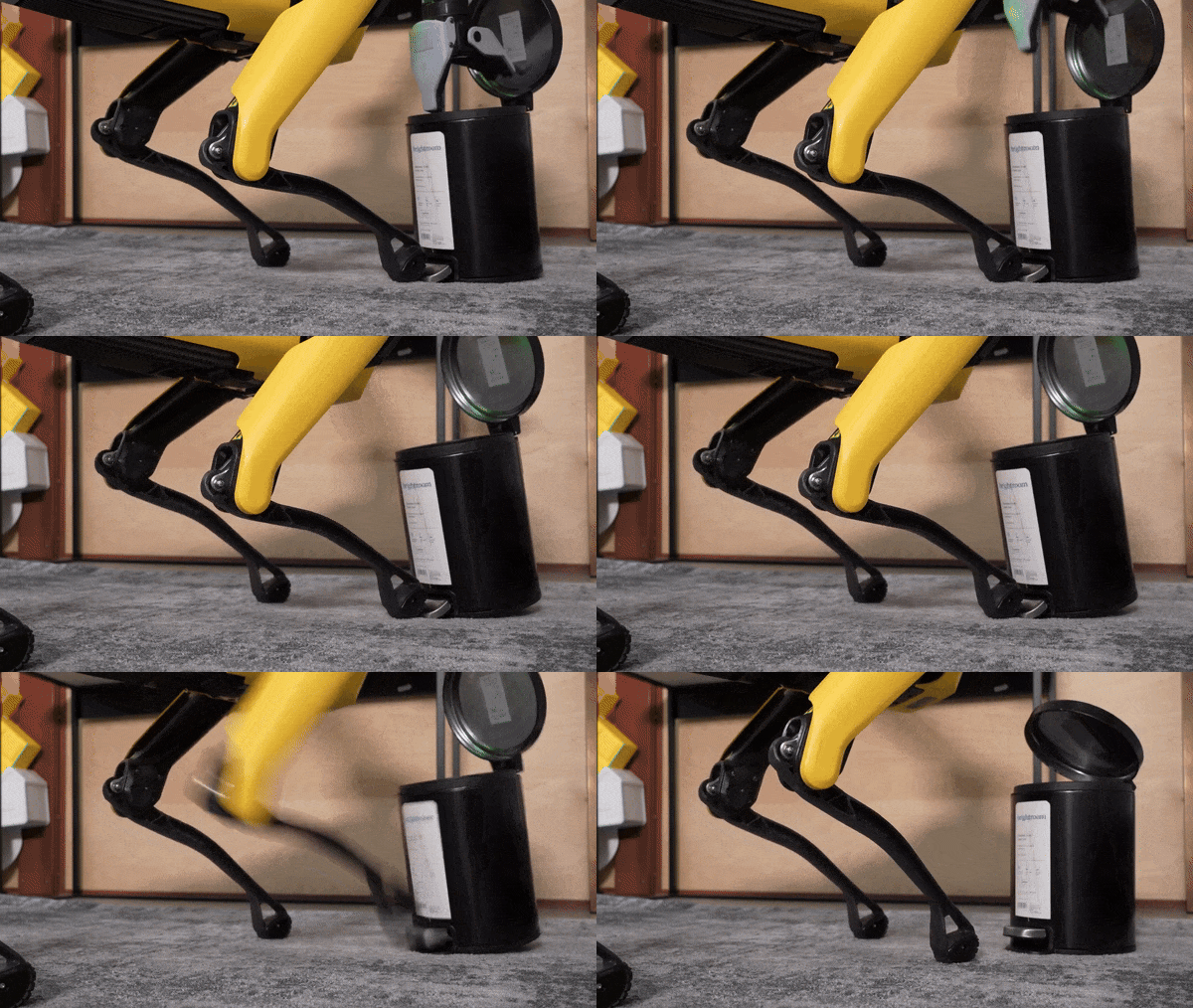
Just yesterday, the newly launched Gemini 4 Argon was used by Google to explore robotic missions.
In the official presentation, the Boston-powered Spot first practices trampling on trash cans in a simulated environment and then actually throws it in the trash.
 |  |
In order for AI to get out of the screen, it needs a reliable place to practice.
The filmmakers have a similar problem: the street is beautiful at first glance, how can you bring it all into a computer so that the director can change places at any time, so that the artists can change?
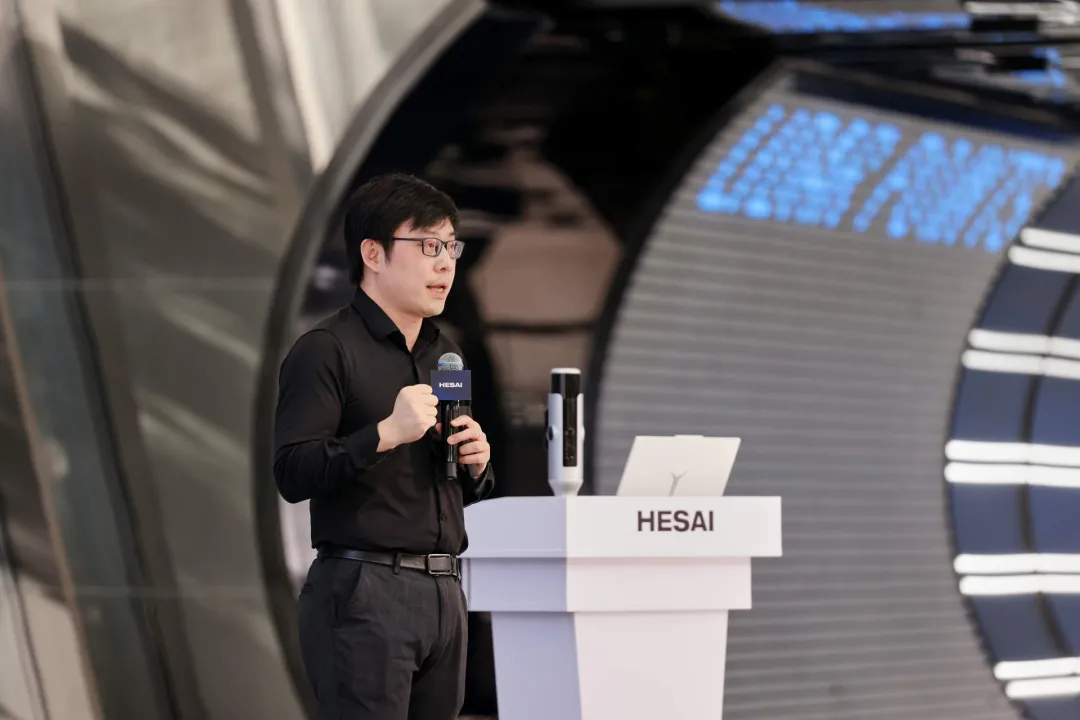
On 14 October, Hershey officially launched the third-dimensional world data engine Kosmo, alongside the cloud platform Kosmo World.
At the same time, Kosmo One, the world's first integrated 8K imaging system, was born!

The company, known for its laser radar, has begun transforming the real world into reusable 3D data.
The video creator is physically intelligent and appears to be 180,000 miles apart, but he has found intersection here.
Even Peaks can't sit down.It's a big lighthouse moving into the world of cyberspace.To understand Kosmo's lethal power, we need to look at how much of a wave it has in the hands of Pixar.
Everyone in the film industry knows that RenderMan, owned by Pixar, is Hollywood's absolute "god-like renderer".
The era of computer animation began with the animation of Toys toys, and ended with the Star Wars film Avatar, which won numerous Oscars for Best Visual Effects over the decades.
In this jungle of computer graphics, Pixar is the creator of the rules.
Dylan Sisson, one of the ghost characters of RenderMan, recently did something very romantic and hardcore.

He picked up a Cosmo space camera and walked to the iconic Square at Pixar's headquarters in California.
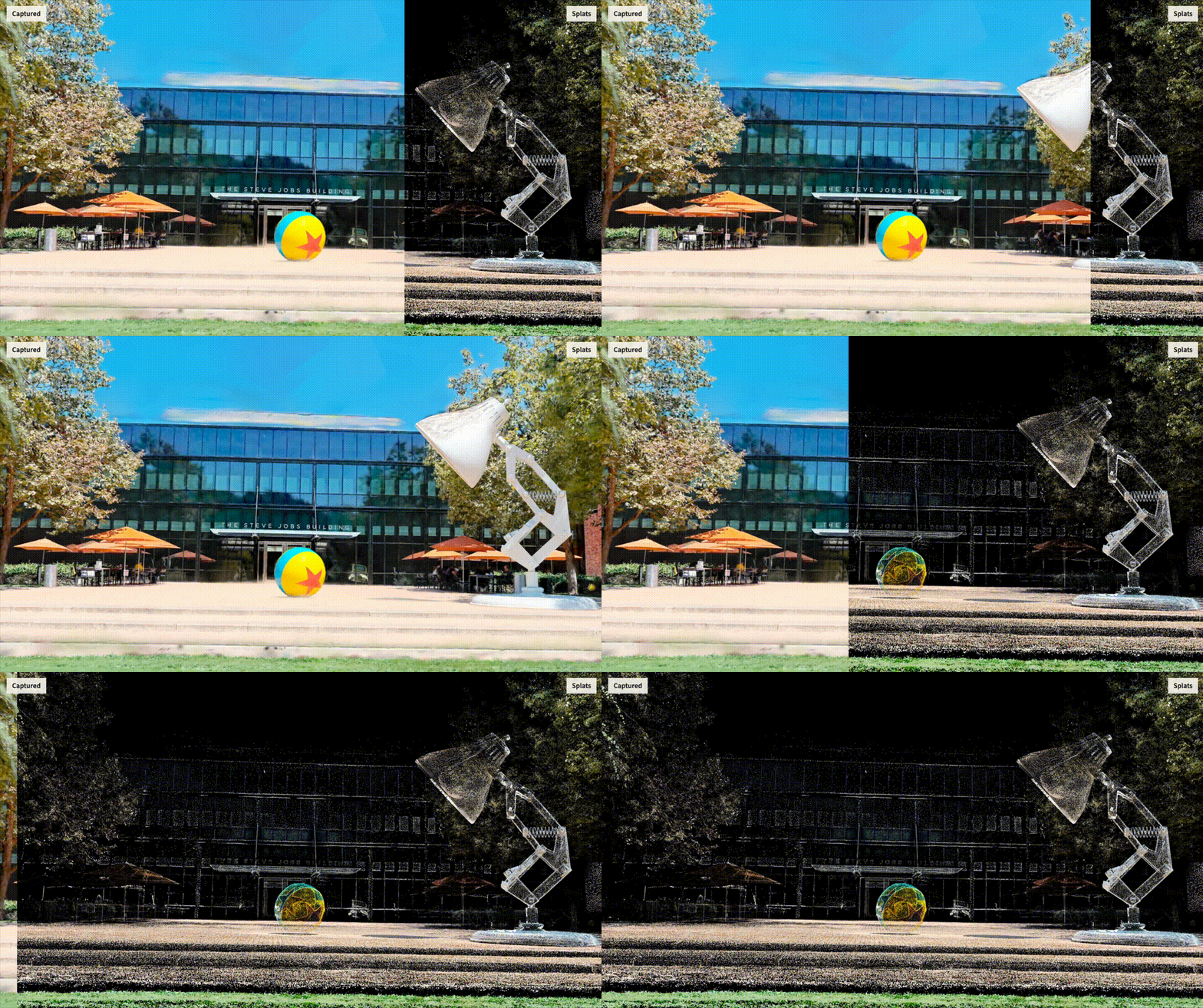
In the center of the square stands the iconic Luxo Lamp and the classic Pixar red-and-yellow-blue three-ball.
Dylan opens the camera and slides around the park.
Pixar Square scanned with Kosmo and rendered with RenderMan
What would a traditional Hollywood team do if they wanted to bring this kind of reality to the computer as a special effect?
A professional scanning and mapping team of dozens of people, equipped with heavy equipment, stayed on the scene for several days, taking thousands of photographs of different exposures, and then spent two or three weeks on hand-to-hand mapping, labeling, and painting details by several high-paid model masters.
But Dylan took Kosmo and completed microsecond data collection in a short period of time.
The data was then imported into Houdini and then into the rendering workflow of the RenderMan 28 test version.
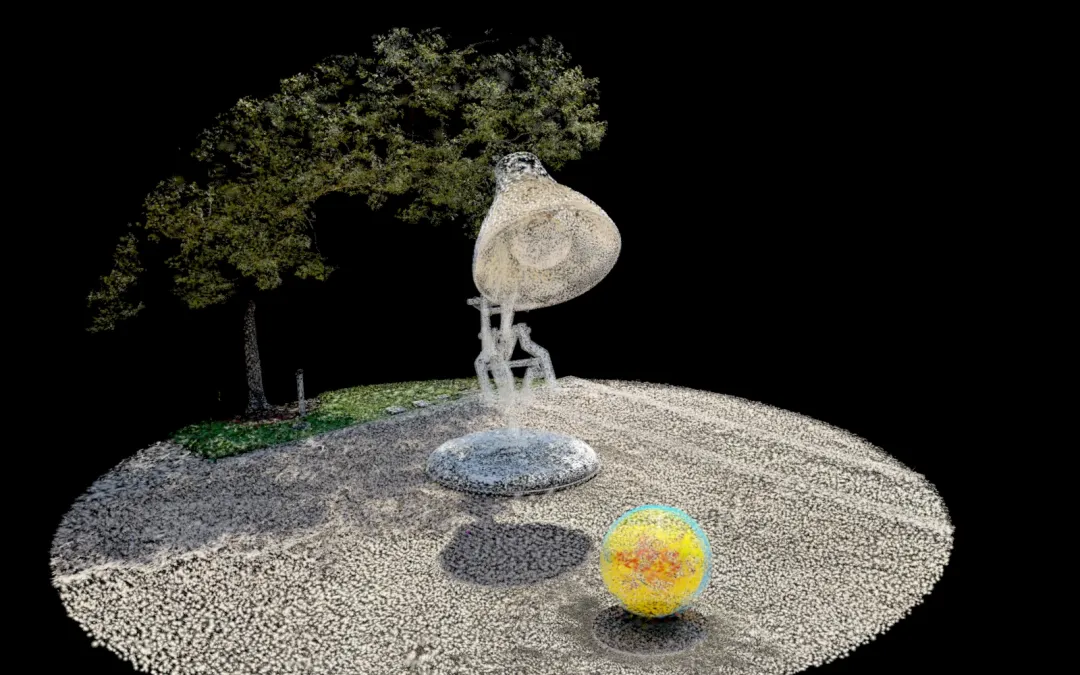
With the 3DGS technology and the millimetre-level precision fusion of laser radar, every inch of the floor of Peaks Square, the spots on the metal shell of the jumping lights, are reflected and fully restored in digital space.
What's even more shocking is that he uses RenderMan's stylistic rendering tools to create secondary art on these real 3D Gaussian data.
A few steps away, the Pixar headquarters building in the real world, was instantly transformed into an animated dream with delicate hand-painted pencils, lush oil painting textures.
Dylan even created an official teaching case specifically for the project and released a tutorial on the workflow.
Hollywood is looking for a way out of the Heisman Trophy program.
Lee Yan-san, CEO of Hyundai Motors, said Kosmo's enthusiasm for robot training and video circles were "surprising surprises" because of the quality of the work.
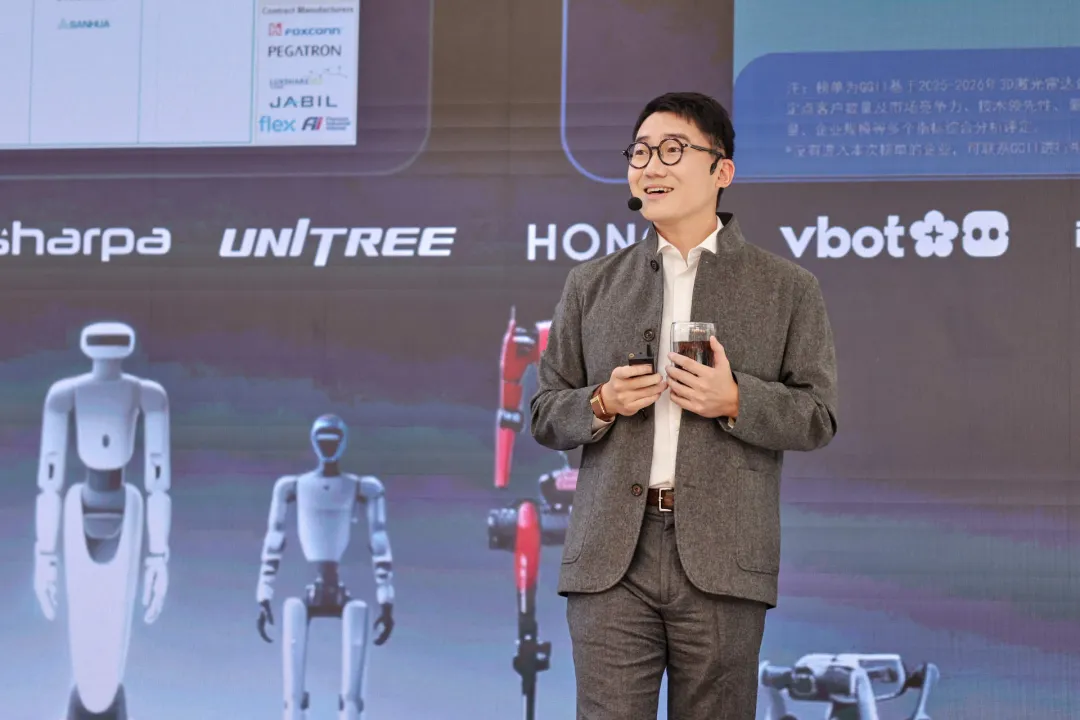
Pikes, who is in charge of rendering, told him: "This technology has been around for a long time, but I've never seen such a high-performance product".
Real space becomes digital blocks in the hands of artists.
It's a week's worth of millions of views.For the cast, this path has a very real appeal: saving jobs and saving budgets.
In the past, the filmmakers were afraid of two things: scenery and scenery.
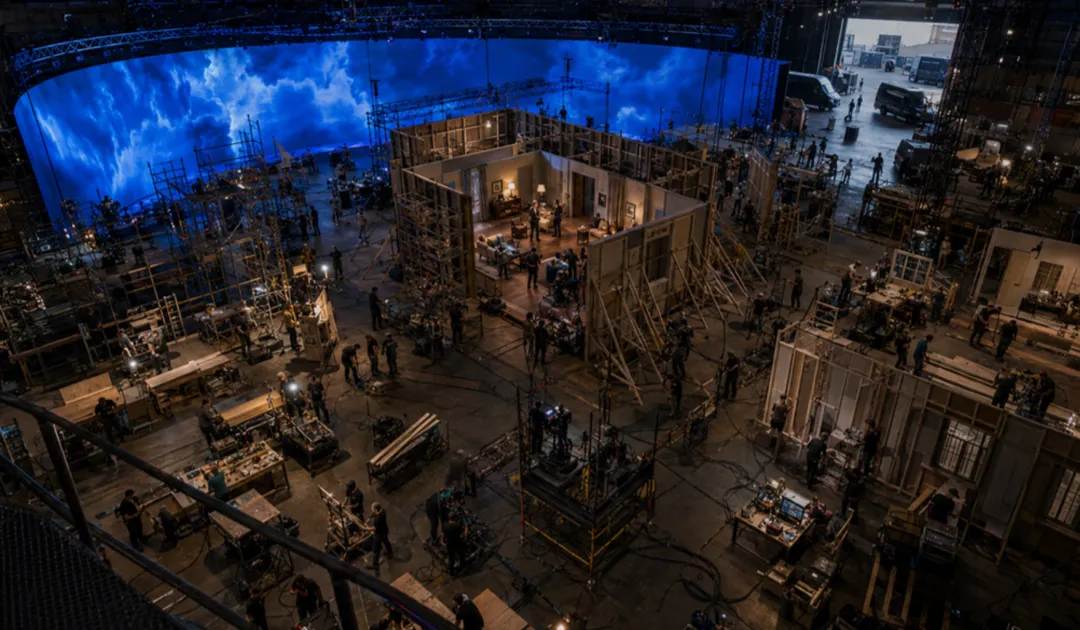
The main creative team flew around the world, consuming 30% of the previously prepared budget; with a 10,000-square-meter European street scene, the construction team had to tighten the drums for two months, burn hundreds of millions, and demolish the entire building waste.
The middle director wants to change the lighting, change the position, and the whole team has to follow the extra layer of skin.
Now, with Kosmo, one person can do digital on-site collection in one day, the cost of exploration is expected to fall from 30% to 5% of the previous budget; street scenes of tens of millions of square meters, scanning and re-editing take only one week, saving up to 80% of synthetic instinct.
More importantly, every tree in the scene, every window becomes an interactive, editable three-dimensional asset.
The lights can be rearranged at any time during the day to night, and if the latter needs to be rearranged, it can be taken directly from existing assets in a virtual shed.
The world's first 8K AI space cameraKosmo One launchesThe device was, to some extent, "forced out" by the customer.
Li Seong recalls, mapping and building these industries are constantly looking for higher-precision laser radars, from a few centimeters to millimeters, and things are good enough and willing to pay more.

But a high-precision laser radar is just getting started. Customers have to come up with cameras, guides, and computing platforms to integrate these components into a system.
Hefei decided to take the integration work and directly turn it into a complete piece of equipment. Even the laser radar inside was redeveloped for millimetre-level accuracy and small volume.
So the question is, what steps has Kosmo One taken to capture photos and videos with ordinary cameras?
If you look at a picture of a table, you can recognize a table. But you need additional space information to know exactly how far along the table the robot is, how high the stage is, or where the camera is when you're shooting.
Kosmo One installed a laser radar, 8K imaging system, one-inch CMOS and high-precision IMU in the same device.
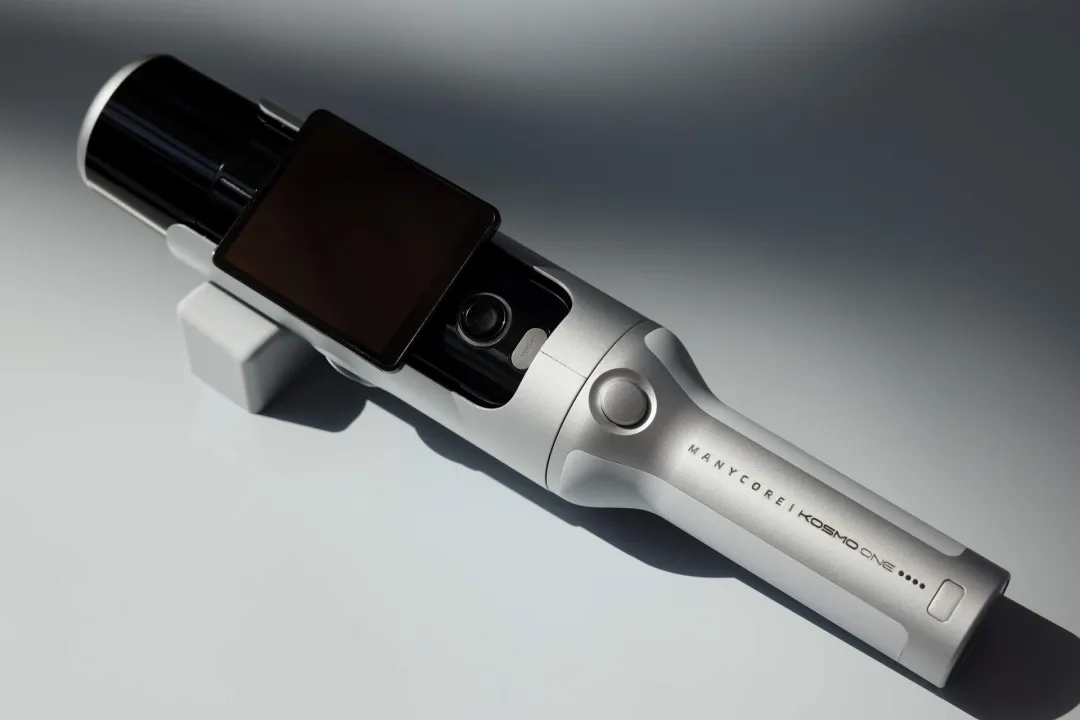
The radar is responsible for measuring distances, imaging systems recording colors and textures, and IMU tracking equipment movements. It can synchronize microseconds on spatial geometry, images and device positions.
Then the rebuilding system paints them into three-dimensional scenes.
The key technology is known as 3D Gaussian Splatting, or 3DGS.
Many people think that 3DGS is about coloring clouds, or putting photos on walls, and Lee has specifically corrected this misconception.
The clock hanging on the walls, the light reflected from the front and the side is completely different. The panoramic photograph can only be viewed from a fixed point, and the cloud-pointed image is only one brightness, and the other angle is false.
The 3DGS approach is "very dirty": the scanning takes all the light from different angles and paints it into a much more information-intensive model that looks like the real side.
The camera can move in rebuilt space and see what the same place looks like from another angle.
This ability is useful for filmmakers: the director takes a test drive, makes a preview of the footage, and finally has real-life material to look around.

Its geometrical accuracy reaches the millimeter level, and it can record 8K images at its highest. However, let me explain that 8K refers to the highest collection resolution of the lens itself, and the final output is actually 6K.
In addition, the process of use has also been compressed. The normal indoor 100 square meters can be cleaned in about 15 minutes, of course, specifically how long to see the layout is not complicated, the requirements are not high.
The device's opener can be scanned directly, with intelligent guidance in the middle, and can be scanned by clicking on it, and then the data can be thrown directly to the Kosmo World cloud platform to run.
Scanning down the doorstep of a room gives 3D collection the opportunity to transform projects from professional teams into everyday tools for more creators.
It's a lot of work to learn about robots and to calculate distances.In film, a scene must first convince the audience.
The robot goes in and it has to know where it can go, where it can hit, where it can reach the target.
Suppose it takes the cup from the counter, and the position of the cup in the training scene is slightly distorted, then the beautiful picture will not save the empty hand.
Heise's co-founder, CTO, Lord Low, summarized the problem as the "impossible triangle" of data: high quality, large scale, low cost, and difficult to obtain at the same time.
Photographs and videos record images, distance, camera positions and real-space relationships, but they also need to be extracted. Pure simulation can be generated in bulk, but materials, friction and shape changes are easily deviated from the scene. Real-time remote control is real enough to involve equipment, manpower and time.
Li Yan gave an example: the same scene that allowed a pure visual model to be rebuilt, the table twisted, the chair twisted, because it was entirely based on probability guesses.
As a result, high-quality real-world data has become the biggest barrier to the development of physical AI.
Kosmo World's Kosmo Spatial Core, abbreviated as KSC, generates three types of spatially aligned data in one reconstruction: 3DGS, mesh and depth.
3DGS attempts to restore the appearance of the scene as much as possible so that the images seen by the robot are closer to the scene.
A mesh is a three-dimensional grid used to express the surface and structure of objects, providing a basis for separating objects, setting collisions and interactions.
Depth is the depth of data that records spatial distances and helps to place objects at precise coordinates.
The three data came from the same scene. The counter in the eye of a robot, which is used for collision calculations in simulation systems, needs to be in the same location.
KSC can also identify the semantic properties of each object in a scene, converting static models into interchangeable intelligent objects; unscanned blind areas are automatically deduced by native AIGC.
It can even make visual adaptations based on the characteristics of a specific robot's camera, allowing the robot to train in a world "in its own eyes", further narrowing the gap between simulation and reality.
DQ is playing ice cream, and it's all about it.At the event venue, Hay-seek unveiled a run-of-the-mill real-life commercial closed loop Sharpa robot playing ice cream at DQ's ice cream shop.
Don't underestimate "a cup of ice cream at DQ", which is a hell of a question for a robot:
Store lights are complex, stainless steel machine surfaces are completely reflected, the cups are large enough to pinch, and the ice cream is two millimeters away.
In the past, a team of professionals built an artificial model to restore a store, which took about 300 hours.
Now looking at Kosmo's entrance to the store, a 15-minute sweep directly generates a high-fidelity 3D training ground.
After Sharpa's crazed training at this digital-powered DQ store, the failure rate of the real-time machine crashed to a tenth of the original, and the success rate of the mission reached a staggering 99%, steadily working on the fence in the real-time stores.
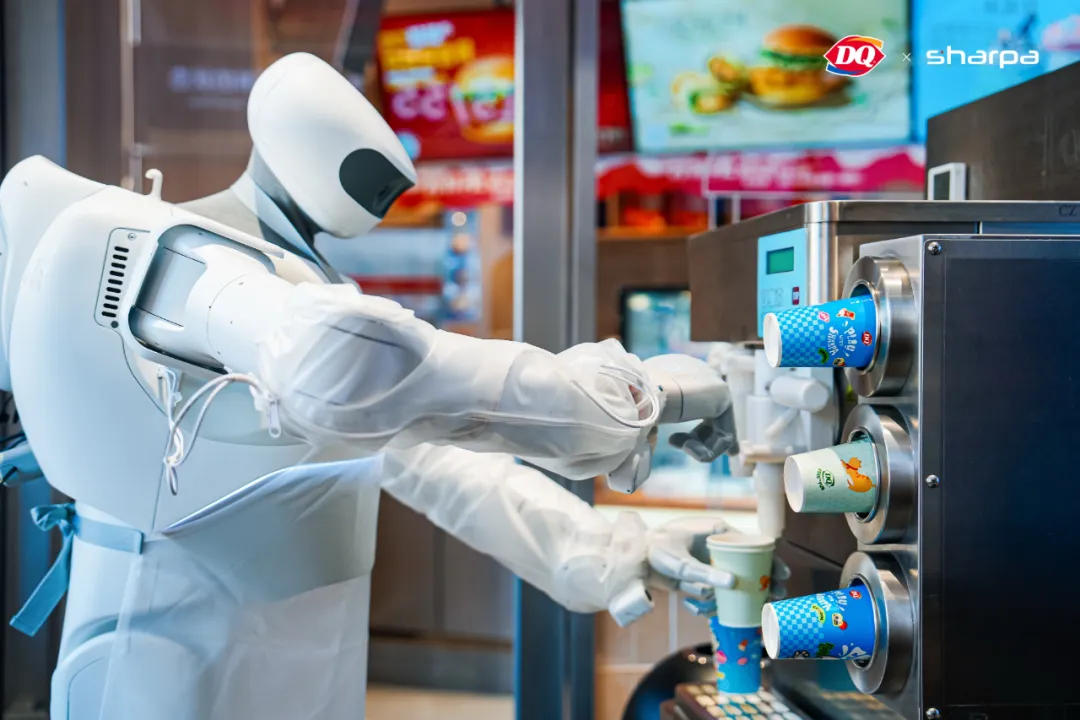
You can practice in digital stores and then go back to physical stores to verify, and you can spend less money trying to make mistakes on the ground.
Sharpa was co-founded by the three co-founders of Heisei, Shi Li, Shi Shi Shi, and Sun, who also co-founded Sharpa.
The same founding team happened to connect the two ends of spatial data collection with the data used by robots.
On the ground, Kosmo also entered into a strategic partnership with Galaxy General, a nuclear reactor. The next step is to test whether it can adapt to more robots and more complex tasks, based on these specific scenarios.
The world model will "dream" and see the real world.For the world model, there's another way to use a store like this: to have AI in your mind as a "kitchen".
If you take two steps to the left of the counter, what do you see?
These spatial relationships are very good. It is impossible to turn the camera and the counter is removed.
Kosmo's 1:1 precision data and real-world positioning are the "real measurements" of how the world model understands the laws of the physical world.
Even more exaggerated is the efficiency improvement, based on the same precise three-dimensional space, which allows KSC to automatically derive tens of thousands of robot training tracks in the cloud.
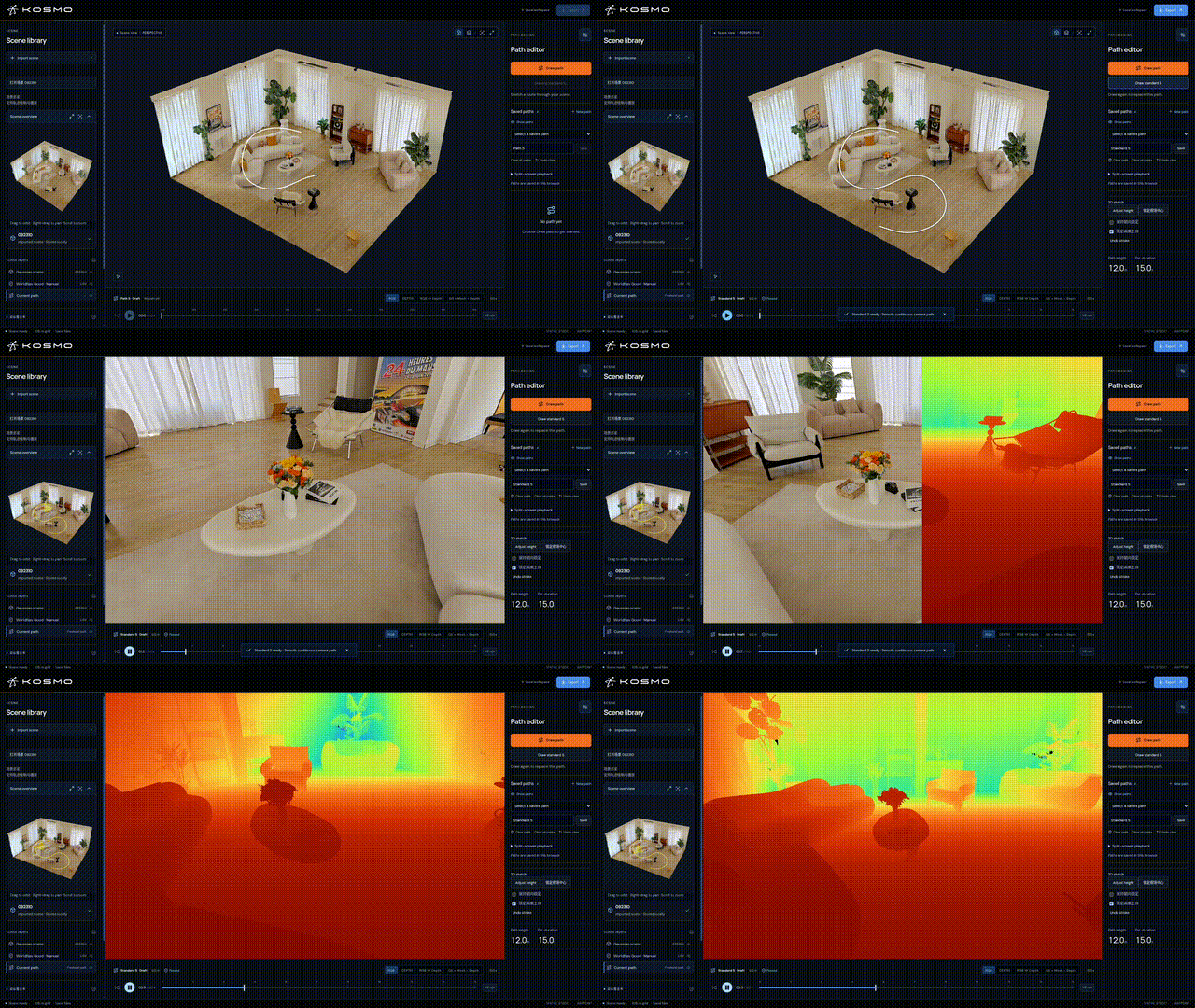
Cosmo's data acquisition efficiency has been improved by more than 100 times, compared to using real machines to collect high-quality trajectory data and spend the same money.
Specific enhancements will change depending on the scale of the scene, the number of tracks and the parameters.
The more powerful AI is, the more problems can be solved, and the more raw materials are needed in the real world. Pure AIGC simply takes the information and repeats it, not bringing new information, like the faces of people in short AI plays, which seem to be the same.
When the entire industry is chasing a world model, real 3D data becomes the hardest piece of hardware, and Kosmo is behind that irreplaceable data base.
Today, the same real space data is flowing into more workflows.
Hershey is also connecting the tool ecosystem around this, with creative platforms like RenderMan, Houdini, UE, and robotic simulation platforms like Isaac Sim, Isaac Lab to open data and 3D assets.
Even in the everyday lives of ordinary people, the digital touch of Kosmo is already open:
In September, Kosmo entered into a strategic partnership with nearly a billion-year-old Goethe, with the first rebuilt "heavy gallery", "paradox gallery", online to scan the list of "flying street views", allowing people to walk around on their phones before leaving.
On the other hand, Kosmo has collaborated with UN partner TRIC to create immersive digital artwork for the Shenandoah Zoo as a blueprint, making the living space a remotely accessible experience, and continuing to create 3D material.
 Next stop is physical AI.
"Digital AI has taken off, while physical AI infrastructure is still waiting to be built".
In the words of Heisei co-founder and CEO Lee Seong, another layer of ambition behind Kosmo is revealed.
In order for AI to get out of the screen, it's not enough to have an intelligent brain. It has to have real-world data that can be learned, and it has to have hands and feet that can make the moves.
Over the past decade, Heisei has done something with laser radars, and Hardcore has done a lot of chip-level self-development, photovoltaic systems, and vehicle-level intelligence.
According to reports, the volume of laser radar deliveries has doubled for nine consecutive years.
Li Yan said that this could not be called "transformation". Transformation is about making planes to sell rice; while the lighting and mechanical design, customization of chips and cost-quality systems under the heels of Hefei would have been an extension of the ability to go beyond cars to robots.
Following this route, Heisei drew two routes for himself.
The 3D world data engine, responsible for turning reality into training and creative material. Kosmo is the first systematic product landing on this route.
The robotic motion engine is responsible for making the machine really move. Its core is the power module, which drives the fingers and joints, and determines whether the robot can make the movements powerful and precise.
The importance of this piece is often underestimated by those who only look at the brain and the world model.
The car has only two degrees of freedom in front and back, and the humanoid robot easily has nearly 100 people. According to Lee, driving and joints account for more than half the cost of a robot, equivalent to the batteries of the era of the train.
What's even more embarrassing is that there was no mature supply chain before. Where did the first team of skilled workers come from? The answer is an electric toothbrush.
Sharpa Wave (W01) with 22 active degrees of freedom, which uses the Hexagonal Power Module, has entered the Isaac GR00T humanoid robot reference program.
According to data released by Heisei, its power module volume has shrunk by 37% compared to similar products, and its power density has increased by three times; more than 10,000 units have been delivered by the end of the second quarter of 2026, and it is expanding from smart hands to full-body joints.
In Lee's plan, the three-dimensional world data engine and robotics engine will be the second growth engine of the Heiser.
He even put forward a flagship product: the Space Smart product of Heisei, which would ultimately be something bigger than laser radar.
For the past decade, Heisei has been making machines see the world; for the next decade, we are going to make robots understand and change the world.
Today, Pixar uses its camera to create, robots use its data to work, and world models have real references.
The virtual world's revelry is already hot enough.
The next test will be in front of the real counter.