The robot's RSI is far from over, so let's see a move: the mechanical arm puts the bowl on the plate, then grabs the bowl and puts it in the bowl that has just moved.
Video 1. Long sequence machine task T3: first put the bowl on the plate and then put the cup in the bowl after moving.
For humans, it's just hand-packing the desk. For robots, even if the single skills of identifying, grabbing, and placing are already quite reliable, the second step takes place in a world where the first step has been changed: the bowl's position is updated, the gesture of the mechanical arm is changed, and then it may become unclear, unstable, or unstable.
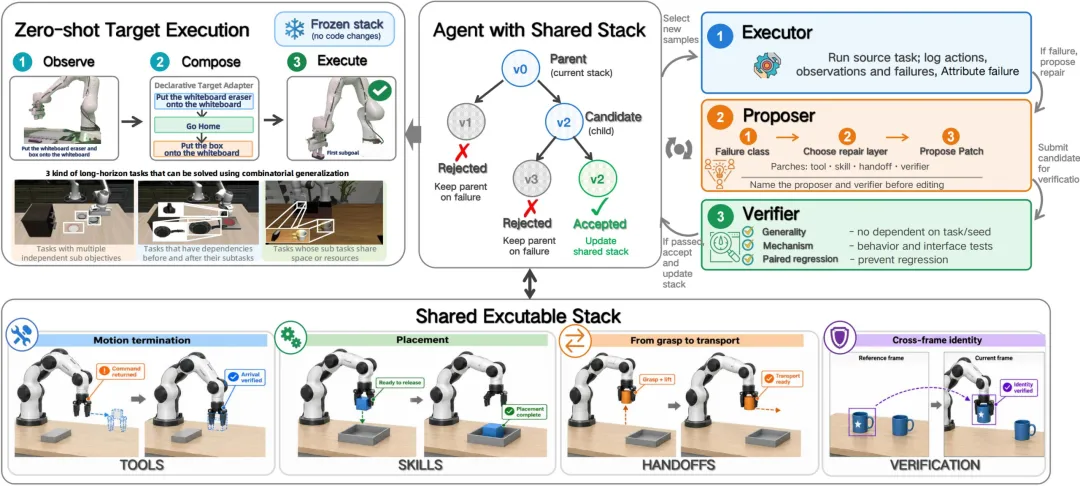
A research team from Beijing Transportation University, Beijing University, New York University (NYU), the University of Southern California (USC) and Beijing Links Intelligent Technology Co., Ltd. has proposed Recursia as a solution to the problem of generalizing the portfolio into the RSI, i.e. recurring self-improvement.
The experiment found that in the zero-sample migration setting that did not do code modulation on the target task, Recursia achieved a 28% (position disruption) / 53% (mission disruption) success rate on LIBERO-Pro Long with 5.8 and 15.1 percentage points higher than the British ASPIRE, respectively, while VLA models such as OpenVLA,π0 and VLA were almost completely overwhelmed (0%),π0.5 with 8% and 1% respectively under both types of disruption. In another group of iterative analysis, the Task direction's success rate increased from 0% on the 0th round to 43.4% on the 18th round and 43.4% on the mid-range.
This result is remarkable because it occurs in the most awkward contexts with physical intelligence: some VLA routes overfit when training, beautiful demos often have poor generalization behind them, changing object positions, changing mission descriptions of the strike on the spot. High success rates in training scenarios, not equal to changing positions, are still reliable after changing task combinations. Studies such as LIBERO-PRO have revealed that some VLA models are sensitive to task and landscape disruption.
This is the question raised by Embodied Recursive Self-Improvement. It sounds somewhat scientific: AI first improves itself and then continues to improve itself with stronger capabilities. Currently, the use of RSI is not entirely the same: some focus on writing experience into memory or skills, others on further modifying the mechanisms that lead to improvement.
Understanding the Embodied RSI is key to keeping track of one thing: what this round has changed, what changes have remained, and what can be done to make the next round of improvements better.
Learning to Compose: Recursive Self-Improvement of Shared Executable Stacks for Zero-Shot Long-Horizon Robot Manipulation
The main page of the project:https://cocacola-lab.github.io/Recursia-website/
The project is on GitHub:
Background: How far are we from the RSI of robots?
Using programming as an example, Coding Agent in a single task requires that the experience be embedded in a replicable memory, skill or tool so that the improvement can be continued in subsequent tasks. This article uses a more rigorous RSI discussion style: this improvement should also enhance the ability of the system to detect, design and verify the next round of improvements, i.e. to allow AI to improve the AI of AI.[5]
From Agent's point of view, RSI has been a battlefield. The three foreign AI firms have been in intense action this month, and may be making a collective splash. As early as June, Anthropic published a paper titled When AI Builds Itself. Officially, as of May 2026, Claude had written more than 80% of the company's merger code himself; in August, the proportion of AI-led development had risen to about 26% from the first figures of the year. OpenAI listed the RSI Index in its official introduction to GPT-5.6.
From a robotic point of view, Embodied RSI may also be an important pathway to endpoint embodied: allowing robots to continue accumulating capabilities in the process of interacting with the world and gradually taking over the work of embodied embodied embodied embodied embodied embodied embodied embodied embodied embodied embodied embodied embodied embodied embodied embodied embodied embodied embodied embodied embodied embodied embodied embodied embodied embodied embodied embodied embodied embodied embodied embodied embodied embodied embodied embodied embodied embodied embodied embodied embodied embodied embodied embodied embodied embodied embodied embodied embodied embodied embodied embodied embodied embodied embodied embodied embodied embodied embodied embodied embodied embodied embodied embodied embodied embodied embodied embodied embodied embodied embodied embodied embodied embodied embodied embodied embodied embodied embodied embodied embodied embodied embodied embodied embodied embodied embodied embodied embodied embodied embodied embodied embodied embodied embodied embodied embodied embodied embodied embodied embodied embodied embodied embodied embodied embodied embodied embodied embodied embodied embodied embodied embodied embodied embodied embodied embodied embodied embodied embodied embodied embodied embodied embodied embodied embodied embodied embodied embodied embodied embodied embodied embodied embodied embodied embodied embodied embodied embodied embodied embodied embodied embodied embodied embodied embodied embodied embodied embodied embodied embodied embodied
This work takes the question to a deeper level: how exactly should robots organize the inner loop to be executed, and the outer loop to evolve?
Recursia's answer is the two-tiered inner and outer cycle. Its focus is on studying how the inner layer closes, how the outer layer rewrites and validates the inner loop: both to make robots better at their tasks and to make this experience truly transform the ability to perform the next task.
Recursia: How do you make the inner and outer layers circulate?
2.1 Turn the inner circle around: robots have to look at the results and take the next step
In Recursia, the inner layer is responsible for the execution of tasks, the outer layer is responsible for the execution of experience improvement systems. The inner layer architecture determines how robots operate in a task, and also constitutes the execution system that is actually deployed after the outer improvement. The inner layer itself has different architectures: whether to let the model come back repeatedly in execution, take a look, think step by step, and change how the task progresses.
1.Rule-based: Pre-set rule drives, removing extreme configurations of the online Agent decision cycle
According to pre-defined rules, organizing high-level operations without relying on large models to repeatedly read new results, then re-decide the next step.
2.One-shot: Mr. into the task process and then execute
It can contain observations, conditional branches, and limited retesting within the program, but higher-level logic is determined primarily by this generation. It also assumes the requirement of anticipating situations that may occur in the execution of written procedural logic processing.
3.Online closed-loop: the next step in a decision based on feedback, so that the execution results continue into the next decision
Read the results of new observations and executions as the task progresses to determine the next action. What the previous code actually does affects how the next code acts. The inner layer is the cycle of observation, decision-making, execution, and retrospective observation, the running process of the agent. It can simply be understood as a model + operating framework, i.e. Agent = Model + Harness: the model is responsible for understanding, reasoning and generating, running the framework, organizing observation tools, calling feedback and making follow-up decisions.[4]
These three methods represent different internal layers of architecture. Compare them to test whether robots are more capable of responding to changes in tasks after taking up higher-level decisions and executing feedback.
Analytical experiments of internal cycles: Models participate in high-level organizations, and relatively regular execution has a higher success rate.
On the same N=13 freeze-sharing array, the paper compares the above three internal layer architectures, each of which evaluates 50 matching cycles in each of the two perturbation directions of Pos and Task.
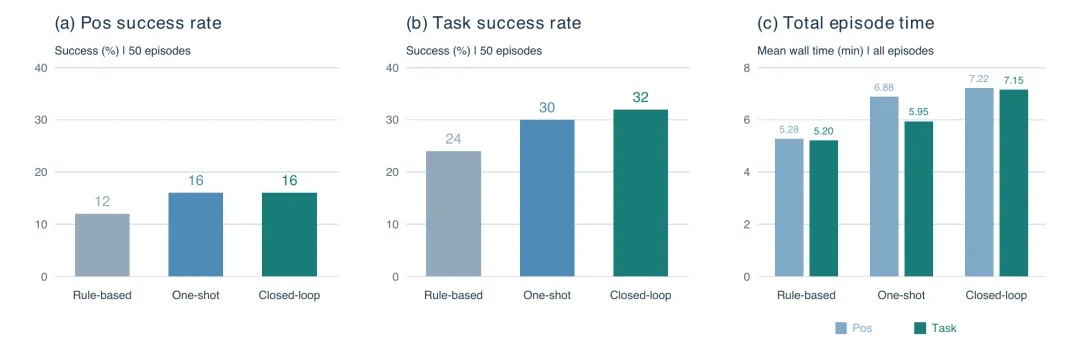
Figure 1. Internal structural controls. Pos and Task each contain 50 matching evaluation cycles (a, b) and time-consuming generation and execution (c).
In this group of experiments, the success rate under Task disruption increased from 24% of rule-driven one-shots to 30% and online closures to 32%; Pos followed by 12%, 16% and 16% respectively.
The cost is that it takes time to execute feedback and participate in high-level decision-making so that the inner edge of the edge of the edge of the edge of the edge of the edge of the edge of the edge of the edge of the edge of the edge: under the task, the average end-to-end time of the one-shot and the online closed loop is 5.95 and 7.15 minutes respectively.
From experiments, it can be seen that the inner layer architecture is an important part of the body system design. Next, the outer layer has to solve the question: can this problem be solved before the next execution?
2.2 Where does the external loop change? From a single process, to a shared execution loop
The question outside is: can a recent failure turn into a lasting, useful modification?
The most direct method is to fix the current task process. Once the placement fails, the placement code is adjusted. This can improve the current task, but the modification can be succeeded by other tasks, depending on where it is kept. The next step is to organize the experience into Skill. Once the crawling and placement practice can be the unit of operation for the subsequent task.
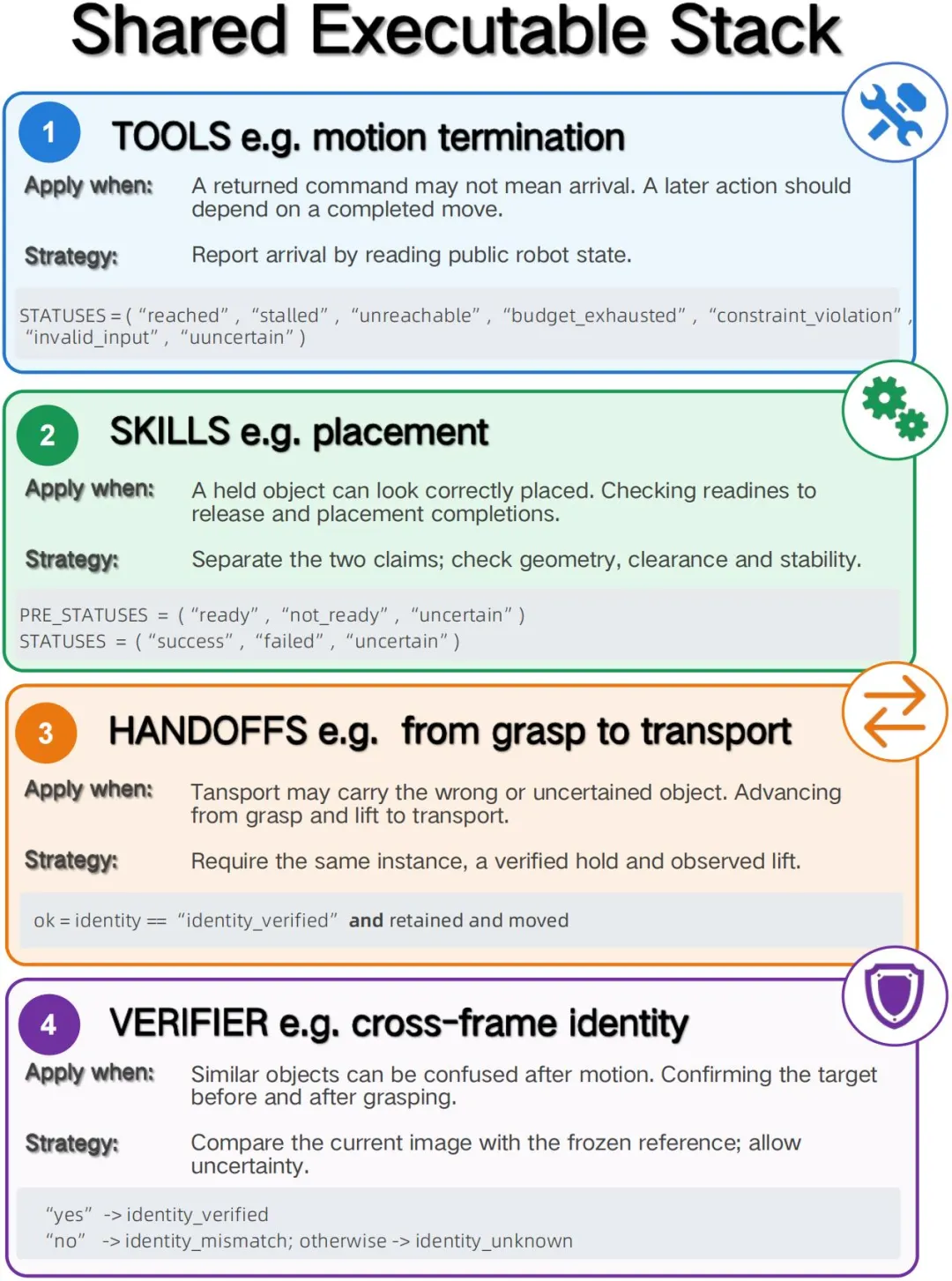
Figure 2. Shared Stack showing the intent.
The tool layer determines whether an operation can be performed reliably. When the necessary operation is lacking, the system can come up with new sharing tools; when an interface behaviour does not meet the requirements, attempts are made to correct its implementation.
A pick-and-place skill requires preconditions, execution processes, and proof-of-conclusion so that the subsequent caller can know what state it has actually established.
The next step is to complete the distance between the pump and the next step is to prepare the pump. After putting the object down, does the catcher withdraw? can the new target still be identified and touched? can the previously completed target be destroyed by subsequent actions? All of these need to be explicitly processed.
The verification layer checks whether the object and the relationship really meet the requirements. Reaching a certain position of the mechanical arm does not automatically mean that the target object has stabilized. Wrong completion judgments may lead the system to the next step prematurely; incorrect failure judgments may also disrupt completed movements.
The four layers are connected to form the actual execution capabilities of subsequent tasks. A verified shared fix can affect multiple calling skills and task combinations. There is one case that is intuitive: in a set of ten simulation executions, the goal of putting the cup on the board is all set, but the complete cup and the pudding combination task is only successful once. In some trajectories, the cup is set and the next pudding identification returns not_found. This indicates that after the single-step goal is set, the system still needs to establish the next set of execution conditions.
In addition to patches that can generate different layers of shared memory, there is also a systemic decision-making question: which patches should be accepted?
Candidate modifications to the Recursia require universal inspection, mechanism testing, and matching between parent and candidate versions. Select door control to focus on whether it brings enough task gains and return door control to focus on whether it loses the previously successful capabilities.
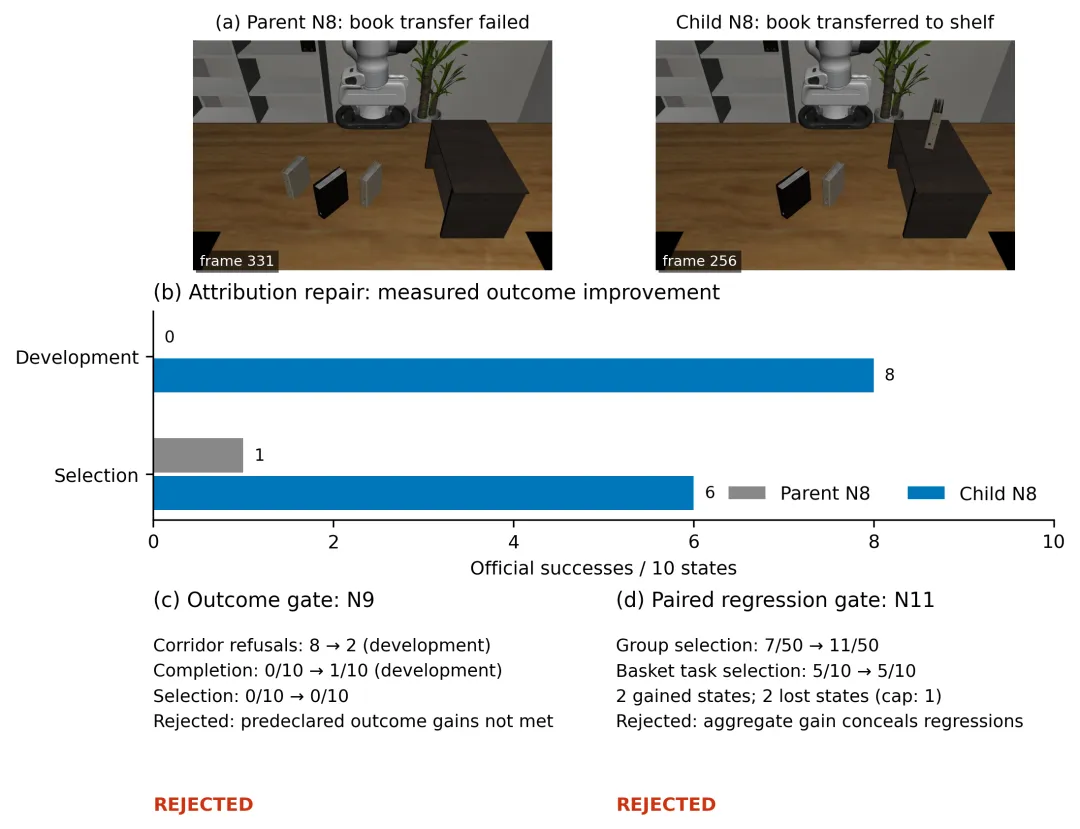
Figure 3. Verify the gate control case. a) N=8 Parent version vs. Candidate version: Book Carriage Failure vs. Success. b) Successful completion of corresponding tasks in the development set and selection set. c) N=9 Reduced local failures but did not achieve the results stated beforehand. d) N=11 improved overall selection scores but lost two previously successful basket placement states, exceeding the loss ceiling for each task.
The total number of successes in the selected set has increased from 7/50 to 11/50, but a basket placing a task has lost two previous successes while obtaining two new successes. Candidates are still rejected due to losses exceeding the task's predefined limit. The overall success rate increases, requiring questions about where to win and what to lose.
In the team's subsequent experiments, Recursia further incorporated two types of options in External Harness into the range of adjustments: the loosening of the verification gate, and the data types used during the current debugging phase.
The gate is responsible for deciding whether a candidate can make a modification to a subsequent version. It is responsible for deciding whether or not a validator has been seized or placed in different locations when the robot is executing. The former affects the substitution of the improvement process and the latter is directly involved in the execution of the task.
A never-changing set of screening strategies may not simultaneously address the need to explore new capabilities and protect existing capabilities. Using screening strategies and debugging data choices as the subject of further research may raise the question: Does the process itself need to be adjusted as system capabilities change?
How versions are inherited also affects this pathway. Continuing to repair along the current version is a way of preserving multiple candidates and historical branches, allowing subsequent explorations to continue from different starting points.
What is the result of the two-layer cycle of recursion?
3.1 Simulation experiments: upgrading of long sequence tasks with zero samples
Among LIBERO-Pro Long's main results, Recursia's success rate under Pos and Task disruption was 28.4% and 53.4% respectively. Here, the zero-sample migration index: once the source task improvement is complete, the shared feed is frozen, and target task feedback is not used for code repair or version selection; observation feedback can still be used in execution.
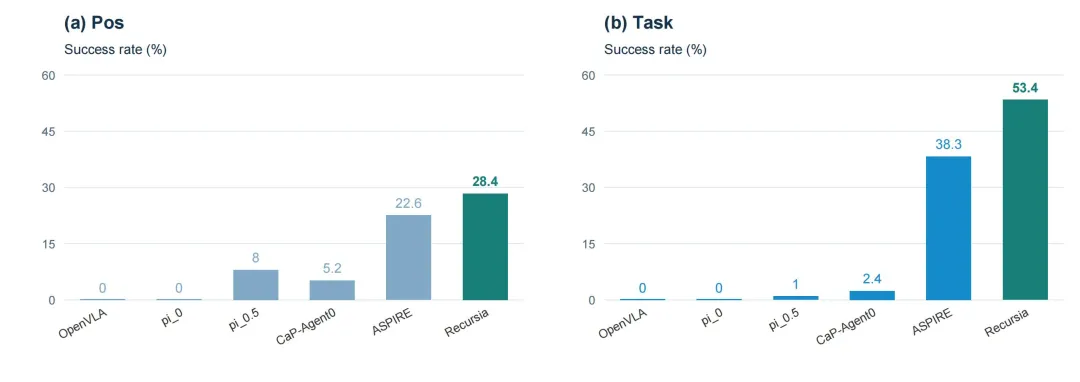
Figure 4. LIBERO-Pro Long Zero Sample Migration Results. Recursia Each disruption direction contains 10 tasks, each 50 states. Numerical comparisons of other methods have been published along ASPIRE; the basic models of different methods, training data and reasoning budgets are not entirely consistent.[2]
3.2 Real-machine experiments: upgrading of long sequence tasks with zero samples
In the Franka FR3+Franka Hand real-machine experiment, the study compared Recursia and SD-only updates to the Natural Language Skills Documentation. Both used the same basic model, observation and basic tool configuration.
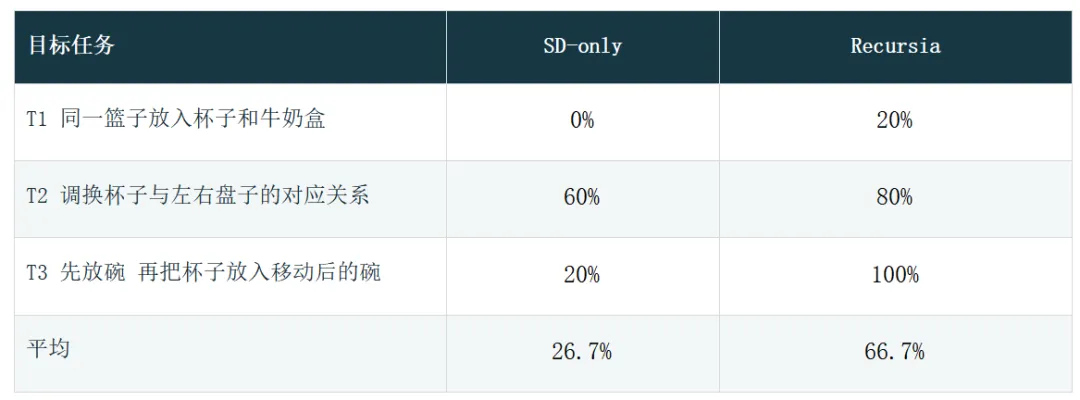
Table 1. Actual machine success rate, based on team updated experimental results. The average of three tasks is the arithmetic average of task success rate.
The open T3 task is an intuitive example of the relationship of dependence when combined generalizations occur: the latter action must use the new state in which the previous action was formed. This group of small-scale real-world results provides initial support for the sharing of executable knowledge, while also leaving room for expanding the number of repetitions and scope of tasks.
Video 2. T1 True Mission: Put the cup and the milk box in the same basket.
Video 3. T2 True Machine Mission: Changing the relationship between the cup and the left-hand plate, completing a new combination.
Four, will GPT-6 Astra replace VLA or WAM?
Multimodal large models (such as the GPT-6 Astra) can generate code based on image and language instructions, by sensing and controlling the interface driven mechanical arm. However, in the team's finely operated experiments, such systems are still stuck with alignment and contact links in the final stages. One possible bottleneck we observed is the lack of information on three-dimensional geometry and contact states: finely operated operations depend on precise perception of the relative positions and contact states between objects, while conventional camera configurations are difficult to cover all critical points of view, and some obscured contact information is difficult to recover from view alone.[4]
Therefore, we prefer to view the VLA (Visual Tapping Language Tapping Models), combined with tactile VTLA, and the WAM (World Action Models) as potential complementary components to undertake action execution, multi-modal perception or predictive planning, in collaboration with high-level task organizations and feedback locks. ENPIRE provides a proof that in RoboCasa 365, Agent combines the GR00T VLA with a combination of detection and sports planning tools to allow the claw to be suspended above the target for retrieval, improving success rates, and moving the strategy to the real cutting task. This will support the compatibility of the VLA with programming tools.[10]
Five, where in the future is the Embodied RSI going to be a little bit worse than that?
It's easy to relate an increase in task success rates directly to intelligent acceleration. What's really worth tracking is whether each round of input results in an improvement (whether the speed is greater than 0), whether it is faster than humans (whether it is faster than v_human), and whether the new system can more efficiently produce the next round of improvements (whether the acceleration is greater than 0).
The curve moves upward and is a signal (acceleration a is greater than 0). To make the next improvement easier, the feedback is more desirable. The figure below illustrates a conceptual form of gain: the lateral axis represents the cumulative resources or costs, the longitudinal axis represents an improvement in capacity/efficiency; the blue curve represents a gradual expansion of the incremental gain from new unit inputs.[5]
Figure 5. A self-improving benefit model, based on the Weco framework as a conceptual discussion. Curves and constellations do not represent the matching results of the observations; Resource/Cost, if time is used, must simultaneously describe resource allocation.[5]
In order to compare the time required to achieve the target performance, the team performed a set of complementary experiments on simple physical tasks such as scrubbing whiteboards, setting Resource/Cost specifically for time, as opposed to using the GPT-6 Astra to modulate pumps from scratch and the traditional pump remote control data collection pump training process. In this setup, the experiment achieved a success rate of more than 90%, with the former using less than 1 hour and the latter containing data collection and training for more than 10 times that of the former when used.
References
[1]
[2] Lu R, Wu Y, Kou E, et al. ASPIRE: Agentic /Skills Discovery for Robotics. arXiv:2607.00272, 2026.
[3] Zhou X, Xu Y, Tie G, et al. LIBERO-PRO: Towards Robust and Fair Evaluation of Vision-Language-Action Models Beyond Memorization. arXiv:2510.03827, 2025.
[4] Fu L, Yu J, El-Refai K, et al. CaP-X: A Framework for Benchmarking and Improving Coding Agents for Robot Manipulation. arXiv:2603.22435v2, 2026.
[5] Weco Team. 4 Levels of Recursive Self-Improvement. Weco AI Blog, 2026-07-10.
[6] Anthropic. When AI builds itself. The Anthropic Institute, 2026.
[7] Anthropic. Measurements for understanding the pace of AI development inside frontier labs. The Anthropic Institute, 2026.
[8] OpenAI. GPT-5.6: Frontier intelligence that scales with your ambition. 2026.
[9] AlphaEvolve Team. AlphaEvolve: A Gemini-powered coding agent for designing advanced algorithms. Google DeepMind, 2025-05-14.
[10] Xiao W, Xie J, Zhang T, et al. ENPIRE: Agentic Robot Policy Self-Improvement in the Real World. arXiv:2606.19980v2, 2026.
[11] Liang J, Liao S, Zhang S, et al. RoboFoundry: System-as-Policy Evolution for Self-Learning Embodied Agents. arXiv:2609.32862, 2026.
[12] Lang H, Lu H, Sang S, et al. EmbodiRSI: Recursive Self-Improvement for Data-Efficient Robot Adaptation. arXiv:2609.38905v3, 2026.
© THE