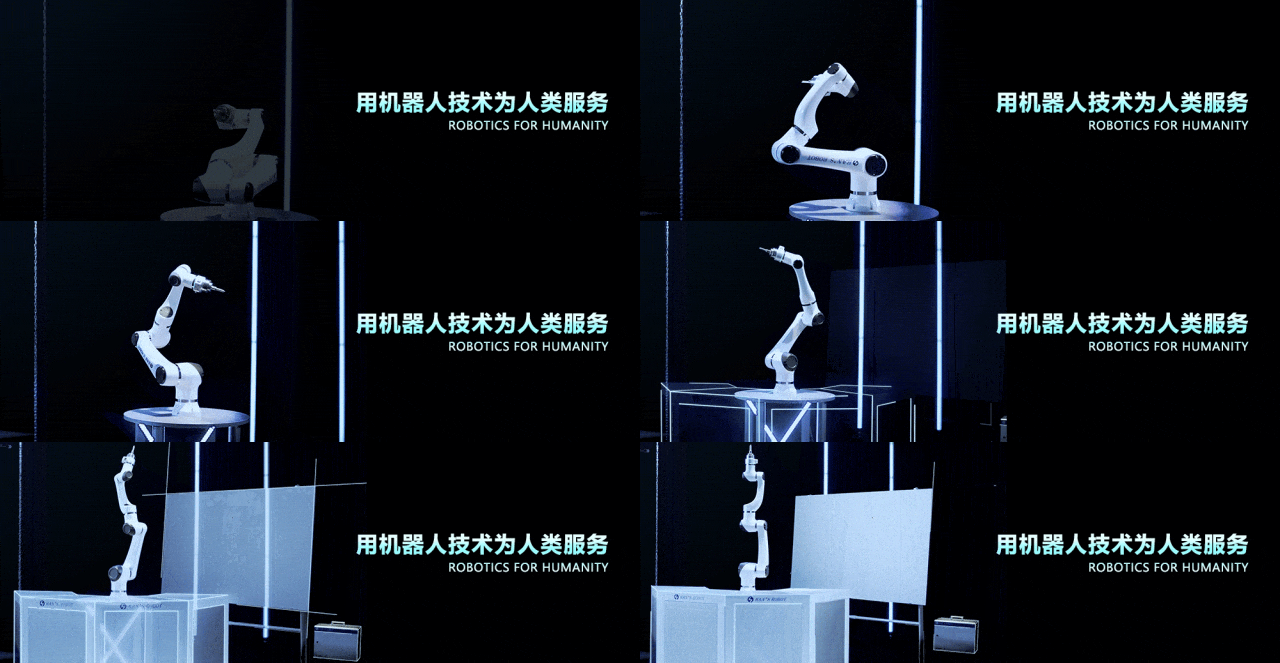
On October 12, 2026, the five-day China International Industrial Exhibition (CIIF 2026) opened at the Shanghai National Exhibition Centre, with the theme of robots equipped with a strong body base, intelligent new energy pumps, booth number: 8.1H-C190), around physical intelligence, visual application upgrades, collaborative performance upgrades and ecological cooperation applications, focusing on the latest achievements from core sports parts, robot body to physical intelligent sports execution platforms.
With 20+ years of core technology accumulated in the fields of motors, servo drives, joint modules, motion control, and more, the company has developed core motor components, robot bodies, and three-tiered intelligence capabilities that can provide the industry and partners with a complete base of end-to-end execution tools ranging from power pumps to pumps.
01.
Major release: The foundation of physical intelligence sport
On the first day of the trade fair, China's Chairman of the Board of Robotics, Mr. Wang Guang Energy, unveiled the foundation for the body-smart movement, which is a physical foundation built by China on the basis of its own hardware strength, industrial experience as a partner in areas such as body-smart, and its core development direction is to make the general underpinning in the world of robotics, with a set of standardized, modularized and open general underpinnings, to accelerate the advancement of body-smart to the real industrial landscape.
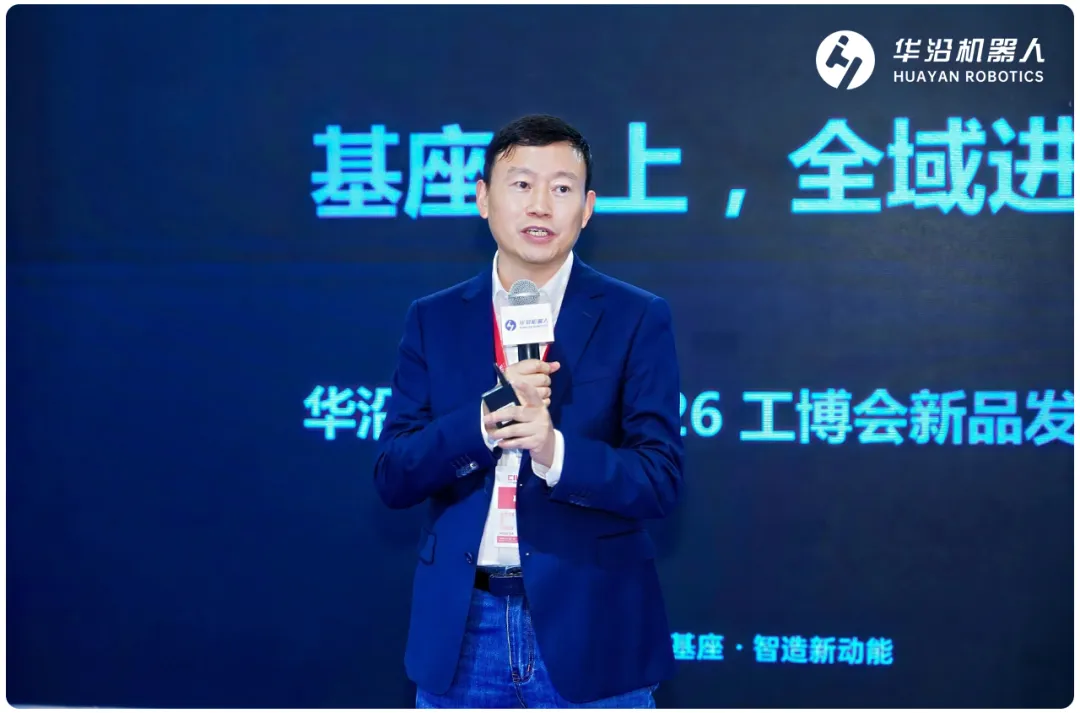
At the exhibition site, Mr. Wang Guang Energy introduced the most basic and core joint module of the robot, which comprehensively outlined innovations and breakthroughs in the field of robotic joints along China, new permanent magnetic brake technology up to 99% energy saving compared to conventional electromagnetic brakes, more efficient servo drive technology and vibration suppression technology, etc., by finding systemic solutions to heat the joints to provide a more reliable physical muscle bone for the body robot.
China has developed high-sensitivity MEMS power sensors alongside robots, achieving extremely low torque lag: torque lag <0.05% FS; lag <0.1% FS); ultra-high sensitivity; sensitivity coefficient >100; accuracy reaches 0.1% FS); mass-production consistency excellence, combined with self-development power control algorithms, allowing each joint to have sensitivity.
The HRC robotic brain is capable of accessing large models efficiently and controls refresh rates in real time on the basis of 1kHz EtherCAT, connecting the body, joints, drive, vision, sensation and touch, and achieving multi-second perception, computation, control, and modification.
Based on China's Intelligent Fitness movement base, partners in the Fitness field can access the capability of multi-form development, cross-scenario migration, and scale replication of Fitness to provide support for its rapid expansion of Fitness Application Scenes, enhanced delivery efficiency, and scale-up of business locations.
02.
AI enabled collaboration: 2.5D visual and physical performance dual upgrades
Currently, collaborative robots are accelerating the evolution from hydrogen-powered collaboration to hydrogen-powered intelligent fusion, and collaborative intelligence has become one of the key trends in the development of the robotics industry. For this reason, China has fully upgraded the intrinsic performance of robots along the way, making collaborative robots not only safer, easier to use, but also smarter and more accurately integrated into the real product line.
Changing systems from modular structures, decelerators, encoders, motors, clutches to drive algorithms and motion compensation algorithms, optimizing the synchronization of core components with overall controls to provide a stronger core for collaborative intelligence.
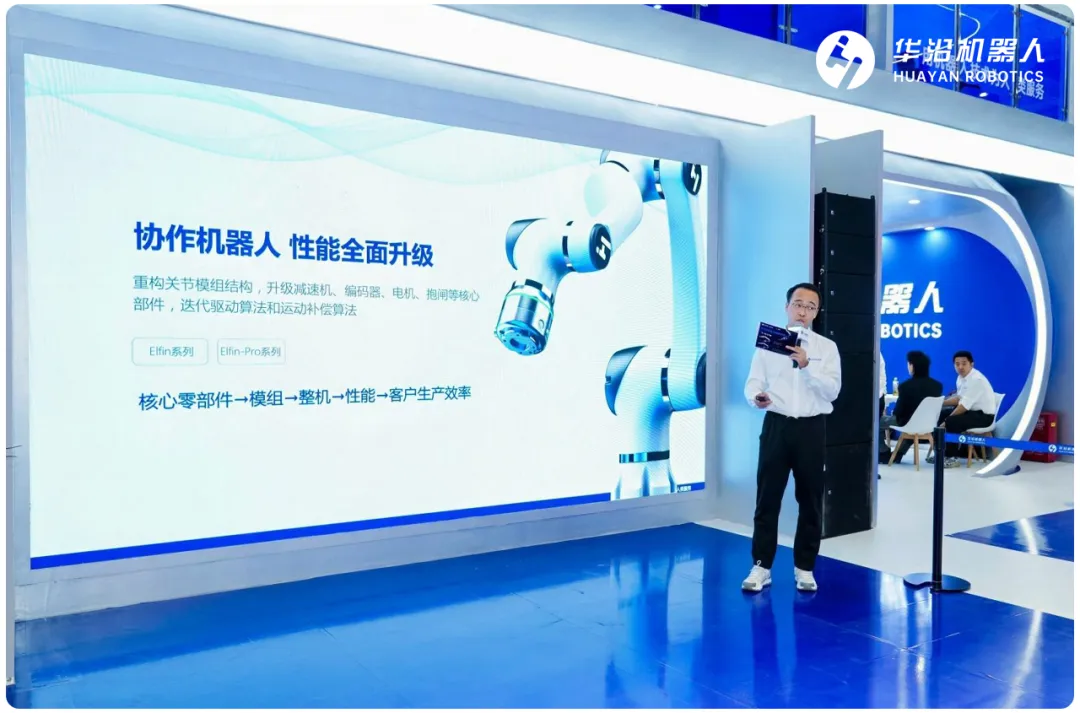
At the speed, the overall joint speed increased by 20% to 150%, up to 360°/s, the end TCP line speed increased by 20% to 50% and up to 4.5m/s, for higher frequency gesture adjustment scenes such as offloading and transportation;
In braking, it is equipped with a new generation of self-developed Meta motors to further enhance power density and overloading capabilities, combining modular structure and drive control optimization to achieve shorter braking distances while ensuring heat dissipation reliability and safety and efficiency;
Repeat positioning accuracy of 0.0109 mm, absolute positioning accuracy of 0.145 mm, and straight trajectory accuracy of 0.289 mm in full load speed tests to provide more stable processing results for applications with higher trajectory quality requirements such as precision assembly and precision processing;
In terms of stability, the unit's minimum operating noise test is less than 55dB, which is better suited to noise-sensitive environments such as medical laboratories and university laboratories.
The integrated 2.5D visual collaboration robot also introduces a whole new upgrade, which further unlocks the entire link from visual perception to robot execution:
2.5D vision→ Automatic focusing→ AI recognition→ HRC movement control→ Accurate execution
The program supports full-plane marking, enabling visual positioning from a local focus point to the entire work area; obtaining target space information through 2.5D vision, combined with the HRC motion control platform, guiding robots to complete X/Y/Z+Rx/Ry/Rz six-dimensional posture adjustments, effectively responding to workpiece position deviations and posture changes. At the same time, automated focusing, AI recognition, AI detection of multiple light source configurations, rapid program migration and drag-and-drop deployments further reduce the threshold for complex industrial scenarios.
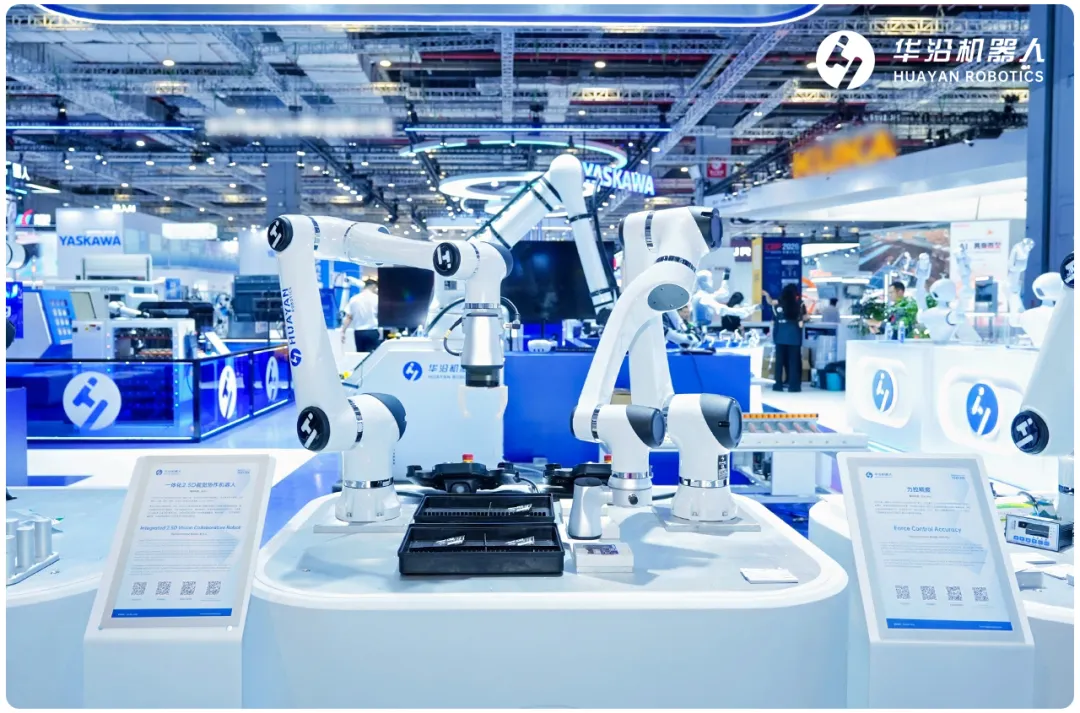
From now on, vision is no longer just a blink of an eye, but is becoming part of a robot's mobility.
Meanwhile, alongside the robot, China has also brought the S65 heavy-duty robot, which carries 65 kg of arm span 2100, further refreshes the collaborative robot load and arm span performance; and simultaneously showcases large-load coding robots, coffee robots, high-precision sports platforms, etc.
03.
Ecological cooperation to thrive together in China's robotics world
Large-scale landing of intelligent and collaborative robots, collaborative innovation that is inseparable from ecological partners. This year's trade fair, China's robots along with several industry partners, jointly showcased several highly efficient landing applications, covering precise assembly, 3D detection, anti-blast spraying, welding, CNC waste and other scenarios.
In the high-precision field, Keynes collaborated with Keynes to demonstrate the use of needle-throwing lines: using Keynes micro-level visual positioning, combined with the stability of the HY7 7-axis man-shaped arm, precise motion control along the HY7, multiple consecutive needle-throwing, detection errors less than the radius of the wire, and applications for precision assembly, high-precision detection, and microscopic operations.
In the field of visual scan detection, collaboration with the first three-dimensional demonstration of collaborative robot + intelligent 3D scan detection along the Chinese coast: equipped with the first three-dimensional measurement-level dual light source handheld three-dimensional scanner, maintaining high accuracy and accuracy in high-pitch motion, achieving fully automated scanning and producing real-time three-dimensional detection reports;
In the field of explosion prevention, with the knowledge of endless collaboration, we will showcase China's anti-blast collaboration robots + anti-blast spraying vehicles: based on China's anti-blast collaboration robots that have received national anti-blast certification, coupled with strapless anti-blast vehicles, four-legged anti-blast machine dogs, providing safer and more efficient anti-blasting programs for mobile spraying, petrified hazardous area inspection, etc.
In the field of welding, collaboration with Toshiba demonstrated collaborative welding robots + dual-axis transformers along the Chinese route: combined with collaborative robot safety, simple demonstration and external axis flexibility of industrial robots, achieving precise welding of complex workpieces, simple operation, low learning costs.
In the field of machine processing, collaboration with New Generation Technology/United States Automation demonstrates collaborative robots+CNCs in China: Elfin, Elfin-Pro series repositioning accuracy up to ±0.015mm, maximum arm span 1800mm, IP68 high protection, support for high-speed and collaborative two-node shooting modes, stability, accuracy, and efficiency.
In the field of medical laboratories, he collaborated with Beckman Kurt to demonstrate Biomek's integrated automated liquid processing workshops, a platform for multivariate, biopharmaceutical R&D, standardization, automation, and flexible high-volume sampling.
In the field of digital transformation, Siemens has signed an ecological partnership with Xcelerator to promote the upgrading of digital transformation in manufacturing.
We've worked with partners to create a number of highly efficient landing applications, including collaborative robotics+intelligent 3D scanning detection along the Chinese coast, CNC machinery waste, intelligent welding, etc. These collaborative results have been the culmination of collaborative innovation along the Chinese coast with our ecological partners. We provide high-performance, high-stability robotic essence and core sporting components, partners contribute their expertise in visual applications, scenic know-how, customer channels, and the ability to create value in real-world industries.
Looking to the future, China's robotics industry will continue to focus on the executive layer of robotics, relying on the foundation of the AI movement, working with more eco-partners to collaborate on innovation, driving AI from technical verification to scale-up applications, and co-creating a thriving Chinese robotics industry ecosystem.