It's the first time in the history of the world.
SpaceX has just released its first public financial statements.
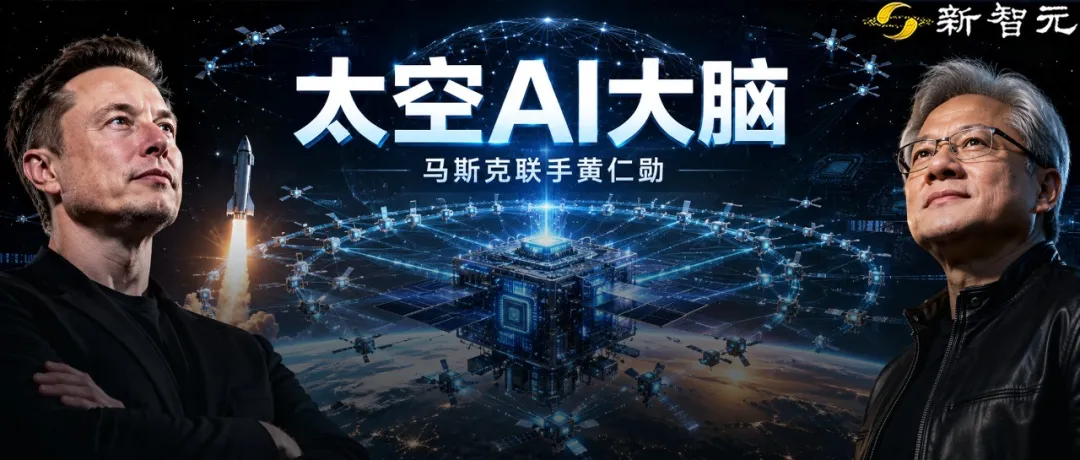
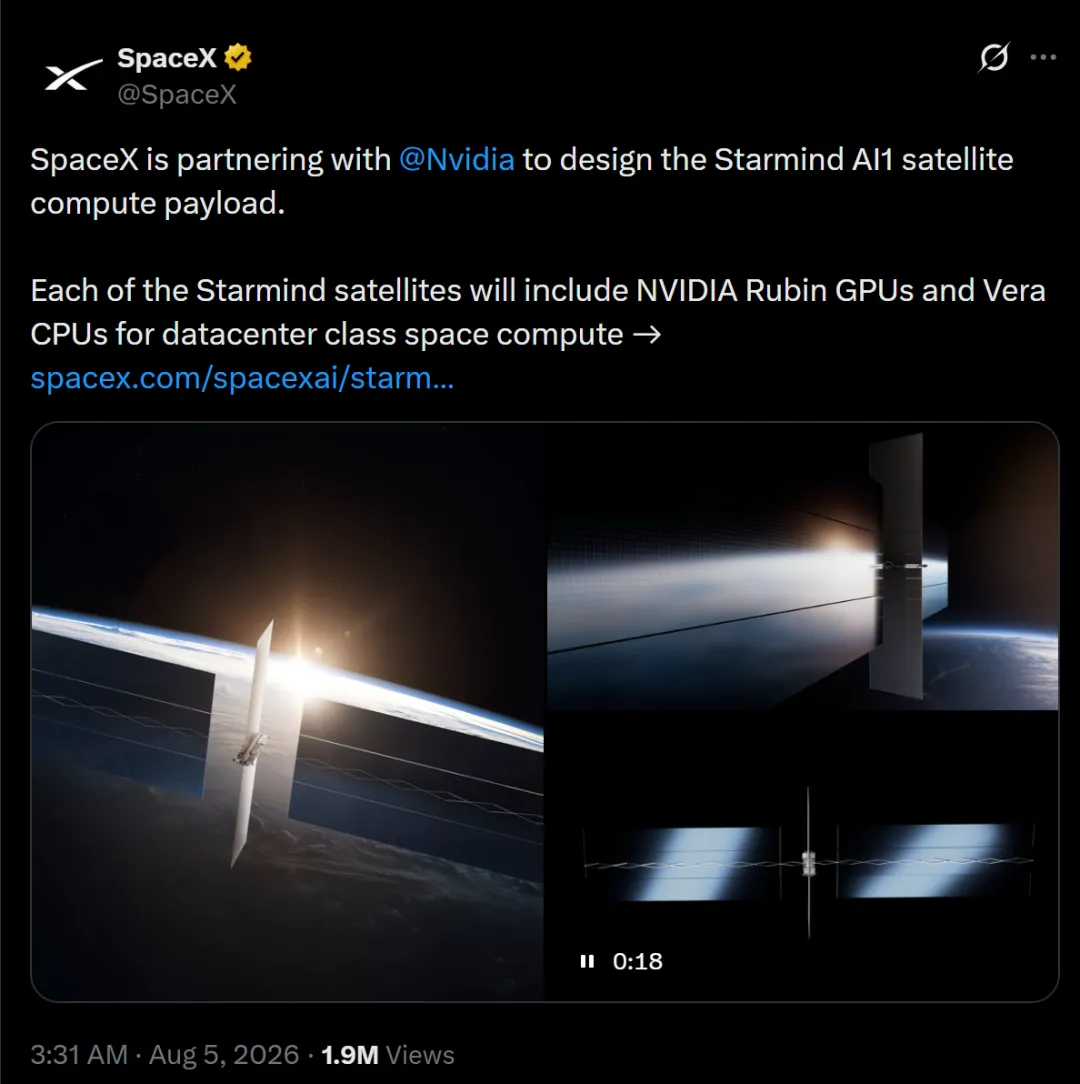
In its financial statement, SpaceX officially announced that it is launching the Starmind (interstellar brain) AI computing network in orbit with the United Kingdom.
This time, Musk is going to use a satellite matrix that covers the sky to create an infinite expansion, infinite energy, absolutely zero-thermal "space AI brain" outside the Earth's atmosphere!
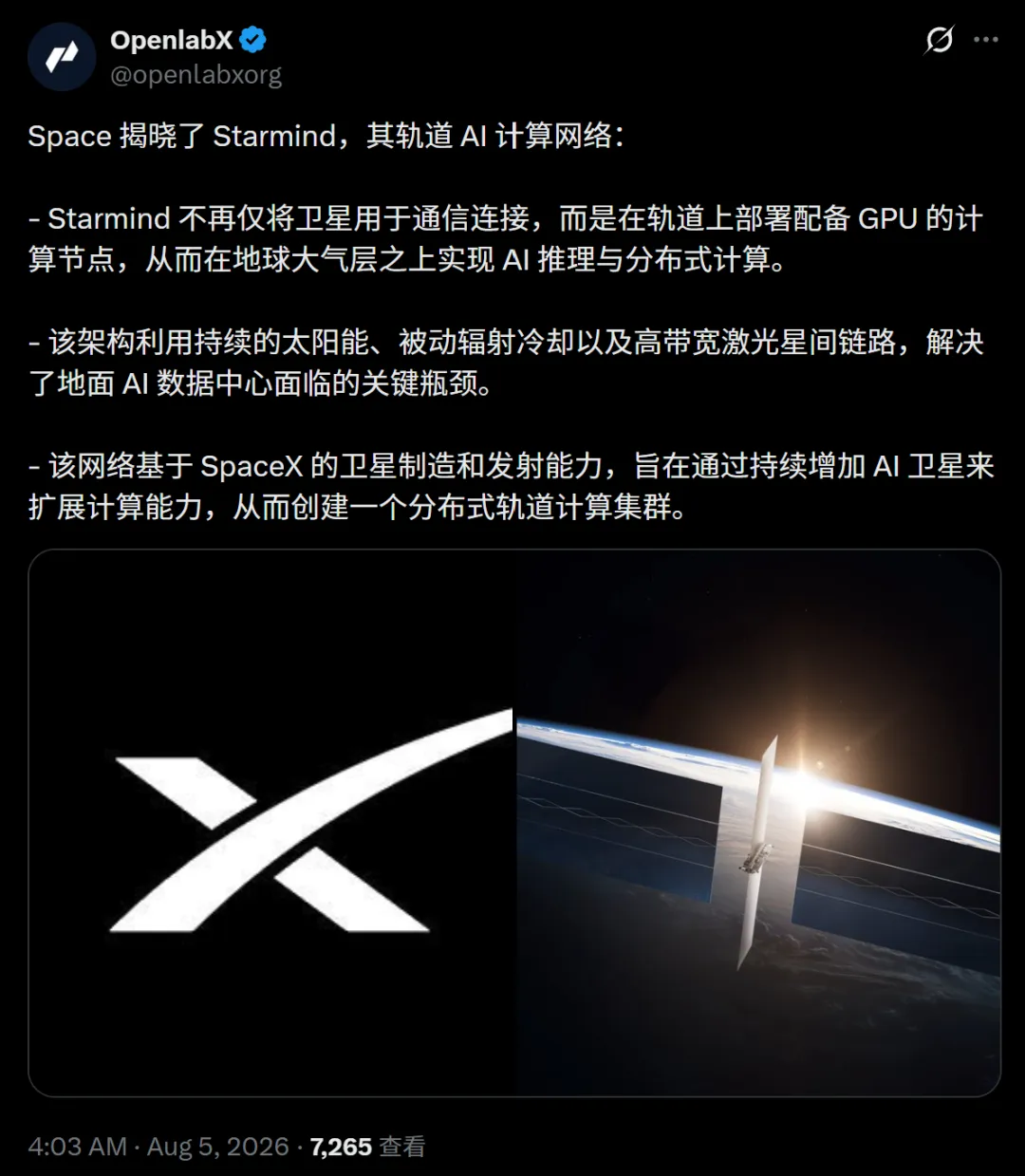
Starmind moves AI's computational base directly from the surface to space.
Musk intends to use this interstellar computing network to completely solve AI's energy consumption and heat dissipation anxiety.
Everyone thought that Musk's ultimate goal was Mars, but on his way to Mars, he masterfully reshaped the entire human AI algorithm.
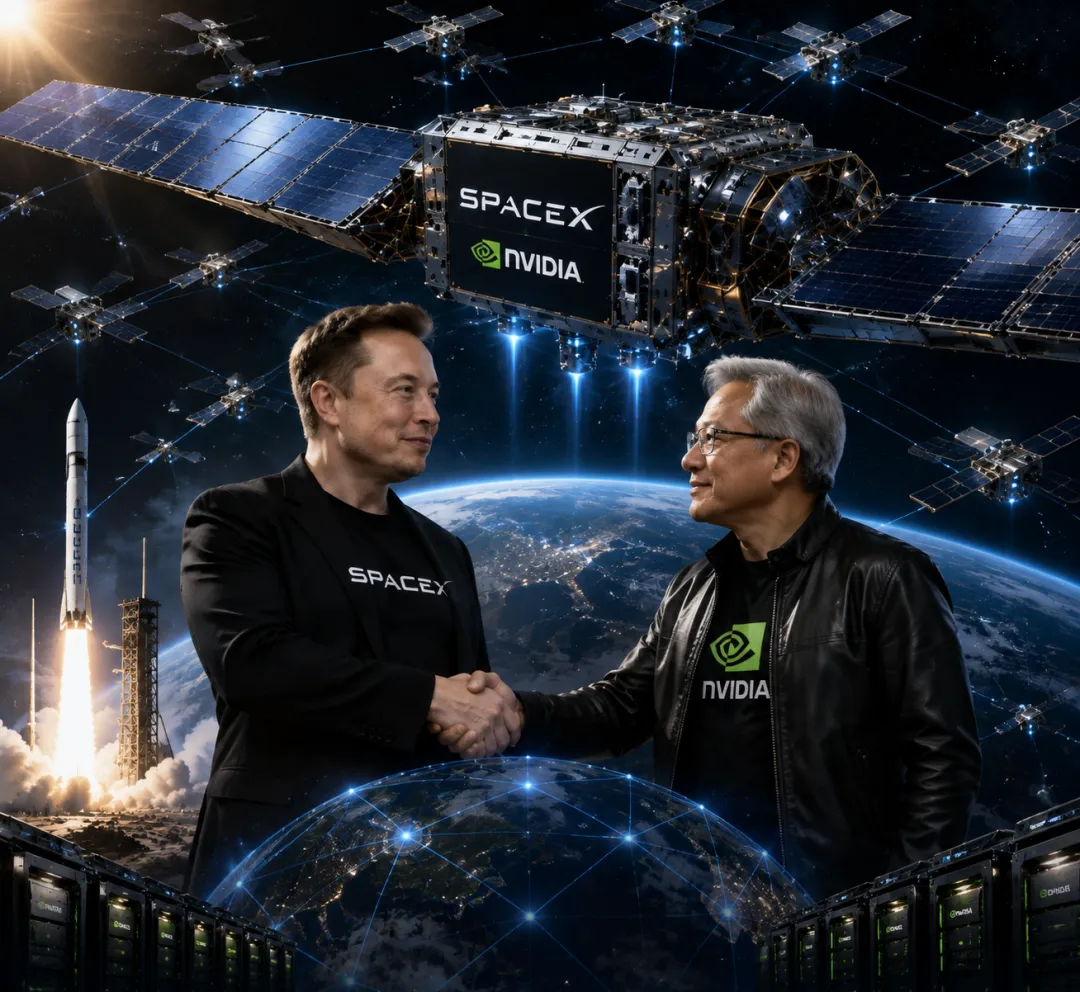
This image was created by AI.
Escape from Earth: Breaking the deadlock of AI computingThe data from the report is striking: revenues plummeted by 92%, reaching $7.8 billion.
However, these data are far from as attractive as the interstellar computing network.
Today's development of AI is facing a dead end of power shortages, water shortages, shortages of space.
A large AI data center, consuming as much power as a medium-sized city. Earth's energy network is fast becoming unable to handle AI's evolution.
Musk said: "If the earth can't fit, put it in space!"
In SpaceX's latest blueprint, the Starmind project has provided a brilliant blueprint.
Directly launch into the Sun's synchronous orbit with data centers equipped with India's most advanced chips!
In an interview, Musk gave an explanation of why space is so volatile.
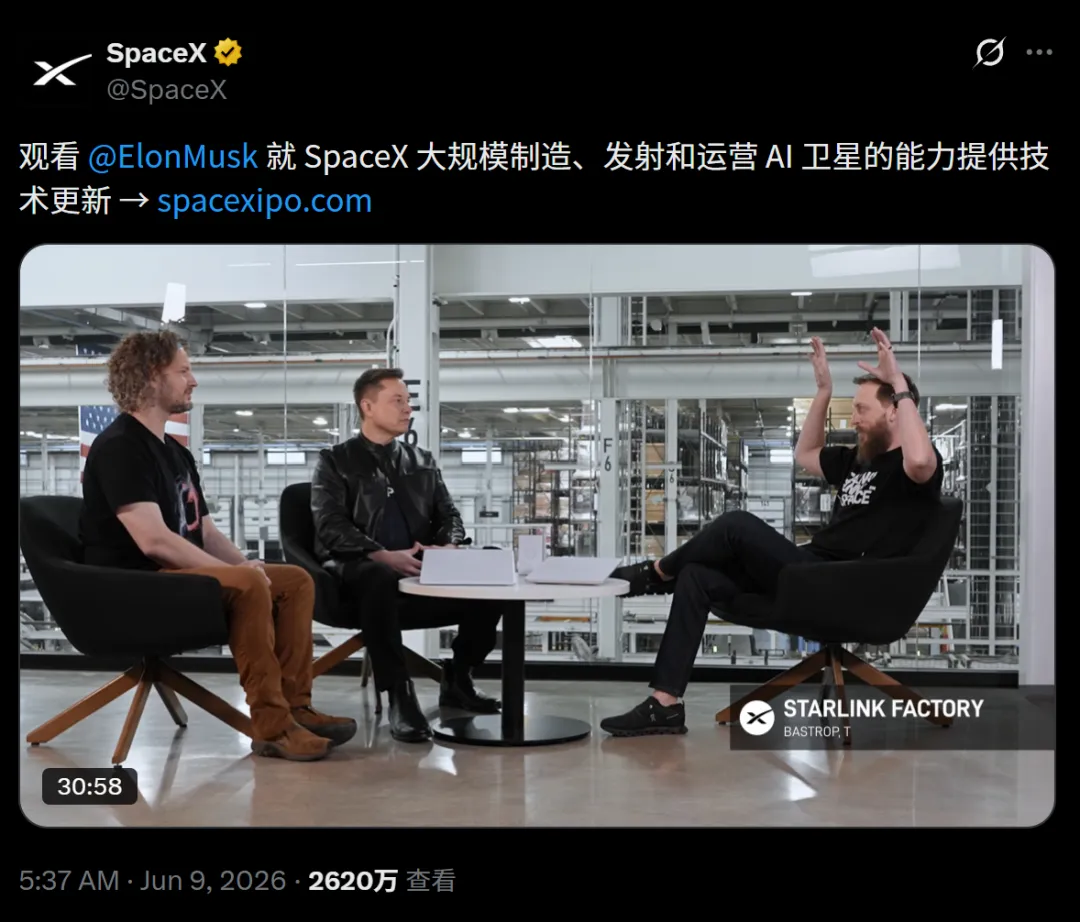
The first is that there is always sunlight in space.
70% of the Earth's surface is water, and even on the rest of the land, the quality of solar panels is poor.
"If the aliens came to us, it would be estimated that the water was water, why would you call it Earth?" Musk joked.
But in the synchronous orbit of the Sun in space, there is no darkness, no weather interference, no weakened atmosphere. AI satellites can bathe in pure solar energy continuously for 24 hours, gaining energy densities several times higher than on the ground.
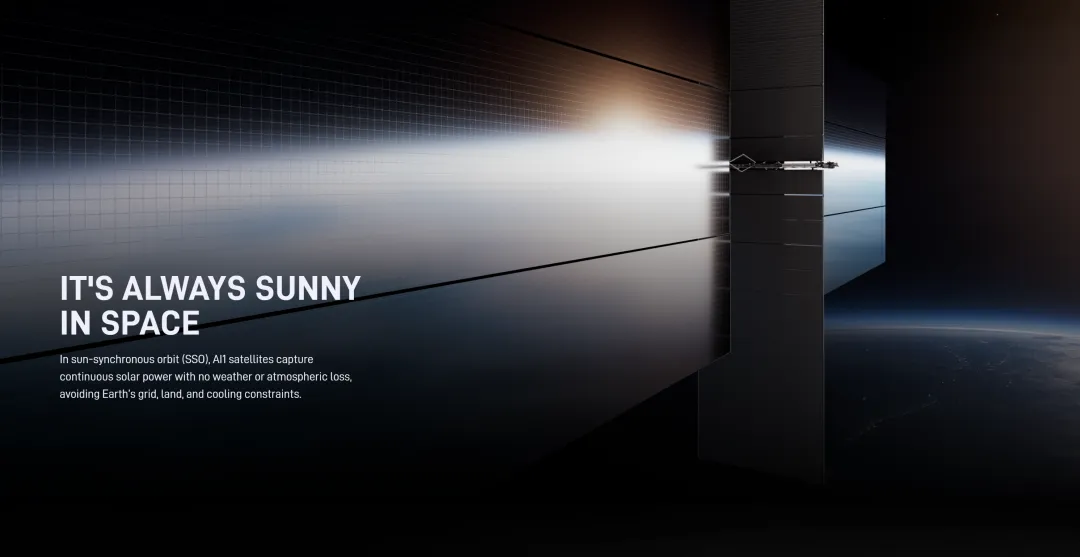
The second reason is the perfect vacuum dissipation.
Data centers on Earth use astronomical numbers of energy for liquid cooling and air-conditioning systems, and in space, heat dissipation problems are solved by directing waste heat radiation into a deep, freezing vacuum!
Therefore, Starmind satellites do not need the most energy-efficient cooling towers, fans or dry coolers on Earth.
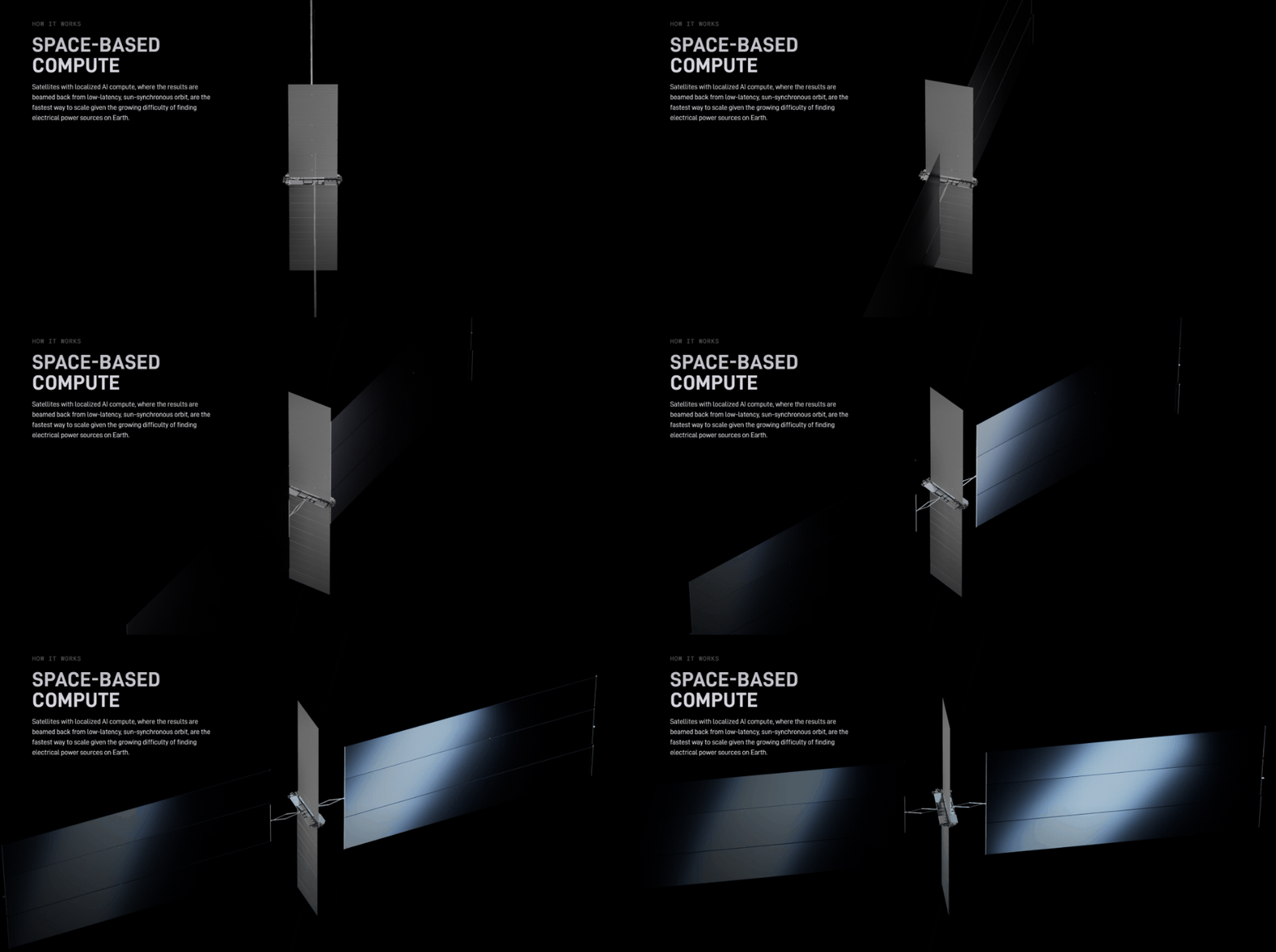
What's more, SpaceX leveraged its extensive experience of flying spacecraft to design deployable liquid heaters with an area of up to 160 square meters, directly reducing the cooling energy consumption of computed clusters by a quantitative level.
In addition, if you want to build a large computing center on Earth, to pass land approval, to deal with environmental protests, the power grid doesn't have to come into play.
But in space, Musk smiles, and there's no land lease fee, and no one will come to your door to raise signs against it. Solar energy is free, vacuum cooling is free, and operating costs are almost infinitely close to zero!
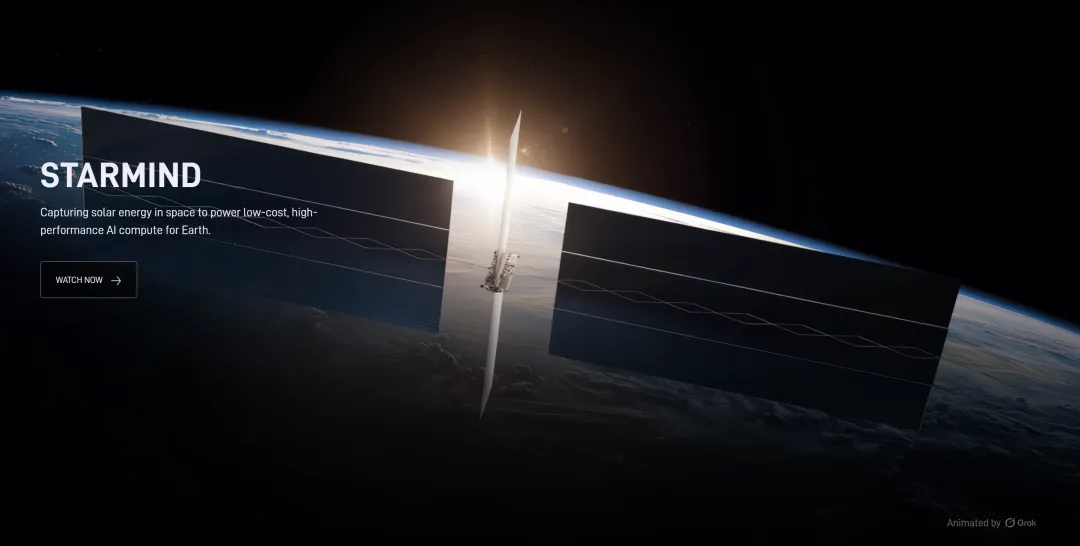
Is the Space Data Center simply throwing an iron hook in the Earth's engine room?
The first computational node, the Starmind AI1 satellite, built by SpaceX in partnership with Invidia, is a true artwork of the space industry.
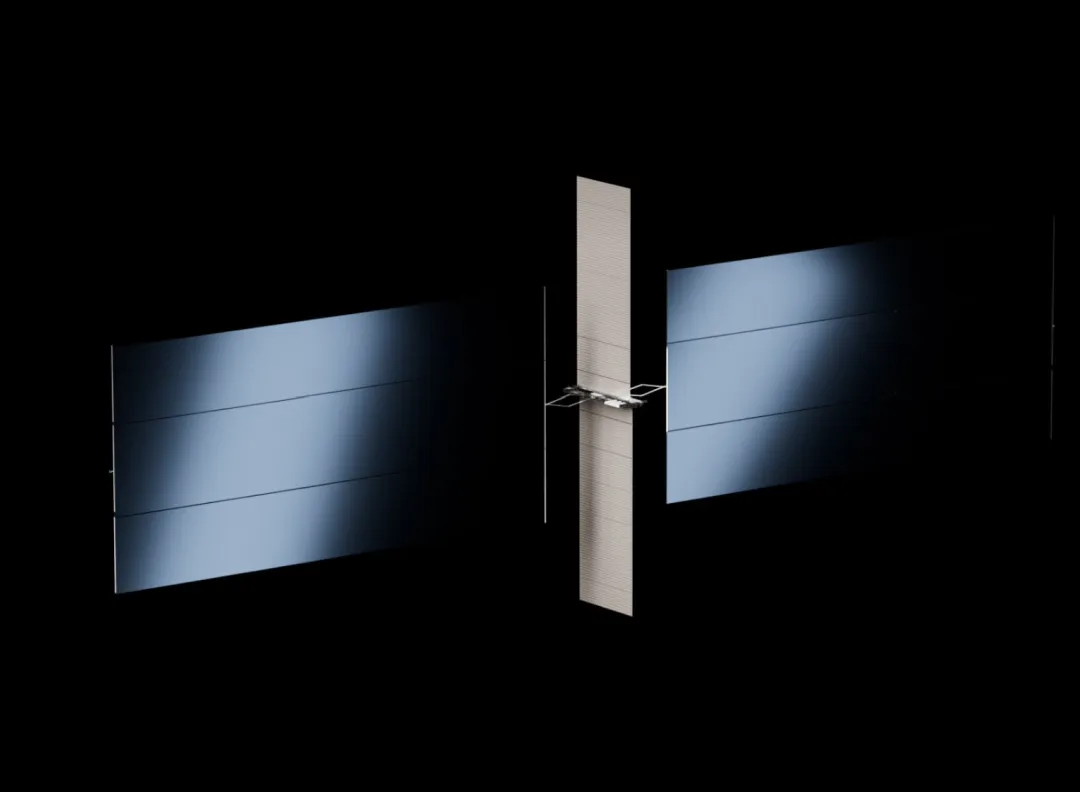
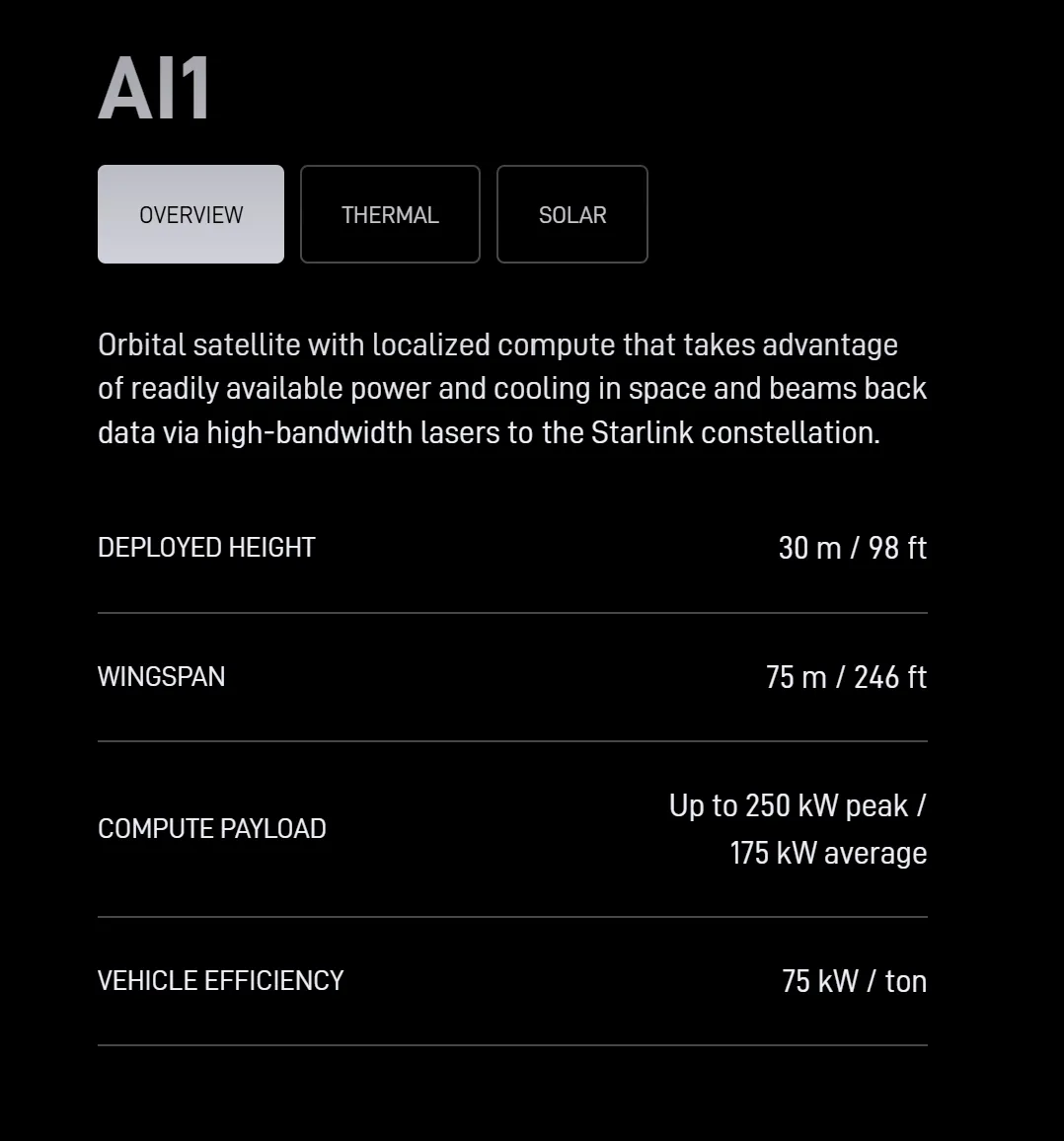
According to published technical details, the satellite is simply a giant.
It has a wingspan of 75 meters (nearly the length of a football field).
Solar array power output of up to 210 kW.
The calculation of the effective load peak power reached 150 kW, with an average power of 120 kW.
150 kilowatts, perfectly matching the power consumption of an entire GB300 supercomputing cabinet!
Musk has made it clear: "SpaceX is currently committed to using Unix GPUs exclusively because they are the best".
These satellites will be equipped with a Rubin GPU and Vera CPU, which have not yet been fully deployed by Invidia, and will kick off a wild run of computing in space.
Some might ask: Will the server be so high that network latency will not die?
This is where SpaceX's real Starlink network is located.
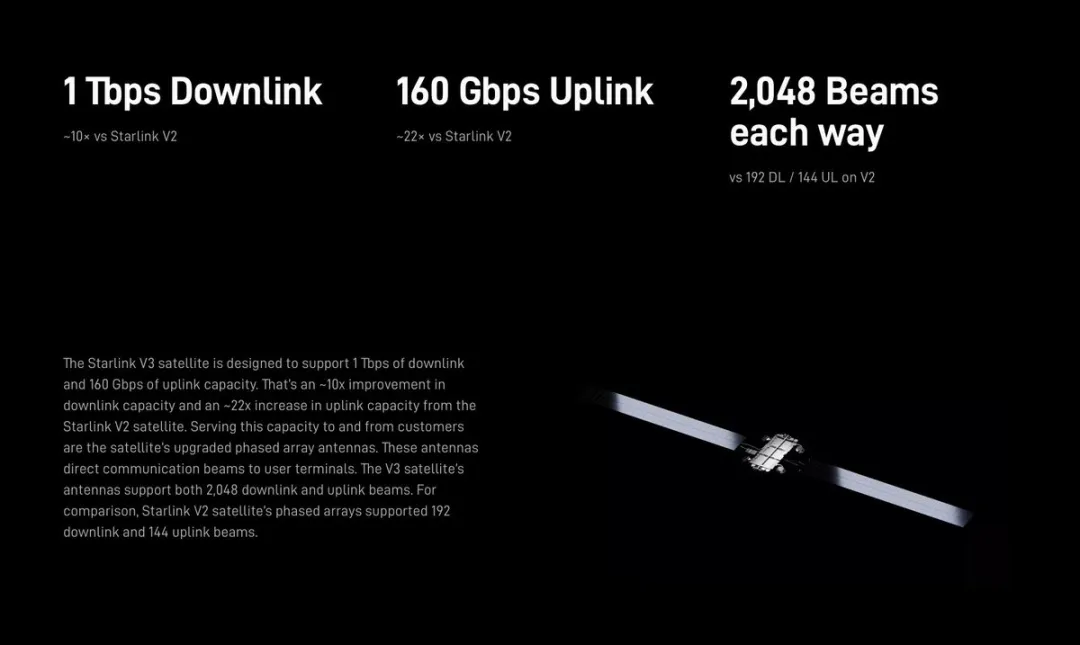
The Starmind satellite does not have the complex phased array antennas on Starlink, it is a purely computational satellite. It operates via ultrafast laser links at terabit-level, directly to the existing network of star chains.
"People are always worried about delays in space computing", Musk said in an interview, "but the speed of light is fast".
AI satellites are only 600 to 800 kilometers from the ground and travel at 300 kilometers per millisecond at the speed of light. This means that the physical delay of the space computing center to your mobile phone or computer is only 3 milliseconds!
At this speed, distance is not a problem at all.
In the future, you can ask XAI's Grok model directly on your phone, and your question will be sent back to your screen instantly after the reasoning is completed via the Invidia computing cluster in the star chain right into space.
And all of this is completely off the grid and cable limits of the ground!
 At the heart of the mask: starships and trillion-dollar maniacs
Why is it that only Musk can do this? Why are all the other tech giants going to die on the planet?
SpaceX's chief financial officer, Bret Johnsen, said: "If we don't have very low-cost, fully and quickly reusable heavy-lift rockets, space AI brains are the sky's the limit".
The most central key to Musk's puzzle is the Starship.
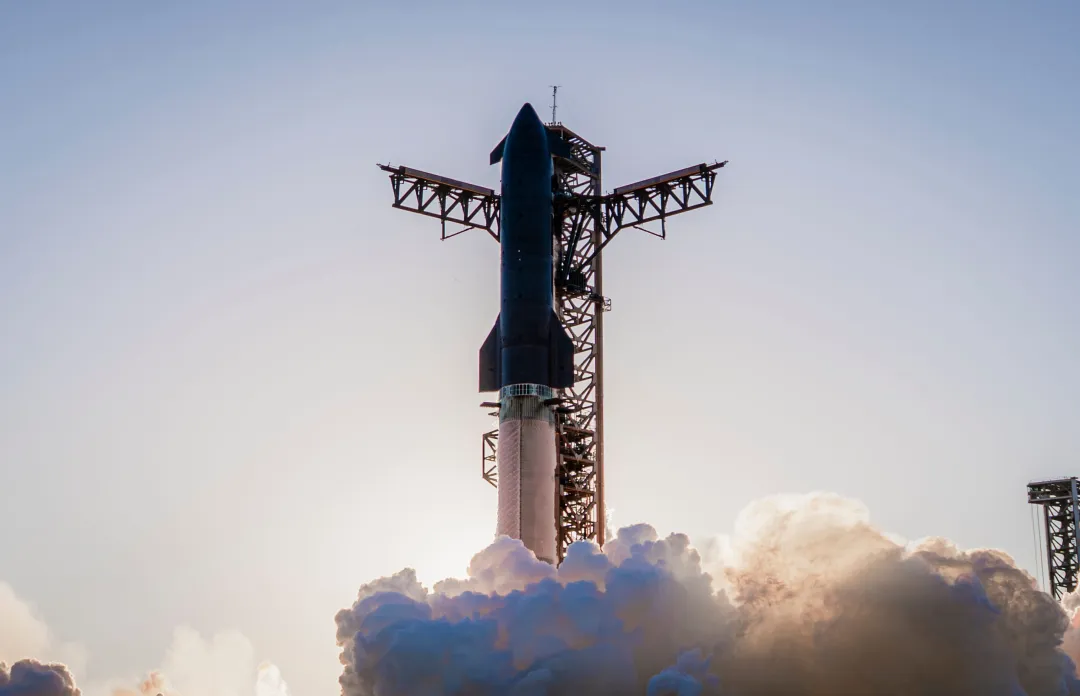
It was the largest, heaviest, and most powerful aircraft ever built in human history (more than twice the thrust of Apollo's Saturn V).
While conventional rockets are extremely expensive to deliver to space, starships aim to be launched, landed, and relaunched within a day, much like civil aviation passenger aircraft.
Today, nearly 90% of the world's orbital mass is achieved by SpaceX's Falcon series rockets. With the launch, SpaceX aims to increase its capacity from 2,500 tons per year to 1 million tons per year in about three years.
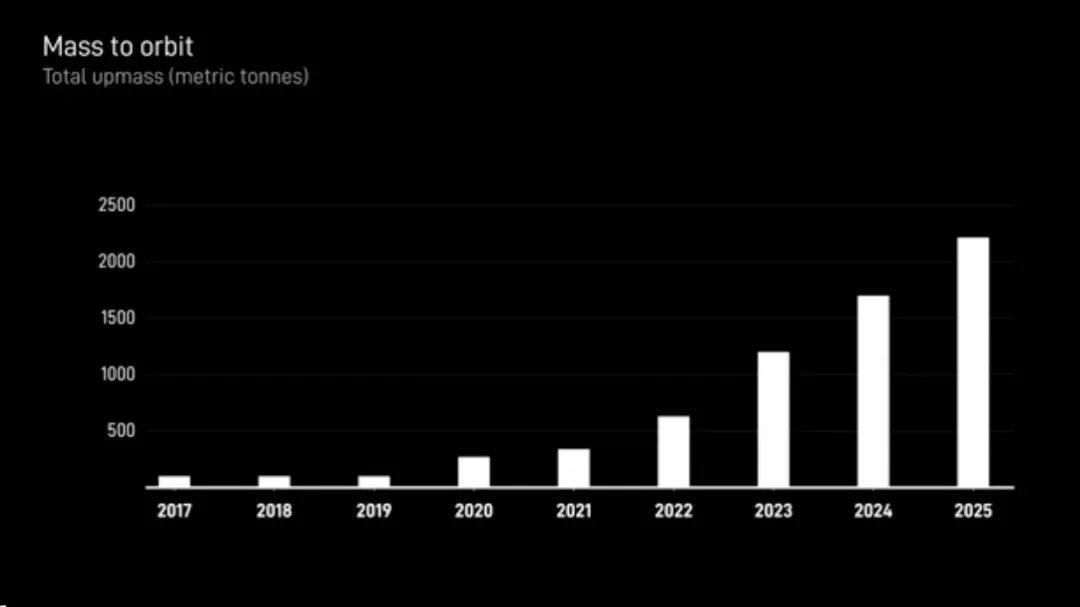
Without the enormous capacity of the starships, it would be impossible to put tens of thousands of tons of AI satellites into orbit.
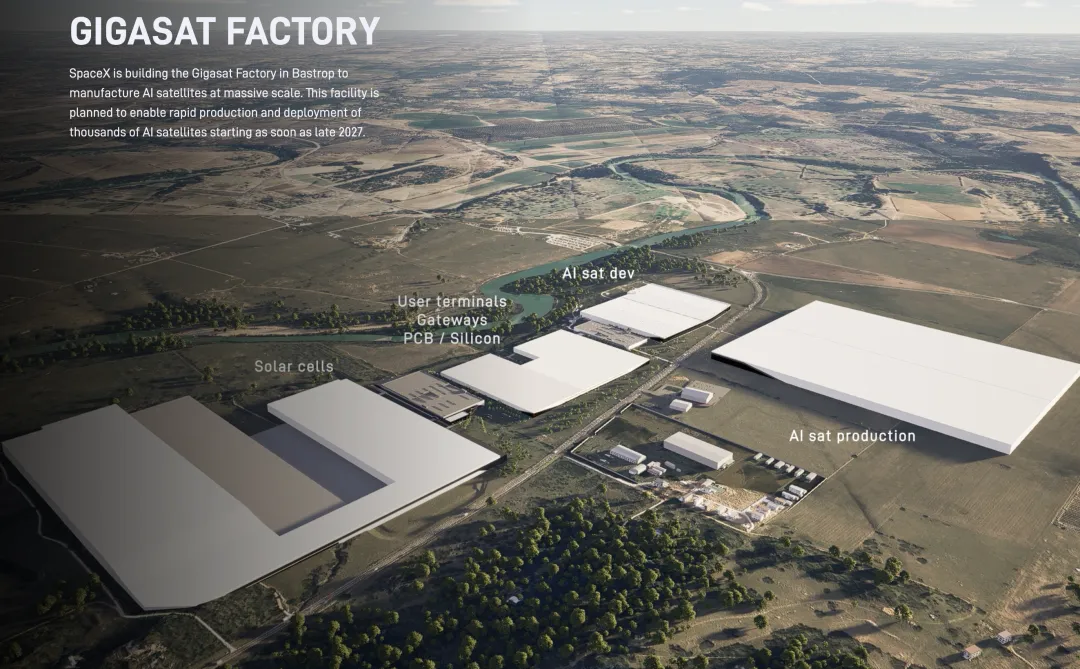
SpaceX's manufacturing capabilities are also expanding on an epic scale to accommodate the "Space City Movement", and they are building the Gigasat superfactory at Bastrop in the state, with plans to mass-produce thousands of AI satellites by the end of 2027.
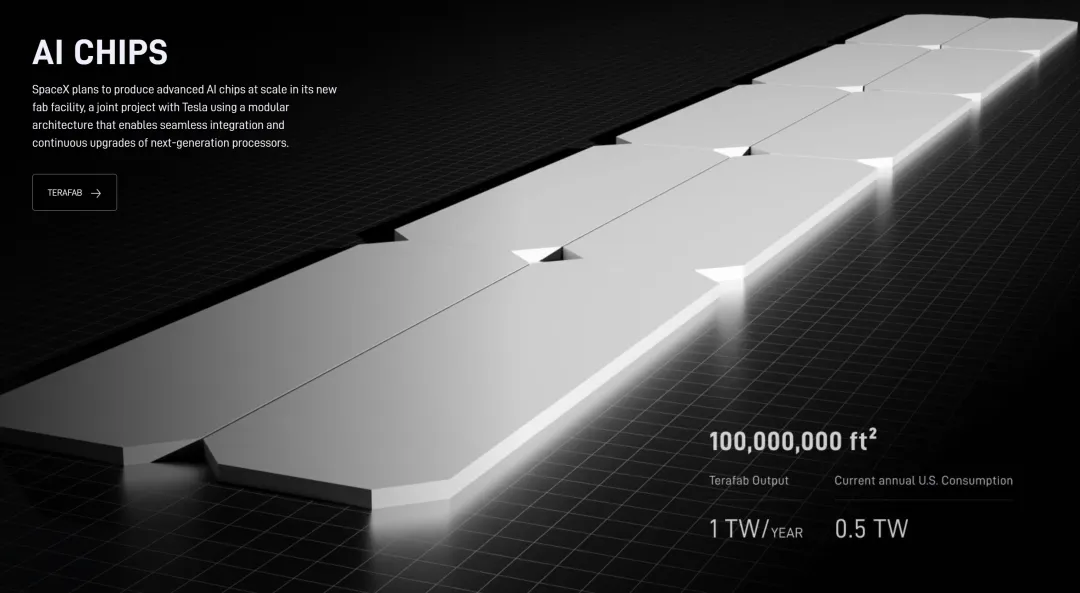
But that's not enough. In order to support the demand for 100 GW of space AI computing per year and even the final one GW of TW, equivalent to 1000 GW, SpaceX has teamed up with Tesla to plan an amazing Terrafab project.
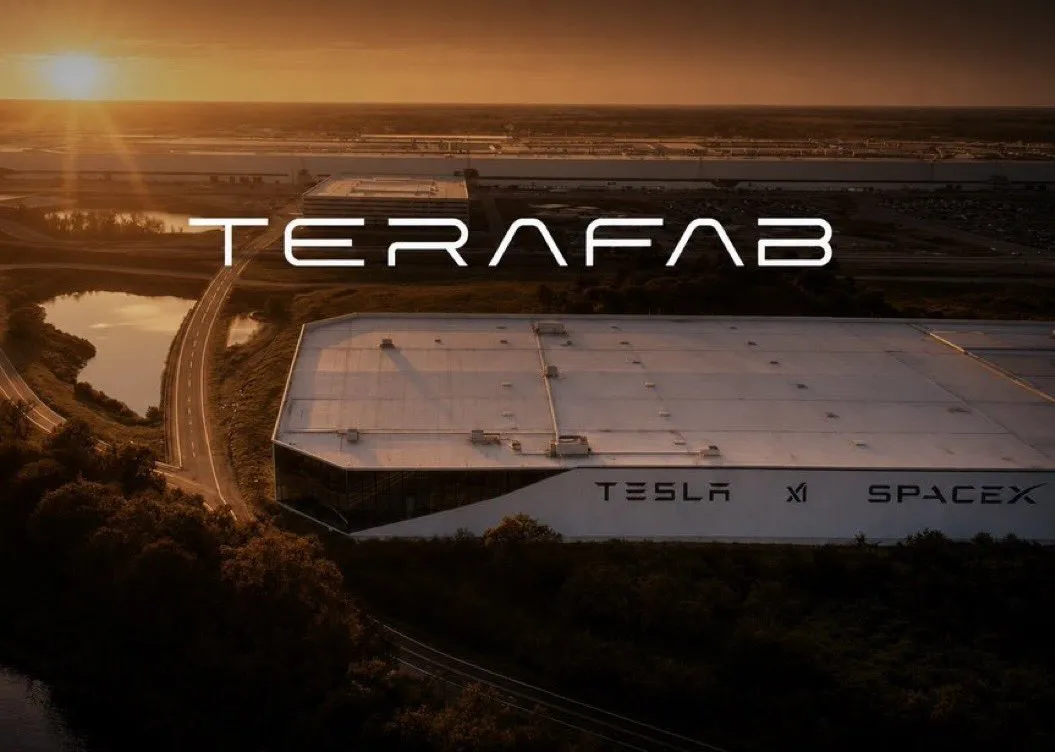
It is expected to cover a staggering 100 million square feet, which is 10 times the size of the current state-owned Tesla supermarket.
The commercial closure of Musk's business, which is showing a lot of frost.
The massive cash flow earned by StarChain -> R&D starships -> Starships sending massive Starmind satellites into space -> Building the space AI brain enabling xAI -> Earning higher-dimensional profits.
One ring, one ring, one perfect ring, no opponent can copy it, only one can do it.
And what's even more terrifying is that every link is open to competitors.
Competitors can buy SpaceX's launch service, use Starlink's communications, or even lease on Starmind. But Musk doesn't care, because when you're the infrastructure of all the tracks, you're the track itself.
This is the first time I've ever heard of this.The Kaldaschoff Index is a progression towards "divine civilization"Is Musk doing this to make money by selling AI services?
In the internal dialogue, Musk threw out a magnificent narrative with a science fiction and even a religious sense of divinity.
It is an objective criterion in cosmosociology for measuring the degree of civilization's development.
Type I civilization: fully controlled by all the energy of its planet Earth.
Type II civilization: fully controlled by the full energy of its star, the Sun.
Type III: Powered by the energy of the entire galaxy.
Musk pointed out: "Where are we now on the Kaldaschoff Index? The answer is nonexistent at all. We use less than one trillionth of the energy the sun produces. If we are an object of study in the eyes of an alien civilization, the performance is completely inappropriate".
The Starmind Interstellar Computing Network is the first substantive step towards a "bi-civilization" of human civilization.
Musk's goal is to deliver 10 GW of computing capacity annually to space within two and a half years and 100 GW within three and a half years.
And his ultimate goal is a space calculator of 1 TW, or 1,000 gigawatt!
At the end of the interview, SpaceX executive Dan Huot asked Musk a seemingly science-fiction question: "What's the next step when we get to the extreme on Earth?"
Musk's response shocked everyone: "Why stop at the one-way street? It's too small".
His vision was to build a quality projector and chip factory on the moon.
In order to achieve a thousand times more computing power than 1 terawatt, launching from Earth is not enough. He plans to mine resources on the Moon, use materials from the Moon's surface to manufacture photovoltaic panels and heat exchangers, and even make AI chips on the ground.
Because the Moon has no atmosphere, gravity is only one-sixth of Earth's. SpaceX will use a large linear motor similar to an electromagnetic orbiting cannon, without requiring any rocket fuel, and will directly build a good AI satellite from the lunar surface "shot" into deep space!
"If we can send so much mass to the moon, it means that almost anyone can go to the moon".
That's the mask.
At a time when many people were still afraid that "AI will not replace humans", he was already thinking about AI.
How to extend human consciousness to the entire solar system, how to move from that "absolutely unremarkable" micro-dust on the Khartoum Index to a species that deserves at least a glimpse of an alien civilization.
Musk, bring civilization to the universeWhether it's colonization of Mars, machine-to-machine interfaces, AGI, or today's "space AI brain", every goal Musk put forward sounds crazy at first.
But as SpaceX's chief financial officer, Bret Johnsen, put it:
After 15 years of working with Elon, the most amazing thing is that he sets the seemingly bold goals, and then he drills with you into the trenches to solve the most difficult technical bottles personally.
In 122 days, he built the world's largest xAI supercomputer, the Colossus; the starship succeeded in the shock-recycling of the Monkey Rocket; and the star chain woven an impenetrable web across the globe.
Today, he's painting a picture of Starmind.
When Ingrid's computing ability was inserted into the wings of SpaceX's starship, one of the hardest, most explosive revolutions in the history of human science and technology was already raging outside the atmosphere.
The Earth may actually be the cradle of human civilization.
Musk, on the other hand, is building a "super-brain" that will illuminate the starry ocean for all of humanity.
As Musk put it: "It's time to start thinking like a civilization that deserves to be in the universe". Starmind is just the first step.
In 2027, see you in space.