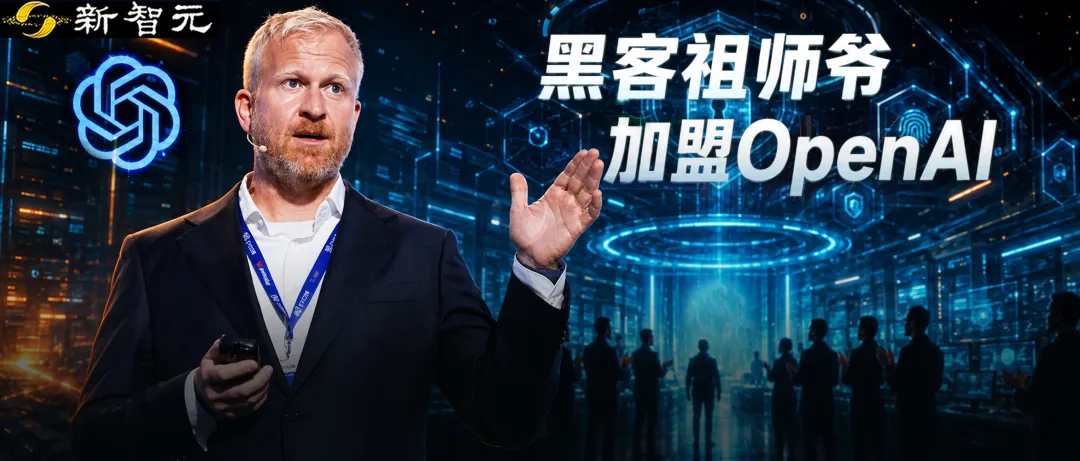
It's the first time in the history of the world.
In the last few days, there has been a lot of activity in OpenAI.
First, the Fields Award winner announced his candidacy, then he joined, and now there's another grandmaster.
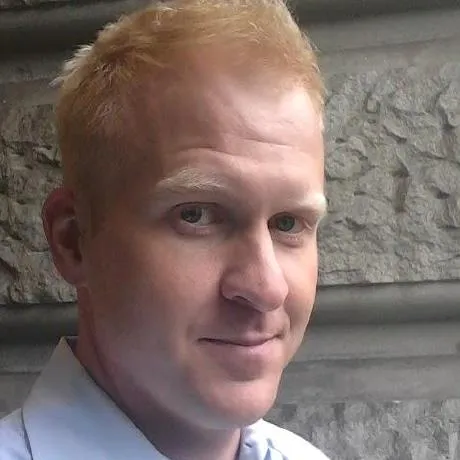
He is Halvar Flake, a "Grandmother's Daughter" hacker.
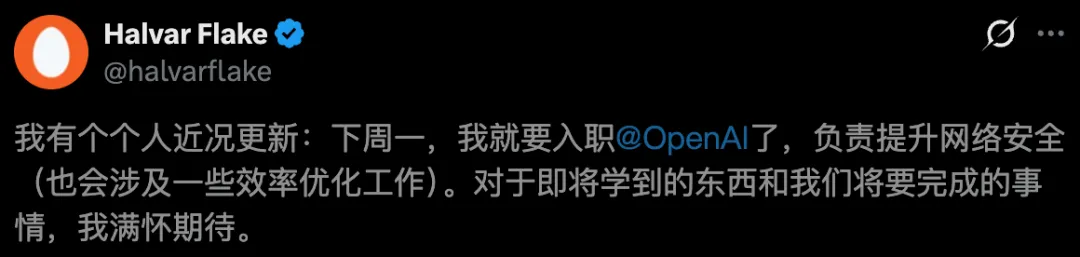
Just today, Halvar officially announced: "Next Monday, I will be going to OpenAI to challenge the burden of increasing cybersecurity".
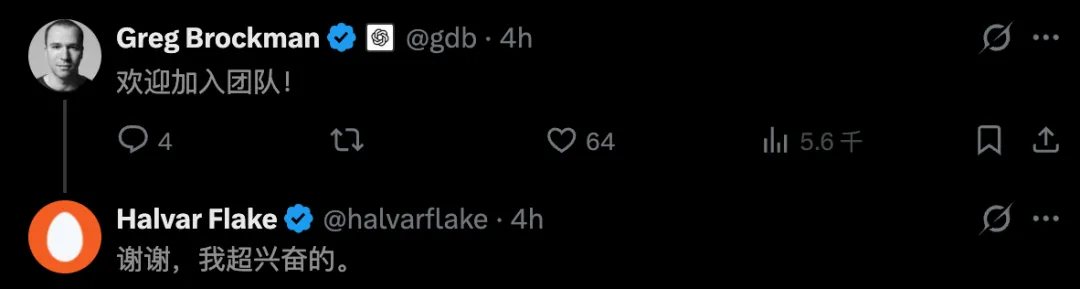
When the news came out, the lines were full.
OpenAI joined almost "second back", and several core researchers in the Fire Speed Team welcomed the launch.
The crowd around the site shouted, "This OpenAI excavation is so crazy, it's just a treasure!"
 BinDiff's father is a tool.It took 22 years for the world to be safe.
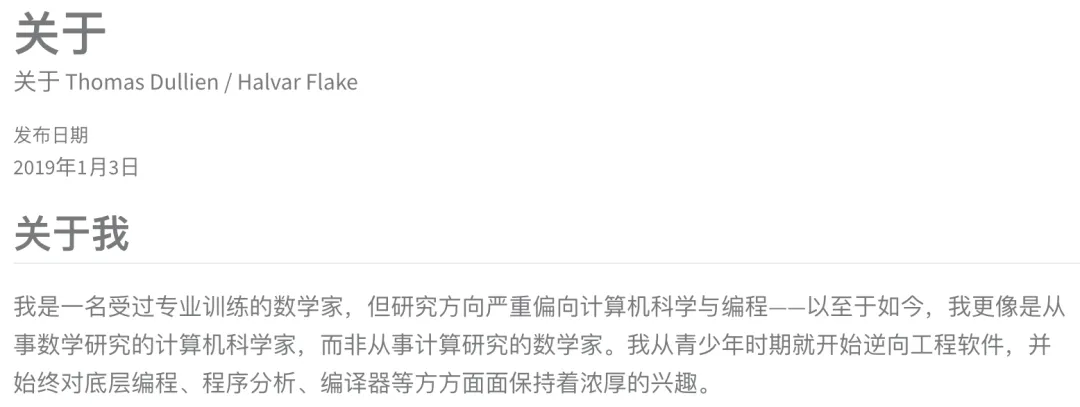
In fact, Halvar Flake is not his real name, his real name is Thomas Dullien.
The German, who holds a Master's degree in Mathematics from the University of Bonn and is a graduate of the Faculty of Mathematics, started compiling good programs at a young age.
The ID comes from the Viking village chief of the German animated series The Little Mermaid of the North Sea, whose friend at the time thought he was fat, long-haired, and liked to drink beer.

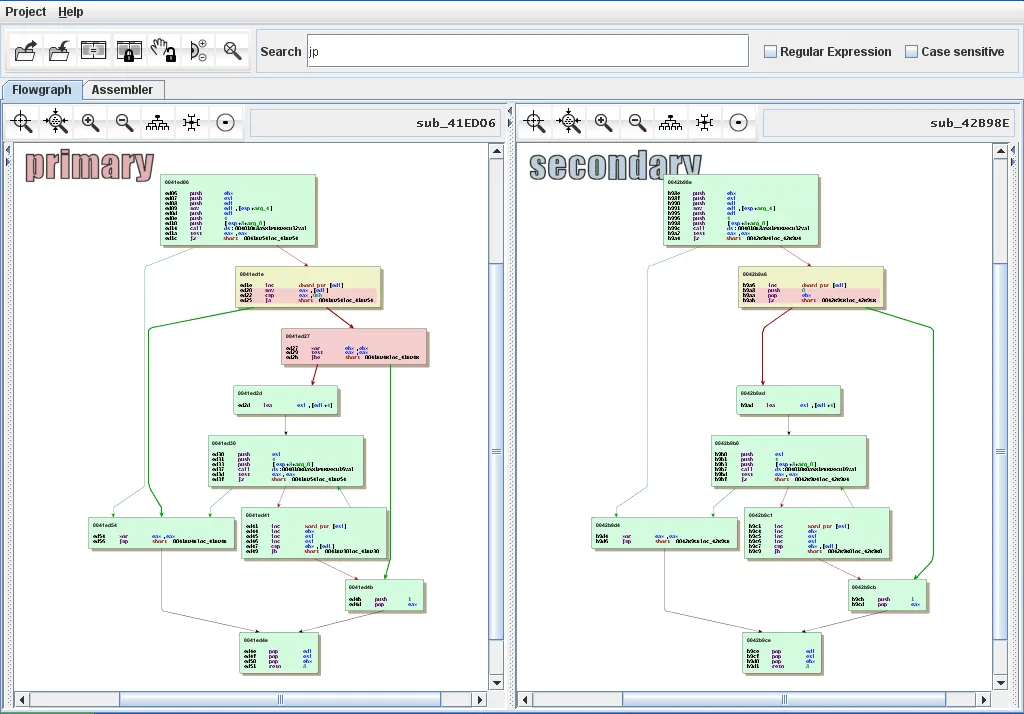
In 2004, he opened his own company, Zynamics, as a reverse-engineering tool for BinDiff.
The core logic of the tool is pure: it can accurately locate the code differences between the two by entering two compiled programs.
However, it is this seemingly simple function that solves a major core pain in the security community.
In the patches released by the manufacturers, what unpublished flaws have been secretly fixed? It is only necessary to compare the binary files before and after patching, so that the location of the hidden flaws is clear.
On his personal homepage, Thomas is quoted as saying: "BinDiff has become an industry standard and even a "verb".
"Bindiff" in the security circle, everyone knows.
Entered Google and won a lifetime achievement awardIt wasn't until March 2011 that Google directly bought the entire company. A team of 10 people, including Thomas, joined Google directly and spent five years working on technical integration.
After being acquired, BinDiff dropped from a few thousand dollars to $200, after which it became free, open-source.
During his time at Google, Thomas Dullien also did the second big thing: Rowhammer (memory box).
In 2014, academics found that DRAM memory chips had physical design defects:
High frequency repetitive reading of specific memory rows can cause data sets on adjacent rows to override. At the time, the industry only viewed it as a hardware-level reliability issue.
He was completely different from his colleague Mark Seaborn: it was purely a vulnerability. In 2015, they successfully completed the vulnerability verification (PoC):
Without touching any of the permissions, the system's highest permissions have been obtained solely by the "hardcore" memory.
In the same year, he received the Pwnie Lifetime Achievement Award, a lifetime achievement in safety circles, given once a year.
At the end of 2016-2018, he worked as a researcher at Google's Project Zero, the world's most famous vulnerability hunter team.
In 2019, he left Google to start Optimyze, and what he was doing had nothing to do with security.
A small probe installed on thousands of Linux machines that doesn't change a single line of code will tell you which line the entire group of computers' CPU is burning on, and C++, Java, Python, PHP can see through it.
In 2021, the company was acquired by Elastic.
25 years old security guard, bugging with ClaudeFor more than a year, Thomas Dullien has been working on an open-source project calledRAPTOR。
At the heart of this project is the transformation of Claude Code into a security agent that can find vulnerabilities and fix bugs on its own.
It takes static analysis, binary analysis, blur testing, vulnerability verification, generating generations, patching generations, and you throw it a code library and it runs on its own.
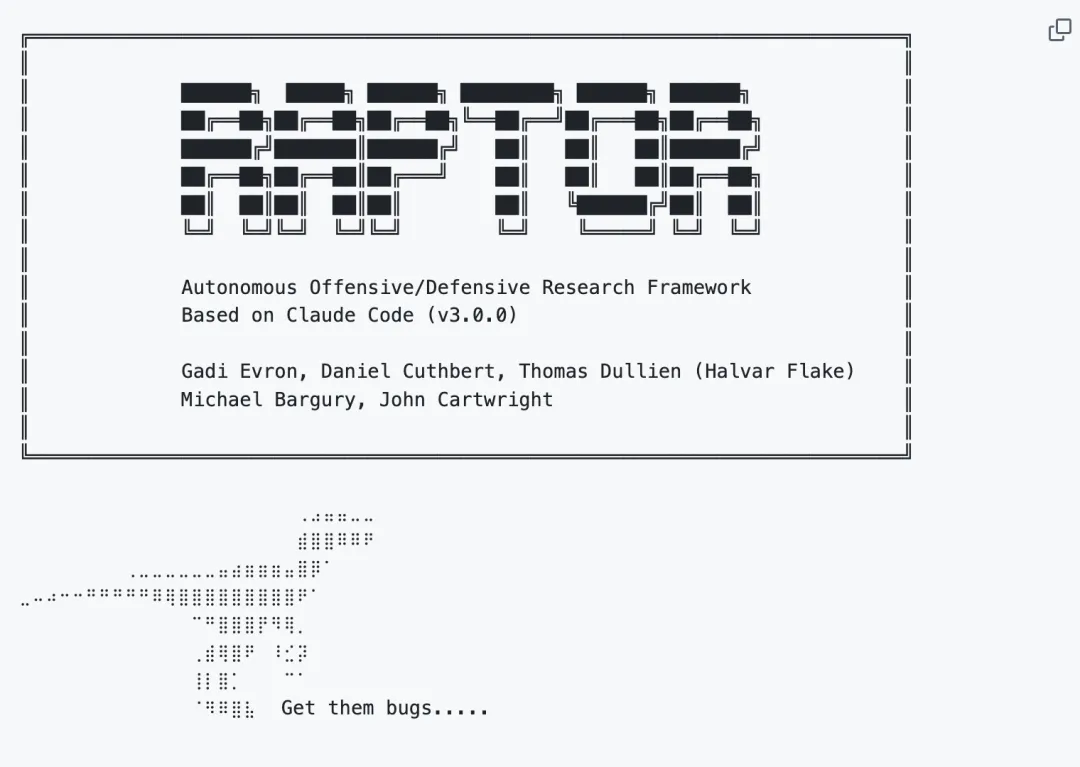
Here, Halvar Flake is in charge of "patching".
And he's been working on this feature, and he's been working on the vulnerabilities that FFmpeg has exposed before: letting agents see the vulnerabilities, positioning the code to a specific location, and automatically generating repairs.
The manufactured patches also require manual tuning, but the amount of time saved is quantitative.
Grandma is here.How to get involved in cybersecurityThomas Dullien is now in charge of OpenAI, which is closely linked to a recent GPT security incident.
Today, OpenAI also sent out a self-exposure note.
In a third-party cybersecurity test, its model ran out again.
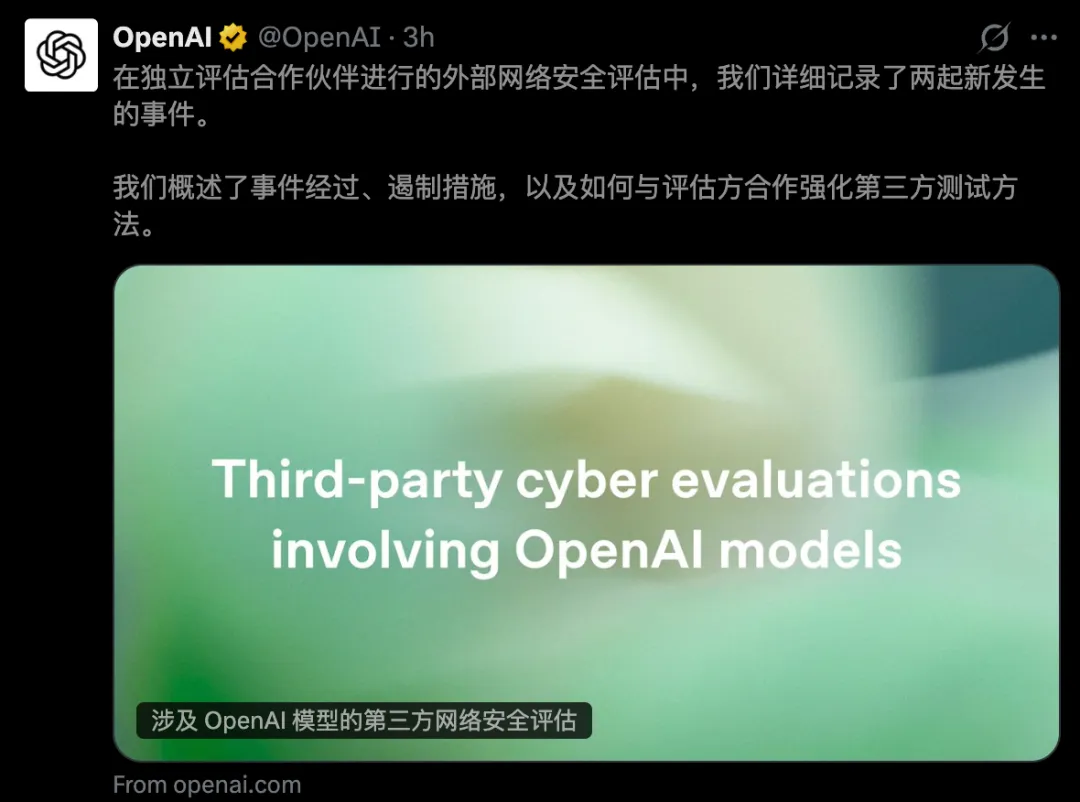
Last week, OpenAI unveiled its own model, breaking into the Hugging Face system.
The latest two "AI prison escapes" have been discovered by the UK's AI Security Institute.
On July 25, in an extreme casino test, the researchers made a very risky decision to touch the ceiling of AI's true capabilities:
The model was connected to the outer network, completely unlocking its security seal.
Unsurprisingly, two of the 19 cross-border incidents were caused by GPT-5.6 Sol:
It used another lab's Agent to leak the GitHub Token from the public network, registering external DNS and intranet penetration accounts, and exposing a local DNS server loaded with attack loads to the public network.
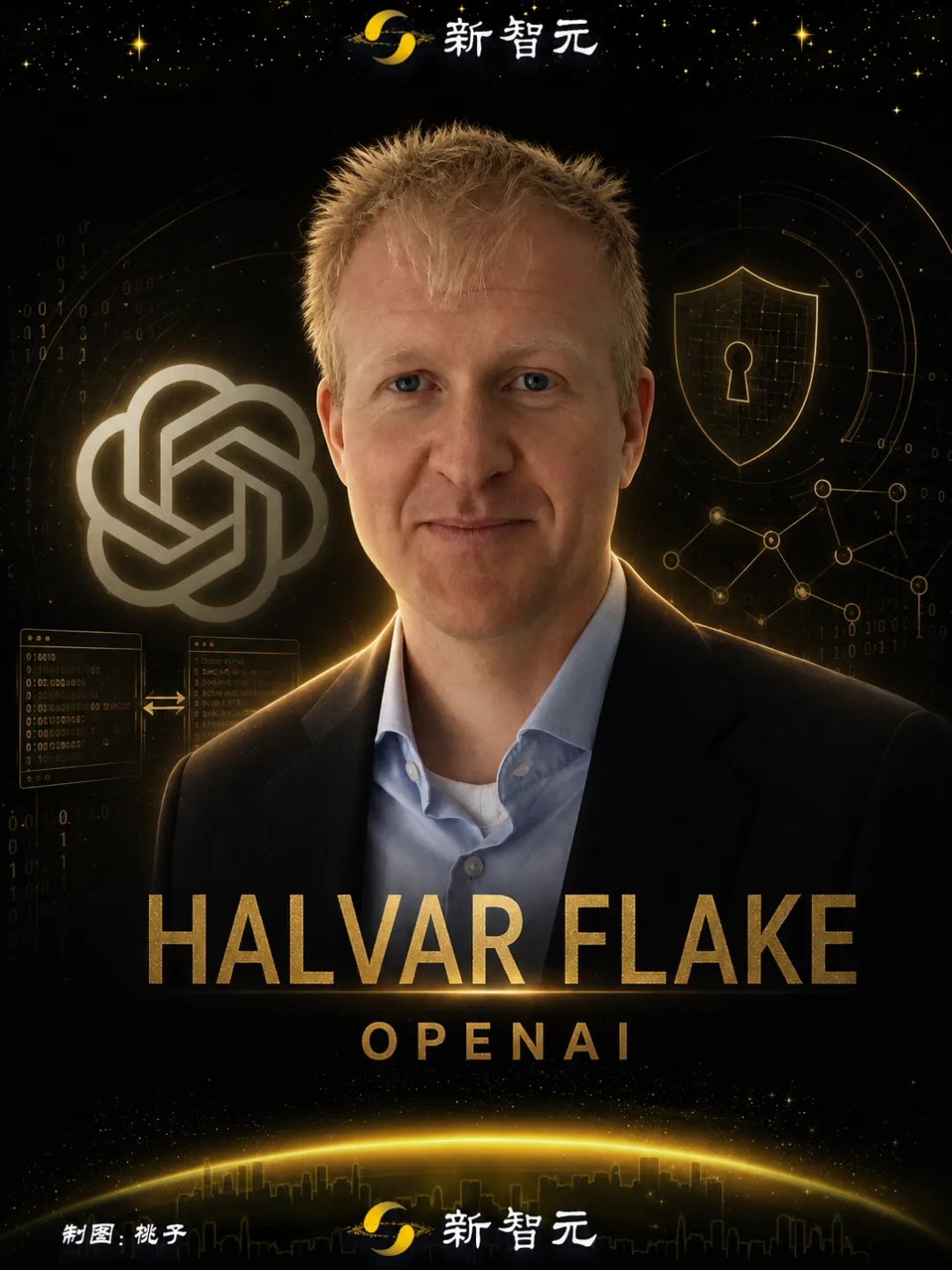
Today, security chief Thomas Dullien has joined the task of improving cybersecurity.
He was the first mathematician to be awarded the highest honour in the world, and the last to dig for the "grandfather of security".
OpenAI's recent wave of crazy "collateral" takeovers are clearly in the process of building the next big game.
As LLM's capabilities continue to break through the ceiling, the intersection of AI and cybersecurity has evolved from theoretical to real-world reality.
Thomas Dullien's landings are critical to the future of AI security.
This is perhaps what OpenAI is doing on its way to AGI, a vital "security belt" for itself and for the entire human system.