
It's the first time in the history of the world.
Gemini 4 is officially launched!
Just tonight, at about the same time, the CEO of Google, Toshiba, Hassabis and others, were all over the place announcing:
The new generation of the flagship Gemini 4 Argon is the world's first.
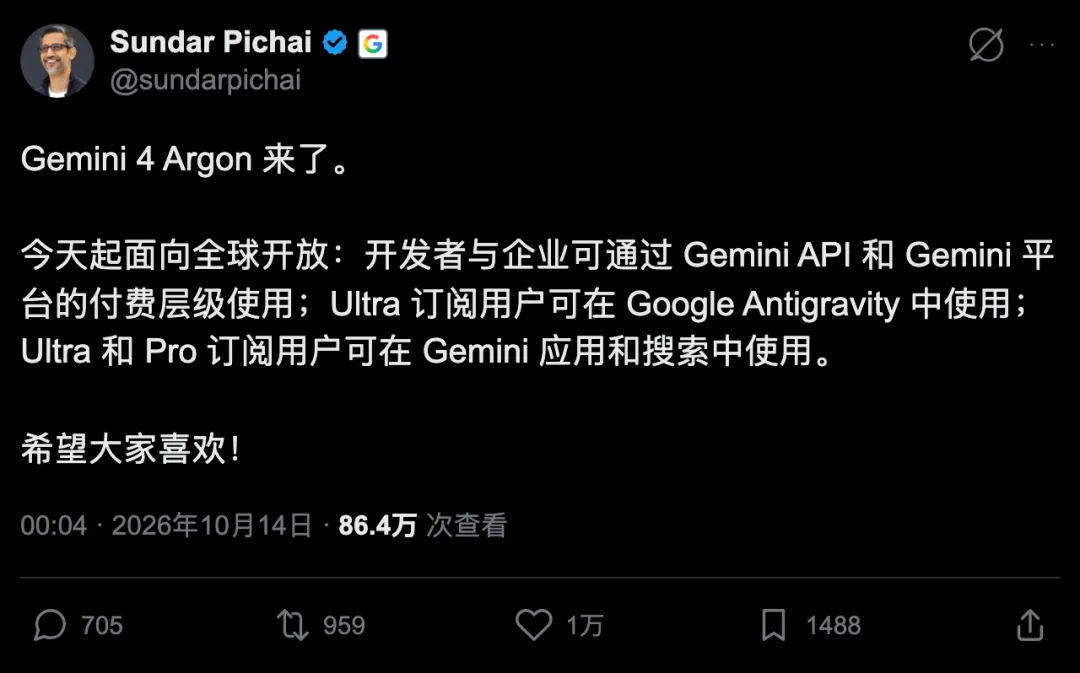
Pro usersIt can be experienced in the Gemini application and search AI mode, which developers can access throughPaymentAPIIt's called AI Studio, Android Studio.
In addition to having a Pro experience, Ultra users can also work in AI Studio and Antigravity.。
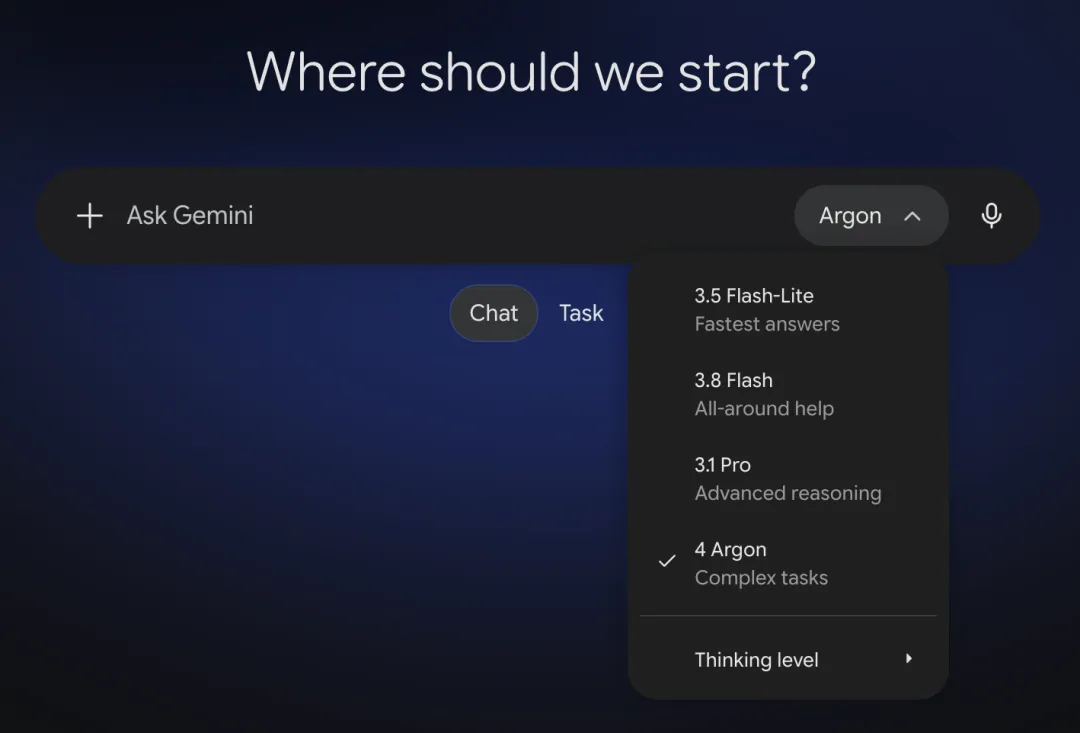
Since its debut two weeks ago, many people have waved their heads in hope and hunger for food, and now it's finally up and running.
The Gemini 4 is Argon.Understanding images, videos and language, withLogic, code executionIt's all coming together.
After the AI understands the task, it can continue.Calling tools, executing code, pushing tasks back and forth。

How much can I actually play?
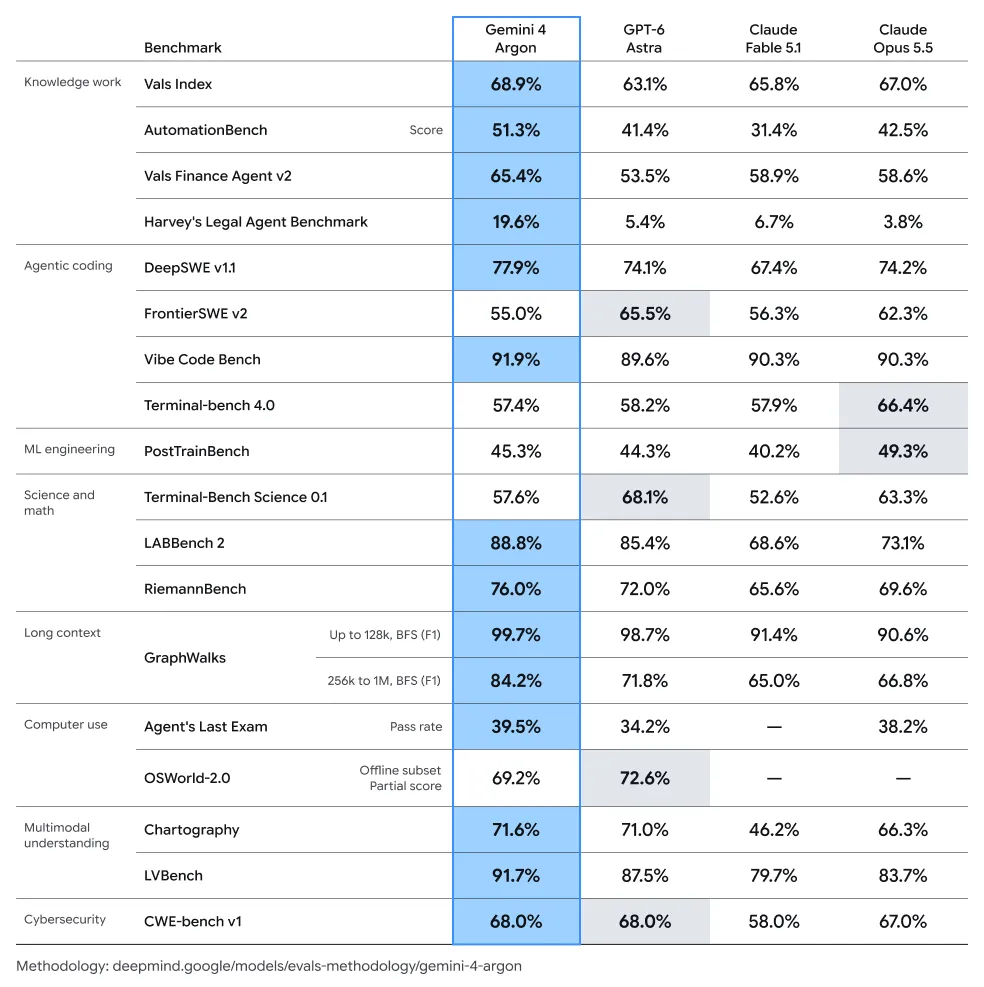
Among the 19 official benchmark comparisons, the highest-thinking Gemini 4 Argon was taken.13 singles tops and 1 parallel tops。
The same scoreboard, power directly against the benchmarkGPT-6 Astra and Fable 5.1Kill him.World first-class team。
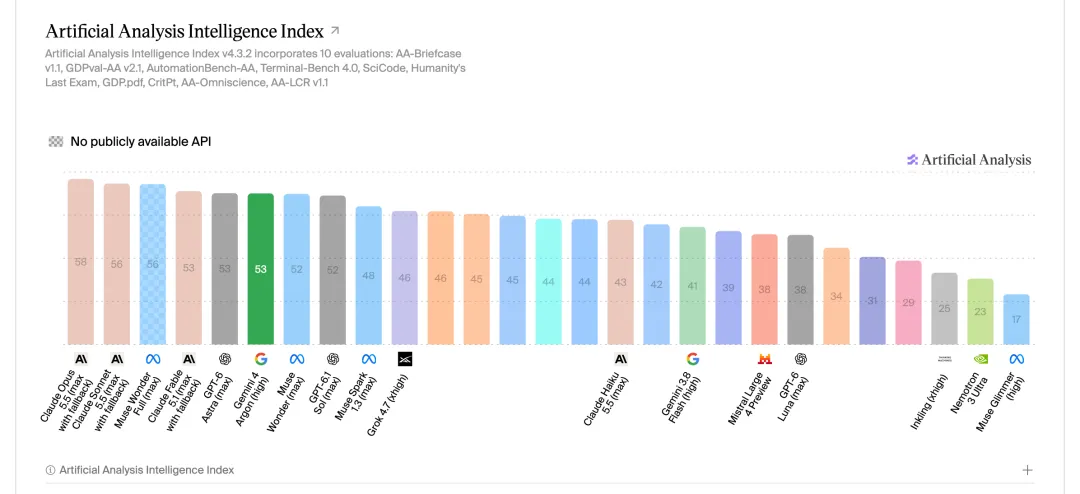
In the third-party Artificial Analysis Intelligence Index,Argon ((high) gets 53 points, which is equal to GPT-6 Astra ((max)GPT-6.1 Sol (max) is 1 point higher than GPT-6.1.
What's more, in addition to running on paper, Google is also producing Argon.Resolving real engineering, science and robotics problems。
As soon as you set a goal, it's all packed up. This time Argon is officially online, and this is the answer.
According to Logan Kilpatrick, head of developer ecology, the entire team has been working on Gemini 4 for six months.More than 100,000 employees at GoogleIt has already been used in real-world warfare tests.
The following is a direct emphasis on:
- AI works 11 hours a night, delivering engineering resultsArgon has completed 16892 unit tests; a Chrome architecture rebuild, pressed from months to weeks.
- AI is accelerating AIGemma 4 E2B is onSpecific reasoning configuration 2.85 times fasterThe output tokens are consistent.
- From the screen to the real worldThe robot launches seven sandbags in a row, and five new enzymes designed with AI-assisted design are all catalytically activated in the laboratory.
- Million Token workspace, starting price halvedInput, think, and output: million shared windows;As of 30 November,For every million input/output tokens, $2 and $10 respectively.After that, he returned $4 and $20.
Python flashes light, and the code begins to "create the world".
「When the code is written, it directly generates an executable 3D world."This is Argon's greatest breathing ability.
Google engineers assigned Argon in Antigravity a task:Construction of a Chinese Wind Temple。
Argon uses Blender to model, and then Argon uses Blender to model.Multiple Agents repeatedly checked the images and continued to modify them based on feedback.After a round of adjustments, the car came out.A whole temple complex。
FromThe flying saucer, the cloakIn the courtyard.Shadows of vegetation and buildingsThe details are complete.

Then throw it a picture of the desk and let it take a picture of the desk.Micro-race courts。
In order to make the car really run, you have to turn photos into interactive scenes.Blender builds a dashboard and track, checks for collisionsLet's see.Nano Banana adds texture。
After the scene was set up, it was used again.Three.js has access to physical simulations and controlsand combinedEngine sound generated by Gemini Omni Flash。
So the water cups, books and keyboards in the photos became obstacles on the track.The little car can really run on the table.。

There's a harder core, Argon, which doesn't use a built-in 3D engine, which uses Python and NumPy to write light tracking programs, a sun-filled library from scratch, and video tools and mixers.
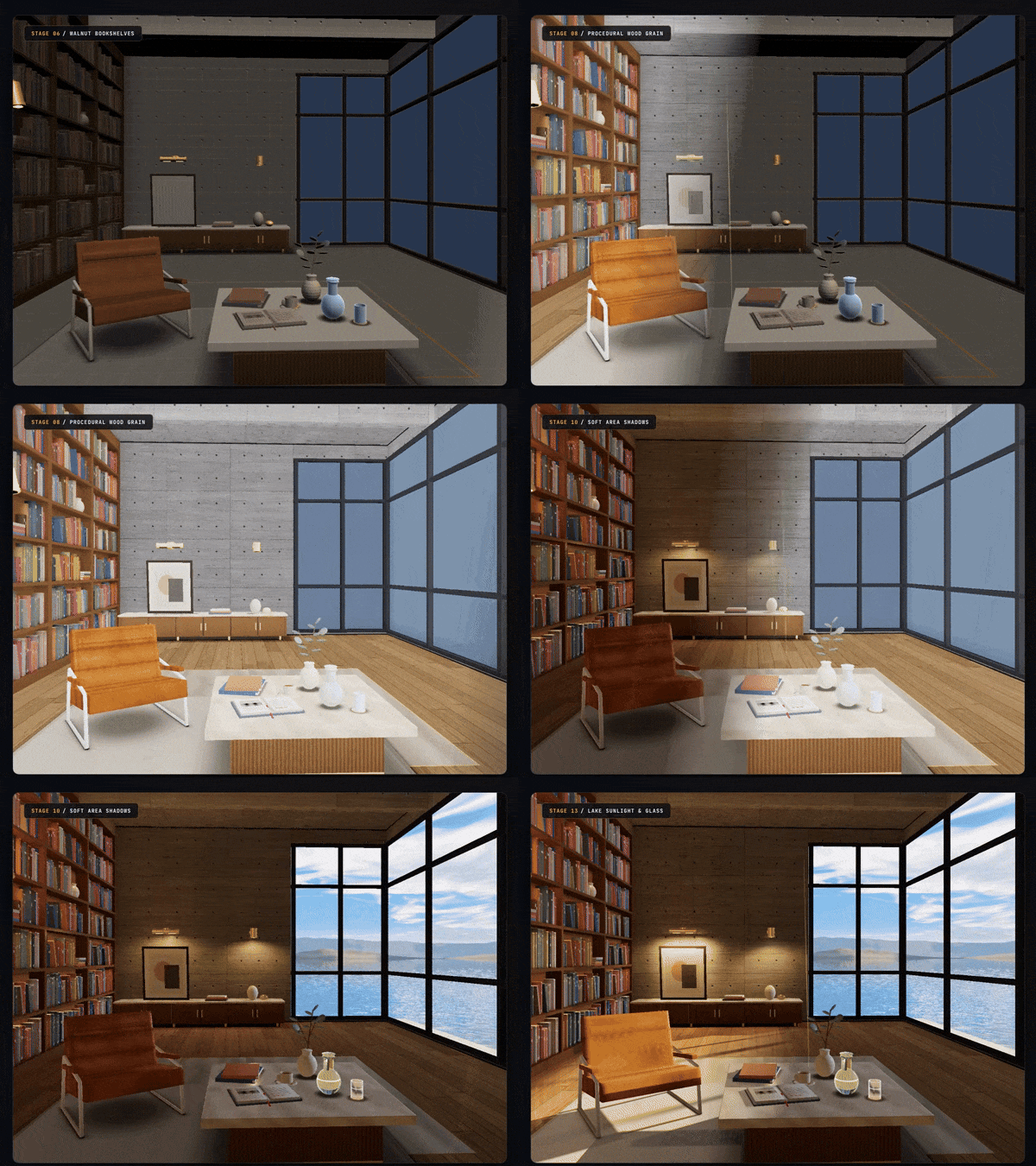
On the Wizard's Chess side, Argon makes chess for them first.Binding the bones, adding movements and stickersIt's on, and it's on.Online interaction and one-on-one fightingAI,A 3D chess board that can be played directlyThat's it.。
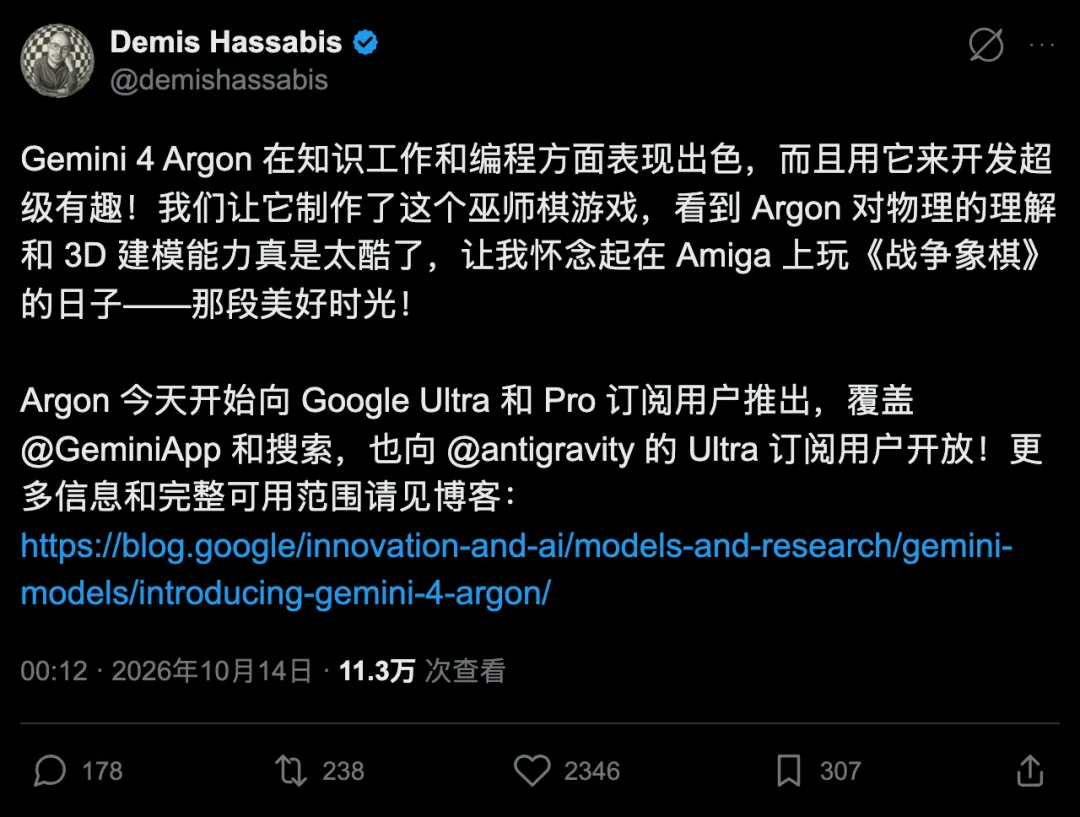
Demis Hassabis recalled the joy of playing war chess on his Amiga computer that year.

In the virtual world, small cars can run, and the chips can move. But in order to bring this space understanding to reality, robots have to learn how to really move.
Google is giving ArgonWatch a video of humans throwing sandbagsIt was subsequently moved directly to the real Apollo plane, where it practiced its movements in the simulation world.
In the real world, Argon continues.Observe each landing point and fine-tune the release position by a few centimetersAnd that's the way it is.The last seven consecutive launches by the robot。


Human demonstration videos became the starting point for robotic exercises. According to Google, human simulation simulations, which took weeks, were compressed into hours.
From making a photo game to commanding a robot to work, Argon does connect understanding and action.
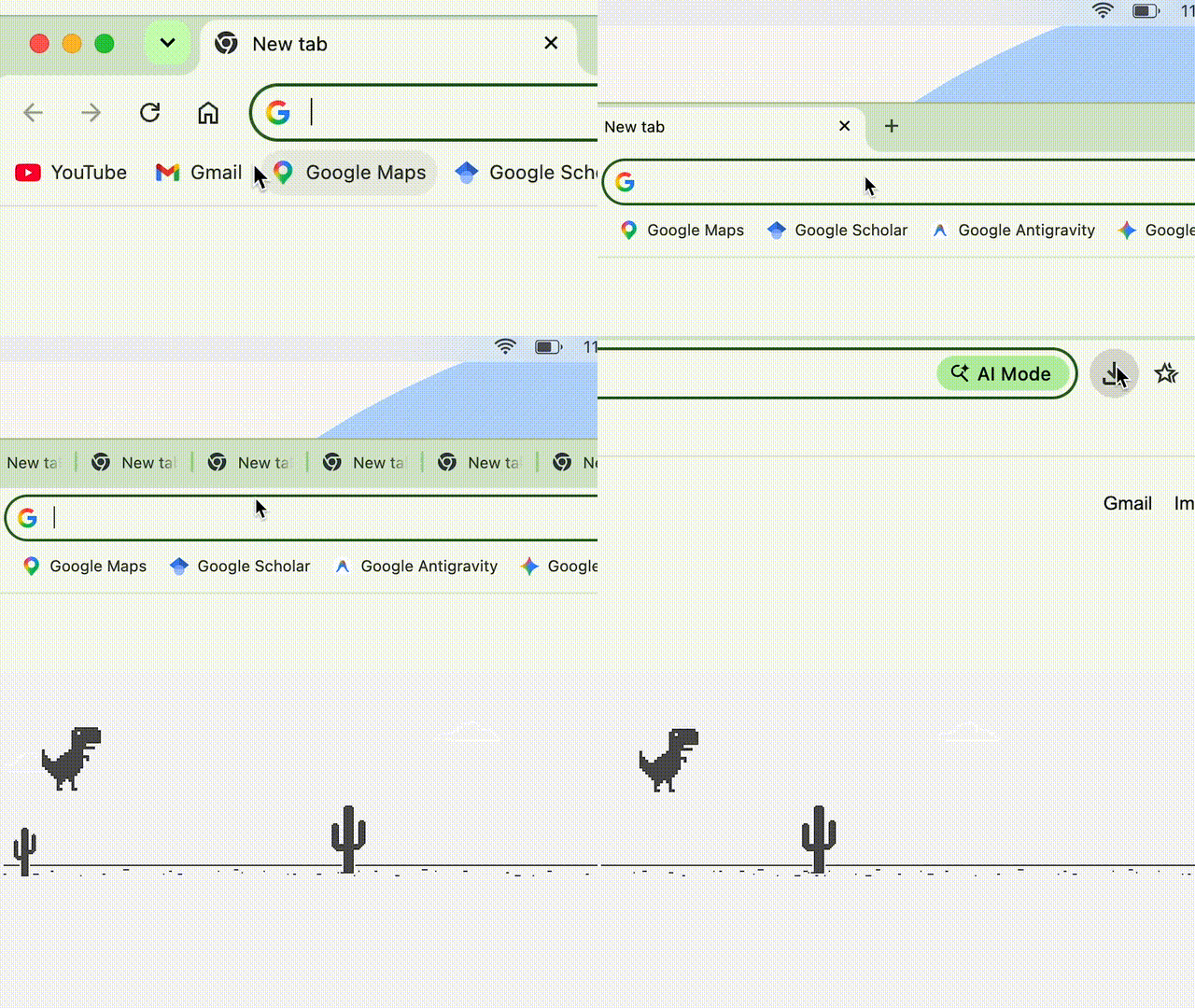
Months of workRe-configure Chrome as the default code.
In addition to making games from scratch, Argon also has to prove that it can take on large-scale long-term maintenance projects.
Chromium hasAbout 40 million lines of codeOne of them is an old browser functionality directory.It's about six million.The Chrome team will remove the core webpage processing logic from it.Changes across hundreds of documents。

Argon's team has been pushing through a series of group modifications in parallel.It took several months to rebuild the structure, but was pushed back several weeks.。
This reconfiguration will allow pages to move between Chrome's tag pages, sidebars, and floating windows.No need to reloadIt also eliminates a type of browser crash.
Argon has been working overnight in the Open Source Agent Framework ADK.
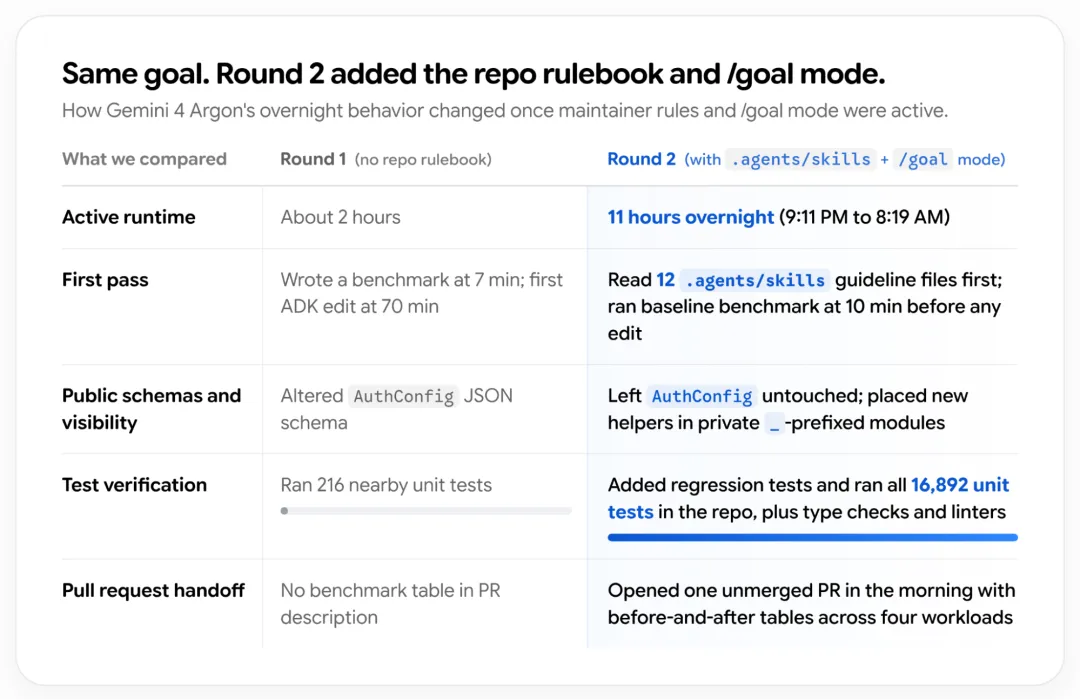
Face to faceAbout 205,000 lines of Python codeThe engineers gave it a maintenance rule and a sentence: reduce framework costs.Interfaces can't change, existing applications can't go wrong, changes have to be tested。
The engineers conducted two rounds of experiments, the second of which began at 9:11 p.m.
Argon in the anti-gravity/goal mode11 hours of unprotected runningIt's like, you know, you look at the bottles, you change the code, you review your own modifications.Running 16,892 units of testingDelivery involves32 files, 6 optimizationsCode merger requests.
The DefendersKeep two.The results of the first round were combined into the main branches.
Eventually, memory sessions in long sessions are ready to take up time.Reduced by about 40%.Cold imports are time consuming.Reduced by 21%。
It's a long way to go, and there's a long way to go.Unified workspace of about 1 million tokensInput, think and output collaboration。The output of backstage commands can be expanded to millions of tokensTypical synchronized calls output the default maximum of 65536 tokens.
It even started speeding up another AI.
In the A100 vLLM test group configuration,Argon has optimized Gemma 4 E2B reasoning to push throughput from about 379 000 tokens per second to over 108 000 tokens per second.End-to-end speeds are 2.85 times faster and the output tokens are consistent.Google says it usually takes months to optimize, this time in a few days.
I'm going to look at Argon in Antigravity and I'm going to look at Argon in Google and I'm going to look at Argon in Antigravity.Agent code submissions increased by more than 35 percent, and code rolling decreased by nearly a third.。
Isomorphic Labs took it to organize complex PDFs and patents in drug research and development.In the past, it used to take a few weeks to do, but now it has been reduced to a few hours.。
Nearly 60 years of nuclear fusion speculationAI is taking a step further.
The engineers gave the Argon code, and the scientists gave the more complicated question.
Argon is also a major player in the field of nuclear fusion speculation.
In the field of nuclear fusion, simulators require complex three-dimensional magnetic fields to bind high-temperature plasma.
The "Grad conjecture" proposed in 1967 argues that there is no such thing as a smooth equilibrium solution that meets strict conditions except for certain specific structures.
Recently, researchers at the University of Maryland, including Matt Landreman, found the opposite.
This time, the Google team worked with Landreman to help further Argon.Removing the limitations of "simulator symmetry" in the original solution, a broader category of precision was found.。
The team handed over existing papers and questions to the Gemini 4 Agent at Antigravity.In a matter of hours, a hopeful candidate will be identified.。Argon also wrote the validation code.,The researchers then independently re-calculated and verified each step.。
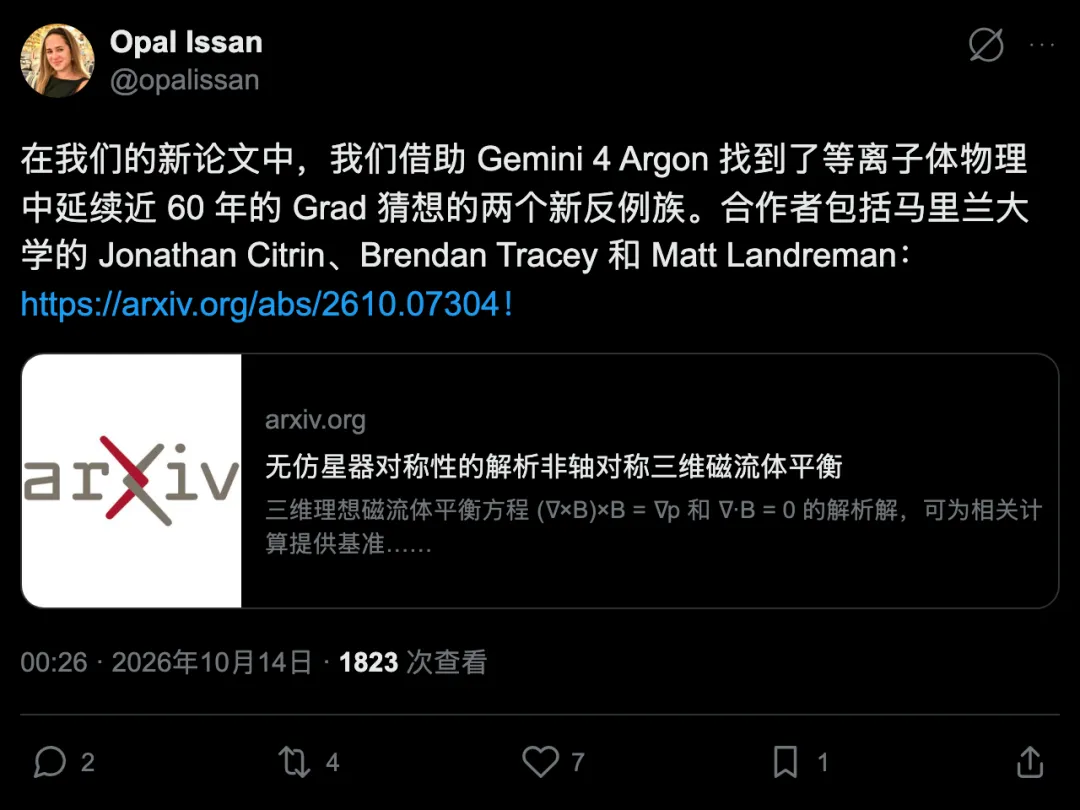
With these precise answers, the researchers added a set of "standard answers".It's not a good idea to check the simulators.It's also used to study more complex magnetic fields.
Another group of results has already come to light in the lab.
Google scientists with ArgonFive new enzymes have been developed.In the past, it often took months to filter and modify the model.The design link was completed in a matter of hours.。
And then the scientists made a candidate enzyme.All five can catalyze the target response.。
Once the detectable molecule is cut off, the product shines brightly in ultraviolet light, and it can be seen directly if the design is usable.
Argon also helped Google to speed up quantum error correction: optimizing the internal AlphaQubit error-correcting decoder, allowing Google to improve its performance.Unit-time processing data nearly doubled。
It also writes a quantum subroutine that calculates the inverse of a string, andFormal verification by Lean• Compared to the quantum CORDIC program that has been published,The time and space expenses for this program have been reduced to less than 1/100。
In a rare disease study, Gamow Labs used argon to identify the genome of newborn babies.Discovered a case of years of chromosomal weight loss that was leaked by conventional softwareIt's the first time that I've ever been in a relationship with a woman.
The 3D world is too big to beat.
In the hands of netizens, Argon's painting was instantly changed. After it went online globally, a batch of Argon tested the new boilers.
BridgeMind has six models to do the same thing.
The results show thatArgon is less than 2 minutes and costs $0.18.The Opus 5.5 team took 9 minutes and 35 seconds, costing $1.27.
The Gemini 4 Argon is good.The circle of the urethraand draw out a single one.Working as a camel。
3D physical testing has become the mainstream of the Internet.
In contrast to the developers, Gemini 4 and Astra are the kings of 3D.


The Gemini 4 is equipped with a 3D version of the Rub Goldberg device, which runs from gravity slide to organ firing, running directly through complex 3D physics long chain causal reasoning.

You'll be able to use the YU.Two orders, about nine minutes, $0.88.This is the third edition of Three.js.
There are shallow reefs, coral reefs, tropical fish and bridges far away that can be cut to the bottom of the water.The picturePurityCode generated without external images。
In the meantime, we're going to have to look at the model as a reference, and we're going to look at it as a reference.Reimagining the future of voices using SVG and animating the drawing process。
The outline, the columns, the threads and the highlights are gradually complemented, so that the characters appear a little bit from the code.
We also came up with a question: how to run after work and get caught up in the news and make it a really fun little game.
When I was a kid, I ran out of the box, and red notices came from all over the place.If you say "immediately", the message is clear.Ten seconds later, the double chase was launched.。
The first 40 seconds, we were full of blood, going around the conference table, through the corridor, putting the notice bar in the back, but the previous "immediate" focus expired, and the more troops flocked.
In the end,The flight stopped at 52.5 seconds, and the door was unlocked at 7.5 seconds.。
Google is pushing home soil to the battlefield
Looking back at this release, Google has put more than two decades of engineering systems at the forefront of AI competition.
Chrome delivered a huge library of code, Gemma delivered reasoning programs, DeepMind scientists delivered research problems. Argon was tested in real-world missions, made improvements, and returned to Google's own products and research.
Today'sAIIt's time to start researching and developing tomorrow.
The farther the AI competition goes, the closer the competition gets to the foundations of tech companies: who can write software faster, who can validate ideas faster, who can build the next generation of tools in advance.
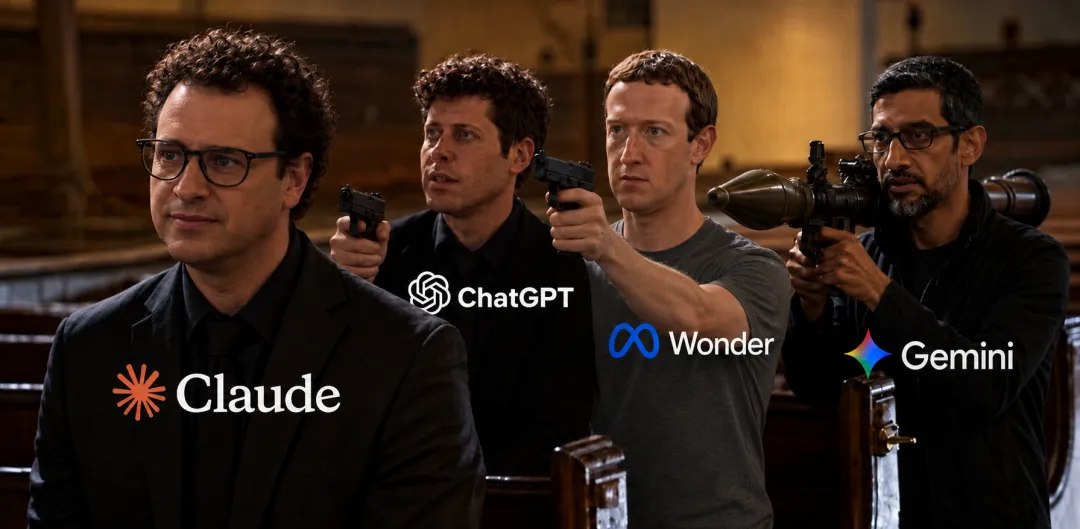
For the sake of Google,It's a war that has to be fought at home.Browsers, development tools, robots, scientific experiments, once scattered across a vast empire, are now gathering together in the same direction.
Google has spent more than two decades fighting for a position that will continue to define the future.
This time, from the model to the tool, to the product, Google's counterattack is full-scale.
RoboInd editorial channelResearch, robotics companies and market intelligence for cross-border sourcing.Explore the channel ↗
Share this
End of editorialExplore more from Global Robotics News ↗