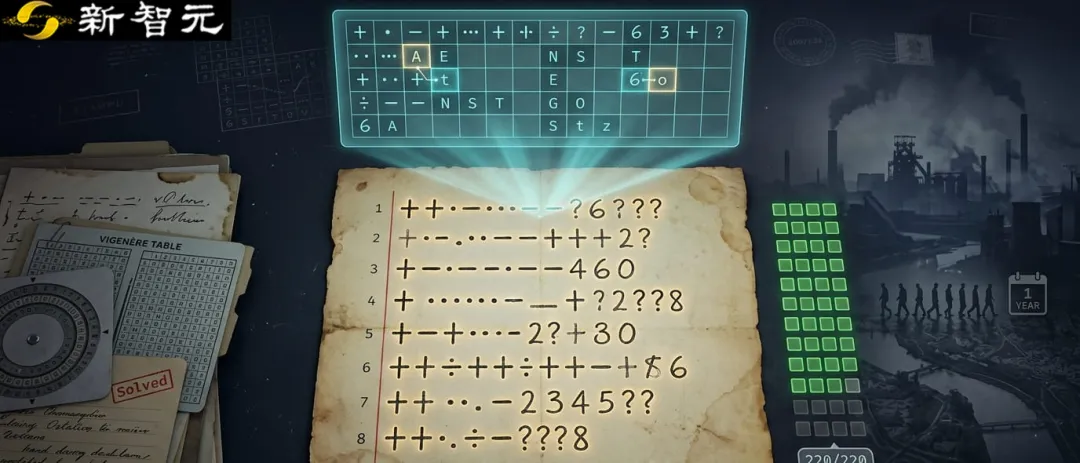
It's the first time in the history of the world.
Nine of them went to Ostrava and stayed there for a year.
In addition, these people also need political work experience.
These almost everyday details are hidden on a page in the material of a Czechoslovak code course from about 1952: horizontal lines, dot numbers, numbers and odd symbols that turn a piece of plain text into a hard-to-read password.
Now, the passage has been read.
UCSI University researcher Zijian Zeng used AI-assisted research processes to complete the reading of HC Portal 615 code.
The project coordinator of the platform, Eugen Antal, an assistant professor at the Technical University of Slovakia, confirmed the correct reading; the official directory marked the article as "Solved" and signed Zijian Zeng.[1][2] The study was published less than 10 days after Zijian Zeng published 453 manuscripts, seven days earlier than OpenAI's large batch of mathematical manuscripts.
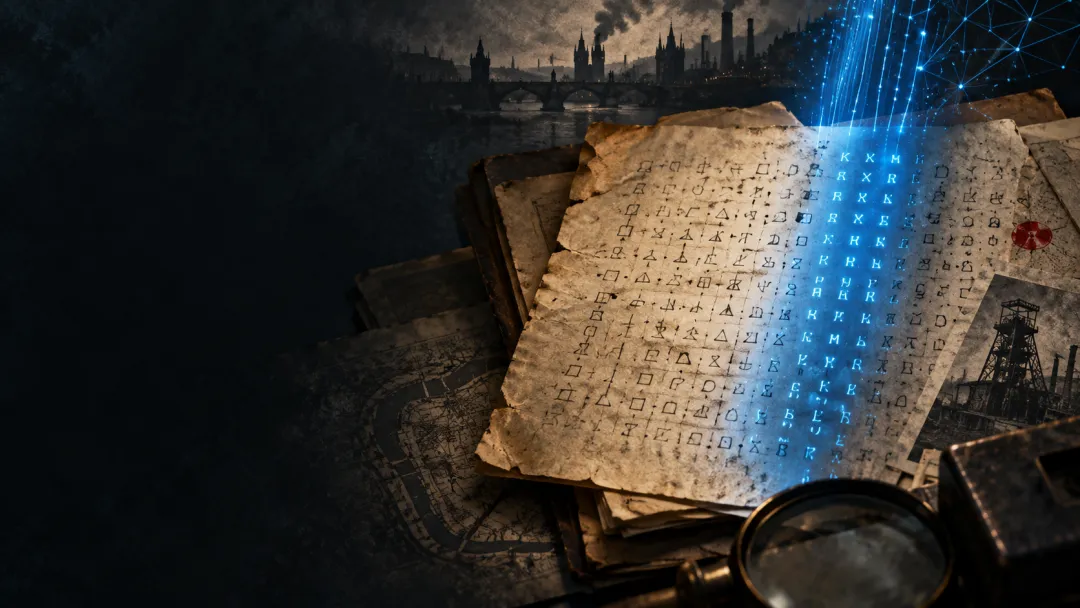
Figure 1 illustrates AI-generated file decryption concepts. The images are not original encryption, historical photos, or actual city sites.
Zeng expanded the study into the History Unlocked AI project, collecting multiple cases of historical ciphers, replicable modern codes, and location-by-site verification records. Other topics are being reviewed by other experts, and the findings will be published individually.
The nine comrades behind the 220 symbols
Look at the original chart. The paper is yellow, the text is arranged in eight rows, and the red markings divide it into 32 sections. Many symbols seem to be familiar, but cannot be read according to the daily numbers and markings.
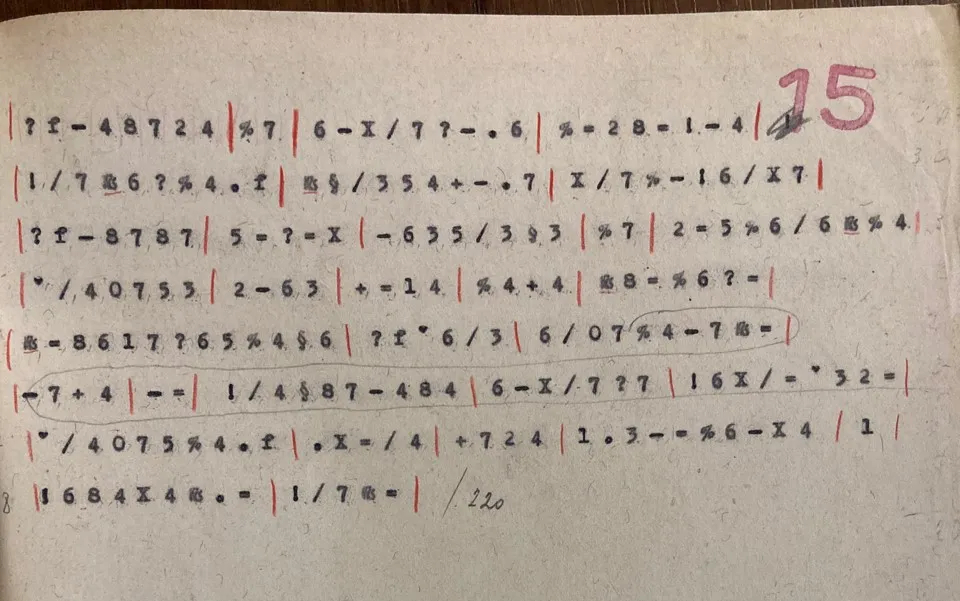
HC615 is the source code of HC Portal, image 1762; archive of safety components, ZSGS, BF388a, 27-19/6-099.
HC Portal compiles the material on this page as HC615, the archive location is ZSGS, BF388a, archives of the Czech Security Department, 27-19/6-099.[1] The source code is a code analysis course practice, the year given in the directory is 1952.[1]
In the October 5 record of the project, the issue was still Not Solved. Today, it has a complete read-out and a public signature of the solver.
The main contents of the readings were: sending excellent staff to the Ostrava region; sending nine comrades to a one-year workforce, including members of an organization's entire factory committee; and sending people with political work experience to Ostrava.
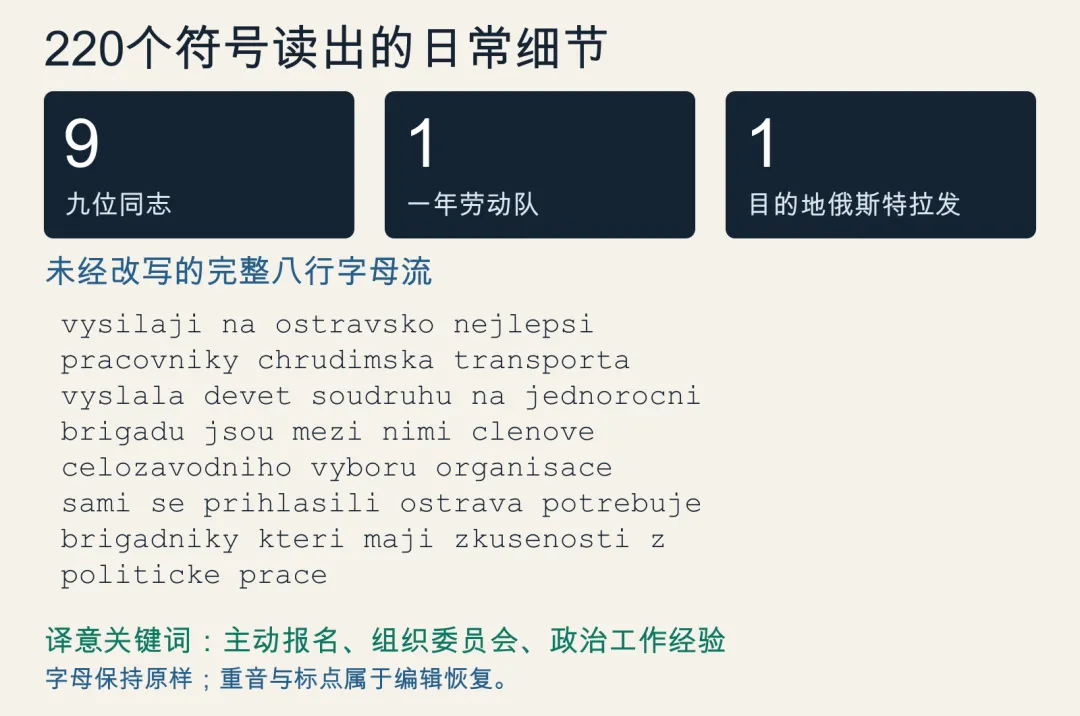
Figure 3 Full eight-line ASCII alphabet flows and translation keywords. The original alphabet is preserved; overtones and punctuation points belong to the edit recovery.
Comrades-in-arms have actively applied for political work experience for a year, so that this page has a readable content and allows readers to see a contemporary language: factory organization, labor arrangements and political work written in the same text.
The history of the city of Ostrava provides the context for these words. The city records, after the war and in the 1950s, the local development of heavy industries such as mining, steel, and industrial expansion attracted new labour migration, and the city is known as the heart of the steel mills of the republic.[3]
The working group narrative in the manuscript can be linked to this context. However, the nine characters have not been independently identified; the original origins of the text of the course are still to be found. Business names, place names and organizational terms have become clues for subsequent research.
The AI locks each symbol first.
To read this page, the first step is to figure out exactly what the input is.
Single-sided and double-sided, low-point and high-point, linear number 1 and narrow pencil are easily confused in scanning. The research process preserves these distinctions, records where each symbol appears, and then freezes the transcript.
The final transcript contains 220 symbols, 22 typefaces, 32 segments, and eight lines of text. The red separation is analyzed as a word space, and this working hypothesis is also recorded.[4]
It is a single-shaped substitution cipher: the same font, no matter which line appears, corresponds to the same letter. For example, in a confirmed mapping, the X-shaped symbol corresponds to t, the 6-shaped symbol corresponds to o. The name of the font describes only the visible shape.
AI assists in organizing information, reviewing transcripts, writing programs, and organizing experiments. The real search key table is the classic password solver: it scores candidates using a statistical pattern of four consecutive characters in Czech to explore different characters by simulating firefighting.
Read here that the role of AI becomes more specific: it helps researchers to see diagrams, write code, test languages, and preserve evidence connected, continually advancing the same task.
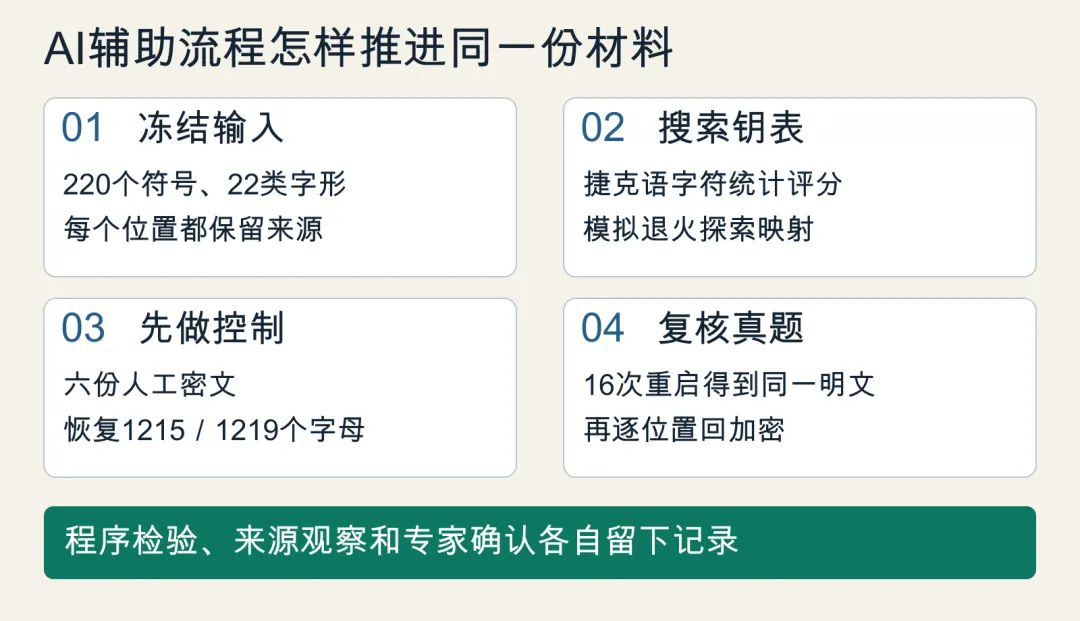
Figure 4 Drawing on the preserved procedures and experimental records. Controlled experimental results measure software performance and cannot be used as a historical reading probability.
Encrypt the answer back.
A text like Czech, only a candidate appears. In order for it to be verifiable, all symbols must be interpreted correctly.
Researchers first used six similarly structured artificial Czech language cipher checking software, which did not read the answer when the decoder was running. Results were saved to recover the correct 1215 characters, for a total of 1219 characters. This number measures the performance of the program in control experiments.
The real target then runs according to a fixed configuration. 16 restarts save the same complete statement; these outputs are also retained in the proof pack.[4]
The resulting text is then re-encoded according to a fixed key table and then position-by-position controlled: 220 observational symbols are all matched, 32 segments and eight rows are all matched.
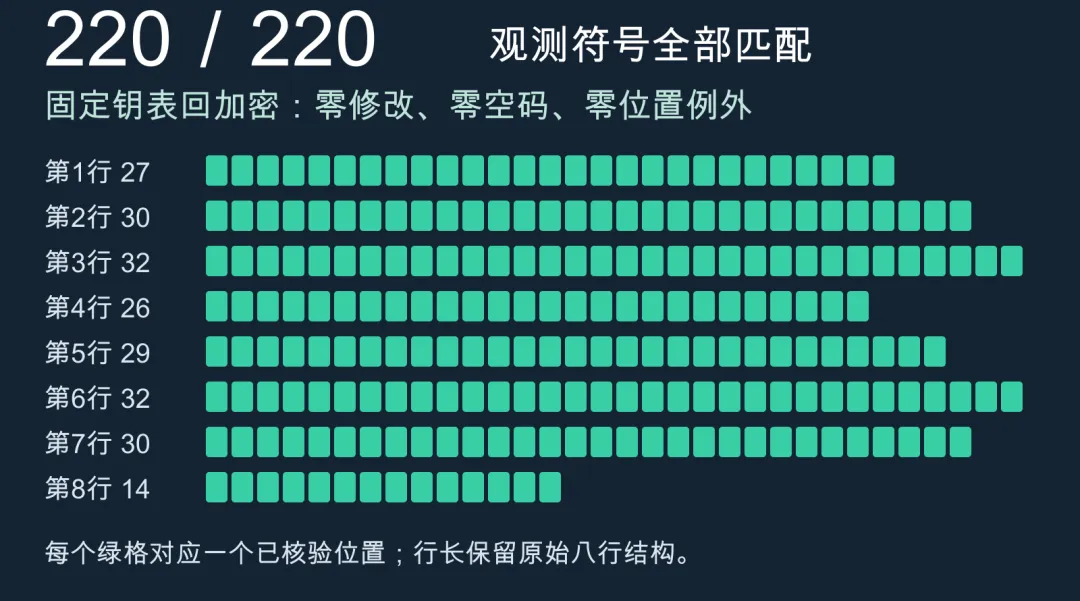
In Figure 5, the results of the verification are visualized according to the number of symbols in the original eight rows. The green indicates the location matching in the fixed transcript, not the re-identification or generation of scanning pixels.
This test gives the results a very practical advantage: another researcher can recalculate the matching relationship along the same transcript, the same key table and the same set of certificates.
The record also retains parts that cannot be recovered: f、q、w、x does not appear in the text, and the corresponding historical symbols are unknown; the overtone, the size of the spelling and the sentence markings belong to the editors. The sentence area near Chrudimska can be read differently, while the original organizace spelling remains unchanged.
Subsequently, this result received professional confirmation from Antal. The HC Portal Open Directory synchronizes Solved status and signature. Algorithmic consistency, language reviews and open records form evidence of interconnectedness in this case.[1][2]
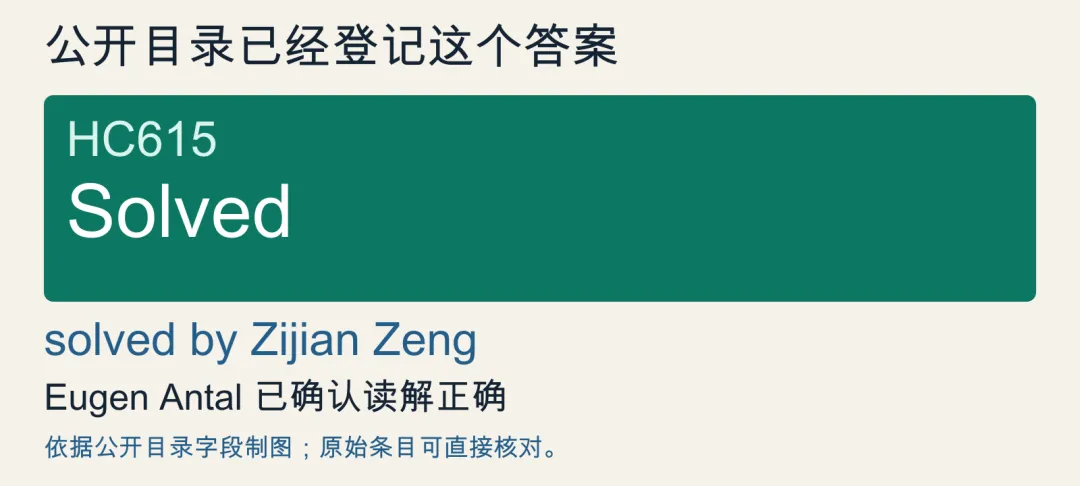
Figure 6 Drawing, non-website or mailing snapshot, based on official public domain with confirmed review results. HC615's verification scope is recorded independently.
More historical passwords are being tested
HC615 is the focal point of the project, which has received external confirmation. Other results also have their own code, records and scope of completion.
For example, HC696 uses another classical password called PORTAX. The full localized reading of the final 180 visible letters has been obtained, and the location-by-site encryption can be recalculated.
HC849 ̊ HC851 ̊ HC852 involves rotating arrays. Research uses open array keys, which reproduce 64 ̊, 144 ̊ and 64 ̊, to test the relationship between historical manual encryption operations and visible text.
The project also preserves conditional reading and partial analysis of handwritten symbol materials. For a pencil, multiple readings or unexplained positions, the evidence packet retains the original ambiguity and records them separately from the complete results.
The readings of other topics are being verified by other experts. Subsequent confirmations will be updated according to the topics, and the scope of completion of different cases will continue to be maintained.
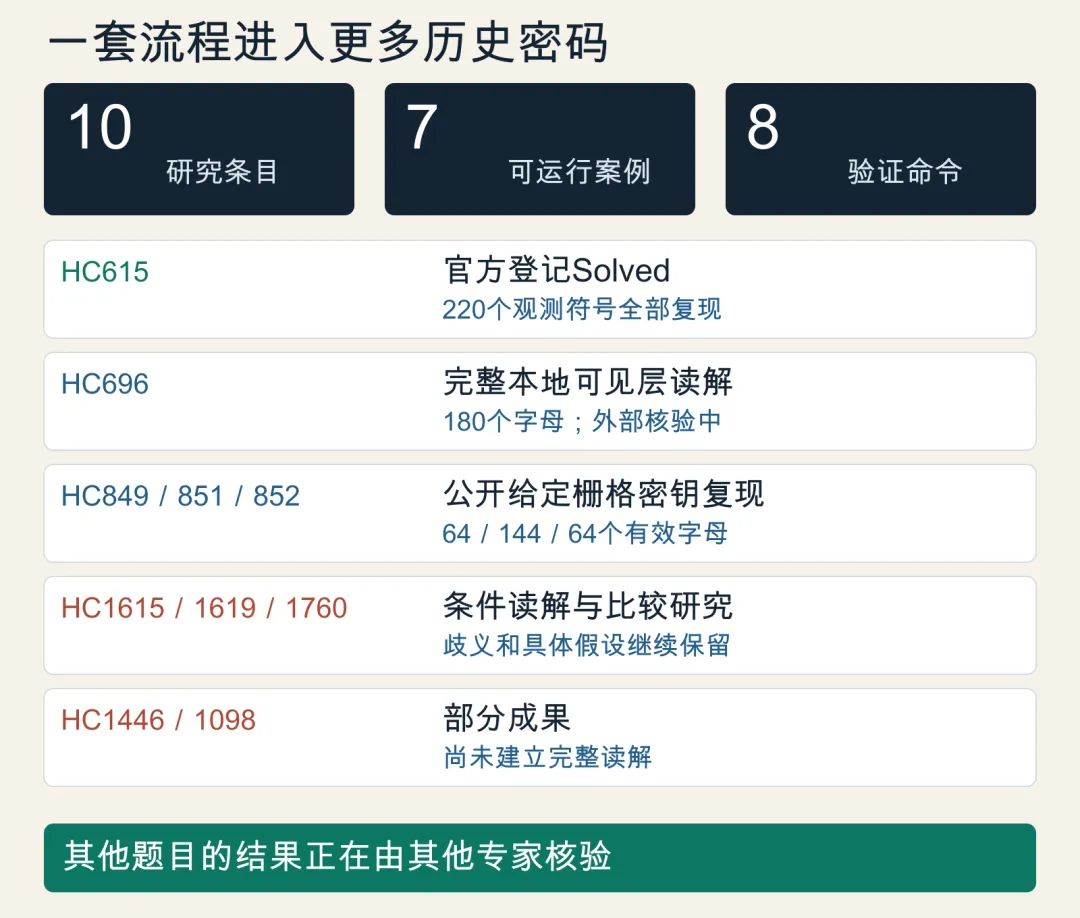
Figure 7 The scope of completion is retained on a case-by-case basis. The HC1619 comparative material is not counted as another set of independent results; 10 research entries are not confirmed breakdowns in all 10.
The current repository contains 10 research entries, seven of which have operational duplication procedures. Eight verification commands have been passed; GitHub automated duplication also shows success. The research index, necessary data, source code and English, Chinese, Czech, and Japanese main pages are all focused on the same open project.[4][5]
Next page archives may also become readable
Historical documents come into study and often have to do a series of specific tasks first: find the source, classify the symbols, create transcripts, write the applicable procedures, and then check each interpretation. They have the ability to be dispersed, and any interruption may allow the material to continue to be just a picture.
This project demonstrates a path of work that can be replicated: researchers combine these steps with AI, then use code, source records and expert verification to get results into a verifiable state. The latter material still needs their respective observations and verification.
For archivists, this can be a tool for organizing encryption practices, old postcards and historical telegraphs. For ordinary readers, the source code provides a participatory input: you can see directly how the method works on the material, or you can come up with specific traceable misreads or modifications.
After downloading the project, a Python command is used to verify the saved evidence. The verification process is free to call large models, and fixed inputs and certificates are checked locally on a case-by-case basis.
Figure 8 Offline verification entries for open projects. Seven cases, eight verification orders that can be reconstructed have preserved evidence.
This page of the Cold War course paper already has an open answer. It also leaves traceable names, place names, and institutional vocabulary. As expert checks on other topics continue, more read-out results will be added to the same verifiable record sheet.
When a page symbol becomes readable, retrievable, verifiable text, it can re-enter historical research.